Dog Bloat Can Turn Deadly Fast: Signs You Must Know

What Is Dog Bloat and Why Is It So Dangerous?
Dog bloat, also called GDV, is one of the most serious emergencies your dog can have.
In bloat, the stomach fills with air and may twist. When that twisting happens, it can cut off blood flow to the stomach, spleen, and other abdominal organs. A whole cascade of serious events can follow, sometimes in as little as 20 minutes to an hour.
This is not a “wait and see” problem.
If your dog recently ate and suddenly becomes restless, drools, tries to vomit repeatedly, pants, stretches out, acts painful, or seems completely unlike himself, call your emergency veterinarian immediately.
Minutes count.
I saw this in practice, and when we got those calls, we told pet parents to get to emergency care fast.
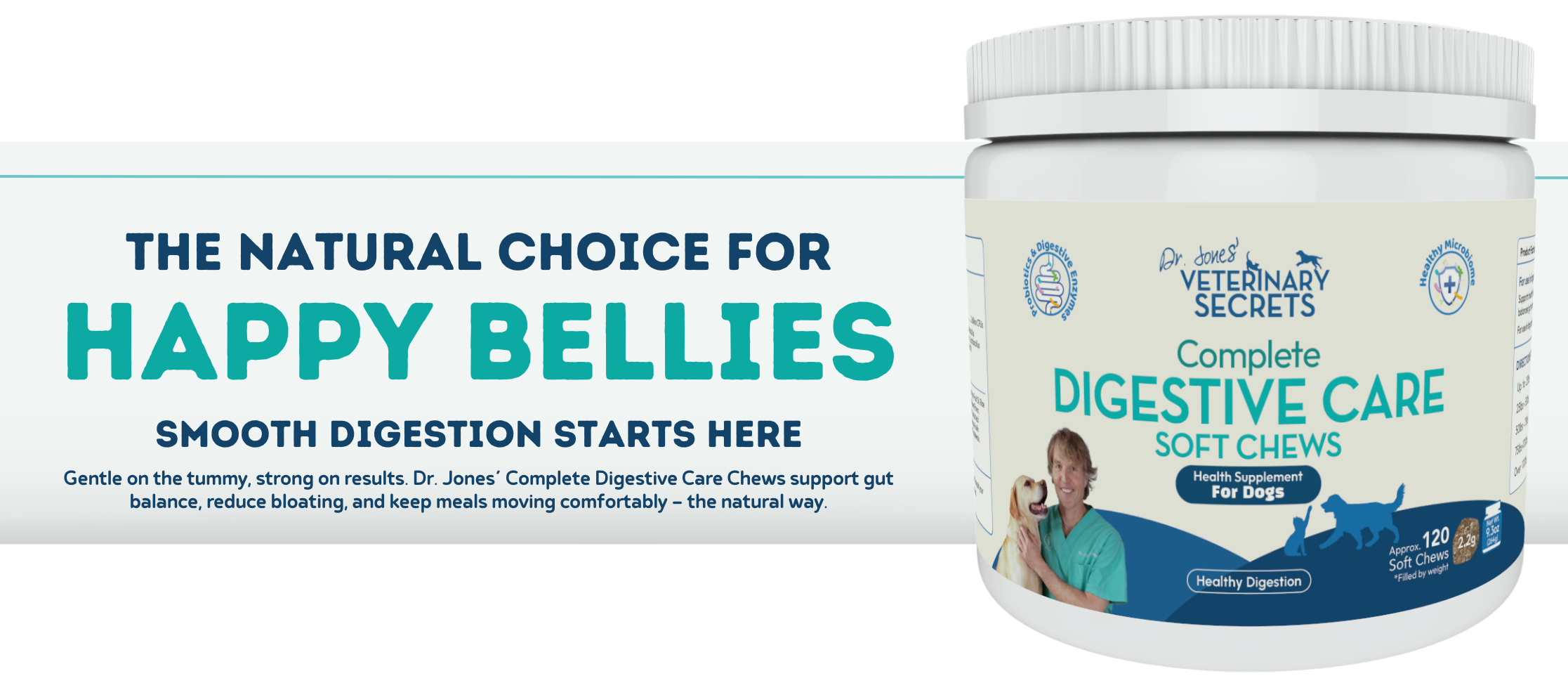
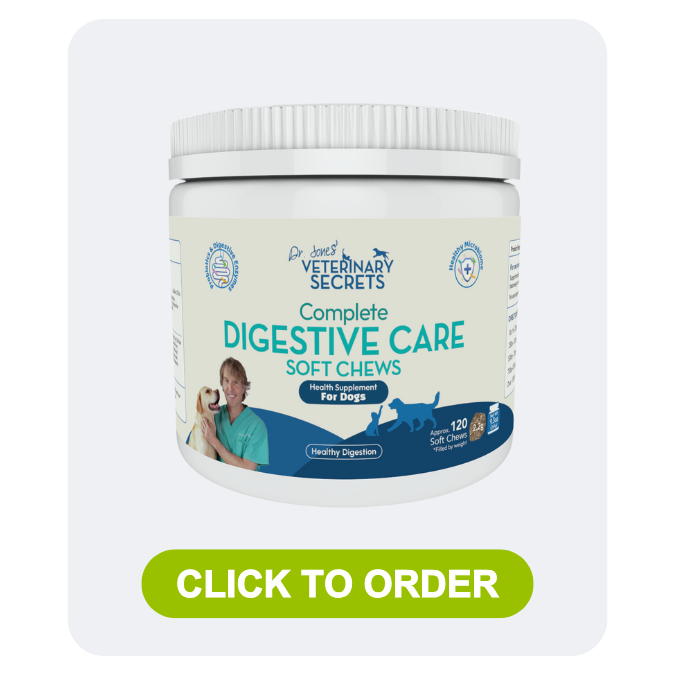
Dr. Jones’ Complete Digestive Care Soft Chews
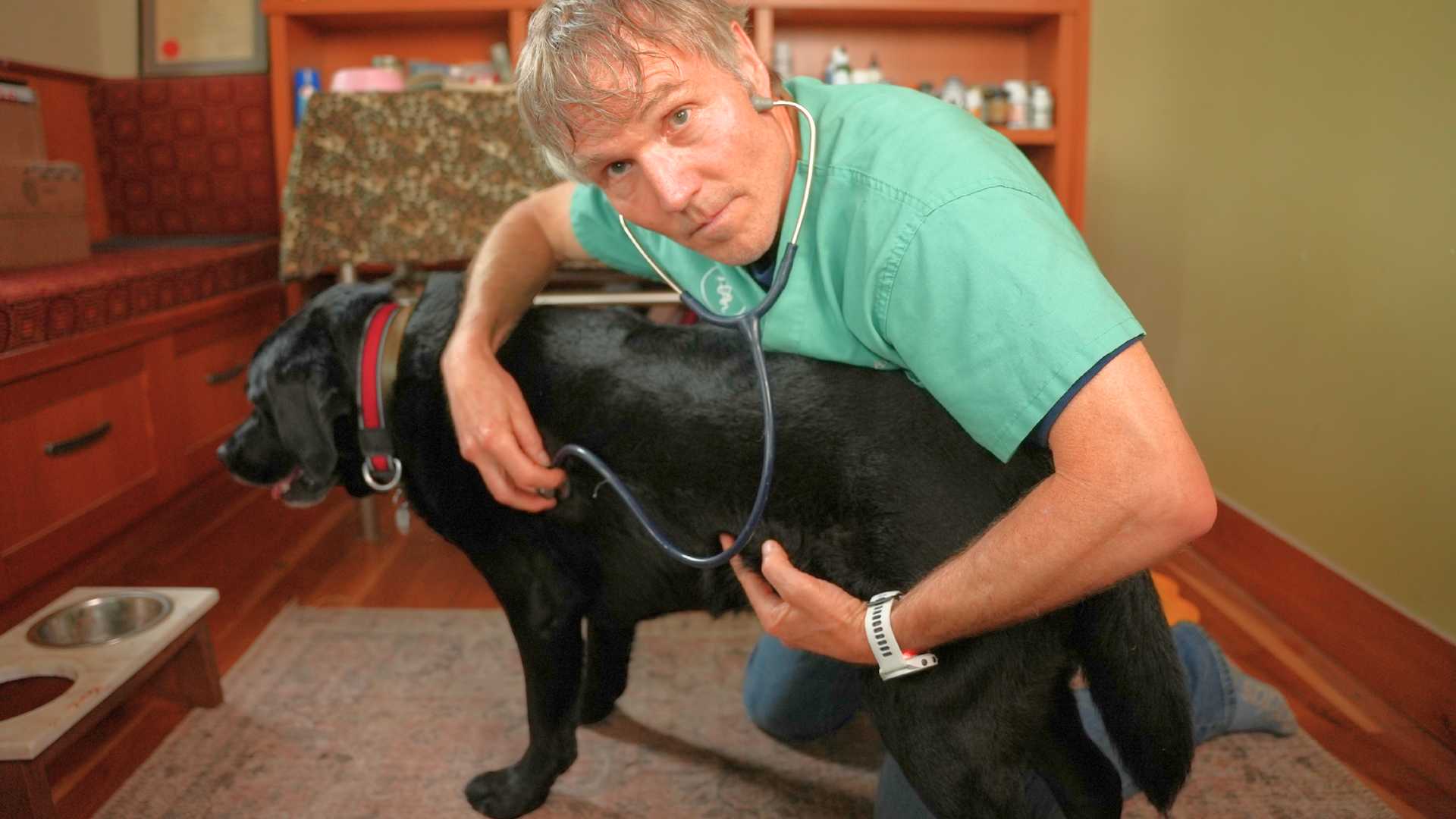
What Happens During Bloat or GDV?
In bloat, the stomach dilates with air.
In many cases, the stomach then twists. If you were looking from behind the dog, it typically twists clockwise.
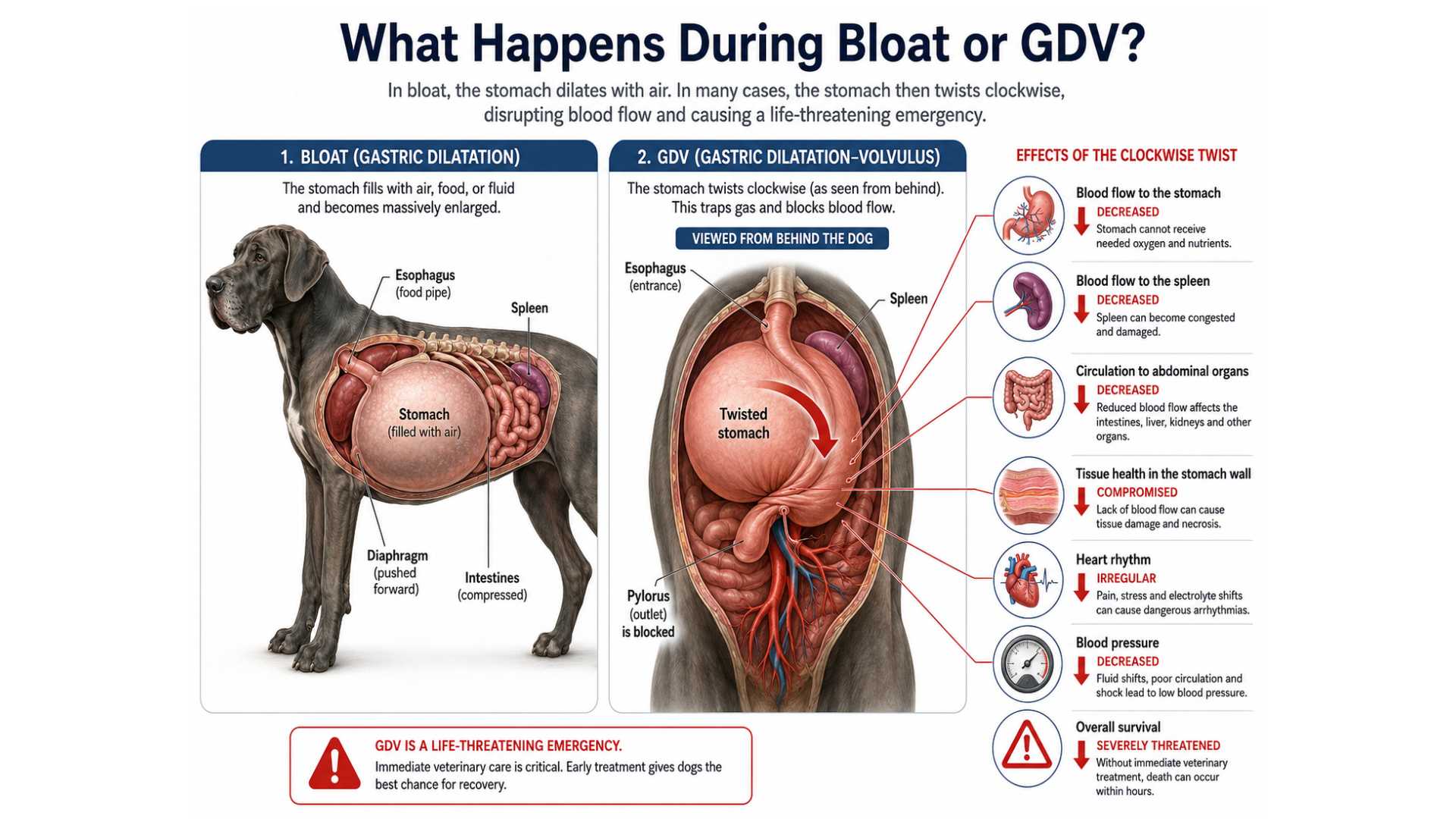
That twist can affect:
- Blood flow to the stomach
- Blood flow to the spleen
- Circulation to abdominal organs
- Tissue health in the stomach wall
- Heart rhythm
- Blood pressure
- Overall survival
When the stomach twists, the dog can go downhill very quickly.
That is why GDV is often called the mother of all dog emergencies.
Not a title any disease should be proud of.
Which Dogs Are Most at Risk for Bloat?
Bloat is more common in large, deep-chested dogs.
In the video, Angus was the model dog. He is a larger breed dog with a fairly deep chest, which puts him in a higher-risk group.
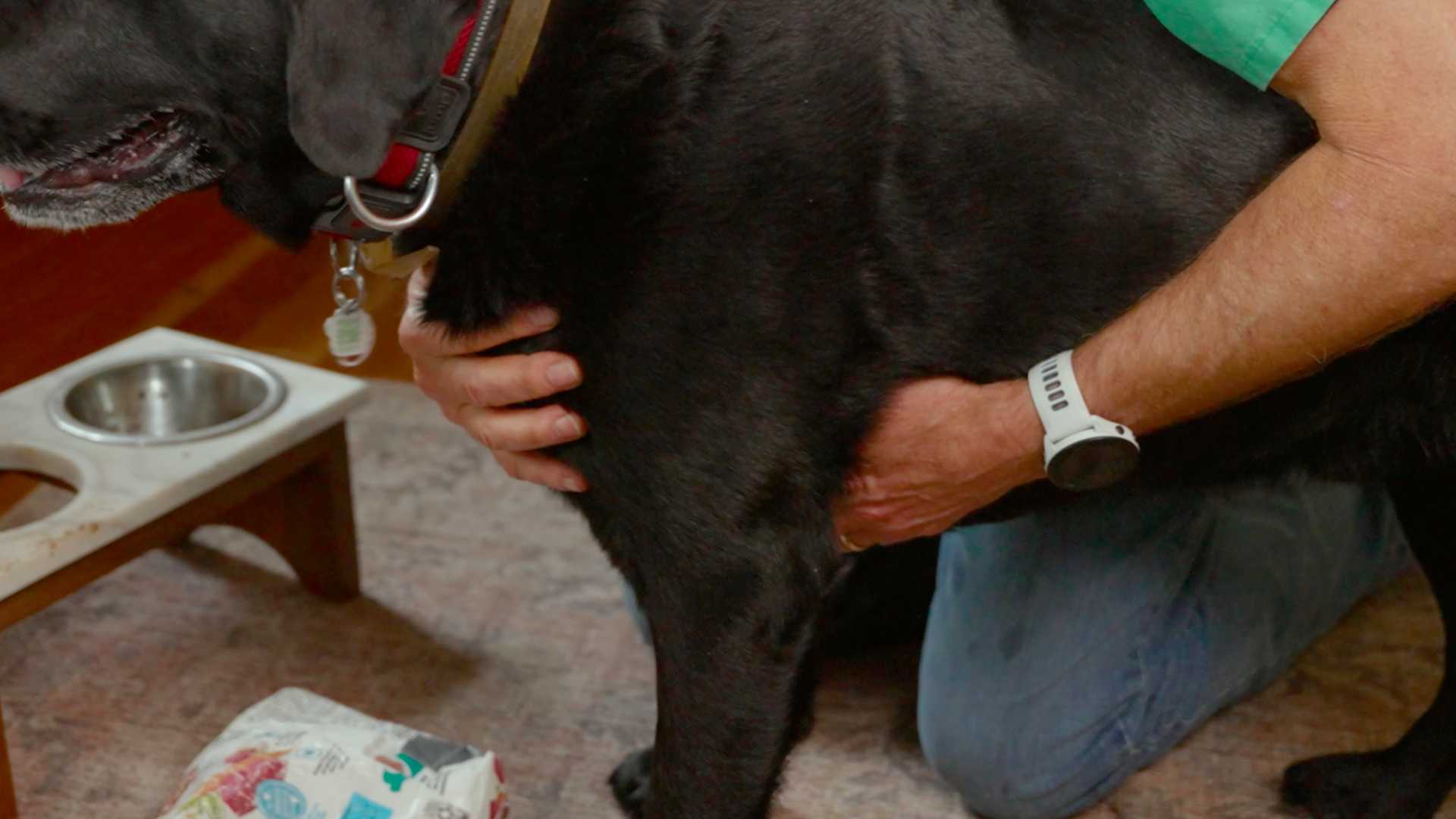
Dogs at higher risk may include:
- Large breed dogs
- Deep-chested dogs
- Fast eaters
- Dogs who gulp kibble
- Dogs who swallow a lot of air while eating
- Dogs eating with competition from another dog
- Dogs eating one large meal
- Dogs eating highly processed kibble
- Dogs exercised right after eating
- Dogs allowed to drink excessive water right after eating
Great Danes are the classic high-risk example, but they are not the only dogs at risk.
What Are the Early Signs of Dog Bloat?
The early signs often happen soon after eating.
The dog may have eaten quickly, gulped a lot of air, and then suddenly starts acting strange.
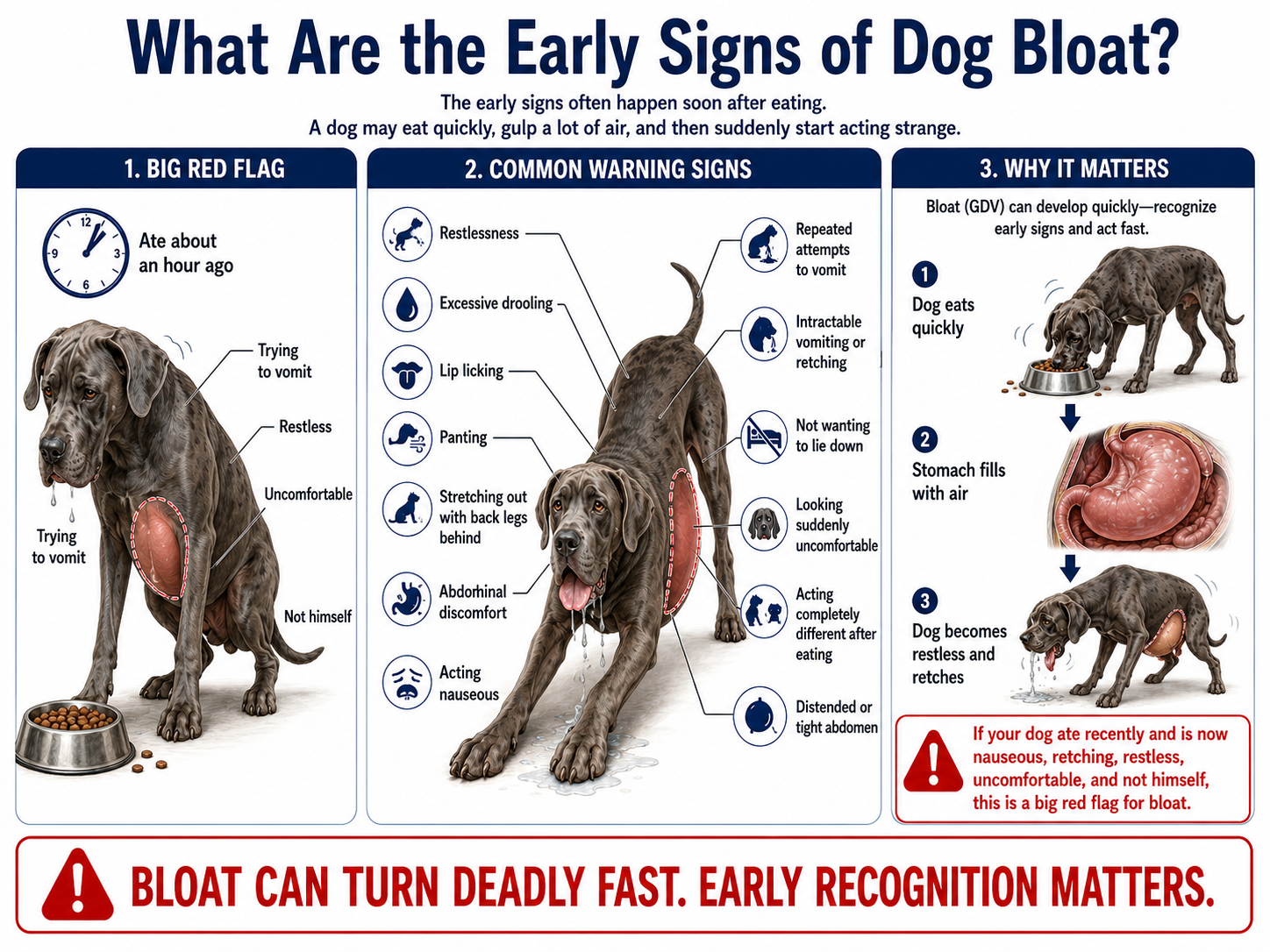
Common Warning Signs
Watch for:
- Restlessness
- Excessive drooling
- Lip licking
- Panting
- Stretching out with the back legs behind
- Abdominal discomfort
- Acting nauseous
- Repeated attempts to vomit
- Intractable vomiting or retching
- Not wanting to lie down
- Looking suddenly uncomfortable
- Acting completely different after eating
- A distended or tight abdomen
One of the biggest warning patterns is this:
Your dog ate about an hour ago, and now he is nauseous, trying to vomit, restless, uncomfortable, and not himself.
That is a big red flag for bloat.
Quick Bloat Warning Sign Table
| Sign | Why It Matters |
|---|---|
| Recently ate, then suddenly acts strange | Bloat often appears shortly after meals |
| Repeated vomiting or retching | A classic emergency sign |
| Restlessness | Dog cannot get comfortable |
| Drooling or lip licking | May signal nausea and distress |
| Panting | May happen from pain and stress |
| Stretching out | Can signal abdominal discomfort |
| Distended abdomen | Stomach may be filling with air |
| Refusing to lie down | Pain or pressure may be worsening |
| Sudden collapse or weakness | Severe emergency |
What Should You Do if You Suspect Bloat?
Call your emergency veterinarian immediately.
Do not wait to see if your dog improves.
Do not assume it is just an upset stomach.
Do not try to manage this at home.
When I was in practice and someone called saying their dog had eaten recently and was now trying to vomit repeatedly, bloat was one of the first things on my mind.
I would often have the pet parent gently feel the dog’s abdomen.
If the abdomen felt distended along with the other clinical signs, that dog needed emergency care right away.
If you suspect bloat, get your dog to an emergency clinic as fast as possible.
Why Minutes Matter With GDV
GDV can progress fast.
The serious cascade can happen in as little as:
- 20 minutes
- 30 minutes
- 1 hour
In the past, survival was much lower. Early in my practice days, the prognosis was often less than 40 percent survival.
Now, with earlier recognition, better awareness, and better surgical techniques, if pet parents recognize the signs and get their dog to emergency care quickly, survival may be upwards of 80 percent.
That is a huge improvement.
But it depends on speed.
Early recognition saves lives.
Does Bloat Usually Need Surgery?
Yes, many dogs with GDV need surgery.
The surgery is done to correct the stomach twist and stabilize the dog.
But bloat surgery is serious.
There can be complications, especially if parts of the stomach wall or spleen have been damaged.
Possible complications mentioned include:
- Stomach wall necrosis
- Spleen damage
- Need to remove the spleen
- Tissue breakdown
- Release of inflammatory byproducts
- Cardiac arrhythmias after surgery
So yes, surgery can save lives.
But ideally, I do not want your dog ever getting to that point.
Prevention is where we want to focus.
What Causes Bloat in Dogs?
Bloat is not caused by one single thing.
It is usually a mix of risk factors.
In many cases, the dog:
- Eats quickly
- Swallows a lot of air
- Eats kibble
- Eats a large meal
- Has a deep chest
- Drinks too much water right after eating
- Exercises too soon after eating
- Eats in competition with another dog
The stomach fills with air, expands, and then may twist.
That twisting is what makes it so dangerous.
Why Fast Eating Raises Bloat Risk
Fast eaters gulp food and air.
That swallowed air can cause the stomach to expand.
Dogs like Angus, who are food driven and eat quickly, may swallow a fair amount of air at mealtime.
This is especially common when dogs eat with a sibling or another dog nearby.
There is competition.
The dog thinks:
“I better eat fast before someone else gets it.”
A Labrador and a young boy at the dinner table may not be all that different.
Prevention Step 1: Feed Smaller Meals
One simple prevention step is to avoid feeding one large meal.
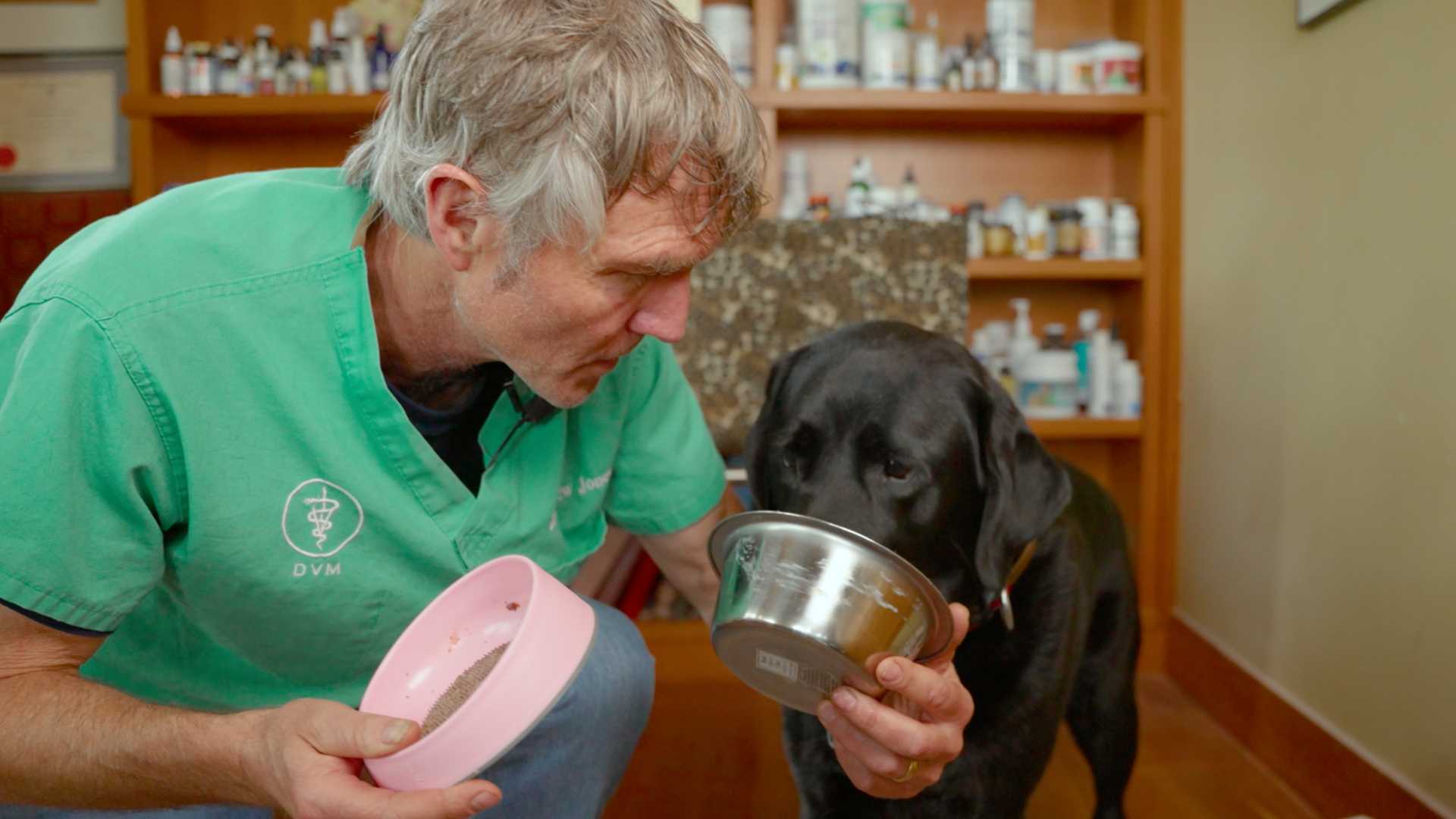
I have always fed my own dogs two meals a day instead of one large meal.
For many dogs, that makes sense.
Instead of one large meal sitting in the stomach, split food into smaller meals.
Better Feeding Pattern
Consider:
- Two meals daily instead of one large meal
- Smaller portions at each feeding
- Calm feeding time
- No rushing
- No competition with other dogs
Simple step. Big potential benefit.
Prevention Step 2: Rethink Kibble
Kibble may increase bloat risk for several reasons.
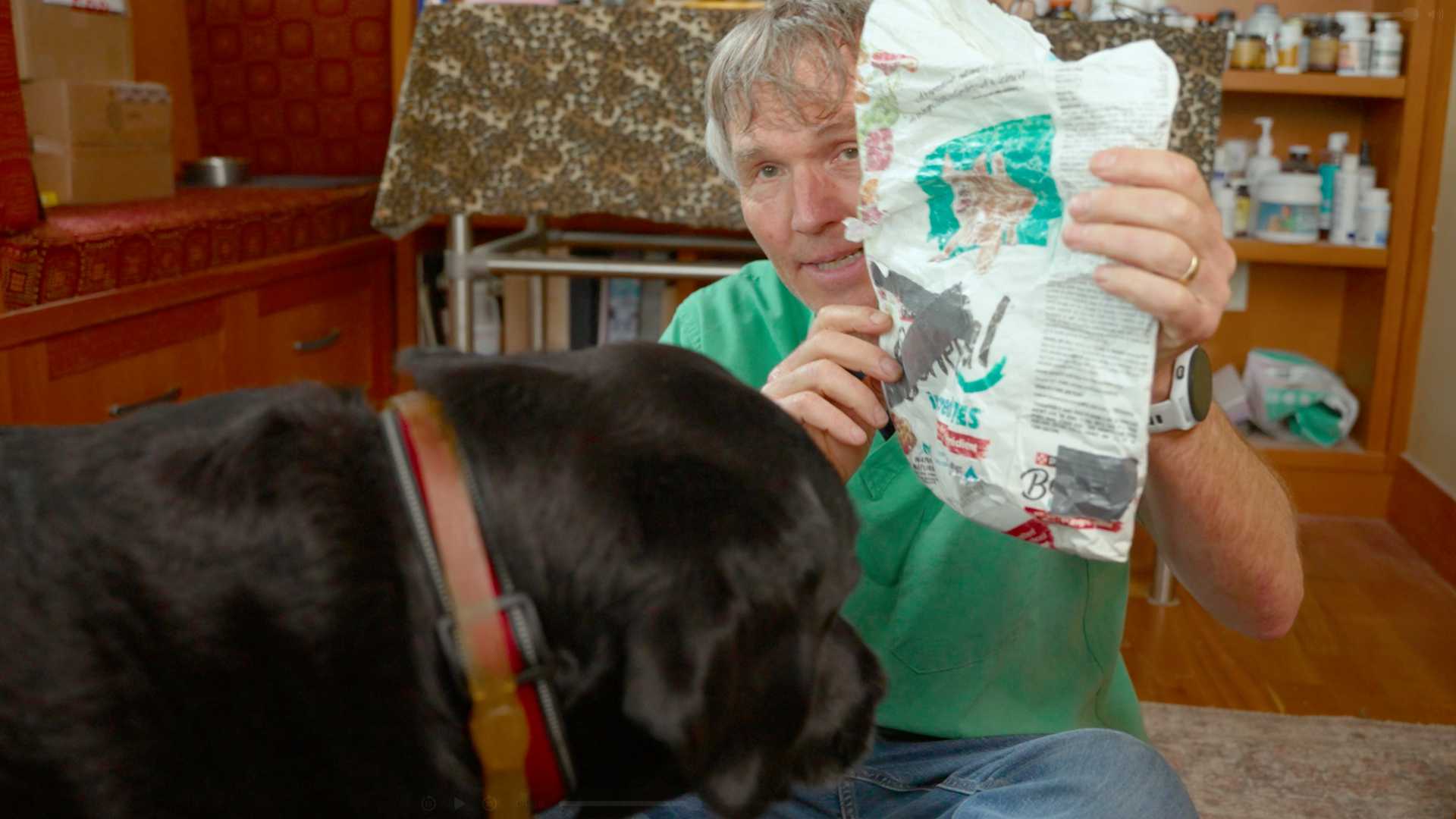
It is:
- Highly processed
- Made into small pieces
- Easy to gulp
- Often swallowed without much chewing
- Often eaten quickly
- Associated with more air swallowing
A fast eater can consume small kibble pieces very quickly.
That means more gulping, less chewing, and more air going into the stomach.
The source content also discusses a possible connection between highly processed kibble, advanced glycation end products, gastric inflammation, gas production, and stomach expansion.
In plain English, highly processed kibble may not be doing your dog’s stomach any favors.
Prevention Step 3: Watch for Seed Oils High on the Ingredient List
The pasted content notes that there appears to be a correlation with processing level and where oils appear on the ingredient list.
If an oil, especially a seed oil, appears in the first four ingredients, that may increase the risk of bloat.
So if you are feeding kibble, look at the label.
Things to consider:
- Is it highly processed?
- Is a seed oil high on the ingredient list?
- Is animal protein high on the ingredient list?
- Are there many inflammatory components?
- Is your dog gulping it down too fast?
If you continue feeding kibble, choose the least processed option you can, with the highest animal protein possible and fewer inflammatory ingredients.
Prevention Step 4: Consider a Meat-Based Diet With Larger Pieces
A meat-based diet with larger chunks may help lower risk.
In the video, chicken gizzards were used as an example.
Why might this help?
Because larger pieces require more chewing.
That means:
- Slower eating
- Less gulping
- Less air swallowed
- More natural chewing
- Less rapid stomach expansion
This is one reason I like thinking beyond tiny processed kibble pieces, especially for high-risk dogs.
If a dog has to chew, they cannot inhale the entire meal in 11 seconds while pretending they have not eaten in a week.
Prevention Step 5: Avoid Exercise Right After Eating
Do not exercise your dog immediately after meals.
After eating, the stomach is full.
If your dog then runs, jumps, wrestles, or plays hard, that movement can increase risk.
The concern is that the full stomach may expand and twist.
Better Plan
After meals:
- Keep your dog calm
- Avoid running
- Avoid hard play
- Avoid rough activity
- Allow quiet rest time
This is especially important for large, deep-chested dogs.
Prevention Step 6: Do Not Let Your Dog Gulp Excessive Water After Eating
Small amounts of water are fine.
But do not let your dog eat a large meal, drink a huge amount of water, then run outside and exercise.
That can increase stomach volume and may increase bloat risk.
The goal is to avoid rapidly increasing what is inside the stomach right after eating.
Prevention Step 7: Use a Slow Feeder Bowl
Slow feeder bowls can help some dogs eat more slowly.
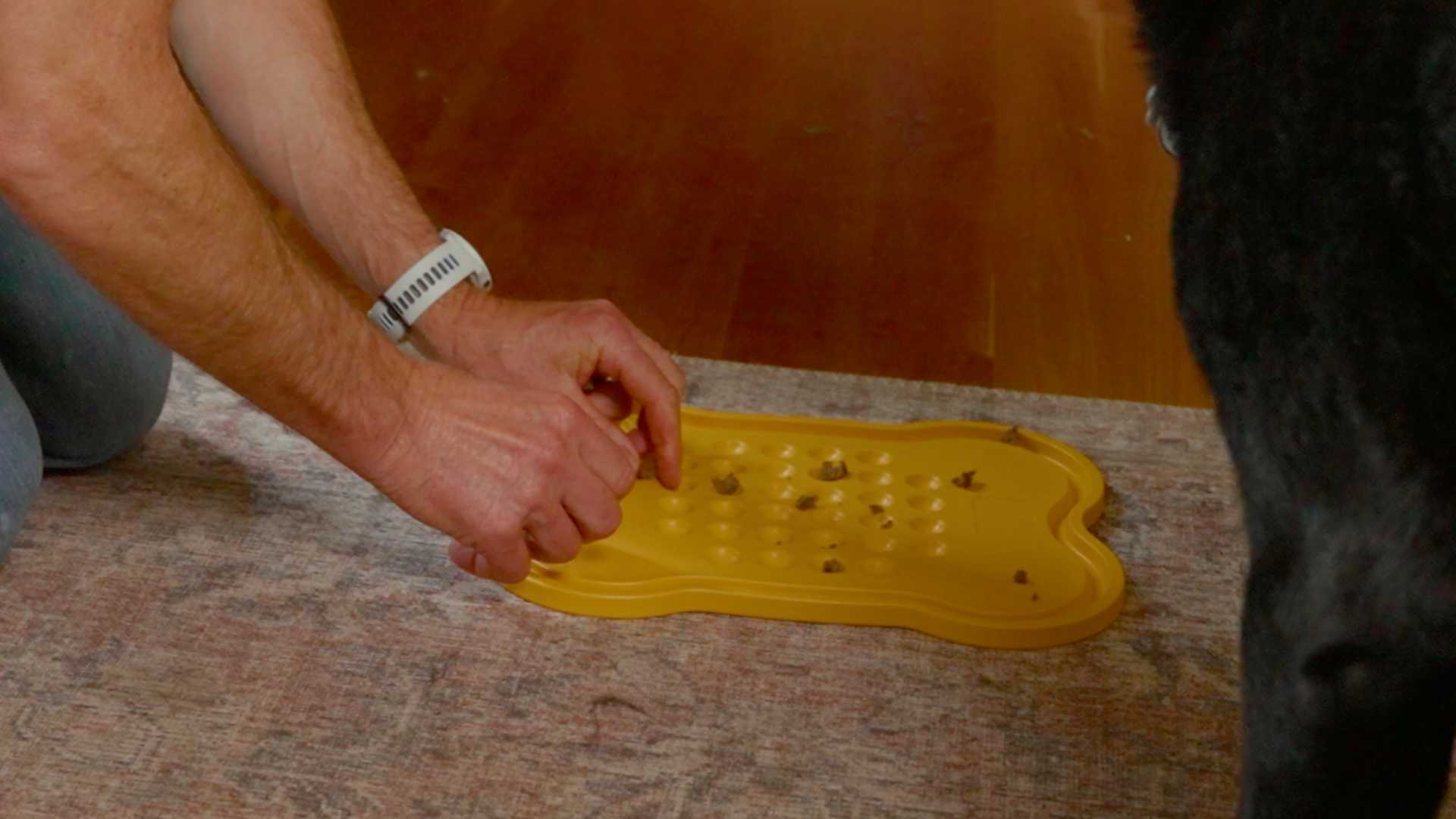
The food is spread out instead of sitting in one big pile.
The ridges force the dog to work a bit to get each piece.
This can help reduce rapid gulping.
Why Slow Feeders May Help
They may:
- Slow eating speed
- Reduce gulping
- Reduce swallowed air
- Make eating more controlled
- Reduce meal competition speed
A determined Lab may still eat impressively fast, but slower than a regular bowl is still better.
Prevention Step 8: Avoid Raised Feeder Bowls
Raised feeder bowls may seem like a good idea.
They keep food off the ground and may look more comfortable.
But for bloat risk, raised bowls may not be a good option.
They may allow some dogs to scoop up and inhale food even faster.
That is not how dogs would naturally eat.
A dog would normally eat with food on the ground, head down, scanning around, chewing, and eating more slowly.
With a raised bowl, food is closer to the mouth and easier to inhale.
So for dogs at risk of bloat, I would avoid raised feeder bowls.
Prevention Step 9: Feed Dogs Separately
If your dog eats beside another dog, competition can make them eat faster.
If Angus eats beside his brother Murdoch, you can imagine the race.
For dogs at risk of bloat, do not feed them side by side.
Instead:
- Feed dogs in separate areas
- Give each dog space
- Avoid competition
- Keep mealtime calm
- Do not allow one dog to hover near another dog’s bowl
Less competition means slower eating.
Slower eating means less air swallowed.
Prevention Step 10: Should You Hydrate Kibble?
This one is mixed.
Some people suggest hydrating kibble. Some suggest not doing it.
I do not know for sure if hydrating kibble is clearly better or not.
However, adding a small amount of something nutritious, such as bone broth, may make sense.
The idea is that it may help break down kibble a bit more easily and possibly reduce gas production in the stomach.
If you are still feeding kibble, a small amount of bone broth may be worth considering.
The jury is still out, but it makes sense to me.
Prevention Step 11: Consider Digestive Enzymes
Digestive enzymes may help break down food more efficiently.
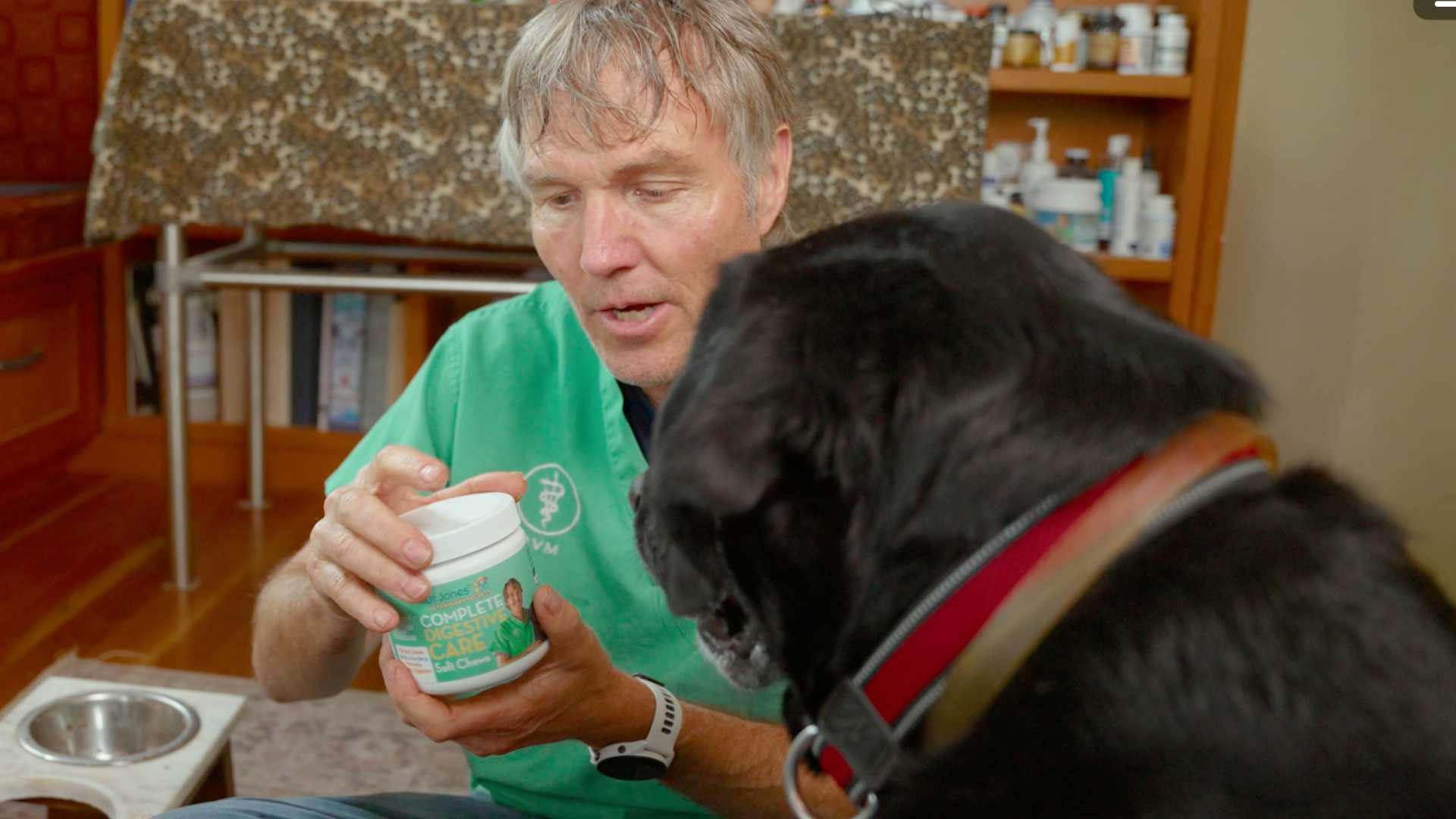
Dr. Karen Becker and other holistic veterinarians have suggested digestive enzymes, and I have seen the logic from my own experience.
Adding enzymes at each meal may help:
- Break down food
- Reduce gas production
- Make digestion easier
- Reduce stomach workload
- Support better digestion in the stomach and small intestine
Less gas production may mean less stomach dilation and less chance of twisting.
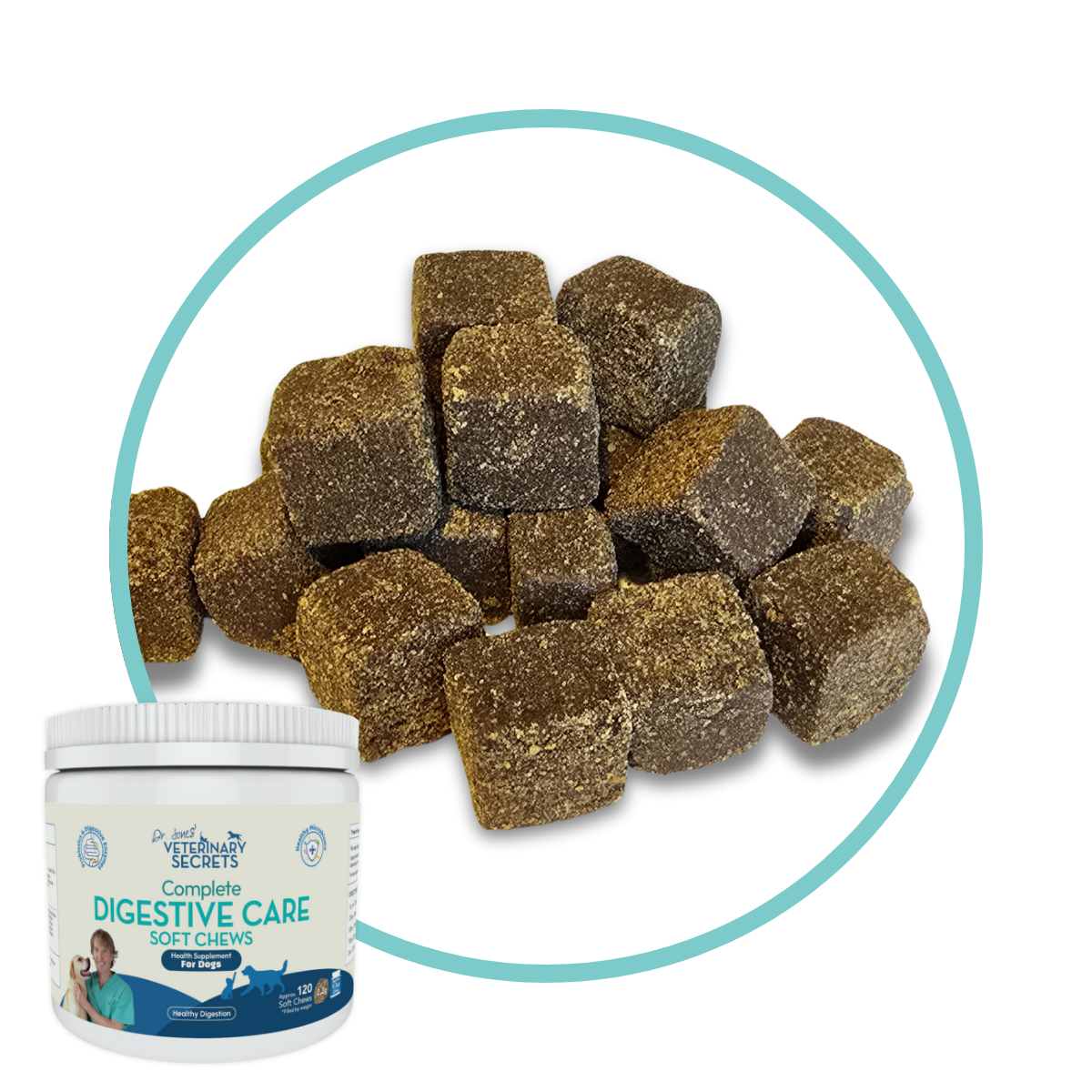
Dr. Jones’ Complete Digestive Care Soft Chews contain digestive enzymes and additional probiotics.
Angus liked them, though to be fair, Angus is a Lab.
He may not be the strictest supplement critic.
Prevention Step 12: Consider Preventive Gastropexy for High-Risk Dogs
For very high-risk dogs, preventive gastropexy is a great option to discuss with your veterinarian.
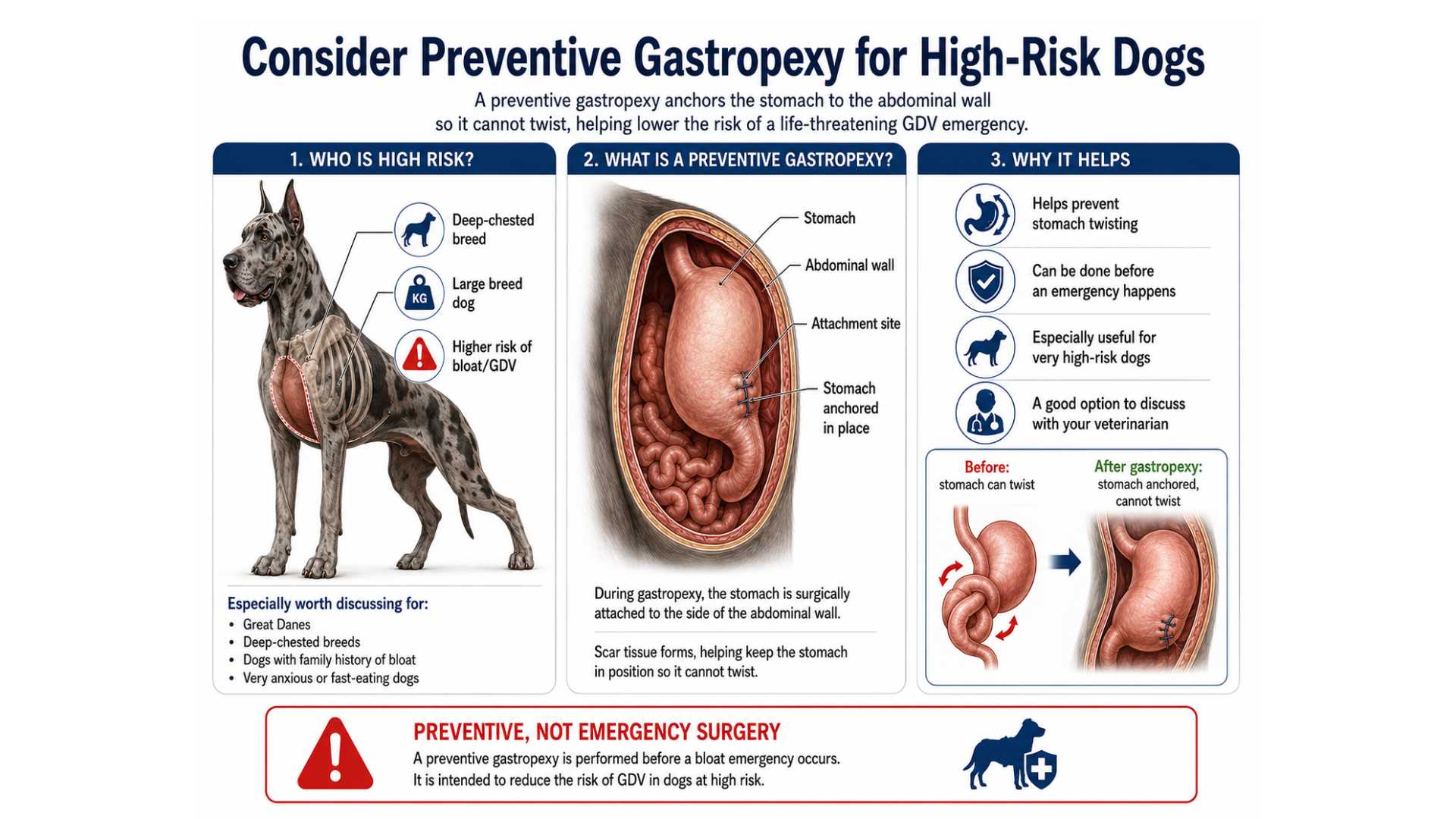
This is especially worth considering for deep-chested breeds such as Great Danes.
A gastropexy is a surgery where the stomach is anchored to the side of the abdominal wall.
Scar tissue forms, and the stomach stays attached so it cannot twist.
This can be done preventively, before a bloat emergency ever happens.
Why Preventive Gastropexy Can Make Sense
It is:
- Done in a controlled setting
- Less intense than emergency GDV surgery
- Designed to prevent twisting
- Especially helpful for very high-risk breeds
If you have a dog at very high risk, especially a Great Dane or a dog from a line with bloat, I would strongly consider it.
No one wants to go through GDV.
Not the dog.
Not the pet parent.
Not the veterinarian.
Bloat Prevention Summary
| Prevention Step | Why It May Help |
| Feed two smaller meals | Reduces stomach overload |
| Slow feeding | Reduces air swallowing |
| Avoid raised bowls | May reduce rapid inhaling of food |
| Feed dogs separately | Reduces competition eating |
| Avoid hard exercise after meals | Reduces stomach twisting risk |
| Limit excessive water after meals | Reduces rapid stomach volume increase |
| Consider less processed food | May reduce inflammation and rapid gulping |
| Use larger meat-based pieces | Encourages chewing |
| Consider bone broth with kibble | May support easier breakdown |
| Add digestive enzymes | May reduce gas production |
| Consider gastropexy in high-risk dogs | Helps prevent stomach twisting |
Best For / Not For
Best For
These prevention steps are especially important for:
- Large breed dogs
- Deep-chested dogs
- Great Danes
- Labradors who eat quickly
- Dogs who gulp kibble
- Dogs who eat with competition
- Dogs with a family history of bloat
- Dogs fed large meals
- Dogs who exercise right after eating
- Dogs who drink large amounts after meals
Not For
This article is not for delaying emergency care.
If your dog is showing signs of bloat, do not try prevention steps at that moment.
Do not try slow feeders, bone broth, digestive enzymes, or home care if your dog is actively bloating.
That dog needs emergency care immediately.
Pros and Cons of Prevention Options
Pros
- Many steps are simple and low-cost
- Slowing eating can help many dogs
- Avoiding raised bowls is easy
- Feeding separately reduces competition
- Digestive enzymes may support better digestion
- Food changes may improve overall health
- Gastropexy may prevent stomach twisting in high-risk dogs
Cons
- High-risk dogs may still bloat
- Some prevention steps require habit changes
- Better food may cost more
- Digestive enzymes must be given consistently
- Gastropexy is a surgery
- Not all dogs eat slowly even with a slow feeder
- Emergency signs still require fast action
Step-by-Step: What I Would Do for a High-Risk Dog
Step 1: Identify Risk
Ask whether your dog is large, deep-chested, a rapid eater, or from a breed known for bloat.
Step 2: Change Meal Size
Feed two smaller meals daily instead of one large meal.
Step 3: Slow the Eating
Use a slow feeder bowl or another method to prevent gulping.
Step 4: Feed Separately
If you have more than one dog, feed them apart so there is no competition.
Step 5: Review the Food
Look at the kibble.
Ask:
- Is it highly processed?
- Are seed oils high in the ingredient list?
- Is the animal protein high?
- Is your dog inhaling it too quickly?
Step 6: Consider Less Processed, Meat-Based Food
Use foods that encourage chewing, such as larger meat-based pieces.
Step 7: Avoid Raised Bowls
Feed from the ground unless there is a specific reason not to.
Step 8: Avoid Exercise and Excessive Water After Meals
Keep your dog calm after eating.
Step 9: Add Digestive Enzymes
Consider digestive enzymes with meals, such as Dr. Jones’ Complete Digestive Care Soft Chews with probiotics.
Step 10: Ask About Gastropexy if Risk Is High
If you have a Great Dane or another very high-risk dog, ask your veterinarian about preventive gastropexy.
When Should You Call the Emergency Veterinarian?
Call the emergency veterinarian immediately if your dog has:
- Recently eaten and is acting strange
- Repeated vomiting or retching
- A distended abdomen
- Restlessness
- Excessive drooling
- Lip licking
- Panting
- Abdominal discomfort
- Stretching out in pain
- Refusal to lie down
- Sudden weakness
- Collapse
If you are even thinking, “Could this be bloat?” call.
I would rather you call and be wrong than wait and be right.
Final Thoughts
Bloat, or GDV, can turn deadly fast.
The stomach fills with air, twists, and cuts off blood flow. In 20 minutes to an hour, a dog can be in serious trouble.
The good news is that more pet parents now recognize the signs earlier, and survival is much better when dogs get emergency care quickly.
But the better goal is prevention.
For high-risk dogs, focus on:
- Smaller meals
- Slower eating
- Less processed food
- Avoiding raised bowls
- Feeding dogs separately
- No hard exercise right after meals
- No excessive water right after meals
- Digestive enzymes
- Preventive gastropexy for very high-risk dogs
Simple changes can make a real difference.
And if you ever suspect bloat, do not wait.
Minutes matter.
Click To Get A Free Copy of My E-Book!

P.S. When I was in practice, a call like “my dog ate an hour ago and now he keeps trying to vomit” made the alarm bells go off.
That is bloat until proven otherwise.
If your dog is restless, drooling, stretching, retching, uncomfortable, and recently ate, call emergency care fast.
Then, once the crisis is not happening, focus on prevention.
Slow the eating. Skip the raised bowl. Avoid hard exercise after meals. Feed separately. Consider digestive enzymes. And for big deep-chested dogs, ask about gastropexy.
Bloat is not something to casually “watch overnight.”
This is one where seconds and minutes really do matter.