Licorice Root for Dogs and Cats: Natural Support for Allergies, Coughs, Itching, and Digestion

Can Licorice Root Help Dogs and Cats?
Yes, licorice root can be a very useful herbal option for dogs and cats, especially for allergies, itching, coughs, sore throat, digestive irritation, and inflammation.
And no, I am not talking about the long black candy you may have eaten as a child. This is the actual medicinal root, Glycyrrhiza glabra, and I have seen it work very well in pets.
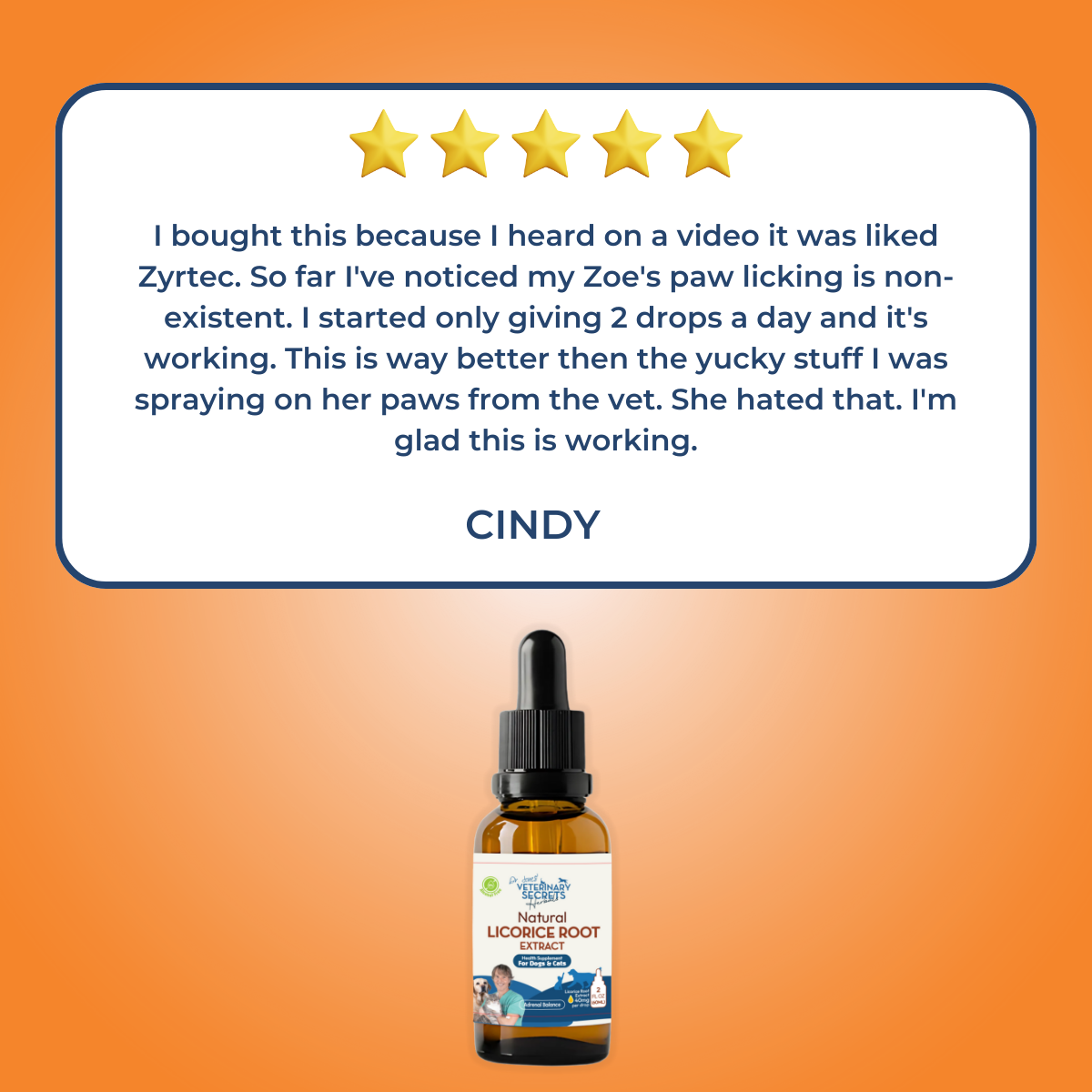
One of our last dogs, Jesse, had allergies and would not stop licking his groin, especially at night. I tried many remedies, but the one that worked was licorice root.
The problem? Many human licorice tinctures are alcohol-based, which is not ideal for pets.
That is why I like a pet-specific licorice root extract with a non-alcohol glycerin base. It tastes better, it is easier to give, and it is much more pet-friendly.
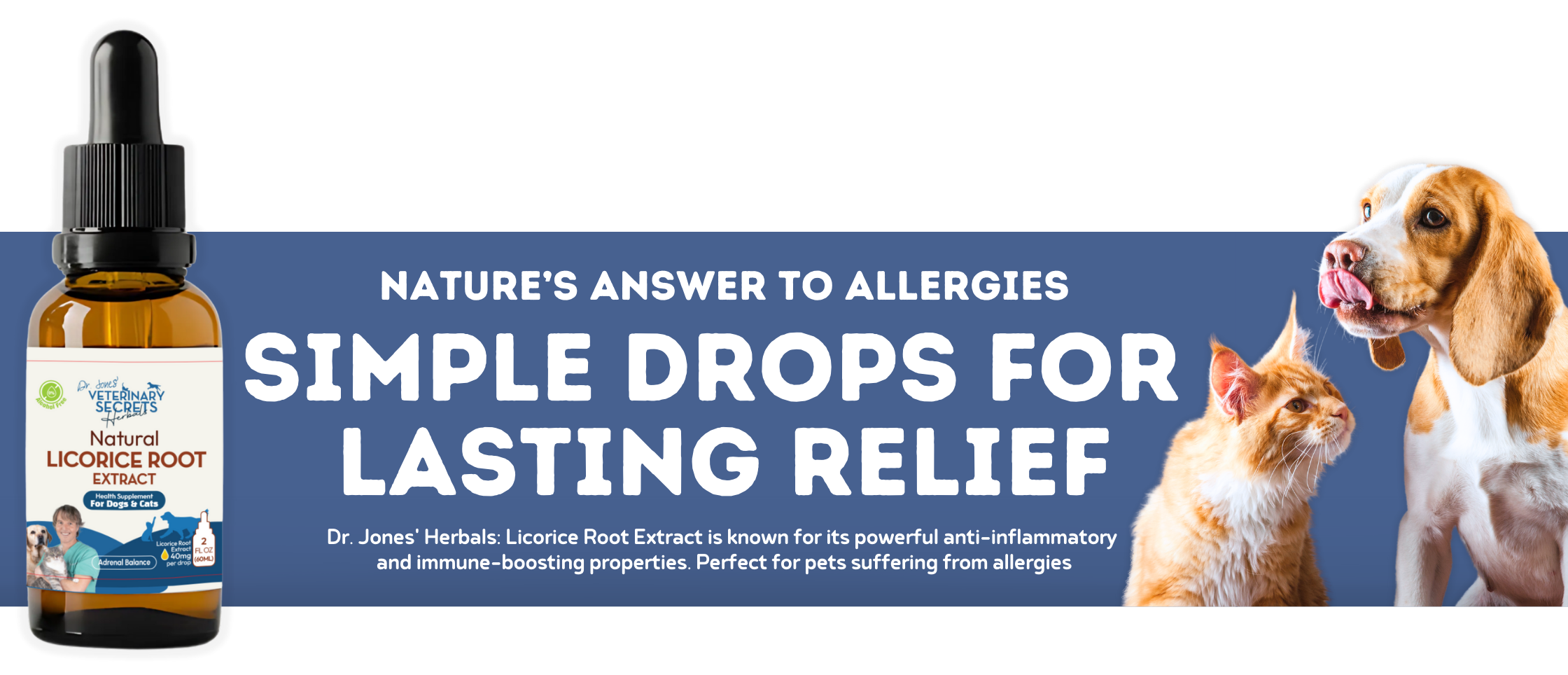
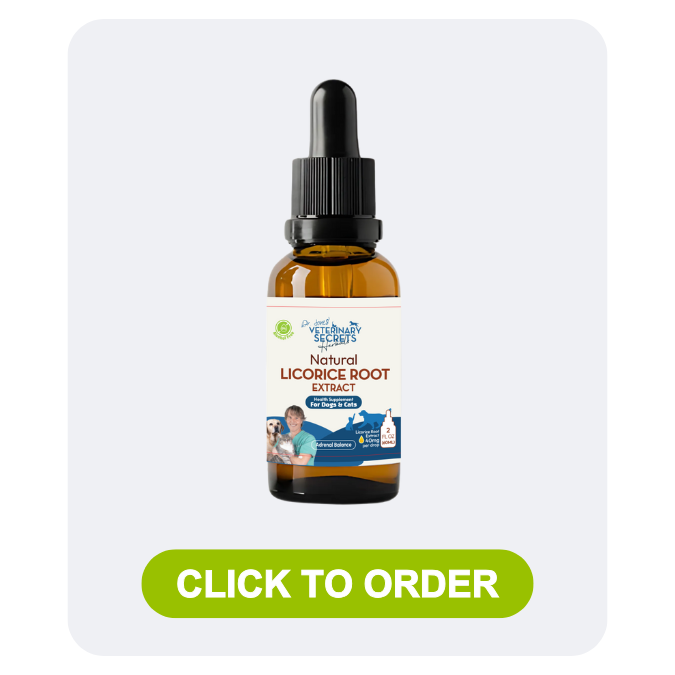
Dr. Jones’ Licorice Root Extract
What Is Licorice Root?
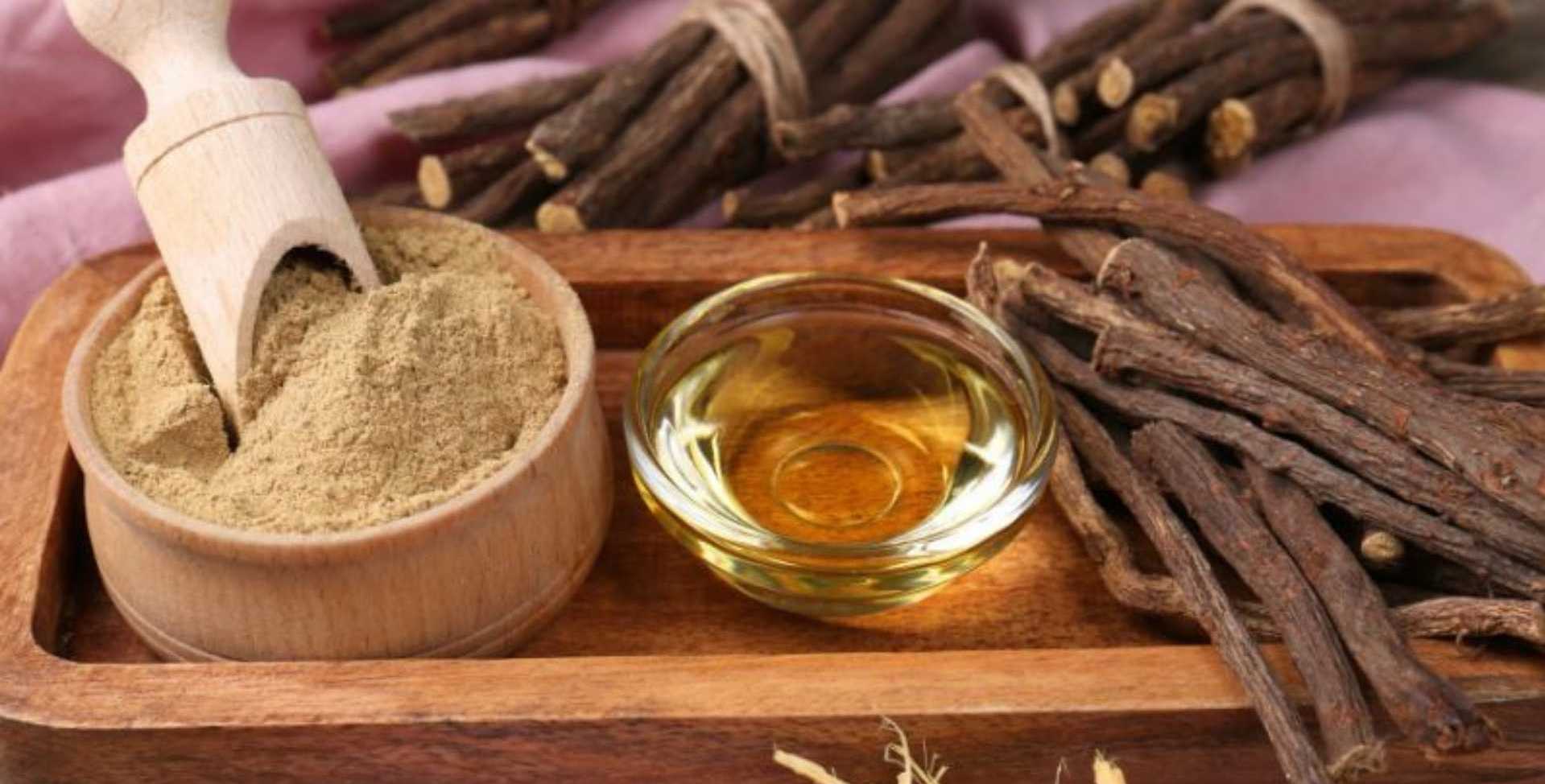
Licorice root, also known as Glycyrrhiza glabra, is a plant root native to southern Europe, Egypt, China, and India.
It is part of the legume family and has been used for centuries in traditional medicine.
Historically, licorice root was used for:
- Respiratory issues
- Gastrointestinal issues
- Sore throats
- Coughs
- Gastric pain
- Ulcers
- Poisonings
- Viral respiratory tract infections
- Hepatitis
- Wounds after operations
King Tut, Julius Caesar, and Napoleon were all known to use licorice root. Napoleon reportedly ate it so often that his teeth turned black from the juices.
That is commitment. Not dental advice, but commitment.
Why Is Licorice Root Helpful for Pets?
The main active ingredient in licorice root is called glycyrrhizin.
Glycyrrhizin is very sweet, about 30 to 50 times sweeter than sugar. It is also one of the main reasons licorice root has medicinal effects.
Licorice root may help by supporting:
- Anti-inflammatory activity
- Immune system balance
- Allergy relief
- Cough and throat comfort
- Mucous membrane soothing
- Digestive tract irritation
- Stomach ulcer support
- Skin itching and redness
It is one of those herbs that can be useful in several areas, but it needs to be used wisely.
What Can Licorice Root Be Used For in Dogs and Cats?
Here are the main uses I would consider.
Quick Guide to Licorice Root Uses
| Use | Why It May Help | Form |
|---|---|---|
| Allergies | Acts like a natural corticosteroid and supports anti-inflammatory processes | Tincture or tea |
| Cough and sore throat | Helps loosen phlegm and soothe irritated mucous membranes | Tincture mixed with honey and green tea |
| Topical itching | May help calm itchy, red skin | Topical mixture |
| Digestive irritation | May soothe stomach ulcers, gastritis, gas, and digestive irritation | DGL for long-term use |
| Immune support | May help modulate an overactive immune system | Tincture or tea |
1. Licorice Root for Allergies
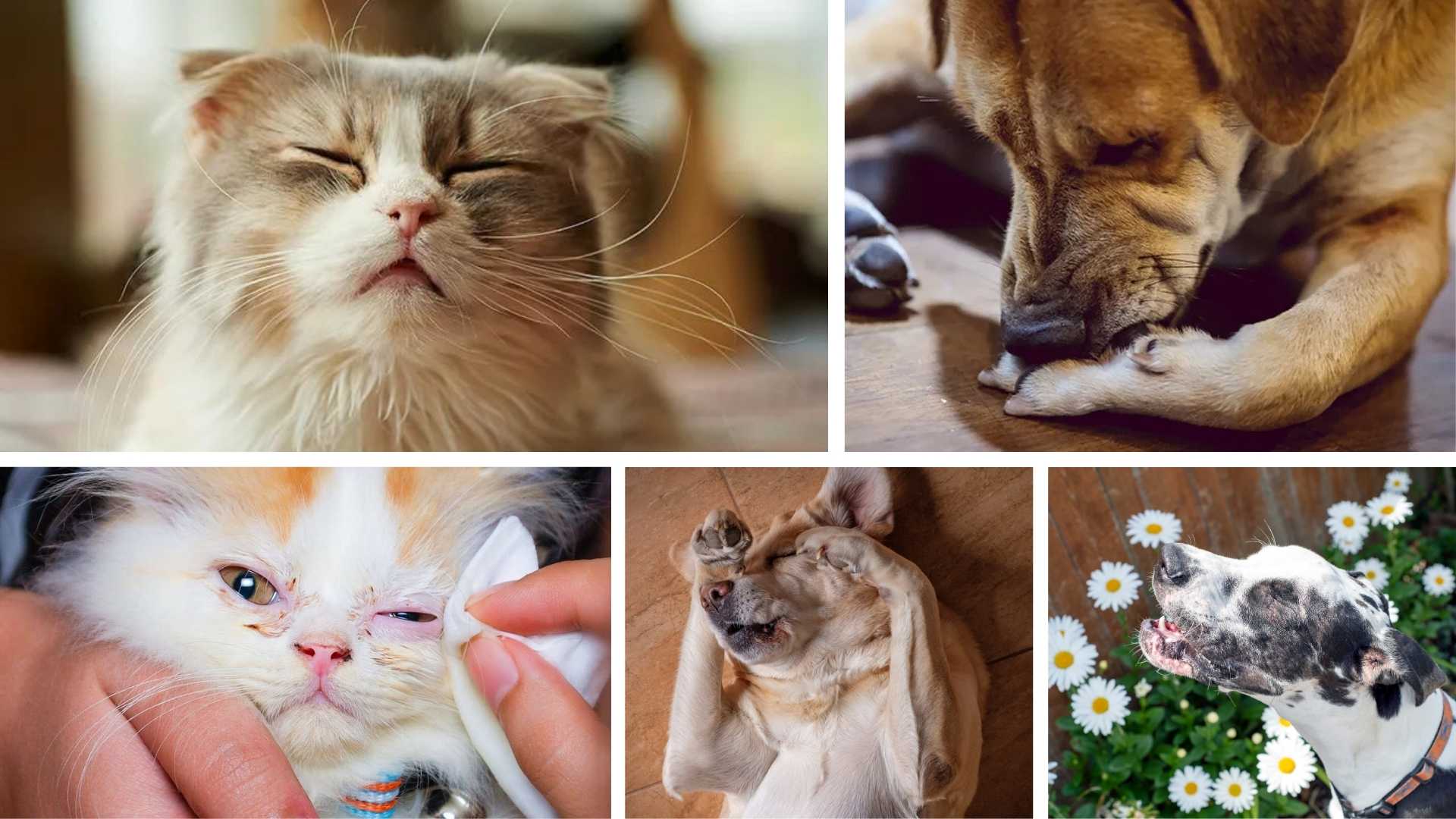
Licorice root can be very helpful for dogs and cats with allergies.
Glycyrrhizin acts as a natural corticosteroid, but without the adverse effect of weakening the immune system.
Licorice enhances the body’s anti-inflammatory processes, which is why it may be helpful alongside more conventional treatments such as hydrocortisone therapy.
This is the use I personally saw help Jesse.
He was itchy, licking constantly, and especially worse at night. Licorice root made a clear difference.
Allergy Dose
Use:
- 1/2 ml of tincture per 20 lbs of body weight
- Twice daily
- Maximum 14 days
2. Licorice Root for Coughs and Sore Throat
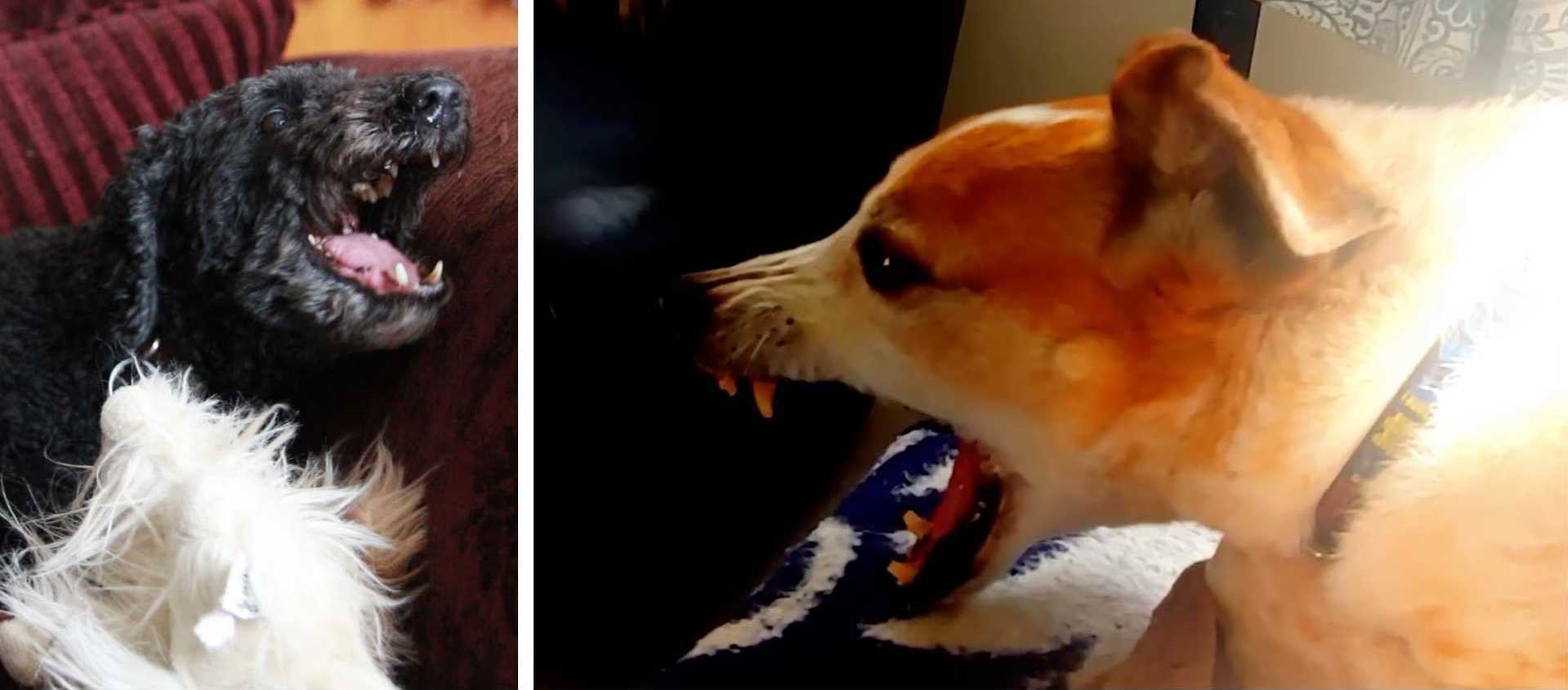
Licorice root is well known for helping coughs and irritated throats.
It acts as an expectorant, which means it may help loosen and expel phlegm.
It also soothes irritated mucous membranes, which can be helpful when your pet has a cough or sore throat.
Licorice Cough Remedy Recipe
Mix:
| Ingredient | Amount |
| Licorice root tincture | 1 ml |
| Dark honey | 1 tablespoon |
| Green tea | 1 cup |
Cough Dose
Give:
- 1/4 cup per 20 lbs
- Twice daily
3. Licorice Root for Topical Itching
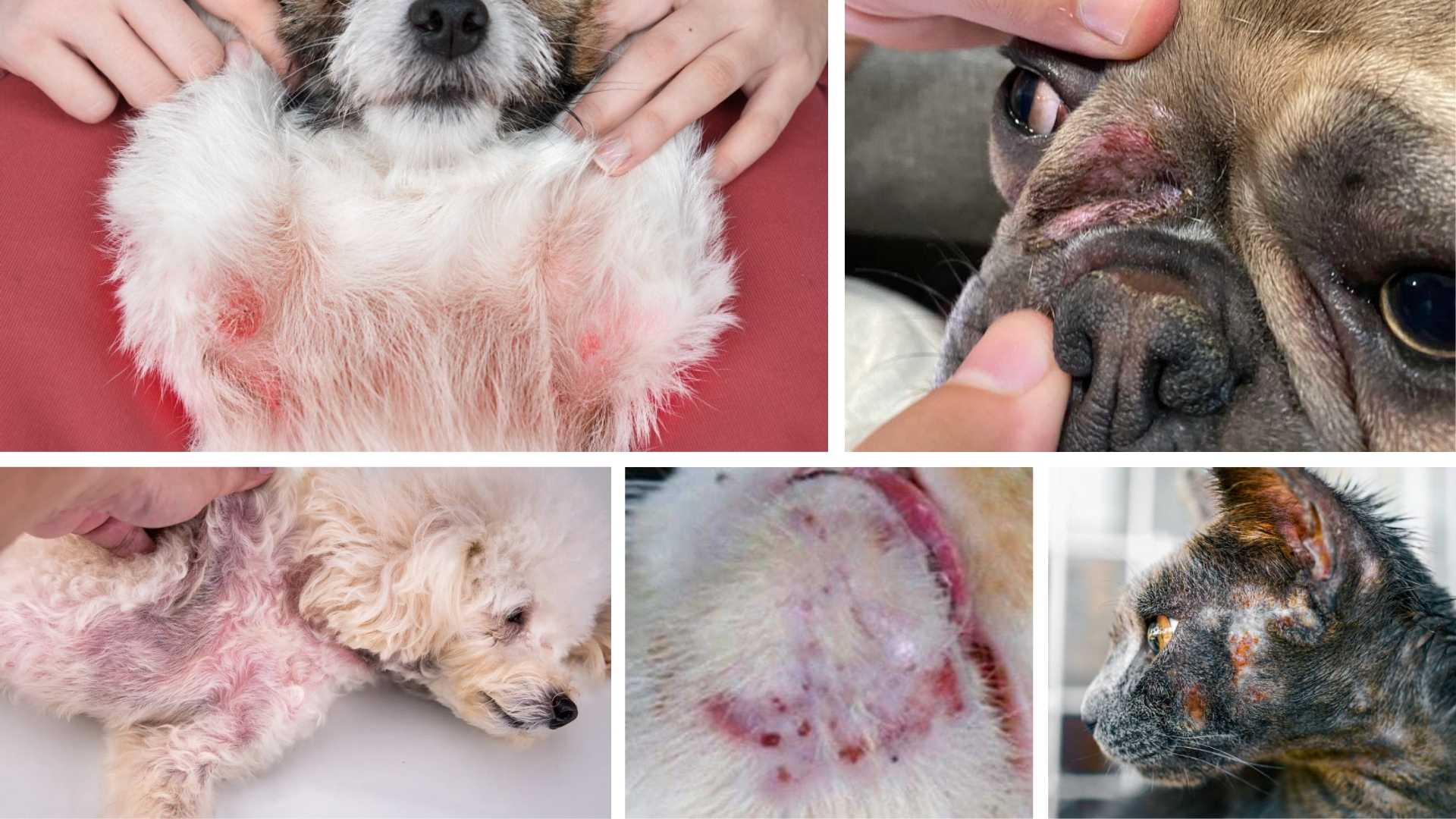
Licorice root can also be used topically for itchy, irritated skin.
This may be helpful for dogs and cats with localized itching, redness, or allergy-related irritation.
Topical Anti-Itch Recipe
Mix:
| Ingredient | Amount |
| Licorice root tincture | 1 ml |
| Coconut oil | 1 tablespoon |
| Lavender oil | 5 drops |
How to Use It
Apply topically to the affected area:
- Twice daily
- For 7 to 14 days
Avoid applying it to open wounds, deep sores, or areas your pet is aggressively licking unless supervised.
4. Licorice Root for Stomach Ulcers and Digestive Support
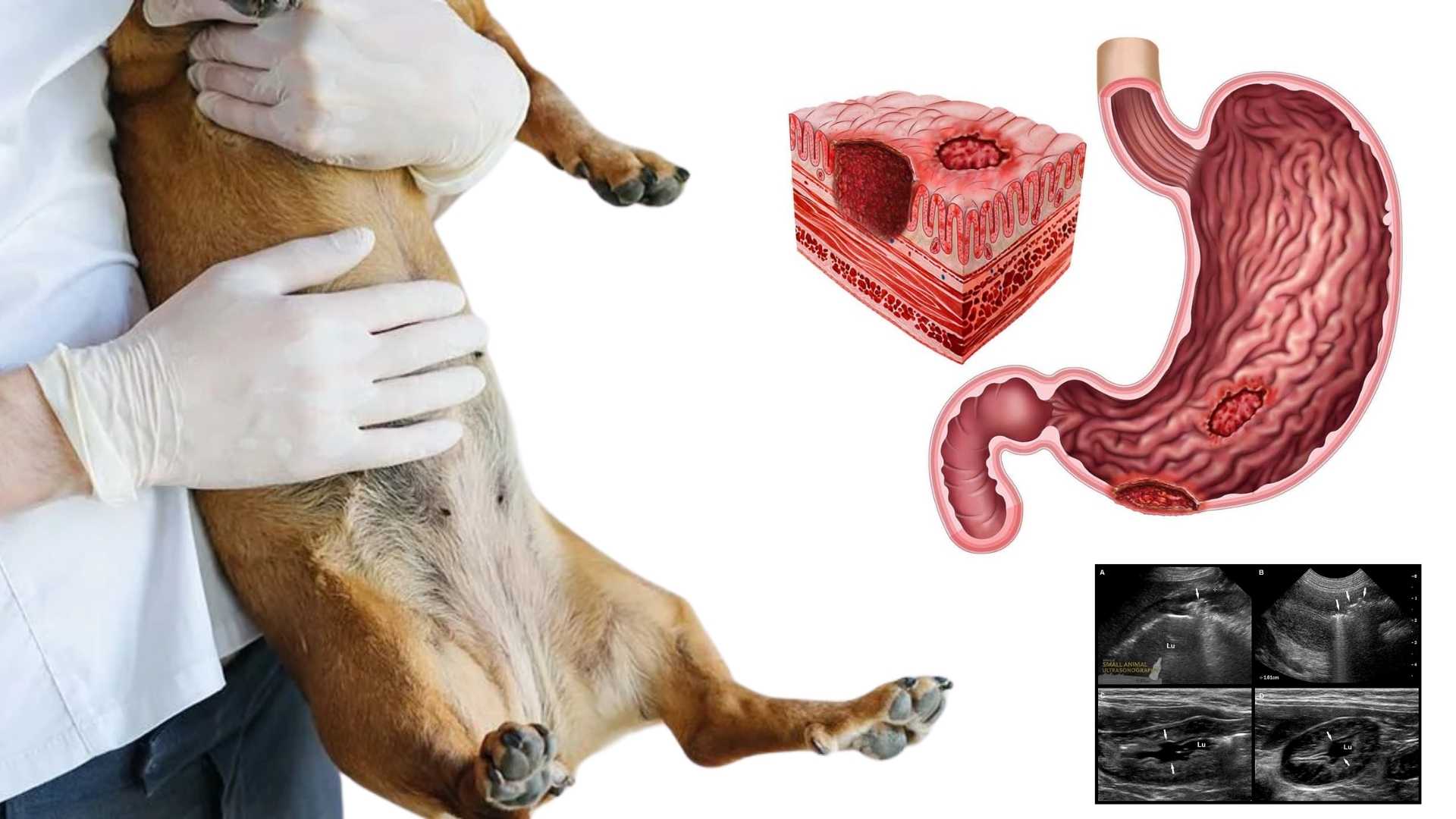
Licorice root has antibacterial properties and may help relieve stomach ulcers.
It may also support digestion by soothing irritation and inflammation in the digestive tract.
The source content notes that licorice is approved for painful spasms associated with chronic gastritis by the German Standard License. In France, licorice root may be used for bloating, impaired digestion, and gas.
For long-term digestive use, the best option is deglycyrrhizinated licorice extract, also called DGL.
What Is DGL Licorice?
DGL stands for deglycyrrhizinated licorice extract.
This means the glycyrrhizin has been removed.
DGL is better for long-term use, especially for chronic acid reflux and intestinal issues.
The tradeoff is that removing glycyrrhizin means DGL is not a strong anti-inflammatory option, so it is not as helpful for allergies.
DGL Dose
Use:
- 0.1 grams per 10 lbs
- Three times daily
- For intestinal issues
DGL may also come in chewable tablet form.
5. Licorice Root for Immune System Support
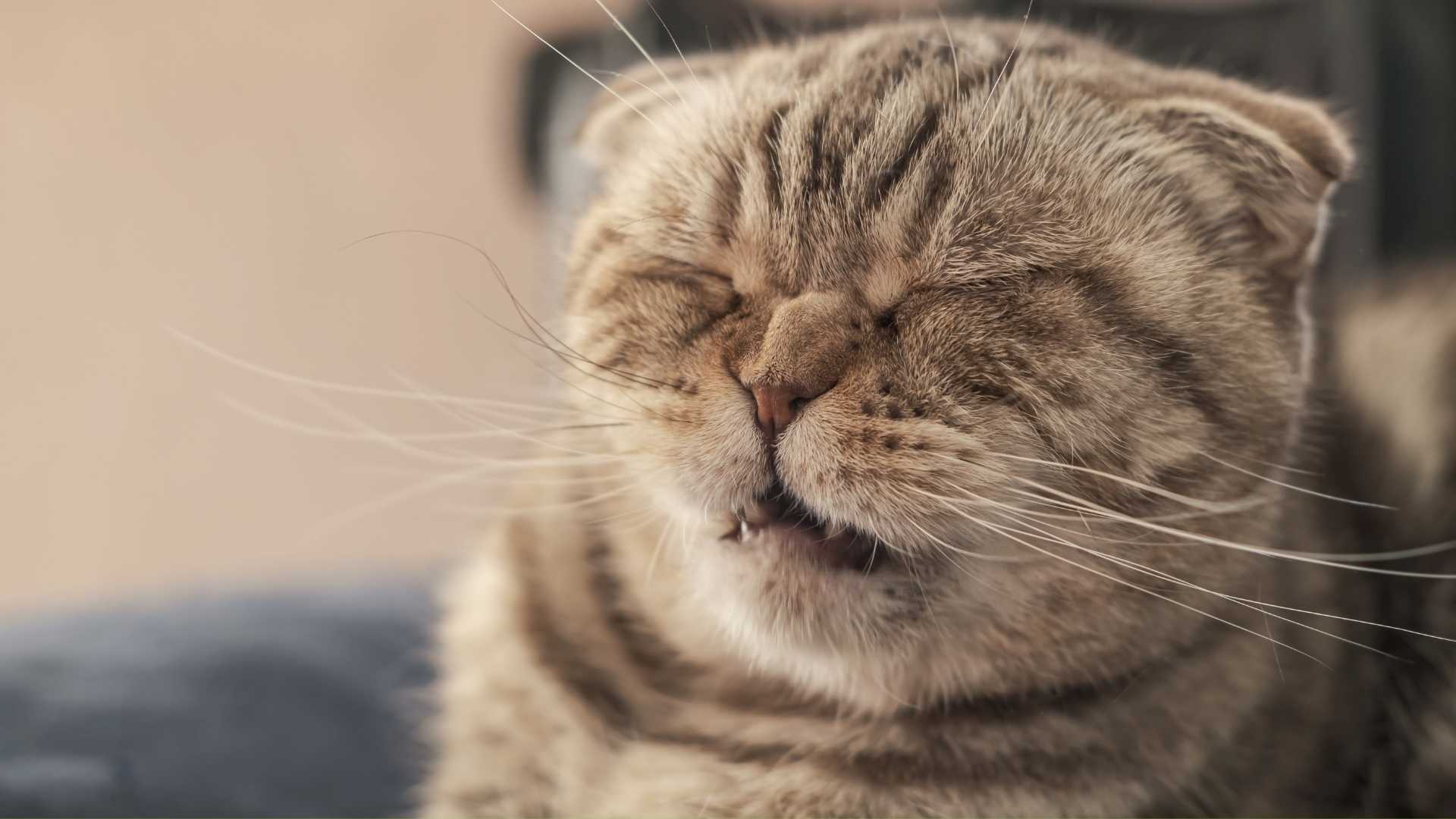
Licorice root has broad-spectrum antiviral activity.
The source content notes that it may be effective against:
- Herpes
- HIV
- Hepatitis
- SARS
- Influenza
It is also considered a serious option to help modulate an overactive immune system, including conditions such as autoimmune skin disease.
This does not mean licorice root replaces medical treatment. But it may be worth considering as part of a natural support plan.
Which Form of Licorice Root Should You Use?
The form depends on what you are trying to help.
| Concern | Best Form to Consider |
| Cough | Tincture |
| Skin disorders | Cream or topical mixture |
| Ongoing itching from allergies | Tea or tincture |
| Antiviral support | Tea added daily to water |
| Long-term digestion or reflux | DGL |
If your pet has a cough, I would consider the tincture.
For pets with skin disorders, I would consider the cream or topical use.
For antiviral support or decreasing ongoing allergy itching, licorice tea can be added daily to your pet’s water.
Licorice Root Dosage for Dogs and Cats
Standard Tincture Dose
Use:
- 1/4 ml per 10 lbs
- Once to twice daily
Most tinctures contain about 200 mg in 1 ml.
For allergies, start with twice daily for at least 3 days.
Tea Dose
Brew:
- 1 teaspoon dried licorice root
- Per 1 cup of water
Give:
- 1/4 cup brewed tea per 10 lbs daily
Allergy Tincture Dose
Use:
- 1/2 ml per 20 lbs
- Twice daily
- Maximum 14 days
DGL Dose for Digestive Issues
Use:
- 0.1 grams per 10 lbs
- Three times daily
Licorice Root Dosage Table
| Form | Dose | Best Use |
| Tincture | 1/4 ml per 10 lbs once to twice daily | General use |
| Allergy tincture dose | 1/2 ml per 20 lbs twice daily, max 14 days | Allergies and itching |
| Tea | 1/4 cup brewed tea per 10 lbs daily | Ongoing itching or antiviral support |
| DGL | 0.1 grams per 10 lbs three times daily | Long-term digestive support |
| Cough mixture | 1/4 cup per 20 lbs twice daily | Cough and sore throat |
| Topical mixture | Apply twice daily for 7 to 14 days | Local itching |
What Are the Side Effects and Cautions?
Licorice root can be very helpful, but it is not for every pet.
Use licorice root carefully if your dog or cat has:
- Heart failure
- Heart disease
- Fluid retention
- High blood pressure
- Diabetes
- Kidney disease
- Liver disease
Do not use licorice root for more than 14 days at a time unless using DGL for digestive support.
Also use caution if your pet is taking:
- Thiazide diuretics
- Cortisone
- Cardiac glycosides
Licorice can prolong the half-life of cortisone.
That means it can affect how long cortisone stays active in the body.
Why Use a Pet-Specific Licorice Root Extract?
Many human licorice root tinctures contain alcohol.
I do not like alcohol-based tinctures for pets when we can avoid them.
A pet-specific licorice root extract with glycerin as the base is a better option.
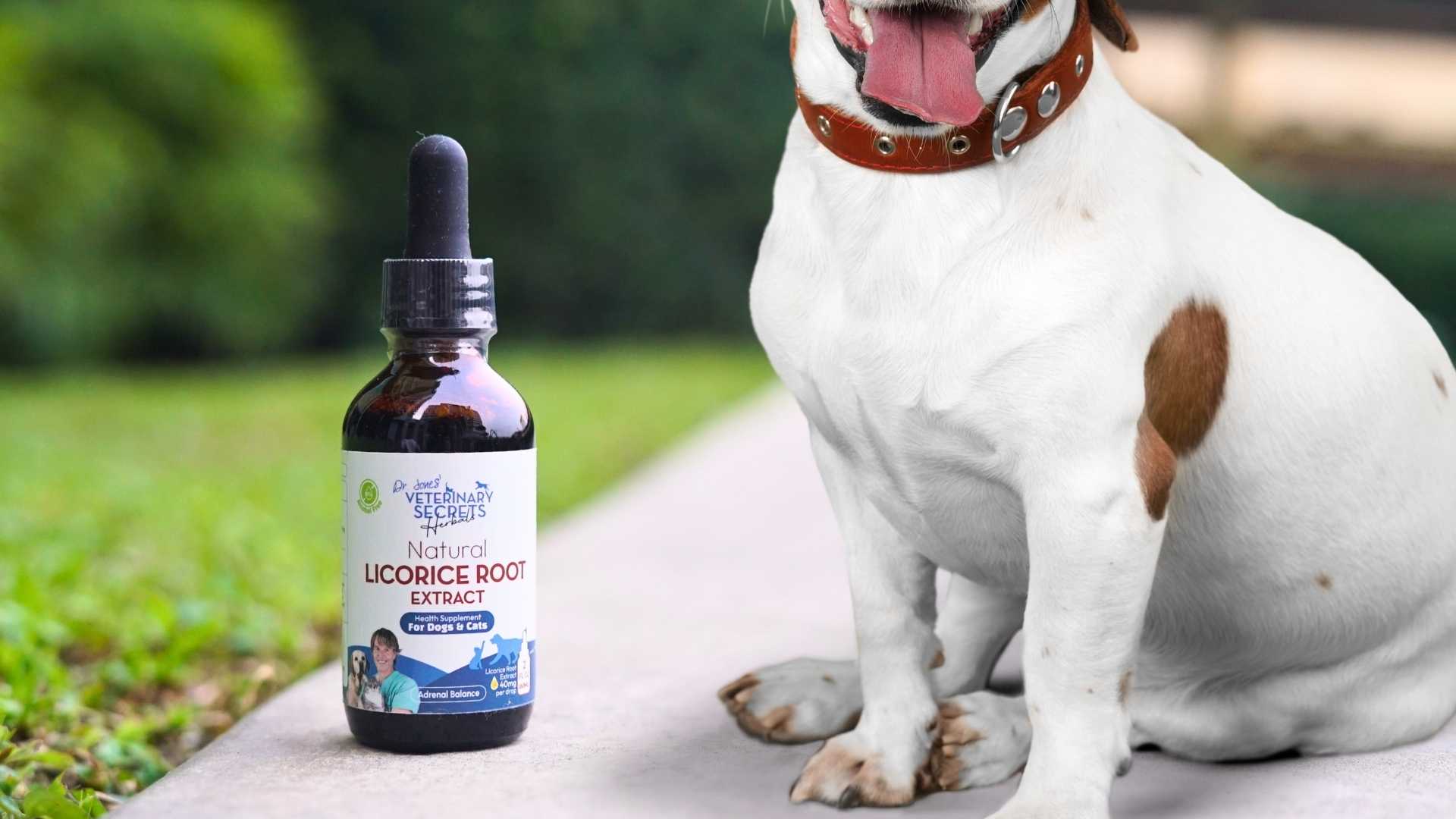
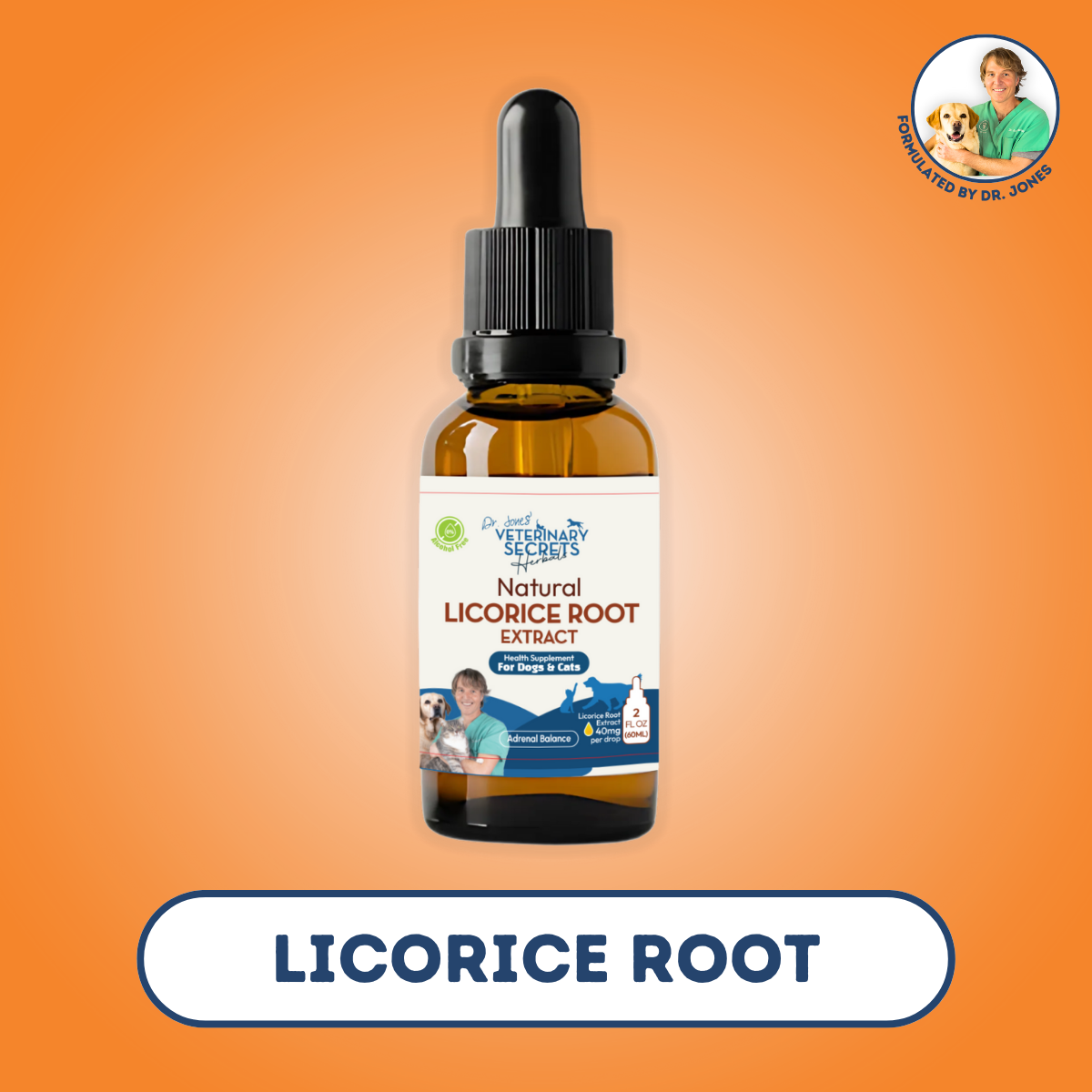
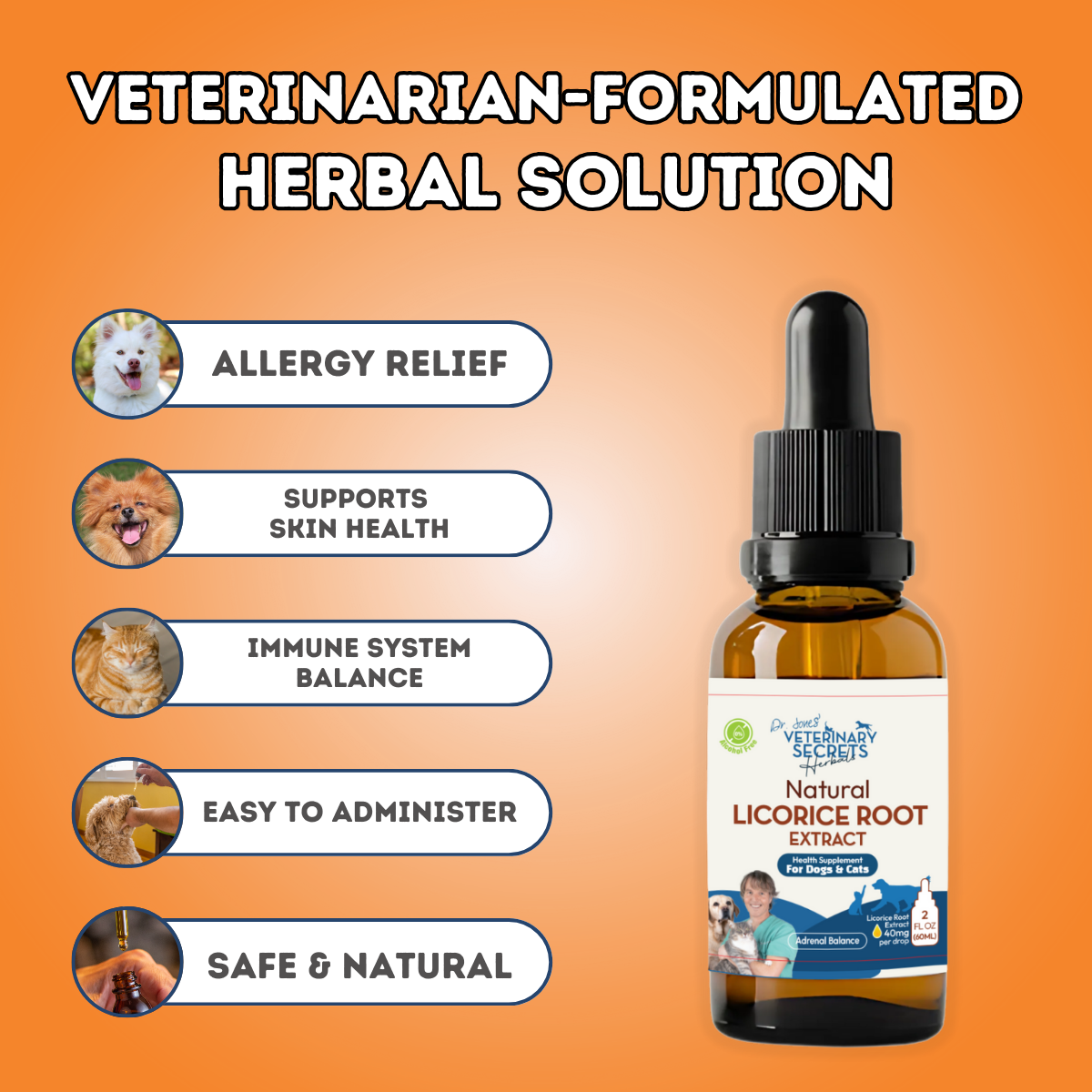
Dr. Jones’ Licorice Root Extract for Dogs and Cats is formulated for pets and contains:
- No alcohol
- Glycerin base
- Pure licorice root extract
- Anti-inflammatory support
- Immune support
- Allergy and itching support
It is designed for pets dealing with:
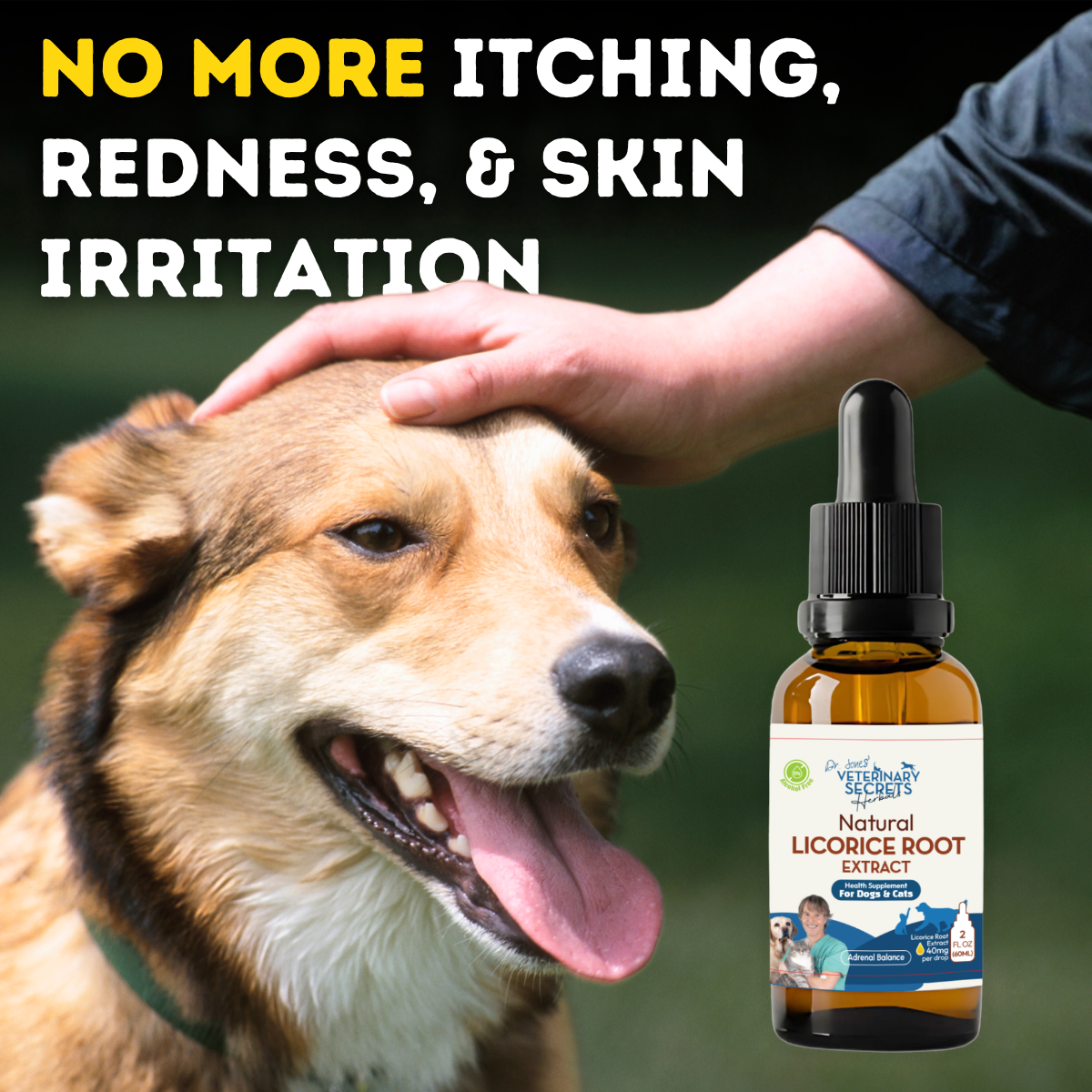
- Allergies
- Itching
- Redness
- Skin irritation
And because it has a glycerin base, it tastes better than many alcohol-based extracts.
Always a bonus when your dog does not look at you like you just betrayed the family.
Licorice root may not be appropriate for pets with:
Pros and Cons of Licorice Root for Pets
Pros
- Natural anti-inflammatory support
- May help allergies and itching
- May soothe coughs and sore throat
- May support digestion and stomach ulcers
- Can be used topically for itchy skin
- Pet-specific non-alcohol formulas are available
- Often tastes better in a glycerin base
Cons
- Should not be used long term in regular glycyrrhizin-containing form
- Can be a concern with heart disease, high blood pressure, diabetes, kidney disease, or liver disease
- Can interact with cortisone, thiazide diuretics, and cardiac glycosides
Step-by-Step: How I Would Use Licorice Root
Step 1: Choose the Right Form
Use tincture for allergies or cough.
Use topical mixture for local itching.
Use DGL for long-term digestive support.
Step 2: Start With the Correct Dose
For tincture, start with:
- 1/4 ml per 10 lbs
- Once to twice daily
For allergies, use twice daily for at least 3 days, but do not exceed 14 days.
Step 3: Watch Your Pet’s Response
Track:
- Itching
- Licking
- Redness
- Cough
- Throat irritation
- Digestive signs
- Energy
- Appetite
Step 4: Keep It Short-Term
For regular licorice root, do not use longer than 14 days at a time.
For long-term digestion, consider DGL instead.
Step 5: Stop If There Are Concerns
Stop and seek help if your pet seems worse or develops unusual signs.
Final Thoughts
Licorice root is one of those natural remedies that deserves a place in the pet health toolbox.
It can help with allergies, itching, coughs, sore throat, digestive irritation, and inflammation. I saw it help Jesse when he would not stop licking at night, and that kind of practical experience sticks with you.
But use it wisely.

Keep regular licorice root short-term. Avoid it in pets with heart disease, high blood pressure, diabetes, kidney disease, liver disease, or fluid retention. Use DGL if you are looking at longer-term digestive support.
And if you are using a tincture, choose a non-alcohol pet formula.
Simple, safer, and far less likely to make your pet spit it out across the kitchen.
Click To Get A Free Copy of My E-Book!

P.S. Should you consider adding licorice root to your pet’s natural healing arsenal?
I say yes.
I have seen less itchy dogs and rapidly improving coughs using it. Jesse was my own proof, and he was one determined nighttime licker.
Use it properly. Keep it short-term. Choose a non-alcohol pet formula.
P.P.S. About our Licorice Root Extract:
Dr. Jones’ Licorice Root Extract for Dogs and Cats is specially formulated for pets. It contains no alcohol and uses glycerin as the base.
It is pure licorice root extract, known for its anti-inflammatory and immune-supporting properties.
For pets dealing with allergies, itching, redness, and skin irritation, it is a simple herbal option I would consider.
You can find it here:
I ordered your licorice root yet it is for possible pemphigus in my cat. However this product is not DGL and pemphigus is lifelong. Do you carry the DGL licorice root? I have not handled it yet I did remove the CBD and used it. If you have the DGL can I please exchange it for one I received. If not how can I get a refund in order to purchase a DGL licorice root? I am on a VERY small fixed income and can’t afford it otherwise.
Thank you for your time assistance as well as all your help with our pets.
We completely understand, especially on a fixed income. Our Licorice Root is not DGL. DGL is mainly for longer term digestive support, while regular licorice is intended for short term use. It is not a treatment for pemphigus.