Why Your Dog Keeps Getting UTIs and What May Help


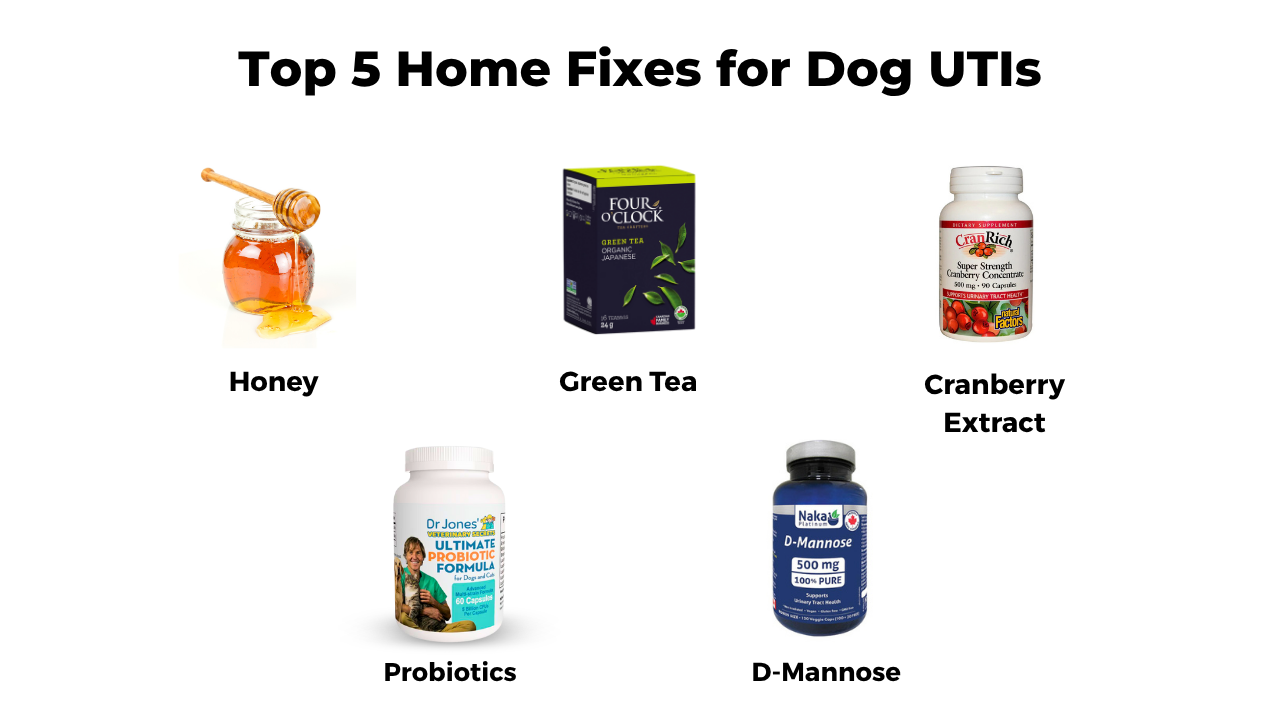
Top 5 Home Remedies for Dog Urinary Tract Infections
Is your dog licking her rear more than usual?
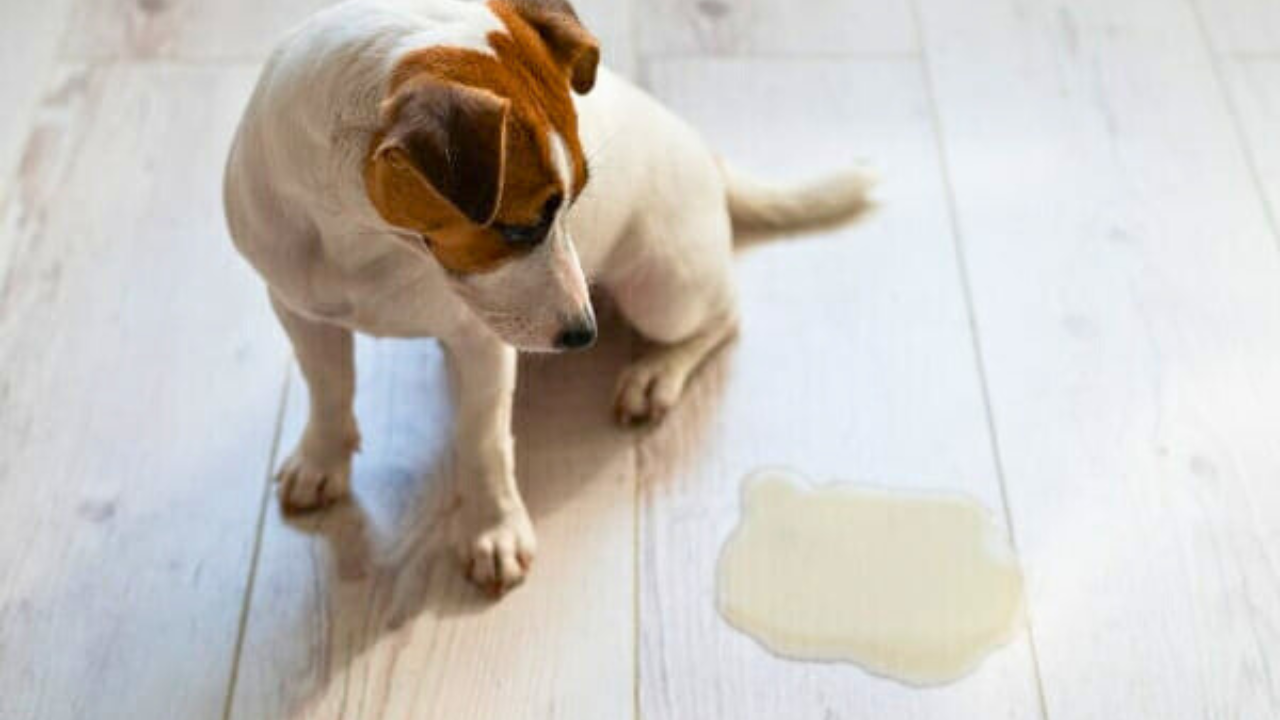
Is she straining to urinate, making frequent trips outside, having accidents in the house, or are you seeing blood in her urine?
That could be a urinary tract infection, also known as a UTI.
UTIs are more common in dogs than many pet parents realize. The good news is that there are natural remedies that may help ease discomfort, support bladder health, and help your dog recover more comfortably.
That said, if your dog is unable to urinate, very painful, lethargic, vomiting, feverish, or you are seeing blood in the urine, do not wait. Get veterinary care. You need to rule out bladder stones, obstruction, kidney infection, or another serious problem.
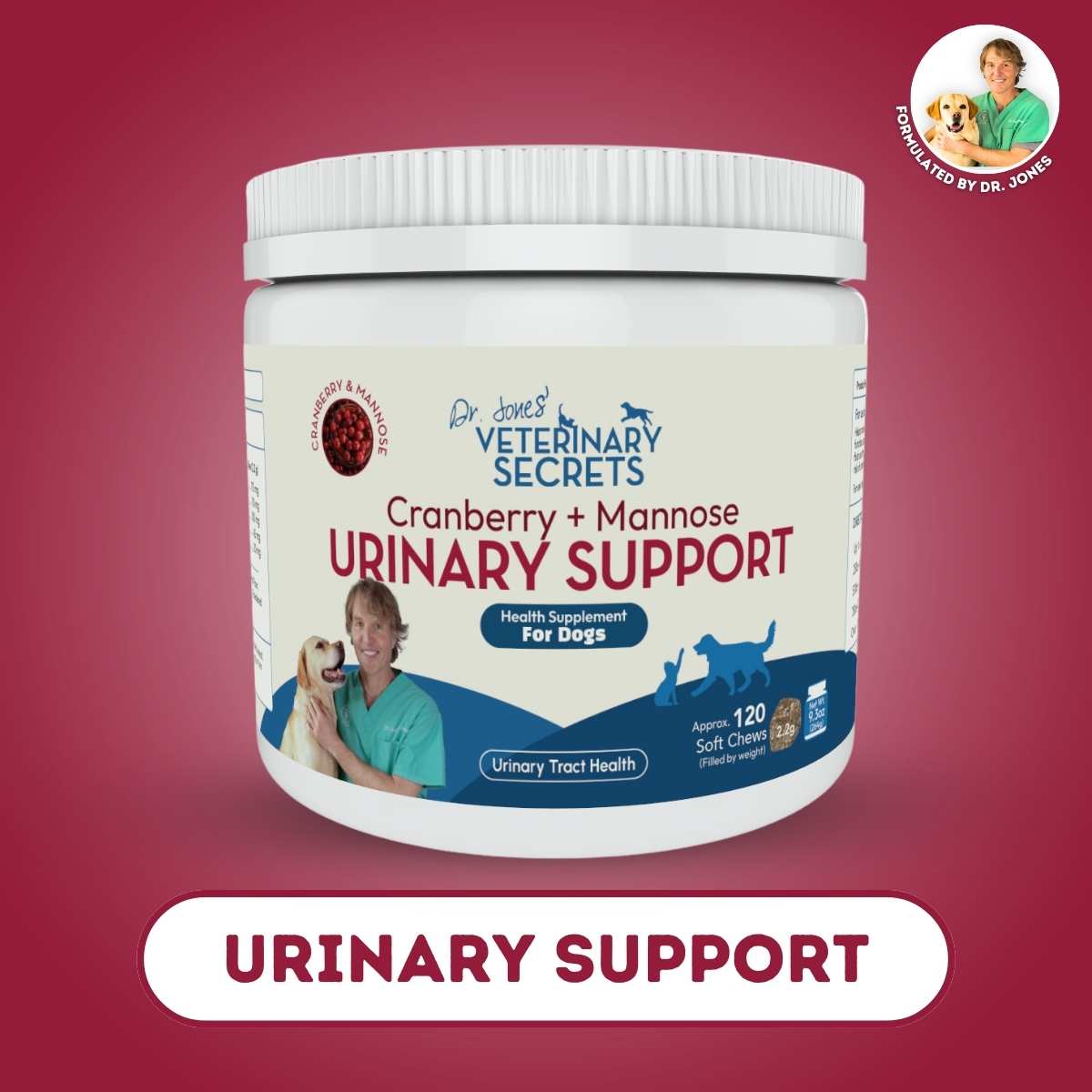
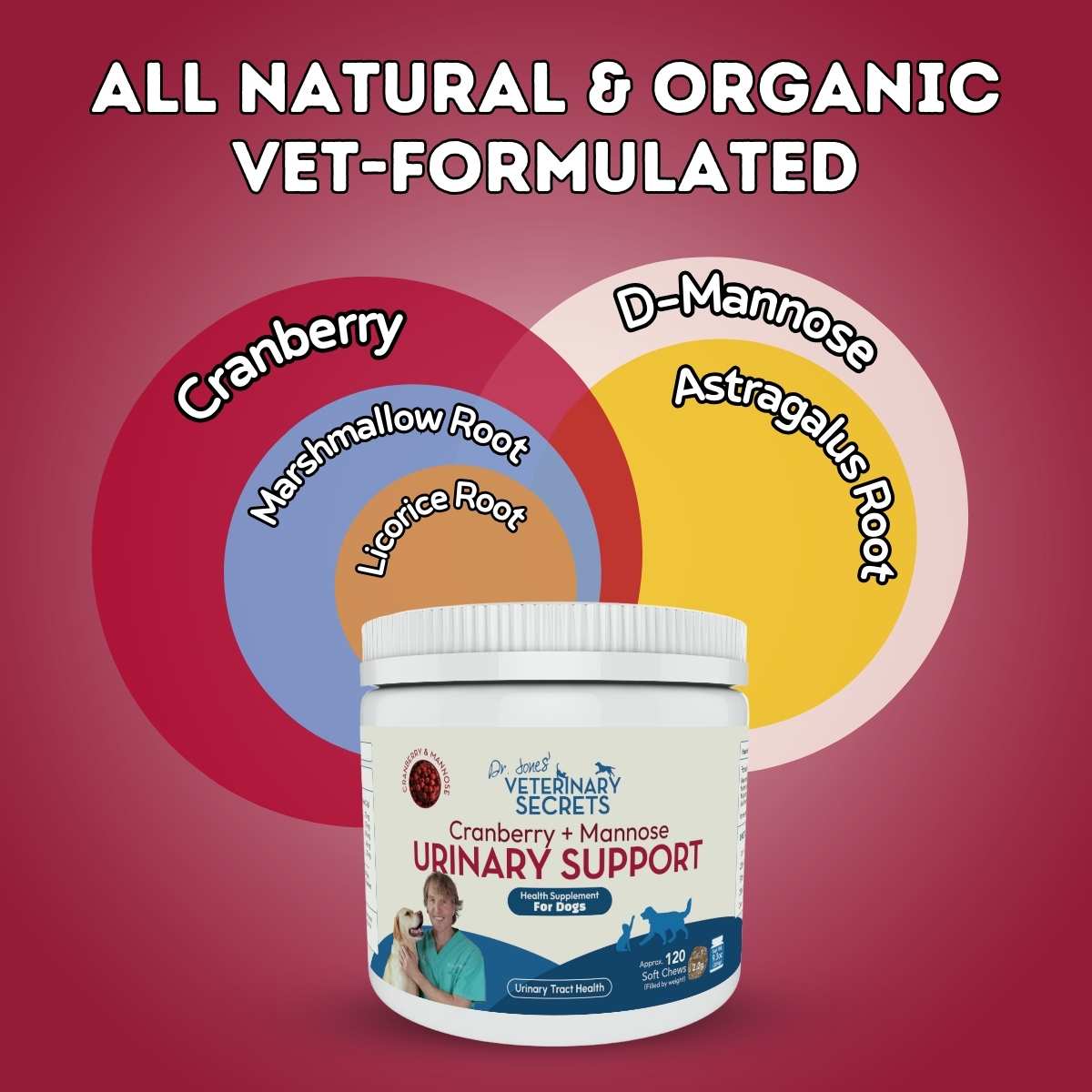
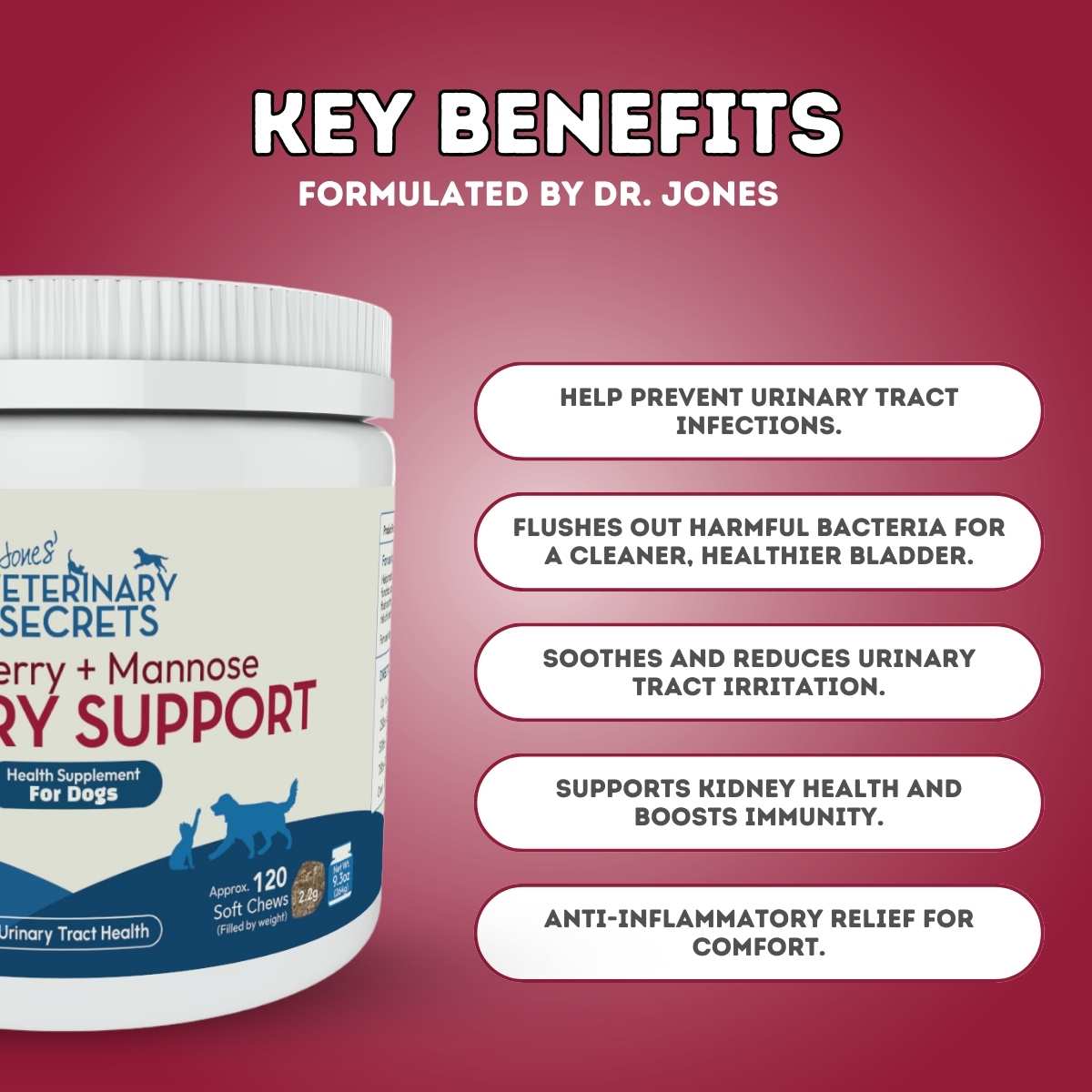
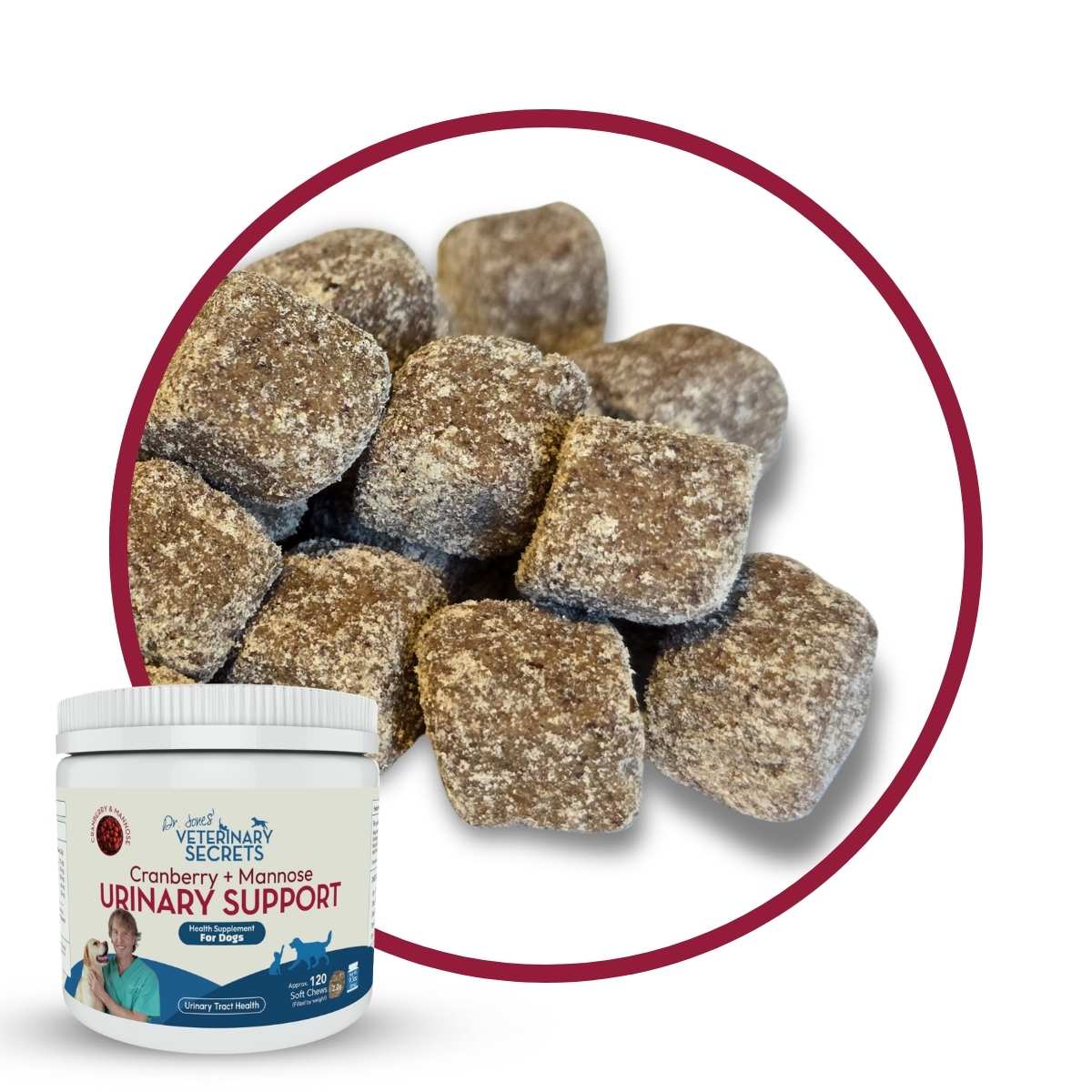
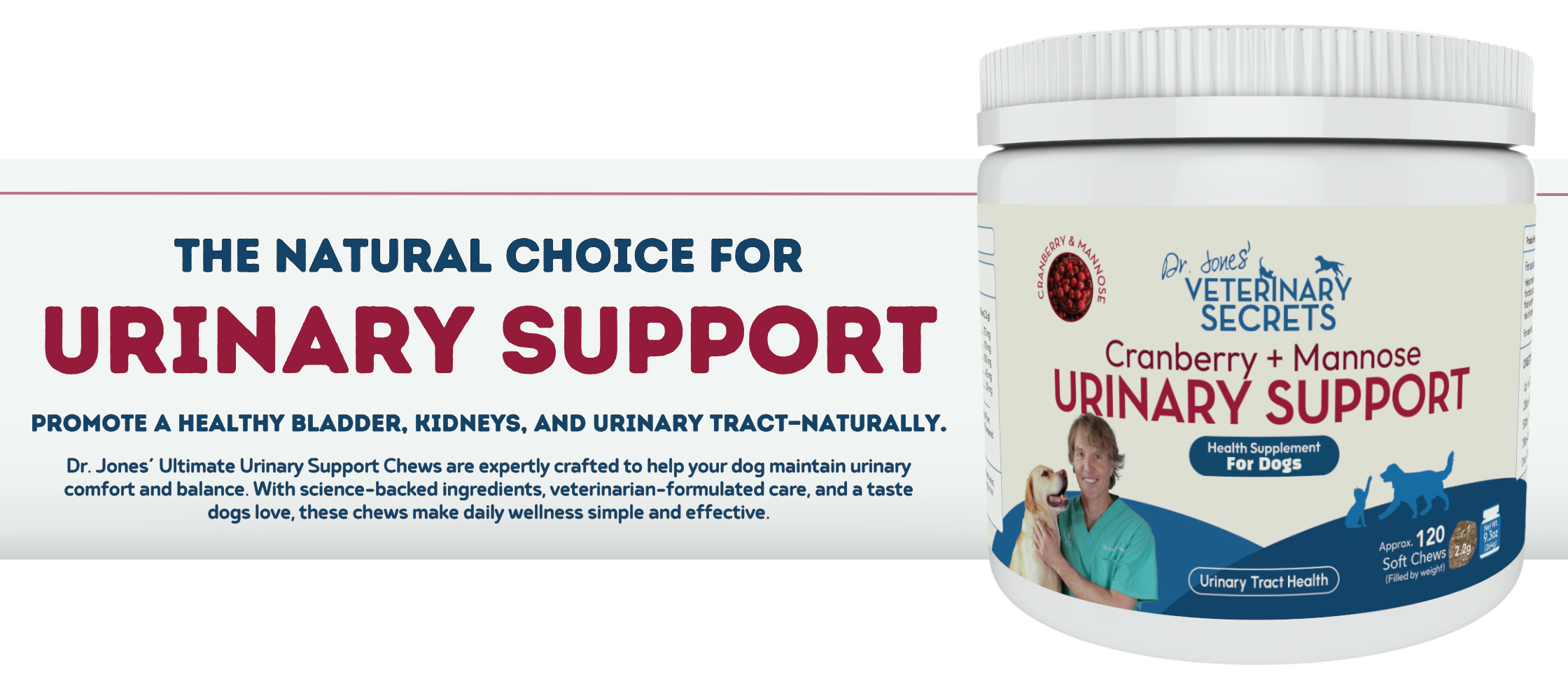
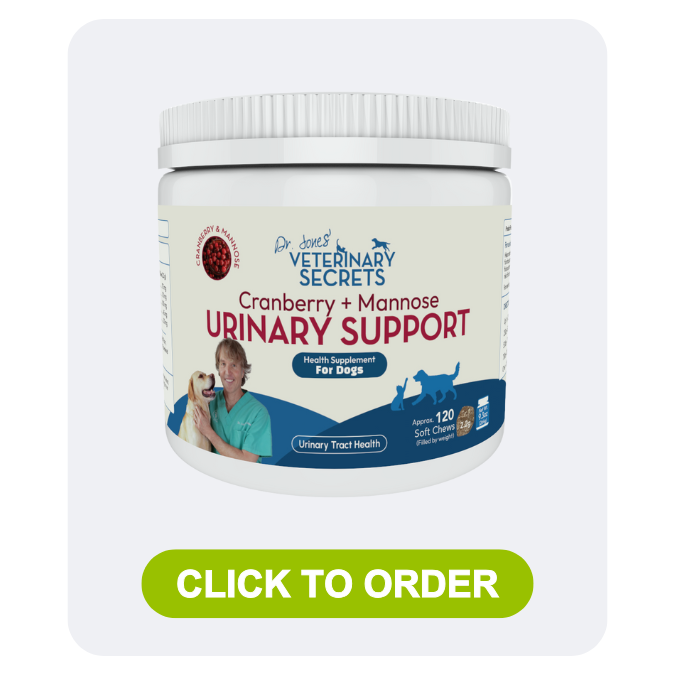
For a simple daily bladder support option, this is why I formulated Dr. Jones’ Urinary Support Chews for Dogs. They combine cranberry, D-Mannose, organic marshmallow root, organic astragalus root, and organic licorice root to support a healthier urinary tract, bladder comfort, kidney function, and normal immune response. Cranberry has been studied in dogs, with research showing it may help prevent E. coli from attaching to urinary tract cells, which is one of the key steps in many UTIs. D-Mannose works in a similar way by helping flush harmful bacteria before they can settle in the bladder. Marshmallow root helps soothe irritated urinary tissues, while astragalus and licorice root add immune and inflammation support. If your dog has recurring urinary issues, frequent licking, straining, or you simply want daily bladder support, Dr. Jones’ Urinary Support Chews for Dogs are an easy option to consider.
Dr Jones’ Urinary Support Chews for Dogs
Signs Your Dog May Have a UTI
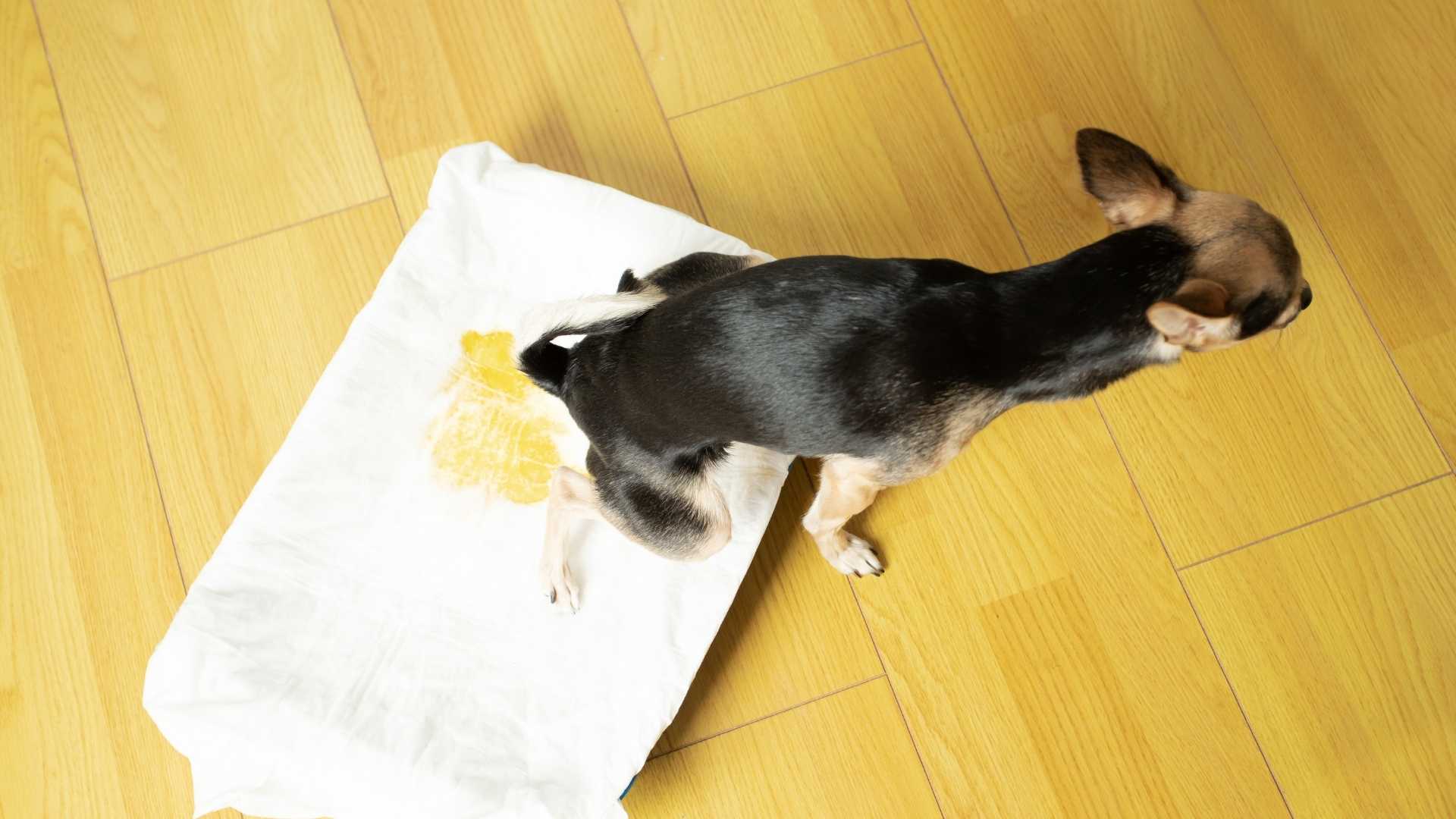
The most common signs of a urinary tract infection in dogs include:
- Frequent urination
- Accidents in the house
- Straining to urinate
- Discomfort while peeing
- Small amounts of blood in the urine
- Leaking or dripping urine
- Licking at the genitals
- Strong-smelling urine
Some dogs are still bright and eating. Others are clearly uncomfortable.
If the symptoms are new, severe, or recurring, I would have the urine checked.
What Causes UTIs in Dogs?
Most UTIs are caused by bacteria entering the urinary tract.
The most common culprit is E. coli, which often comes from fecal matter. Other bacteria, including strep and staph, can also be involved.
Bacteria may enter the urinary tract from:
- The skin around the genitals
- Fecal contamination
- Skin folds
- Dental disease
- Poor hygiene
- A weakened bladder
- Recurrent inflammation
Female dogs, especially spayed females, can be more prone to urinary infections because of anatomy and sometimes reduced bladder tone.
Whatever the cause, the goal is to stop bacteria from sticking to the bladder wall, reduce inflammation, support good bacteria, and help your dog feel better.
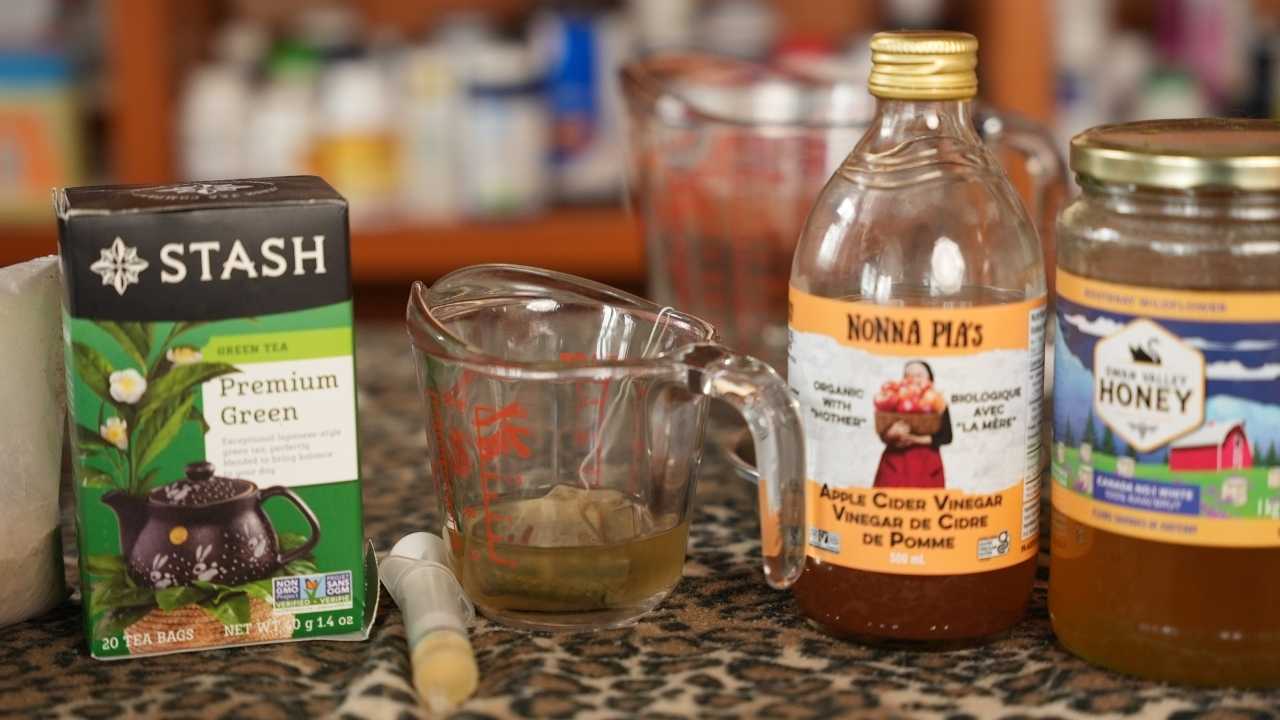
1. Honey: A Natural Antibacterial Remedy
Honey is one of my favorite simple remedies.
It has natural antibacterial properties because it contains hydrogen peroxide and other compounds that can inhibit bacterial growth. It is also anti-inflammatory, which may help reduce some of the swelling and discomfort that comes with a UTI.
For every 20 pounds of body weight, give about:
1 teaspoon of unpasteurized honey once to twice daily
Use it for 10 to 14 days.
Regular honey can still be helpful, but unpasteurized honey is ideal.
Most dogs like the taste, which makes this one easy.
Use caution if your dog is diabetic.
2. Green Tea: Antibacterial and Anti-Inflammatory Support
Green tea contains a powerful compound called EGCG, which has been shown to have antibacterial effects against bacteria such as E. coli and staph.
It also contains catechins, which can act as natural anti-inflammatories. That is helpful when the bladder lining is irritated and inflamed.
Here is how I would use it:
Steep one cup of green tea.
Let it cool.
Mix in 1 tablespoon of honey.
For a 20 pound dog, give about:
1/4 cup twice daily
The caffeine content in this amount is low, but you can also use decaffeinated green tea if your dog is sensitive.
This is a simple, soothing option for urinary discomfort.
3. Cranberry Extract: Helps Stop Bacteria From Sticking
Cranberry has long been used for UTI prevention.
The important compounds are called PACs, or proanthocyanidins. These help prevent bacteria from sticking to the bladder wall.
That matters because bacteria need to attach before they can multiply and cause more inflammation.
I prefer cranberry extract over cranberry juice.
Why?
Cranberry extract is more concentrated, more effective, and does not come with all the extra sugar.
A typical dose is:
100 mg per 10 pounds of body weight daily
For a 20 pound dog, that would be about 200 mg daily.
You can sprinkle it over food.
This is especially useful for dogs with recurrent UTIs.
4. D-Mannose: A Gentle Sugar That Supports the Bladder
D-Mannose is a naturally occurring sugar found in fruits such as apples.
It works in a similar way to cranberry by helping prevent bacteria, especially E. coli, from sticking to the bladder wall.
This is one of my favorite long-term options for dogs that keep getting UTIs.
A typical dose is:
100 to 200 mg per 10 pounds of body weight daily
For a 20 pound dog, I would start with:
200 mg twice daily for the first few days
Then reduce to:
200 mg once daily
D-Mannose is gentle, well tolerated, and often very useful for recurring urinary tract issues.
5. Probiotics: Support the Good Bacteria
Probiotics are not just for diarrhea.
They also play a role in urinary tract health.
Good bacteria help keep harmful bacteria, such as E. coli and staph, in check. This is especially important for dogs with skin folds, recurrent infections, digestive imbalance, or a history of antibiotic use.
A high-quality, multi-strain probiotic can help restore a healthier bacterial balance in the gut and around the urinary tract.
For dogs with recurrent UTIs, I would strongly consider daily probiotics.
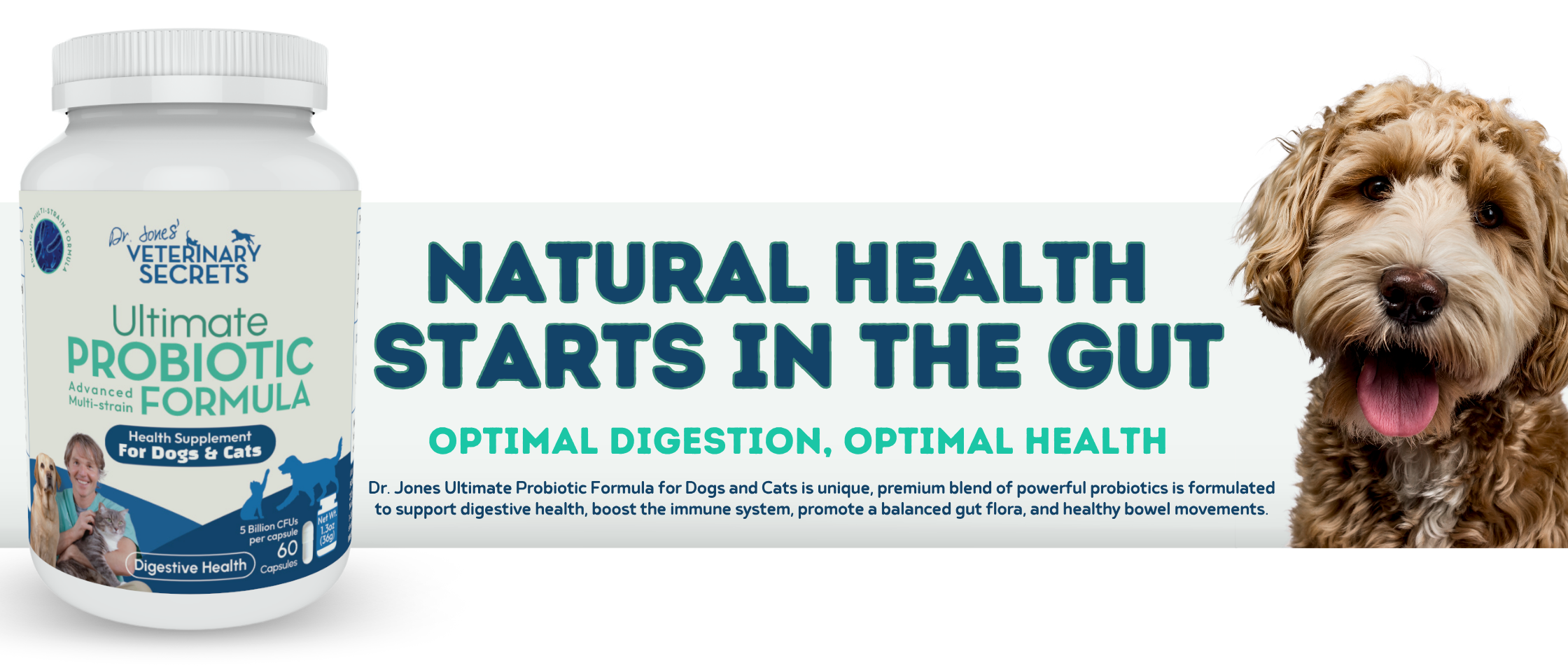
This is where Dr. Jones’ Ultimate Probiotic Formula for Dogs and Cats can be a helpful option.
It is designed with multiple probiotic strains to support digestion, immune health, bowel regularity, and a healthier microbiome.
Dr. Jones’ Ultimate Probiotic Formula for Dogs and Cats
A Simple UTI Support Plan
If your dog has mild urinary signs and is still bright, eating, drinking, and able to urinate, you can consider this support plan:
- Honey once to twice daily
- Green tea and honey twice daily
- Cranberry extract daily
- D-Mannose daily
- Probiotics daily
If there is no improvement in 24 to 48 hours, or symptoms worsen, get the urine checked.
If there is blood, pain, fever, vomiting, or your dog cannot urinate, get help right away.
Dr Jones’ Urinary Support Chews for Dogs (120 Chews)
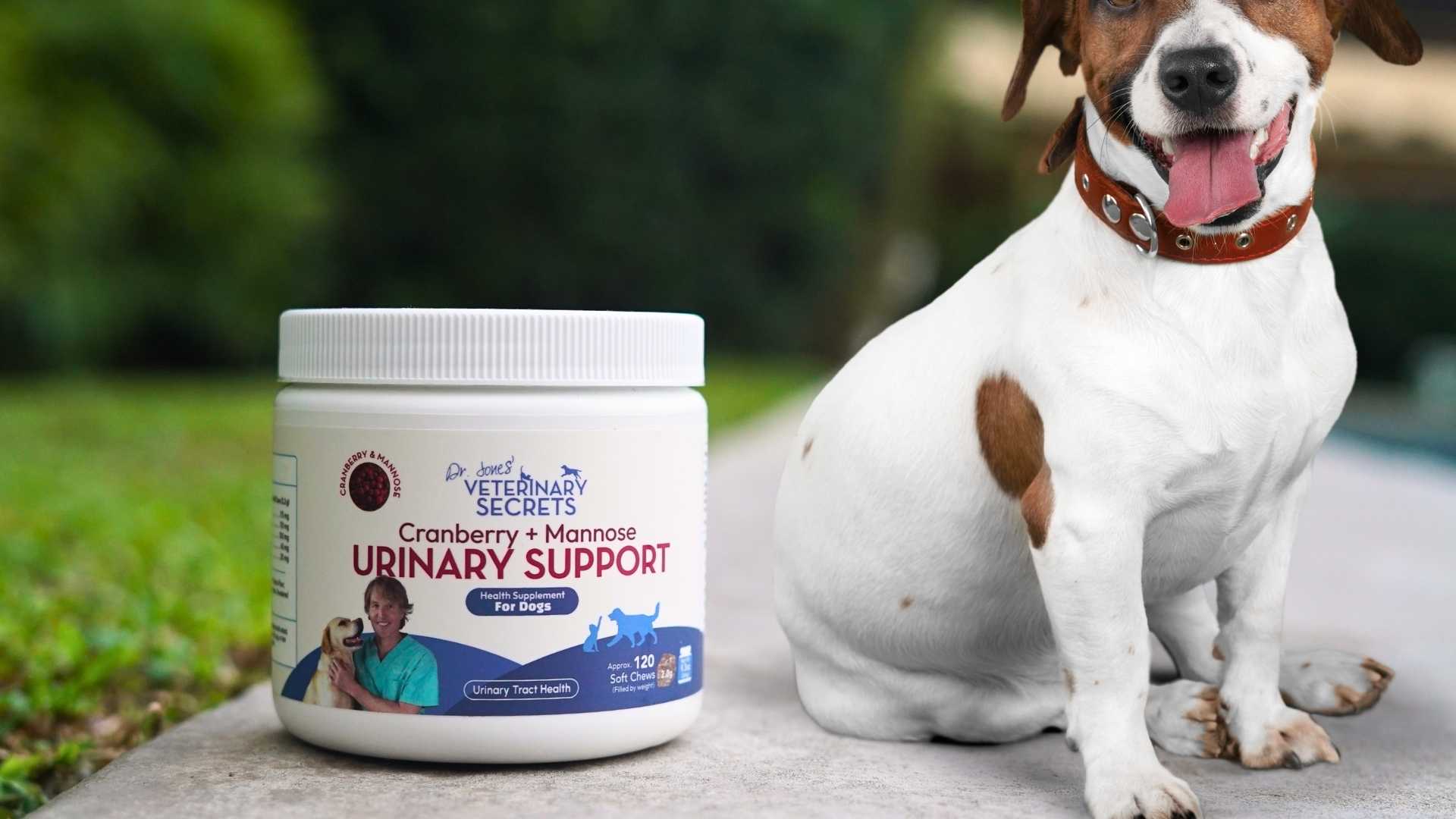
For a simpler daily option, I also suggest Dr. Jones’ Urinary Support Chews for Dogs.
These chews are formulated with bladder-supportive ingredients such as:
- Cranberry
- D-Mannose
- Organic marshmallow root
- Additional urinary and kidney-supportive nutrients
Cranberry and D-Mannose help reduce bacterial attachment to the bladder wall. Marshmallow root is traditionally used to soothe irritated mucous membranes, which makes it a great fit for bladder discomfort.
If your dog has recurring urinary problems, or you want daily bladder support, this is a very practical option.
My Takeaway
UTIs in dogs can be uncomfortable, but many mild cases can be supported naturally while you are monitoring closely.
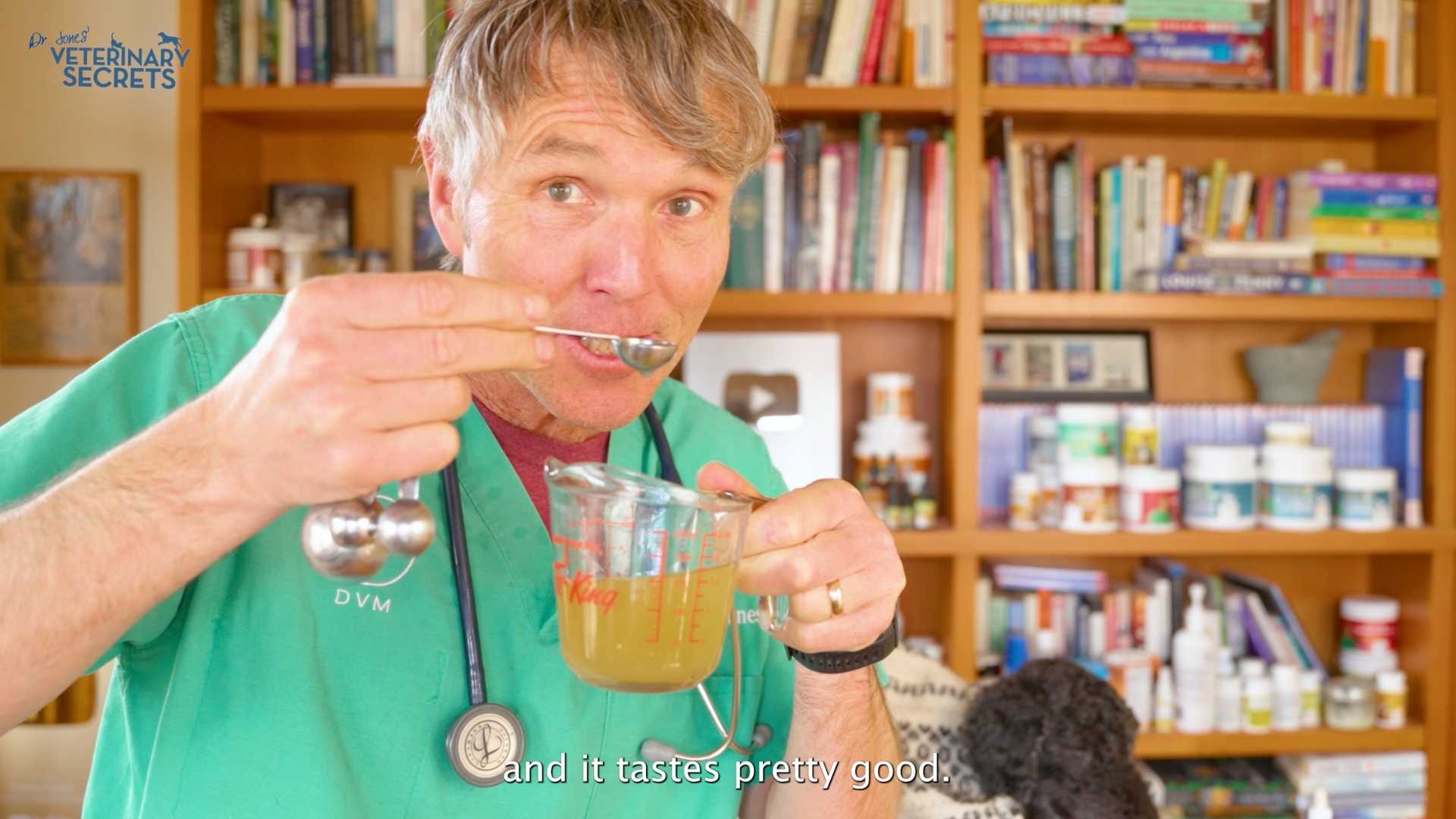
The key remedies I reach for are:
- Honey.
- Green tea.
- Cranberry extract.
- D-Mannose.
- Probiotics.
But do not ignore serious signs.
If your dog is straining, bleeding, painful, not improving, or cannot urinate, she needs veterinary care.
Natural remedies can be helpful, but you still need to know what you are treating.
Click To Get A Free Copy of My E-Book!

P.S. If your dog is licking, straining, peeing frequently, or you see blood in the urine, act early. The sooner you support the bladder, the better.
P.P.S. For daily urinary support, consider Dr. Jones’ Urinary Support Chews for Dogs, made with cranberry, D-Mannose, organic marshmallow root, and other bladder-supportive ingredients.