The #1 Cause of Dog Euthanasia Is Not Cancer

Why is arthritis one of the leading causes of euthanasia in dogs?
The leading cause of elective euthanasia in dogs is not cancer.
It is arthritis.
More specifically, osteoarthritis: painful joints, loss of mobility, difficulty getting up, and pain that can no longer be managed well enough.
That may surprise you. It surprised me at first too.
But when I think back to practice, many dogs did not reach the end because of one dramatic disease. They reached the end because they could not move comfortably anymore.
They could not get up.
They could not walk well.
They could not interact the way they used to.
And when pain can no longer be managed, quality of life drops quickly.
That is why arthritis in dogs deserves far more attention than it gets.
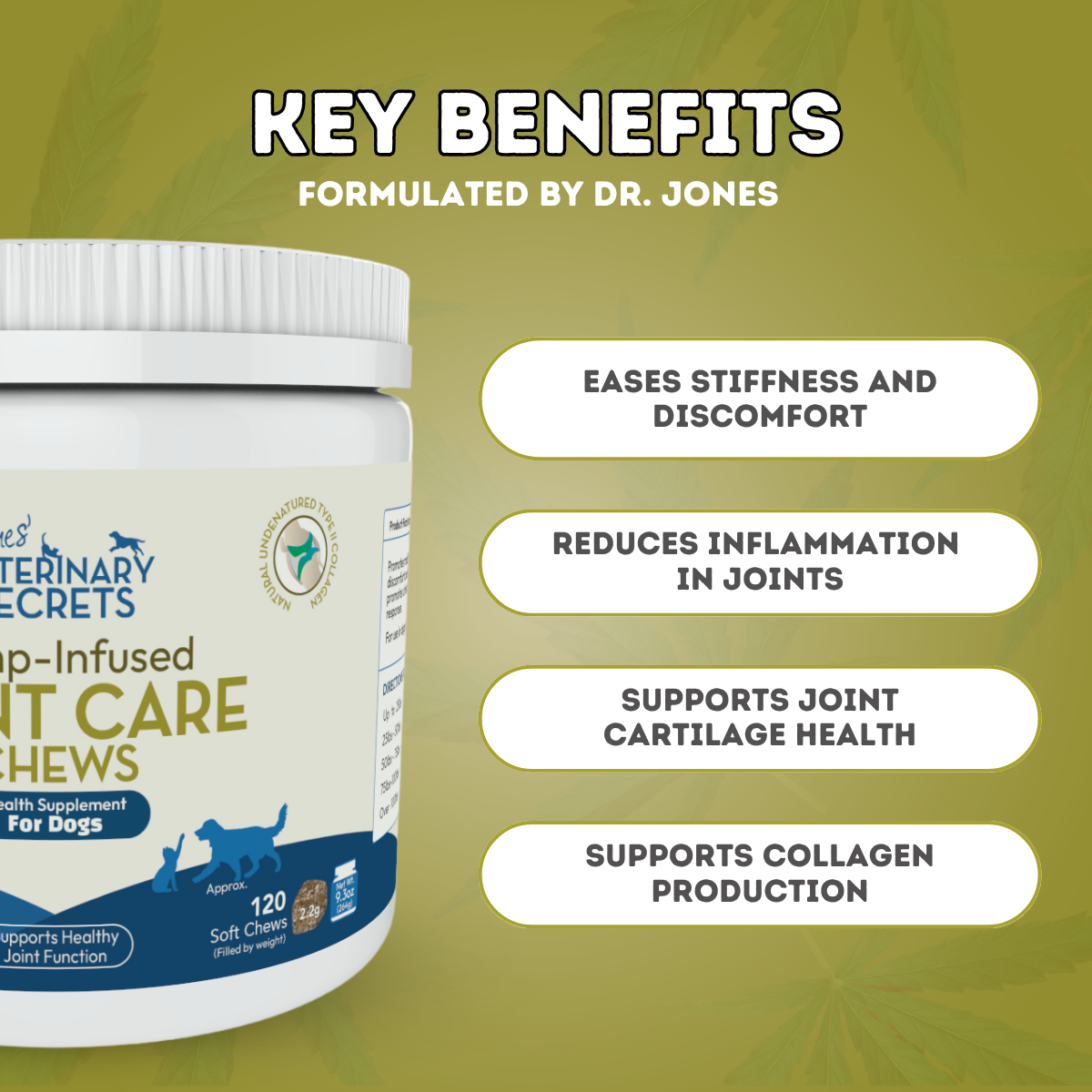
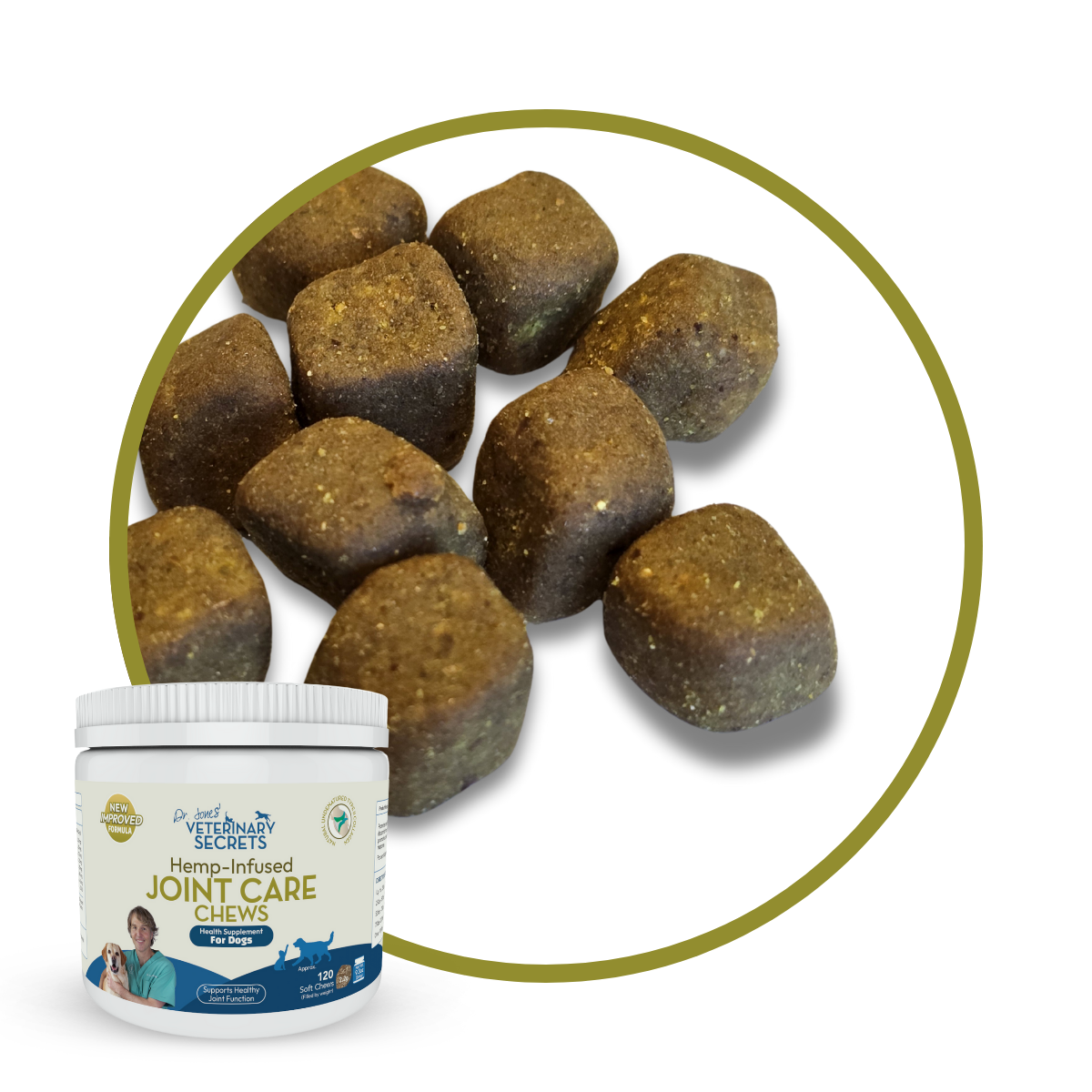
Dr. Jones’ Undenatured Type 2 Collagen Joint Care Chews for Dogs


Why Does Arthritis Lead to Euthanasia in Dogs?
Arthritis leads to euthanasia because it affects the two big things pet parents worry about most:
- Pain
- Quality of life
When I have had to make that decision for my own dogs, I focused on one question first:
Can I manage their pain?
If the answer was no, then the decision became much clearer. It is not fair to keep a dog living in pain.
I think of one of our last dogs, Jesse. He got to the point where he could not get up on his own, and he was uncomfortable.
That was not fair to him.
In practice, I looked at two things:
- Can we adequately manage the pain?
- Does this dog still have a good quality of life?
A dog may still be eating and drinking, but if they cannot move, cannot interact, and are no longer happy, then we need to look honestly at what is best for them.
That is hard.
But pain matters.
Mobility matters.
Happiness matters.
What Is Osteoarthritis in Dogs?
Osteoarthritis happens when the smooth protective covering over the joints, called cartilage, breaks down.
Cartilage normally allows the joint to move smoothly.
When that cartilage is lost, you get bone rubbing on bone.
That leads to:
- Pain
- Stiffness
- Joint swelling
- Reduced mobility
- Creaky movement
- Less willingness to walk, jump, or climb
A healthy joint should flex and extend with lubrication from joint fluid.
An arthritic joint loses that smooth movement.
The result is a painful joint that makes everyday life harder.
What Causes Arthritis in Dogs?
Arthritis can happen for many reasons.
The big ones include:
- Aging
- Joint wear and tear
- High-impact exercise
- Excess weight
- Early spay or neuter
- Ligament or tendon injuries
- ACL tears
- Poor diet
- Highly processed kibble
- Lack of food variety
- Loss of muscle and soft tissue support
Some of these are age-related.
Some are preventable.
And some are things we can start improving right now.
How High-Impact Activity Can Damage Joints
Some dogs are high-energy, high-impact athletes.
Think of a Border Collie or Australian Shepherd flying downhill after a ball at 100 miles an hour.
That is a lot of force on the joints.
When a dog runs downhill, they have to brace their legs. That puts pressure on:
- Shoulders
- Knees
- Hips
- Tendons
- Ligaments
- Cartilage
Large dogs are especially vulnerable.
With my own last big dog, Lewis, I was careful about running him downhill for long periods. If I took him mountain biking, I would do small sections and let him catch up.
I did not push him that way.
Movement is good.
Repeated high-impact joint stress is not.
Why Weight Matters So Much
Overweight dogs have more force on their joints.
That extra weight increases strain on the cartilage, tendons, ligaments, hips, knees, shoulders, and spine.
If you can manage your dog’s weight, you can help prevent early osteoarthritis.
The best approach is usually:
- Consistent exercise
- Higher protein diet
- Lower carbohydrate diet
- Healthy fats
- Fewer highly processed foods
Keeping your dog lean may be one of the most important long-term arthritis prevention steps.
Simple? Yes.
Easy? Not always.
Especially if your dog looks at you like the treat jar is a moral obligation.
How Early Spay and Neuter May Affect Arthritis Risk
Sex hormones such as estrogen and testosterone are important for normal bone, muscle, and soft tissue development.
When dogs are spayed or neutered early, those hormones are removed before the body has fully developed.
That can affect:
- Bone growth
- Muscle support
- Tendon strength
- Ligament strength
- Joint stability
- ACL injury risk
If a dog’s bones grow to full length but the muscle and soft tissue do not adequately support the joints, that dog may be at higher risk for injuries like ACL tears.
And once a dog tears an ACL or another major ligament, the risk of osteoarthritis increases.
That is why delaying the age of spay or neuter may be an important part of long-term joint health.
Why ACL Tears Often Lead to Arthritis
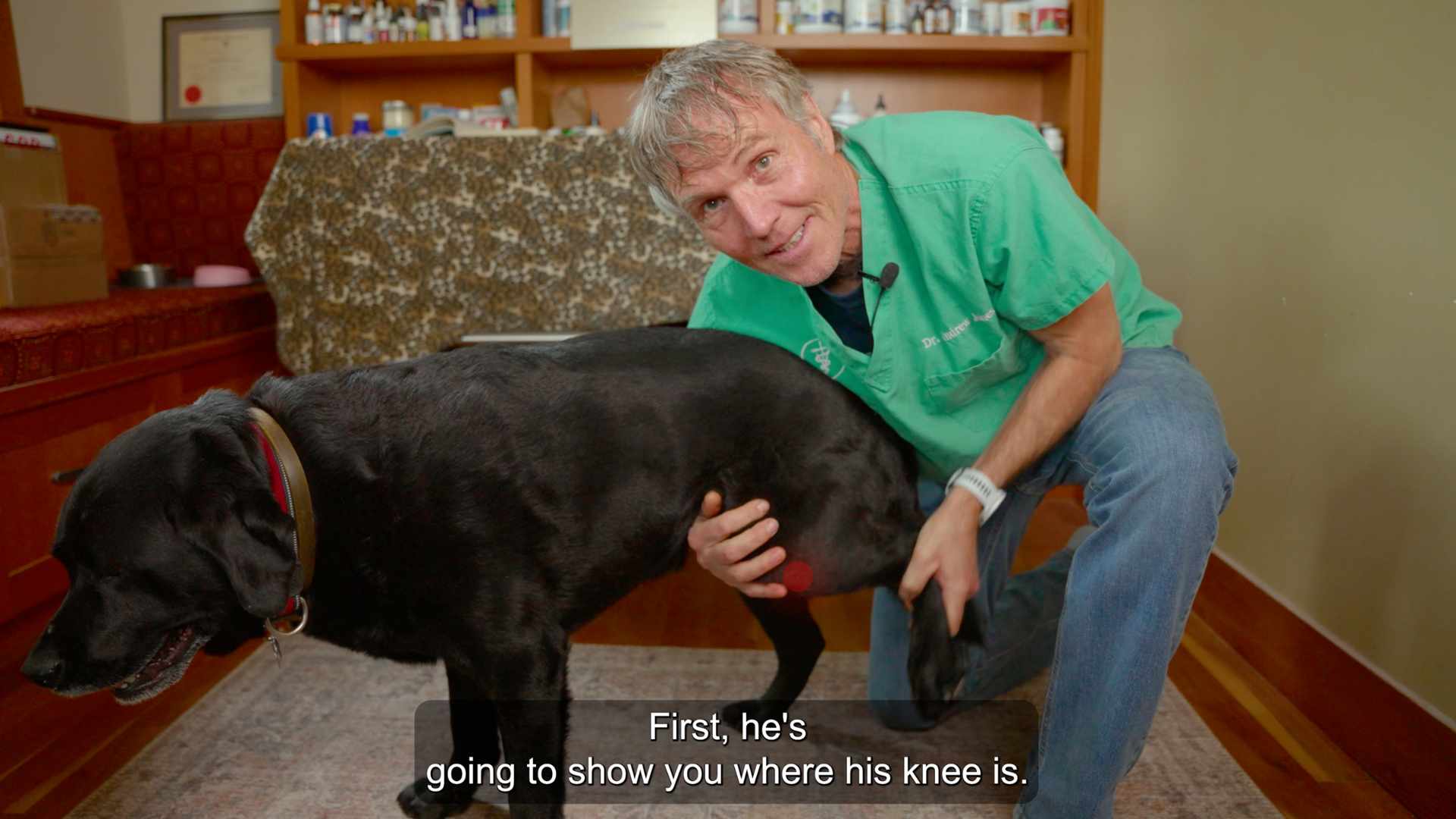
The ACL, or anterior cruciate ligament, helps stabilize the knee.
When a dog tears the ACL, the knee becomes unstable.
Even if the injury is treated, that joint is now at much higher risk of osteoarthritis.
Dogs with ligament or tendon injuries often develop joint changes over time.
The body may add scar tissue to make the joint more stable, but the joint may still become painful and arthritic.
So preventing ligament injuries matters.
And when they happen, supporting healing matters too.
Why Consistent Exercise Helps Arthritis
Even older dogs need to keep moving.
The act of moving, flexing, and extending a joint helps produce joint fluid.
That joint fluid lubricates the joint and can provide natural pain relief.
So even if your dog is older and not as mobile as before, keeping them active is still very important.
The key is appropriate movement.
Good options may include:
- Short walks
- Gentle daily movement
- Avoiding long downhill runs
- Avoiding overexertion
- Maintaining muscle tone
- Keeping the joints moving
Too little movement makes stiffness worse.
Too much impact can damage the joints.
The sweet spot is regular, controlled activity.
How Diet May Affect Arthritis in Dogs
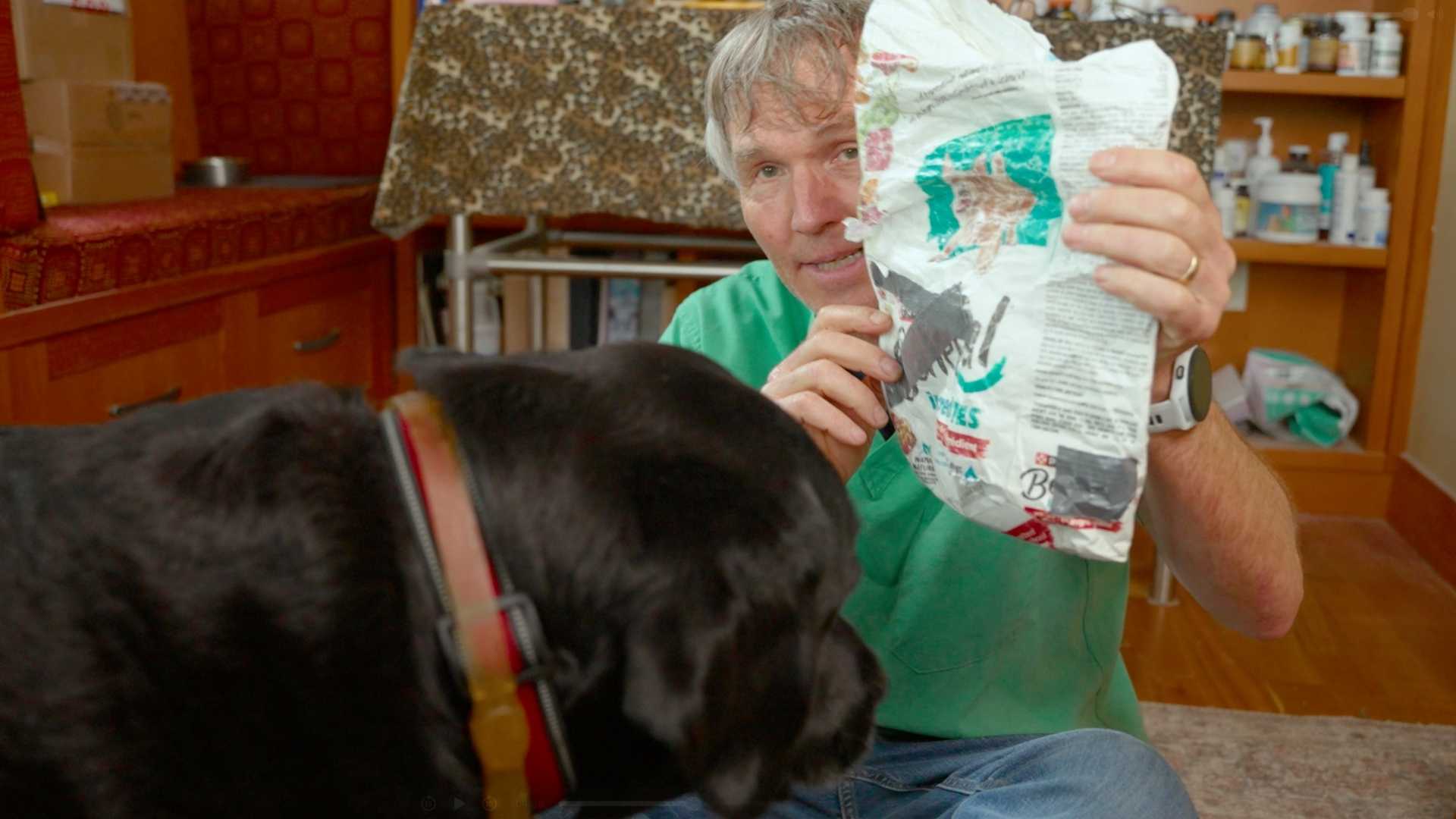
Diet is a huge part of arthritis prevention.
Highly processed kibble is often high in carbohydrates.
High-carb diets make dogs more likely to gain weight.
More weight means more force on the joints.
That is one obvious connection.
But there is another one.
Feeding the same kibble every day, year after year, may reduce the diversity of the gut microbiome.
That means fewer good bacteria in the gut.
Those good bacteria help produce amino acids, such as lysine.
Amino acids are building blocks for protein.
And protein is needed for:
- Muscle
- Tendons
- Ligaments
- Collagen
- Skin
- Joint support tissues
Collagen is a major part of the body’s soft tissue, including important ligaments like the ACL.
If the gut microbiome is less diverse and producing fewer helpful amino acids, that may affect the body’s ability to maintain and repair tissue.
That is one more reason I like whole, less processed food.
Your dog’s joints are built from what goes into the bowl.
What Diet Is Better for Arthritis Prevention?
If I had to choose a better diet pattern for arthritis prevention, I would focus on:
- Higher protein
- Moderate fat
- Healthy fats
- Omega-3 fatty acids
- Lower carbohydrates
- More whole, unprocessed foods
- More variety
- Less repetitive highly processed kibble
Think about how many of these same principles apply to you.
Your dog is not a small wolf-shaped carbohydrate processor.
They need protein, good fats, and nutrients that support muscle, ligaments, tendons, and cartilage.
What Are the Signs of Arthritis in Dogs?
Arthritis signs can be subtle at first.
Your dog cannot say, “My knee hurts.”
So you need to watch behavior.
Common Signs of Dog Arthritis
| Sign | What You May Notice |
|---|---|
| Slower getting up | Your dog hesitates or struggles when rising |
| Reluctance to jump | Avoids couch, bed, car, or stairs |
| Limping | One leg may be favored |
| Less interest in activity | Walks are shorter or slower |
| Licking one joint | Repetitive licking over one painful area |
| Swelling over a joint | Joint may feel thicker or enlarged |
| Knee thickening | Can happen after ACL injury |
| Behavior changes | Less happy, more withdrawn, less interactive |
| Stiffness | Worse after rest or after activity |
| Reduced quality of life | Less ability to do normal daily things |
Many pet parents first notice visible lameness.
Your dog may hold up one leg, avoid jumping, or struggle to get up.
If you see those signs, assume there may be pain and do something to help.
Why Behavior Changes Matter
Some dogs do not limp dramatically.
They just change.
They may become:
- Less interested
- Less playful
- More tired
- Less social
- More irritable
- More hesitant to move
Chronic pain can change behavior.
A dog with mild to moderate arthritis may still eat and drink, but they may not be happy.
That is why you need to know your dog’s normal.
If they are not acting like themselves, ask why.
Conventional Arthritis Medications
Many dogs with arthritis are prescribed NSAIDs, or non-steroidal anti-inflammatory drugs.
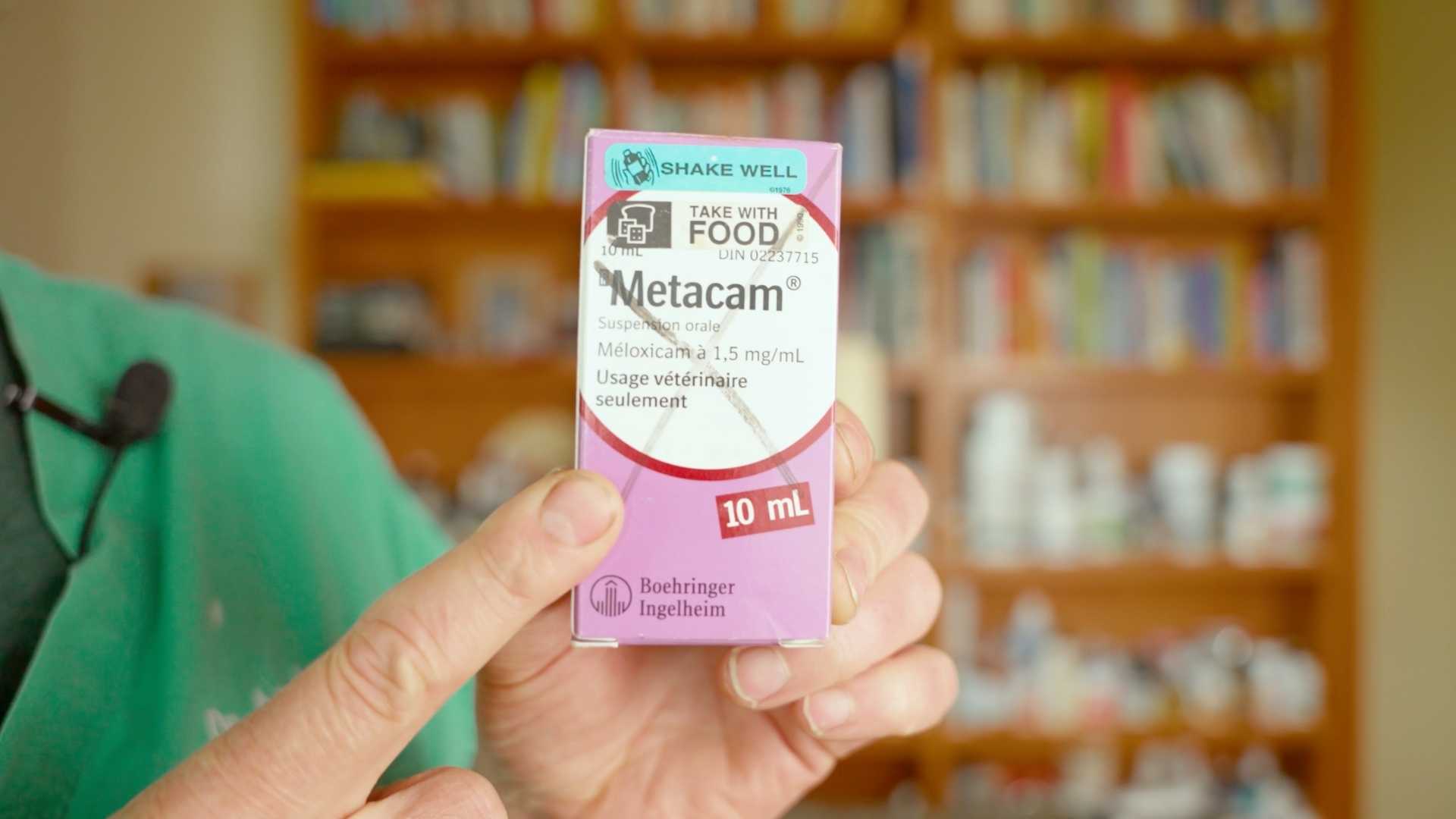
Examples mentioned include:
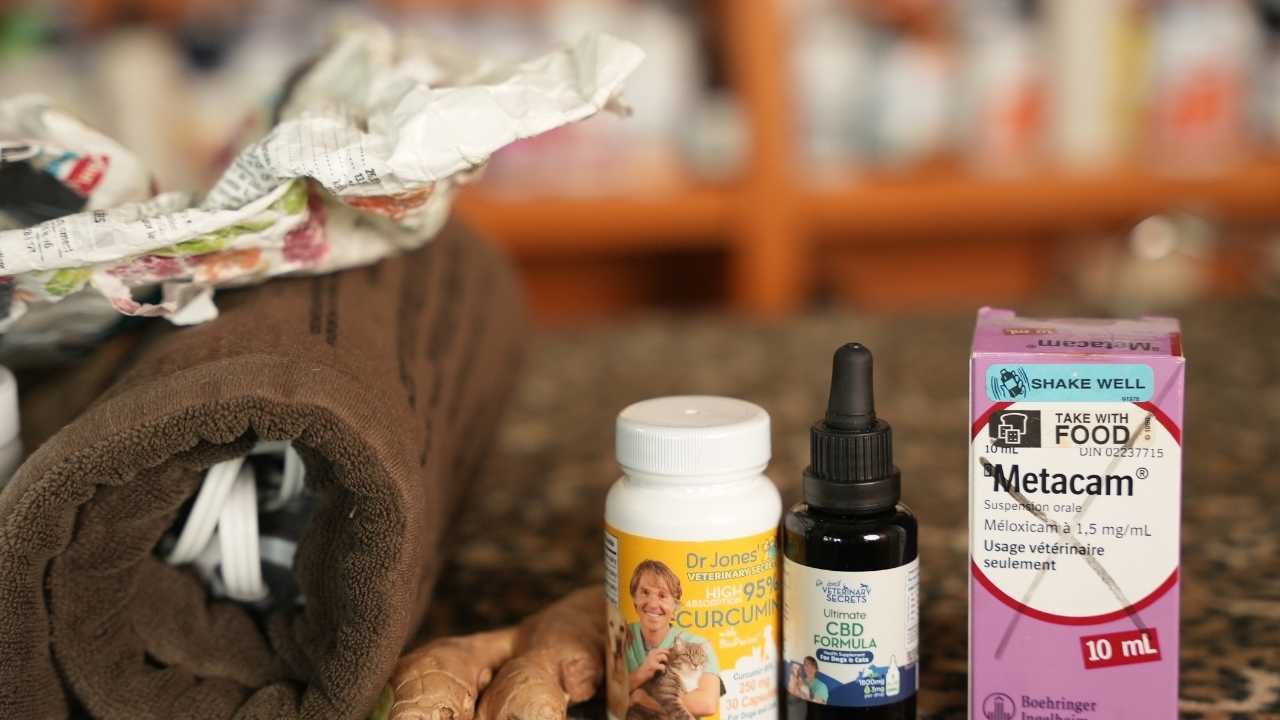
- Metacam, drug name meloxicam
- Carprofen
- Other NSAIDs
These medications can provide pain relief.
They can be very important, especially for short-term use.
But they can also have side effects, including:
- Vomiting
- Diarrhea
- Gastrointestinal issues
- Kidney disease concerns
- Liver disease concerns
I have always been cautious about having animals on NSAIDs long term.
That said, if you have tried every alternative and your dog is still in pain, then consider them.
I will always say this:
It is better that your dog is out of pain than in pain.
What About Librela?
Librela is a newer drug mentioned in the source content.
It is a monoclonal antibody that targets a protein called nerve growth factor.
By doing this, it blocks the feeling or sensation of pain.
Some concerning side effects mentioned include:
- Neurologic signs
- Ataxia
- Wobbling
- Seizures
- Gastrointestinal side effects
- Kidney disease concerns
- Possible increased rate of joint destruction
The concern is that it blocks pain sensation but does not address the underlying causes.
Pain relief matters.
But I also want to support the joint, reduce inflammation, and help the body repair where possible.
Natural Remedies for Dog Arthritis Pain
There are several natural options I would consider for dogs with arthritis pain and inflammation.
Some are better for short-term pain.
Some are better for long-term joint support.
Some are topical.
Some are taken internally.
And some are simple, inexpensive things you may already have at home.
1. CBD for Dog Arthritis Pain
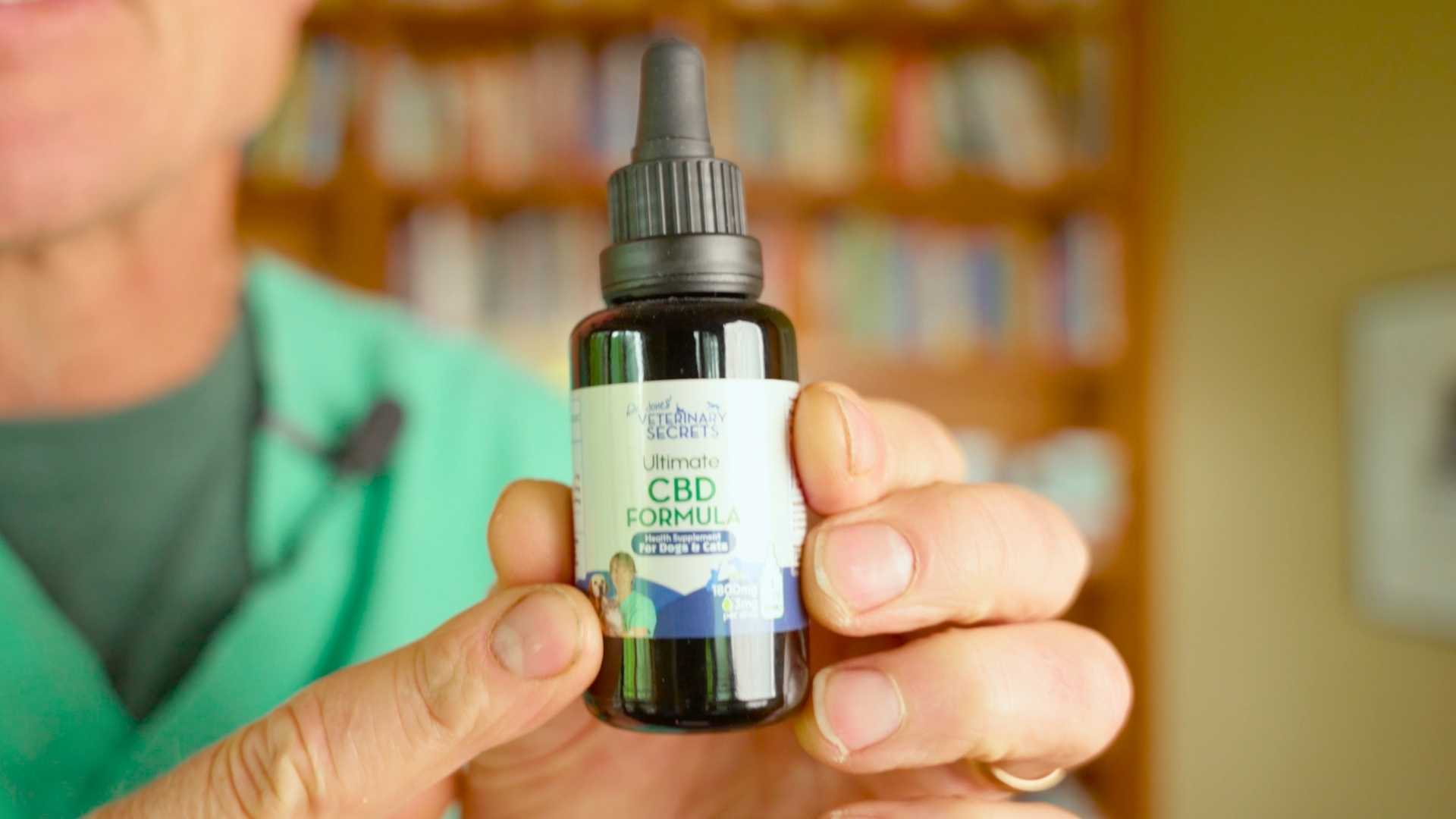
CBD, or cannabidiol, is one of the natural options I find especially useful for short-term pain relief.
Dogs generally tolerate cannabinoids well and often respond well.
CBD Dose
Start with:
- 3 mg per 10 lbs of body weight
- Twice daily
This can be increased up to five times that amount if needed.
CBD does not come with the same serious side effects I worry about with some conventional drugs.
For many dogs, it can be a very useful part of an arthritis pain plan.
2. DMSO for Topical Pain and Inflammation
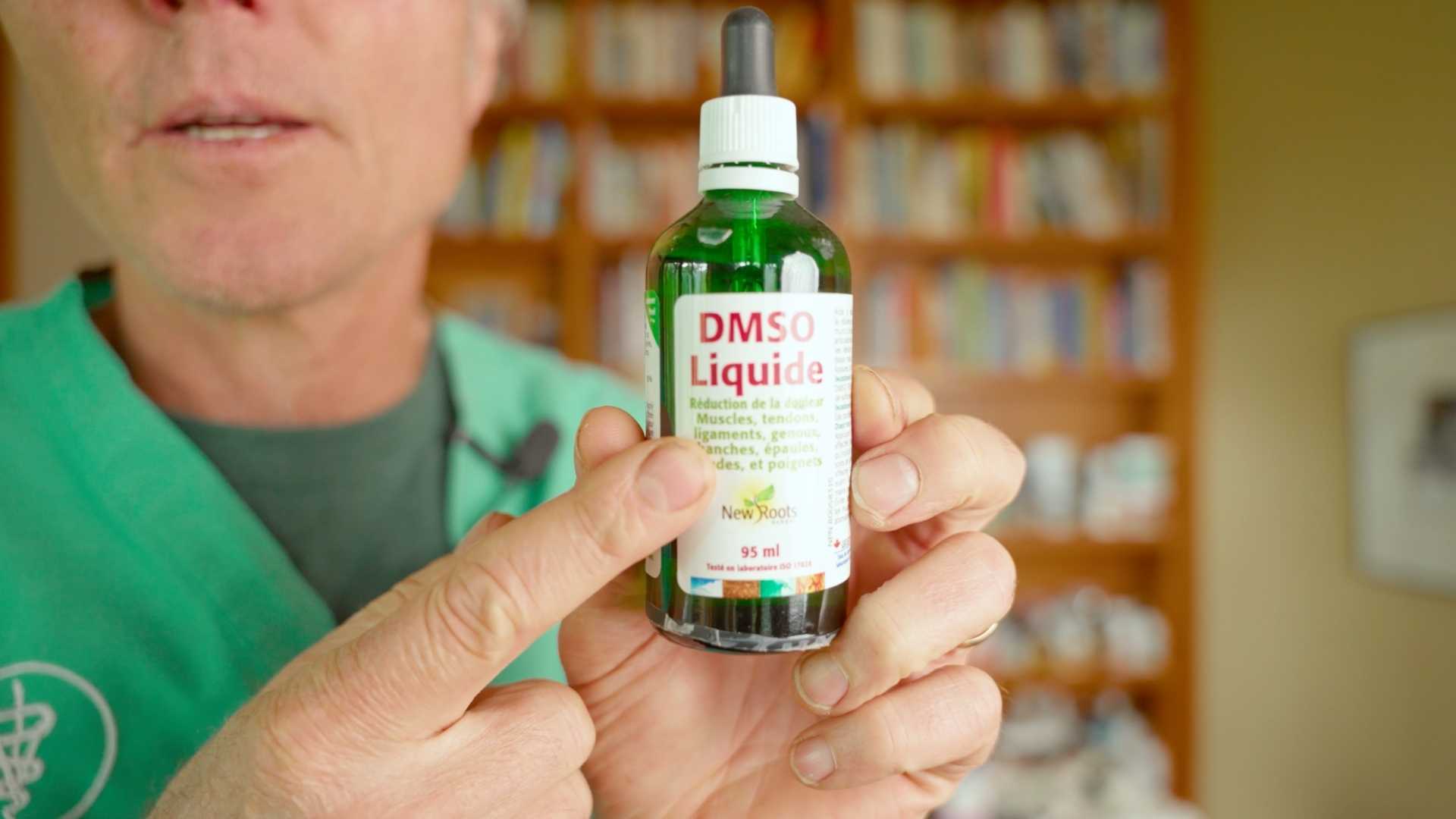
DMSO is a solvent that rapidly penetrates the skin.
It is found in garlic and onion and is commercially isolated as a byproduct of the pulp and paper industries.
I have used DMSO myself for sore muscles and joints, and I have seen good results in animals.
How to Use DMSO
If you know the inflamed area, apply:
- 2 to 3 drops over the sore joint
- Rub directly into the skin
- Use twice daily
- Try for 1 week
I often apply CBD first, then DMSO afterward to help bring it into the joint.
DMSO is inexpensive and very safe when used appropriately.
3. Ginger for Inflammation
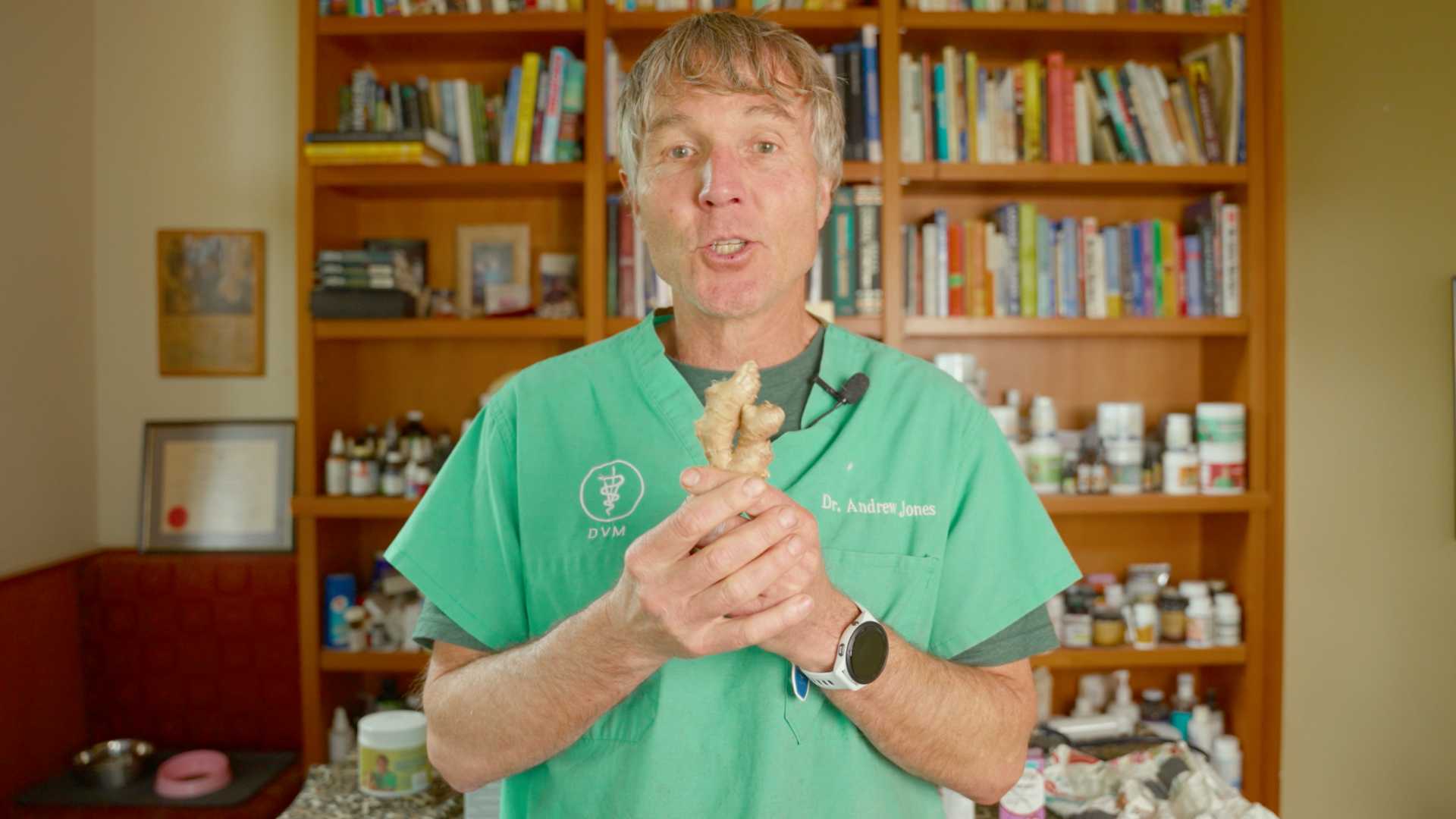
Ginger contains nutrients with anti-inflammatory effects.
It is simple, inexpensive, and easy to incorporate into your dog’s routine if your dog will drink it.
How to Use Ginger
Use:
- A small slice of ginger
- Chop or crush it to release more active ingredients, including gingerol
- Add it to your dog’s water bowl
- Do this once daily
- Try for 7 to 14 days
Assuming your dog drinks the water, ginger may be a useful long-term support.
It does taste gingery, so some dogs may vote no.
Dogs can be very honest food critics.
4. 95% Curcumin for Long-Term Arthritis Support
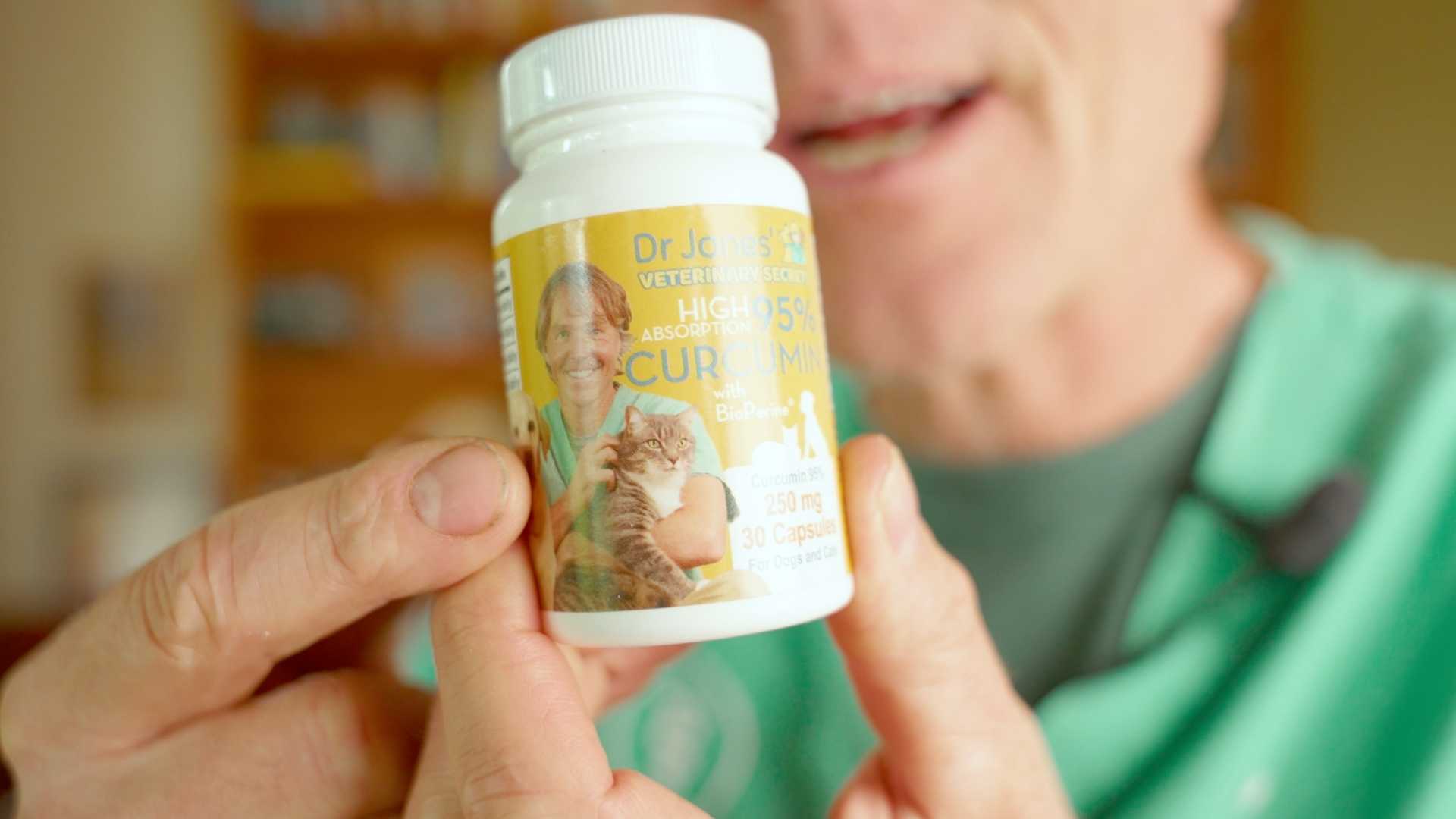
Curcumin is the active ingredient from turmeric.
I like 95% curcumin as a longer-term anti-inflammatory option.
This is one I often used for dogs who may have started on an NSAID for acute pain, then moved toward curcumin for longer-term support.
Curcumin Dose
Use:
- 250 mg per 50 lbs of body weight
- Twice daily
- Give with a meal
- Give with fat to improve absorption
Curcumin needs time.
Give it at least 14 days before deciding whether it is helping.
It also needs to be in a form that is absorbed well.
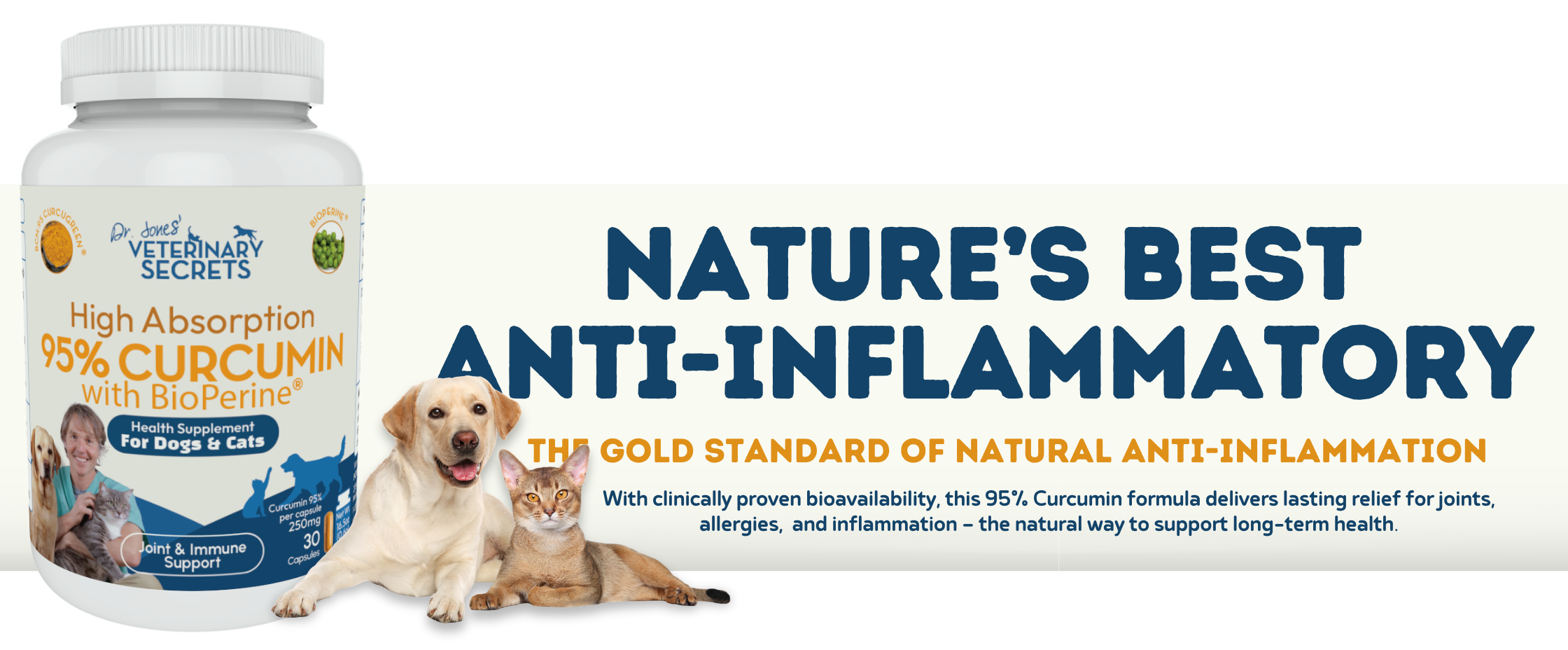
Dr. Jones’ Ultimate High Absorption 95% Curcumin for Dogs and Cats
5. Heat Therapy for Arthritis Pain
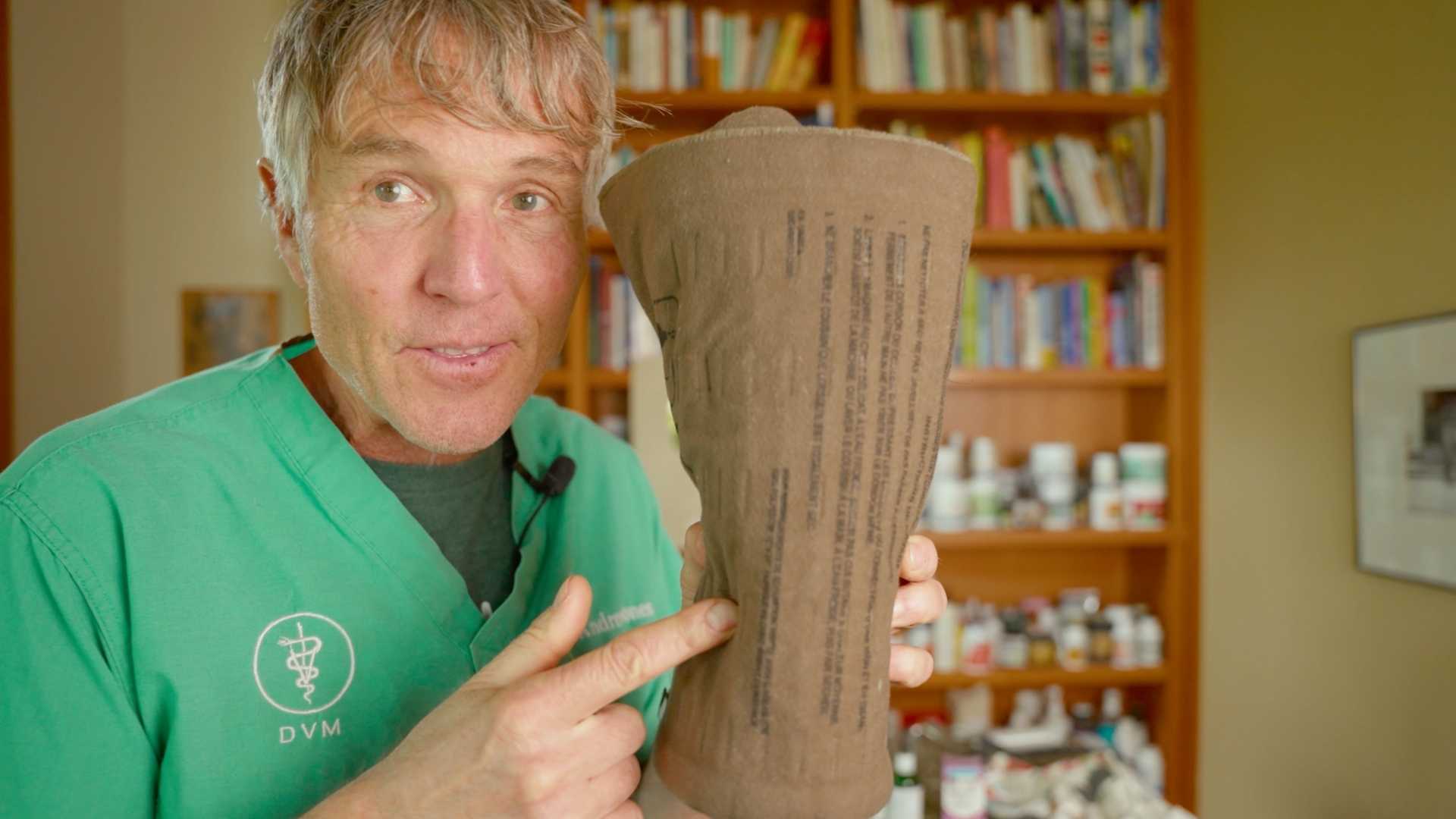
Heat therapy is simple, inexpensive, and often overlooked.
Heat increases blood flow to the sore area.
More blood flow can help bring healing cells to the joint and remove inflammatory debris.
This can help with osteoarthritis pain.
How to Use Heat Therapy
Use:
- Electric heating pad
- Place over the sore area, such as hips or elbows
- Leave on for 15 minutes
- Do this twice daily, morning and night
Because it is not a pill or fancy device, people often underestimate it.
Do not overlook heat therapy.
It can really help.
6. Acupressure for Arthritis Pain
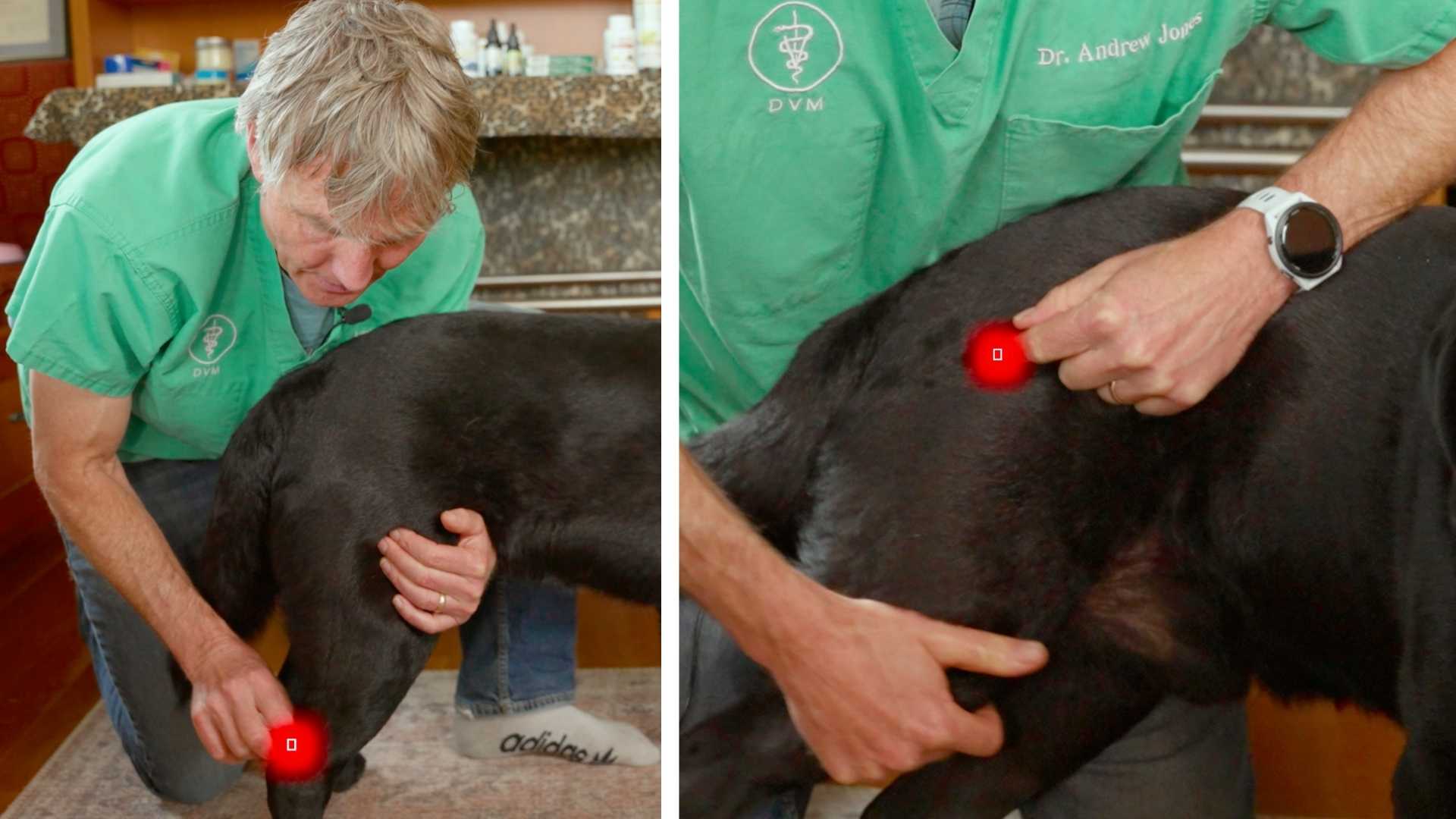
Acupressure uses pressure on the same points used in acupuncture.
Some dogs respond very well to it.
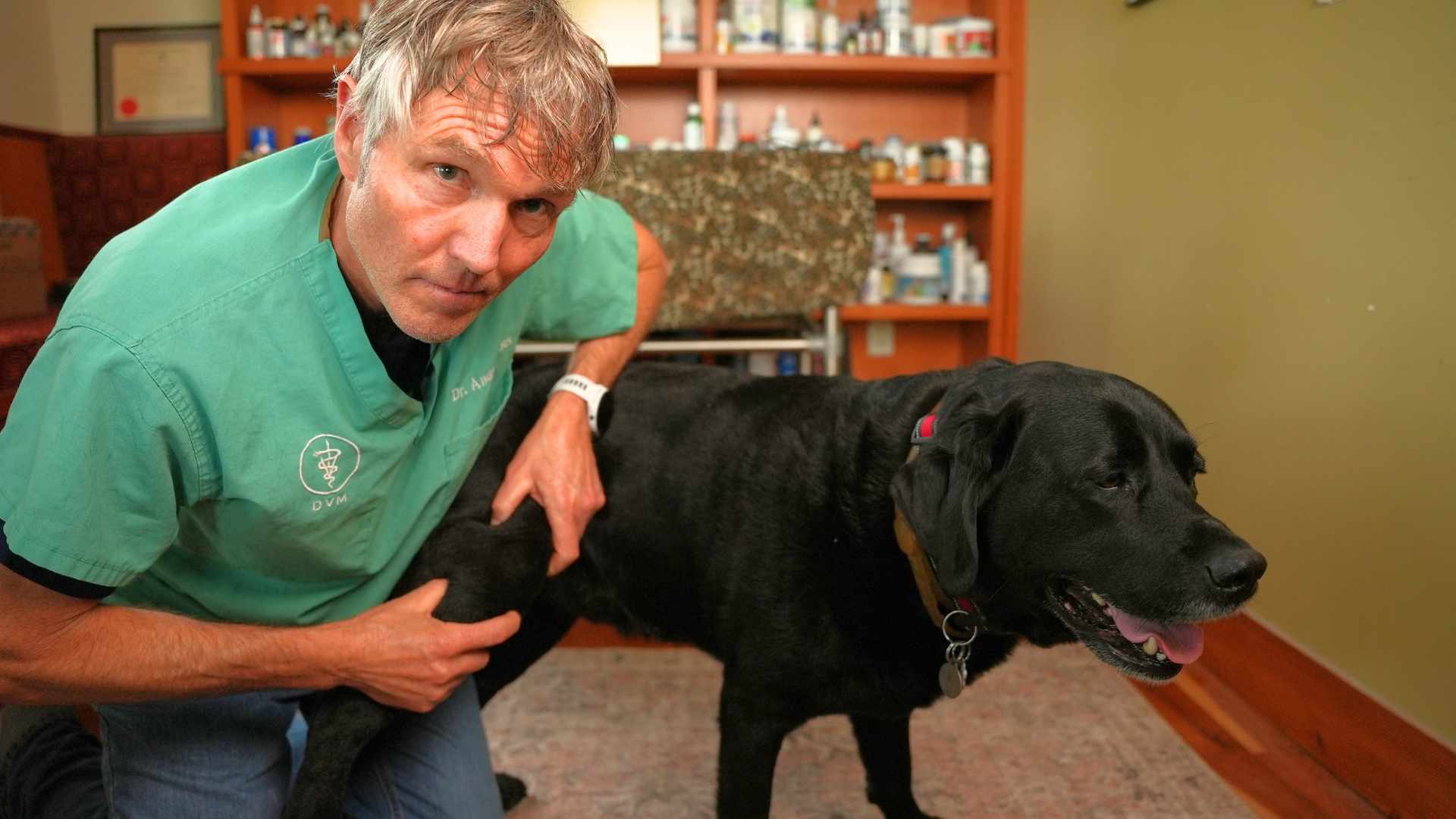
My last dog, Lewis, responded quite well to acupressure.
Hip Points: GB29 and GB30
These points are near the hip.
To find them:
- Locate the top of the femur.
- Move the leg gently back and forth.
- Feel the depression on either side of the bony point near the hip.
- One point is GB29 and the other is GB30.
Hold these points for:
- 30 to 60 seconds
These may help dogs with hip issues.
Hock Points: BL60 and KI3
These are two of the easiest points to find.
They are located around the outside and inside webbing of the hock joint, near the Achilles tendon.
- BL60 is also known as the aspirin point.
- KI3 is also called the kidney point.
Place your thumb and forefinger in the webbing around the hock.
Hold for:
- 30 to 60 seconds
- Twice daily
- For 7 days
These points may bring pain relief for some dogs.
Knee Point: BL40
BL40 is useful for knee or stifle issues.
To find it:
- Move your dog’s knee gently up and down.
- Feel behind the knee.
- Find the small depression in the popliteal fossa, the area behind the knee.
- Hold the point.
Hold for:
- 30 to 60 seconds
This may help with arthritis, especially involving the knee.
7. Undenatured Type 2 Collagen for Joint Repair
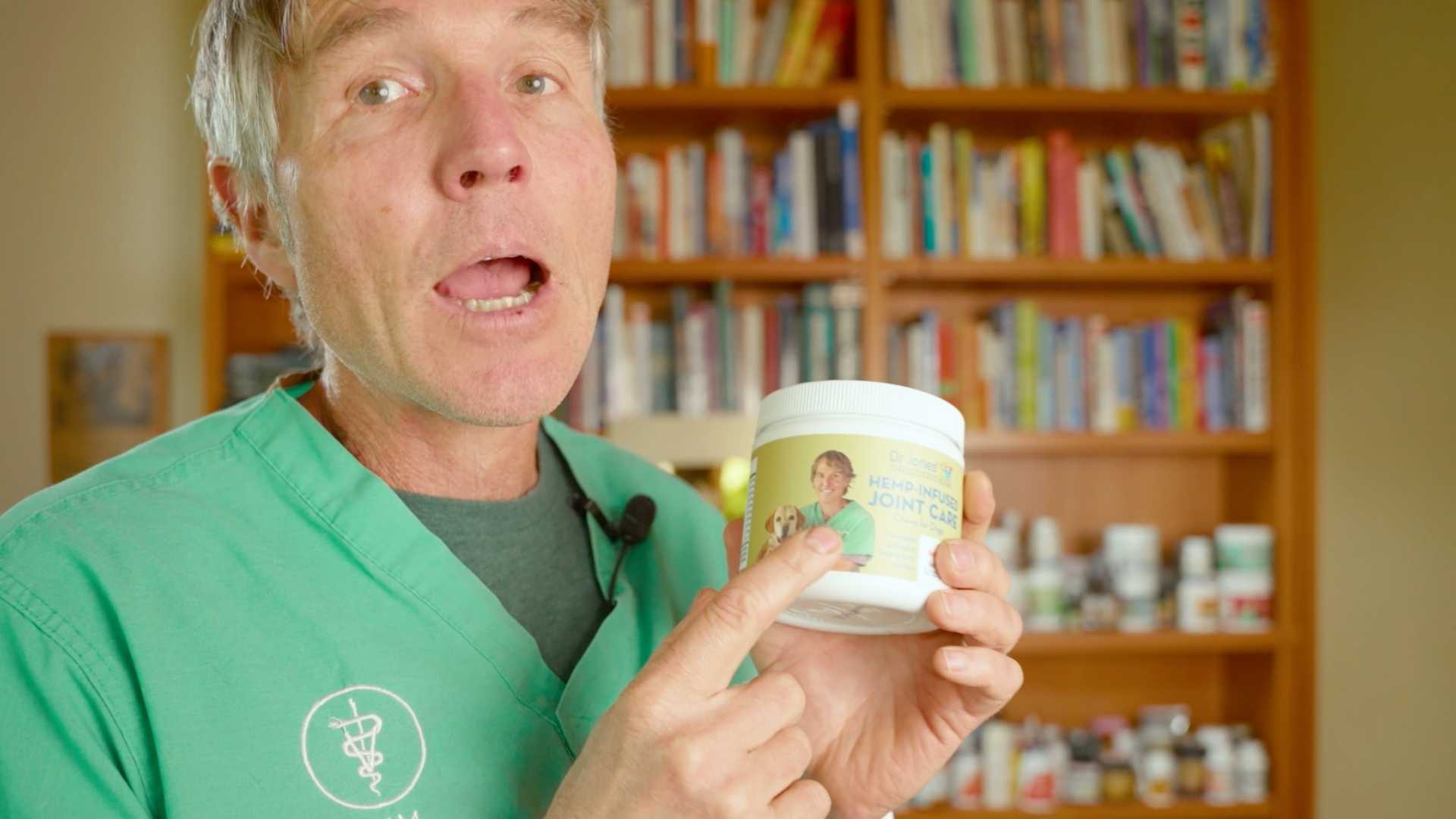
Undenatured type 2 collagen, also called UC2 collagen, is an ingredient in our new Joint Care Chews.
Collagen is the most abundant protein in the body.
It is found in:
- Skin
- Ligaments
- Tendons
- Cartilage
- Soft tissues
The type and structure of collagen matter.
UC2 collagen is type 2 collagen that has not been broken down by grinding or high heat.
This is important because its structure is preserved.
How UC2 Collagen May Help
UC2 collagen is recognized in the intestinal tract.
There, it helps produce anti-inflammatory compounds.
It may then support the joints by:
- Decreasing joint inflammation
- Supporting collagen repair
- Supporting collagen synthesis
- Helping produce new cartilage
- Supporting tendon and ligament repair
What makes UC2 unique is that it works at the level of the immune system.
The immune system recognizes the undenatured type 2 collagen as similar to the collagen in your dog’s body.
Then it helps reduce joint inflammation and supports rebuilding of collagen that has been lost in the joint.
That is why it is working so well for many dogs.
8. BPC-157 for Soft Tissue and Joint Support
BPC-157 is a newer treatment being discussed.
BPC stands for body protection compound.
It was first isolated from the stomach juices of dogs.
A peptide is a sequence of amino acids. It is not a fully developed protein, but it can have a positive effect on the body.
BPC is produced in gastric fluid to help heal the intestinal tract.
For example, if a dog eats something irritating or damaging, the body secretes BPC to help heal those lesions.
But it also appears to support healing in other areas of the body.
Why BPC-157 Is Interesting
BPC-157 is being researched and used for:
- Gut healing
- Intestinal lesions
- Ongoing gastrointestinal disorders
- Inflammatory bowel disease
- Soft tissue injuries
- Muscle injuries
- Tendon injuries
- Ligament injuries
- ACL injury support
- Joint pain and inflammation
Some veterinarians are starting to use peptides such as BPC-157 in dogs.
The part I like is that this specific peptide comes from dogs, and research with BPC-157 has shown it to be particularly safe.
It may be especially worth considering for dogs with ongoing pain and inflammation tied to structural injuries, such as an ACL injury.
What Is the Best Natural Arthritis Plan?
The best plan is usually not one thing.
It is a combination.
For Prevention
Focus on:
- Healthy weight
- Consistent exercise
- Higher protein, lower carbohydrate diet
- Healthy omega-3 fats
- Less processed food
- More whole food variety
- Delaying early spay or neuter when appropriate
- Avoiding repeated high-impact stress, especially downhill running in large dogs
For Pain Relief
Consider:
- CBD
- DMSO
- Heat therapy
- Acupressure
For Longer-Term Inflammation and Joint Repair
Consider:
- 95% curcumin
- UC2 collagen
- Ginger
- Omega-3 fatty acids
- BPC-157
If your dog is painful, do not ignore it.
Start helping early.
Pros and Cons of Arthritis Treatment Options
Pros of Natural Options
- Often fewer side effects
- Can be used long term in many dogs
- May reduce inflammation
- May support joint repair
- Can improve comfort
- Can be combined with diet and lifestyle changes
- Some are inexpensive and easy to try
Cons of Natural Options
- May take time to work
- May not be enough for severe pain
- Some dogs refuse certain remedies
- Dosing must be consistent
- Advanced arthritis may still need medication
Pros of Conventional Pain Medications
- Can give stronger pain relief
- Often helpful short term
- Useful when pain is severe
- May be needed if natural options are not enough
Cons of Conventional Pain Medications
- NSAIDs can have GI, kidney, and liver side effects
- Long-term use may be concerning
- Librela may have neurologic, GI, and kidney concerns
- Some options block pain but do not address underlying joint damage
Natural Arthritis Remedy Dosage Table
| Remedy | Suggested Dose or Use | Best Use |
| CBD | 3 mg per 10 lbs twice daily, can increase up to 5 times if needed | Pain relief and inflammation support |
| DMSO | 2 to 3 drops over the sore joint, rub into skin twice daily for 1 week | Topical pain and inflammation support |
| Ginger | Small slice in water daily, chopped or crushed, for 7 to 14 days | Natural anti-inflammatory support |
| 95% Curcumin | 250 mg per 50 lbs twice daily with a meal and fat | Longer-term inflammation support |
| Heat therapy | Heating pad over sore area for 15 minutes twice daily | Increased blood flow and pain relief |
| Acupressure | Hold points 30 to 60 seconds, twice daily for 7 days | Pain relief and mobility support |
| UC2 collagen | Dose not specified in source content | Joint inflammation and collagen repair support |
| BPC-157 | Dose not specified in source content | Gut, tendon, ligament, and soft tissue healing support |
Step-by-Step: How I Would Help a Dog With Arthritis
Step 1: Recognize the Signs
Watch for slower rising, limping, stiffness, reluctance to jump, licking one joint, behavior change, and reduced mobility.
Step 2: Manage Weight
Keep your dog lean.
Extra weight means extra joint stress.
Step 3: Improve the Diet
Move toward higher protein, lower carbohydrates, healthy fats, omega-3s, less processed food, and more whole food variety.
Step 4: Keep Your Dog Moving
Use controlled, consistent exercise.
Avoid hard downhill running or high-impact activity, especially in large dogs.
Step 5: Start Natural Pain Support
Consider CBD, heat therapy, DMSO, and acupressure.
Step 6: Add Longer-Term Joint Support
Consider 95% curcumin, UC2 collagen, ginger, and other anti-inflammatory support.
Step 7: Consider Advanced Options
If your dog has soft tissue, tendon, ligament, or ACL injury concerns, BPC-157 may be worth discussing.
Step 8: Use Conventional Pain Relief if Needed
If your dog is still in pain, use what is needed to keep them comfortable.
Pain control matters more than being perfectly natural.
When Should You Call Your Veterinarian?
Call your veterinarian if your dog has:
- Sudden lameness
- Severe pain
- Trouble getting up
- Inability to walk
- Swelling over a joint
- Suspected ACL injury
- Repeated limping
- Pain that is worsening
- Loss of appetite
- Major behavior changes
- Poor quality of life
- Pain that is not improving with home support
If your dog is in pain, do not wait too long.
The earlier you address arthritis, the better chance you have of preserving mobility and quality of life.
Final Thoughts
The #1 cause of dog euthanasia is not cancer.
It is often arthritis.
Painful joints. Loss of mobility. Poor quality of life.
That is why I want you taking arthritis seriously long before your dog can no longer get up.
Start with prevention.
Keep your dog lean. Feed better food. Keep them moving. Avoid repeated high-impact stress. Think carefully about early spay and neuter. Support the gut, the muscles, the ligaments, and the joints.
If arthritis is already there, treat the pain.
Use natural options such as CBD, DMSO, ginger, curcumin, heat therapy, acupressure, UC2 collagen, and possibly BPC-157.
Use conventional medications when needed.
The goal is not to prove a point.
The goal is to keep your dog comfortable, mobile, and happy for as long as possible.
Click To Get A Free Copy of My E-Book!

P.S. If your dog is slower getting up, reluctant to jump, limping, licking a joint, or just not acting like himself, do not brush it off as “just old age.”
Old age is not a diagnosis.
Pain is pain.
And arthritis pain can steal your dog’s life one small movement at a time.
Start early. Keep them lean. Keep them moving. Feed real food when you can. Add natural anti-inflammatory support.
And remember this: your dog does not need to run marathons.
They just need to get up, move comfortably, and still enjoy being your dog.




Do you have a dmso that that you would suggest? I’m looking for a brand in the US. Thank you
I do not have one specific favorite brand, but I would look for pharmaceutical or veterinary grade DMSO that is at least 99.9 percent pure from a reputable US supplier. Just remember that DMSO carries whatever is on the skin with it, so always apply it to clean skin and use it carefully.