Red Light Therapy for Dogs and Cats: Benefits and Safety


Can Red Light Therapy Help Dogs and Cats?
Yes, red light therapy may help support dogs and cats by decreasing inflammation, supporting circulation, improving tissue repair, helping with wound healing, supporting joints and soft tissue, and bringing the body into a calmer “rest and digest” state.
But the bigger idea from Jackie Jolie, founder of AnimaSol, is this:
Our pets may not just need better food, better supplements, and better exercise.
They may also need better light.
Many dogs and cats live indoors most of the day. They are under artificial light, around screens, inside houses with windows that filter out important wavelengths, and sleeping near blue light, Wi-Fi, and smart devices.
So, red and near infrared light therapy is not just “shining a red flashlight on your dog.”
It is a way to supplement light that many modern pets are missing.
And no, your dog does not need to understand mitochondria to benefit.
Lucky for him.
Dr. Jones’ Licorice Root Extract


Who Is Jackie Jolie?
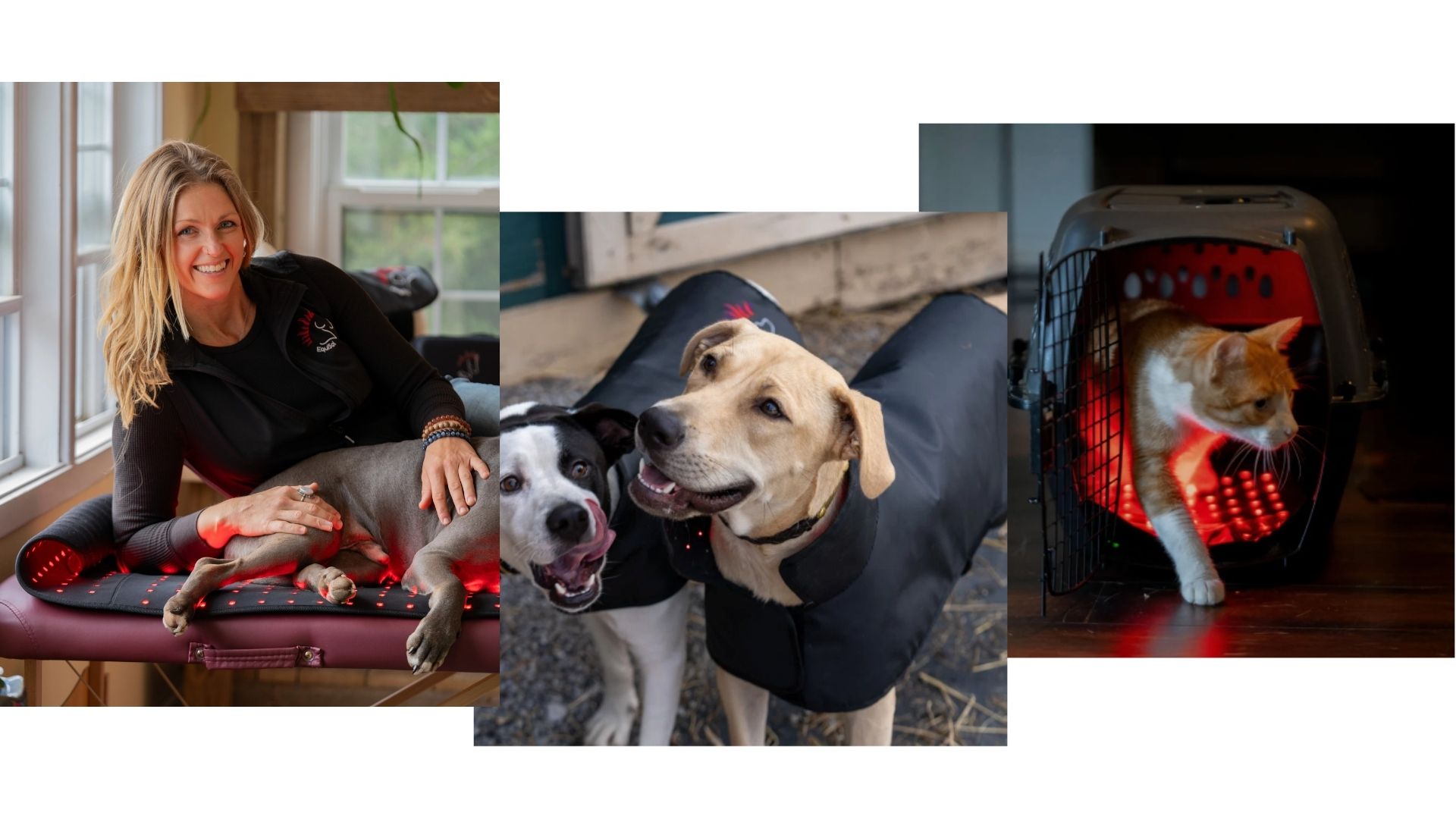
Jackie Jolie is the founder of AnimaSol.
She has a bachelor’s degree in equine health and rehabilitation and more than 15 years of experience in equine and canine body work.
She spent close to 20 years working with performance animals, using body work and rehabilitation-style approaches. She also used lasers in that practice.
Her deeper interest in light therapy came from her own health journey after Lyme disease.
She shared that she healed Lyme disease naturally with herbal tinctures and lifestyle changes, but after that, she still struggled with symptoms she could not recover from. Her hormones were low, her energy was poor, she could not recover from workouts, and she had spent a large amount of money trying different tests, supplements, and naturopathic options.
Then she learned about quantum biology, which focuses on light, water, and magnetism.
That led her to the idea that light is foundational for health.
From there, she created red and near infrared light therapy products for animals and began teaching pet parents more about circadian biology, natural light, darkness, and getting animals back closer to nature.
What Is Red Light Therapy?
Red light therapy is a form of photobiomodulation.
That is the scientific term for using light to change biology for the better.
Jackie explained that light therapy works by using specific wavelengths of light to interact with the body.
The main wavelengths discussed were:
- Red light
- Near infrared light
These wavelengths can be delivered using lasers or LED devices.
The goal is to bring specific light into the tissue so the body can respond.
Are Lasers and Red Light Therapy the Same Thing?
Jackie’s simple answer was yes, in the sense that both are delivering red and near infrared wavelengths to tissue.
But the products are built differently.
Lasers
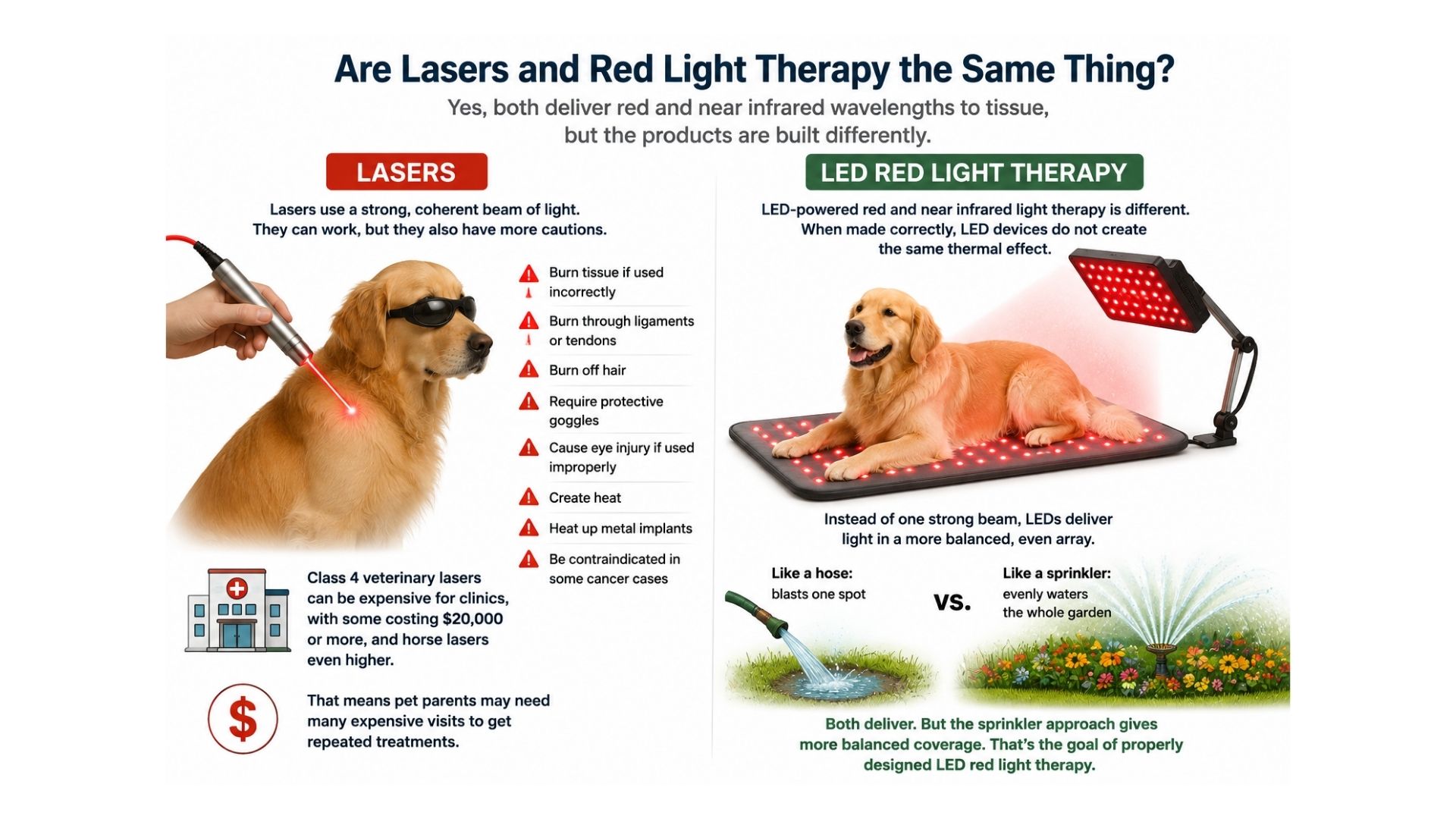
Lasers use a strong coherent beam of light.
They can work, but they also have more cautions.
Jackie mentioned that lasers can:
- Burn tissue if used incorrectly
- Burn through ligaments or tendons
- Burn off hair
- Require protective goggles
- Cause eye injury if used improperly
- Create heat
- Heat up metal implants
- Be contraindicated in some cancer cases
Class 4 veterinary lasers can also be expensive for clinics, with some costing $20,000 or more, and horse lasers even higher.
That means pet parents may need many expensive visits to get repeated treatments.
LED Red Light Therapy
LED-powered red and near infrared light therapy is different.
When made correctly, LED devices do not create the same thermal effect.
Instead of one strong beam, LEDs deliver light in a more balanced, even array.
Jackie compared it to watering a garden.
You could blast one spot with a hose, or you could use a sprinkler to evenly saturate the garden.
Both deliver water.
But the sprinkler gives a more balanced coverage.
That is how she describes properly designed LED red light therapy.
Why Does Light Matter for Pets?
Jackie’s bigger point is that modern dogs, cats, horses, and people are often light deficient.
Many of us spend most of our time indoors.
Our pets are doing the same.
Modern homes can have:
- Windows that filter natural light
- Artificial indoor lighting
- Fluorescent lights
- LED bulbs with mostly blue light
- Screens from TVs, computers, phones, and tablets
- Lights on at night
- Wi-Fi and smart devices
Jackie said we need to start seeing light as a supplement.
That is especially true for indoor cats, older dogs, working dogs, pets with chronic inflammation, and animals recovering from injuries.
What Does Circadian Rhythm Have to Do With Pet Health?
Dogs and cats are circadian mammals.
That means their bodies are designed to respond to cycles of light and darkness.
Jackie explained that pets need both:
- A light sequence during the day
- A dark sequence at night
The problem is that many pets get indoor artificial light at night, especially blue light from bulbs, screens, and devices.
That can interfere with the body’s natural rhythm.
What About Melatonin?
Jackie made an important point:
Melatonin is not just a “sleepy vitamin.”
Melatonin is a hormone.
The body makes melatonin naturally, and it is involved in repair processes.
Jackie explained that UVB exposure during the day helps create the body’s melatonin storage, and darkness is needed to release melatonin so it can run important processes.
She specifically discussed:
- Apoptosis
- Autophagy
- Cellular repair
- Cell death programs that help kill abnormal cells
- The need for about two hours of darkness
In plain English:
Your pet’s body needs daytime light and nighttime darkness to repair properly.
A dog sleeping beside a glowing TV and Wi-Fi router all night is not exactly living like the old farm dog.
How Does Red Light Therapy Work in the Body?
Jackie explained that light interacts with the body at the cellular level.
Every cell has mitochondria.
Most of us learned that mitochondria are the “powerhouse of the cell.”
That is true, but Jackie explained they do more than make energy.
Mitochondria are involved in:
- ATP production
- Heat production
- Circulation
- Hydration
- Cellular repair
- Signals for healing programs
- Responding to the environment
Red and near infrared light interact with the mitochondria, especially through cytochrome C oxidase.
The idea is that the correct light helps the mitochondria do their job better.
That may lead to better energy, hydration, circulation, and healing.
What Benefits Were Discussed?
Jackie discussed a wide range of possible benefits from red and near infrared light therapy.
These included:
- Natural pain relief
- Decreased inflammation
- Improved circulation
- Faster wound healing
- Nerve regeneration
- Hydration of joints and soft tissue
- Support for arthritis
- Support for bone-on-bone joint issues
- Soft tissue injury support
- Hair regrowth
- Support for recovery
- A calming systemic effect
- Helping the body enter rest and digest mode
She also said red light therapy may help wounds heal faster, describing wound healing as being about 50% faster in the discussion.
What Conditions Might Red Light Therapy Help in Pets?
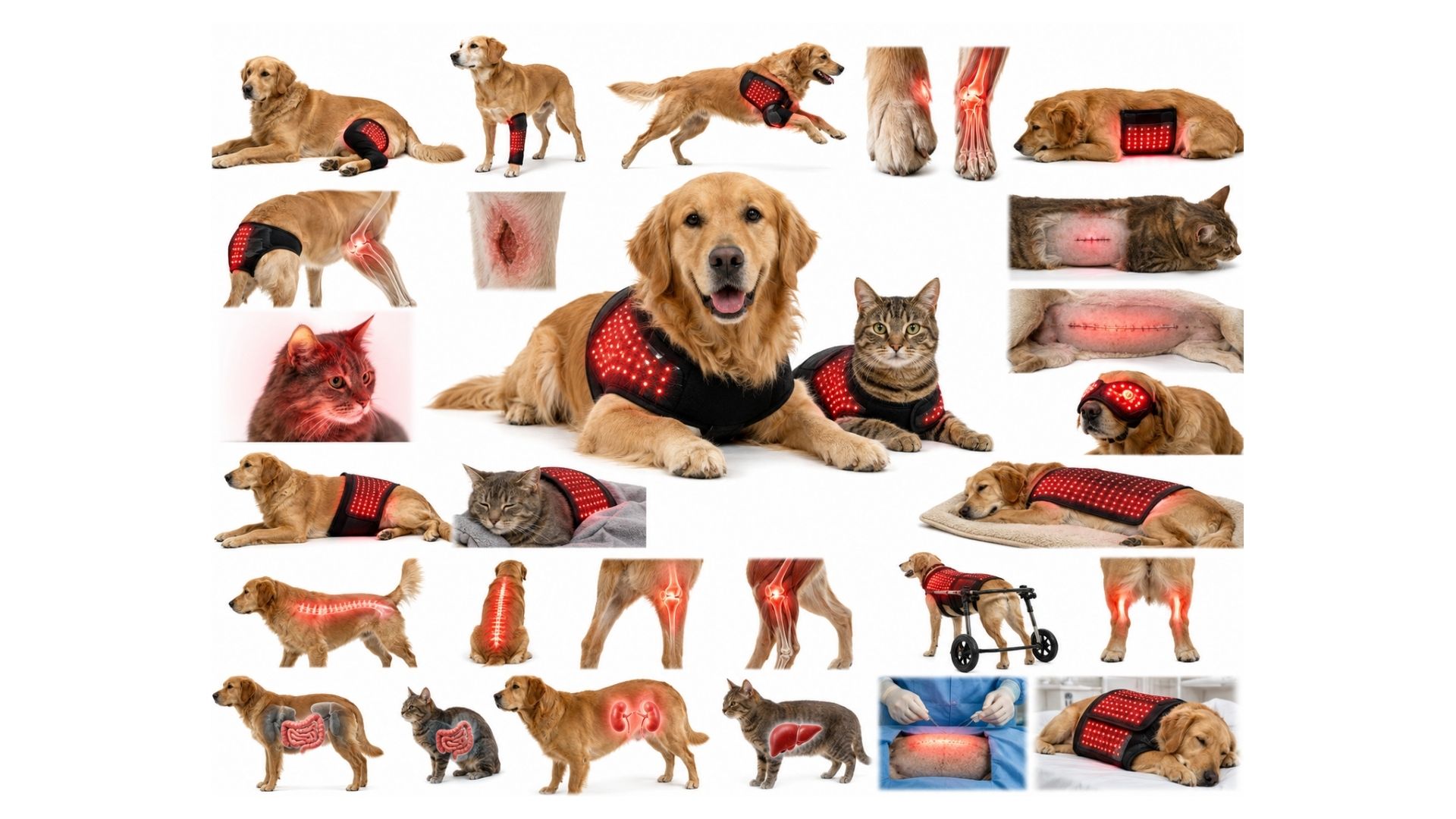 Based on the conversation, red light therapy may be considered for:
- Arthritis
- Soft tissue injuries
- Ligament injuries
- Tendon injuries
- Wound healing
- Surgical recovery
- Hair regrowth
- Pain relief
- Inflammation
- Anxiety
- Separation anxiety
- Noise sensitivity
- Gut support
- IBD
- Kidney disease support
- Liver inflammation support
- Eye support, depending on the product
- Hospice comfort
- Pre-surgery and post-surgery support
- CCL or ACL injuries
- Paralysis case support
- Spay and neuter recovery
- Bloat surgery scars
- C-section scars
- Castration recovery
- Abdominal surgery scars
That does not mean red light therapy cures all of those conditions.
But it may support the body while it is trying to heal.
What Are the Three Things to Look for in a Red Light Therapy Product?
Jackie said there are three main parameters to look for:
- Wavelengths
- Contact method
- Power
These matter because not every red light product is the same.
A random red panel on the wall is not automatically giving your pet a therapeutic dose.
1. Wavelengths: Red and Near Infrared Matter
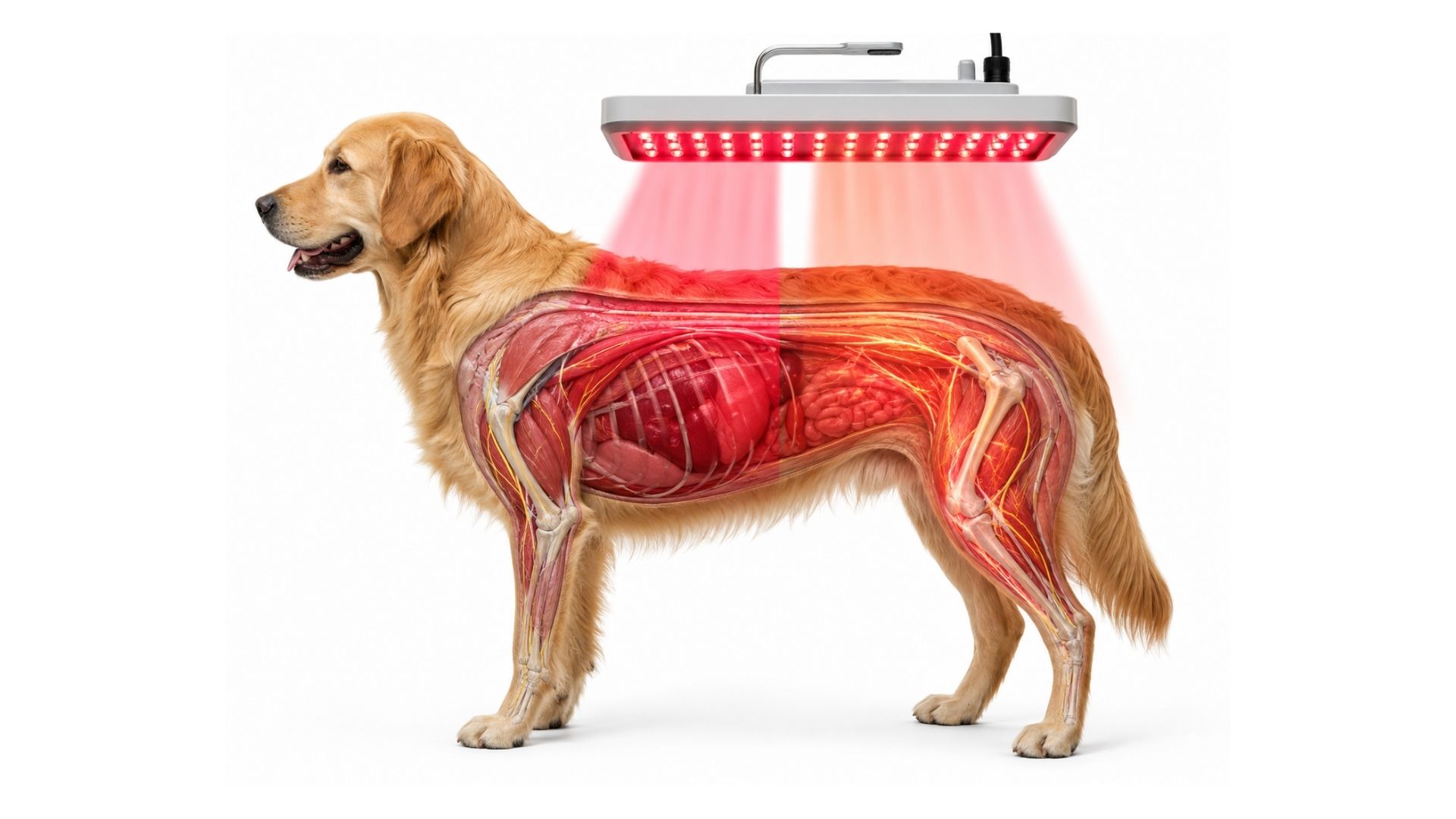
Jackie said a product should include both red and near infrared light.
Red Light
Red light is more superficial.
It may penetrate about 3 to 5 millimeters into the body.
This makes it useful for more surface-level support, such as:
- Hair regrowth
- Wound healing
- Surgical site repair
- Skin-level concerns
Near Infrared Light
Near infrared light penetrates deeper.
Jackie said it can reach deeper tissues, including down toward the bone marrow and organs, if the product is made correctly.
This makes it more relevant for:
- Joints
- Nerves
- Tendons
- Ligaments
- Muscles
- Organs
- Deeper tissue inflammation
What Wavelengths Does AnimaSol Use?
Jackie said AnimaSol devices use five wavelengths:
| Type | Wavelengths Mentioned |
|---|---|
| Red light | 630 and 660 |
| Near infrared | 810, 830, and 850 |
She especially highlighted 810 because she said it is strong enough to go through the cranium, meaning it should also get through the vertebrae, discs, nerves, and joints.
AnimaSol products were also described as having a 2:1 ratio of near infrared to red, meaning the products deliver double the deeper-penetrating wavelengths.
2. Contact Method: Why the Light Should Touch the Body
Jackie said contact method matters.
In most studies, the light source was placed on the skin or body surface.
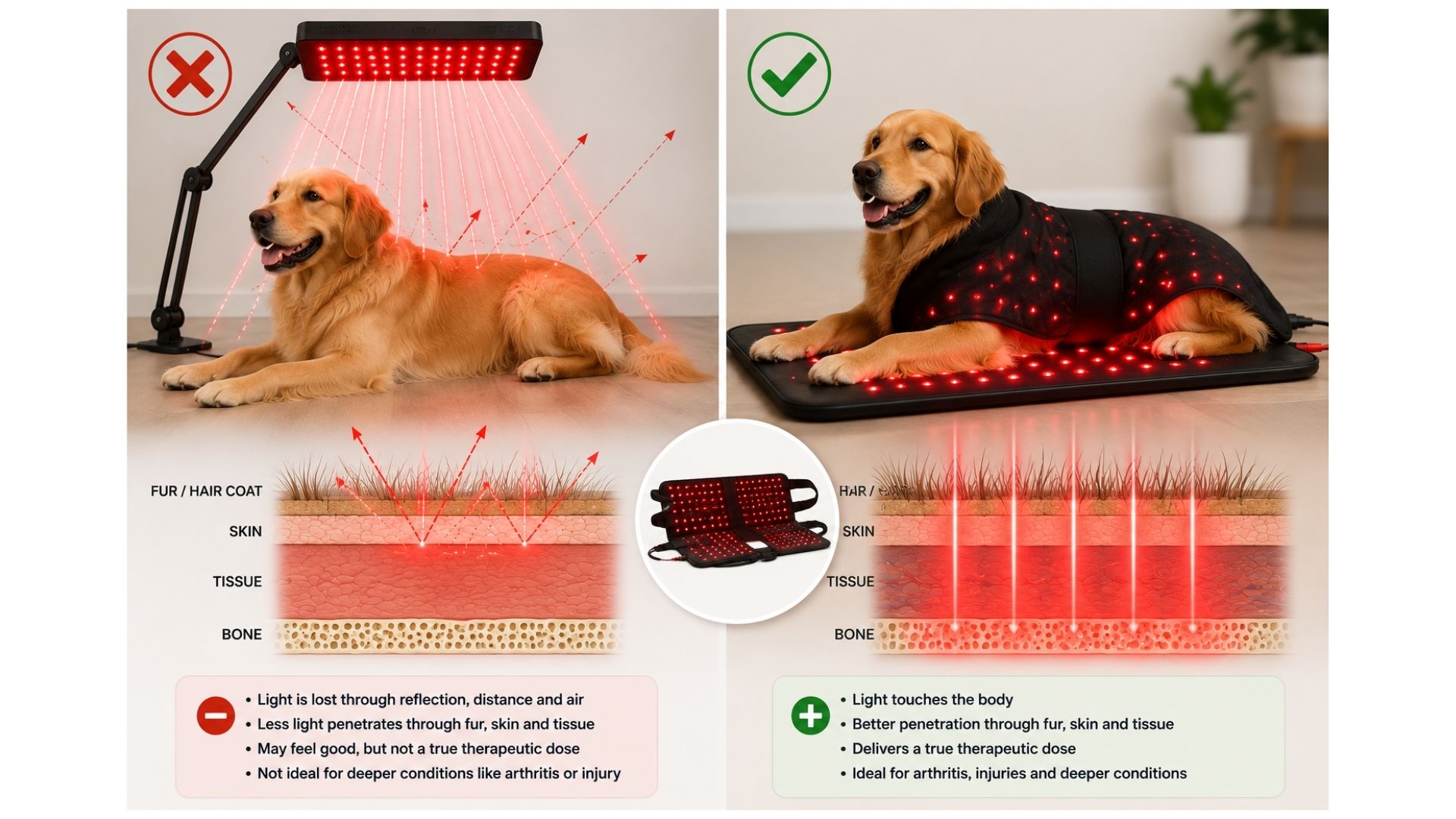
That matters even more for animals because the light needs to get through:
- Skin
- Fur
- Hair coat
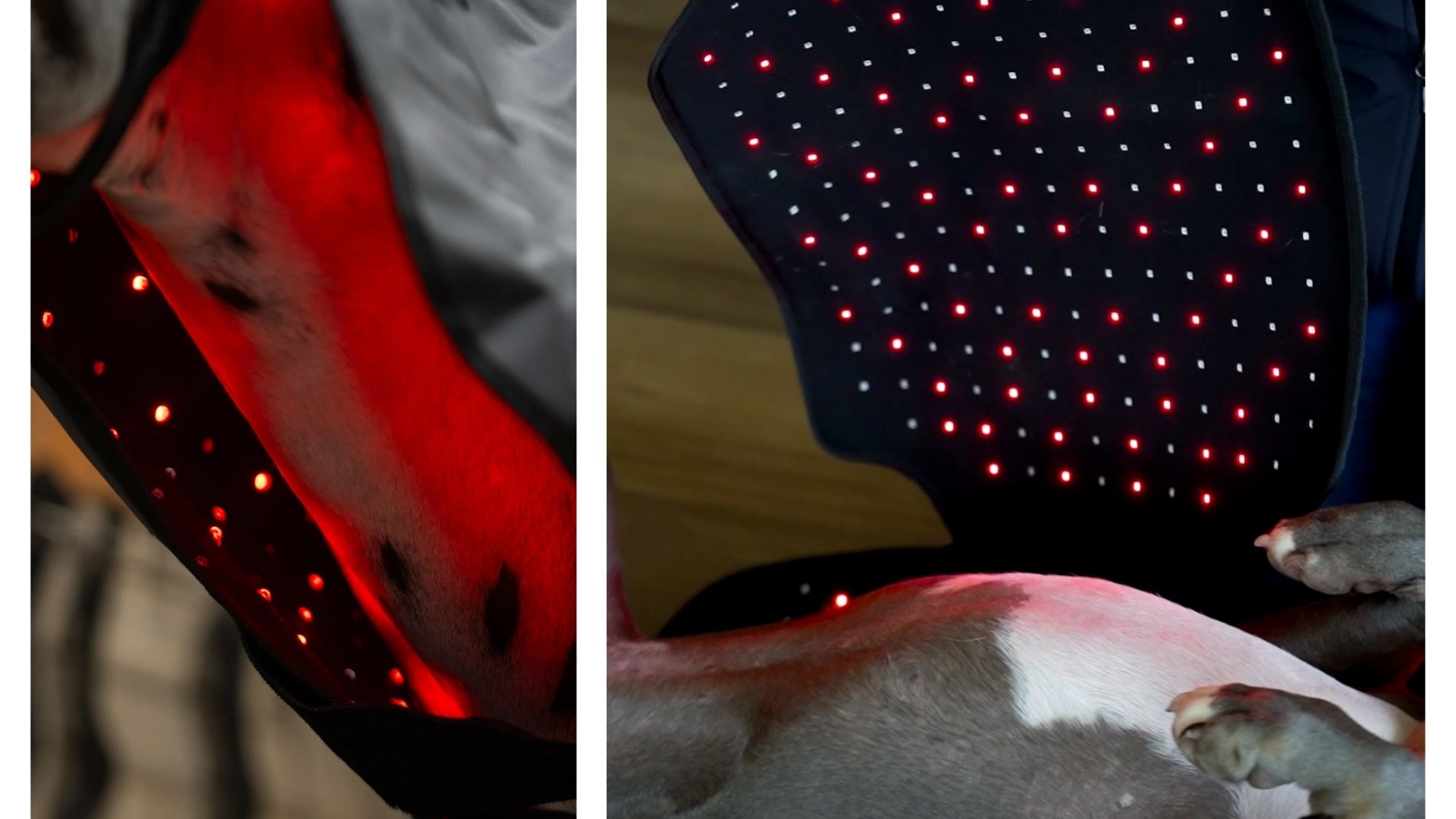
If the light source is moved away from the body, light can be lost through reflection, space, and air.
A panel may give a “feel-good” effect, but Jackie said it may not deliver a true therapeutic dose for arthritis, injury, or deeper conditions.
Her recommendation:
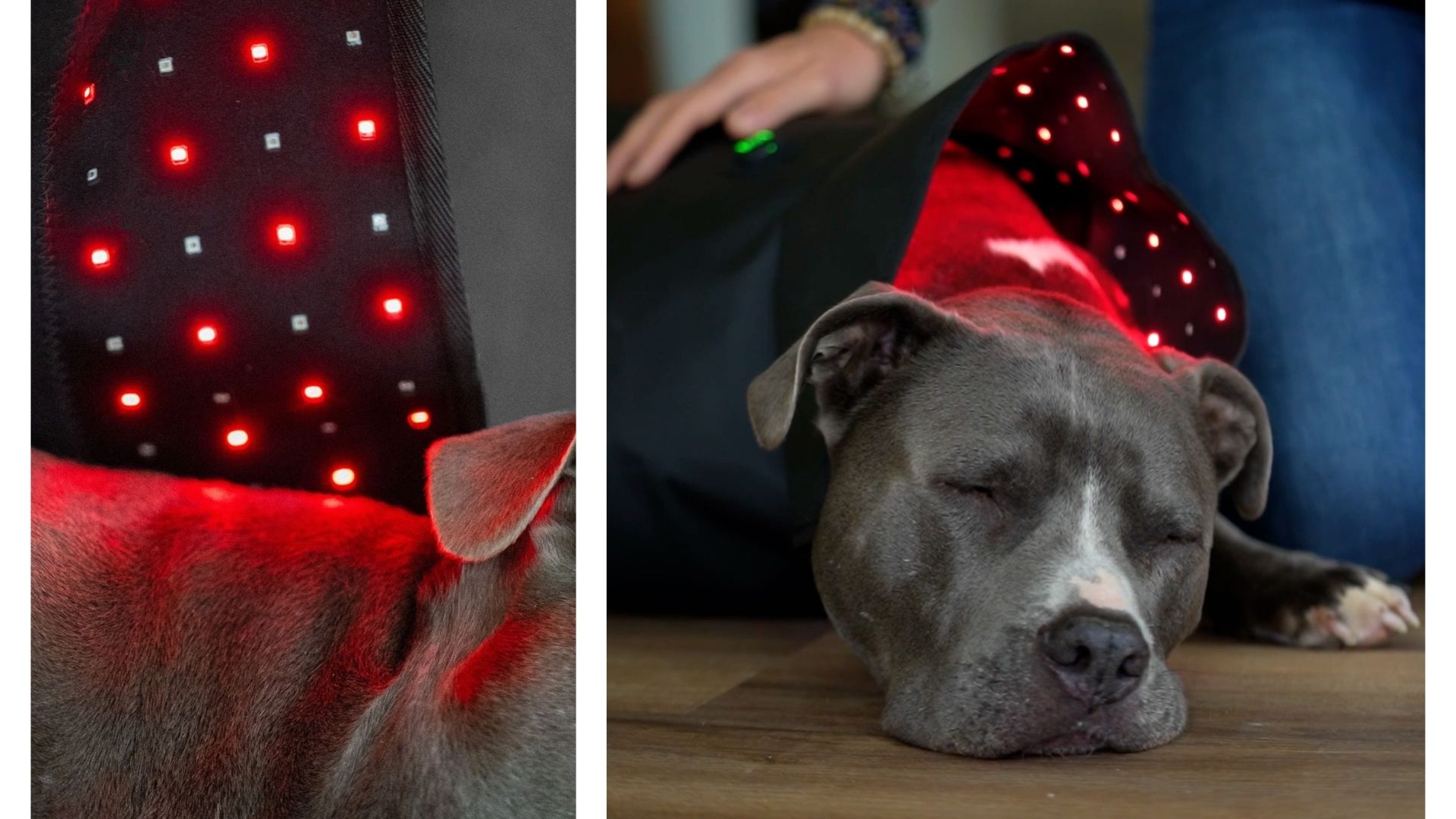
Use a product that touches the body.
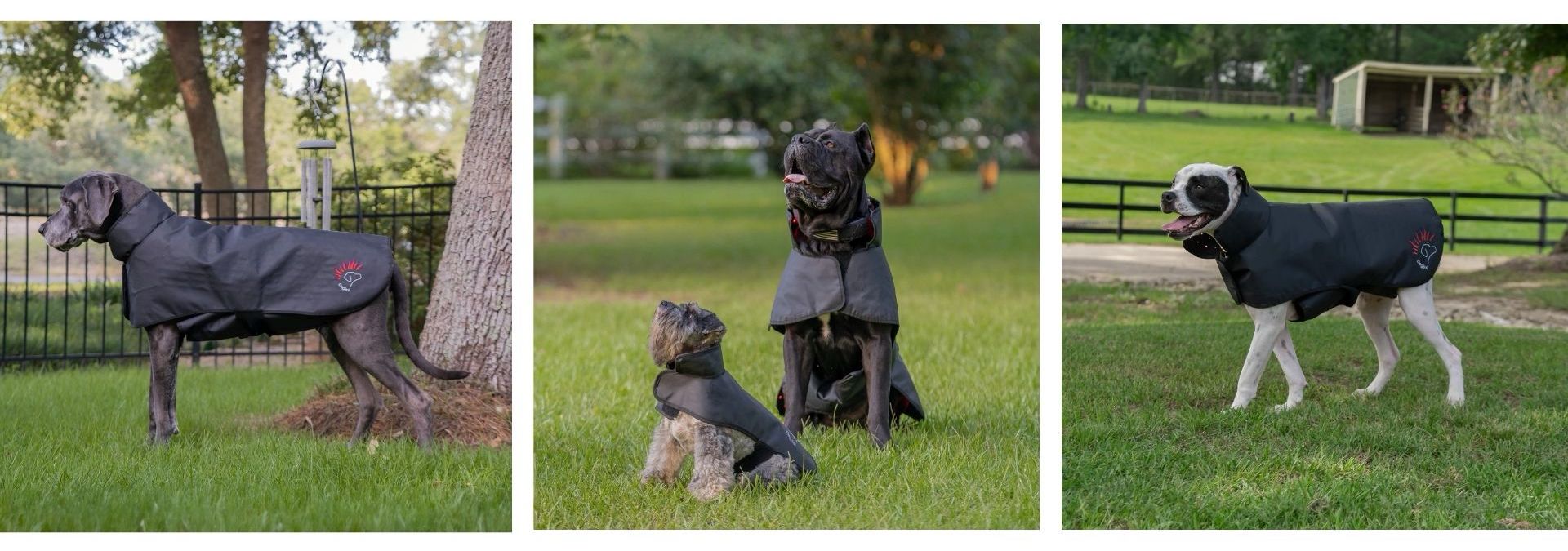
AnimaSol products were described as full-body wearable devices.
3. Power: Stronger Is Not Always Better
Many people assume the strongest and most expensive device is best.
Jackie said that is not necessarily true.
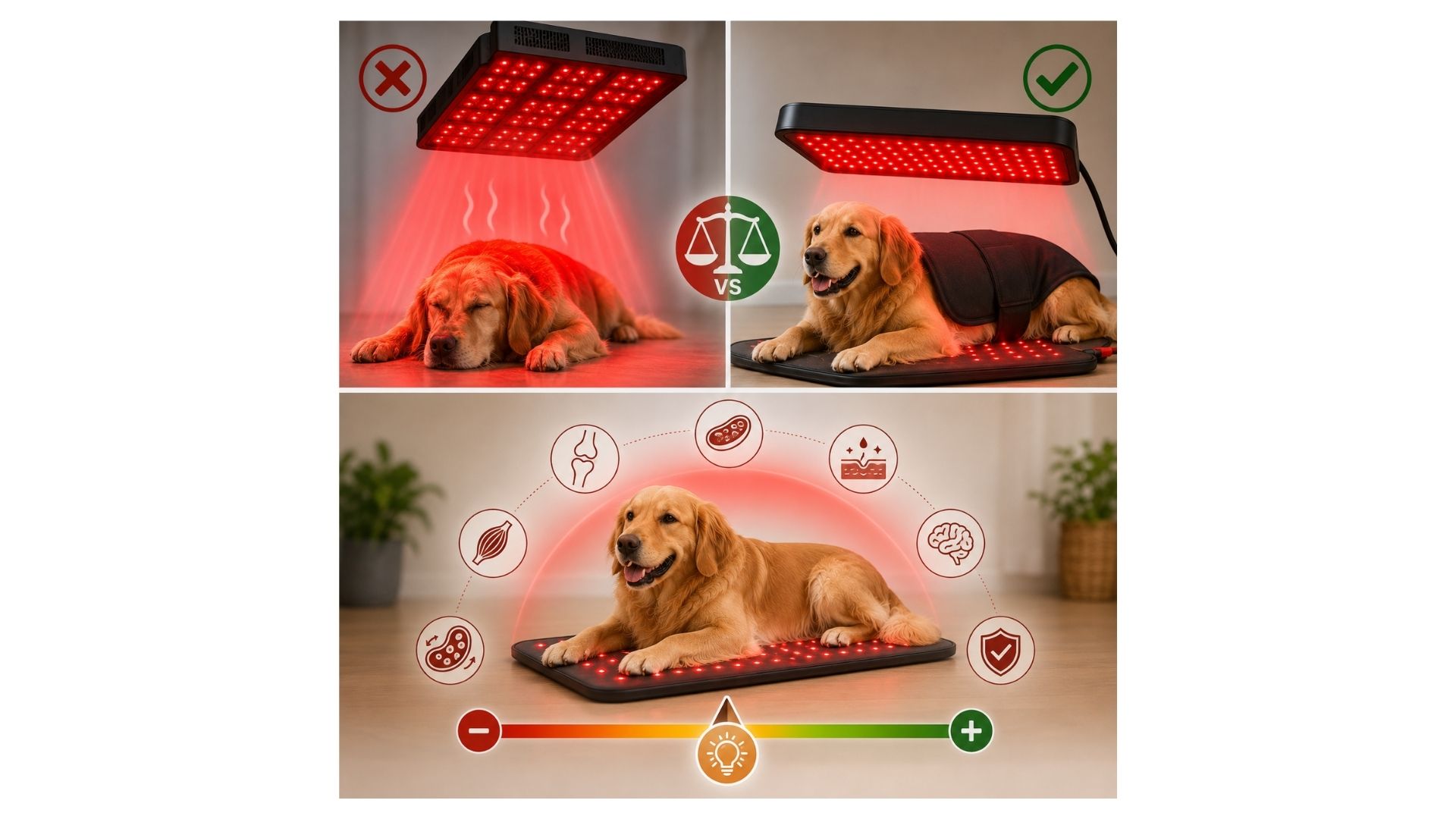
The science she discussed shows therapeutic effects from low-level LED products or low-level lasers.
The goal is not to blast the body.
The goal is to provide enough light to trigger a beneficial response without creating heat or damage.
How Long Should You Use Red Light Therapy?
Jackie said she does not recommend more than 30 minutes at a time.
Not because she believes it causes harm, but because of something called a biphasic dose.
That means the cells can only take in so much light at one time.
If you use it for four hours, you may not get additional benefit after the first 30 to 40 minutes.
The body needs time to integrate and use the light.
Then it may be ready for another session two or three hours later.
Simple Session Guide From the Discussion
| Situation | Session Guidance Mentioned |
| General use | Avoid going over 30 minutes at one time |
| Multiple sessions | Allow 2 to 3 hours between sessions |
| Torch/acupuncture point use | 30 to 45 seconds for acupuncture point activation |
| Horse case studies | 15 minutes daily was used in some injury cases |
| Paralysis case study | 30 minutes twice daily was used |
| Eye case study with torch | 3-minute session was mentioned |
Can You Overdo LED Red Light Therapy?
Jackie said that with AnimaSol’s LED products, she does not believe you can overdose or cause harm.
The caveat is that more is not always more beneficial because of the biphasic dose.
So the practical advice is:
Use it regularly.
Do not assume four hours gives four times the benefit.
Let the body use the light.
Then repeat later if needed.
Does Fur Color or Hair Length Matter?
Jackie said lighter coats may absorb light more easily.
That includes:
- White coats
- Off-white coats
- Tan coats
Darker coats may be less easy to penetrate in theory.
But she also said AnimaSol products have been used on many dogs with different coats, including:
- Great Pyrenees
- German Shepherds
- Poodles
- Golden Retrievers
She said their products are designed to penetrate through fur and reach the joints and nerves.
If someone is unsure, she mentioned they could run the product twice in a row for a 30-minute session to get deeper saturation.
Does Red Light Therapy Help Wounds and Surgical Healing?
Yes, this was one of the strongest points in the discussion.
Red light therapy may help with:
- Wound healing
- Surgical site repair
- Scar tissue reduction
- Inflammation reduction
- Pain relief
- Faster soft tissue repair
Jackie discussed using red light after surgeries such as:
- C-sections
- Bloat surgery
- Castration
- Spay and neuter
- Abdominal surgery
- Colic surgery in horses
She said light may help repair the area faster, reduce inflammation and pain, and help prevent scar tissue from setting in.
Can Red Light Therapy Help Arthritis and Joint Pain?
Red light therapy may help support pets with arthritis and joint pain by improving circulation, decreasing inflammation, supporting tissue hydration, and helping the pet relax.
Jackie said red light can help support the areas around a joint even if it cannot grow a joint capsule back.
So for bone-on-bone joints, the expectation should be realistic.
It may help with comfort, mobility, hydration of tissues, and inflammation.
But it is not rebuilding a missing joint capsule.
That is an important distinction.
Can Red Light Therapy Help ACL or CCL Injuries?
Jackie discussed CCL and TPLO cases in dogs.
She said they have helped several dogs avoid expensive CCL or TPLO surgery, including a Great Pyrenees and her own 85-lb pit bull with a slight tear.
But she also made clear that it is not guaranteed.
A complete tear or bilateral problem may still require surgery.
Where red light may help is:
- Supporting the injured joint
- Supporting the opposite compensating joint
- Helping before surgery
- Helping after surgery
- Supporting faster healing
- Helping reduce strain during recovery
Jackie also said that when one joint is injured, the other side compensates, so both joints should be treated.
That makes sense.
The “good leg” often becomes the overworked leg.
Can Red Light Therapy Help Paralysis?
Jackie shared a case study of a Yorkshire Terrier that had been completely paralyzed for a year.
They used red light therapy for 30 minutes twice a day.
She said the dog was standing in five days and walking in 12 days.
He later walked 30 minutes with his owner every day, no longer needed a wheelchair, and could pee, poop, get up, and walk on his own.
After inflammation was reduced and he started walking again, more diagnostics found four herniated discs in his back that were not operable.
That is an impressive case.
But I would still be careful how we talk about it.
This does not mean every paralyzed dog will walk again.
It does mean this is an area worth paying attention to, especially for inflammation, neurologic support, and quality of life.
What About Cancer?
This is where we need to be careful.
Jackie explained that lasers have traditionally not been recommended for cancer patients because lasers create heat.
That heat may be a concern around active tumors.
With LED-powered red and near infrared devices, she said the conversation is different.
She said practitioners on the human and animal side are using LED red and near infrared light therapy to support the body during cancer.
She also clearly said she is not claiming red light therapy cures cancer.
Good.
We need that line.
She said some cancer patients using these products had:
- Better appetite
- More thirst
- More energy
- Better comfort
- Improved quality of life
She also discussed hospice use, where red light therapy may be used to provide comfort, calm, and relaxation near the end of life.
My Take
If your pet has cancer, work with your veterinarian.
Do not use high-powered lasers over tumors unless properly guided.
LED red light therapy may be supportive, but this should be done with caution and good judgment.
Comfort matters.
Quality of life matters.
But cancer is not a “guess at home” situation.
Does Red Light Therapy Help Anxiety?
Jackie shared that they have seen some improvement in small case examples involving separation anxiety, noise sensitivity, and reactivity.
One dog reportedly became less upset by the TV or people coming to the door when the blanket was used daily.
She also connected anxiety to gut health, noting that a lot of health comes from the gut and that anxiety and aggression may be connected to gut lining and bacteria disruption.
This is early.
More large controlled studies would be helpful.
But it is an interesting area, especially because red light may help bring the body into rest and digest mode.
What About Eye Safety?
For lasers, Jackie said protective goggles are always needed.
No exceptions.
For LED products, she said they should be safe enough for the eyes if they are properly designed.
But she also warned that red light therapy is now trendy, and not every company is making products properly.
She said she had used a human panel that was too strong and gave her eye floaters.
For AnimaSol’s products, she said they are safe to use around eyes, and they have case examples involving eye conditions.
Simple Eye Safety Takeaway
| Product Type | Eye Safety Guidance From Discussion |
| Laser | Always use protective goggles |
| LED product | Should be safer if properly made |
| Strong panels | Use caution, especially near eyes |
| AnimaSol products | Jackie stated they are safe around eyes |
Can Human Red Light Products Be Used on Pets?
For AnimaSol products, Jackie said yes.
Her point was simple:
We are all mammals.
She said their human and animal products are interchangeable.
She also said many customers use animal products on themselves, such as a dog blanket on the face or gut, or a cat pad on the back or stomach.
This may not apply to every company.
But for AnimaSol, she said the products are interchangeable.
Why Does Indoor Light Matter So Much?
This was one of my favorite parts of the conversation.
Jackie said many pet parents focus on food, water, supplements, vaccines, and toxins, but miss light.
A dog may be eating raw food, drinking clean water, and still living in a home with:
- Smart devices everywhere
- Wi-Fi on all night
- Blue light exposure at night
- Artificial light instead of sunlight
- Little outdoor time
- Poor darkness at night
In Jackie’s view, light is the elephant in the room.
And when I think about the old farm dog, it makes sense.
Those dogs were outside.
They were grounded.
They had sunlight during the day.
They had darkness at night.
And some of them lived to 16, 17, 18, even 19 years old, despite eating some pretty unimpressive food.
I am not saying feed your dog awful kibble and hope sunshine fixes everything.
Please do not make that the takeaway.
But light and darkness clearly matter.
What Can Pet Parents Do Without Buying Anything?
You can start with your pet’s light environment.
Simple Daily Light Habits
- Get your dog outside in the morning
- Let your pet get safe natural light during the day
- Create darker nights
- Turn off unnecessary lights at night
- Reduce blue light exposure in the evening
- Turn off Wi-Fi at night if possible
- Keep electronics out of the bedroom when possible
- Avoid keeping pets near routers and smart devices
- Let dogs, cats, and horses touch the ground when safe
- Use red or warmer light at night when needed
This is not expensive.
It just takes awareness.
Your dog does not need a wellness retreat.
He may just need sunlight in the morning and darkness at night.
Click To Get A Free Copy of My E-Book!

P.S. I found this conversation with Jackie Jolie fascinating.
The big practical takeaway?
Get your pets more natural light during the day and more darkness at night.
Then, if your dog or cat is dealing with pain, inflammation, wounds, arthritis, soft tissue injury, or recovery, red and near infrared light therapy may be worth considering.
And please, turn off the Wi-Fi at night if you can.
Your dog does not need to stream Netflix while sleeping.
P.P.S. Jackie’s company, AnimaSol, makes red and near infrared light therapy products for dogs, cats, horses, and people.
If you are looking at a light therapy product, remember Jackie’s three basics:
- Red and near infrared wavelengths.
- Contact method.
- Low-level power.
That is where I would start.
AnimaSol – Use code DRJONESSOL for 10% OFF
Learn more about Jackie and AnimaSol: https://www.animasol.life/drjonessol
Use code DRJONESSOL for 10% OFF