Licorice Root Dogs: The Natural Steroid I Use for Itchy Skin and Allergies

How Licorice Root Supports Allergies, Skin, Digestion, and Immune Health
If you are looking for a natural option that works fast for itchy dogs, this is one herb I reach for again and again.
It is Licorice Root.
Not the candy. The medicinal root that has been used for thousands of years in Greece, China, and the Middle East for respiratory and digestive support.
I have used it for allergies, topical skin disease, immune support, gastrointestinal issues, and even autoimmune conditions.
Let me explain why.
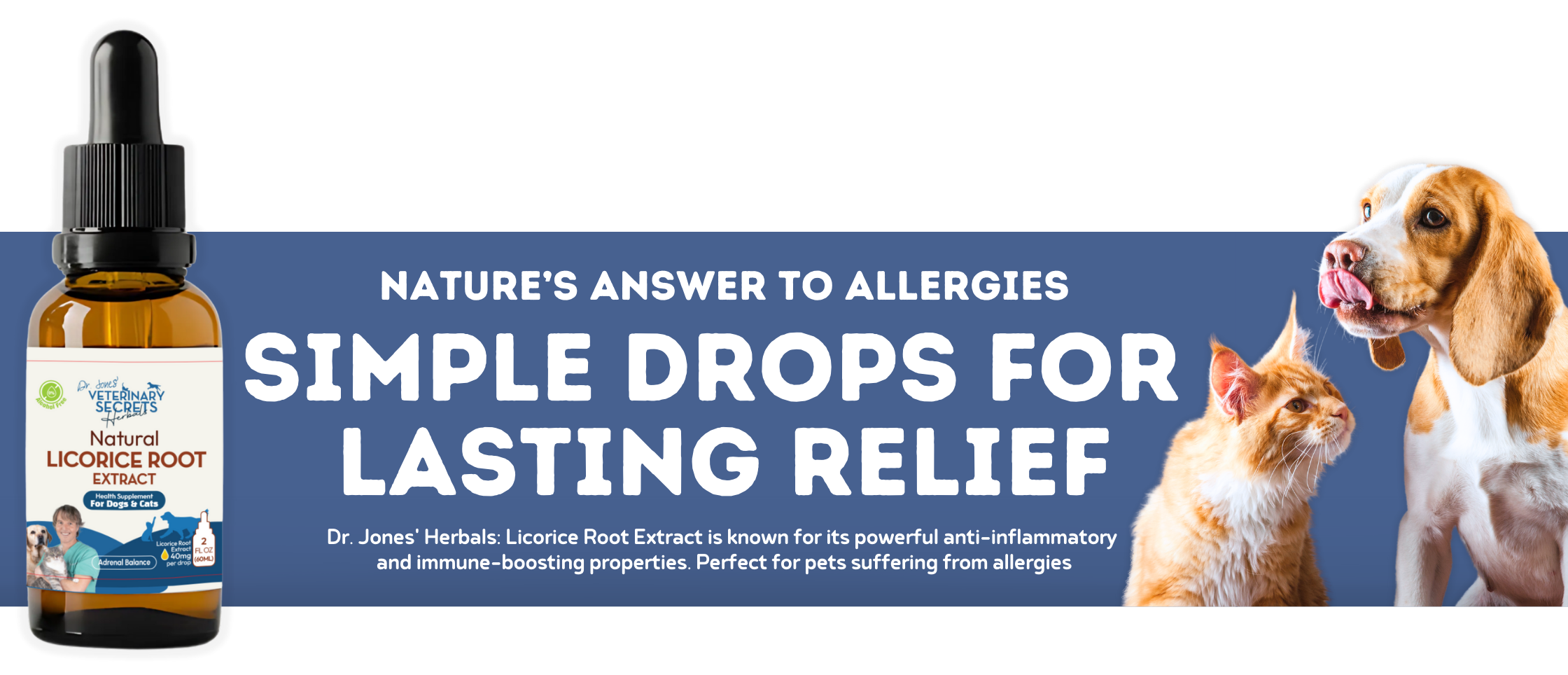
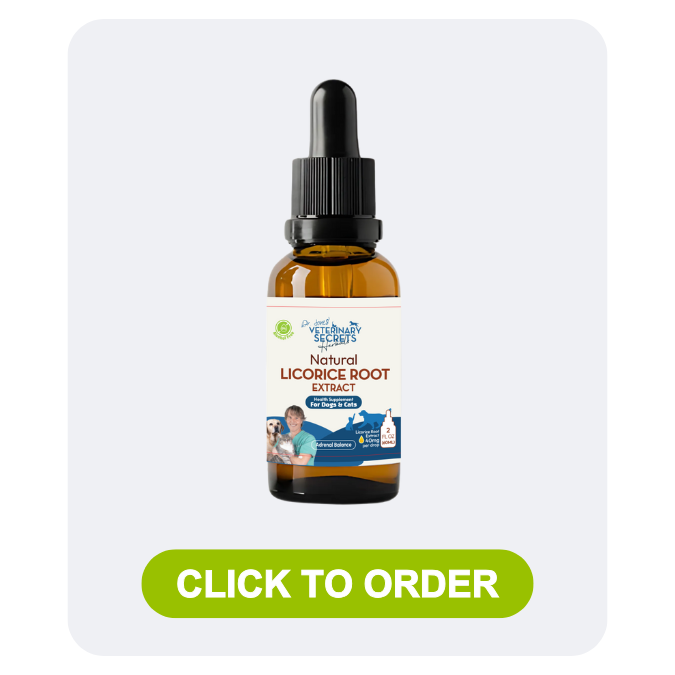
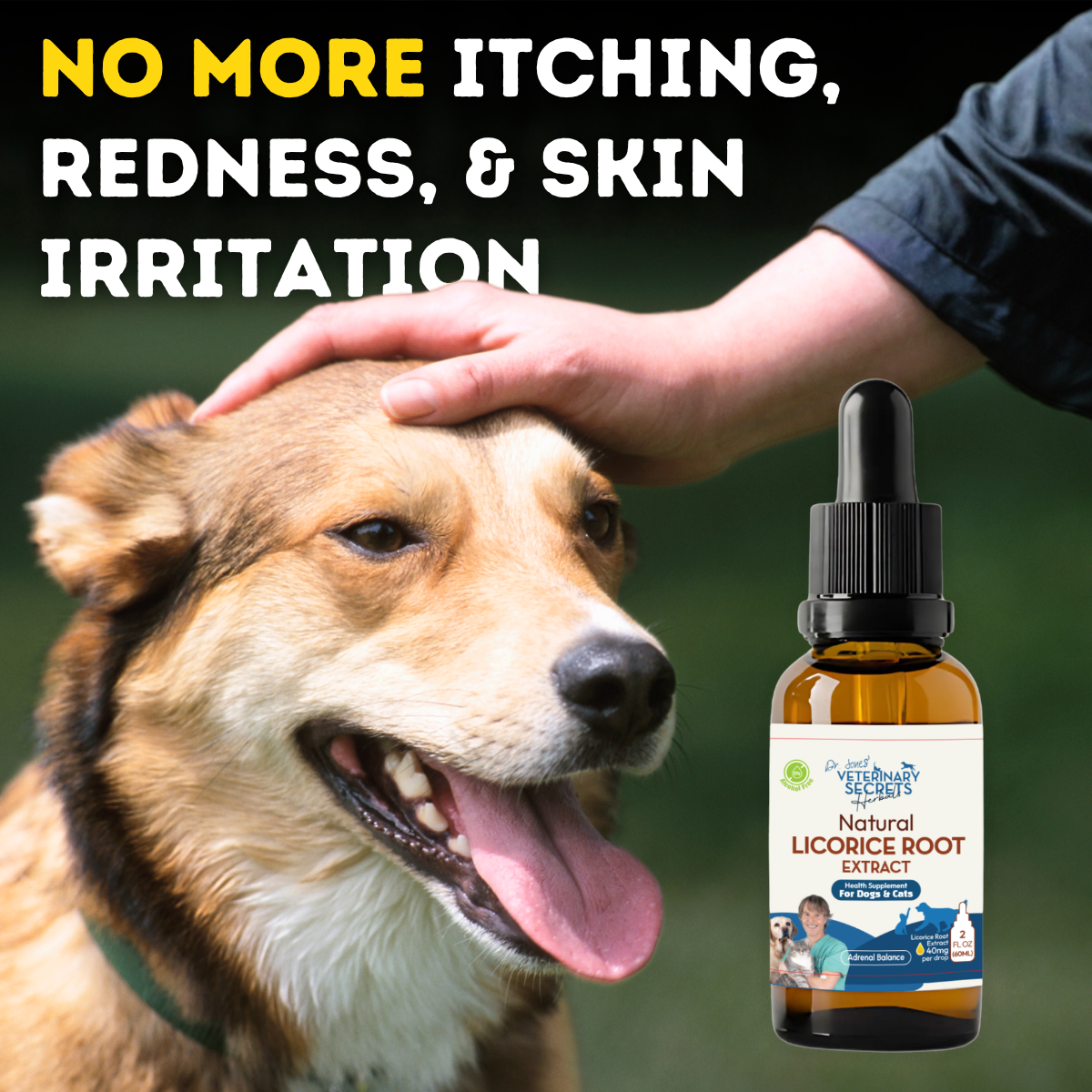
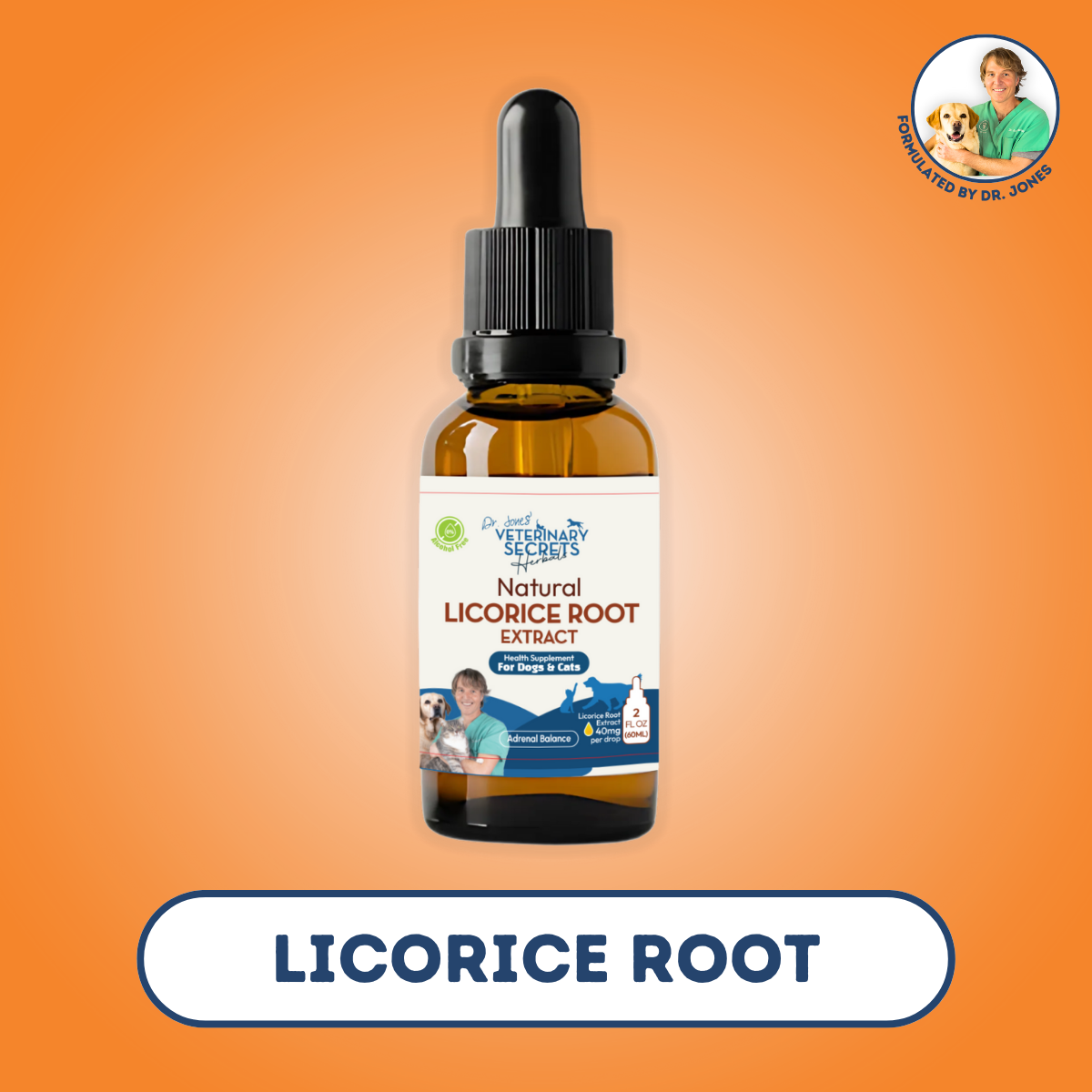
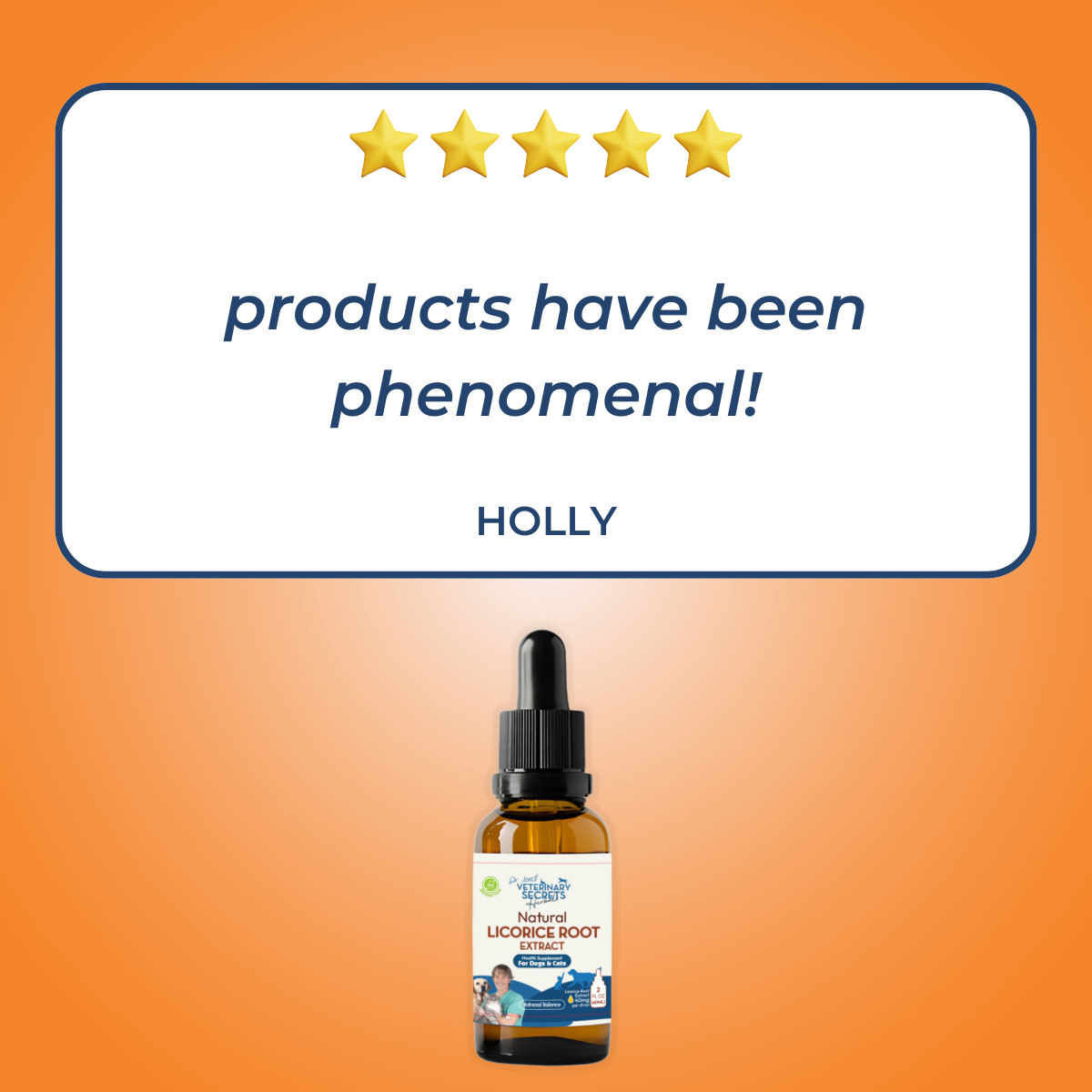
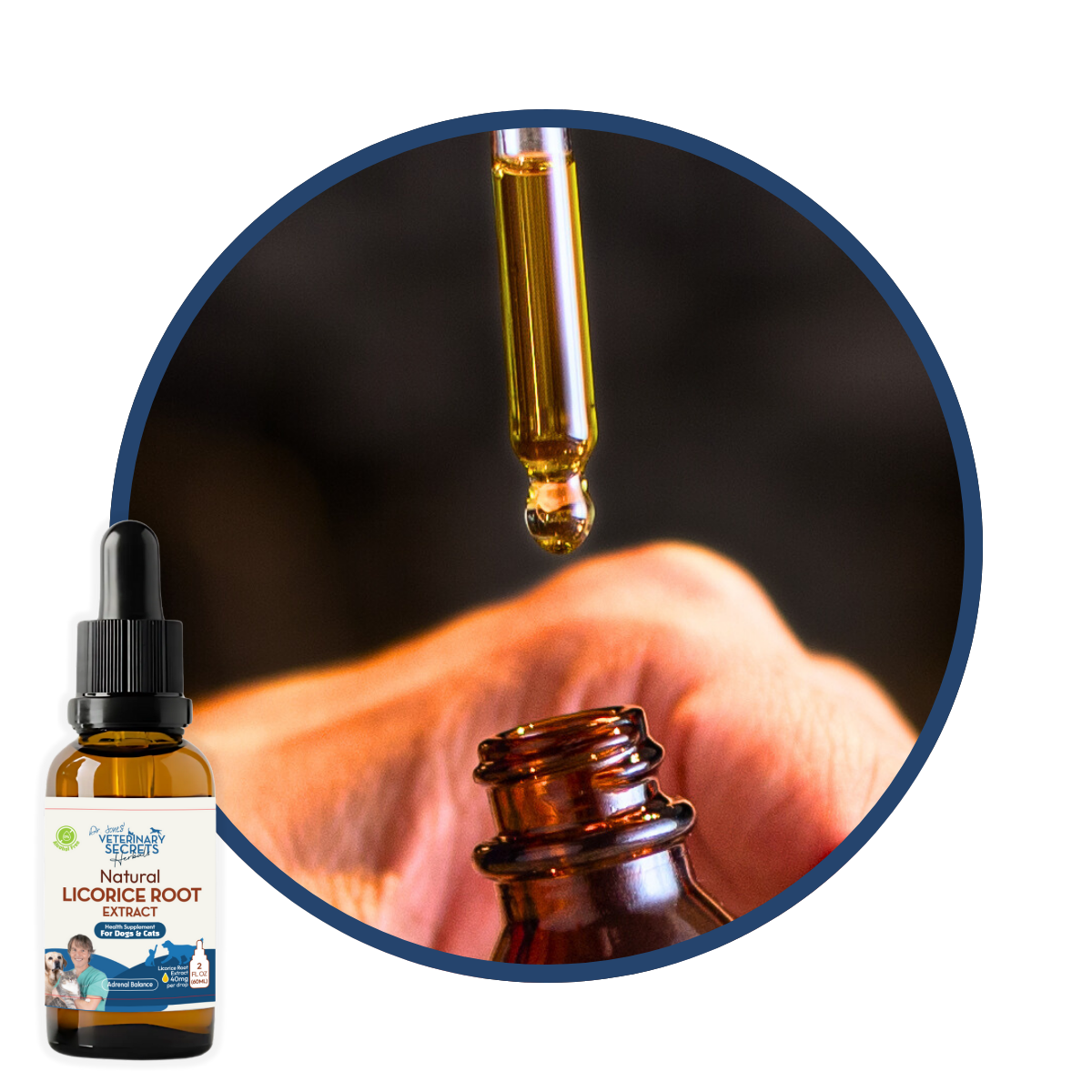
Dr. Jones’ Herbals: Licorice Root Extract

A Story From My Own Dog, Jesse
Years ago, our dog Jesse had severe allergies. He would not stop licking his groin, especially at night. His skin was red and inflamed. We tried many things. Some helped temporarily. Most did not.
The remedy that finally gave him real relief was Licorice Root.

Within a few days, the inflammation calmed. The itching eased. The constant lick cycle stopped.
Licorice Root acts like a natural steroid. It supports the body’s own cortisol pathways and helps reduce inflammation without jumping straight to conventional steroids.
What Is Licorice Root?
The scientific name is Glycyrrhiza glabra. It literally means sweet root.
It has been traditionally used for:
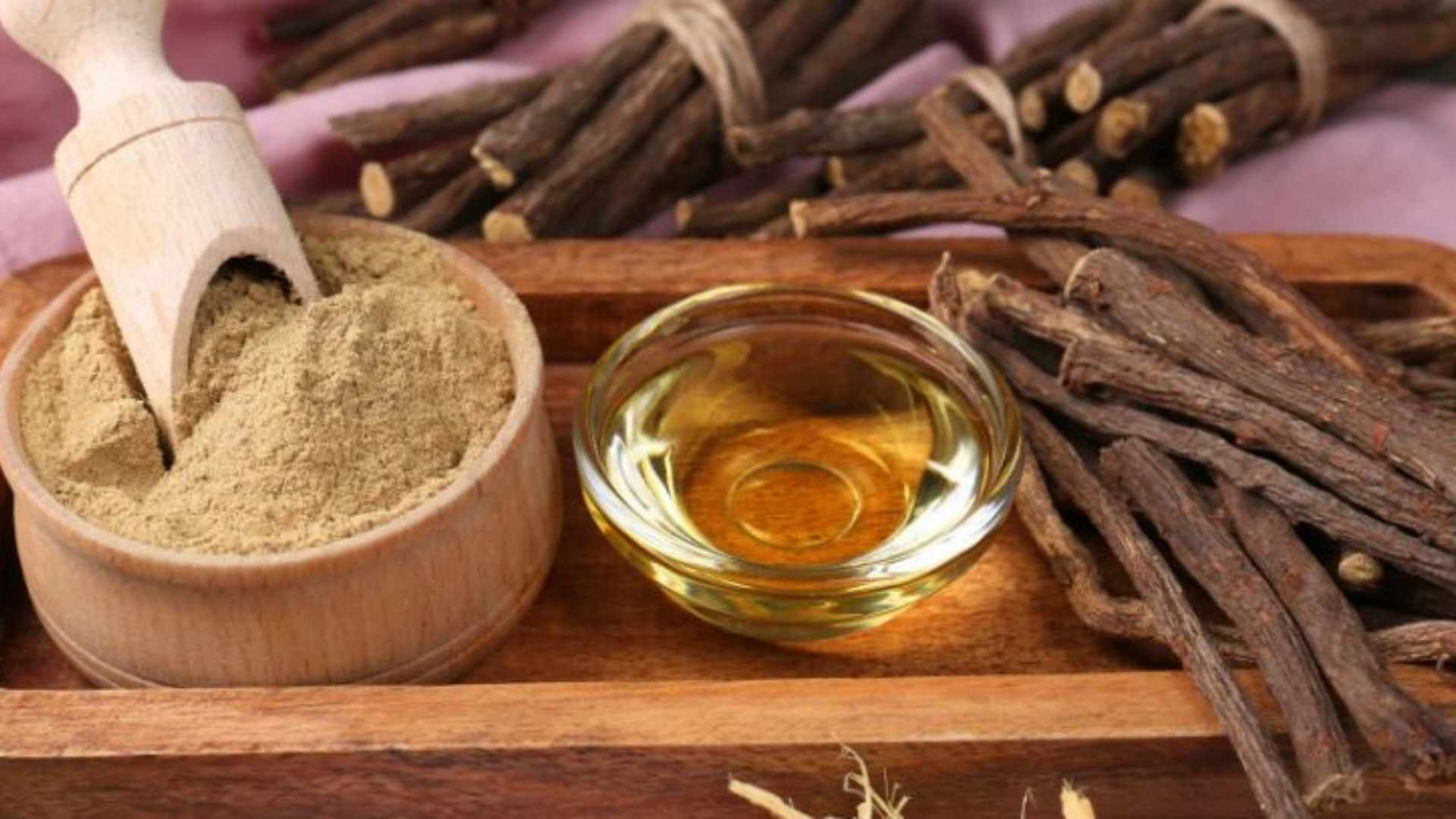
Respiratory conditions such as cough and asthma
Gastrointestinal disorders
Inflammation and immune imbalance
It contains many active compounds. The most notable is glycyrrhizin, which gives it strong anti inflammatory effects.
Top 5 Uses of Licorice Root for Dogs and Cats
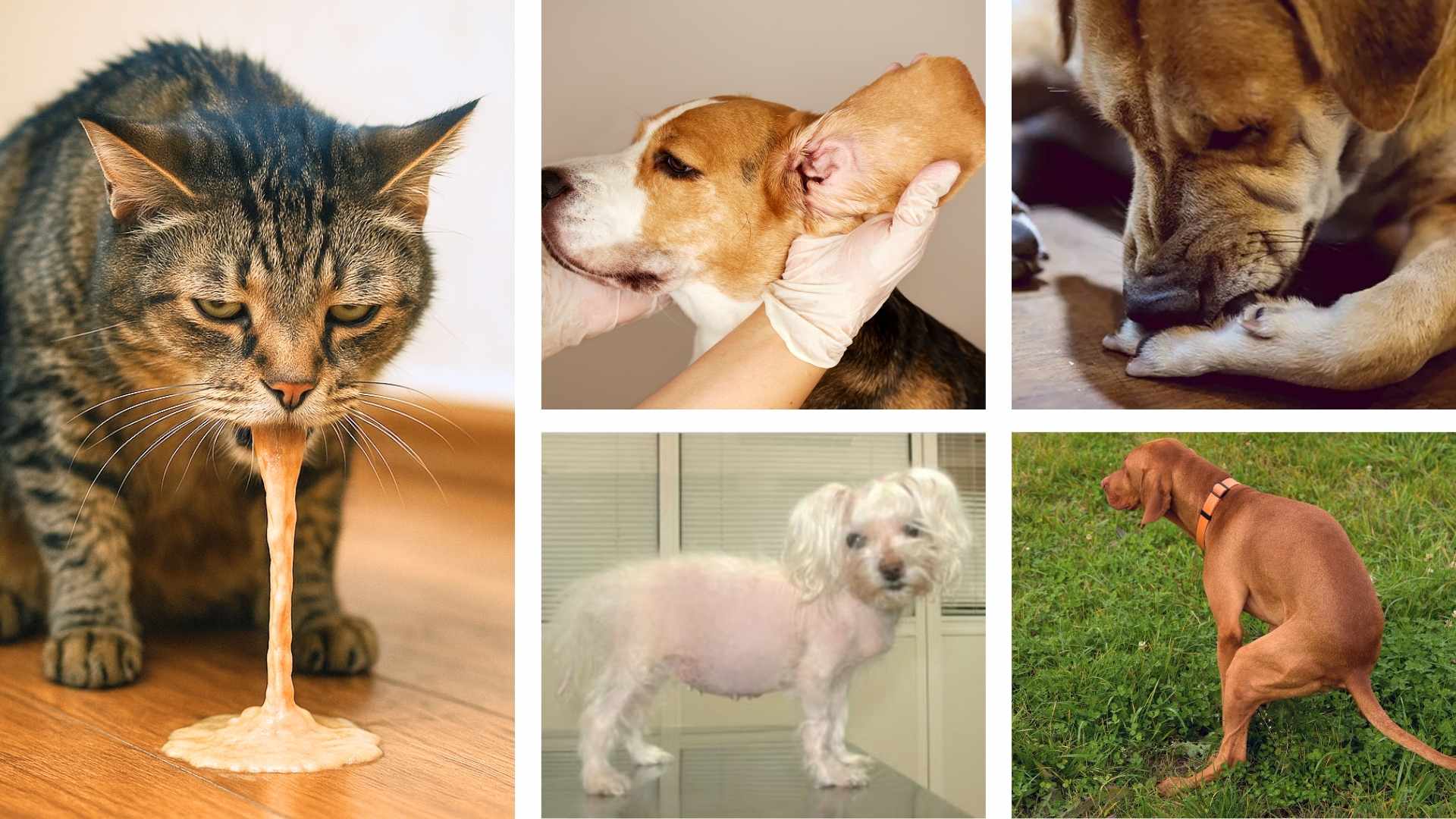
1. Allergies and Itchy Skin
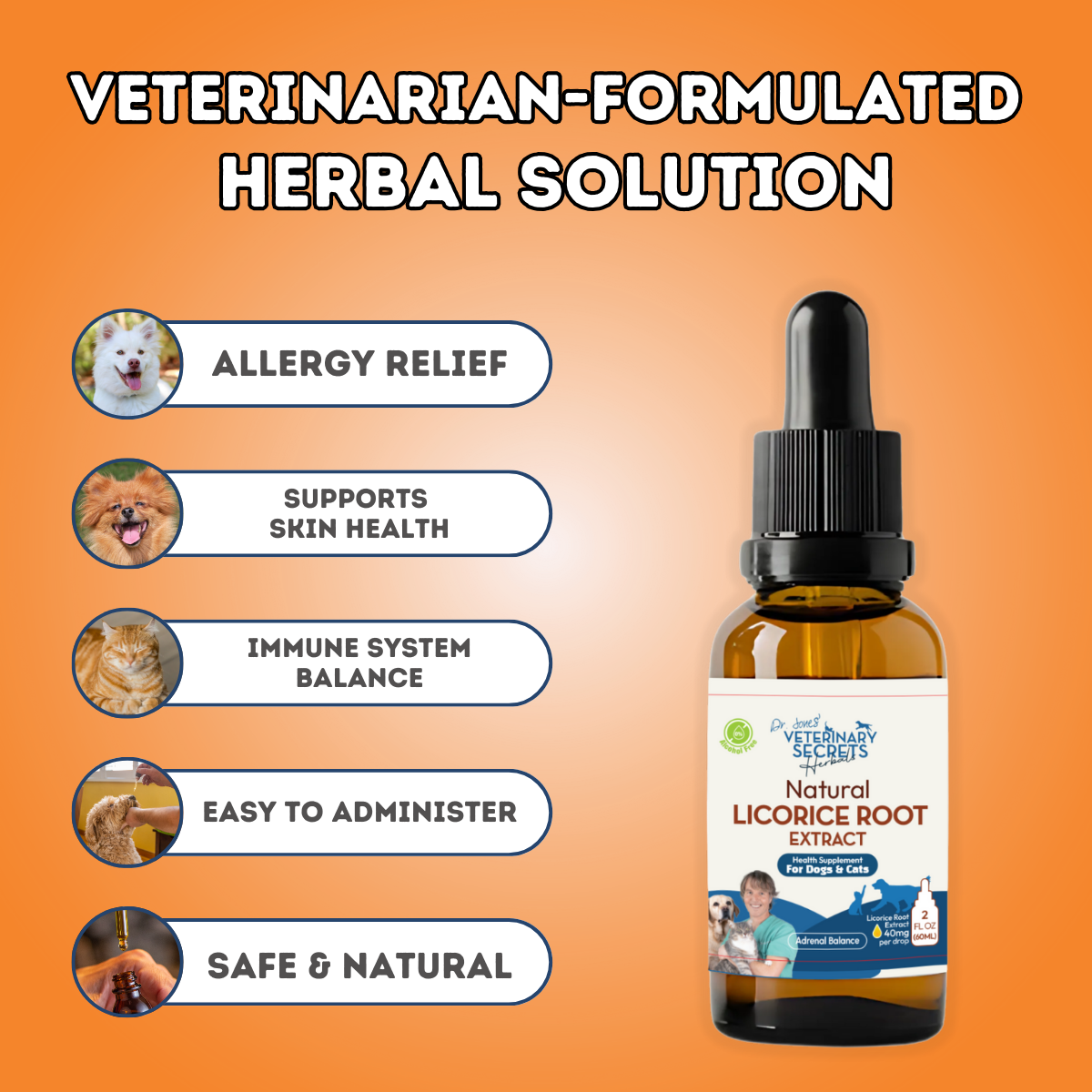
This is where I see it work quickly. It helps stop the itch scratch cycle and calm inflamed skin. It is often referred to as a natural steroid for that reason.
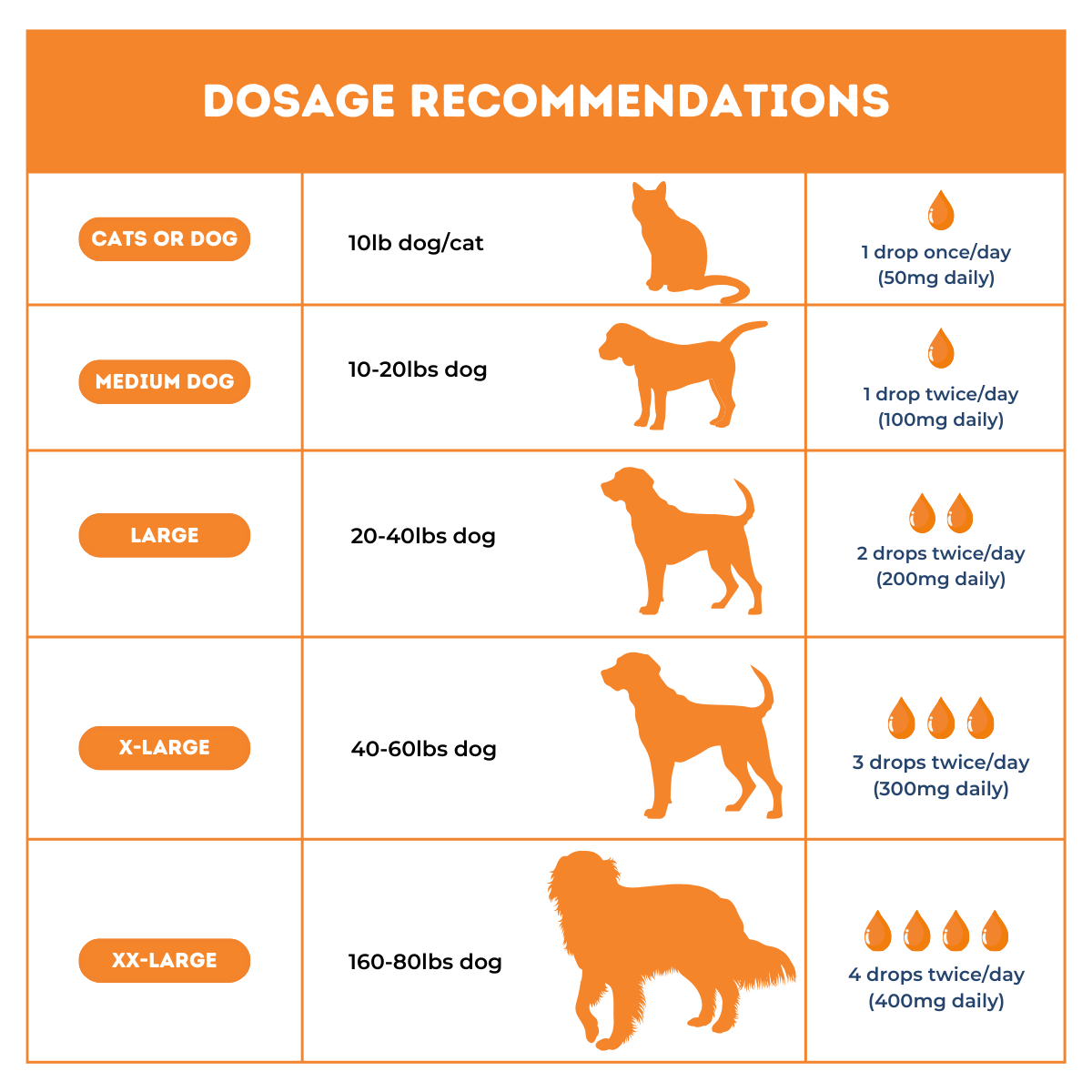
A common tincture dose is about 0.5 ml per 20 pounds of body weight, given short term.
2. Topical Skin Relief
You can mix licorice tincture with coconut oil and apply it directly to irritated skin two to three times daily. If your dog licks it, coconut oil is safe.
3. Cough and Sore Throat
Licorice has long been used for coughs. For dogs with kennel cough, I will often mix a small amount of licorice tincture with honey and warm water to soothe the throat.
4. Stomach Ulcers and Acid Reflux
Licorice supports the stomach lining and may help with gastric ulcers. There is a special form called DGL, which has the glycyrrhizin removed. This form can be used longer term for digestive support.
5. Immune and Autoimmune Support
Licorice has antiviral activity and helps modulate the immune system. It has been studied in autoimmune conditions. It is worth considering in cases of autoimmune skin disease or inflammatory joint disease.
How Much Licorice Root to Use for Dogs
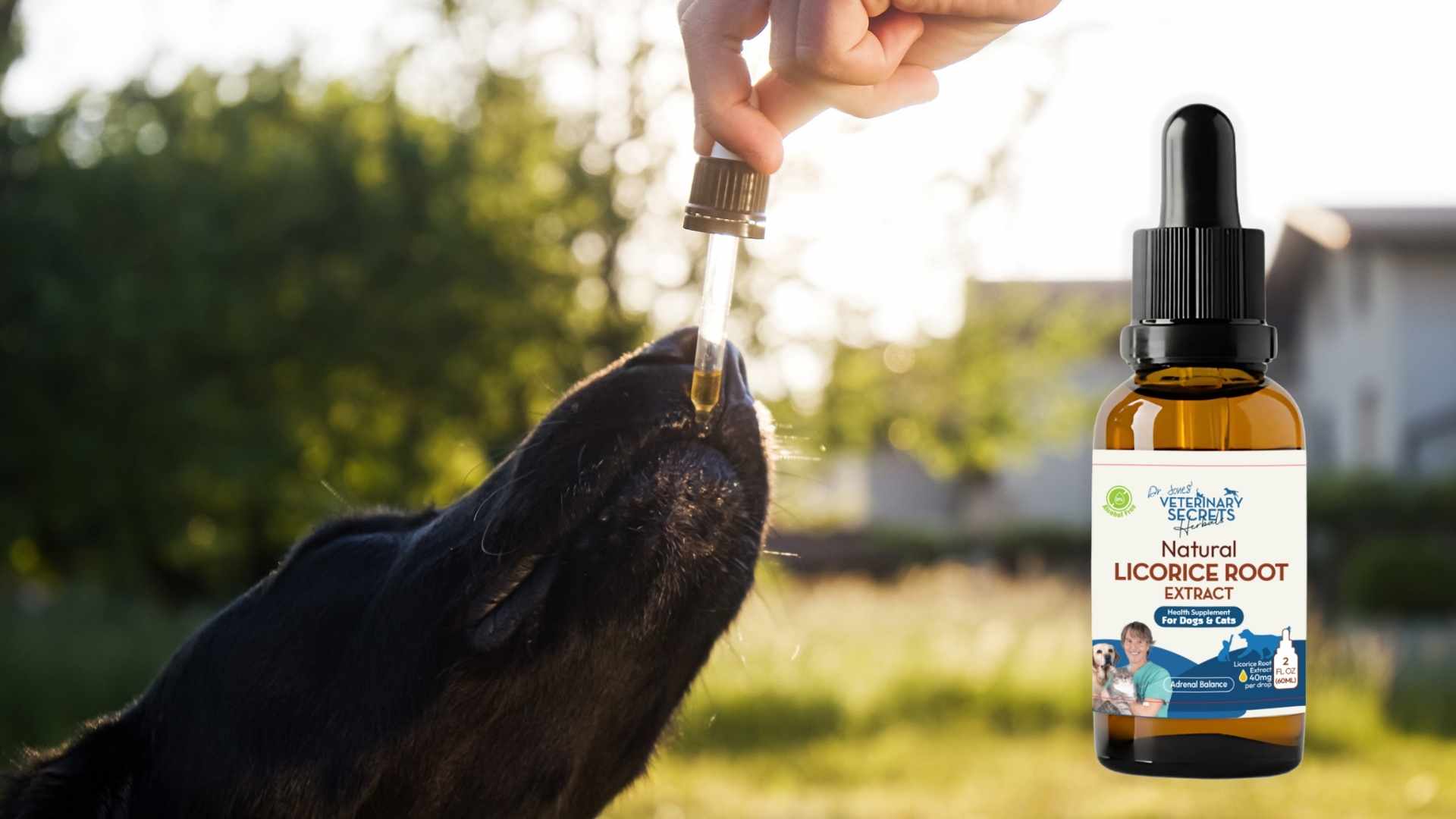
Dosage depends on the form you use:
Licorice Tincture (Standard)
-
Typical dose is about ½ ml per 20 pounds of body weight, given twice daily for up to 14 days when used for allergies or short-term inflammatory support.
Deglycyrrhizinated Licorice (DGL)
-
For digestive support like acid reflux or stomach issues, DGL (with glycyrrhizin removed) can be given at about 100 mg per 10 pounds of body weight daily, divided into multiple doses.
Tea or Drops
-
Licorice tea or low-alcohol extracts can be used, but dosing varies and should be kept gentle and short-term.
Licorice root is usually given for only a short course (7 to 14 days) when used for itching or acute inflammation.
Important Safety Notes
Do not use licorice root in pets with kidney disease, liver disease, heart disease, or high blood pressure.
Avoid use during pregnancy.
Standard licorice should not be used longer than 14 days. For longer use, choose DGL licorice, which is safer for extended support.
Final Thoughts
Licorice Root is one of the most versatile herbs I use. It can calm inflammation, soothe skin, support digestion, and help regulate the immune system.
If your dog is licking, scratching, coughing, or struggling with digestive upset, this is a natural option worth considering.
Sometimes the most powerful remedies are roots that have been quietly working for thousands of years.
Click To Get A Free Copy of My E-Book!

My dog KoKo licks her paws occasionally and scratches occasionally , I don’t know if she has yeast. Will licorice root work for this.Also she has reoccurring ear infection.
Occasional paw licking and scratching is often early allergy or mild yeast inflammation, and licorice root can definitely help since it naturally calms inflammation and acts like a gentle steroid without the side effects. It works best for mild to moderate itching rather than severe infections.
For the recurring ear infections that usually points to the same root cause, allergies or yeast. Licorice can help from the inside but you still want to address the ears directly with a simple natural ear routine and look closely at diet.
If KoKo’s signs are mild you are catching this early which is great. Small changes now can prevent bigger problems later.
Hi Dr Jones
just after some advice please. 6 month old Staffordshire boy. Broke out in spots to his head and armpit 7th feb. These progressively spread over his head and chin with a few to his body. Vet started steroids 1.5mgs OD, we started purina hypoallergenic kibble.
Since then he has been on higher dose steroids 2mgs Od with antibiotics (10 day course) as his ear started weeping.
This has now resolved but he continues to have large pustule/ scabs to his body although his head would improve if he stopped pushing it against anything he can- he wears a cone all the time but unfortunately that doesn’t protect the areas to his face
He is now still on steroids 1.5mgs OD as well as having had 2 x lime and sulphur body washes. Vet is spreading the net wide.
We’ve stopped using normal washing powder and now use sensitive baby wash liquid
We have also got rid of his metal bowls and now use ceramic, his beds have been binned, he has a new crate and now sleeps on a cotton quilt cover. He has no treats or chews and is pavement walked in case it’s a grass/ Bush allergy although his paws are fine.
He doesn’t seem to be improving, he’s happy in himself despite the miserable existence he is having to lead.
Is there anything else we could be doing, any suggestions would be great- thank you
You are doing a great job with him.
At six months with spreading pustules, I would really want juvenile demodex ruled out with deep skin scrapings. Staffies are prone, and steroids can worsen it.
Also, ten days of antibiotics is often not long enough for bacterial skin infections. Many need three to four weeks.
True food allergy at this age is less common than mites or infection.
If you are trying to taper steroids, short term licorice root can help support inflammation naturally at about 0.5 ml per 20 pounds twice daily for up to 14 days, provided no heart, kidney, or liver issues.
The good news is he feels well. That is very encouraging. Once the root cause is nailed, these cases usually turn around.