Are Carbs Bad for Dogs? New Research on Kibble, Blood Sugar, and Raw Diets

Are Carbohydrates Bad for Dogs?
Dogs can digest carbohydrates, but that doesn’t necessarily mean a diet high in carbohydrates is the healthiest choice.
New research from the University of Helsinki suggests that dogs may respond better metabolically to diets higher in animal protein and fat than to traditional, carbohydrate-rich kibble.
And the findings are pretty interesting.
For years, veterinarians have been taught that carbohydrates such as rice and corn are perfectly appropriate for dogs. They provide energy, dogs have the enzymes to digest them, and many experts argue there is little evidence that carbohydrates cause disease.
But a recent study comparing kibble-fed dogs with dogs eating a raw, meat-based diet found measurable differences in blood sugar, blood fats, and other metabolic markers.
The dogs eating the higher-fat, lower-carbohydrate raw diet generally showed more favorable metabolic responses.
Does that mean every carbohydrate is bad?
No.
But I think we need to take a much closer look at how much carbohydrate we’re feeding our dogs, especially when it comes from easily digested starches such as white rice and corn.




Can Dogs Actually Digest Carbohydrates?
Yes. Dogs can digest carbohydrates.
Their pancreas produces an enzyme called amylase, which helps break down starch into simpler sugars.
When your dog eats carbohydrates such as rice or corn, amylase helps break down the starch, releasing glucose.
That glucose is absorbed through the intestinal tract and used for energy.
This is one reason carbohydrates have been considered an acceptable part of commercial dog food for decades.
The conventional argument is simple:
-
Dogs can digest starch.
-
Carbohydrates provide energy.
-
Glucose can be used by the body.
-
Fiber-containing plant ingredients may support digestive health.
-
Weight gain comes from consuming too many calories, not necessarily from carbohydrates alone.
And there is some truth to these arguments.
But here is my question.
Just because your dog can digest carbohydrates, does that mean a carbohydrate-heavy diet is best for their long-term health?
Those are two different things.
What Does Conventional Research Say About Carbohydrates in Dog Food?
One recently published paper concluded that there is little to no evidence supporting the belief that carbohydrates negatively affect canine health.
The researcher reported no established association between carbohydrate intake and:
-
Diabetes
-
Obesity
-
Adverse food reactions
-
Other health conditions
The conclusion was that carbohydrates can be an important part of a dog’s diet because they provide energy and may support digestive health.
Let’s look at those arguments.
Do Carbohydrates Cause Weight Gain in Dogs?
The conventional explanation is that obesity is primarily about energy intake.

If your dog eats more calories than they use, they’re likely to gain weight.
That can happen regardless of whether those calories come from carbohydrates, protein, or fat.
And yes, calorie intake matters.
But I also want us looking at what happens metabolically when dogs regularly consume large amounts of easily digested carbohydrates.
Can Fiber Be Good for Dogs?
Yes.
The researcher also pointed out that nondigestible plant material, such as ground flaxseed fiber, can provide health benefits.
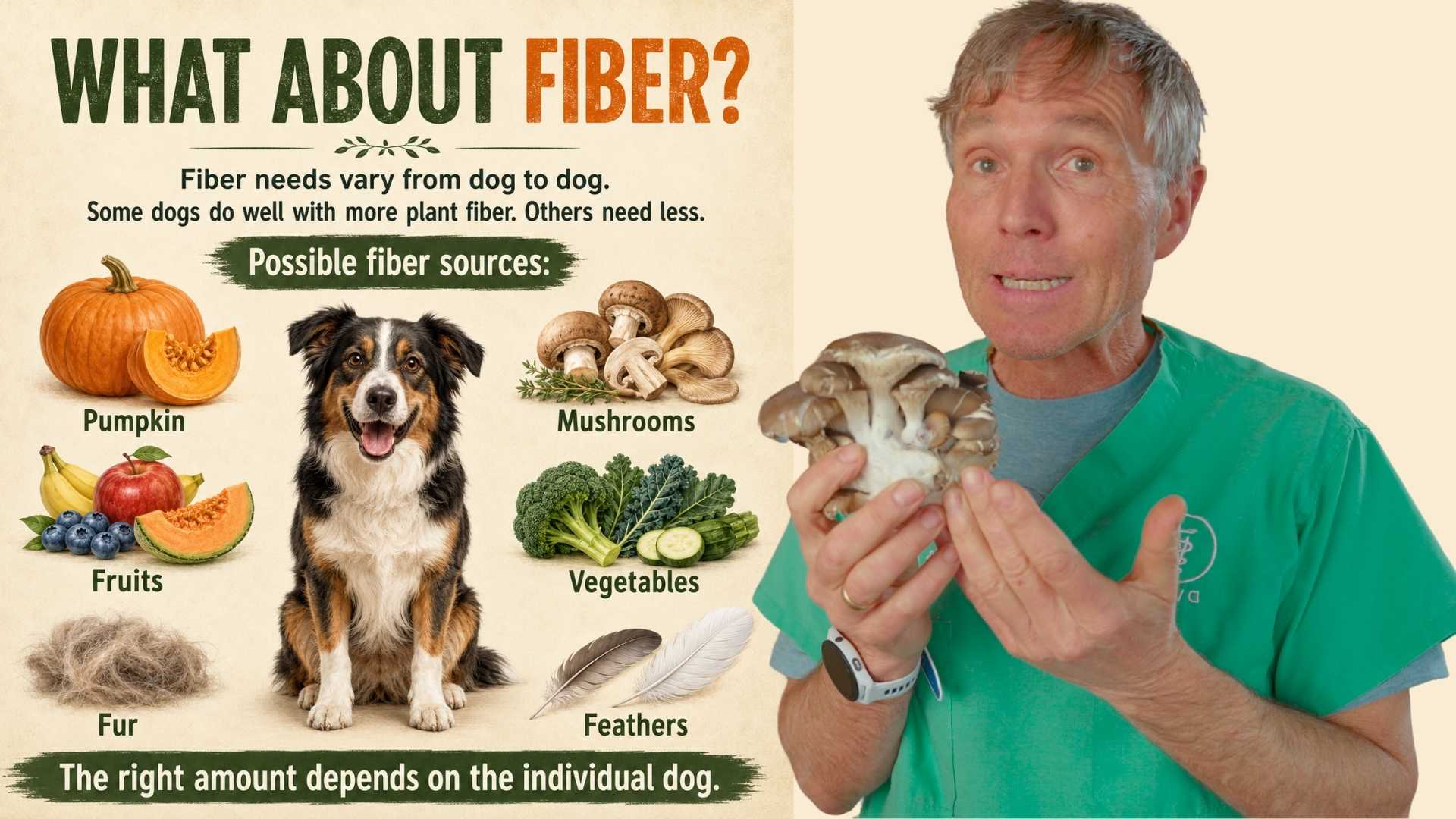
Fiber may help dogs feel fuller and potentially support weight management.
I don’t disagree with that.
But there’s a difference between including beneficial fiber and feeding a diet where a large proportion of the calories comes from rapidly digested starch.
Do Carbohydrates Cause Diabetes in Dogs?
This is where the discussion gets interesting.
The conventional argument is that most diabetic dogs develop a form of diabetes involving insufficient insulin production.
This is often compared with type 1 diabetes in people.
We do not fully understand why this happens, and it is generally not considered directly triggered by diet.
Fair enough.
But if a dog is already diabetic, I certainly wouldn’t want to feed them large amounts of readily digested starches that release glucose into the bloodstream.
For example:
-
Large amounts of white rice
-
Corn-heavy kibble
-
Foods dominated by simple, easily digested carbohydrates
I suspect dietary carbohydrates may still play a role in metabolic health, even if the direct relationship with diabetes has not been established.
Can Dogs Be Allergic to Carbohydrates?
Traditionally, we have been taught that food allergies in dogs are primarily associated with proteins.
And proteins are certainly important when discussing food allergies.
But dogs can react to virtually any food ingredient.
So I wouldn’t automatically dismiss carbohydrates or other ingredients when investigating an adverse food reaction.
What Does the New University of Helsinki Study Say?
Researchers from the DogRisk group at the University of Helsinki in Finland investigated how different diets affect canine metabolism.
Their research focuses on dog health, nutrition, population-level health patterns, and disease-related questions.
One of the studies discussed was titled:
“Canine Metabolism Responds Better to Fats Than Carbohydrates."
The researchers wanted to examine whether dogs metabolically respond differently to a carbohydrate-rich kibble diet compared with a raw, animal-based diet containing more protein and fat.
And they found some measurable differences.
How Was the Study Conducted?
The study involved 46 Staffordshire Bull Terriers.
The dogs were divided into two dietary groups.
| Study Detail | Kibble Group | Raw Food Group |
|---|---|---|
| Diet type | Commercial dry kibble | Raw, animal-based food |
| Main energy sources | Higher in non-fiber carbohydrates | Higher in protein and fat |
| Carbohydrate content | Included easily digested starches | No non-fiber carbohydrates |
| Study duration | Approximately 4.5 months | Approximately 4.5 months |
| Measurements | Before and after dietary period | Before and after dietary period |
The researchers measured several metabolic markers before the diets began and again after approximately four and a half months.
These included:
-
Blood glucose
-
Insulin
-
Cholesterol
-
Triglycerides
-
Ketone bodies
-
Glucagon
-
Body weight
This allowed them to compare how the dogs responded to the two different feeding approaches.
What Happened to Dogs Eating High-Carbohydrate Kibble?
The kibble-fed dogs showed several metabolic changes.
These included:
-
Increased blood glucose
-
Increased body weight
-
Increased blood lipids
That is what caught my attention.
These dogs were eating a diet higher in non-fiber carbohydrates, similar to the starch-heavy ingredients commonly found in commercial kibble.
And within approximately four and a half months, researchers were already measuring changes in their metabolic markers.
Now compare that with the dogs eating raw food.
What Happened to Dogs Eating the Raw Meat-Based Diet?
The dogs eating the higher-fat, animal-based raw diet showed a different response.

Researchers reported:
-
Decreased blood glucose
-
Decreased blood lipids
-
Lower glucagon levels
-
Higher ketone levels
-
A reduction in the triglyceride-glucose index
These findings suggest that the raw-fed dogs were relying more heavily on fat for energy.
And that is significant.
The raw diet contained virtually no non-fiber carbohydrates, yet the dogs were still able to obtain the energy they needed.
Why Were Ketone Levels Higher?
Ketones are produced when the body uses fat as an energy source.
Both groups showed increased ketone levels, but the raw-fed dogs had significantly higher levels.
The researchers interpreted this as evidence that those dogs were relying more on fat for energy.
To me, this is one of the interesting parts of the study.
Dogs can use carbohydrates for fuel.
But this research suggests that a diet based more heavily on animal protein and fat produces a different metabolic response.
Why Does the Triglyceride-Glucose Index Matter?
Another important finding involved the triglyceride-glucose index.
This measurement combines:
-
Triglycerides, which are fats circulating in the blood
-
Glucose, which is blood sugar
In human research, this index is often used as a marker associated with insulin resistance.
The dogs eating the raw food diet showed a decrease in this index.
That suggests a more favorable metabolic response.
It doesn’t prove that the raw diet prevents diabetes or other diseases.
But it raises an important question about whether carbohydrate-heavy diets may contribute to unfavorable metabolic changes over time.
What Did the Researchers Conclude?
Dr. Sarah Holm, the lead researcher, described the different responses between the two feeding groups.
The carbohydrate-rich kibble diet was associated with metabolic changes that have been linked to unfavorable health outcomes.
Meanwhile, the raw food diet produced metabolic responses generally considered more favorable.
The researchers also emphasized that more research is needed.
That matters.
This was a study involving 46 dogs over approximately four and a half months.
It demonstrated differences in metabolic markers, but it did not establish that one diet prevents specific diseases or extends lifespan.
Still, I think the findings deserve attention.
What About Similar Research in People?
The DogRisk research group also discussed similarities with findings from human nutritional research.
Some studies in people suggest that higher-fat, lower-carbohydrate diets may produce favorable changes in certain metabolic markers.
These can include:
-
Lower triglycerides
-
Lower cholesterol
-
Improved blood glucose measurements
Conversely, diets higher in easily digested carbohydrates may produce less favorable metabolic responses in some circumstances.
The researchers suggested that dogs may also be useful for investigating nutritional metabolism because some responses appear similar to those seen in humans.
That doesn’t mean dogs and people have identical nutritional requirements.
But the parallels are interesting.
Are High-Carbohydrate Diets Linked to Disease in Dogs?
This is the question I keep coming back to.
If a dog regularly eats a diet dominated by rapidly digested starches, what happens over many years?
Could repeated increases in blood glucose and blood lipids contribute to metabolic problems?
I suspect there may be a connection.
Some of the conditions I think deserve further investigation include:
-
Diabetes
-
Insulin resistance
-
Pancreatitis
-
Cognitive dysfunction
-
Other metabolic disorders
The Helsinki study did not demonstrate that carbohydrate-rich kibble directly causes these diseases.
What it did show was that the two diets produced different metabolic responses within a relatively short period.
And those differences were measurable.
For me, that’s a good reason to pay closer attention to what we’re putting in our dogs’ bowls.
What Is the Difference Between High-Carb Kibble and a Meat-Based Diet?
The main difference discussed in this research is where the calories are coming from.
| Dietary Feature | High-Carb Kibble | Meat-Based Diet |
|---|---|---|
| Main ingredients | May rely heavily on corn, rice, or other starches | Primarily animal protein and fat |
| Easily digested carbohydrates | Higher | Very low in the raw diet studied |
| Blood glucose response in study | Increased | Decreased |
| Blood lipid response in study | Increased | Decreased |
| Ketone response | Increased | Increased more significantly |
| Energy use | Greater carbohydrate contribution | Greater reliance on fat |
| Main concern or consideration | Amount of easily digested starch | Overall diet composition |
One thing I want to be clear about is that this particular study compared a raw diet with a kibble diet.
It did not directly test every type of gently cooked diet or every commercial dog food.
But it does make me think more favorably about diets emphasizing animal protein and fat rather than large amounts of starch.
Why I’m Concerned About Corn Being the First Ingredient in Dog Food
Look at the ingredient label on your dog’s kibble.
What comes first?
If the first ingredient is corn, that tells you something about the food’s composition.
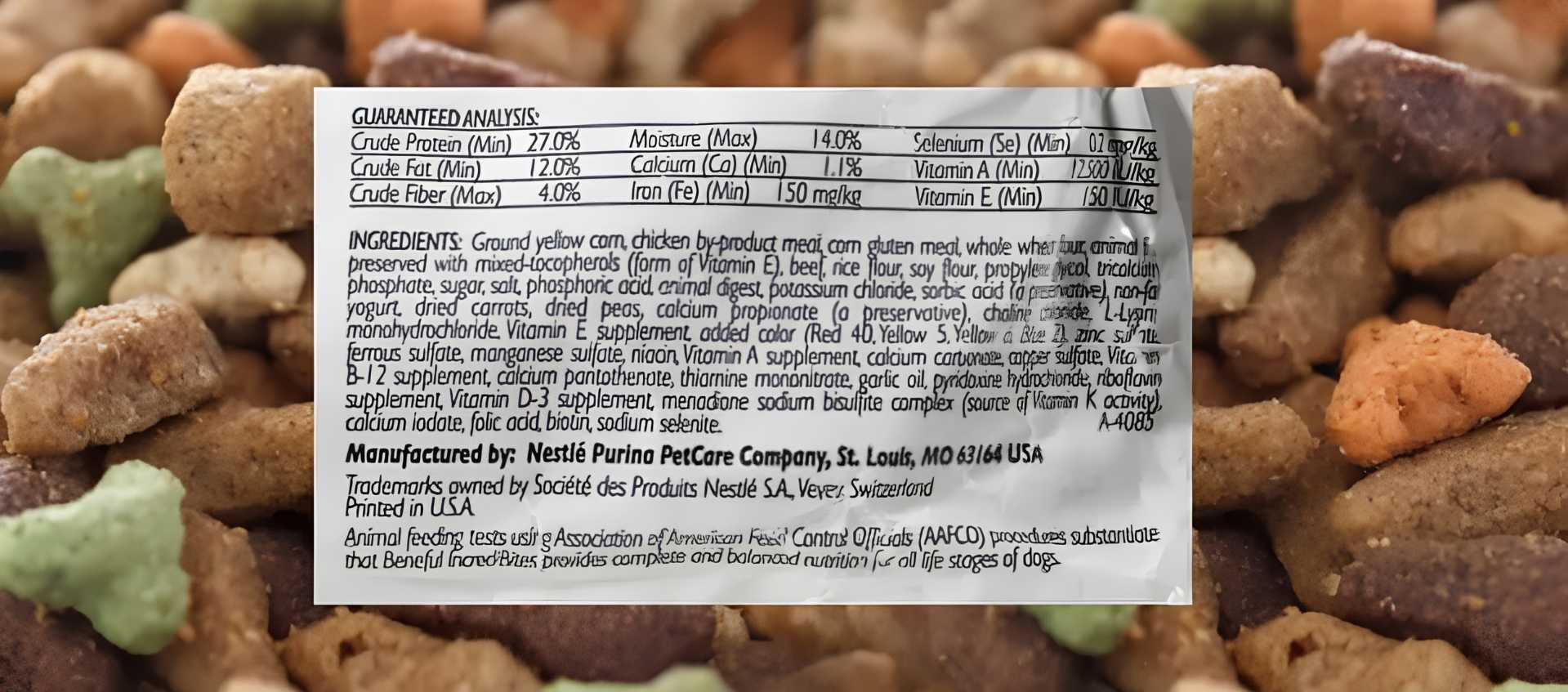
Corn provides starch, which is broken down into glucose.
And if your dog isn’t using that energy through substantial physical activity, excess energy may contribute to weight gain.
This is why I question feeding dogs diets dominated by easily digested carbohydrates.
A dog running a 50-kilometer race has very different energy demands from a dog spending most of the day sleeping on the couch.
Yet we may be feeding both a similar carbohydrate-heavy diet.
That doesn’t make much sense to me.
What Should You Feed Your Dog Instead?
My preference is to reduce the amount of easily digested carbohydrates in your dog’s diet and place greater emphasis on animal protein and fat.

That does not necessarily mean you have to throw out every bag of kibble.
You can start with a practical change.
1. Reduce the Amount of Kibble
If you’re currently feeding a carbohydrate-heavy kibble, consider reducing the amount by approximately 20% while adjusting the rest of the diet appropriately.
This creates room to include more protein-rich foods.
The idea is not simply to feed less.
It is to improve the overall composition of what your dog eats.
2. Add More Animal Protein
Consider adding a protein-rich topper to your dog’s food.
One of my favorite examples is chicken gizzards.
They’re inexpensive, widely available, and provide animal protein along with some fat.
When I think about my dog Tula, adding something as simple as a chicken gizzard to her meal is the kind of practical improvement I would consider.
Depending on the size of the meal, even one gizzard may meaningfully increase the animal protein portion.
3. Consider a Meat-Based Diet
The research also makes me more interested in diets that emphasize:
-
Animal protein
-
Animal fat
-
Fewer easily digested carbohydrates
This might include a properly formulated raw or gently cooked diet.
The study specifically tested raw food, so we cannot assume all other diets would produce identical results.
But I like the general direction of reducing reliance on starch-heavy ingredients.
My Simple Kibble Upgrade for Dogs
Here’s a practical way I would begin improving a carbohydrate-heavy diet.
| Step | What to Do | Why |
|---|---|---|
| 1 | Check the ingredient label | See whether corn, rice, or other starches dominate |
| 2 | Consider reducing kibble by around 20% | Make room for more animal-based food |
| 3 | Add a protein-rich topper | Increase the proportion of animal protein |
| 4 | Consider chicken gizzards | Affordable source of protein and fat |
| 5 | Look at the overall diet | Focus on the balance of protein, fat, and carbohydrates |
The goal is to move toward a balanced diet with more animal-based nutrition, rather than simply adding extra calories on top of the existing food.
What Is the Biggest Takeaway From This Research?
For me, the biggest takeaway is that diet composition matters.
For years, the conventional view has been that carbohydrates are perfectly appropriate for dogs because dogs can digest and use them.
But the new research adds another dimension.
We now have a controlled dietary comparison showing that dogs eating a higher-fat, animal-based raw diet experienced more favorable changes in several metabolic markers than dogs eating carbohydrate-rich kibble.
That’s worth paying attention to.
It doesn’t settle every question about carbohydrates, raw feeding, or long-term disease.
But it certainly challenges the idea that carbohydrate-heavy kibble is automatically the best way to feed our dogs.
Final Thoughts: Should You Stop Feeding Carbohydrates to Your Dog?
I wouldn’t say your dog must never eat carbohydrates.

Dogs can digest them, and some carbohydrate-containing foods provide useful energy and fiber.
But I would be much more cautious about feeding large amounts of easily digested starches every day.
Especially when ingredients such as corn or white rice dominate the diet.
The University of Helsinki research gives us another reason to question that approach.
In just four and a half months, researchers observed differences in blood glucose, body weight, blood lipids, ketones, and other metabolic markers between kibble-fed dogs and dogs eating a raw, animal-based diet.
I think that’s significant.
My suggestion?
Start looking more carefully at your dog’s food.
Check the ingredients.
Reduce the amount of carbohydrate-heavy kibble where appropriate.
Consider adding more animal protein, such as chicken gizzards.
And think about the bigger picture of diet and long-term metabolic health.
Because what you feed your dog every day may have far more influence on their health than we previously appreciated.
And that makes nutrition one of the most important areas to focus on.
Click To Get A Free Copy of My E-Book!

P.S. If you’re feeding kibble, check the first ingredient. If it’s corn or another major source of starch, I would seriously consider improving the diet. Even replacing around 20% of the kibble with an appropriate amount of animal-based food may be a practical place to start.
P.P.S. Chicken gizzards are one of my favorite inexpensive protein additions. A small amount can help increase the animal protein portion of your dog’s meal without making feeding complicated.
P.P.P.S. The University of Helsinki study doesn’t answer every question about carbohydrates and dog health. But the metabolic differences between the kibble and raw-fed dogs are worth taking seriously. My preference remains simple: more emphasis on animal protein and fat, and fewer easily digested carbohydrates.