Screwworm Update in Dogs and Cats: Signs and Protection Tips

Can Screwworm Affect Dogs and Cats?
Yes, screwworm can affect dogs and cats.
The good news is that the risk to most pets is still low. There have been no reported dog or cat cases mentioned in this update. But yes, this parasite can affect pets because dogs and cats are warm-blooded animals, and screwworm flies are attracted to open wounds, cuts, scratches, body openings, and damaged tissue.
This is not something to panic about.
But it is something to be aware of, especially if you live in an area where screwworm has been detected, such as parts of the southern United States, including Texas and Florida.
The practical takeaway is simple:
Check your dog or cat daily.
Look for wounds.
Keep wounds clean and protected.
If you see movement, maggots, swelling, discharge, a strong odor, or a rapidly worsening wound, call your veterinarian right away.
Dr. Jones’ Diatomaceous Earth Powder for Pets




What Is Screwworm?
New World screwworm is a parasitic fly.
The adult fly lays eggs on living warm-blooded animals. Those eggs hatch into larvae, or maggots, and the larvae burrow into living tissue.
That is what makes screwworm so serious.
This is not like some flies that are attracted to dead or decaying tissue. Screwworm targets live tissue.
It can affect:
- Cattle
- Horses
- Sheep
- Pigs
- Deer
- Wild animals
- Dogs
- Cats
- People
If an animal has even a small wound or scratch, that can potentially attract the fly.
Not lovely.
Very much not lovely.
Why Is Screwworm Back in the News?
In the transcript, I mentioned that on June 3rd, the United States confirmed a case of New World screwworm affecting a calf in Texas.
Since then, additional detections were noted in Texas and New Mexico.
New World screwworm is primarily found in Mexico, Central America, and South America. It had occurred in the southern United States in the past, but it was considered eradicated.
That eradication was done through a sterile breeding program.
It was reported eradicated in 1966.
So seeing it detected again is a reason to pay attention.
Why Is Screwworm Dangerous?
Screwworm is dangerous because it can move fast.
The fly finds an open wound, lays eggs, and those eggs can hatch in as little as 12 to 24 hours.
Then hundreds of tiny white larvae can begin burrowing into live tissue.
That can turn a small wound into a serious problem very quickly.
Many animals can die from the infestation if it is not treated.
The problem is not just that maggots are present.
The problem is that these larvae are feeding on living tissue.
That is painful, damaging, and potentially life-threatening.
What Does the Screwworm Fly Look Like?
The fly has a somewhat unique appearance.
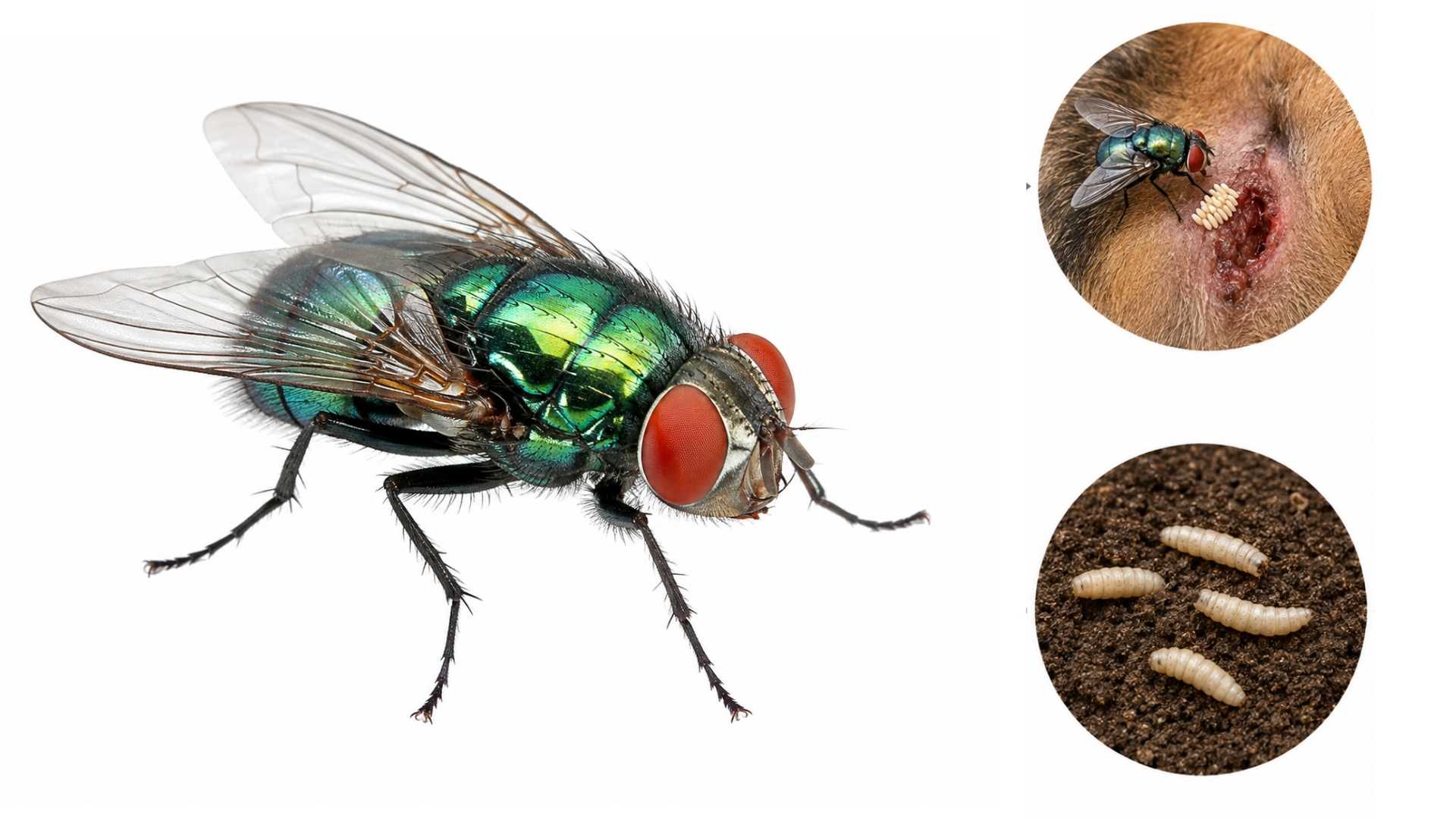
It may have:
- A metallic look
- A green metallic shine
- Red eyes
- A striking, shiny appearance
It can stand out if you see it.
But the more important thing for pet parents is not identifying the fly.
It is identifying the wound changes early.
Why Is It Called “Screwworm”?
Screwworm gets its name because the tip of the larva looks somewhat like the shape of a screw.
But it is not actually a worm.
It is the larval stage of a fly.
The adult fly lays the eggs.
The eggs hatch.
The larvae burrow into tissue.
Then they eventually drop off into the soil and develop into adult flies.
Lovely little life cycle.
And by lovely, I mean horrible.
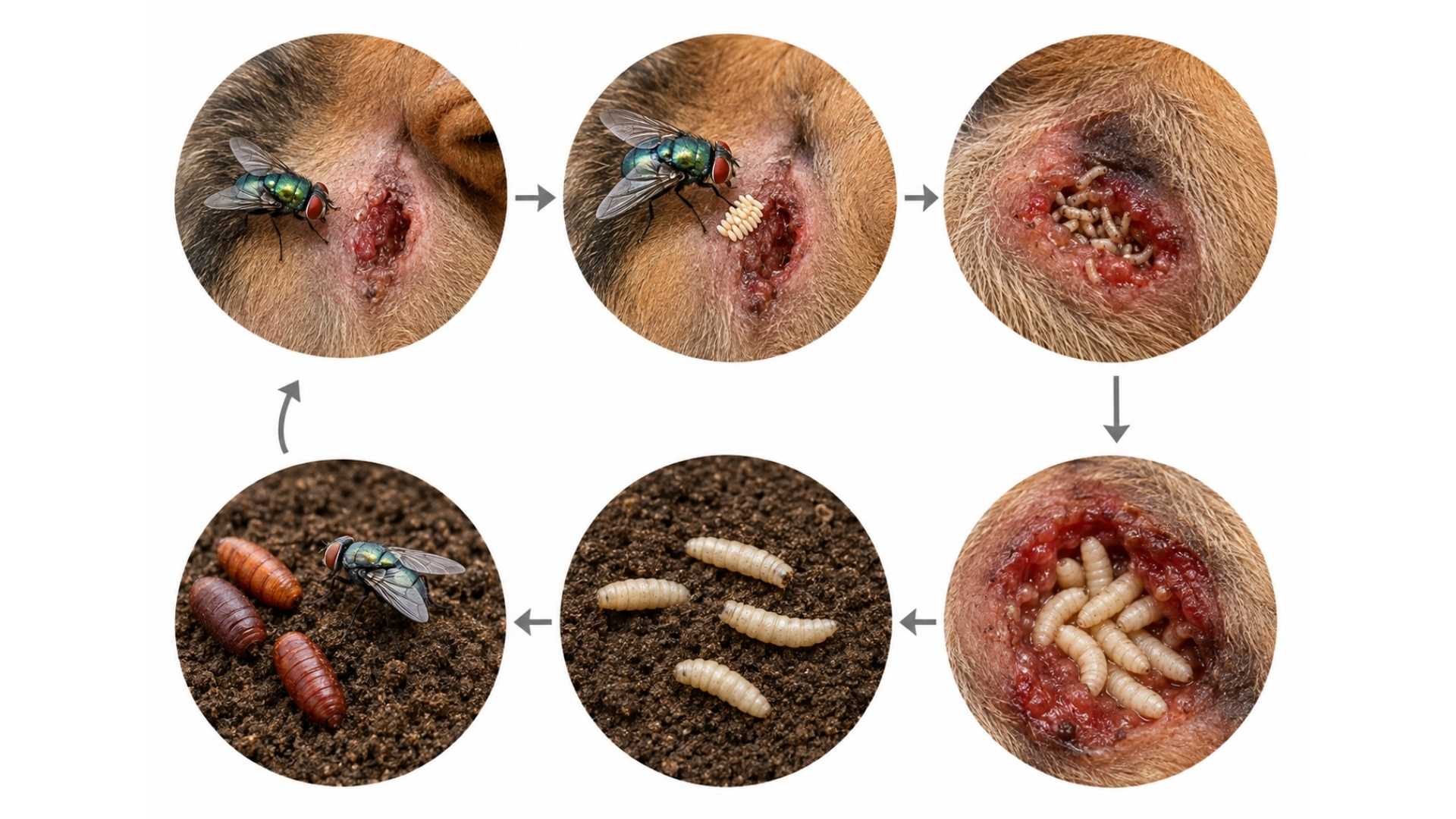
What Is the Screwworm Life Cycle?
The life cycle can happen quickly.
| Stage | What Happens |
|---|---|
| Adult fly | Finds a small cut, wound, or body opening |
| Egg laying | Lays about 2 to 400 eggs |
| Hatching | Eggs hatch in about 12 to 24 hours |
| Larvae stage | Larvae burrow into living tissue and feed |
| Drop-off stage | In about 5 to 7 days, larvae can fall off into soil |
| Adult fly emergence | About 7 days later, adult flies can emerge |
That rapid turnover is why infestations can spread quickly.
A tiny wound can become a very large problem in a short time.
What Animals Are Most at Risk?
Livestock are often the main concern, especially animals with wounds.

Commonly affected animals may include:
- Cattle
- Horses
- Sheep
- Pigs
Wild animals, such as deer, can also be affected.
Pets can be affected too, especially if they have wounds, skin infections, ear problems, or areas that attract flies.
Stray dogs and stray cats may be at higher risk because they do not have someone checking them every day.
A small wound can go unnoticed.
Then it can get much worse.
Are Dogs and Cats at Serious Risk?
For most owned pets, the risk appears low.
In the transcript, I mentioned that there have been no reported cases in dogs or cats.
But dogs and cats can be affected if they are exposed and have a wound, scratch, ear infection, or compromised tissue.
So no, I do not want you panicking.
But yes, I want you aware.
Especially if you live in or travel through areas where screwworm exists.
Where Can Screwworm Affect a Dog or Cat?
The fly is attracted to fresh wounds, open tissue, and body openings.
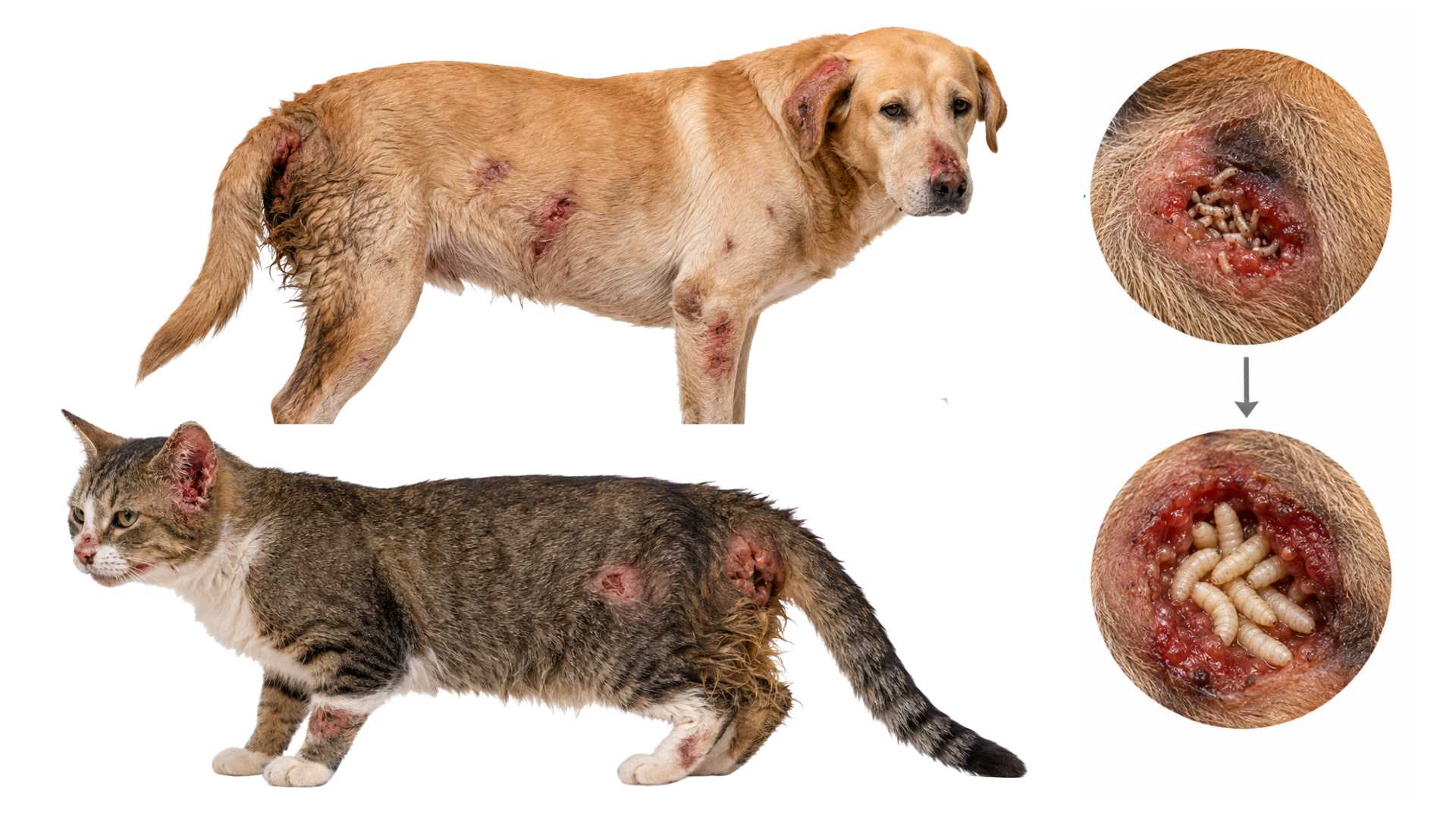
Possible problem areas include:
- Cuts
- Scratches
- Open wounds
- Ears
- Nose
- Mouth
- Anus
- Skin folds
- Matted wet fur
- Areas with stool stuck to the fur
- Chronic ear infections
- Any irritated or damaged tissue
A dog with big floppy ears and recurring ear infections could have a vulnerable area.
A cat with a scratch could have a vulnerable area.
A dog with diarrhea and stool matted around the anus could have a vulnerable area.
That is why checking matters.
What Are the Signs of Screwworm in Pets?
You may see changes around a wound very quickly.
Signs to watch for include:
- Scratching
- Irritation
- Discomfort
- Lethargy
- Acting sick
- Rapid wound changes
- Swelling around the wound
- Strong discharge
- Strong odor
- Smell of dead or decaying tissue
- Visible movement in the wound
- Visible maggots
- Wound worsening quickly
The smell can be a major giveaway.
If you have ever dealt with maggots in tissue, the odor is very distinct.
You are likely going to see it.
You are likely going to smell it.
And your pet is likely going to be very uncomfortable.
Why Daily Checks Matter
If you live in an area where screwworm has been detected, daily checks are one of the simplest things you can do.
You do not need to perform a 45-minute medical exam with dramatic lighting.
Just have a reasonable daily look.
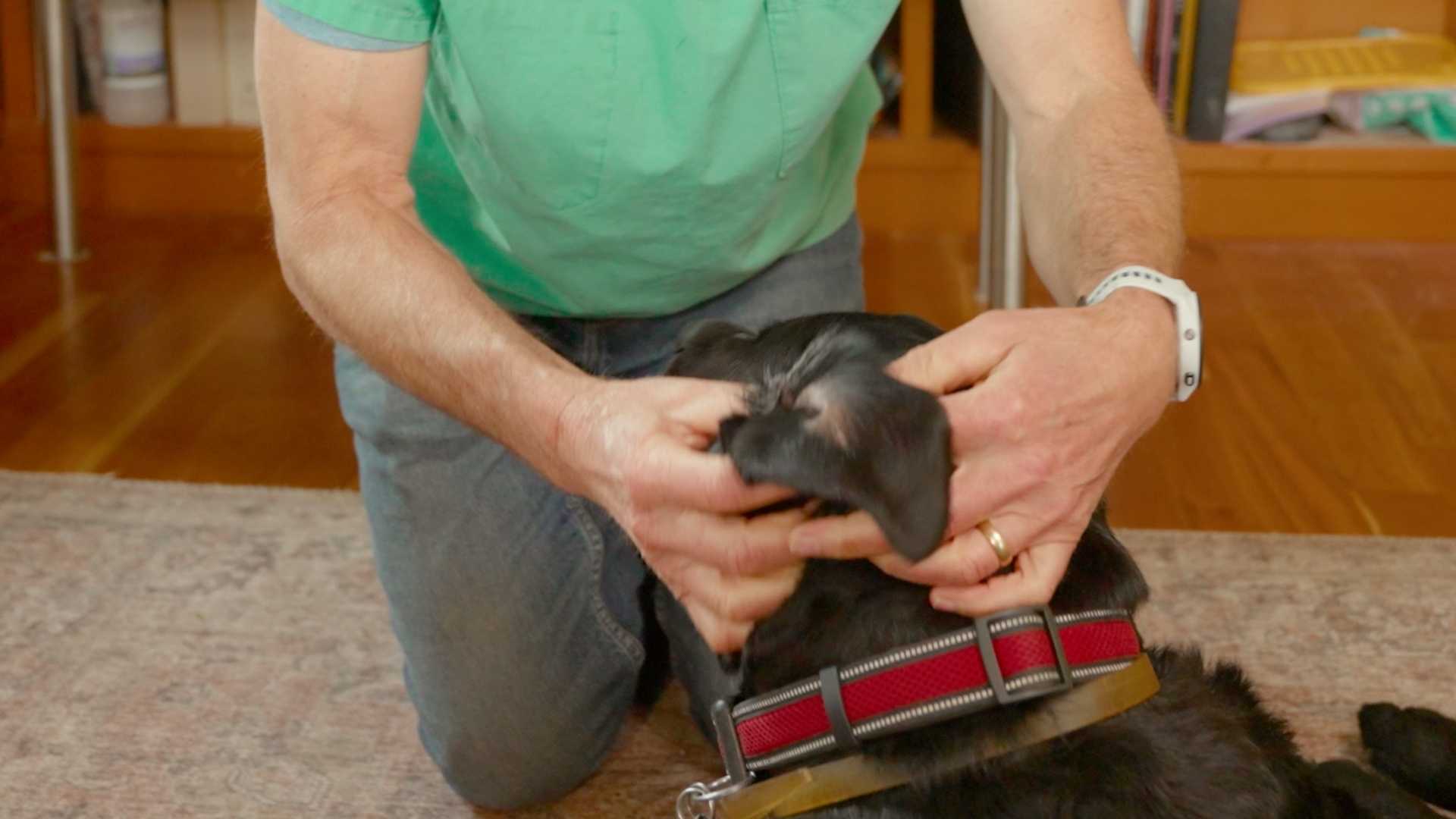
Check for:
- Small wounds
- Cuts
- Scratches
- Abrasions
- Ear irritation
- Nose irritation
- Mouth sores
- Anal irritation
- Matted fur
- Areas with discharge
- Unusual smell
- Skin movement or maggots
You are already doing daily tick checks, right?
Good.
Make a daily wound check part of that same routine.
How to Check Your Dog or Cat for Screwworm Risk
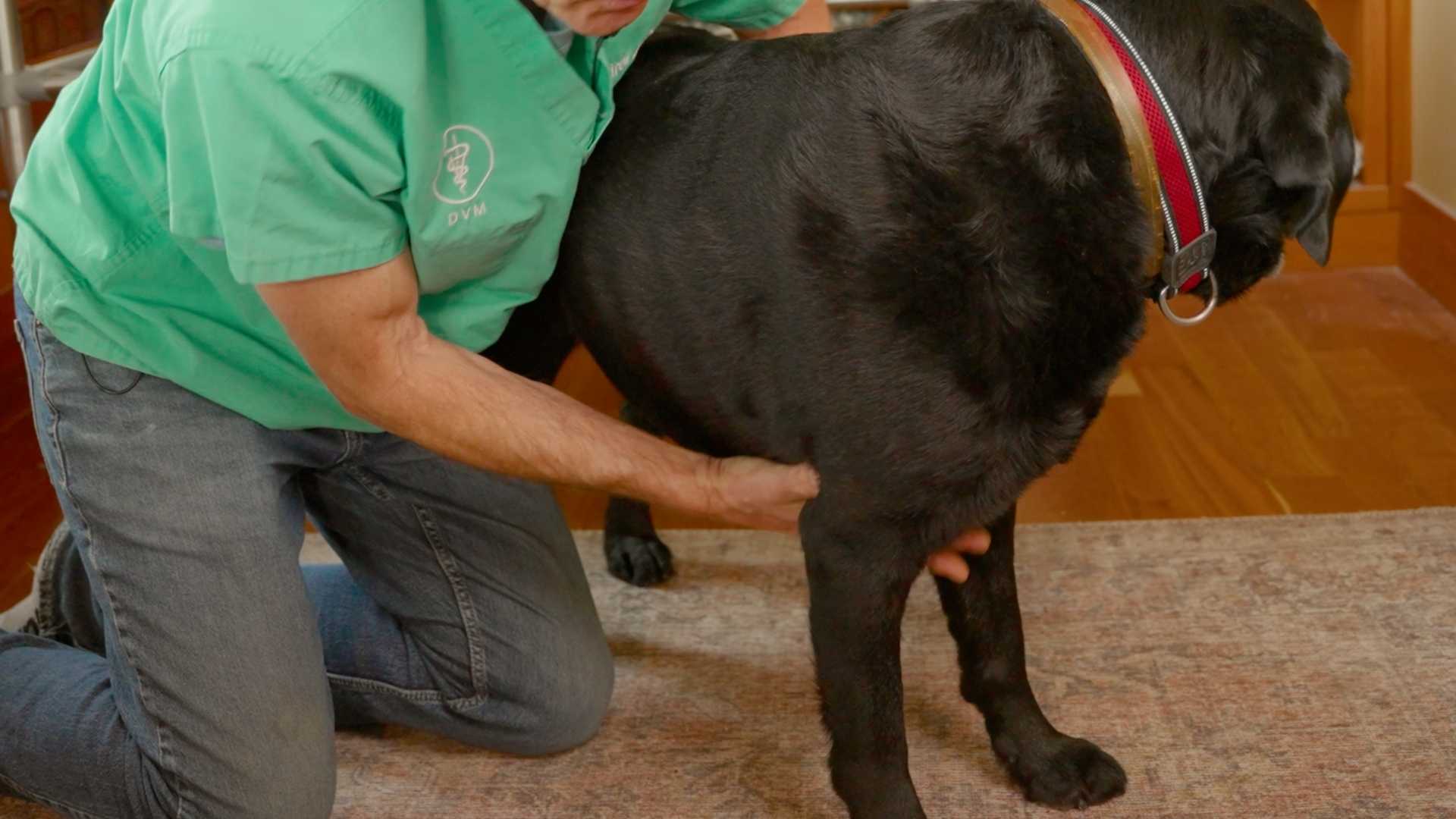
Step 1: Look Over the Whole Body
Run your hands over your pet.
Look for small cuts, scabs, wounds, or irritated skin.
Step 2: Check the Ears
Open the ears and look inside.
This is especially important for dogs with recurring ear infections or floppy ears.
If a fly has laid eggs and they have hatched, you may see larvae or maggots and smell a strong odor.
Step 3: Check the Nose and Mouth
Look for sores, discharge, or damaged tissue around the face.
Step 4: Check the Tail and Anus
If your dog has had diarrhea, constipation, or stool matted near the anus, clean it.
That area can create the right environment for flies to be attracted.
Step 5: Check Existing Wounds
If your pet already has a wound, inspect it daily.
Look for swelling, discharge, smell, movement, or rapid changes.
How Can You Help Prevent Screwworm?
The main prevention is wound care.
The fly needs access to a wound or compromised tissue.
So if you remove that access, you reduce the risk.
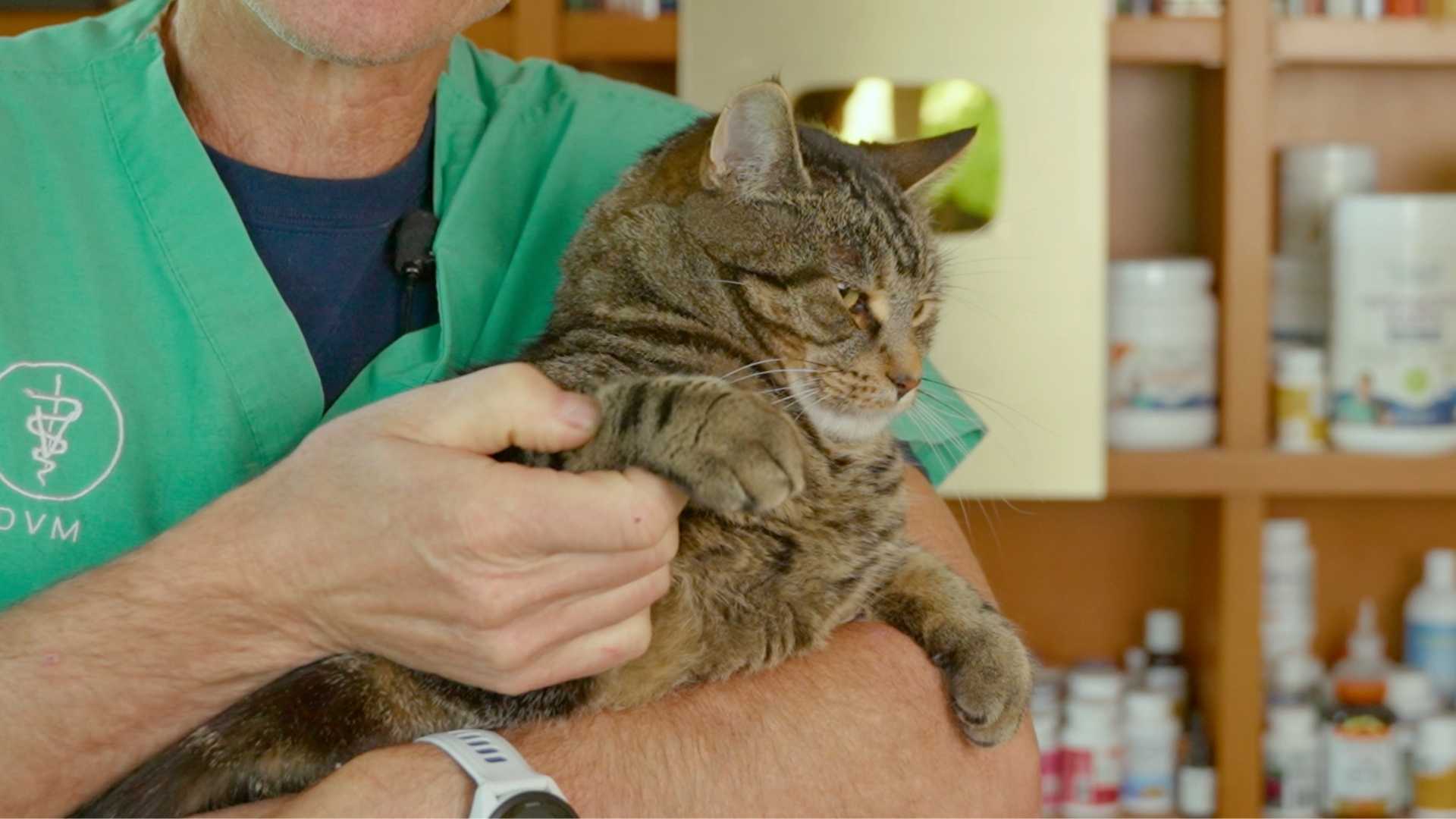
Practical Prevention Steps
- Check your pet daily
- Keep wounds clean
- Clip fur around wounds if needed
- Use a topical antiseptic
- Protect small wounds
- Stay on top of recurring ear infections
- Keep stool cleaned from the rear end
- Prevent matting, especially in hot and humid weather
- Watch pets closely if they spend time outside
- Be extra cautious in areas where screwworm exists
This is basic care, but basic care matters.
Can Vaseline Help Protect a Wound?
Yes, for a small wound, Vaseline may offer protection.
If there is a small cut on your dog or cat’s ear, you can clean it, use a topical antiseptic, and then apply a little Vaseline over it.
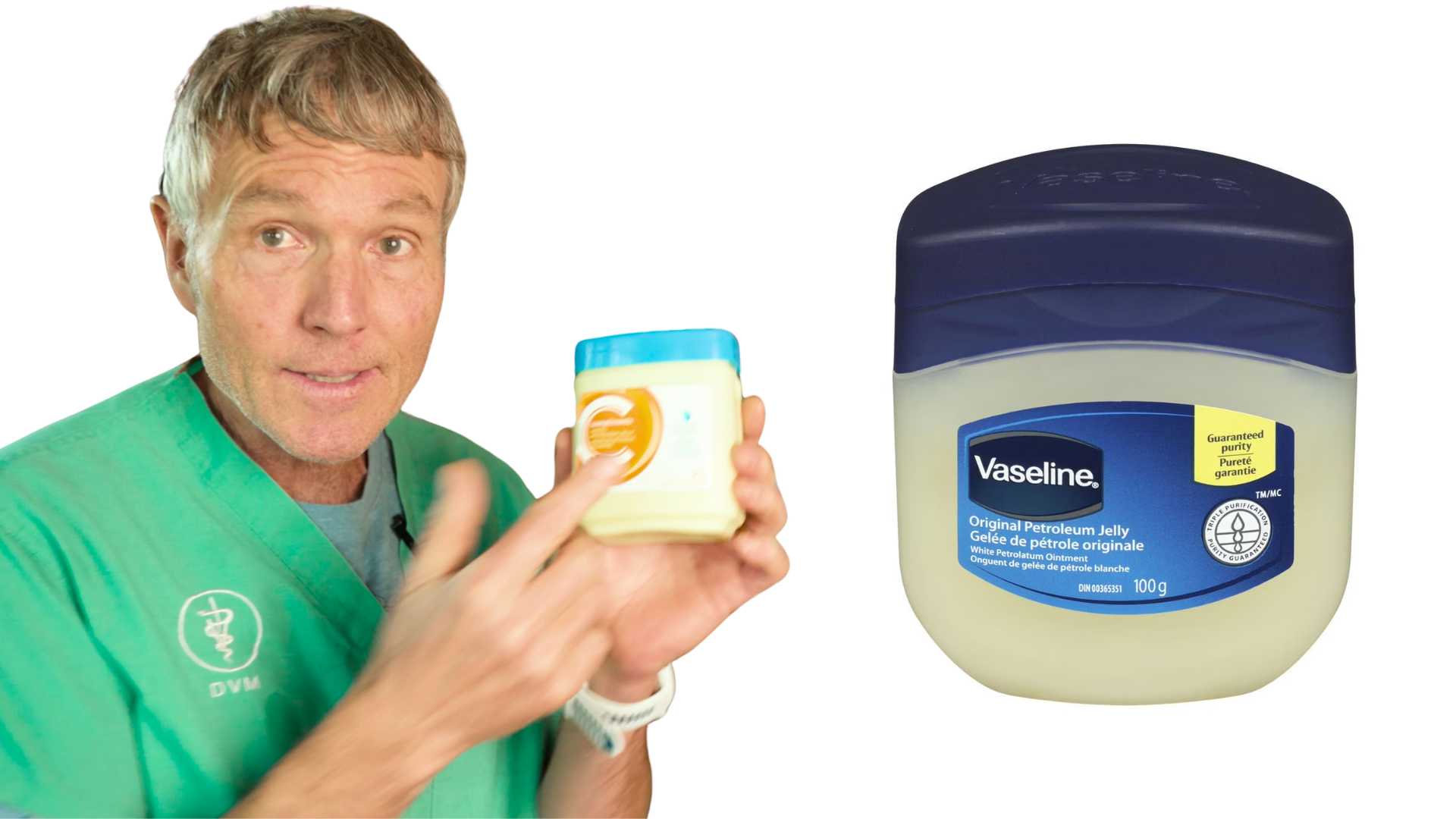
This may help by:
- Covering the open wound
- Making it harder for the fly to access the wound
- Reducing the scent of blood or open tissue
- Creating a protective layer
The fly is attracted to the smell of a fresh wound.
If the wound is covered and protected, there is less for the fly to target.
Simple, but useful.
What Topical Antiseptics Were Mentioned?
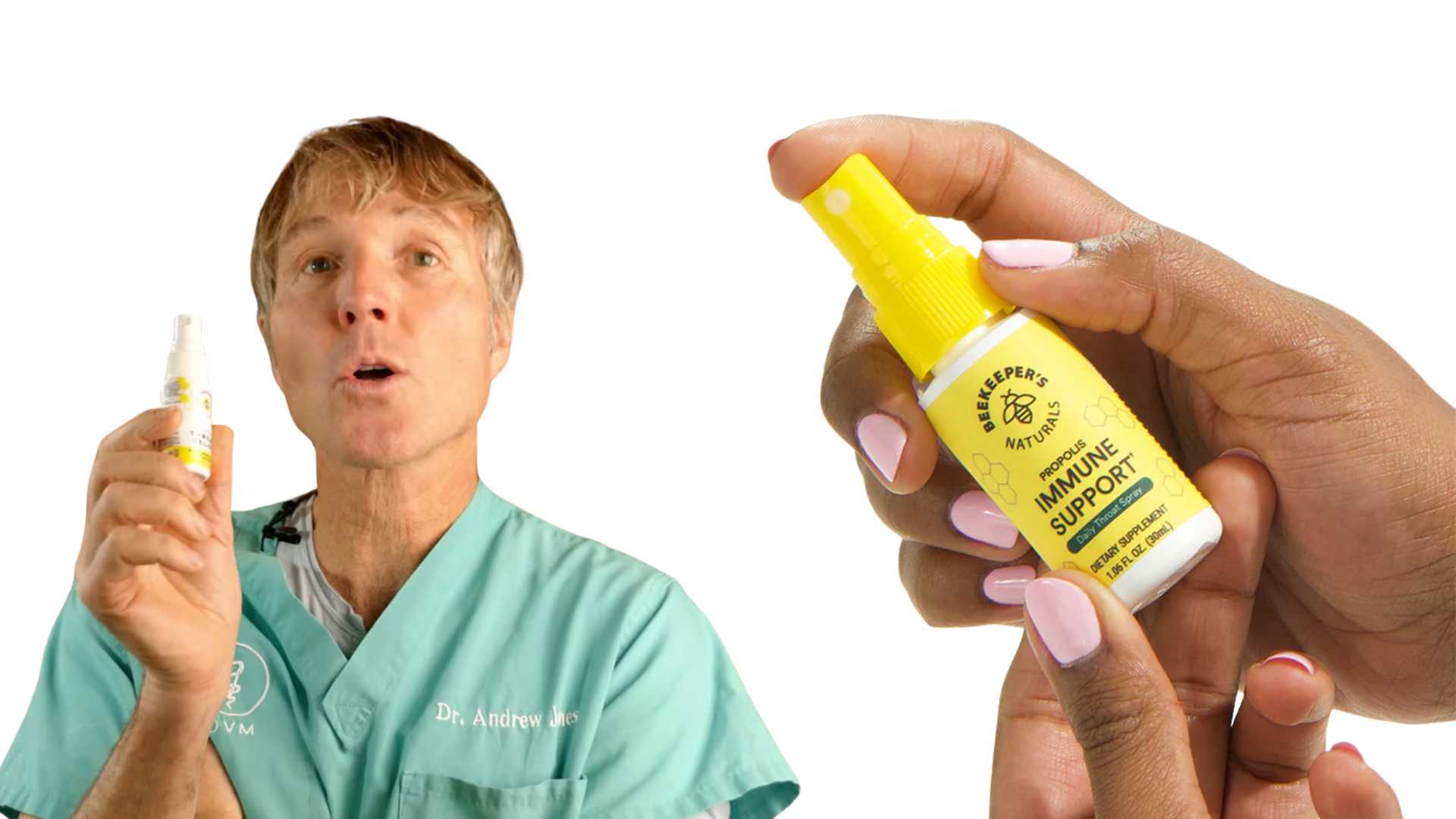
Using topical antiseptics such as:
- Propolis
- Colloidal silver
The goal is to help the wound heal as quickly as possible.
A clean, protected wound is less attractive to flies.
What About Holistic Prevention?
There is not much evidence that holistic products can fully prevent screwworm flies from laying eggs.
This is a pretty new emerging concern again, and there does not seem to be much available to prevent the fly from being attracted to a wound in the first place.
That said, a holistic flea and tick collar with cedar oil and peppermint essential oil may provide some external parasite support.
It may make it slightly less likely that a fly is attracted.
But I want to be clear:
There is nothing to say it is definitely beneficial for screwworm.
And there is not a commercially available product that prevents the fly from laying eggs.
So do not rely on a collar and ignore wounds.
That would be wishful thinking with a buckle.
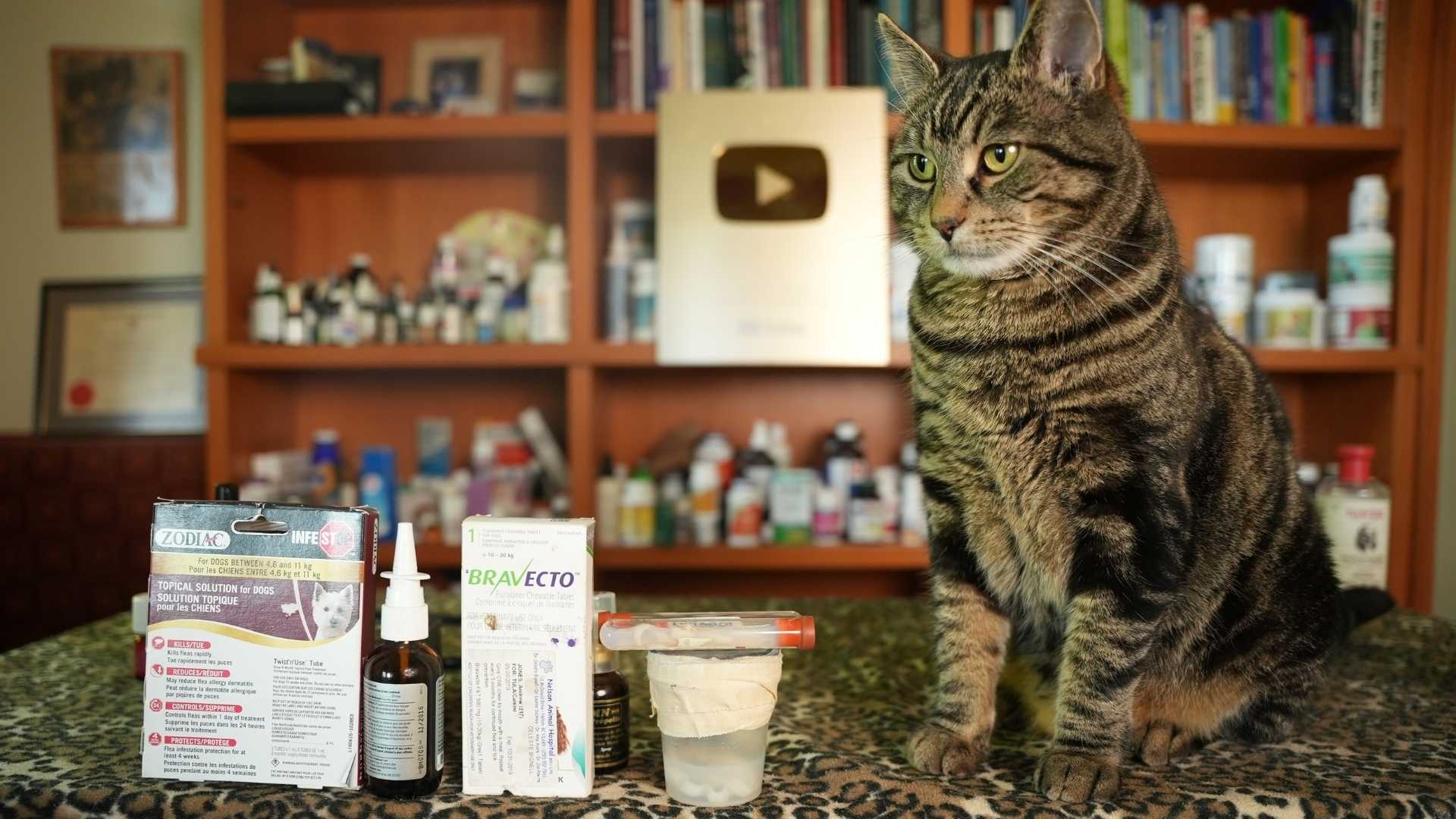
What About Conventional Products?
Several conventional insecticide options were discussed because they may target the larvae after the eggs hatch.
These products do not target the adult fly.
They do not target the eggs.
They target the larvae, or maggots.
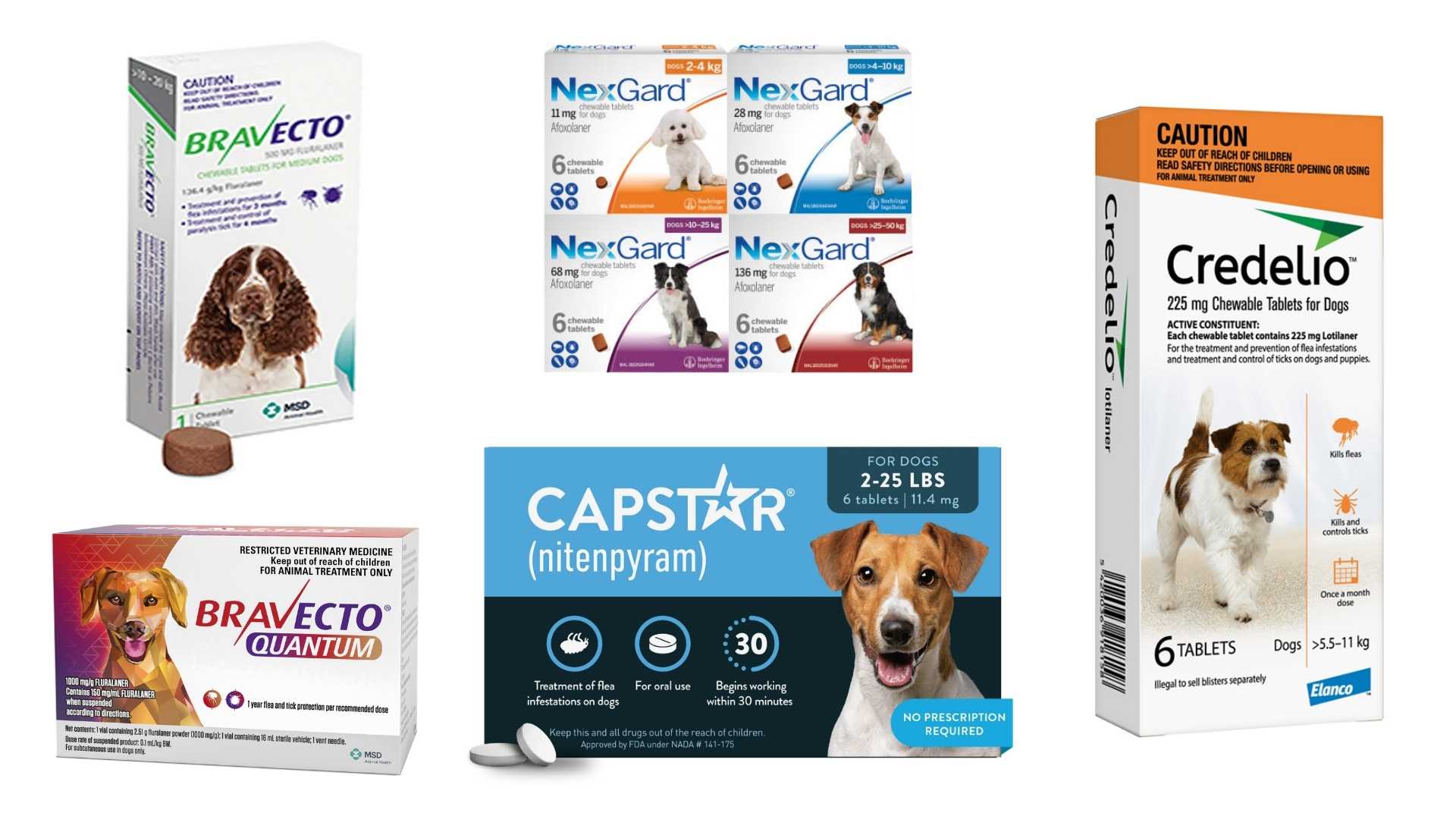
Products include:
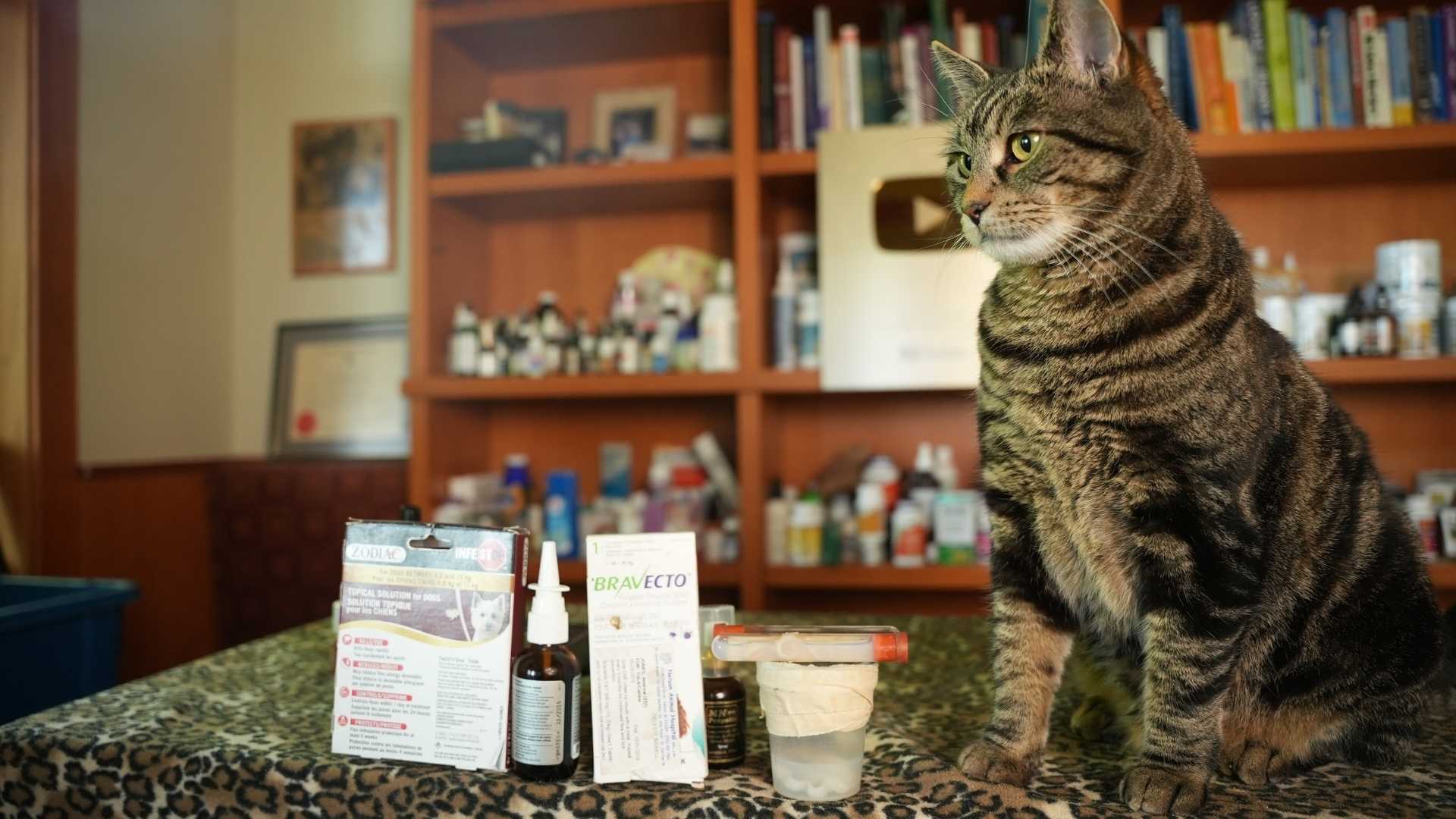
- Bravecto
- Bravecto Quantum
- NexGard
- Credelio
- Capstar
- Generic forms of Capstar
The FDA has authorized some of these options for targeting larvae.
Capstar is typically used short term for fleas, and it was also mentioned as authorized to target larvae.
Bravecto Quantum, a yearly injection, was mentioned as another option, though I said my alarm bells would go off around ongoing levels of Bravecto for a year.
What About Ivermectin?
Injectable ivermectin has been authorized by the FDA for treating screwworm infestation in cattle.

Injectable doramectin, which is related to ivermectin, has also been authorized for treating New World screwworm in cattle.
Ivermectin is used in dogs and cats for certain conditions.
I used it for ear mites in cats and for suspected mange issues in dogs, including sarcoptic mange and demodex.
It has not yet been authorized by the FDA for screwworm use in dogs and cats.
But if it is working in livestock, it may also be effective in dogs and cats.
This is something to discuss with your veterinarian.
Do not dose ivermectin on your own.
Can Holistic Remedies Treat Screwworm Larvae?
This is asking a lot of any holistic product.
If there are 200 to 400 larvae burrowing into living tissue, this is not a simple home remedy situation.
This is not where I would say, “Let’s sprinkle a little something on it and hope.”
Screwworm can cause severe tissue damage.
If you suspect it, get veterinary help.
Holistic support may help with general wound care or external parasite prevention, but an active infestation needs proper treatment.
Best For / Not For
Best For
Daily wound checks and prevention are especially important for:
- Dogs and cats in areas where screwworm exists
- Pets in Texas, Florida, or the southern United States
- Outdoor pets
- Stray animals
- Pets with open wounds
- Pets with recurring ear infections
- Pets with matted fur
- Pets with diarrhea or stool stuck near the anus
- Pets with skin infections
- Livestock and farm animals
Not For
Do not rely on home care only if your pet has:
- Visible maggots
- Wound movement
- Strong odor
- Rapidly worsening wounds
- Swelling
- Discharge
- Lethargy
- Pain
- Signs of serious illness
- Ear, mouth, nose, or anal wounds with discharge or odor
Those cases need veterinary care.
Pros and Cons of Screwworm Prevention Steps
Pros
- Daily checks are simple
- Wound protection can reduce fly access
- Vaseline may help protect small wounds
- Propolis or colloidal silver may support wound cleaning
- Early detection can prevent severe tissue damage
- Checking for wounds also helps catch ticks, infections, and other problems
Cons
- Screwworm can progress quickly
- Eggs may hatch within 12 to 24 hours
- Larvae can cause serious tissue damage
- Pets may hide small wounds
- Stray animals are at higher risk
- Holistic products are not proven to prevent egg laying
- Active infestation needs veterinary treatment
Step-by-Step: What to Do if You Find a Wound
Step 1: Look Closely
Check the wound carefully.
Look for swelling, discharge, odor, movement, or tiny white larvae.
Step 2: Clean the Area
Clean the wound.
Clip fur if needed so you can actually see what is going on.
Step 3: Use a Topical Antiseptic
Consider a topical antiseptic such as propolis or colloidal silver.
Step 4: Protect the Wound
For a small clean wound, a little Vaseline may help cover it and reduce fly access.
Step 5: Check the Wound Daily
Look at it every day.
If it changes rapidly, smells bad, swells, or shows movement, call your veterinarian.
Step 6: Treat Underlying Problems
If your dog has recurring ear infections, skin infections, diarrhea, or matted fur, stay on top of those.
Those areas can attract flies.
Step 7: Get Help if You See Maggots
If you see larvae or maggots, do not treat this casually.
Get veterinary care.
When Should You Call Your Veterinarian?
Call your veterinarian immediately if you see:
- Maggots in a wound
- Movement in the wound
- Strong odor
- Dead or decaying tissue smell
- Rapid swelling
- Worsening discharge
- A wound that changes quickly
- Lethargy
- Pain
- Fever
- Severe discomfort
- Ear, nose, mouth, or anal wounds with discharge
- A wound in an area where screwworm exists
Screwworm can become serious very fast.
Early treatment matters.
Final Thoughts
Screwworm is back in the news, and yes, it can affect dogs and cats.
But your pets are not at serious risk in most situations.
There is concern, especially in areas where screwworm exists, but this is mainly a reminder to be diligent.
Check your pets daily.
Look for wounds.
Check the ears.
Check the rear end.
Keep cuts clean.
Use a topical antiseptic.
Protect small wounds.
And if you see swelling, discharge, a strong odor, movement, or maggots, call your veterinarian.
This is not a “wait and see for a week” problem.
A small wound can turn serious quickly when larvae are involved.
The best protection is noticing early and acting quickly.
Click To Get A Free Copy of My E-Book!

P.S. I do not want you panicking about screwworm.
For most owned dogs and cats, the risk is low.
But if you live in an area where it has been detected, be aware.
Do your daily tick check.
Then add a quick wound check.
Look at the ears, nose, mouth, skin, and rear end.
If there is a small wound, clean it, use a topical antiseptic, and consider a little Vaseline to protect it.
Simple daily attention can prevent a much bigger problem.
And if you smell something awful or see maggots?
That is not a home-remedy moment.
That is a call-your-veterinarian-now moment.