Questions to Ask Your Vet About Pet Vaccines: 4 Ways

Why Do Some Veterinarians Pressure Pet Owners About Vaccines?
When you question whether your dog or cat needs another vaccine, your veterinarian may use specific communication techniques to address your concerns and encourage vaccination. These include the truth sandwich, presumptive framing, visual decision aids, and motivational interviewing.
These approaches were discussed in a recent veterinary conference presentation about vaccine hesitancy, why pet owners decline vaccines, and how veterinary professionals can respond.
Now, I want to make something clear right from the beginning.
I’m not against all vaccines.
I’ve discussed many times that there are certain important vaccines I believe dogs and cats should receive.
But I also believe we need to be much more thoughtful about how often we’re vaccinating our pets and whether every recommended vaccine is necessary for that individual animal.

In my opinion, dogs and cats have often received too many vaccines, too frequently.
I’ve expressed concerns about possible consequences of unnecessary vaccination, including immune-related problems. These are concerns I believe deserve thoughtful discussion, rather than assuming that every additional vaccine is automatically beneficial or harmful.
And I know many of you share similar concerns.
Maybe your dog has already received several vaccines.
Maybe you have a completely indoor cat.
Or perhaps your veterinarian is recommending another vaccine, and you’re simply wondering:
“Does my pet actually need this?"
That’s a perfectly reasonable question.
The problem is that you may feel uncomfortable asking it.
Your veterinarian has medical training. They’re the professional. You’re sitting in the examination room with your dog or cat, and suddenly it feels as though you’re expected to agree with everything being recommended.
But I don’t think that’s how a good veterinary conversation should work.
You should understand why a vaccine is being recommended, what disease it’s intended to prevent, how likely your pet is to encounter that disease, and what risks are involved.
I want to show you four communication techniques veterinarians may use when discussing vaccines, and how you can have a more informed conversation about what’s best for your pet.
What Is Vaccine Hesitancy in Pet Owners?
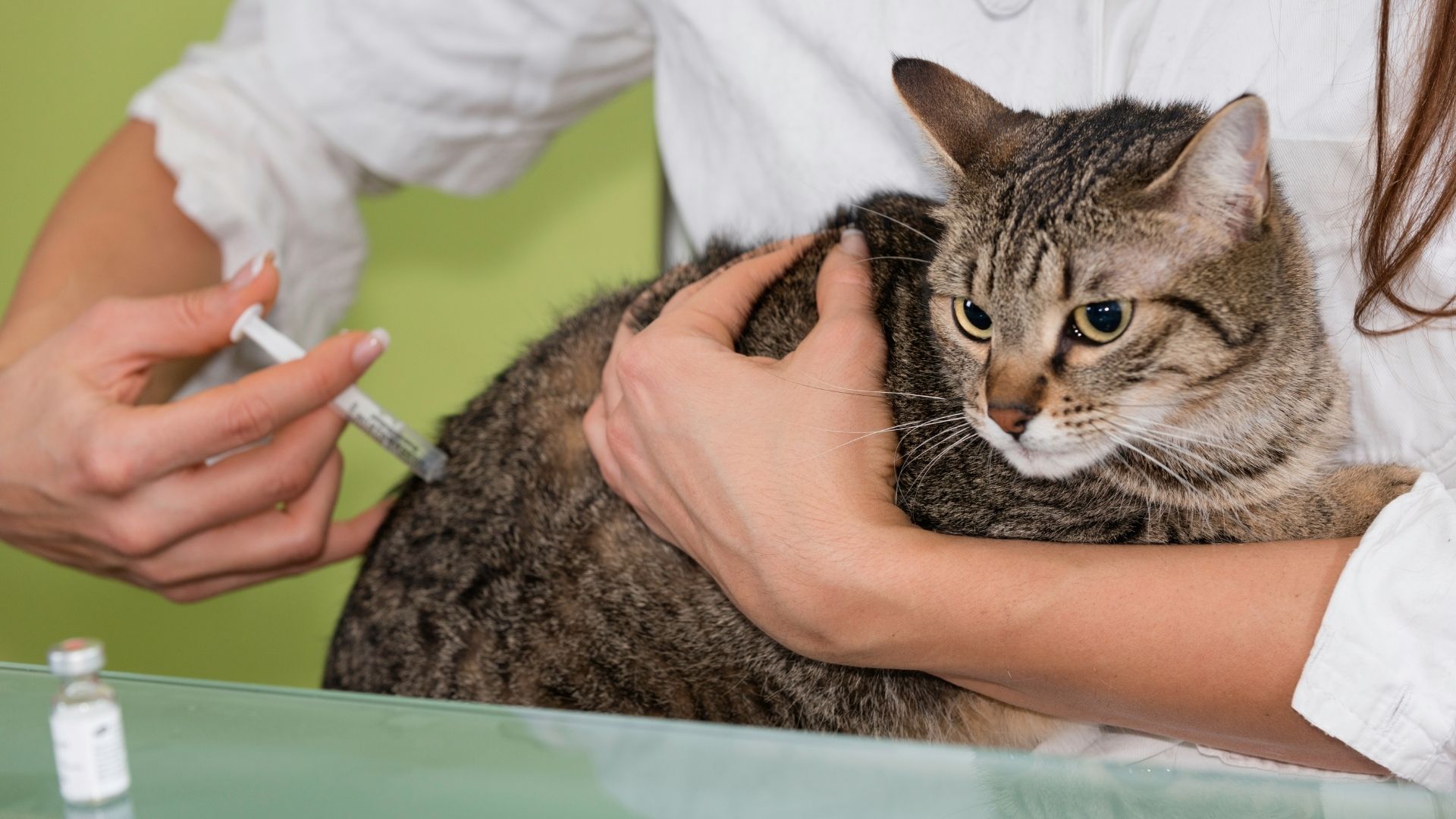
Vaccine hesitancy describes a pet owner’s uncertainty, reluctance, or opposition to vaccinating their dog or cat.
It’s something veterinary professionals are seeing more often.
And similar concerns have also been observed in human healthcare.
But not every vaccine-hesitant pet parent feels the same way.
Some are completely opposed to additional vaccines.
Others are willing to consider vaccination but want more information.
And many simply wonder whether their pet actually needs another injection.
Why Are More Pet Owners Questioning Vaccines?
The conference presentation described several reasons people hesitate to vaccinate their pets.
These include:
-
Believing the vaccine is not medically necessary
-
Concern about possible adverse reactions
-
Believing their dog or cat has little exposure to the disease
-
Questioning whether the benefits outweigh the risks
-
Wondering whether the additional expense is justified
Those are different concerns.
And they shouldn’t all be treated as though the pet owner is completely opposed to veterinary medicine.
Sometimes people just want answers.
Does Being Vaccine-Hesitant Mean You’re Against All Vaccines?
No.
You might support certain vaccines while questioning others.
Perhaps you’re comfortable with your puppy receiving the important early vaccines but aren’t convinced your adult dog needs every additional vaccine offered.
Or maybe you have an indoor cat who received kitten vaccines, and you’re questioning the need for further vaccination.
That’s different from rejecting vaccination altogether.
For me, the key issue is whether we’re making a decision based on the individual animal’s actual needs and risks.
What Did the Wisconsin Survey Find About Pet Vaccine Hesitancy?
One part of the conference presentation discussed a survey of pet owners in Wisconsin.
Wisconsin was particularly relevant because of concerns about Lyme disease and leptospirosis in the area.
Researchers wanted to understand why some pet parents declined vaccines against these diseases.
Why Did Pet Owners Decline Lyme and Leptospirosis Vaccines?
The two main reasons discussed were:
-
Owners did not believe the vaccine was medically necessary.
-
Owners were concerned about potential adverse effects.
More than half of the owners who declined the Lyme or leptospirosis vaccine did so because they did not believe their pet was at risk.
That’s an interesting finding.
It suggests that the central question for many owners wasn’t simply whether vaccines are good or bad.
It was whether that particular vaccine was necessary for their dog.
What Did the Survey Find About Trust in Veterinarians?
The presentation also discussed two findings about attitudes toward vaccination.
First, hesitancy toward human vaccination was strongly associated with hesitancy toward pet vaccination.
Second, pet owners reported trusting their veterinarian’s advice more than advice from their own healthcare providers.
Think about that.
Many pet parents have considerable trust in their veterinarian.
That’s a responsibility I think veterinarians should take seriously.
When someone asks whether their dog needs a particular vaccine, I believe they deserve a clear explanation rather than simply being told that it’s time for another injection.
Do All Dogs Need Lyme Disease and Leptospirosis Vaccines?
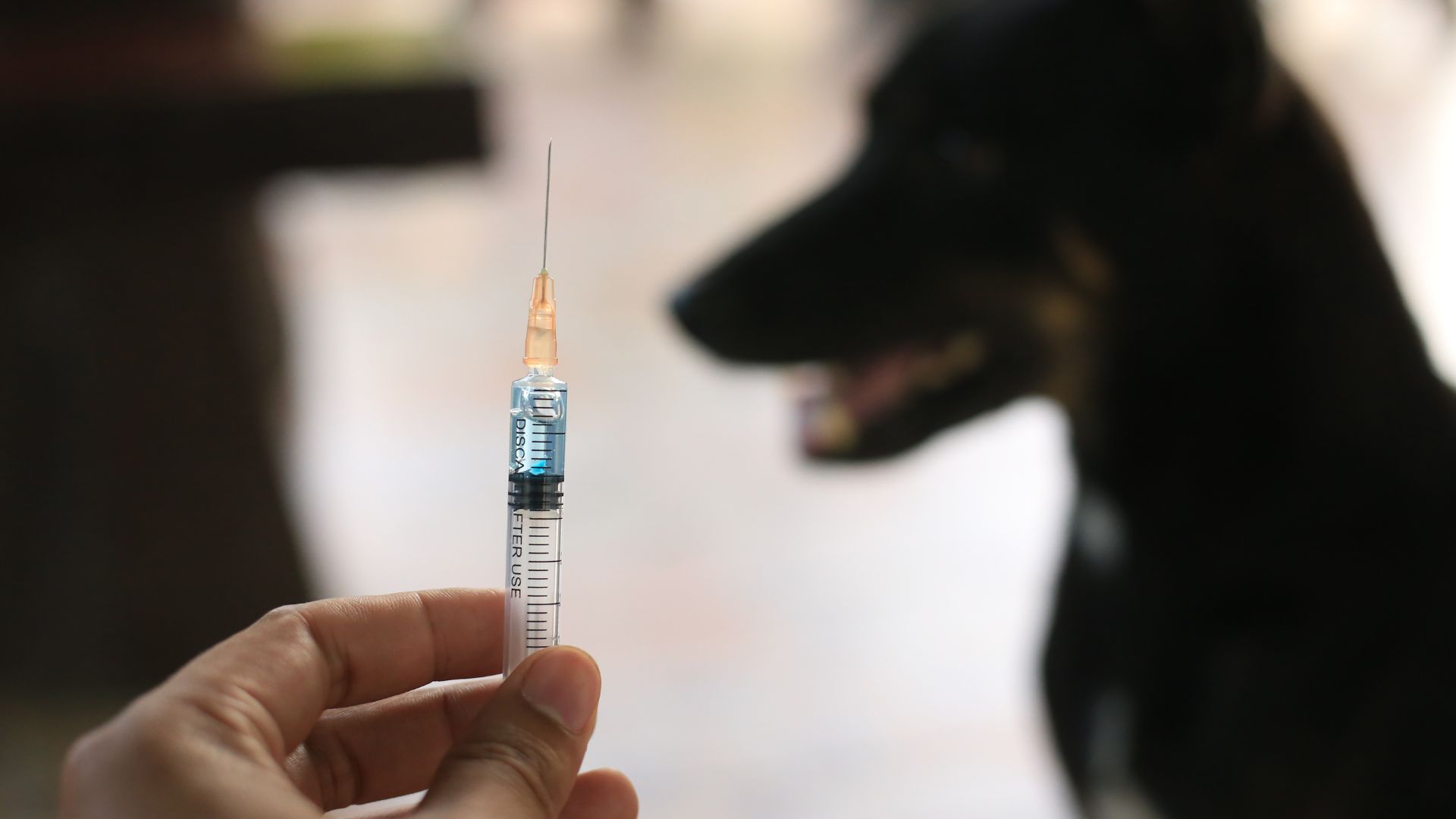
The decision should consider your dog’s exposure, the presence of disease in your area, the vaccine’s potential benefits, and possible adverse effects.
This was one of my biggest takeaways from the discussion.
A vaccine recommendation should involve more than simply saying the disease exists somewhere in your state or province.
I want to know what the risk looks like for the individual dog.
Let’s look at the two diseases discussed in the presentation.
Lyme Disease Vaccine: Does Your Dog Really Need It?
Lyme disease is one of the diseases mentioned in the discussion about vaccine hesitancy.
It’s associated with exposure to infected ticks.
And the likelihood of encountering ticks can vary depending on where you live and your dog’s activities.
When Would I Consider the Lyme Vaccine?
Suppose you live in an area where Lyme disease is common.
Your dog spends considerable time outdoors.
And you’re having difficulty controlling tick exposure.
In that situation, I would certainly consider discussing the Lyme vaccine.
There may be a meaningful risk worth addressing.
What if Your Dog Has Very Little Tick Exposure?
That’s a different situation.
I would want to understand the actual risk before automatically recommending another vaccine.
My questions would include:
-
How common is Lyme disease in this area?
-
How frequently are dogs becoming clinically ill?
-
How likely is my dog to encounter infected ticks?
-
How effectively can tick exposure be controlled?
-
What benefits and risks should I expect from vaccination?
These are the kinds of questions that help us make an informed decision.
Leptospirosis Vaccine: How Do You Know if Your Dog Is at Risk?
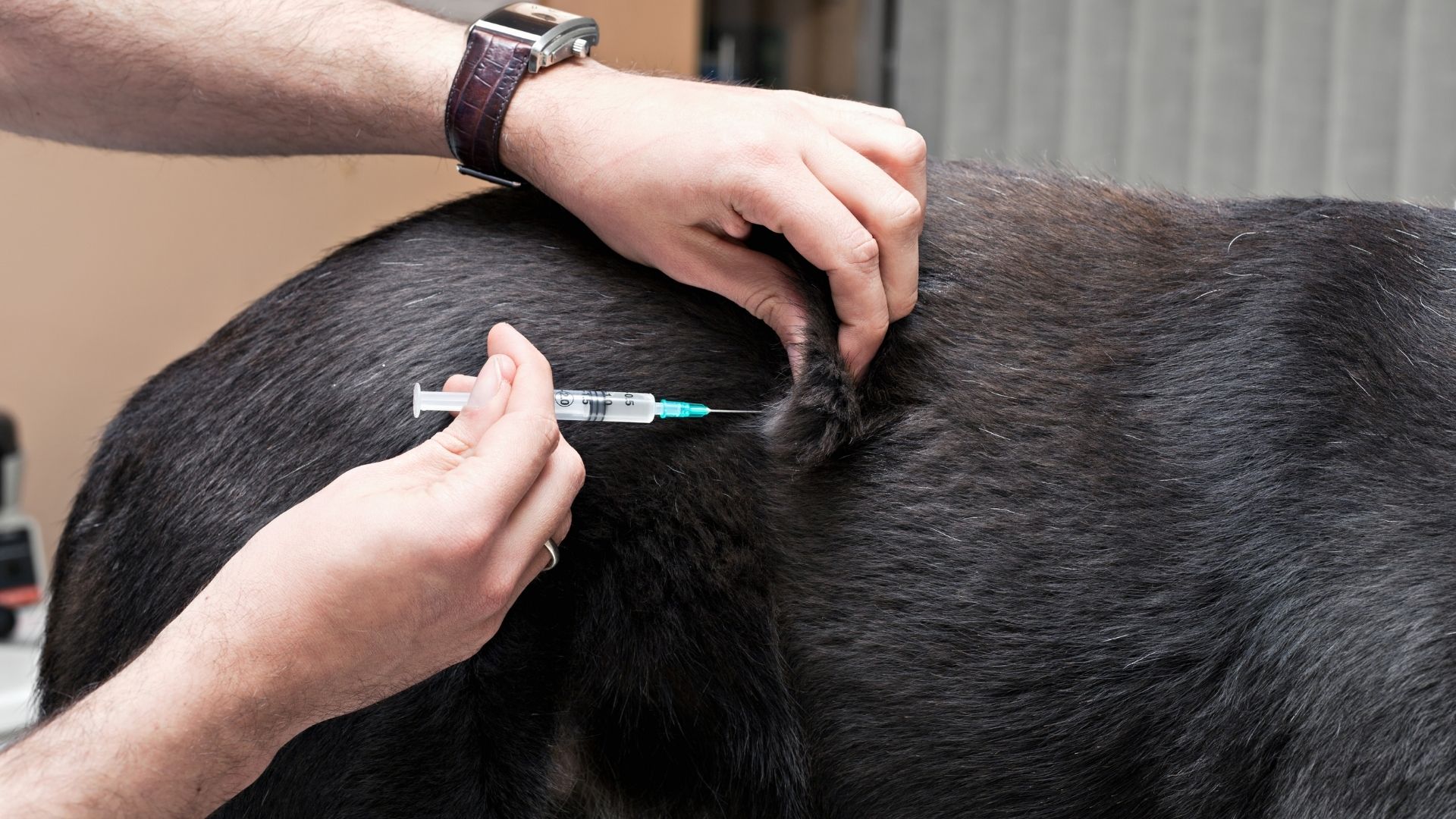
Leptospirosis was another major focus of the conference presentation.
The presentation came from a veterinarian who had observed an increase in leptospirosis cases, particularly during an outbreak.
In that setting, dogs becoming clinically ill were often those that were unvaccinated or whose owners had been hesitant about vaccination.
That matters.
It shows why local disease patterns should be part of the discussion.
What Is Leptospirosis?
Leptospirosis is a bacterial disease that dogs may encounter through environments contaminated by infected animals.
The discussion particularly highlighted water contaminated by urine from animals such as:
-
Rats
-
Raccoons
Standing water was one of the exposure examples mentioned.
When Might Leptospirosis Vaccination Be Worth Considering?
Imagine you live in an area experiencing a leptospirosis outbreak.
There are reports of dogs becoming ill.
Your dog frequently spends time outdoors and drinks from standing water where wildlife may have been present.
That is a situation where I’d want to take the disease risk seriously.
I would discuss vaccination with my veterinarian.
What About a Small Dog That Rarely Encounters Those Environments?
Now consider a small white poodle.
He spends most of his time indoors.
When he goes outside, he’s usually on a leash.
He has very different daily activities from a dog frequently exploring areas with standing water and wildlife.
My point is that those two dogs may have different exposure risks.
I would not automatically assume the same recommendation applies to both without discussing their circumstances.
At the same time, a dog’s exposure cannot be determined solely by whether he’s small, lives indoors, or walks on a leash.
I’d still want to know how leptospirosis is spreading locally.
Is the Leptospirosis Vaccine 100% Effective?
No vaccine is 100% effective.
And no vaccine is completely risk-free.
That applies to the leptospirosis vaccine as well.
This is why I believe the discussion should include:
-
How common the disease is locally
-
The dog’s likely exposure
-
The possible severity of the disease
-
How effective the vaccine is
-
Potential adverse reactions
A vaccine may be particularly worthwhile in one situation and require a different discussion in another.
I think the most useful question is not simply:
“Should every dog receive this vaccine?"
It’s:
“What is the benefit of this vaccine for my dog, given where we live and how my dog spends his time?"
Why Do Some Pet Owners Question Vaccines for Indoor Cats?

My own cat, Cassian, is a good example of why I like individualized decisions.
Cassian is now a completely indoor cat.
He received vaccinations when he was a kitten.
Given his circumstances, my personal decision has been not to continue additional vaccinations.
But I’m also in a different position from many pet parents.
I previously practiced veterinary medicine, and I feel comfortable discussing my decisions with other veterinary professionals.
You may not have that same confidence.
And I understand why.
You might be sitting in a clinic where your veterinarian recommends two or three vaccines, and you’re not certain whether you should question them.
That’s why I want you to understand the communication approaches being discussed within the veterinary profession.
What Are the 4 Techniques Veterinarians May Use to Address Vaccine Hesitancy?
The conference presentation discussed four approaches intended to help veterinary professionals communicate with hesitant pet owners.
They were described as science-backed communication techniques.
These techniques aren’t necessarily dishonest or inappropriate.
They may help communicate useful medical information.
But I believe pet owners should understand how the conversation is being structured.
That way, you can recognize the approach and still feel comfortable asking your own questions.
1. The Truth Sandwich Technique
The first technique is called the truth sandwich.
Interesting name, isn’t it?
The general idea is to present a reassuring factual message, address the concern or misinformation, and then reinforce the original message.
How Does the Truth Sandwich Work?
The approach has three parts.
Step 1: Begin with a factual statement.
A veterinarian might start by explaining that vaccines have established safety profiles and that serious adverse reactions are uncommon.
Step 2: Address the pet owner’s concern.
Perhaps you’ve watched a video discussing vaccine reactions.
Maybe you’ve read about possible side effects.
The veterinarian listens to your concern and responds with information intended to clarify the risk.
Step 3: Return to the main factual message.
The veterinarian concludes by reinforcing the vaccine’s safety and benefits.
The intended result is that you leave the discussion feeling more reassured.
What Might the Truth Sandwich Sound Like?
Imagine you’re concerned about possible side effects.
Your veterinarian might say:
“Vaccines are generally safe and serious adverse reactions are uncommon."
You explain that you’ve heard some animals have reactions after vaccination.
The veterinarian acknowledges your concern and explains what is known about the frequency and severity of adverse effects.
Then the discussion returns to the vaccine’s overall safety.
That’s the truth sandwich.
What Should You Ask When You Hear This Approach?
I would encourage you to move beyond general reassurance.
Ask for specific information.
For example:
-
What adverse reactions have been reported with this vaccine?
-
How common are serious reactions?
-
Are those figures specific to this vaccine?
-
Does my pet have any individual factors that change the risk?
-
How likely is my pet to develop the disease without vaccination?
The point isn’t to argue.
It’s to understand the recommendation.
A statement such as “vaccines are safe" is useful, but I still want to know the benefits and risks of the particular vaccine being offered.
2. Presumptive Framing vs. Participatory Framing
The second technique has a rather complicated name.
Presumptive framing.
But the concept is simple.
It changes the way the veterinarian introduces vaccination.
What Is Presumptive Framing?
Presumptive framing means the veterinarian presents vaccination as the expected plan.
For example:
“Cassian is due for two vaccines today. What questions do you have?"
Notice what’s happening.
The assumption is that Cassian will receive those two vaccines.
The veterinarian isn’t initially asking whether you want to proceed.
Vaccination is introduced as the planned course of action.
The only question is whether you have anything to ask about it.
What Is Participatory Framing?
Participatory framing gives the pet owner a more active role in discussing the decision.
For example:
“Would you like to discuss the vaccines Cassian could receive today?"
That’s a different conversation.
It invites discussion before presenting vaccination as the assumed next step.
Why Does the Difference Matter?
With presumptive framing, the decision can feel as though it has already been made.
With participatory framing, there is more obvious room to explore options.
The conference presentation discussed using presumptive language to encourage vaccine acceptance.
That may be effective communication.
But I think pet parents should still feel comfortable asking whether the recommendation is appropriate for their animal.
How Should You Respond if Vaccination Is Presented as Automatic?
You can simply say:
“I’d like to understand why these vaccines are recommended for my pet before we proceed."
That’s reasonable.
You aren’t rejecting the veterinarian’s expertise.
You’re asking to participate in the decision.
3. Decision Aids, Graphs, and Visual Statistics
The third technique involves decision aids and visual information.
These might include:
-
Graphs
-
Charts
-
Disease statistics
-
Risk comparisons
-
Icons or other visual explanations
Personally, I think good visuals can be extremely useful.
They can make complicated information easier to understand.
But the way numbers are presented matters.
How Can a Graph Influence Vaccine Decisions?
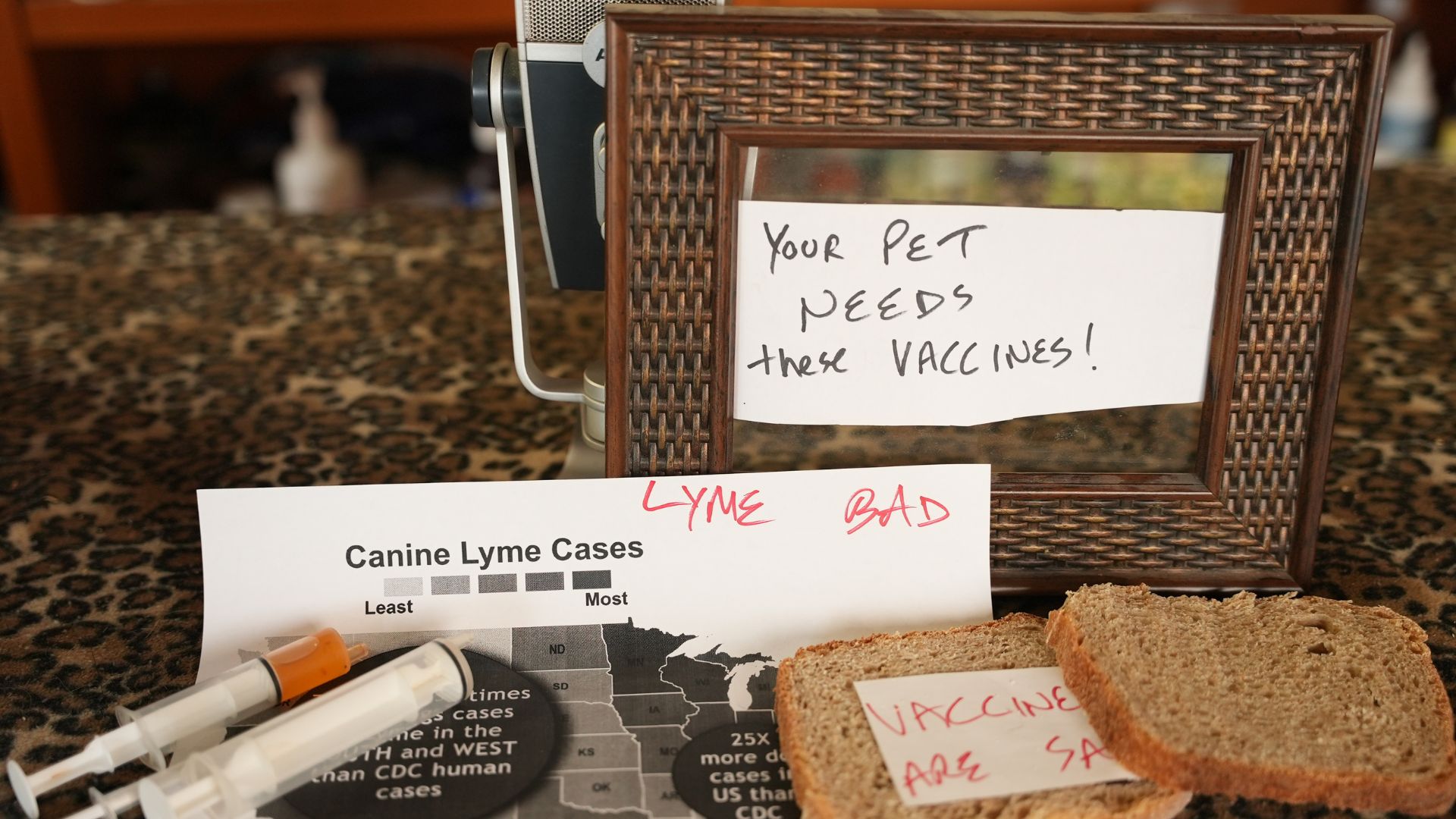
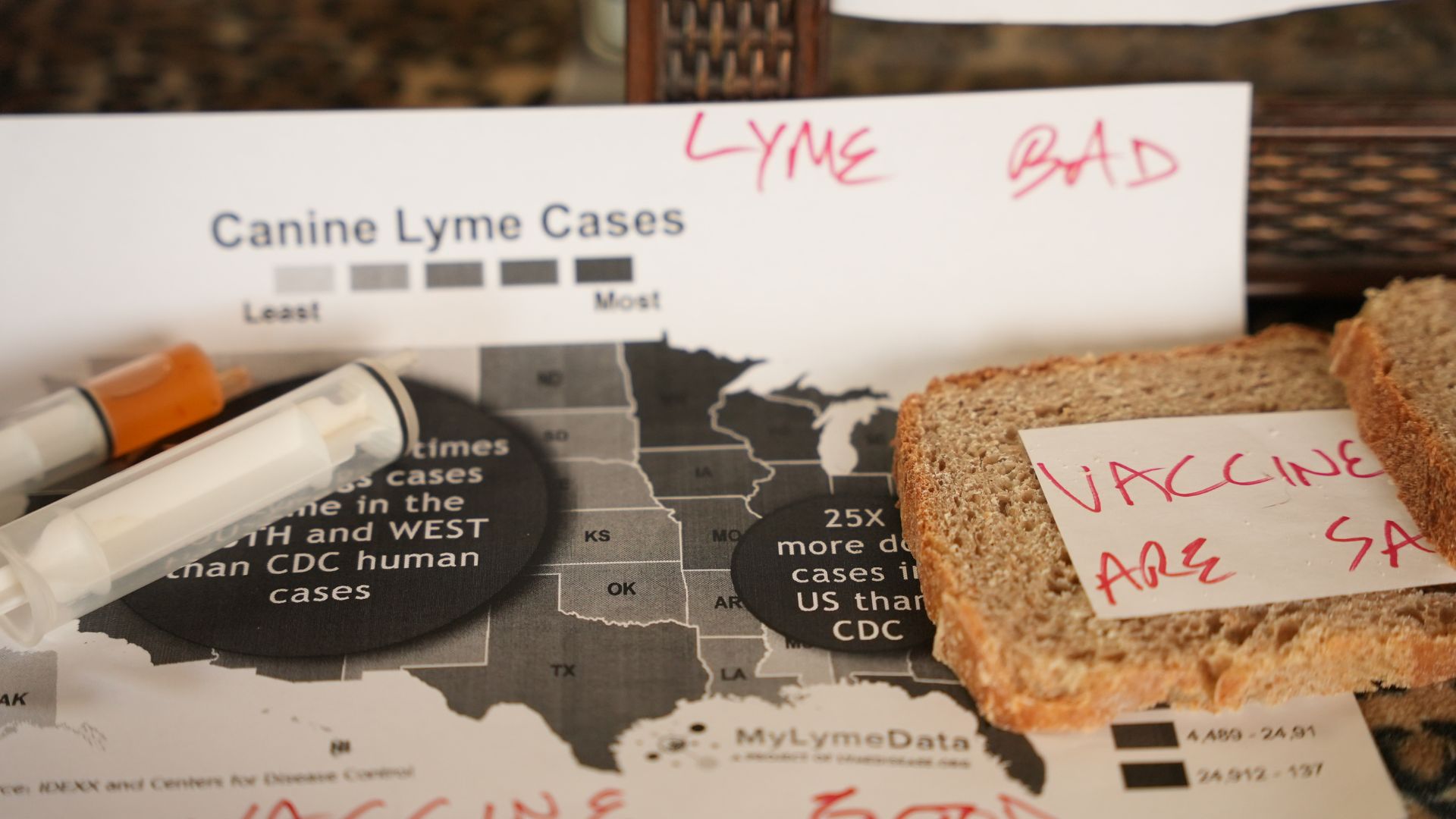
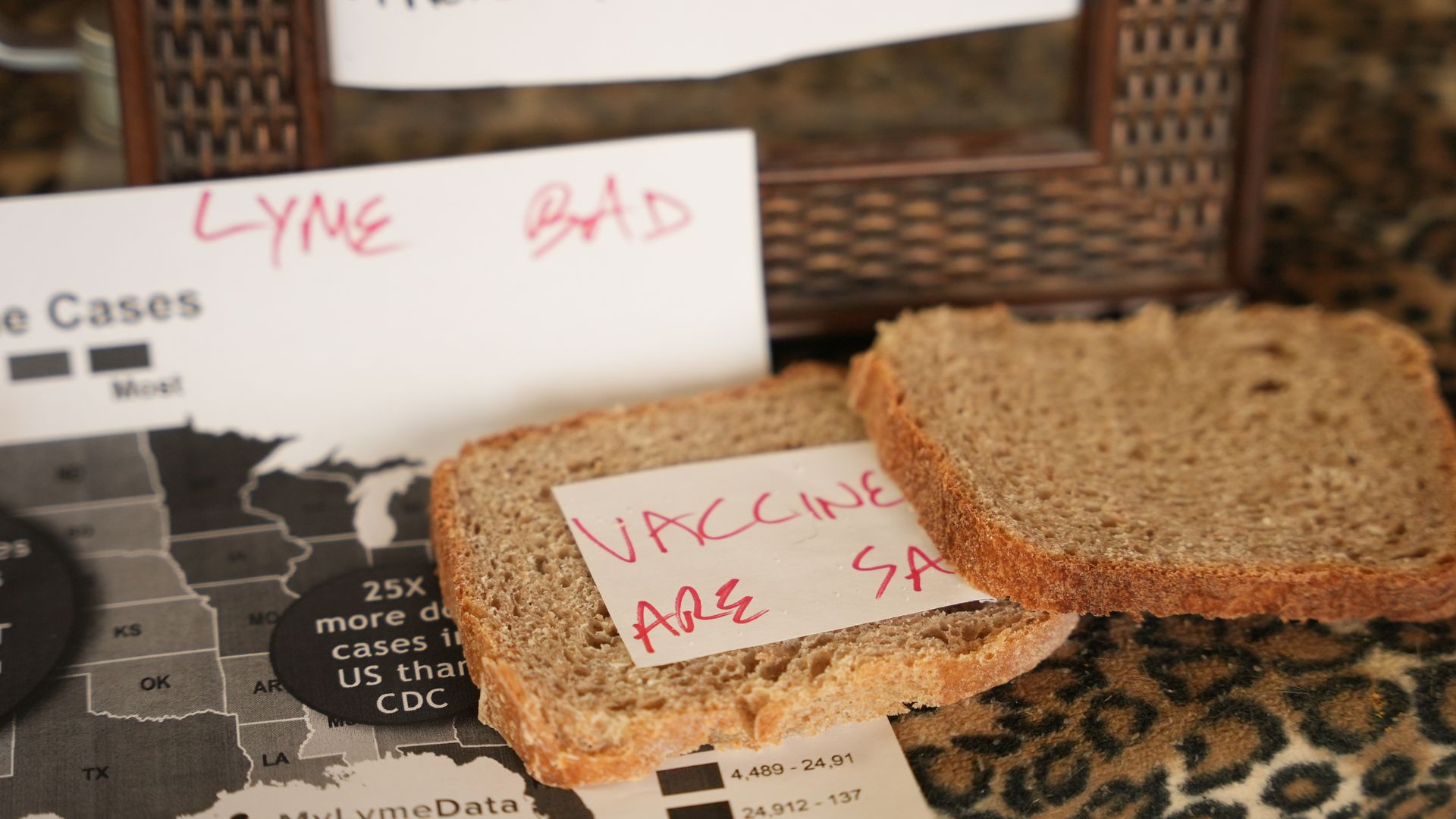
The presentation included examples comparing Lyme disease cases in dogs with human case figures reported through the CDC.
Some comparisons showed figures such as:
-
Approximately 50 times more dog cases in one regional comparison
-
Approximately 25 times more dog cases in a broader United States comparison
Those figures can certainly catch your attention.
You look at the graph and think:
“Wow. That’s a lot of Lyme disease."
And perhaps you’re suddenly much more interested in vaccinating your dog.
But I would encourage you to ask another question.
What does that comparison actually tell me about my individual dog’s risk?
Why Is Relative Risk Different From Absolute Risk?
A graph can show a large difference between two numbers without telling you how common the disease is in the overall population.
For example, imagine a graphic comparing two case counts.
One number is 25 times larger than the other.
That sounds impressive.
But you still need to know:
-
How many animals were included?
-
Which geographic area was studied?
-
What time period was measured?
-
How many dogs actually became ill?
-
How many dogs were potentially exposed?
The presentation also discussed an illustrative example involving a very large dog population, perhaps around 100 million dogs, and a relatively small number of affected animals within a particular area.
The point of that illustration was to show how the denominator can change your understanding of risk.
Those example numbers should not be treated as actual local disease rates.
What Questions Should You Ask About Vaccine Statistics?
If your veterinarian presents a graph showing a high incidence of disease, I would ask:
-
Does this graph represent our local area?
-
Is it showing reported cases, exposure, or clinically ill animals?
-
What percentage of dogs in our area were affected?
-
Is the information from a recent outbreak?
-
Does my dog’s lifestyle increase or decrease the risk?
-
How does vaccination change that risk?
The graph may be completely accurate.
But it still needs context.
And I think that context is particularly important when making a decision about your own pet.
4. Motivational Interviewing
The fourth approach is called motivational interviewing.
This technique is intended for pet owners who are particularly hesitant about vaccination.
And compared with some of the other approaches, it can feel much less direct.
What Is Motivational Interviewing?
Motivational interviewing is a communication approach that focuses on understanding the person’s concerns.
The conference presentation described several important components:
-
Expressing empathy
-
Listening carefully
-
Reflecting the pet owner’s concerns
-
Asking permission before offering advice
-
Avoiding unnecessary confrontation
-
Encouraging further consideration
Rather than trying to change your mind immediately, the veterinarian may focus on building trust.
What Might Motivational Interviewing Sound Like?
Suppose you tell your veterinarian:
“I’m worried my dog might have a reaction to another vaccine."
Instead of immediately dismissing your concern, the veterinarian might say:
“I understand why you’re worried. Can you tell me what you’ve heard or experienced?"
They might listen to your explanation.
Then ask:
“Would you be comfortable if I shared some information about the risks and benefits?"
That’s motivational interviewing.
What Is the Goal of Motivational Interviewing?
According to the presentation, the goal isn’t necessarily to convince a hesitant owner during the first visit.
Instead, the veterinarian may try to move the person a little closer toward considering vaccination.
Perhaps you’re completely opposed at first.
After a discussion, you become willing to review more information.
That may be considered progress.
Is Motivational Interviewing Manipulative?
Not necessarily.
Listening carefully and acknowledging concerns are valuable parts of any medical conversation.
I think veterinarians should do more of that.
But it helps to understand that motivational interviewing can also be used with the goal of changing someone’s position.
As a pet parent, you can appreciate the discussion while still deciding that you need more information.
I don’t think you need to be suspicious of every conversation in a veterinary clinic.
Many veterinarians genuinely want to protect your animal from preventable disease.
But understanding these approaches can help you take a more active role.
Questions to Ask Your Veterinarian Before Vaccinating Your Pet
If you feel uncertain about a vaccine recommendation, here are questions I would encourage you to ask.
| Question | Why It Matters |
|---|---|
| What disease does this vaccine prevent? | Helps you understand its purpose |
| How common is the disease in our area? | Puts the recommendation into local context |
| Have there been recent outbreaks? | Helps identify changing disease risks |
| How might my dog or cat become infected? | Connects disease exposure to your pet’s lifestyle |
| How effective is this vaccine? | Clarifies its expected benefit |
| What adverse reactions are possible? | Helps you understand the risks |
| How common are those reactions? | Provides context for safety concerns |
| Does my pet’s lifestyle change the recommendation? | Encourages individualized assessment |
| Can you explain the information behind this recommendation? | Allows you to understand the evidence |
You don’t have to ask every question at every appointment.
But if you feel uncertain, ask the questions that matter to you.
I would much rather have an informed pet parent than someone who agrees to something they don’t understand.
What if You Feel Pressured to Vaccinate Your Dog or Cat?
This is where I want you to feel more comfortable speaking up.
You can respect your veterinarian and still ask for additional information.
Those two things aren’t mutually exclusive.
Perhaps your veterinarian says:
“Your dog is due for the leptospirosis vaccine today."
And you’re not sure whether your dog needs it.
You can respond:
“I’d like to understand the risk of leptospirosis in our area. How many dogs have been affected, and what would my dog’s exposure look like?"
That’s a reasonable question.
Or perhaps you want to consider the recommendation before making a decision.
You can say:
“I’m not comfortable making this decision today. I’d appreciate more information about the disease risk and the vaccine’s potential side effects."
You don’t need to become confrontational.
And you don’t need to pretend you understand something when you don’t.
Is It Okay to Ask for More Information?
Absolutely.
Your veterinarian should be able to explain why a vaccine is being recommended.
And you should feel comfortable discussing your concerns.
A good veterinary relationship involves trust, communication, and informed decisions.
Should You Talk With Other Pet Parents?
I also think it can be useful to hear about other pet owners’ experiences.
Ask whether they’ve encountered the disease in question.
Have they had dogs diagnosed with Lyme disease or leptospirosis?
Have they noticed reactions after vaccination?
Those conversations may help you identify questions worth asking.
But remember that individual experiences don’t tell you how common a disease or adverse reaction is across a larger population.
I would use those experiences alongside professional advice and local disease information.
Final Thoughts: Make Informed Vaccine Decisions for Your Dog or Cat
I think the veterinary profession needs to recognize that more pet parents are asking questions about vaccines.
And I don’t see that as automatically being a bad thing.
I want people to be involved in their pets’ healthcare.
I want them to understand why a particular treatment is recommended.
And I want them to feel comfortable asking about benefits, risks, and alternatives.
The conference presentation discussed four specific approaches veterinarians may use when addressing vaccine hesitancy:
The truth sandwich.
Presumptive framing.
Decision aids and visual statistics.
Motivational interviewing.
Some of these techniques may be useful for improving communication.
Others may feel more persuasive, particularly when vaccination is presented as the expected decision.
But regardless of the approach, I think the most important thing is that the conversation remains open.
I’ve always believed we should be thoughtful about vaccination.
There are important vaccines that protect pets from serious disease.
But I also question whether every animal needs every additional vaccine as frequently as it may be recommended.
And I want those decisions to reflect the individual animal.
Think about my cat Cassian.
He is now completely indoors and was vaccinated as a kitten.
His situation is very different from a dog spending considerable time around ticks or potentially contaminated standing water.
The risks aren’t automatically identical.
And neither should be the conversation.
My biggest recommendation is simple.
Before agreeing to another vaccine, understand what disease it prevents, how your pet might encounter that disease, how well the vaccine works, and what adverse effects are possible.
Ask about local disease cases.
Ask about recent outbreaks.
Ask about your pet’s individual risk.
And listen to your veterinarian’s explanation.
You don’t need to be against vaccines to ask questions about them.
In fact, I think those questions are an important part of responsible pet ownership.
Because ultimately, what matters most is protecting our dogs and cats while making informed decisions about their health.
Click To Get A Free Copy of My E-Book!

P.S. If your veterinarian recommends another vaccine and you’re unsure whether your dog or cat needs it, please ask questions. Find out how common the disease is in your area, how your pet might be exposed, and what the benefits and risks of vaccination are. A thoughtful conversation can make a big difference.
P.P.S. I’m not against all vaccines. I’ve always believed certain important vaccines have a place in protecting our dogs and cats. My concern is unnecessary vaccination and whether we’re considering the individual animal. A dog frequently exposed to ticks or standing water may have very different risks from a pet that spends nearly all its time indoors.
P.P.P.S. Remember, no vaccine is 100% effective, and no vaccine is completely risk-free. Those two facts belong in the same conversation. I encourage you to work with your veterinarian, ask for the information you need, and make thoughtful decisions that put your pet’s health first.




The 4 Veterinary Vaccine Communication Techniques Compared
| Technique | How It Works | What You May Hear | What You Can Do |
|---|---|---|---|
| Truth sandwich | Presents a factual message, addresses concerns, and reinforces the message | “Serious vaccine reactions are uncommon. Let’s discuss your concerns." | Ask for vaccine-specific risks and benefits |
| Presumptive framing | Introduces vaccination as the expected plan | “Your pet is due for two vaccines today." | Ask why each vaccine is recommended |
| Decision aids and icons | Uses charts, graphs, and statistics to explain disease risk | “Look how many cases occur in dogs." | Ask about local and absolute risk |
| Motivational interviewing | Uses empathetic listening to explore concerns and encourage reconsideration | “What worries you most about this vaccine?" | Share your concerns and request information |
Lyme vs. Leptospirosis Vaccination: Questions to Consider
| Consideration | Lyme Disease | Leptospirosis |
|---|---|---|
| Exposure discussed | Infected ticks | Contaminated environments, including standing water |
| Local factors | Lyme disease occurrence and tick exposure | Local outbreaks and environmental exposure |
| Lifestyle questions | Does your dog encounter ticks regularly? | Does your dog encounter water or areas potentially contaminated by wildlife? |
| Vaccine decision | Consider exposure, local risk, and vaccine benefits | Consider exposure, local risk, and vaccine benefits |
| Key question | How likely is my dog to encounter the disease? | How likely is my dog to encounter the disease? |