Ouch! Dental Pain Remedies for Pets and People

A cheery Hello to you and your family of pets and people!
I just returned from a great camping trip with my family, along with my 2 brothers and their families.
The weather was pretty cooperative, the water was warm, the kids happy, and except for the border collie running after the deer in the park incident, it all went well 🙂
That EXCEPT for a sore tooth ( of my own…) A few different ‘remedies’ were tried, although it ‘cured’ itself with a whole lot of jostling being dragged behind a boat a high speed, spun in circles by a 14 year old son intent on having his father ‘bite the dust’…
Here is some of what you can use for your own pets:
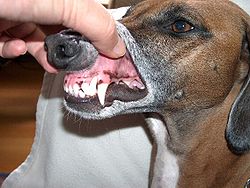
Tooth pain
Similar to us, our dogs and cats also experience tooth pain, the primary difference being that they really don’t get cavities as we do.
In our pets it is more common to have gingivitis, gum recession, and too abscesses.
But regardless of the cause, it is uncomfortable.
You may see your dog or cat not acting themselves, they may have difficulty chewing, or you may even see a swollen, red area around the tooth.
This is painful, and will require care.
There are some things that you can do at home.
1. Cloves
This is the preferred home remedy for people, and can also help your dog or cats. Cloves have anti-inflammatory, antibacterial, antioxidant and anesthetic properties.
You can purchase clove oil, or grind 1-2 cloves and mix with olive oil
Dab a cotton ball in clove oil and rub it directly on the sore tooth.
2. Garlic
Garlic has been used by many people for tooth pain. Garlic is antibacterial, and will also help with gum infections.
Crush a garlic clove, mix in olive oil, wait 15 minutes, then apply this to the affected area with a Q tip.
3. HERBAL TINCTURE. A tincture of OREGON GRAPE, GOLDENSEAL, and MYRRH can be liberally applied to your pet’s gums with a cotton swab.
4. HEALING LOTION. Calendula lotion can be used to heal ulcers in the mouth and promote healing of damaged tissue.
5. CHAMOMILLA. This is used to decrease puppy and kitten chewing, alleviating some of the signs of teething pain.
6. MYRRH. This can be mixed with water and applied topically to the inflamed gum tissue to decrease gum inflammation.
7. HOMEOPATHIC: ARNICA. For acute pain/injuries to the mouth or teeth. I have used it myself for a tooth root abscess. Dose: 30C four times daily.
Best Wishes,
Andrew Jones, DVM
P.S. My new book, Veterinary Secrets, has extensive information on HOW to prevent and treat dental disease Naturally.
A great reference at 467 pages.
You can grab a copy, along with 3 additional bonuses here:
DO NOT GIVE GARLIC TO CATS AS IT IS TOXIC!!!!! Really, Andrew, this is common knowledge. Please retract your advice about giving garlic for tooth pain.
Thanks for pointing that out. You’re absolutely right—garlic should not be given to cats, as it can be toxic to them. For dogs, even small amounts should only be used with caution and under veterinary guidance. Safety always comes first, and I appreciate you helping clarify this for everyone.
Happy Birthday my dear man. Sorry you had such pain on this important day but you still have much to be thankful for so enjoy the sensation of being grateful along with me please. You have gifted much to so many of us who are grateful to you for your wisdom and kindness. Thank you mil gracias.
My birthday was the27th and this year it was shared with a friend of 87 years, visiting from another country, whose birth date is the 7th of Sept. What a lovely celebration we shared with friends….and a first for me. I wish you the same fun and shared experience….and continued love among family and fans.
Thank you so much for your beautiful birthday wishes—and Happy Birthday to you too! What a special way to celebrate with a lifelong friend. I’m truly grateful for your kindness and support. Wishing you many more joyful birthdays, good health, and wonderful memories with family, friends, and of course, our furry companions!
Calendula is pretty good for sore’s and infections, it can cures pink-eye when used with Eyebright as an eye wash, but when using it orally it can cause gastric upset.
For years Vet’s have warned about Garlic, saying it’s harmful. Back in the 80’s I had a dog with a bleeding uterus infection, the Vet said the dog had about 5% chance and to take home and let it pass. I used Garlic for the infection and Cayenne to stop the bleeding. The dog lived! Without the Vet’s help
I like Lavender EO for tooth pain, use very little on a Q-tip, it can be applied on the outside of the mouth over the area that hurts or inside the mouth, however it will cause you to salivate! Not for pets!
Thanks for sharing your experience. I’m glad your dog recovered all those years ago. Calendula can certainly be helpful for minor skin wounds, but it’s always important to use herbal remedies appropriately. As for garlic, I recommend caution—especially with cats, where it can be toxic, and even in dogs, large amounts can be harmful. For ongoing dental pain or infection, it’s always best to have the underlying cause treated.
Hello Donna,
A garlic tincture of olive oil will not cause toxicity, hence that is why I suggested it as a remedy.
Onions are quite toxic, as can garlic be if enough is consumed.
Here is a section from vetlearn.com
Hidden Dangers in the Kitchen: Common Foods Toxic to Dogs and Cats
by Kim Gugler, DVM, Christopher M. Piscitelli, MS, DVM, DACVECC, Jeffery Dennis, DVM, DACVIM
Garlic and Onions
Onions and garlic are members of the genus Allium, which also includes leeks, chives, and shallots. The toxicity of onions in dogs was first recognized in 1930, when dogs fed onions developed anemia during a research study.1 It has since been determined that onion juice, as well as dehydrated, powdered, and cooked onions, can cause hemolytic anemia in dogs and cats.2 Most cases of toxicosis are attributed to a single episode of accidental ingestion of raw onion or feeding of foods containing onions or garlic. The toxic dose has been found to be as low as 5 g/kg in cats and 15 g/kg in dogs.2 A medium-sized onion (2 to 3¼” in diameter) is approximately 150 g, and the average weight of a garlic clove is 6 g. A 10-lb dog would ingest a potentially toxic dose by eating only half of an onion. Crushing or chewing Allium spp releases allicin, which quickly breaks down into the toxic component n-propyl disulfide. N-propyl disulfide causes oxidative damage to hemoglobin and erythrocyte membranes, resulting in the formation of methemoglobin, Heinz bodies, and eccentrocytes, which then lead to intravascular hemolysis and anemia.3,4 Cats may be more sensitive to the toxic effects of onions because of differences in feline hemoglobin that result in an increased sensitivity to oxidative damage.
Dr Andrew
Hi thanks for your post.
My cat is in dire need of pain relief for tooth pain.
I am thinking of using Clove oil. Knowing from personal use it does burn when used straight. Now do you have any suggestions if its safe to apply straight on a cats gums and tooth or should I dilute it with olive oil?
Any tips and advice would be greatly appreciated. Eg how many applications per day, how to get her be still.
Thank you.
I’m sorry to hear your kitty is so uncomfortable. I would not recommend applying clove oil to a cat’s gums. Clove oil contains eugenol, which can be toxic to cats, and even diluted it may cause irritation or other problems.
The best option is to have her seen by a veterinarian as soon as you can, as dental pain is often caused by an abscess, severe gingivitis, or a damaged tooth that needs treatment. In the meantime, offer soft food and keep her as comfortable as possible. I hope she’s feeling better very soon.
Okay so I just did the garlic and oil mix on my dog for her teeth and then saw that it said may be toxic. She is fine and actually appears to be feeling MUCH better.
I’m glad she’s feeling more comfortable! A small, one-time exposure is unlikely to cause problems for most dogs, but I wouldn’t recommend using garlic as an ongoing dental remedy. Keep an eye on her, and if the tooth is still bothering her, it’s best to have it checked—dental pain is often caused by an infection or damaged tooth that needs treatment. Wishing your pup a speedy recovery!
My cats’ gums are red and swallen around certain teeth, yet her teeth are nice and white? She has started to rub her face on hard surfaces and has lost weight.
I do not want her to take antibiotics or be anesthetized.
What treatment can I apply to her gums?
I’ve been using c. Silver for a couple days thinking about using clove & coconut oil mix on the gums ?
clove oil should be diluted with a carrier oil (like olive oil) before being applied to pets, as it can be too strong on its own especially with sensitive pets. For coconut oil, it is commonly used for oral health
Sorry to hear your kitty is uncomfortable. Red, swollen gums and weight loss usually mean she’s in pain. I’d avoid putting anything on her gums until you know the cause. In the meantime, offer soft food and have your vet check her mouth. Be sure to let them know you’d prefer to avoid antibiotics or anesthesia if possible. Wishing her a speedy recovery!
Can I use onion topically on the skin for a sore on my doggy’s back?
I wouldn’t recommend using onion, even topically. Onions can be toxic to dogs if they’re licked or ingested. For a sore on your dog’s back, it’s much safer to gently clean the area with saline and have it checked if it’s painful, swollen, or not healing. Hope your pup feels better soon!
What about putting cloves in boiling water, letting it steep, and then cool it off and using the clove water as a wash on a cats’ teeth?
There’s so much contradicting information on the internet about everything including cloves that it gets tiring.
I just found out about the healing uses for cloves yesterday from a YouTube video with Dr. Eric Berg and he suggested this treatment for people to heal our gums.
What’s your opinion?
I know—it can be confusing with so much conflicting information online. For cats, I wouldn’t recommend using clove water on the gums. Cloves contain eugenol, which cats don’t process well and can be toxic, even in small amounts. If your cat has sore gums, it’s much safer to have the cause checked and use treatments that are known to be safe for cats.