Heavy Metals Found in 99% of Cat Foods Tested: What Every Cat Owner Should Know

Are There Heavy Metals and Other Toxins in Your Cat’s Food?
A Clean Label Project investigation found lead in 99% of the cat food products tested, cadmium in 96%, and mercury in 94%. The investigation also detected other contaminants, including glyphosate, plastic-related chemicals, and microplastics.
Now, that’s something I think every cat parent deserves to know.
A recent investigation examined 100 cat food products from more than 62 different brands, screening for over 122 contaminants.
And the findings were disturbing.
I know many of you are doing your best to feed your cats good-quality food.
Perhaps you’ve switched from kibble to canned food.
Maybe you’re purchasing one of the more expensive brands because you assume it’s cleaner and healthier.
I’ve been doing something similar with my own cat, Cassian.
He doesn’t get kibble, and I’ve been choosing what I consider good-quality canned cat food.
But after looking at these findings, I’m beginning to wonder just how clean that food really is.

The investigators detected heavy metals, herbicides, and plastic-related contaminants in a large proportion of the products tested.
They also found some particularly concerning differences between fish-based cat foods and foods made with other animal proteins.
Fish-based cat foods contained 18 times more mercury than non-fish-based foods in the investigation.
And canned foods containing fish had even higher mercury levels compared with canned foods made from other proteins.
So what does this mean for your cat?
Should you stop feeding fish?
Is expensive canned cat food really better?
And what can you do to reduce your cat’s exposure to potentially harmful substances?
Let’s go through the findings and, more importantly, what I would change about feeding our cats.
What Is the Clean Label Project Cat Food Investigation?
The Clean Label Project is a nonprofit organization that tests consumer products for contaminants.
The organization has previously investigated a range of products, including dog foods.
Now, it has examined cat food.
The investigation was particularly extensive.
How Many Cat Foods Were Tested?
The researchers examined:
| Investigation Detail | Finding |
|---|---|
| Cat food products tested | 100 |
| Brands represented | More than 62 |
| Contaminants screened | More than 122 |
| Testing method | Independent accredited laboratory |
| Main contaminants discussed | Heavy metals, glyphosate, plastic-related chemicals, microplastics, and processing-related compounds |
That’s quite a substantial number of products.
And what concerns me most is how frequently contaminants were detected.
The investigation wasn’t limited to one inexpensive brand or one type of food.
It included a wide selection of commercial cat foods.
What Contaminants Did the Researchers Look For?
The investigation screened for several categories of substances.
These included:
-
Heavy metals: Lead, cadmium, and mercury
-
Herbicides: Including glyphosate, commonly associated with Roundup
-
Plastic-related chemicals: Including BPA
-
Microplastics: Tiny plastic particles
-
Processing-related compounds: Including advanced glycation end products, or AGEs, which can form during high-temperature processing
These are substances I don’t particularly want to see in food that my cat eats every day.
And the results raise some important questions about long-term dietary exposure.
What Percentage of Cat Foods Contained Heavy Metals?
The Clean Label Project reported widespread detection of three heavy metals.
Lead was detected in 99% of the products, cadmium in 96%, and mercury in 94%.
Here are the results.
| Heavy Metal | Percentage of Cat Foods Testing Positive | Main Health Concern Discussed |
|---|---|---|
| Lead | 99% | Brain, nervous system, and kidney damage |
| Cadmium | 96% | Carcinogenicity and potential organ toxicity |
| Mercury | 94% | Nervous system, kidney, and gastrointestinal toxicity |
Those percentages are remarkably high.
But I want to distinguish two things.
Detecting a contaminant is not the same as proving that every food contains enough of it to cause disease.
The percentages tell us how frequently these substances were found.
They don’t, by themselves, tell us whether every product exceeded a harmful exposure level.
Still, I believe the findings deserve attention, especially because many cats eat the same foods repeatedly for years.
Let’s look at each heavy metal more closely.
1. Lead in Cat Food: Why Is It Concerning?
Lead was detected in 99% of the cat food products tested.
That’s nearly every product included in the investigation.
And lead is not a substance I want my cat consuming unnecessarily.
What Does Lead Do to the Body?
Lead is a known neurotoxin.
That means it can damage the brain and nervous system.
At sufficiently high exposures, lead can cause serious neurological problems, including potentially irreversible damage.
Lead exposure can also affect the kidneys.
High levels of lead have been associated with kidney injury and kidney failure.
This is one reason the findings concern me.
Could Lead in Cat Food Contribute to Kidney Disease?
Kidney disease is something we see frequently in older cats.
I’ve discussed how a substantial proportion of senior cats develop kidney problems, with estimates exceeding one-third by around 15 years of age.
And when I see lead being detected in almost every cat food product tested, I have to wonder:
Could long-term dietary exposure be one of the factors contributing to kidney problems in some cats?
It’s a question worth investigating.
The investigation does not establish that lead in commercial cat food is causing chronic kidney disease in cats.
But we know that excessive lead exposure can damage the kidneys.
And when the same food is eaten repeatedly, I think it makes sense to pay attention to potential sources of exposure.
2. Cadmium in Cat Food: What Are the Risks?
The second heavy metal is cadmium.
It was detected in 96% of the cat foods tested.
Cadmium is particularly concerning because it is classified as a human carcinogen.
Why Is Cadmium Considered Dangerous?
Cadmium is a toxic heavy metal.
Research involving humans has established important concerns about its carcinogenic effects.
That’s why its presence in pet food raises questions.
I don’t think anyone is deliberately choosing cat food because it contains cadmium.
Yet the investigation suggests that detecting this metal in commercial cat food is extremely common.
Does Cadmium in Cat Food Cause Cancer?
The classification of cadmium as a human carcinogen is an important warning about its hazardous properties.
However, it doesn’t establish that the amounts detected in these cat foods cause cancer in cats.
The actual risk depends on exposure.
And that is one of the gaps I want us to understand better.
How much are cats consuming?
How much exposure occurs over their lifetime?
And what levels can cats tolerate without adverse effects?
I don’t think we have all the answers yet.
But I would certainly prefer to reduce unnecessary cadmium exposure where possible.
3. Mercury in Cat Food: Why Are Fish-Based Foods a Concern?
This was one of the most striking findings for me.
Mercury was detected in 94% of the cat food products tested, and fish-based foods contained substantially higher amounts than non-fish-based foods.
Mercury is particularly concerning because of its effects on the nervous system and kidneys.
How Does Mercury Affect Cats?
Mercury is a neurotoxin.
At harmful exposure levels, it can affect the central nervous system.
Potential consequences of significant mercury toxicity include:
-
Neurological damage
-
Cognitive impairment
-
Kidney injury
-
Gastrointestinal problems
The kidneys are especially relevant because they’re involved in filtering waste products from the body.
And certain heavy metals can accumulate in tissues and damage organs.
This is part of why I’m concerned about repeated exposure through food.
Why Do Fish-Based Cat Foods Have More Mercury?
Fish can accumulate mercury from their environment.
And when fish are used as ingredients in cat food, contaminants present in those ingredients may also enter the finished product.
Cats are obligate carnivores.
They need appropriate animal-based nutrition.
But that doesn’t mean fish has to be their main protein source.
And after reviewing these findings, I’m reconsidering how often fish should appear in a cat’s diet.
How Much More Mercury Was Found in Fish-Based Cat Foods?
The Clean Label Project reported several important differences.
| Comparison | Finding |
|---|---|
| Fish-based food vs. non-fish-based food | 18 times more mercury |
| Canned fish-based food vs. canned food with another protein | 28 times more mercury |
| Fish-based food vs. non-fish-based food | 2.5 times more cadmium |
Those numbers certainly caught my attention.
Why Did Fish-Based Foods Have 18 Times More Mercury?
When the investigators compared fish-based cat foods with non-fish-based foods, they reported that the fish-based products contained 18 times more mercury.
That is a substantial difference.
And it’s particularly relevant if your cat eats fish-flavored or fish-based food every single day.
What About Canned Cat Food With Fish?
The results were even more striking when comparing canned foods.
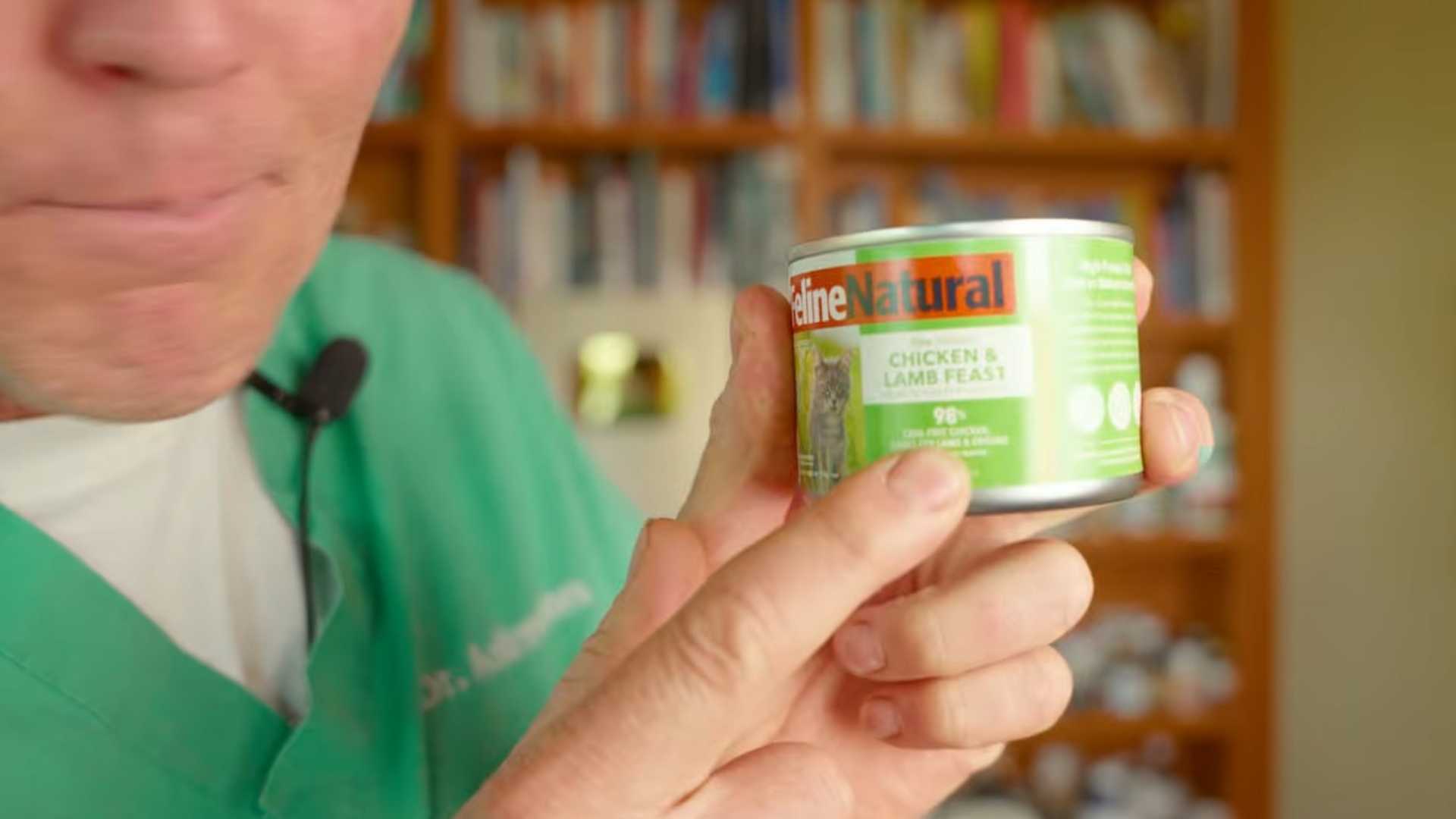
Canned cat foods containing fish had 28 times more mercury than canned foods containing other proteins, such as chicken.
That’s one of the clearest practical findings I took from this investigation.
If I have a choice between a fish-based canned food and a comparable chicken-based food, I would lean toward the non-fish option when trying to reduce mercury exposure.
Were Fish-Based Foods Higher in Cadmium Too?
Yes.
The investigation reported that fish-based foods contained approximately 2.5 times more cadmium.
So mercury wasn’t the only heavy metal of concern.
This strengthens my preference for looking at other animal proteins rather than making fish the foundation of a cat’s diet.
Which Fish Ingredients Were Most Contaminated?
The Clean Label Project singled out three fish-related ingredients in connection with higher contamination findings.
These were:
-
Herring
-
Tuna
-
Fish broth
I think this is particularly useful information when you’re reading a cat food label.
What About Tuna Cat Food?
Tuna is a common ingredient in commercial cat foods.
And many cats absolutely love it.
But because the investigation identified tuna among the fish ingredients of concern, I would be cautious about using tuna-based foods as a regular dietary staple.
Is Herring Cat Food Any Better?
Herring was also highlighted among the fish-related ingredients associated with contamination concerns.
So I wouldn’t automatically assume that choosing a different species of fish eliminates the problem.
Why Should You Check for Fish Broth?
Fish broth is an ingredient pet parents may overlook.
You might purchase a food with chicken or another animal protein prominently displayed on the label.
But the ingredient list could still include fish broth.
Because fish broth was among the ingredients highlighted, I would pay closer attention to it when selecting a product.
My preference is to choose cat foods that use clearly identified, traceable animal proteins without relying heavily on fish ingredients.
What About Glyphosate and Roundup in Cat Food?
Heavy metals weren’t the only concern.
The investigation also detected glyphosate in many of the cat food products.
Glyphosate is an herbicide commonly associated with Roundup.
It’s widely used to control unwanted plants.
And residues can enter the ingredients used to manufacture food.
Why Am I Concerned About Glyphosate?
Glyphosate has been classified as a probable human carcinogen.
That classification raises concerns about its potential health effects.
And it makes me question whether repeated dietary exposure could also have consequences for animals.
However, this classification does not establish that the amounts detected in cat food cause cancer in cats.
What concerns me is that our pets may be exposed repeatedly through their diets.
Can Cats Be Exposed to Herbicides Through Food?
Yes, the investigation found glyphosate residues in many tested products.
This suggests that food ingredients can be one source of exposure.
We might think of herbicides as chemicals used outdoors.
But the ingredients used in food production can also carry residues.
And that’s what makes these results particularly relevant to pet nutrition.
What Are BPA and Microplastics, and Why Were They Found in Cat Food?
The Clean Label Project also investigated plastic-related contaminants.
These included BPA and microplastics.
Both raise questions about the substances that may be entering commercial pet food.
What Is BPA?
BPA, or bisphenol A, is a chemical associated with certain plastic materials and food-contact products.
The investigation detected BPA in a high proportion of the tested cat foods.
This raises questions about possible contamination from packaging or other parts of food production.
What Are Microplastics?
Microplastics are extremely small plastic particles.
When larger plastic materials break down, they can release tiny particles into the environment.
These particles have become an increasing focus of research.
The Clean Label Project reported microplastic contamination in many of the products examined.
Are Microplastics Dangerous for Cats?
The full health implications of microplastic exposure in cats are still unclear.
And I think that uncertainty is worth acknowledging.
We shouldn’t automatically assume every detected particle is causing disease.
But I also don’t think we should dismiss the question simply because long-term research is incomplete.
For animals eating the same commercially prepared foods repeatedly, it’s an area I would like to see investigated further.
What Are Advanced Glycation End Products in Cat Food?
Another category of compounds discussed in the investigation was advanced glycation end products, commonly abbreviated as AGEs.
These compounds can form during food processing, particularly under conditions involving high heat.
And that brings us to one of my longstanding concerns about kibble.
How Are AGEs Formed?
Certain compounds can form when food ingredients are exposed to high temperatures and processing conditions.
The investigation included these processing-related contaminants among the substances screened.
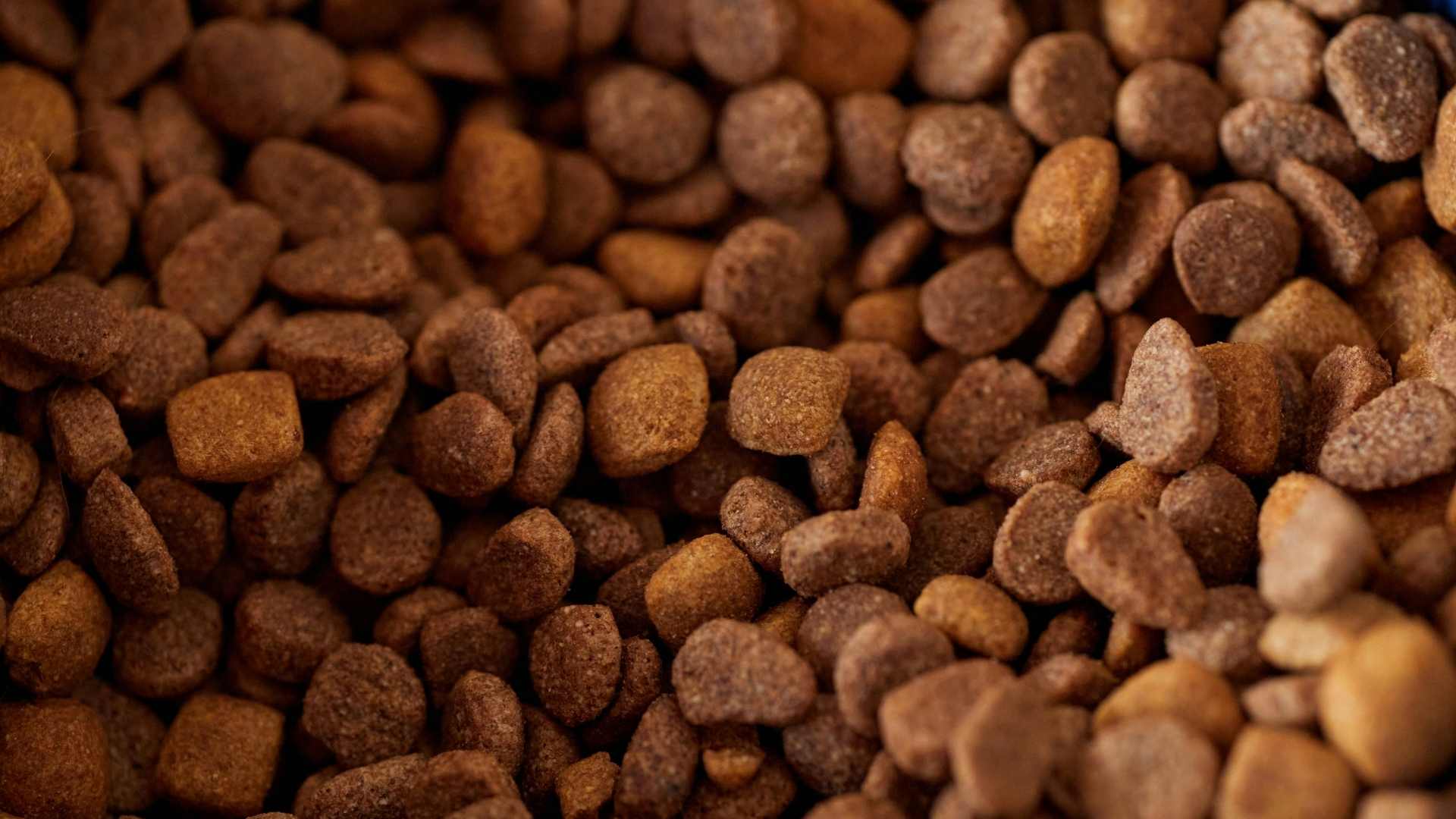
This matters because commercial dry pet food frequently undergoes significant heat and pressure during manufacturing.
Why Am I Concerned About Highly Processed Kibble?
I’ve spoken many times about why I don’t favor kibble as the main diet for cats.
Cats are obligate carnivores.
My preference is to feed appropriate animal-based foods rather than relying on highly processed dry diets.
And when I see an investigation examining compounds associated with high-temperature processing, that reinforces my interest in less processed feeding options.
It doesn’t establish that every kibble product causes disease.
But for my own cat, Cassian, I prefer to avoid kibble.
Why Did Researchers Compare Contaminants Per Calorie Instead of Per Weight?
This is an important detail that can easily be overlooked.
The Clean Label Project compared contaminant levels based on calories rather than simply comparing equal weights of food.
Why?
Because dry and canned cat foods contain very different amounts of water.
Why Does Moisture Matter?
Canned cat food generally contains much more moisture than dry food.
Imagine comparing the same weight of canned food and kibble.
The canned food contains considerable water.
So a simple weight-based comparison could make it appear to contain substantially lower contaminant concentrations.
But that wouldn’t necessarily reflect how much exposure a cat receives while consuming enough food to meet its energy needs.
How Does a Calorie-Based Comparison Help?
By comparing contaminants on a calorie basis, the investigators aimed to account for differences in moisture and energy density.
This provides another way to compare foods that may otherwise be difficult to evaluate fairly.
I think that’s a useful part of the investigation.
And it makes the differences reported between fish-based and non-fish-based foods particularly interesting.
Are Government Contaminant Limits Enough to Protect Cats?
This is one of the questions raised by the Clean Label Project.
Government agencies have established contaminant limits for various substances.
But the investigation raised two important concerns.
1. Human Safety Standards May Not Reflect Cat-Specific Risks
Some contaminant standards were developed using human health information.
And the organization questioned whether these limits adequately account for the needs of dogs and cats.
After all, cats are not small humans.
They have different physiology, body sizes, and dietary patterns.
So I think it’s reasonable to ask whether we have enough information about safe long-term exposure levels for cats.
2. Cats Often Eat the Same Food Every Day
This is the second concern, and it’s one I find particularly important.
Think about how you and I eat.
We can go to the grocery store and choose different foods.
We might eat chicken one day, vegetables another day, and something completely different the next.
Our diets naturally vary.
But many cats?
They eat the same food.
Every day.
Sometimes for years.
And that means any contaminants in that food may be part of their repeated dietary exposure.
Why Does Repeated Exposure Matter?
The question isn’t simply whether a substance was detected once.
It’s whether long-term exposure could lead to health consequences.
And for substances that may accumulate in the body, repeated exposure deserves particular attention.
That’s why I think we need more cat-specific research into dietary contaminants.
Could Heavy Metals in Cat Food Be Linked to Kidney Disease?
This is one of the biggest questions I have after reviewing the investigation.
Kidney disease is extremely common in older cats.
And several of the heavy metals detected in the tested foods are known to cause kidney damage at harmful exposure levels.
Which Heavy Metals Can Affect the Kidneys?
The investigation highlighted:
-
Lead: Can damage the kidneys at sufficiently high exposure
-
Mercury: Can cause kidney toxicity and accumulate in tissues
-
Cadmium: A toxic metal associated with serious health concerns
The Clean Label Project specifically drew attention to mercury’s potential kidney effects.
And given the high mercury levels reported in fish-based foods, that’s particularly concerning.
Does This Study Prove Cat Food Causes Kidney Disease?
No.
The investigation detected contaminants in commercial cat foods.
It did not establish that those contaminants caused kidney disease in the cats eating them.
We still need research that connects actual long-term exposure levels with clinical health outcomes.
But I think the question deserves serious investigation.
Could long-term exposure to heavy metals through commercial cat food contribute to kidney disease in some cats?
That’s something I want researchers to examine more closely.
Especially when kidney disease affects so many senior cats.
What Is the Best Cat Food to Reduce Potential Contaminant Exposure?
After reviewing these findings, I started thinking more seriously about what I’m feeding Cassian.
I’ve been buying what I consider a good-quality canned cat food.
It’s not inexpensive.
And I had assumed that because I was choosing a premium product, it was probably relatively clean.
But the investigation makes me question whether price alone is a reliable measure of food quality.
Is Expensive Cat Food Always Cleaner?
Not necessarily.
A premium price doesn’t automatically guarantee that a food is free of contaminants.
The Clean Label Project detected substances across a wide range of tested products.
That doesn’t mean every expensive food is equally contaminated.
But it does mean I wouldn’t assume a product is cleaner simply because it costs more.
I want to pay closer attention to the ingredients.
And particularly to the protein source.
Should You Stop Feeding Fish-Based Cat Food?
Personally, I would strongly consider avoiding fish-based foods as a regular part of my cat’s diet.
The reported mercury differences are simply too significant for me to ignore.
Remember:
-
Fish-based foods contained 18 times more mercury.
-
Canned fish-based foods contained 28 times more mercury than canned foods with other proteins.
-
Fish-based foods contained 2.5 times more cadmium.
These findings don’t prove that every fish-containing food is unsafe.
But they give me a practical reason to favor other animal proteins when choosing food for Cassian.
What Animal Proteins Would I Consider Instead?
I would look for foods made with clearly identified animal proteins.
The source discusses options such as:
-
Chicken
-
Turkey
-
Other traceable animal proteins
I particularly like the idea of choosing ingredients that can be traced to an identifiable animal source.
Rather than relying on vague descriptions of animal-derived ingredients.
Would I Feed My Cat Raw Food?
One option I’ve been incorporating more into Cassian’s diet is prepackaged frozen raw cat food.
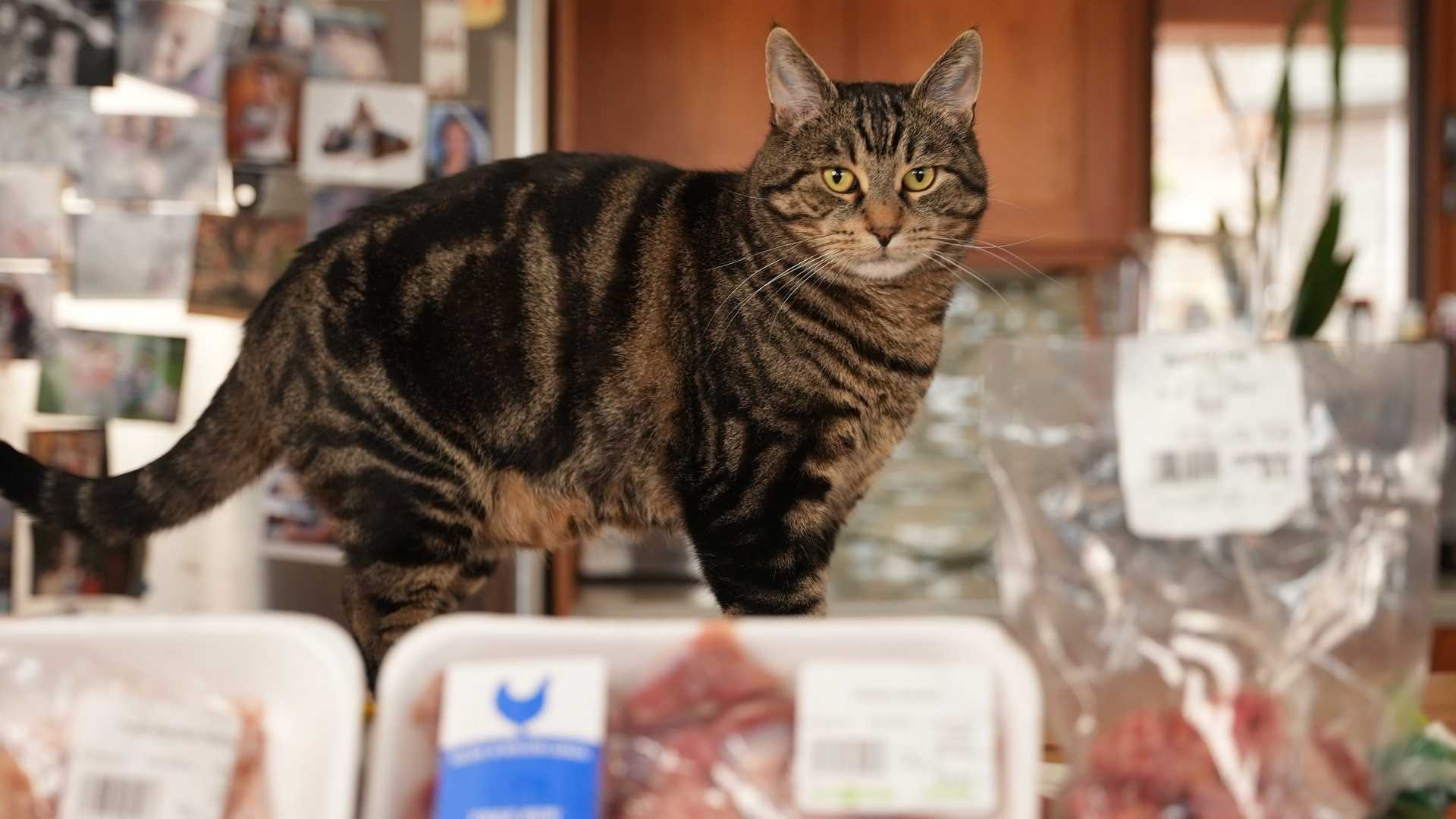
I’m interested in products specifically formulated to provide a balanced diet for cats.
And Cassian certainly seems to appreciate it.
Why Am I Interested in Frozen Raw Cat Food?
I like the idea of feeding less processed animal-based food.
And I want to know exactly what is going into my cat’s diet.
But I would still look for an appropriately formulated, nutritionally balanced product.
Raw food requires careful handling because it can carry harmful microorganisms, and a raw label alone doesn’t guarantee that a food is nutritionally complete or contaminant-free.
So I wouldn’t choose just any frozen raw product.
I’d want one intended to provide complete feline nutrition.
Does Cassian Like Raw Food?
He certainly seems to.
I’ve been giving him more of a prepackaged frozen raw food.
And he appreciates it.
There’s also something else he loves.
Animal protein.
We recently celebrated Thanksgiving here in Canada, and we had turkey.
Cassian was very interested in that.
No surprise there!
He’s a cat.
And cats are obligate carnivores.
They need appropriate animal-based nutrition.
Is Homemade Cat Food a Better Option?
After looking at the contamination findings, I’ve been thinking more seriously about preparing Cassian’s food at home.
The biggest appeal is having more control over the ingredients.
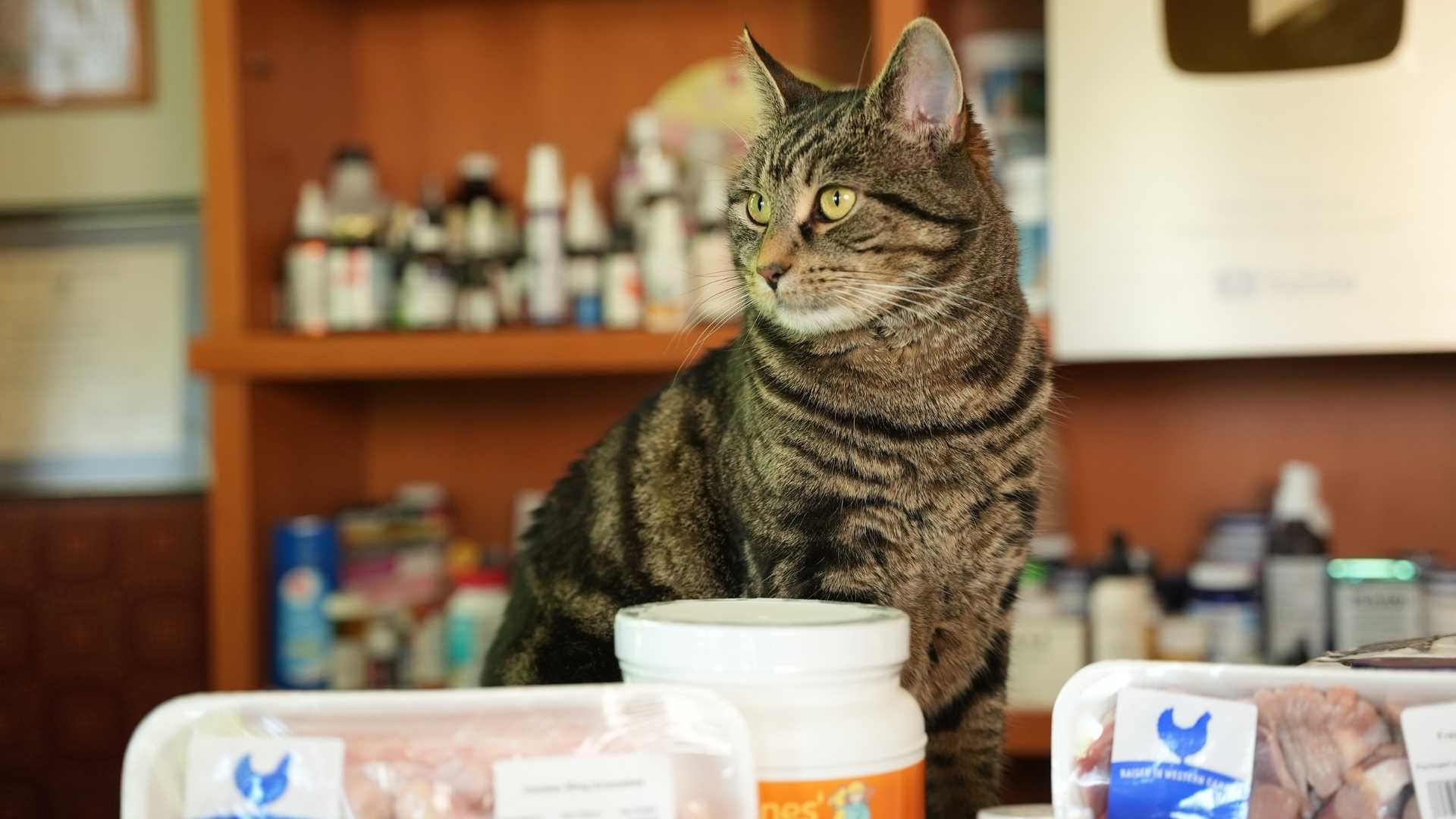
If I’m choosing the meat myself, I know what I’m buying.
And I can make a point of avoiding fish-based ingredients that were associated with higher mercury levels in the investigation.
What Are the Benefits of Homemade Cat Food?
The main advantages I see are:
-
More control over ingredients
-
Ability to select clearly identified animal proteins
-
Ability to avoid fish ingredients
-
Less reliance on highly processed commercial food
-
Greater awareness of what your cat is eating
For me, those are meaningful benefits.
Does Homemade Cat Food Eliminate Heavy Metals?
Not necessarily.
Even ingredients purchased for human consumption can contain environmental contaminants.
And homemade food isn’t automatically free from pathogens or nutritional deficiencies.
The advantage is that you have more control over ingredient selection.
But the food still needs to be properly balanced for a cat.
That is essential.
Why Haven’t I Fully Switched Cassian to Homemade Food?
Well, I have to admit something.
I’m not quite there yet.
I know I’d like to prepare more of Cassian’s food myself.
And I think being more organized about it would help.
But between everything else going on, I haven’t completely made the switch.
So for now, I’m making smaller changes.
I’m giving him more of the balanced frozen raw food he enjoys.
I’m paying closer attention to the animal proteins in his commercial food.
And I’m avoiding fish as much as possible.
Final Thoughts: What Should You Feed Your Cat After These Findings?
I have to admit, this investigation really made me reconsider what I’m feeding Cassian.
I thought I was already doing a pretty good job.
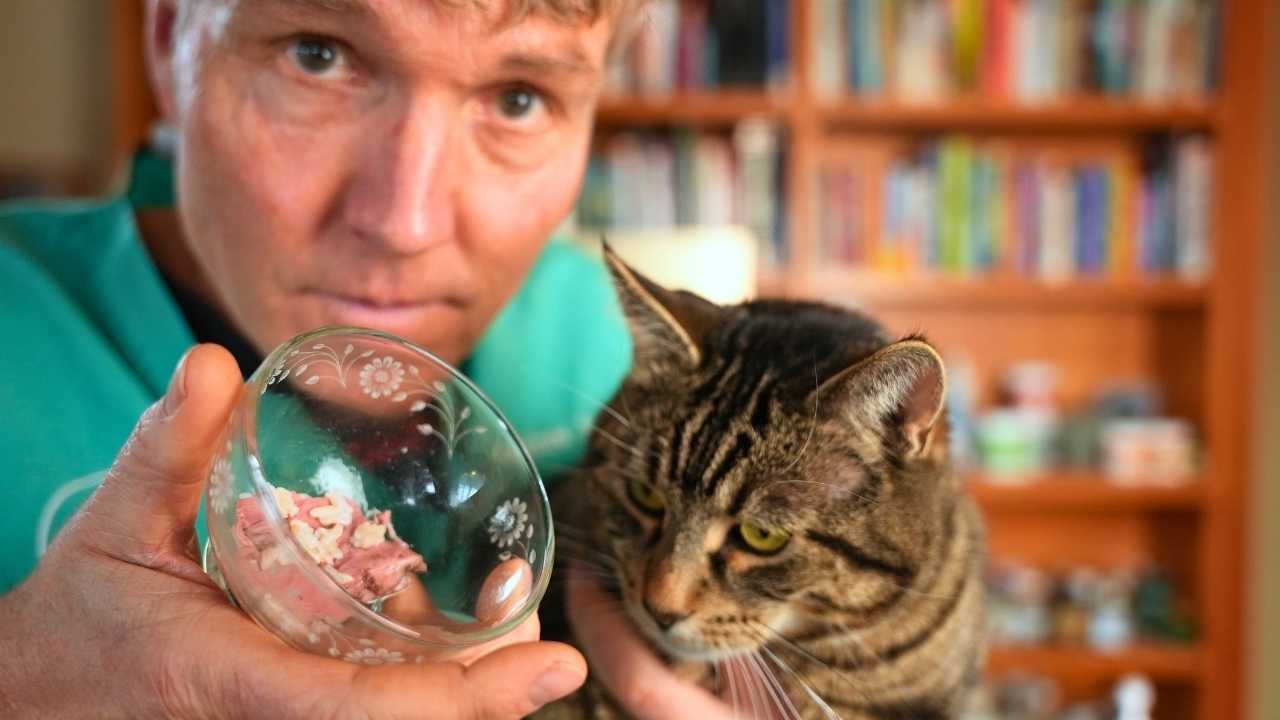
No kibble.
Good-quality canned cat food.
Appropriate animal protein.
And I’m spending more money because I want him to have good nutrition.
But when I see the Clean Label Project reporting lead in 99% of tested foods, cadmium in 96%, and mercury in 94%, I have questions.
Especially when fish-based cat foods contained 18 times more mercury than non-fish-based foods.
And fish-based canned food contained 28 times more mercury than canned products made from other proteins.
Those numbers are hard for me to ignore.
Now, do these results prove that every commercial cat food is making our cats sick?
No.
The investigation identified contaminants.
It did not establish that every detected amount was sufficient to cause disease.
But it raises some important concerns about long-term exposure.
Particularly because our cats often eat the same foods every day for years.
I also keep thinking about kidney disease.
We see so many older cats developing kidney problems.
And we know that certain heavy metals can damage the kidneys at harmful exposure levels.
Could repeated dietary exposure be contributing to the problem in some animals?
I think that’s a question worth pursuing.
In the meantime, what am I changing?
First, I’m avoiding fish-based foods as much as possible.
The mercury findings have convinced me to look more closely at non-fish animal proteins.
Second, I’m continuing to avoid kibble.
That has long been my preference for cats.
Third, I’m feeding Cassian more of the balanced frozen raw food that he enjoys.
And finally, I’m thinking more seriously about making some of his food myself.
I like knowing exactly which ingredients I’m using.
I can choose animal proteins such as turkey or chicken.
And I can make a point of avoiding ingredients that were associated with higher contaminant levels.
Of course, any homemade diet still needs to be balanced.
But I think having greater control over what goes into our cats’ food is something worth considering.
You don’t necessarily need to change everything overnight.
Start by reading the ingredients.
Look at the main protein source.
Consider reducing reliance on fish-based foods.
And think about how you can provide appropriate, high-quality animal-based nutrition.
Because the goal is much bigger than choosing one particular brand.
It’s about doing what we can to help our cats stay healthy and, hopefully, prevent disease before it develops.
That’s what I want for Cassian.
And that’s what I want for your cat too.
Click To Get A Free Copy of My E-Book!

P.S. One of the biggest findings I want you to remember is that fish-based cat foods contained 18 times more mercury than non-fish-based foods. Among canned foods, the difference was even greater at 28 times. If your cat eats fish-based food every day, I’d seriously consider reviewing the ingredients and looking at other animal protein options.
P.P.S. I’m not suggesting that you need to throw away every can of cat food in your cupboard. But I do think these findings give us a reason to ask more questions about what’s in our pets’ food. Even expensive canned foods may contain contaminants. For Cassian, I’m choosing more identifiable animal proteins, avoiding fish, and incorporating more balanced frozen raw food.
P.P.P.S. If you’ve been thinking about making your cat’s food at home, I encourage you to learn how to prepare a properly balanced feline diet before making the switch. Cats have very specific nutritional needs. The goal is to know what’s going into their food while still providing everything they need to stay healthy. I’ll continue sharing practical homemade cat food information and recipes through Veterinary Secrets.
Homemade vs. Canned vs. Kibble: Which Cat Food Would I Choose?
Here is how I currently think about these options.
| Feeding Option | What I Like | What I Would Consider |
|---|---|---|
| Homemade animal-based cat food | More control over ingredients and protein sources | Must be nutritionally complete |
| Balanced frozen raw cat food | Less processed, animal-based feeding option | Requires careful selection and safe handling |
| Canned food with non-fish animal protein | Convenient and aligns with my preference for animal protein | Still may contain contaminants |
| Fish-based canned food | Convenient and often appealing to cats | Higher mercury and cadmium findings in the investigation |
| Dry kibble | Convenient | Highly processed and not my preferred diet for cats |
For Cassian, I’m leaning toward more balanced animal-based food with ingredients I can identify.
And less reliance on the same commercial product every day.
What Should Cat Owners Take Away From the Clean Label Project Findings?
Here are the most useful findings from the investigation.
| Finding | What It Means for Pet Parents |
|---|---|
| Lead detected in 99% of tested foods | Widespread detection raises questions about exposure |
| Cadmium detected in 96% | Another common heavy metal worth investigating |
| Mercury detected in 94% | Mercury exposure deserves attention, particularly with fish-based foods |
| Fish-based foods had 18 times more mercury | Consider non-fish animal proteins |
| Fish-based canned foods had 28 times more mercury | Protein selection may matter even within canned food |
| Fish-based foods had 2.5 times more cadmium | Fish ingredients were associated with more than one elevated contaminant |
| Glyphosate detected in many products | Herbicide residues may enter pet food ingredients |
| BPA and microplastics were detected | Plastic-related contamination requires further study |
| Contaminants measured per calorie | Comparisons accounted for differences in food moisture and energy density |
The most actionable finding, in my view, is the difference between fish-based and non-fish-based foods.
That’s one change many pet parents can consider without completely changing how they feed their cats.