Cyclospora Outbreak: Are Dogs and Cats at Risk?

Can Dogs and Cats Get Sick From Cyclospora?
No, dogs and cats are not considered at risk for diarrhea from Cyclospora.
Cyclospora is a microscopic parasite causing infectious diarrhea in people. It is being linked to contaminated food or water, especially produce such as lettuce and other leafy greens.
But for our pets?
This is a human-specific parasite.
That means we are not expecting dogs or cats to develop diarrhea from Cyclospora exposure.
Could a dog, and possibly a cat, eat contaminated food and pass the parasite in the stool? Potentially. A Labrador looking at a bowl of lettuce may not have the same sense of caution you and I do.
But in the big picture, this is not the main concern.
Our dogs and cats are not the ones I am worried about with Cyclospora.
We are.
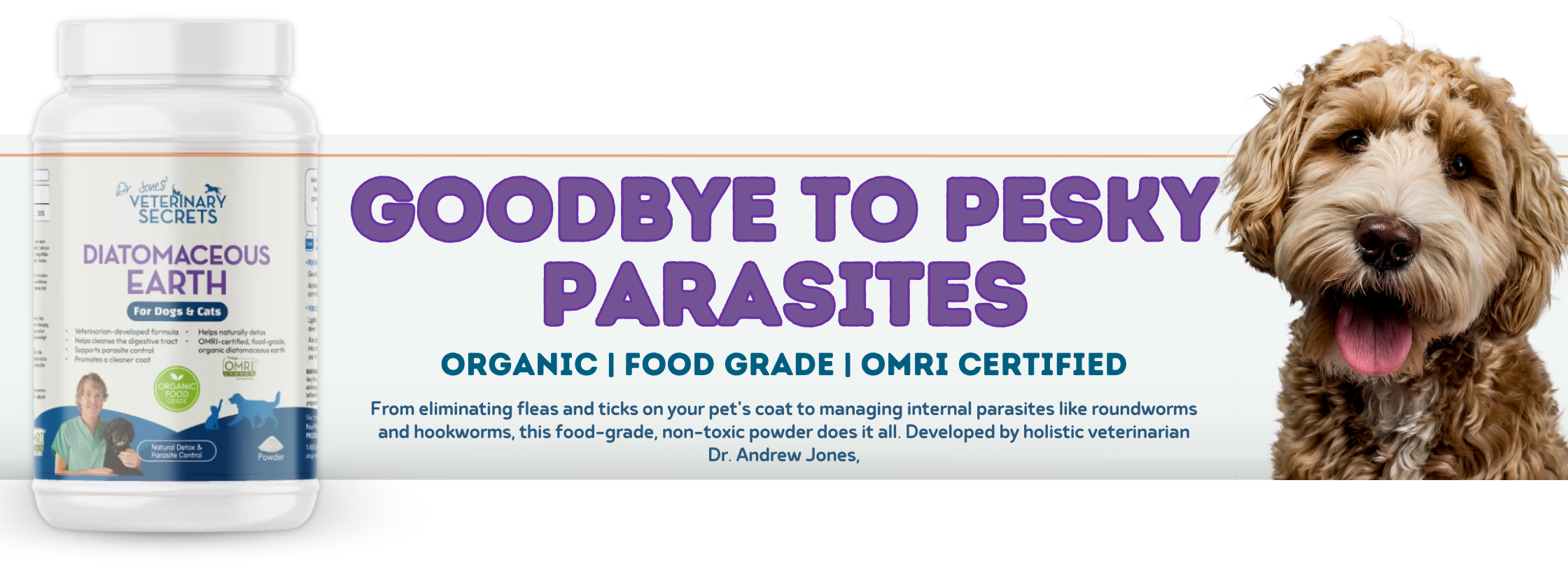
Dr. Jones’ Diatomaceous Earth Powder for Pets
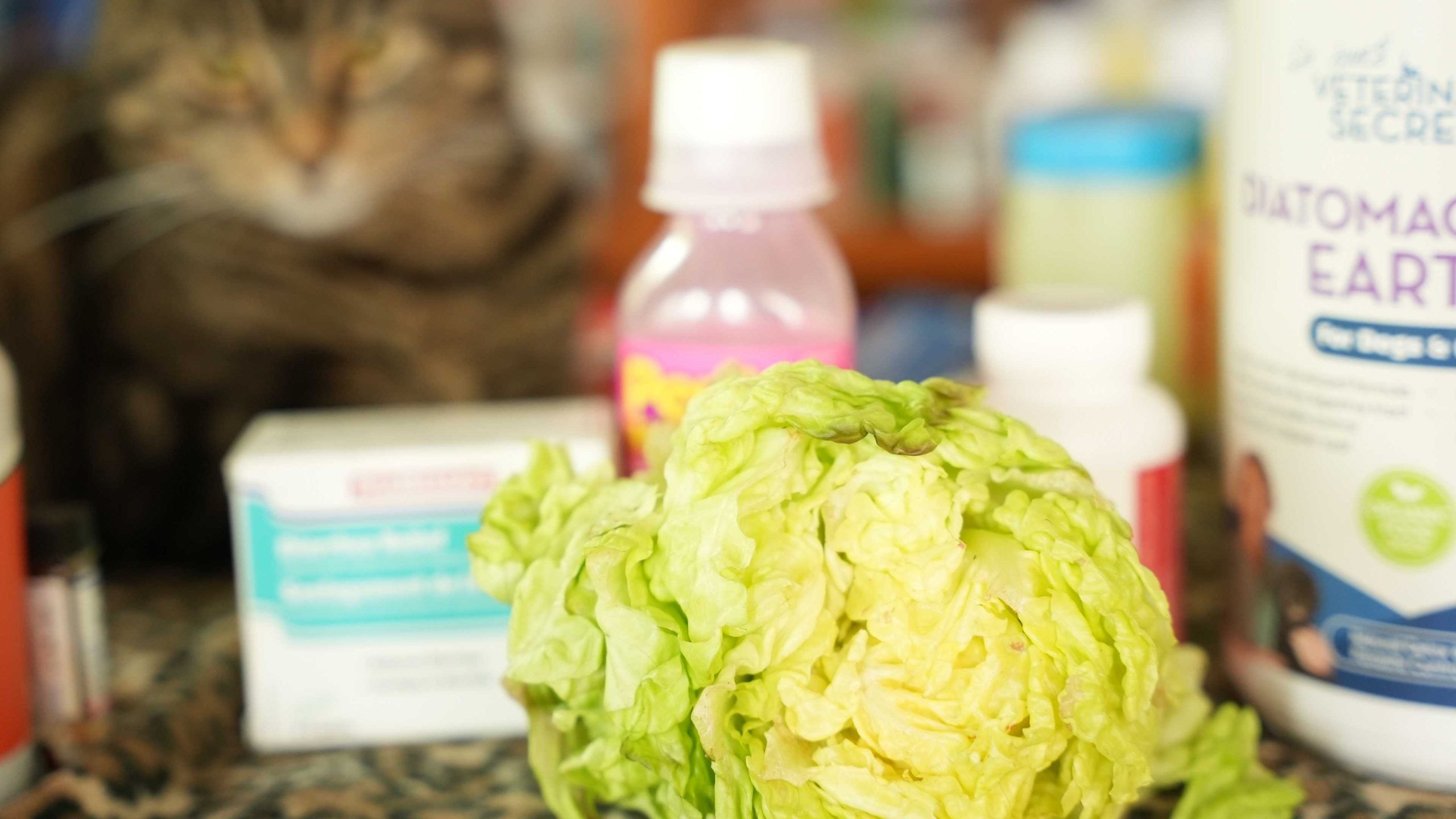
What Is Cyclospora?
Cyclospora is a tiny microscopic parasite that can cause infectious diarrhea in people.
People can get it from food or water contaminated with human feces.
Yes, that sounds unpleasant because it is.
The major concern mentioned was lettuce, especially iceberg lettuce, with one farm in Mexico named as a suspected origin. But the issue may be more widespread, and other leafy greens, fruits, and vegetables can also potentially be contaminated.
The tricky part is that contaminated produce may look and taste normal.
You cannot tell just by looking at it.
You eat the lettuce.
Everything seems fine.
Then about a week later, your gut starts making its complaints known.
Rather loudly.
What Are the Symptoms of Cyclospora in People?
Symptoms in people may take about 7 days to appear.
The symptoms mentioned include:
- Serious watery diarrhea
- Severe or explosive diarrhea
- Abdominal pain
- Marked intestinal gas
- Nausea or feeling sick
- Loss of appetite
- Fever in some people
Most people may recover symptomatically, but some people can become seriously ill. Some may need an antibiotic, and in some cases, the illness can become chronic.
Why Is Cyclospora Hard to Prevent?
Cyclospora is difficult because it can be resistant to simple washing.
A little washing may not remove the microscopic parasite from contaminated lettuce or produce.
It can also be resistant to some common hand sanitizers.
And because symptoms may take about 7 days to appear, you may not immediately connect the diarrhea to what you ate.
That makes prevention harder.
How Can People Reduce the Risk?
The simplest prevention point is this:
If you can cook it, cook it.
Cooking is one of the better ways to reduce risk.
The problem is that we generally do not cook lettuce.
So for raw produce, I would think about where it is coming from.
Practical Prevention Ideas
Consider:
- Sourcing lettuce and greens locally when possible
- Buying from smaller farms you trust
- Choosing produce from sources less likely to use contaminated water
- Cooking vegetables when possible instead of eating them raw
- Being extra cautious with raw leafy greens during an outbreak
You cannot easily wash Cyclospora away, so sourcing matters.
Are Dogs and Cats at Risk From Cyclospora?
No, dogs and cats are not expected to develop diarrhea from Cyclospora.
Cyclospora is human-specific.
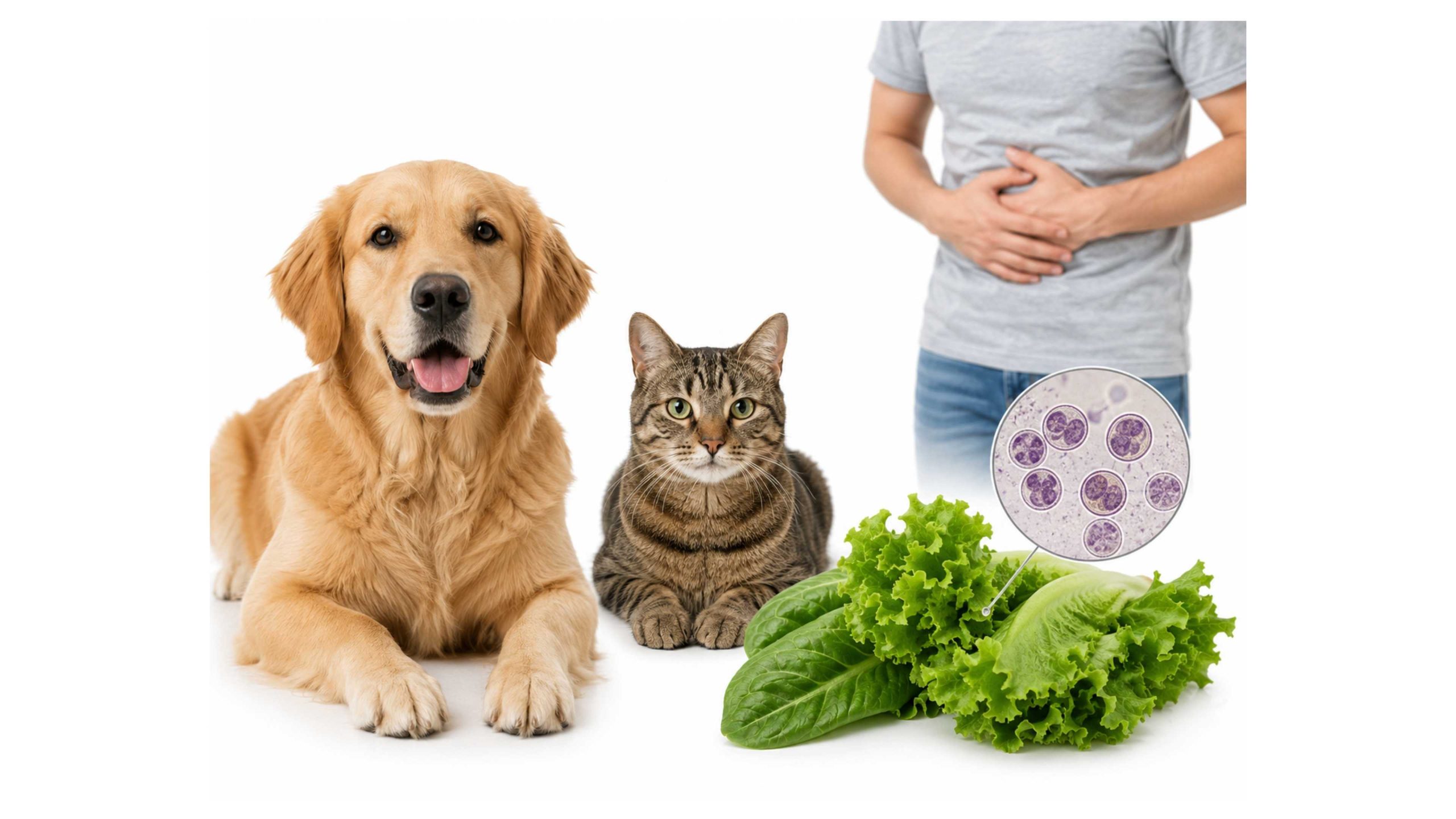
That means if your dog or cat is exposed, they are not expected to show diarrhea from this parasite.
A dog may eat contaminated lettuce. A cat could possibly be exposed too. They may potentially harbor the parasite and pass it in the stool, but this is not really the main concern.
For pet parents, the bigger point is this:
Cyclospora is mainly a people problem.
Dogs and cats have many other causes of vomiting and diarrhea, but Cyclospora is not the one I am worried about for them.
What Causes Vomiting and Diarrhea in Dogs and Cats?
Even though Cyclospora is not a major concern for pets, dogs and cats can still get infectious or digestive upset from many other causes.
Common causes mentioned include:
- Garbage gut
- Roundworms
- Tapeworms
- Coccidia
- Coronavirus in dogs and cats
- Parvovirus in dogs
- Salmonella from eating prey or spoiled food
- Eating things off the ground
- Eating mushrooms
- Plant toxins
- Other parasites
- Other infectious causes
Cats may go hunting and eat a dead bird.
Dogs may eat something mysterious off the ground.
Cassian may act more dog-like than cat-like and want to eat anything.
This is pet parenting.
Sometimes the digestive tract is simply paying for their poor life choices.
When Is Vomiting or Diarrhea Mild Enough to Treat at Home?
Before using any home remedy, assess your pet first.
Ask yourself:
- Is my dog or cat still alert?
- Are they still walking around?
- Are they interested in food?
- Are they willing to drink?
- Are they vomiting repeatedly?
- Are they having diarrhea every hour?
- Do they seem mostly like themselves?
If your dog or cat is relatively alert, still drinking, not frequently vomiting, and not having diarrhea every hour, then home remedies may be reasonable.
If they seem very sick, do not wait.
How to Check Hydration at Home
Hydration matters with vomiting and diarrhea.
Check the Gums
Lift your pet’s lip and feel the gums.
Moist gums are a good sign.
Dry or tacky gums may suggest dehydration.
Check the Skin
Gently lift or twist the skin over the back of the neck.
If it rapidly returns to normal, your pet likely has adequate moisture in the skin.
If the skin stays tented or goes back slowly, dehydration may be a concern.
What Should You Do First for a Dog With Diarrhea?
For dogs, especially if diarrhea has gone on for at least 24 hours, the first step may be a short fast.
Dog Fasting Guideline
Give your dog a period of fasting with no food in the digestive tract.
The fasting period mentioned is:
At least 12 hours
After a 12 to 24-hour period, slowly introduce food.
What Should You Feed a Dog After Diarrhea?
After fasting, slowly reintroduce bland food.
A simple option mentioned is:
- Plain white rice
- A small amount of bland cooked chicken
- No fat added
Start with small amounts.
White rice is simple, stool-firming, and relatively non-inflammatory.
The goal is not a gourmet dinner.
The goal is to stop the digestive drama.
Returning to Normal Food
If your dog does well with no vomiting or diarrhea, slowly return to regular food.
A simple schedule:
| Time | Feeding Approach |
|---|---|
| First meal | Small amount of rice with a little bland chicken |
| Morning after improvement | About half the normal amount |
| Evening | Increase to about 3/4 of the normal amount |
| Following day | Gradually return to regular food |
Go slowly.
The gut appreciates patience.
Should You Fast a Cat With Diarrhea?
No.
It is not a good idea to fast a cat.
Cats have a different metabolism, and there is concern about hepatic lipidosis.
For cats, offer a small amount of their normal food instead.
For example:
- A small amount of canned food
- Offered about every 6 hours
- Ensure your cat stays well hydrated
If extra fluids are needed, subcutaneous fluids may be considered with proper guidance.
Cats are not small dogs.
Their liver likes to remind us of that.
Home Remedies for Dog and Cat Diarrhea
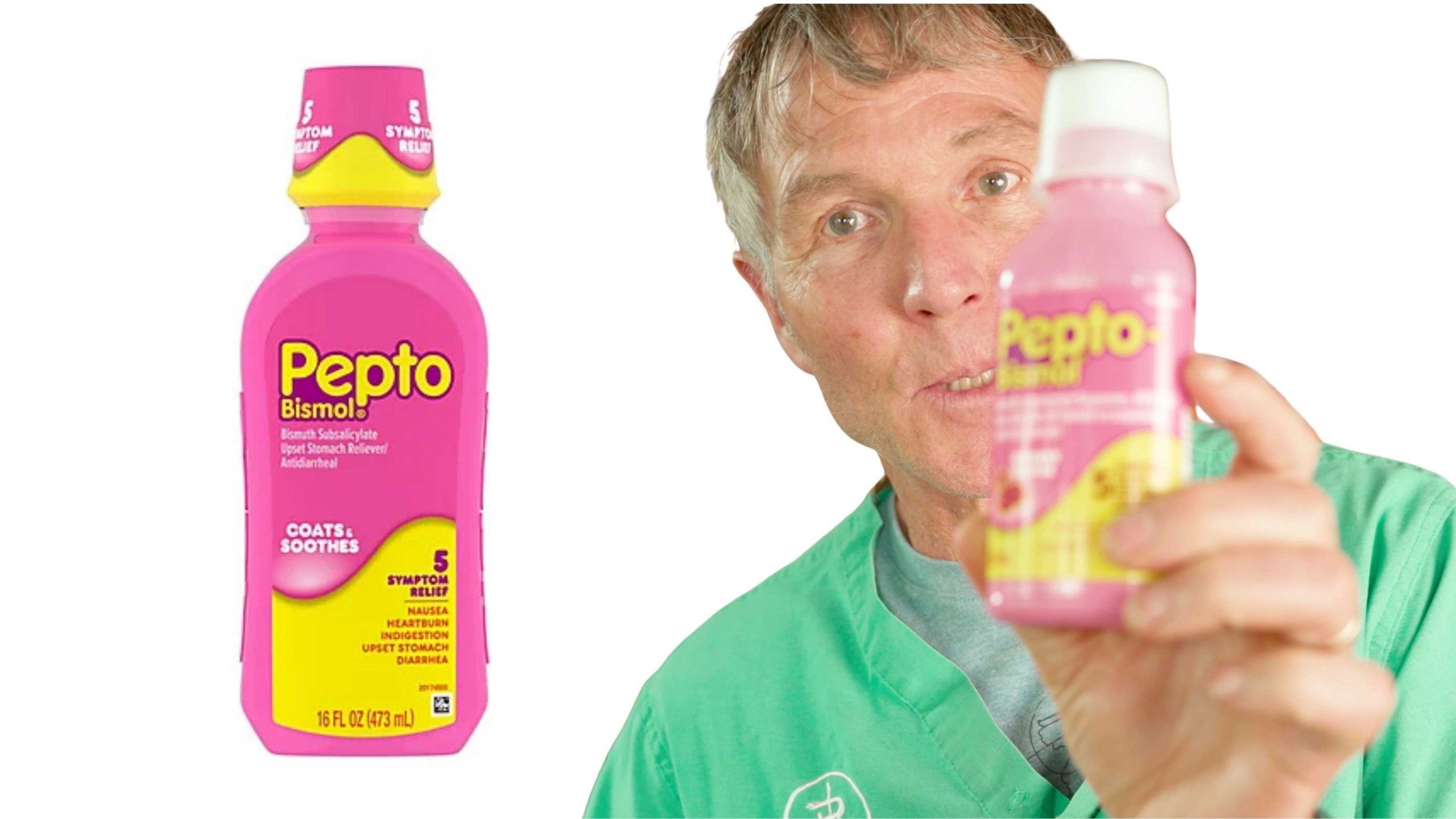
Remedy 1: Pepto-Bismol for Dogs
Pepto-Bismol can be a simple over-the-counter option for dogs.
It works okay and is relatively safe for most dogs.
Dog Dose
1 tsp per 10 lb of body weight, 2 to 3 times daily
Caution
Make sure your dog is not also taking an anti-inflammatory medication, such as a non-steroidal anti-inflammatory drug.
This is for dogs.
Do not use this as a casual cat remedy.
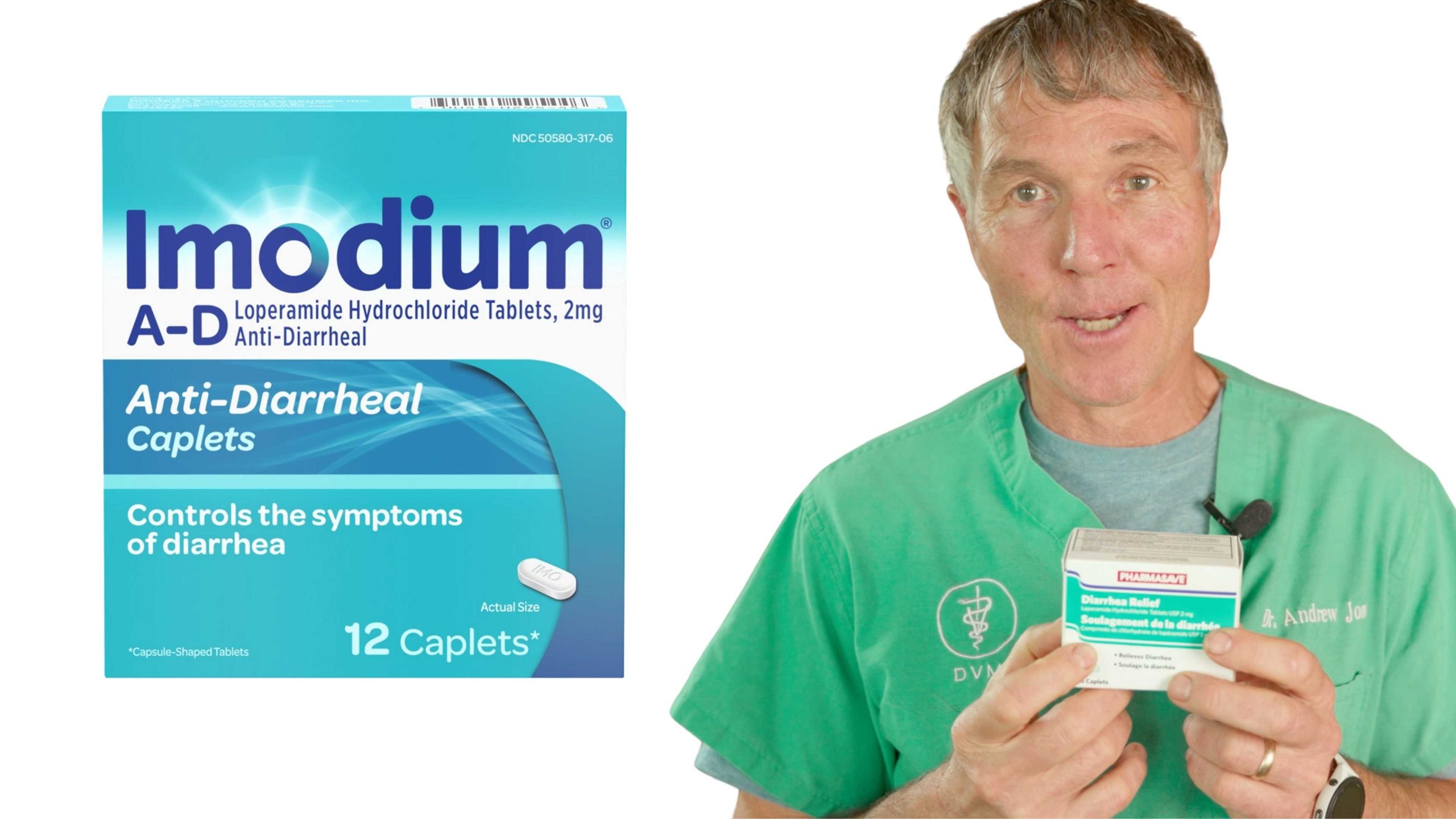
Remedy 2: Imodium for Dogs
Imodium, also called loperamide, can be effective for acute diarrhea.
I used it a fair amount in practice, and it can work well when acute diarrhea is not stopping.
Dog Dose
0.5 mg per 10 lb of body weight, 3 times daily
Example:
A 40-lb dog would get 2 mg.
Important Breed Caution
Some breeds should not use Imodium because of the MDR1 gene mutation.
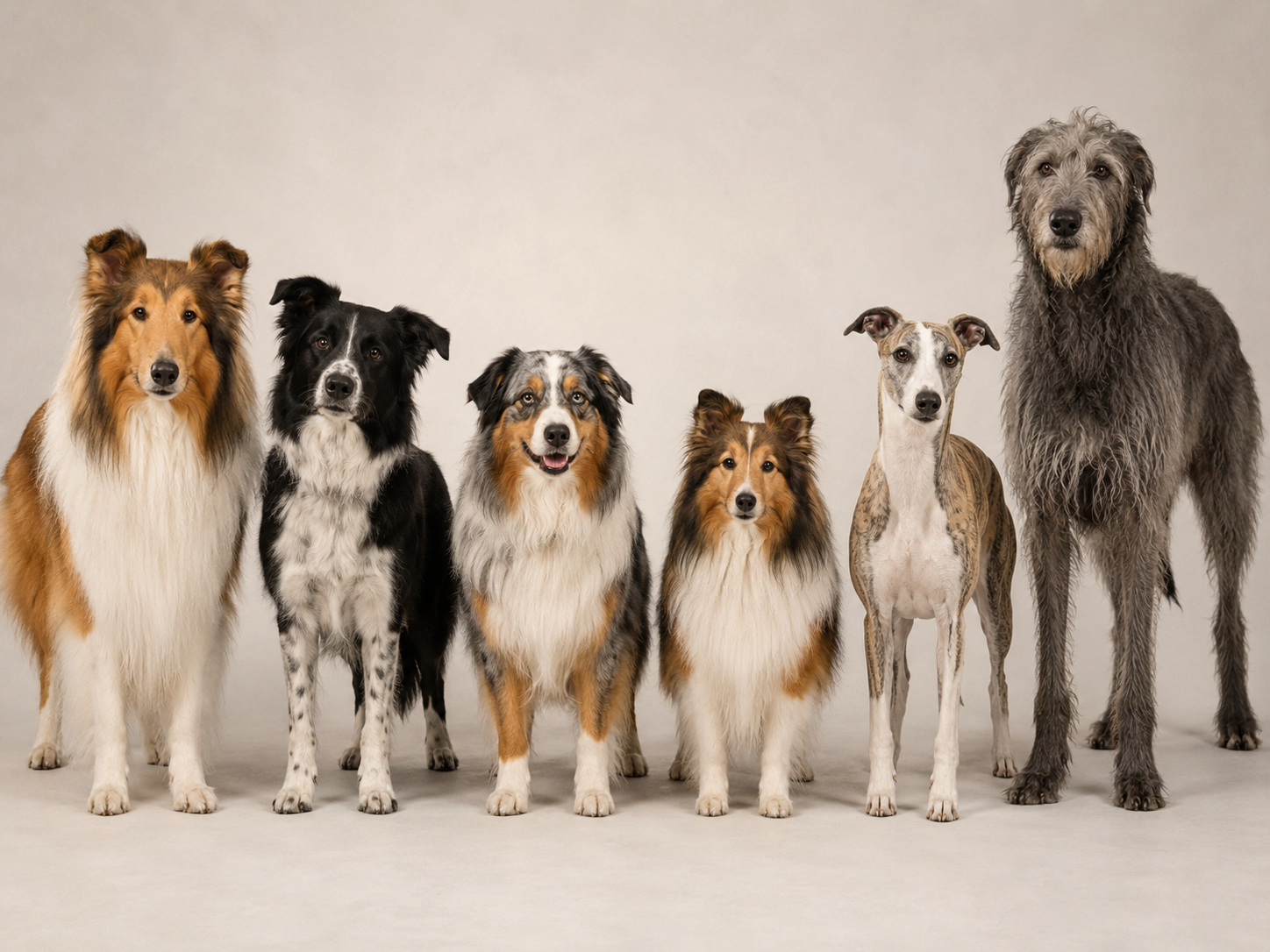
The old veterinary reminder was:
White feet don’t treat.
Breeds mentioned include:
- Collies
- Collie crosses
- Australian Shepherds
- Shetland Sheepdogs
- Whippets
- Scottish Deerhounds
If your dog is one of these breeds or a mix of these breeds, avoid Imodium unless your veterinarian tells you otherwise.
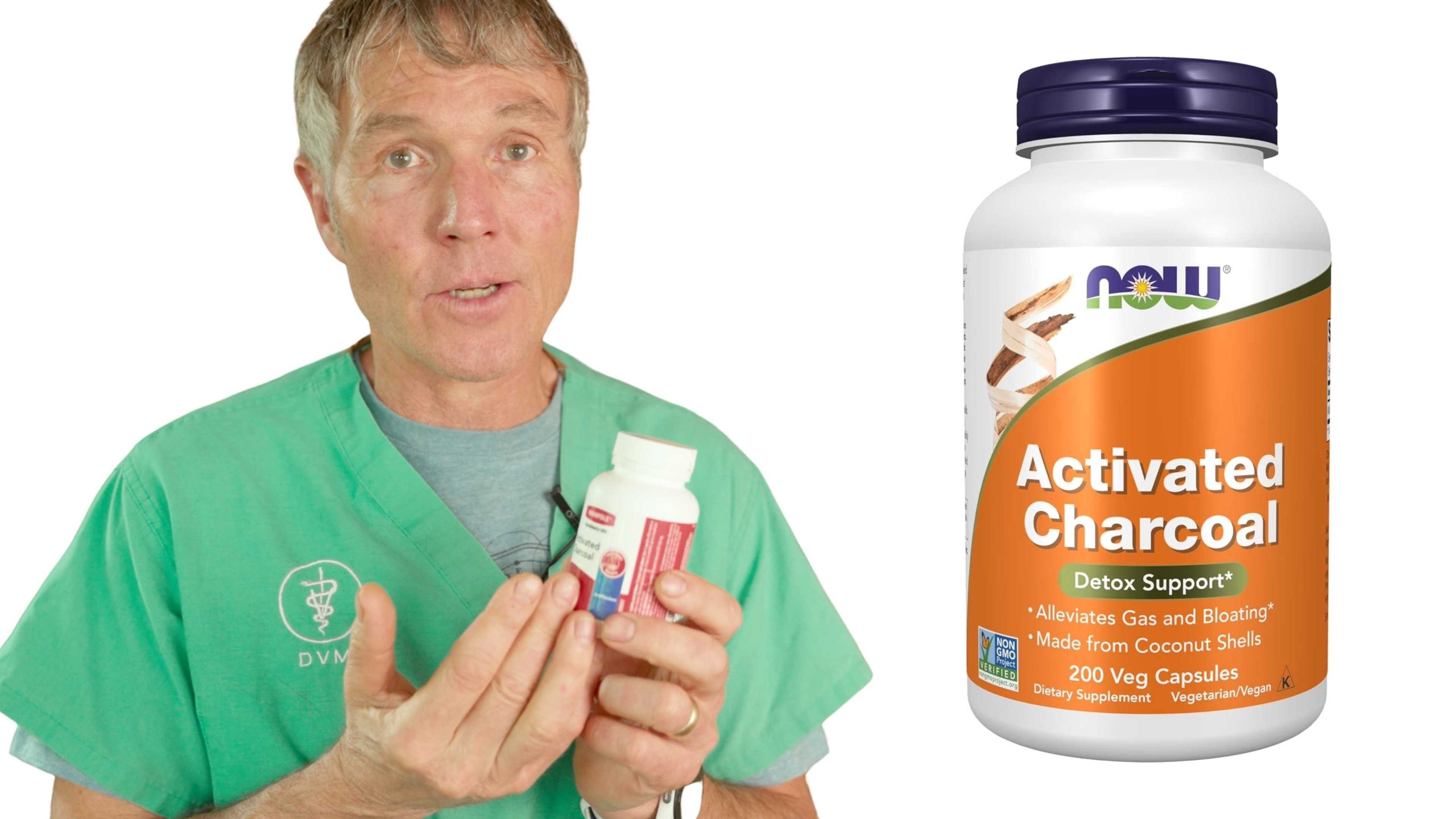
Remedy 3: Activated Charcoal for Dogs and Cats
Activated charcoal can be a good option for both dogs and cats.
It is typically used to bind toxins.
For example, if your dog or cat ate something they should not have, such as mushrooms that triggered diarrhea, activated charcoal may help bind toxic metabolites still in the intestinal tract.
It may also absorb excess fluid and help manage diarrhea.
Dose Mentioned
Two 400 mg capsules per 10 lb of body weight, 2 to 3 times daily
This is one I would consider when the diarrhea seems linked to eating something questionable.
Which, for some dogs, is basically their hobby.
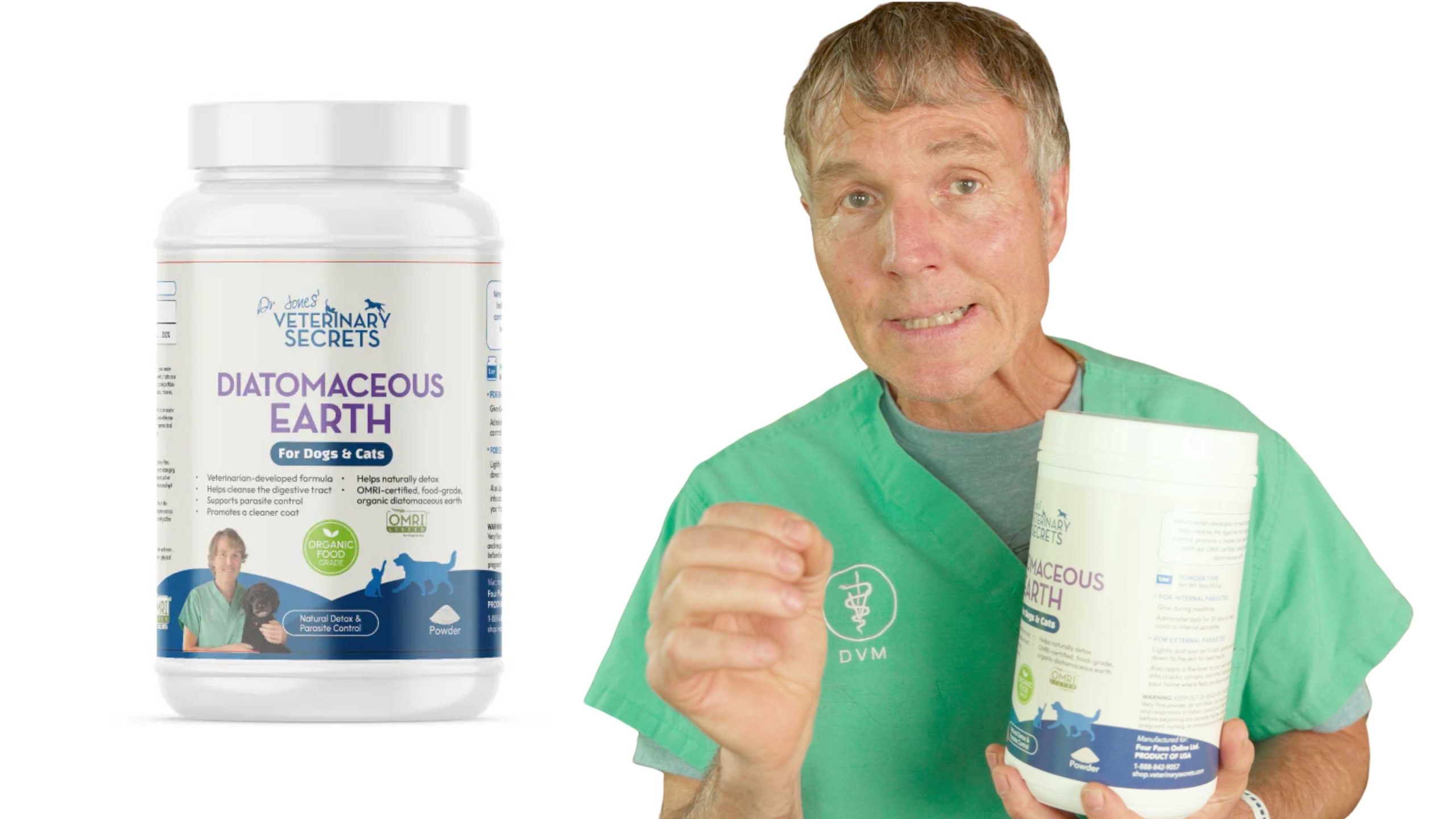
Remedy 4: Diatomaceous Earth for Dogs and Cats
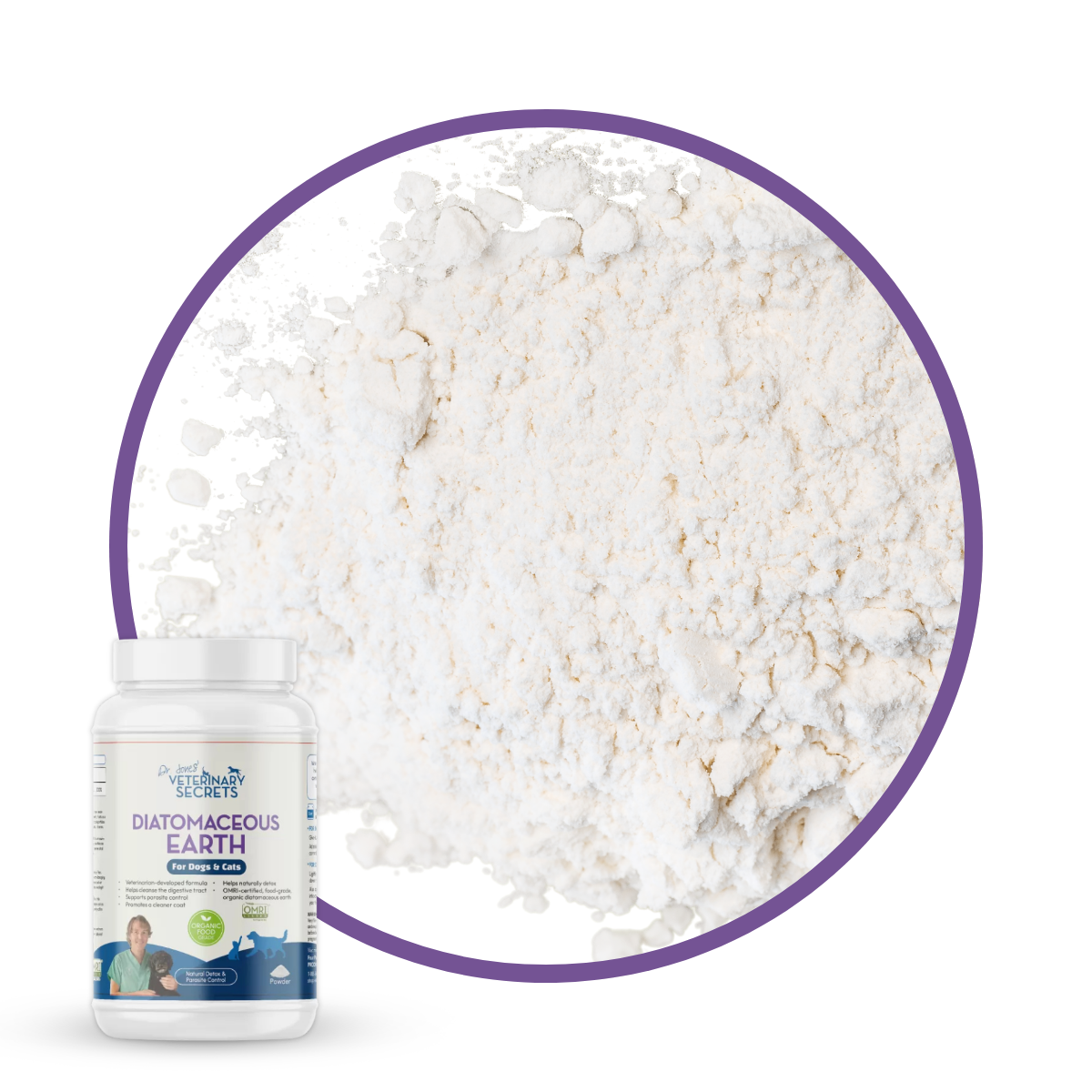
Diatomaceous earth, or DE, is a fine white powder that looks like flour.
It is often discussed for flea control, but it can also be used for natural worm or intestinal parasite control.
It may help diarrhea in two ways:
- Some diarrhea is caused by intestinal parasites.
- DE may absorb excess moisture in the intestinal tract.
Dose Mentioned
1/4 tsp per 10 lb of body weight, 2 to 3 times daily
This was mentioned as safe for both dogs and cats.
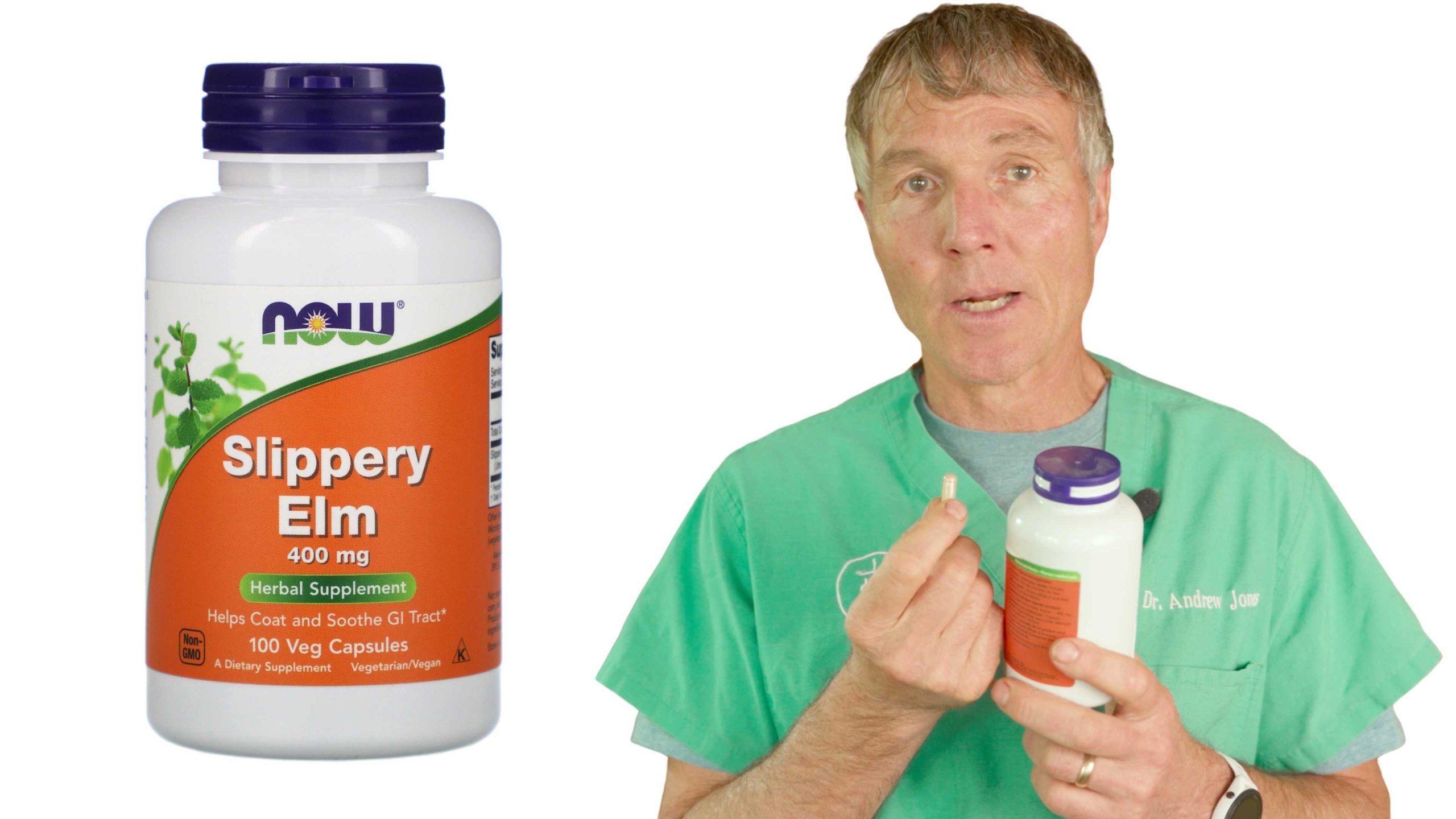
Remedy 5: Slippery Elm for Dogs and Cats
Slippery elm comes from the inner bark of the slippery elm tree.
It is a light grayish powder and can help with several issues.
It was mentioned for:
- Diarrhea
- Vomiting
- Intestinal inflammation
- Natural antacid support
- Cough
- Cats with chronic renal failure
Slippery elm is safe for dogs, cats, and people.
Dose Mentioned
400 mg per 20 lb of body weight, 2 to 3 times daily
You can open the capsule and sprinkle it into your pet’s food.
If your pet is not eating, you may need to give the capsule directly.
For Cassian, if he had GI upset, this would likely be the first thing I would reach for.
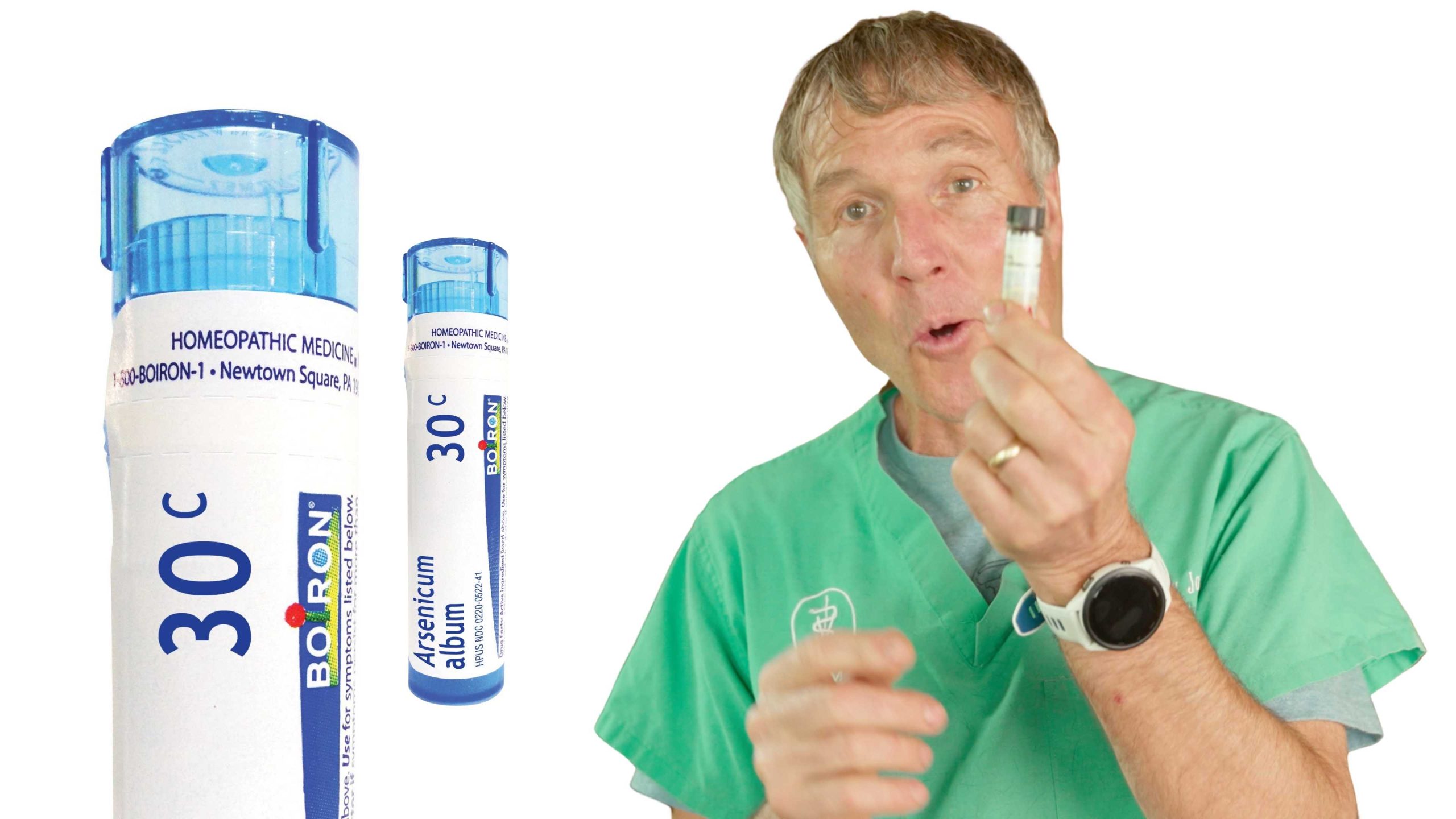
Remedy 6: Arsenicum Album 30C
Arsenicum album is a homeopathic remedy.
If homeopathy is not your thing, I understand.
But I had many clients use Arsenicum album in practice for pets with garbage gut, vomiting, and diarrhea, and I was surprised by how many reported good results.
This was especially for pets that ate who knows what, were sick at home, and still wanted to eat but had diarrhea after eating.
Dose Mentioned
One 30C pellet per 10 to 20 lb of body weight
For acute ongoing signs:
Give every 2 hours
For lingering intestinal inflammation after 2 to 3 days:
Give twice daily
You do not need to shove it down the back of your cat’s throat.
You can place it inside the lips or side of the mouth and let it dissolve.
If your cat swallows it, even better.
Best For / Not For
Best For
Home remedies may be worth considering when your dog or cat:
- Is still alert
- Is still drinking
- Is not vomiting repeatedly
- Is not having diarrhea every hour
- Seems mostly like themselves
- Has mild diarrhea
- Ate something questionable
- Has mild vomiting and diarrhea
- Has possible garbage gut
- Has a mild self-limiting intestinal upset
Diarrhea Remedy Dosage Table
| Remedy | Pet | Dose Mentioned | Notes |
| Pepto-Bismol | Dogs | 1 tsp per 10 lb body weight, 2 to 3 times daily | Do not use if your dog is on an anti-inflammatory medication such as an NSAID |
| Imodium / Loperamide | Dogs | 0.5 mg per 10 lb body weight, 3 times daily | Avoid in MDR1 breeds, remembered by “white feet don’t treat” |
| Activated charcoal | Dogs and cats | Two 400 mg capsules per 10 lb body weight, 2 to 3 times daily | Helps bind toxins and may absorb excess fluid |
| Diatomaceous earth | Dogs and cats | 1/4 tsp per 10 lb body weight, 2 to 3 times daily | May help with parasites and excess moisture |
| Slippery elm | Dogs and cats | 400 mg per 20 lb body weight, 2 to 3 times daily | Helps decrease intestinal inflammation |
| Arsenicum album 30C | Dogs and cats | One 30C pellet per 10 to 20 lb body weight | Every 2 hours for acute cases, or twice daily if lingering for 2 to 3 days |
Summary: Home Remedies for Dog and Cat Diarrhea
The remedies mentioned include:
- Pepto-Bismol
- Imodium or loperamide
- Activated charcoal
- Diatomaceous earth
- Slippery elm
- Arsenicum album 30C
Some are for dogs only.
Some can be used for both dogs and cats.
Use common sense, assess your pet first, and call your veterinarian if your pet seems seriously ill.
Pros and Cons of Home Diarrhea Remedies
Pros
- Many are easy to keep at home
- Some can help mild self-limiting diarrhea
- Activated charcoal may bind toxins
- Slippery elm may soothe inflammation
- DE may absorb excess fluid
- Arsenicum album is easy to give
- Pepto and Imodium can be useful for some dogs
Cons
- Not all remedies are for cats
- Imodium is not safe for MDR1 breeds
- Pepto-Bismol should not be combined with NSAIDs
- Home remedies do not replace care for a very sick pet
- Cats should not be fasted
- Severe dehydration can become dangerous
- Some infectious causes need veterinary treatment
Step-by-Step: What to Do if Your Dog or Cat Has Diarrhea
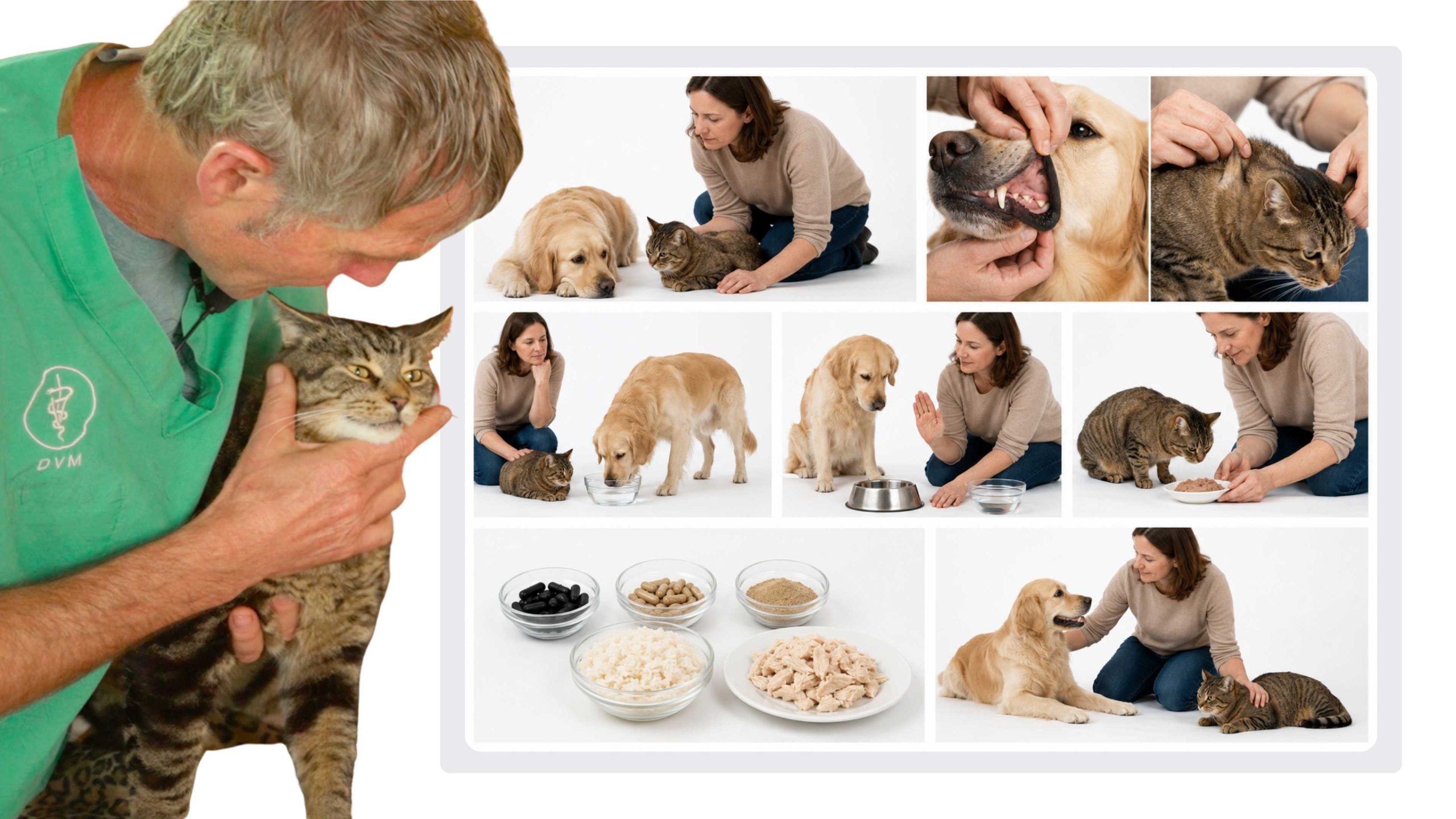
Step 1: Assess Your Pet
Check alertness, drinking, vomiting frequency, diarrhea frequency, and overall attitude.
If your pet is very sick, call your veterinarian.
Step 2: Check Hydration
Feel the gums.
Do the skin tent test.
Hydration is one of the biggest concerns with vomiting and diarrhea.
Step 3: Decide if Home Care Is Reasonable
If your pet is alert, drinking, and not having severe frequent vomiting or diarrhea, home care may be reasonable.
Step 4: For Dogs, Consider a Short Fast
If diarrhea has been going on for at least 24 hours, fast for at least 12 hours.
Then slowly reintroduce bland food.
Step 5: For Cats, Do Not Fast
Offer small amounts of normal canned food every 6 hours.
Keep your cat hydrated.
Step 6: Choose a Remedy Based on the Situation
Use the remedy table above.
For toxin-related diarrhea, activated charcoal may make sense.
For inflammation, slippery elm may be the first choice.
For acute diarrhea in certain dogs, Imodium may help, but avoid MDR1 breeds.
Step 7: Monitor Closely
Watch for improvement.
If your pet worsens, becomes lethargic, develops fever, stops drinking, or has ongoing vomiting or diarrhea, call your veterinarian.
Final Thoughts
Cyclospora is causing infectious diarrhea in people, but dogs and cats are not the main concern.
It is a human-specific parasite.
Your dog or cat is not expected to develop diarrhea from Cyclospora exposure.
That said, our pets can still get vomiting and diarrhea from many other causes, including garbage gut, parasites, viruses, bacteria, mushrooms, plant toxins, and eating things they absolutely should not eat.
The first step is always assessment.
- Are they alert?
- Are they drinking?
- Are they hydrated?
- Are they vomiting repeatedly?
- Are they having diarrhea every hour?
If they are very sick, call your veterinarian.
If they are still fairly bright, drinking, and not severely ill, then home remedies may help.
For dogs, a short fast followed by bland food can be useful.
For cats, do not fast. Offer small amounts of normal food and focus on hydration.
And yes, keep a few basics at home: activated charcoal, slippery elm, and maybe some plain white rice for the dogs.
Because sooner or later, somebody eats something they should not.
Usually the dog.
Sometimes the cat.
Occasionally, based on the lettuce situation, us.
Click To Get A Free Copy of My E-Book!

P.S. Cyclospora is one nasty little parasite, but fortunately, our dogs and cats are not the ones I am worried about here.
We are.
For our pets, the bigger lesson is this:
Vomiting and diarrhea happen.
Start by assessing how sick they really are.
If they are still alert, drinking, and reasonably hydrated, you may be able to use simple home remedies.
If they are lethargic, feverish, dehydrated, or getting worse, please see your veterinarian.
And if you are eating lettuce during an outbreak, maybe know where it came from.
Your stomach may thank you about 7 days later.