Castor Oil for Dogs and Cats: 5 Benefits, Uses, Dosage, and Side Effects


Is Castor Oil Good for Dogs and Cats?
Castor oil may offer several benefits for dogs and cats, particularly for dry, itchy skin, inflammation, and certain skin conditions. It has also been used as a natural laxative for constipation.
This thick vegetable oil has been used in traditional medicine for thousands of years, and research has investigated its moisturizing, anti-inflammatory, antibacterial, and wound-supporting properties.
I remember, not so fondly, having castor oil applied to my itchy, inflamed skin when I was younger.
At the time, I couldn’t understand why my mother was using this home remedy.
Shouldn’t she just be reaching for an antihistamine?
Well, it turns out she may have been onto something.
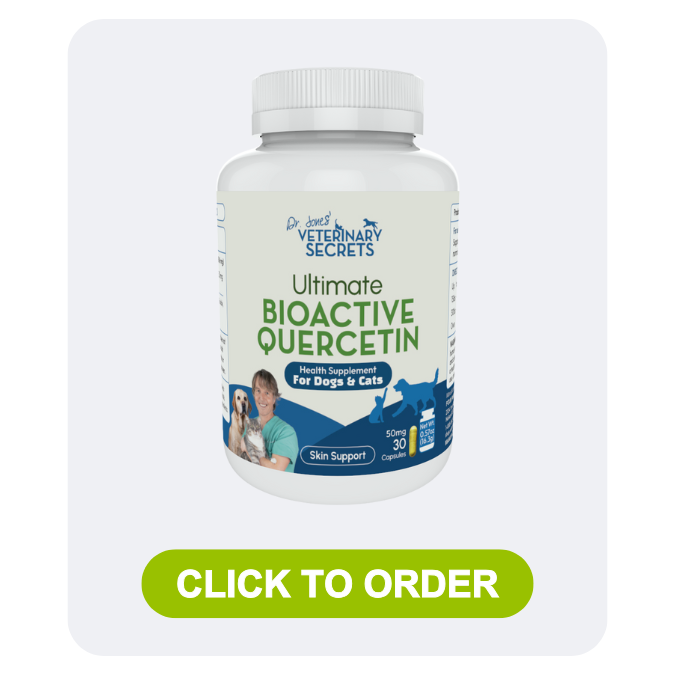
Dr. Jones’ Ultimate BioActive Quercetin for Dogs and Cats

Castor oil contains ricinoleic acid, a fatty acid that has been studied for its potential effects on inflammation, pain, and skin health.
And those properties make it particularly interesting for dogs and cats dealing with itchy skin, allergies, dandruff, and localized inflammation.
There are five main benefits I want to discuss:
-
Relief from occasional constipation
-
Moisturizing dry, itchy, and allergy-prone skin
-
Supporting wound healing
-
Reducing localized inflammation and arthritis discomfort
-
Supporting skin affected by dandruff, acne, and certain infections
Let’s look at how castor oil works, what the research suggests, and when I would consider using it for a pet.
What Is Castor Oil?
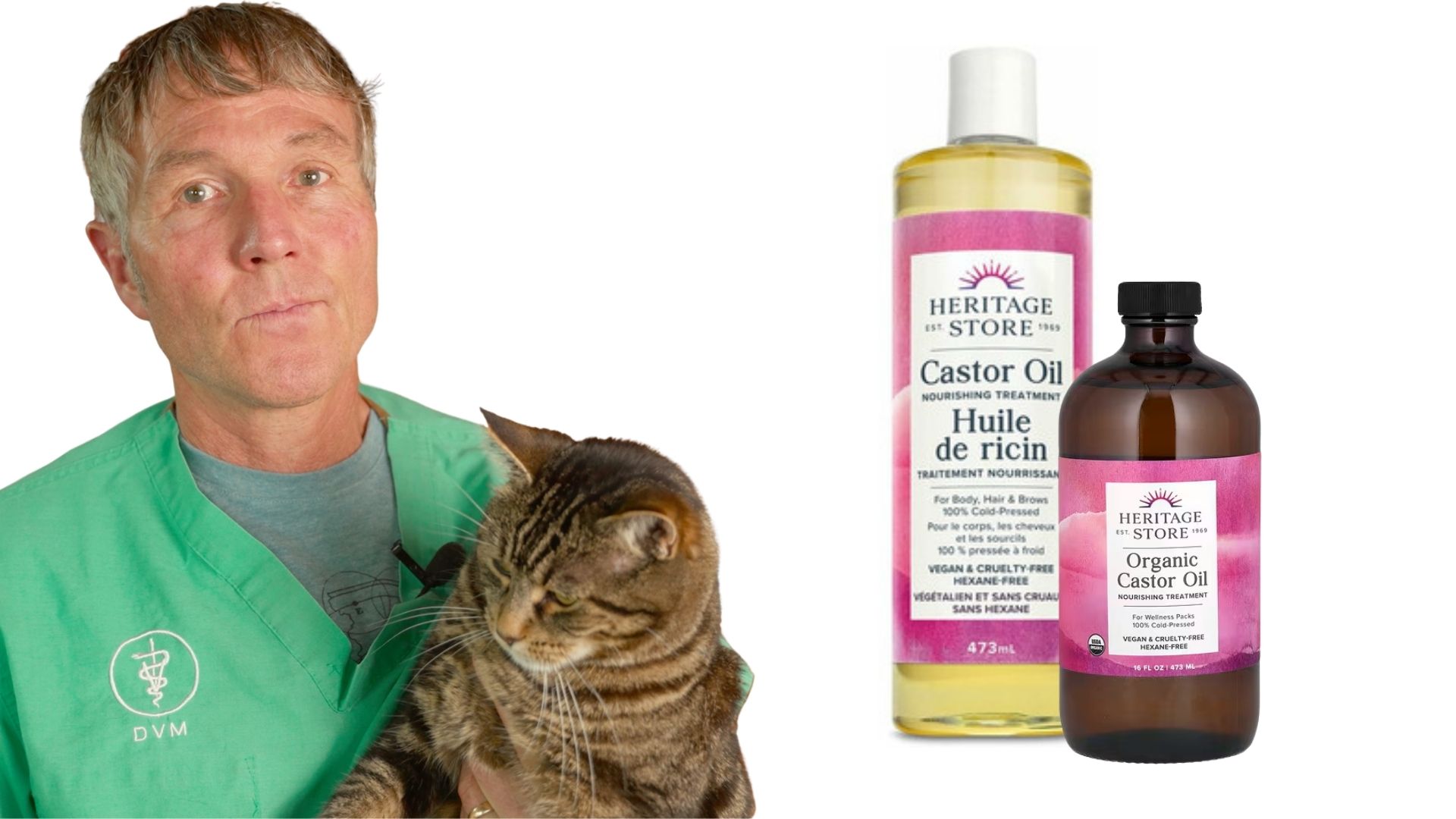
Castor oil is a vegetable oil extracted from the seeds of the Ricinus communis plant.
These seeds are commonly called castor beans.

The oil has been used for thousands of years for several medicinal and cosmetic purposes.
One of its most important components is ricinoleic acid, a monounsaturated fatty acid associated with many of castor oil’s potential benefits.
What Makes Castor Oil Different From Other Oils?
Castor oil is particularly thick and rich in ricinoleic acid.
This fatty acid has moisturizing properties and has been investigated for its effects on inflammation and pain.
Castor oil can also help retain moisture in the skin.
That’s useful because many dogs and cats with allergies have dry, irritated skin.
And when the skin becomes dry, the itching and irritation can become even more uncomfortable.
Is Castor Oil the Same as Castor Beans?
No.
This is an important distinction.
Castor beans naturally contain ricin, a highly toxic protein.
The processing used to manufacture castor oil removes or deactivates this toxic component.
That is why properly manufactured castor oil is very different from eating raw castor beans.
However, this doesn’t mean every castor oil product is suitable for pets.
I would use only an appropriately processed product and discuss oral use with my veterinarian.
And I would never allow a dog or cat to eat castor beans.
What Are the 5 Benefits of Castor Oil for Dogs and Cats?
Castor oil has several properties that make it worth investigating for pet health.
Some have been used traditionally for many years.
Others have been studied in humans, laboratory experiments, or animal models.
The findings are interesting, although not every benefit has been established specifically in dogs and cats.
Here are the five uses I find most relevant.
1. Castor Oil for Constipation in Dogs and Cats
One of the oldest and best-known uses of castor oil is as a natural laxative.
Castor oil is classified as a stimulant laxative.

This means it increases intestinal muscle activity, helping move material through the digestive tract.
It can act relatively quickly.
And research has shown that castor oil can relieve constipation.
How Does Castor Oil Work as a Laxative?
The intestines contain muscles that contract to move their contents along.
This process helps food and waste travel through the digestive system.
Castor oil stimulates intestinal movement, which can help empty the bowels.
That’s why it has traditionally been used for occasional constipation.
However, the same effects that make castor oil a laxative can also cause unwanted symptoms.
What Are the Side Effects of Oral Castor Oil?
Larger amounts may cause:
-
Abdominal cramping
-
Nausea
-
Vomiting
-
Diarrhea
And because castor oil stimulates bowel movements, I would not consider it a routine supplement for long-term digestive problems.
Castor oil is not recommended as a treatment for CHRONIC constipation.
If your dog or cat is repeatedly constipated, I would want to find out why.
What Is the Castor Oil Dosage for Dogs and Cats?
½ teaspoon per 20 pounds of body weight, twice daily.
2. Castor Oil for Dry, Itchy Skin and Allergies
This is one of my favorite potential uses of castor oil for pets.
Castor oil can help moisturize dry skin and reduce moisture loss, which may make irritated, itchy skin more comfortable.
If your dog or cat suffers from allergies, you’ve probably noticed that dry skin can make the itching worse.
Some pets scratch constantly.

Others lick or chew at their paws.
And some develop areas of skin that appear dry, flaky, or irritated.
Castor oil may help support the skin’s moisture barrier.
Why Does Castor Oil Help Dry Skin?
Castor oil is rich in ricinoleic acid.
This fatty acid acts as a humectant, helping the skin retain moisture.
Humectants help prevent water loss through the outermost layer of the skin.
When skin retains moisture more effectively, it may become less dry and irritated.
This is particularly helpful for pets whose allergies are accompanied by noticeable dryness.
Can You Mix Castor Oil With Coconut Oil?
Yes, combining castor oil with another skin-friendly oil is one approach I would consider for localized dry skin.
Castor oil is very thick.
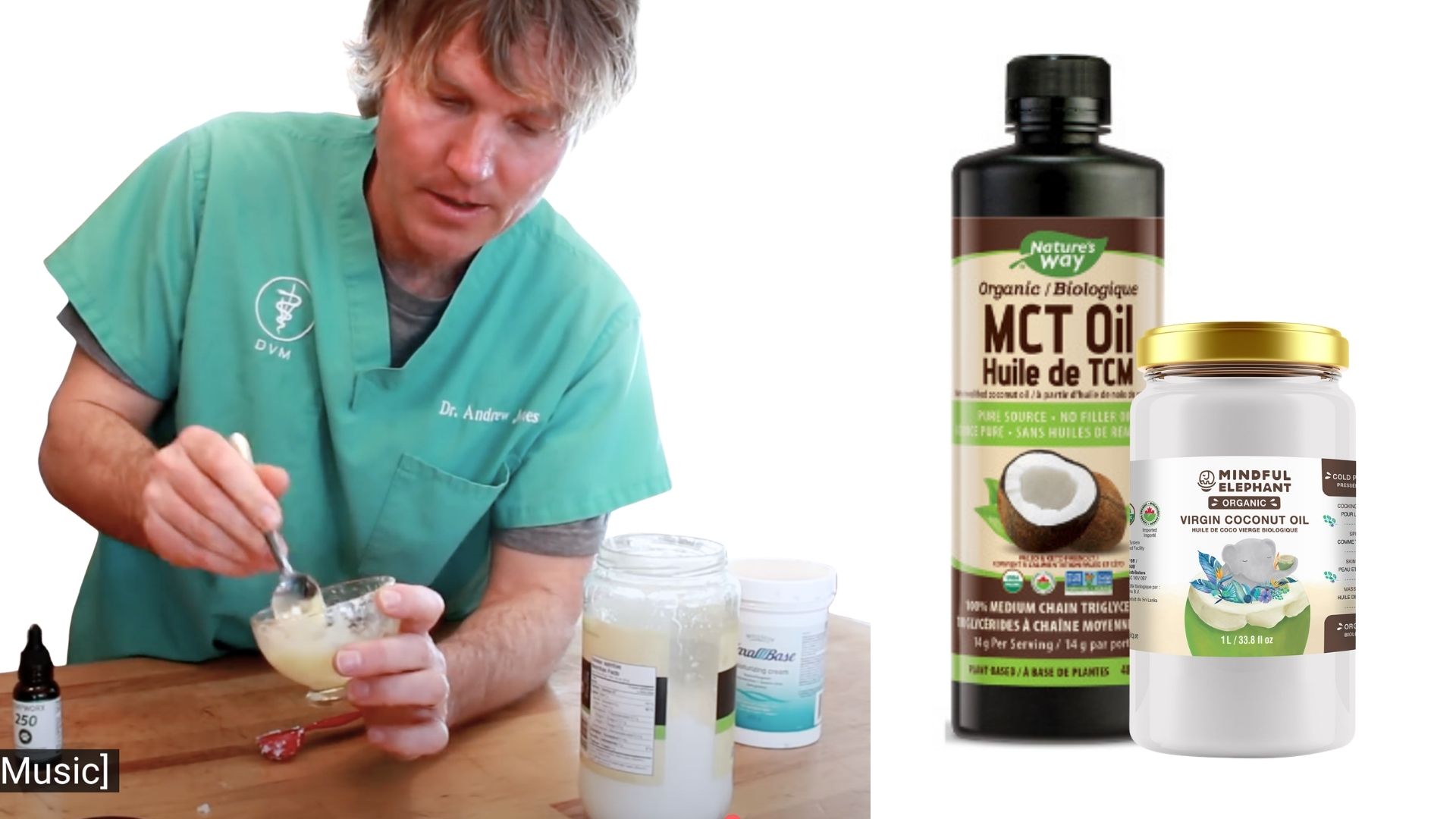
Because of that, it is frequently mixed with other moisturizing oils.
Examples include:
-
Coconut oil
-
Olive oil
-
Almond oil
For dogs and cats with dry, itchy skin, I am particularly interested in a castor oil and coconut oil combination.
The idea is to combine castor oil’s moisture-retaining properties with another moisturizing oil.
How Would I Use Castor Oil for Dry Skin?
For a pet with a small area of dry, irritated skin, I would consider the following approach:
-
Identify the area of dry or irritated skin.
-
Make sure the skin is not severely inflamed or infected.
-
Apply a small amount to the affected external skin.
-
Watch for increased redness, itching, or irritation.
Can Castor Oil Replace Allergy Medication?
Not necessarily.
Castor oil may help with the dryness and skin irritation that accompany allergies.
But it does not necessarily address the underlying allergic response.
For dogs and cats with recurring allergic itching, I would also consider other options, including quercetin.
3. Castor Oil for Wound Healing in Dogs and Cats
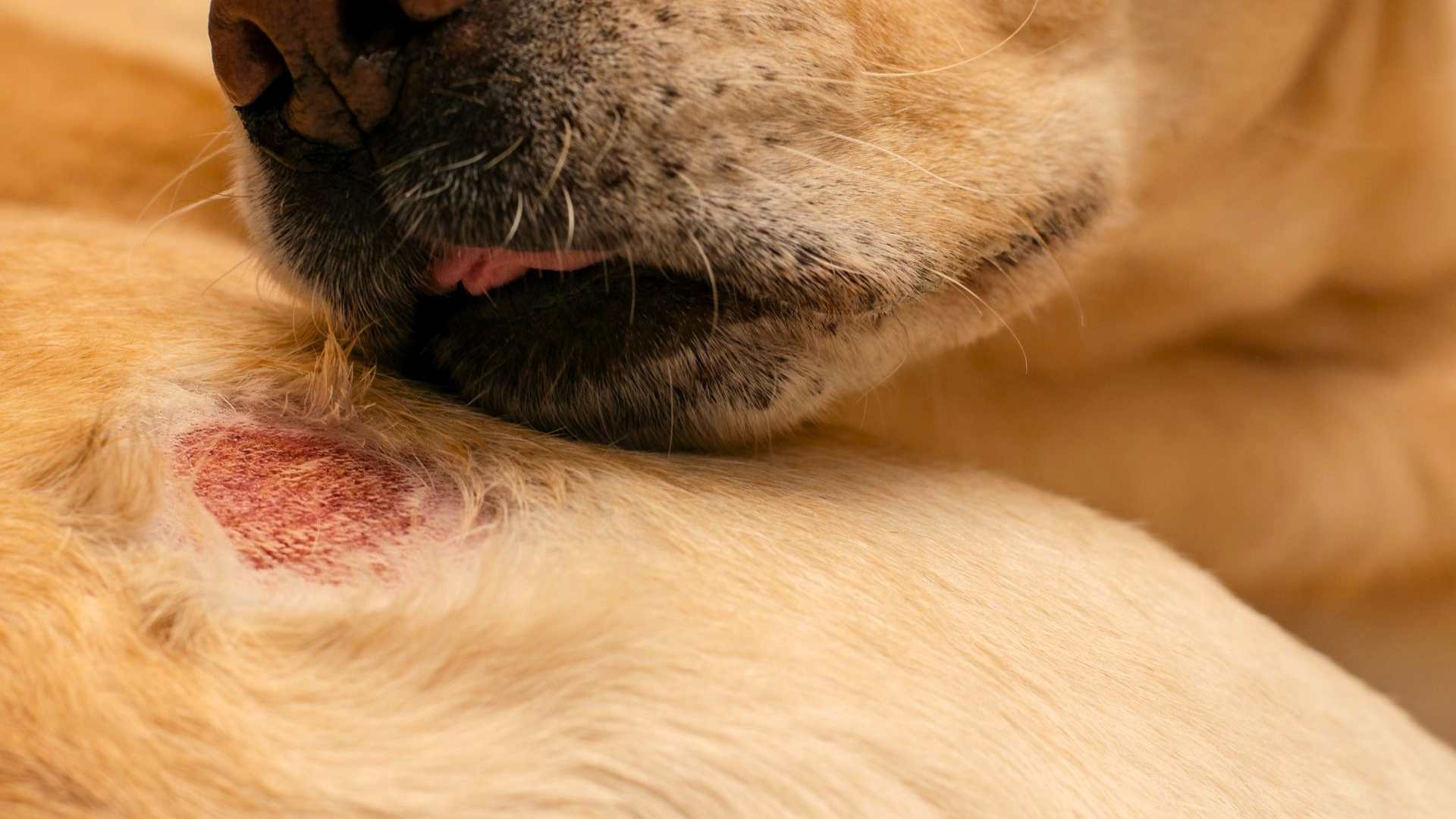
Castor oil has also been studied for its potential role in wound healing.
One of its main benefits is helping create a moist environment around damaged skin.
This is relevant because excessive dryness can interfere with normal wound repair.
How Does Castor Oil Support Wound Healing?
Castor oil may help:
-
Maintain moisture around damaged skin
-
Reduce excessive dryness
-
Support new tissue formation
-
Limit the buildup of dead skin cells
-
Support the skin’s protective barrier
Some wound-care preparations contain castor oil because of these properties.
One example is Venelex, a topical ointment used in clinical settings.
Venelex contains castor oil combined with Peru balsam, which comes from the Myroxylon tree.
What Does Research Say About Castor Oil and Wounds?
Research has investigated castor oil-containing preparations for treating pressure ulcers.
Pressure ulcers develop when prolonged pressure damages the skin and underlying tissues.
One study involving 861 nursing home residents examined wound healing with an ointment containing castor oil.
The group treated with the castor oil-containing preparation experienced higher healing rates and shorter healing times compared with other treatment approaches.
That’s an interesting finding.
Can Castor Oil Help Dogs With Elbow Pressure Sores?
This is one of the situations where I would be interested in its moisturizing properties.
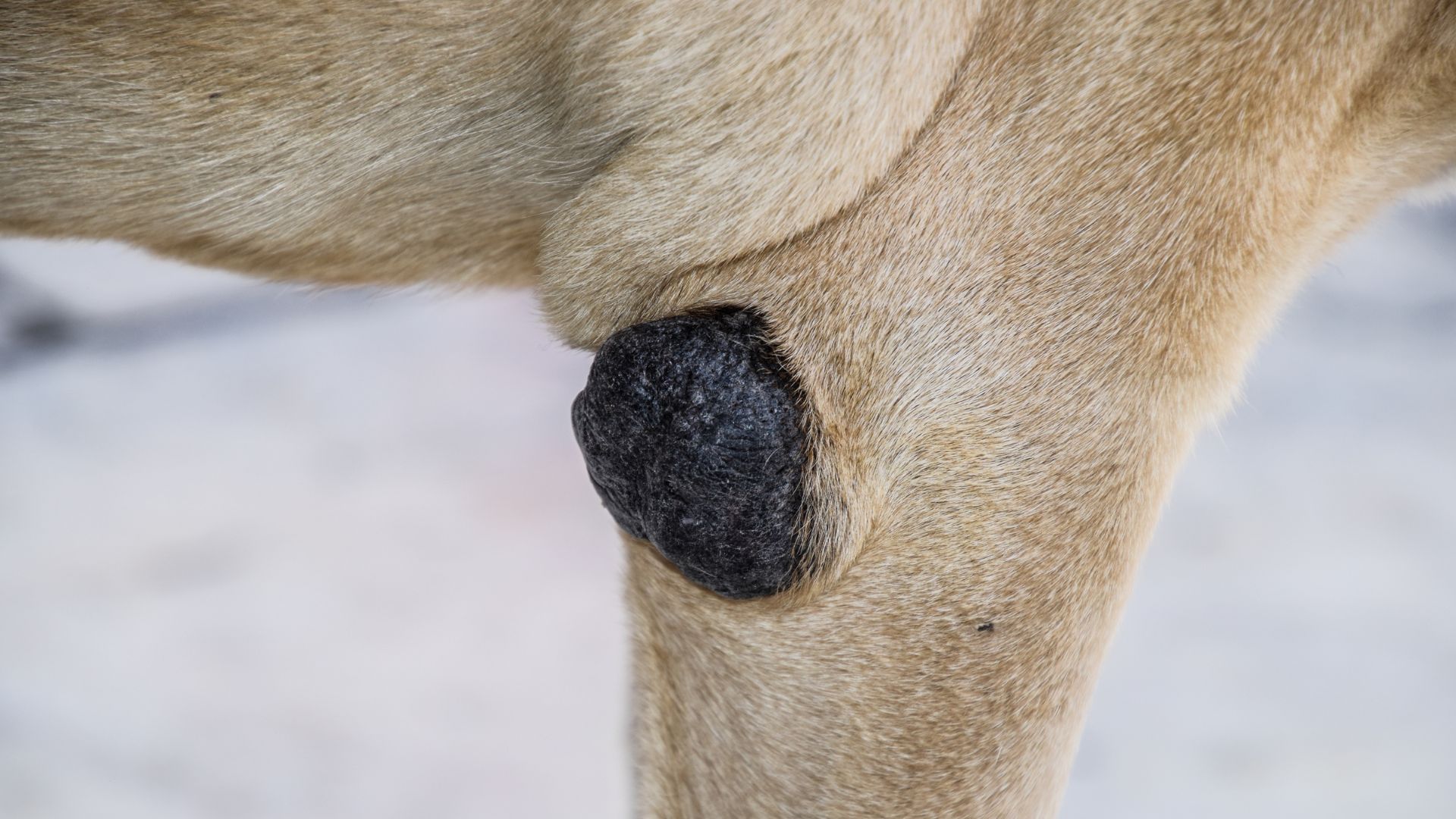
Some dogs develop pressure-related skin problems around their elbows.
The affected skin may become:
-
Dry
-
Thickened
-
Irritated
-
Uncomfortable
Castor oil-containing products may be worth discussing as part of skin care for these areas.
But there is an important distinction between dry, thickened skin and an actual open wound.
For an open wound, infected sore, or ulcer, I would have the area examined before applying any oil.
The goal is to support healing, not trap contamination or interfere with appropriate wound care.
4. Castor Oil for Arthritis, Pain, and Inflammation in Dogs and Cats
Castor oil contains ricinoleic acid, which has demonstrated anti-inflammatory and pain-reducing effects in experimental research.

This makes it an interesting topical option for pets with localized inflammation.
It is particularly relevant to conditions involving painful or inflamed tissues.
How Does Castor Oil Reduce Inflammation?
Ricinoleic acid is the main fatty acid responsible for many of castor oil’s biological properties.
Studies involving animal models and laboratory experiments have found that ricinoleic acid can influence inflammatory processes.
Researchers have observed reductions in:
-
Pain
-
Swelling
-
Inflammatory activity
These findings have generated interest in castor oil’s potential use for inflammatory conditions.
What Does the Research Say About Ricinoleic Acid?
One study investigated a gel containing ricinoleic acid.
When applied topically, the gel was associated with a significant reduction in pain and inflammation compared with other treatment methods.
A laboratory component of the same research examined inflammation involving human rheumatoid arthritis cells.
Ricinoleic acid showed anti-inflammatory effects in that setting as well.
These findings are promising.
Can You Apply Castor Oil to an Arthritic Joint?
For a pet with localized arthritis discomfort, I would be interested in discussing topical castor oil as a possible supportive option.

The idea would be to use its potential anti-inflammatory properties on a localized area.
But I wouldn’t expect it to reverse arthritis or replace treatment needed for significant joint pain.
The research on castor oil and inflammatory conditions is still developing.
5. Castor Oil for Dandruff, Skin Infections, Acne, and Yeast
Castor oil is also interesting for several common skin problems in dogs and cats.

These include:
-
Dandruff
-
Dry skin
-
Feline acne
-
Certain bacterial skin problems
-
Yeast-associated skin irritation
Its potential benefits come from a combination of moisturizing, anti-inflammatory, and antimicrobial properties.
Can Castor Oil Help Feline Acne?
Feline acne is a common skin condition, particularly around the chin.

Dogs can also develop skin problems involving inflammation and bacterial overgrowth.
Because inflammation plays a role in acne-related skin changes, researchers have investigated whether castor oil might help reduce irritation.
Castor oil may also have antibacterial activity.
One laboratory study found that castor oil extract inhibited the growth of several bacteria, including Staphylococcus aureus.
That’s interesting because bacterial activity can contribute to some skin problems.
Can Castor Oil Help Yeast Infections in Dogs?
Castor oil has also been investigated for fungal and yeast-related concerns.
It has been used in people for certain oral yeast problems.
This raises the possibility that it may have a role in supporting dogs with yeast-related skin irritation.
I’m particularly interested in dogs with allergies that develop recurring problems involving their paws.
These dogs may experience:
-
Itching
-
Paw licking
-
Skin irritation
-
Secondary yeast problems
Because castor oil has moisturizing and potentially antimicrobial properties, it is one of the topical ingredients worth investigating.
Can Castor Oil Help Dog Dandruff?
Of these skin problems, dandruff is one of the more straightforward situations where moisturizing support may help.
Dandruff can be a frustrating problem for many dogs.
You may notice:
-
Dry, flaky skin
-
Visible dandruff
-
Rough or dry coat texture
-
Skin irritation
Castor oil’s moisturizing properties may help keep the skin and hair hydrated.
Its anti-inflammatory effects may also contribute to improved comfort when dryness and irritation are present.
I would consider a small amount of an appropriate topical preparation for localized dry skin, rather than covering the entire dog in thick oil.
Castor Oil vs. Coconut Oil: Which Is Better for Dry Skin?
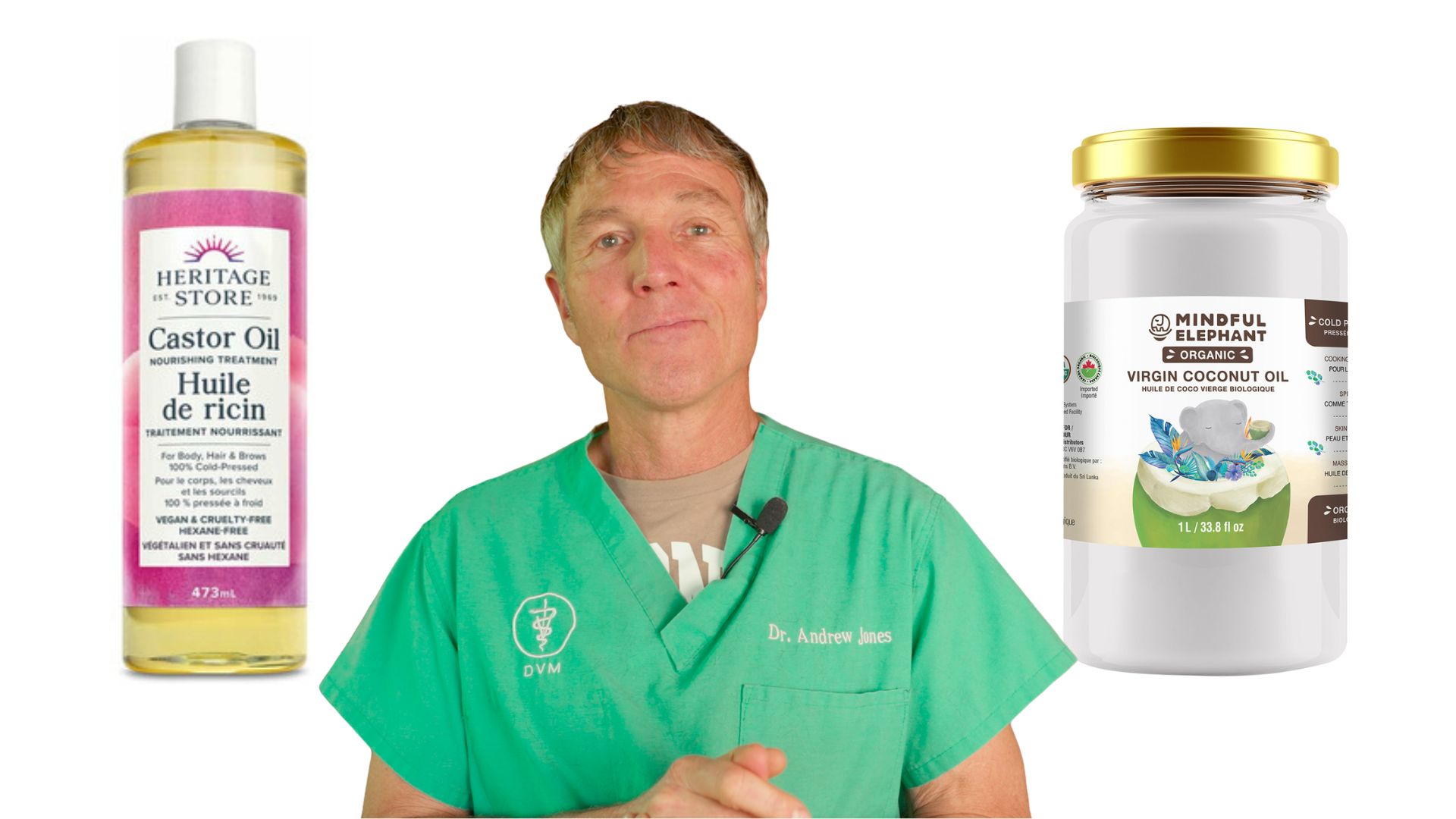
Both oils are discussed for moisturizing the skin, but they have different characteristics.
Castor oil is particularly thick and rich in ricinoleic acid.
It is often mixed with another oil to create a preparation that is easier to apply.
| Feature | Castor Oil | Coconut Oil |
|---|---|---|
| Main role discussed | Moisture retention and skin support | Moisturizing carrier oil |
| Texture | Very thick | Commonly used to dilute thick castor oil |
| Skin benefit | Helps limit moisture loss | Adds moisturizing support |
| Combined use | May be mixed with coconut oil | May make castor oil easier to spread |
For a dog with especially dry, itchy skin, I would consider discussing a castor oil and coconut oil combination.
The objective is to support moisture retention and relieve dryness.
But if the underlying problem is an allergy, moisturizing the skin may be only one part of the solution.
What Else May Help Dogs and Cats With Allergies?
Castor oil is interesting for topical relief, particularly when dry skin is making itching worse.
But I would also consider supporting the allergic response itself.
One of my favorite natural compounds for this is quercetin.
What Is Quercetin?
Quercetin is a bioflavonoid naturally found in several plants and foods.
Sources include:
-
Apple peel
-
Red onion
-
Kale
-
Green tea
-
Black tea
Quercetin is particularly interesting because of its potential antihistamine-like properties.
It may help influence inflammatory pathways associated with allergic itching.
For dogs and cats dealing with recurring allergies, that is something worth considering.
Why Do I Recommend Bioactive Quercetin?
Rather than relying on small amounts found in foods, I prefer a concentrated supplement designed for pets.
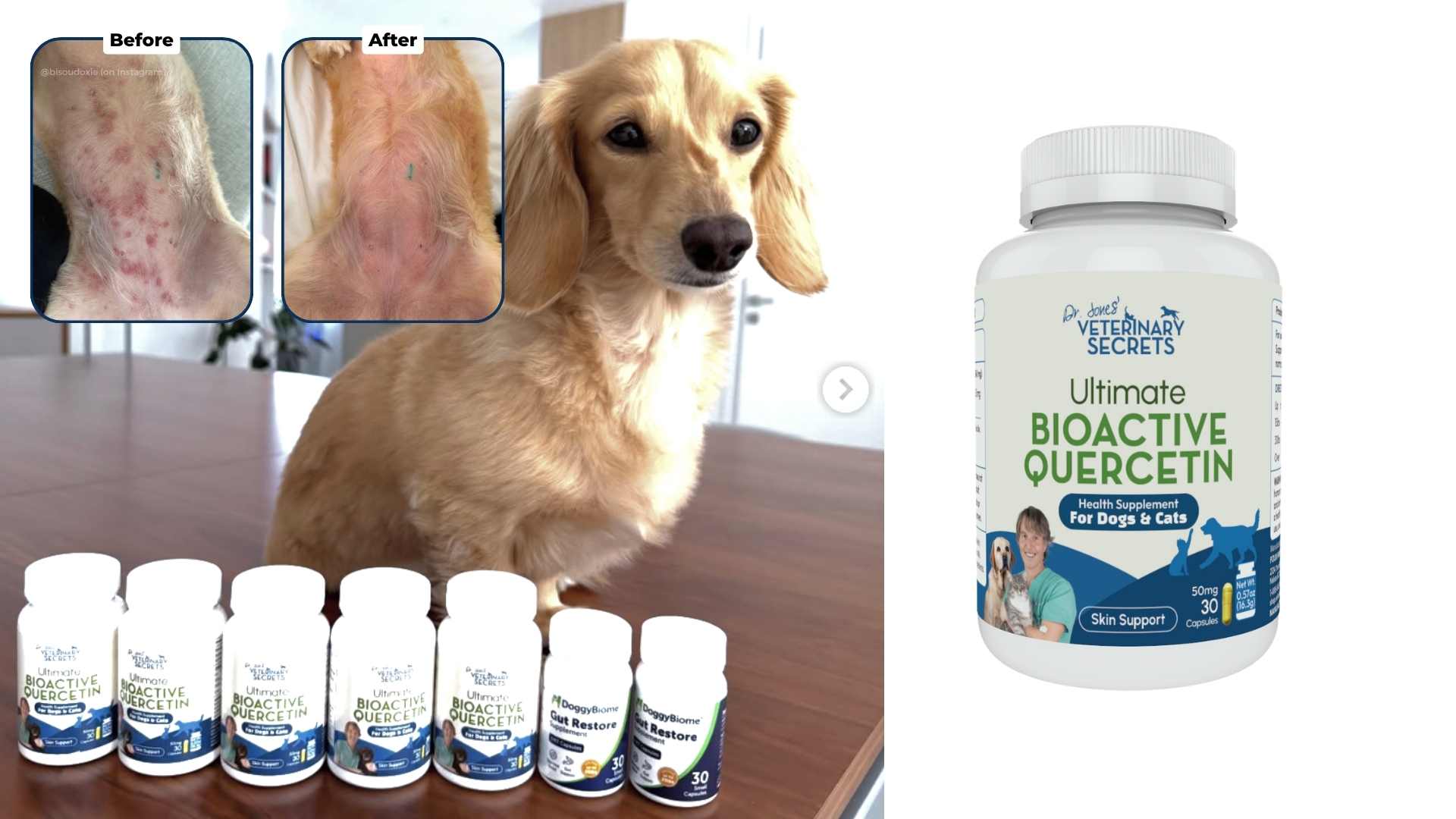
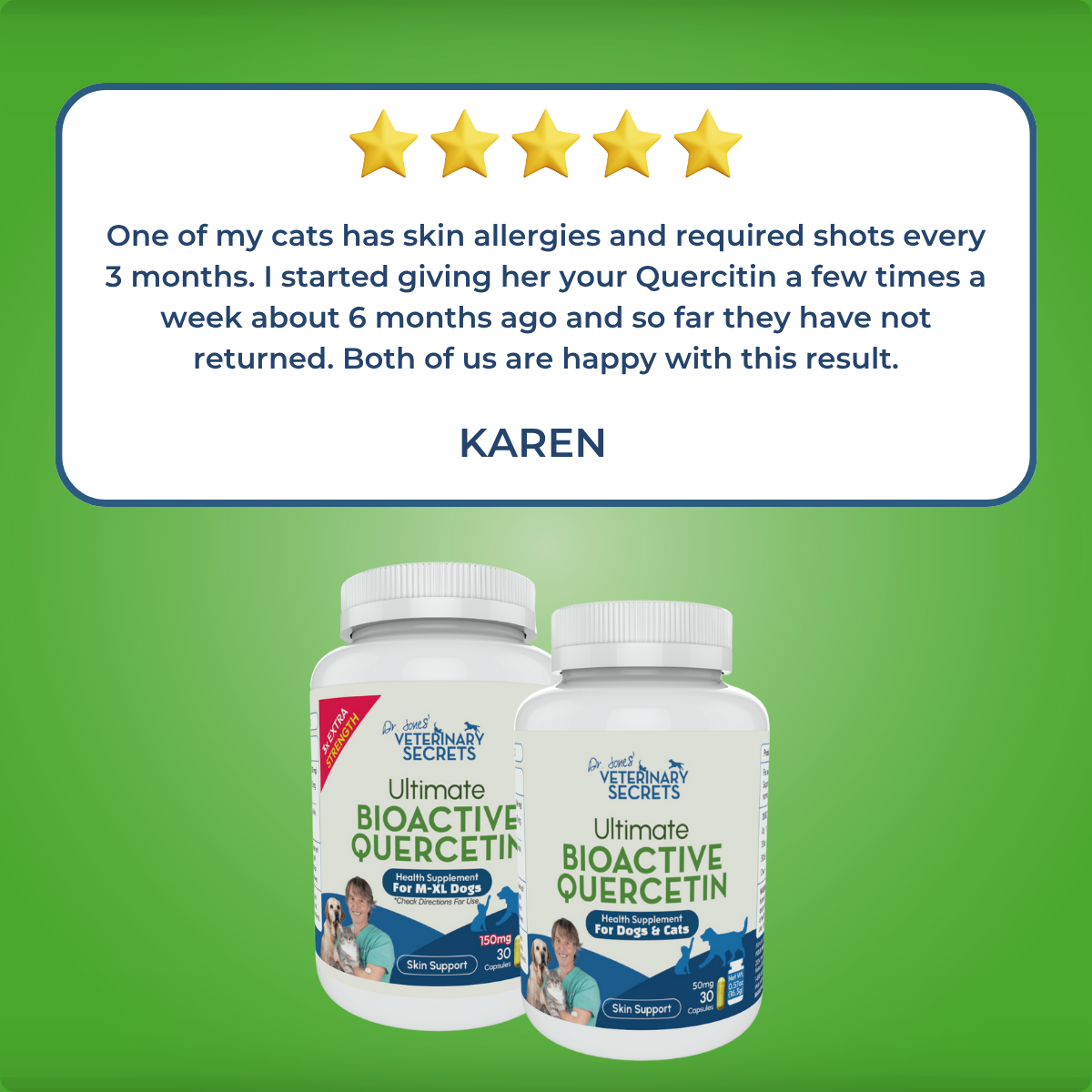
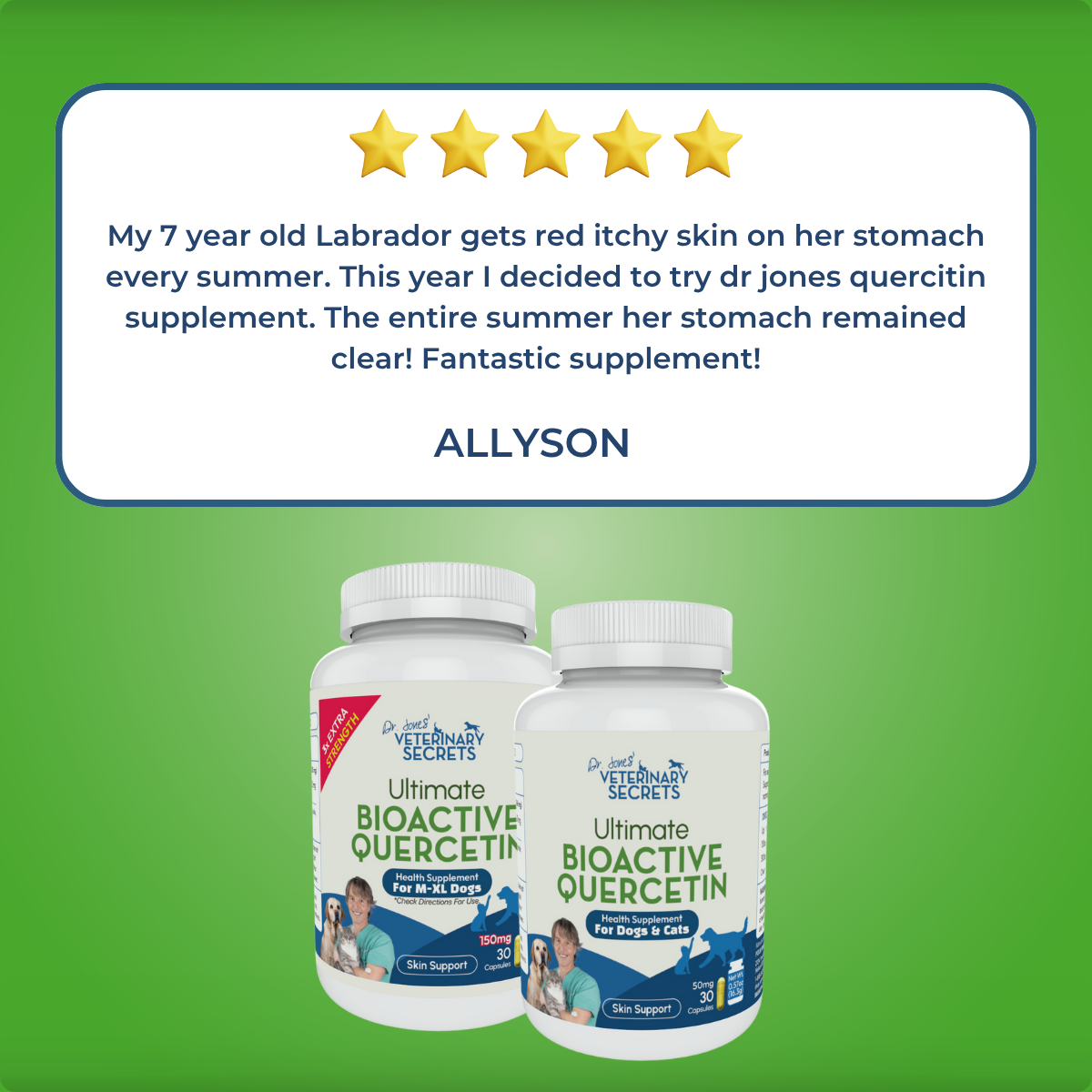
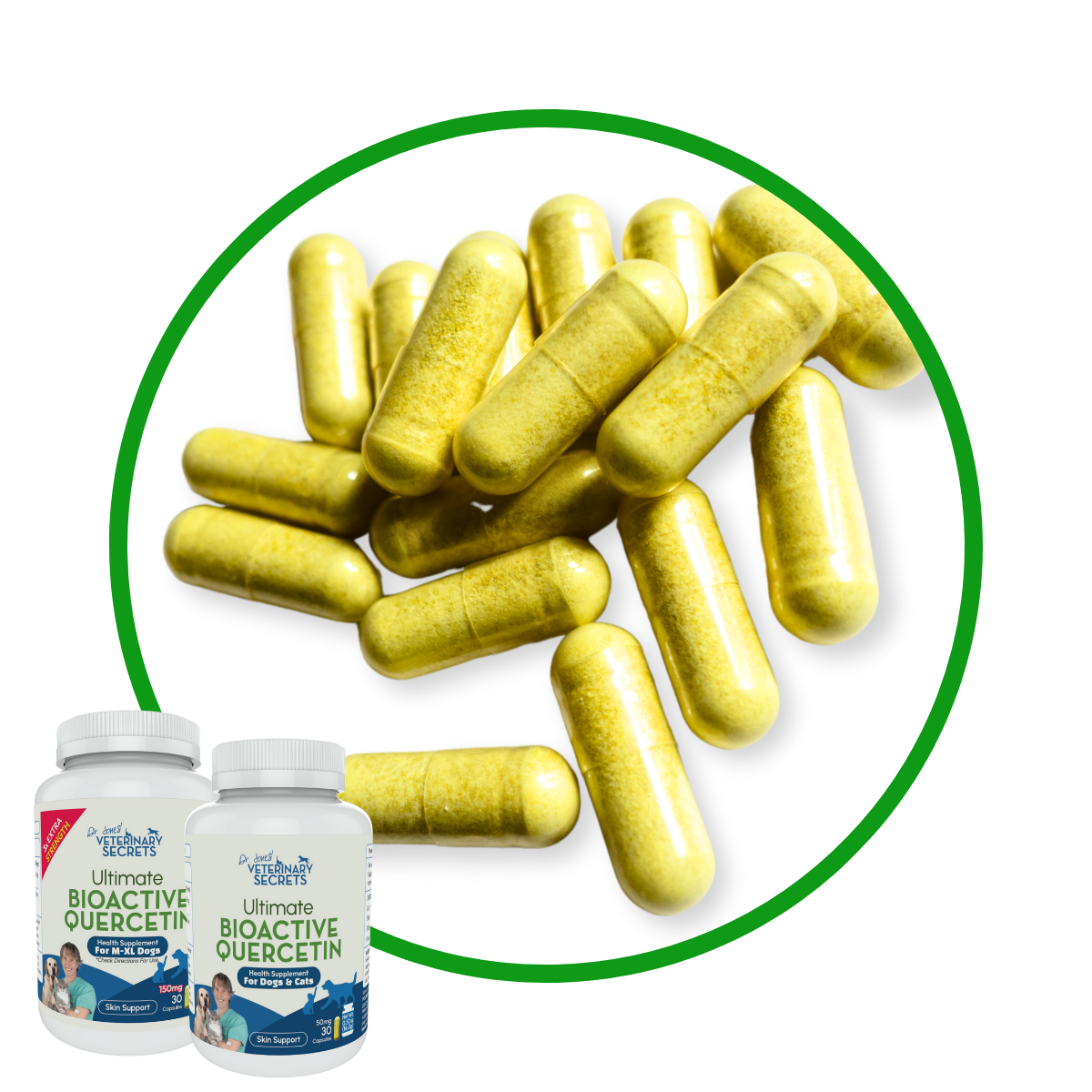
My Dr. Jones’ ULTIMATE Bioactive Quercetin for Dogs and Cats uses a whole-flower extract from Japonica flower, a rich source of bioactive quercetin.
I’ve received encouraging feedback from pet parents using this supplement for allergy support.
It is one of the options I recommend considering for dogs and cats with persistent itching.
You can learn more here:
Dr. Jones’ ULTIMATE Bioactive Quercetin for Dogs and Cats
Final Thoughts: Is Castor Oil Worth Trying for Your Dog or Cat?
Castor oil has been used for thousands of years, and I can now appreciate why my mother reached for it when I had itchy, irritated skin.
At the time, I wasn’t exactly convinced.
But after looking at its properties, I can see why researchers have become interested in it.
Castor oil contains ricinoleic acid, which has been investigated for moisturizing, anti-inflammatory, pain-reducing, and antimicrobial effects.
For dogs and cats, I think its most practical potential benefit is supporting dry, itchy skin.
It may also be worth investigating for dandruff, localized inflammation, and certain skin-care applications.
For allergy-prone pets, I would consider two different approaches.
First, support the skin’s moisture barrier with a suitable topical preparation.
Second, look at the underlying allergic response.
This is where a supplement such as bioactive quercetin may be helpful.
Castor oil may make dry skin feel more comfortable, while quercetin offers another way to support pets dealing with allergic itching.
Sometimes the old home remedies are worth looking at again.
Click To Get A Free Copy of My E-Book!

P.S. My mother used castor oil on my inflamed, itchy skin years ago, and I wasn’t particularly impressed at the time. But now I understand why it has been used for so long. Its moisturizing and anti-inflammatory properties make it an interesting option for dry skin, dandruff, and localized irritation in pets.
P.P.S. If your dog or cat struggles with dry, itchy skin, a castor oil and coconut oil combination may be worth discussing. Just remember that even natural oils can cause skin irritation, so use an appropriate preparation and watch your pet’s response.
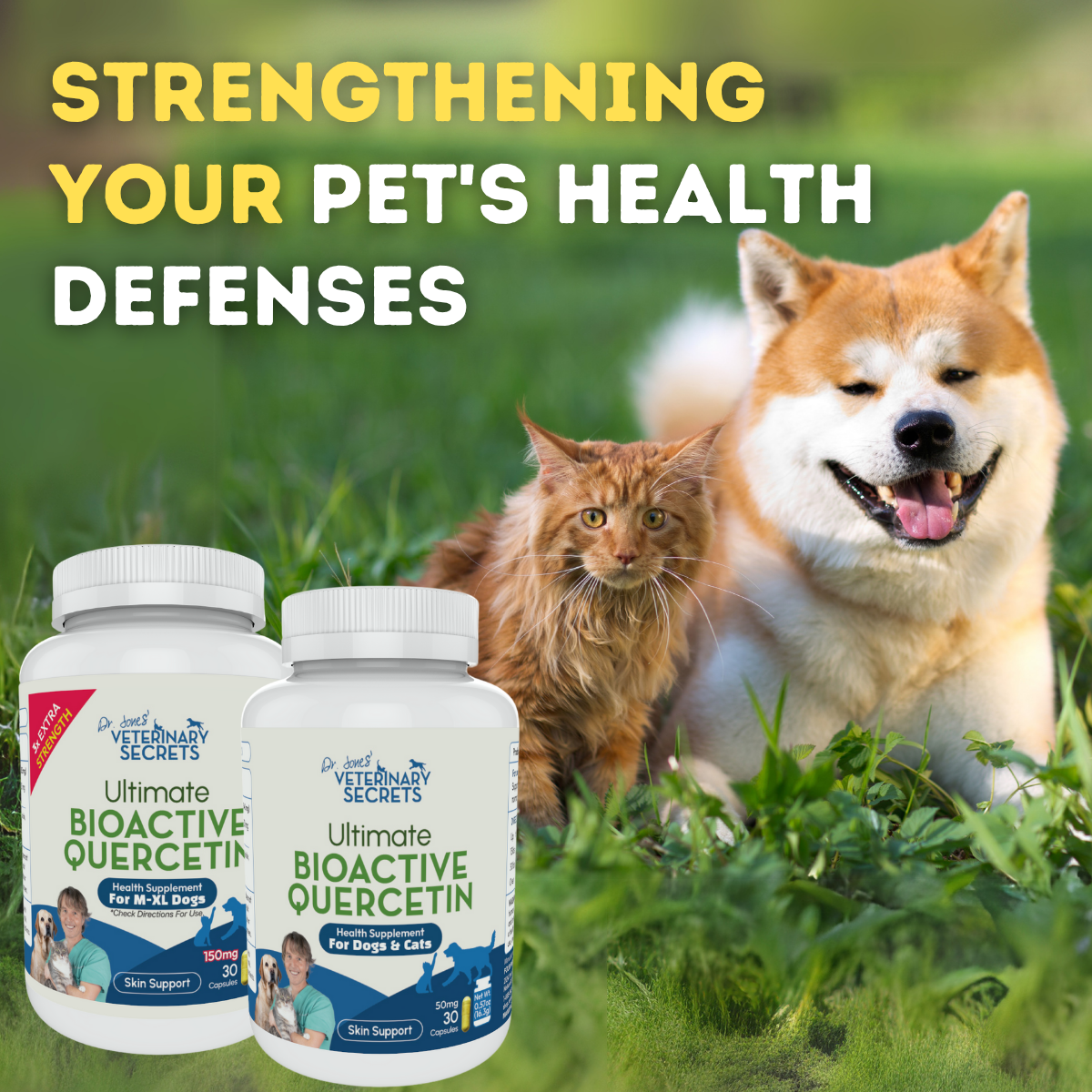
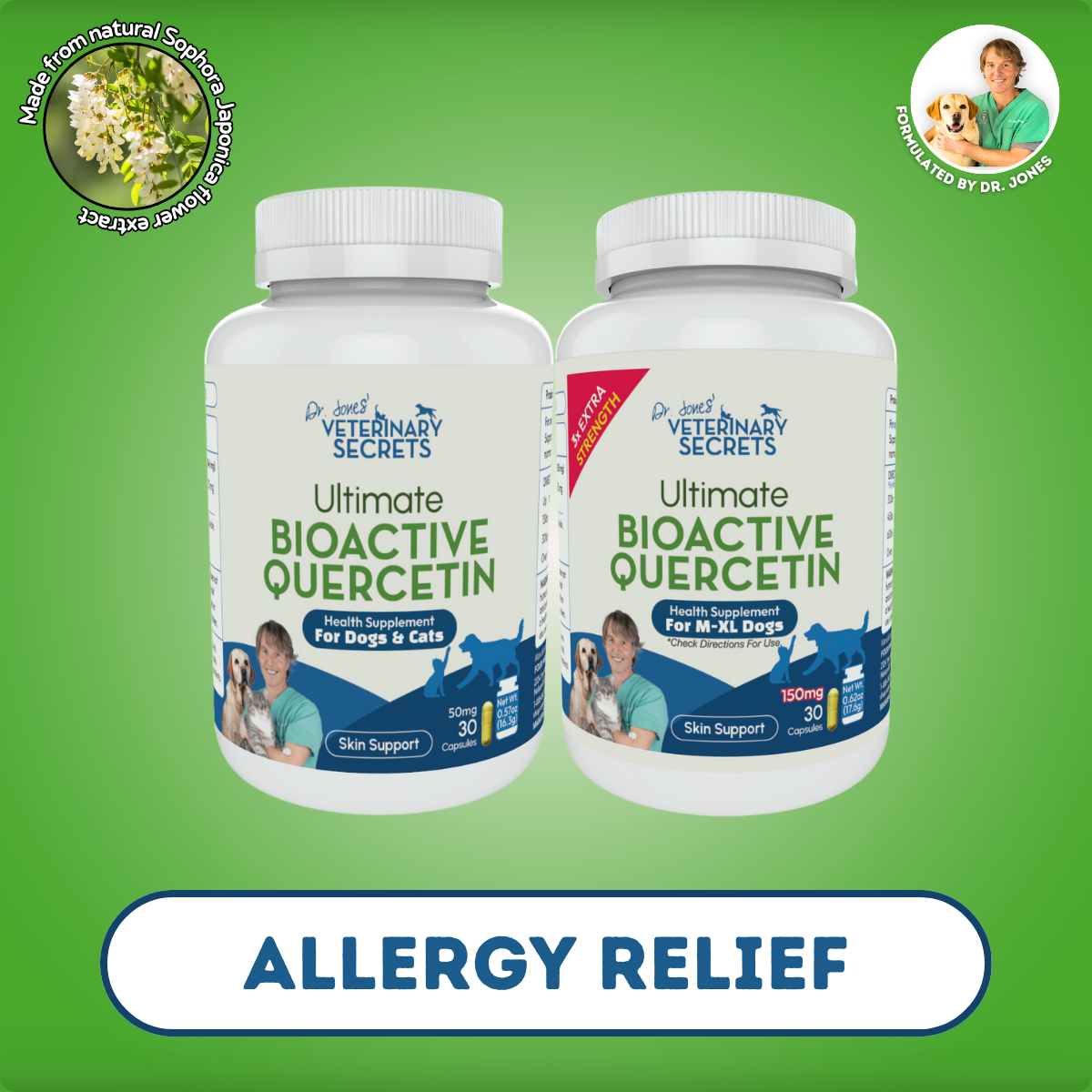
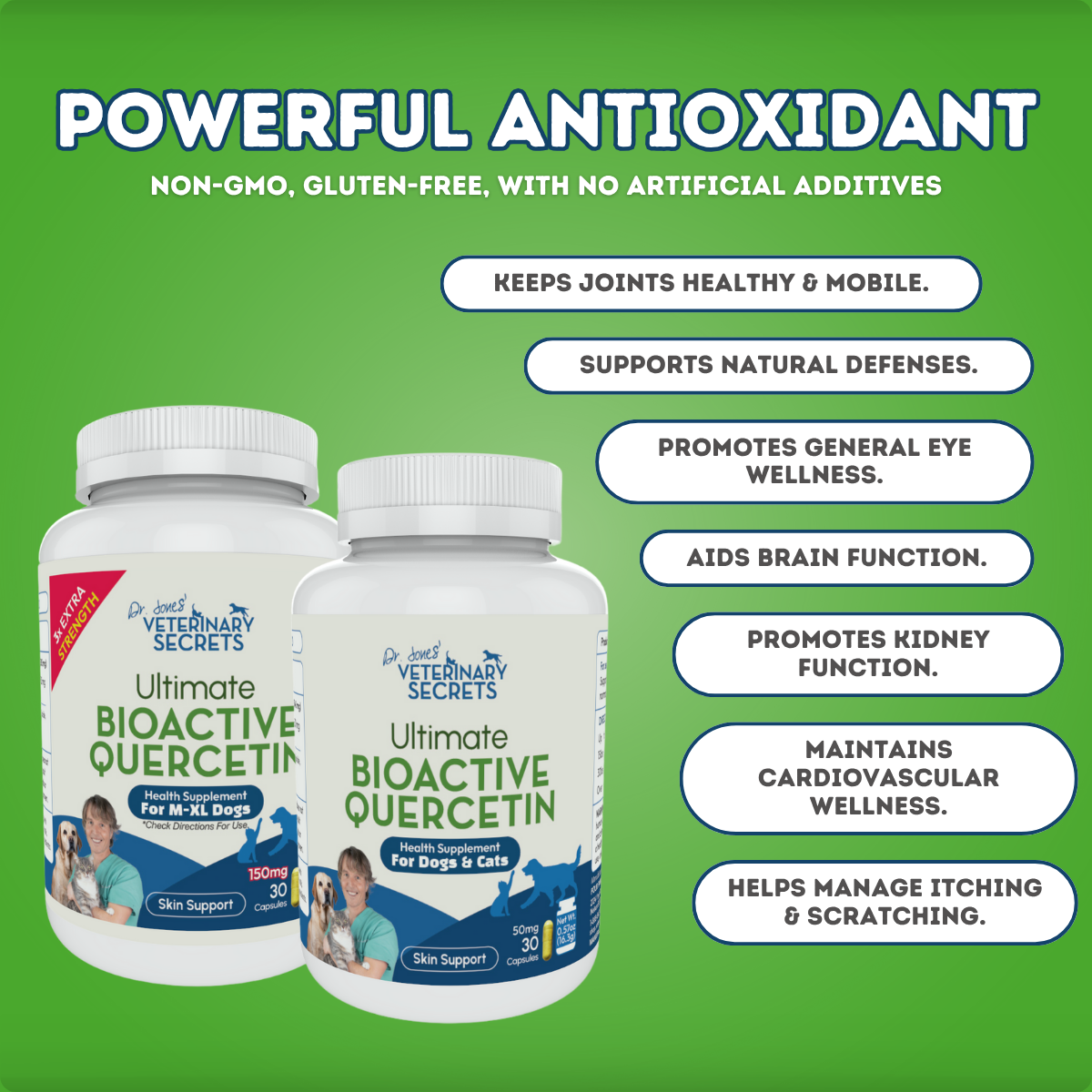
P.P.P.S. If allergies are the bigger problem, consider my Dr. Jones’ ULTIMATE Bioactive Quercetin for Dogs and Cats. It contains quercetin-rich Japonica flower extract and is one of my preferred natural options for supporting dogs and cats with allergic itching.

Castor Oil Benefits for Dogs and Cats: Quick Comparison
| Potential Benefit | How Castor Oil May Help | What to Keep in Mind |
|---|---|---|
| Occasional constipation | Stimulates intestinal movement | Can cause cramping, vomiting, and diarrhea |
| Dry, itchy skin | Helps retain moisture | May cause skin irritation or allergic reactions |
| Wound healing | Supports a moist wound environment | Evidence includes human studies of castor oil-containing preparations |
| Localized arthritis discomfort | Ricinoleic acid has shown anti-inflammatory effects | Pet-specific arthritis benefits are not established |
| Feline acne and bacterial skin problems | May have antibacterial and anti-inflammatory activity | Laboratory findings do not prove clinical effectiveness |
| Yeast-related skin irritation | Potential antimicrobial and moisturizing support | Not a substitute for treatment of a confirmed infection |
| Dandruff | Moisturizes dry skin and hair | Most relevant when dryness is contributing to the problem |
How Much Castor Oil Can You Give Dogs and Cats?
½ teaspoon per 20 pounds of body weight, twice daily.