Case Study, Anorexic Cat
Hello and Welcome to my next case study.
The lucky winners will get a copy of my NEW course, “How to Start With Healing Your Pets At Home”.
There is still time to get in on my Ultimate Feline Health Formula Special:
You can get a trial bottle for 67% OFF, BUT this ends tonight.
As a BONUS for trying my Cat Supplement, you’ll get:
1. A copy of my cat health and nutrition secrets webinar
2. The report foods and plants hazardous to your cat
PLUS 3 additional bonuses:
3. Cat Health Remedies
4. Cat First Aid
5. Cat Food and Nutrition Secrets
All for $9.97
http://www.thecatsupplement.com/special
Case Study
Patient
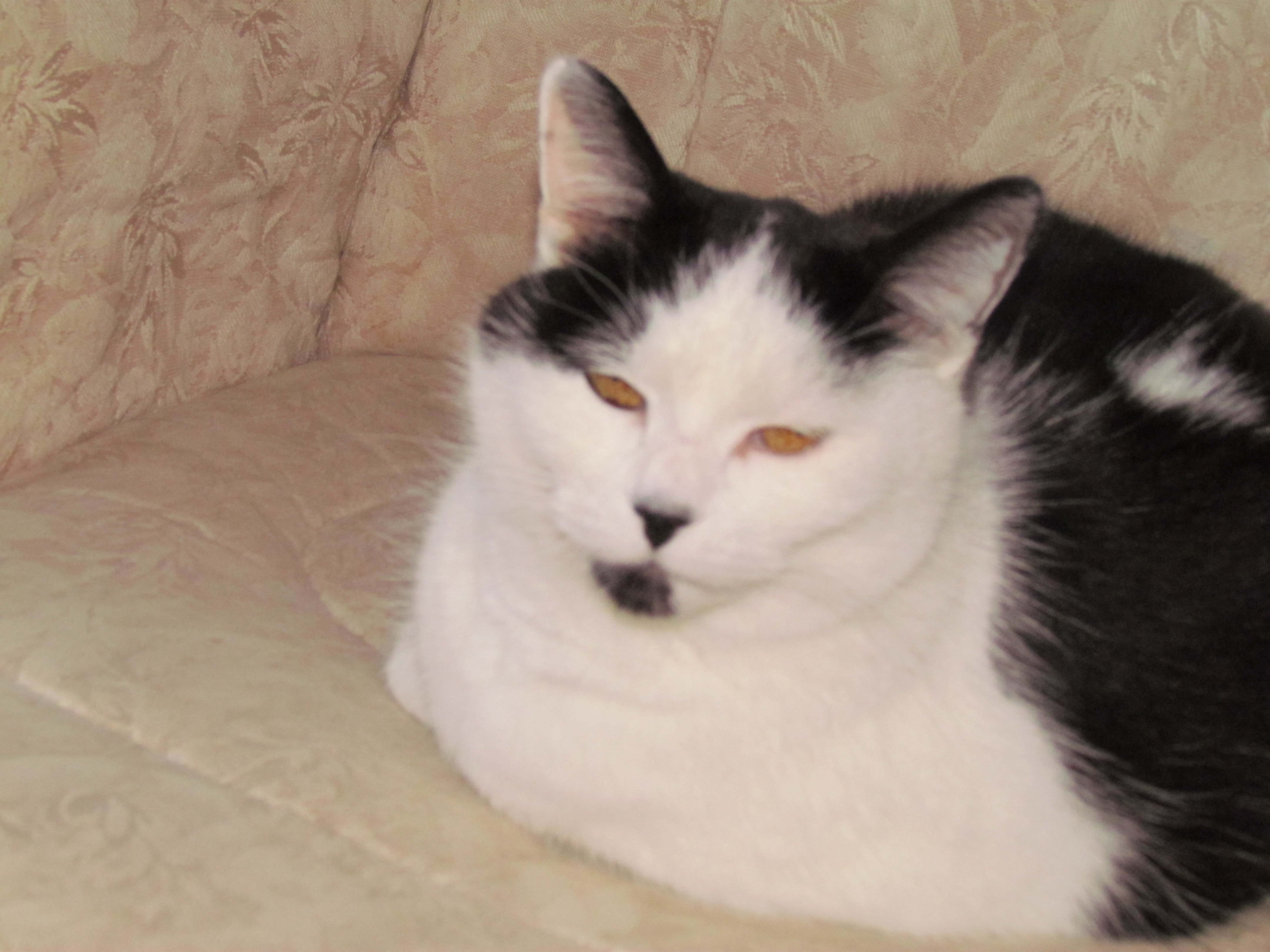
Gussie is an 13-year-old, spayed female domestic shorthaired cat.
History
Gussie has not been eating well for 1-2 weeks
Gussie stopped eating three days ago.
No vomiting or diarrhea.
Limited urination or defecation, and she has lost weight.
Physical examination
•Temperature = 38.3C, Pulse = 189 beats/min, Respiratory rate = 30 breaths/min
•Weight = 9.7 lb; ribs palpable
•5% dehydrated
•Mucous membranes, sclera ( white around the eyes) are yellow
•NAF on Abdominal palpation
Problem List
Anorexia, dehydration, thin body score, jaundice
Diagnostics and Treatment Plan
CBC, Chemistry Panel, Urinalysis,
Hospitalization
IV catheter with Lactated Ringers Solution
Lab Results with reference ranges
Complete Blood Cell Count
HCT ( hematocrit) = 21.5 % – normal range 24.0 – 45.0
HGB ( hemoglobin) = 6.8 g/dl normal range 8.0 – 15.0
MCHC = 28.1 g/dl normal range 30.0 – 36.9
WBC (white blood cell count)= 19.5 x10⁹/L normal range 5.0 – 18.9
GRANS = 13.4 x10⁹/L normal range 2.5 – 12.5
%GRANS = 68 %
L/M = 2.1 x10⁹/L normal range 1.5 – 7.8
%L/M = 32 %
PLT = 161 x109/L normal range 175 – 50
Chemistry Results
BUN 14 normal range 14-36
Creatinine .8 normal range .6-3.4
Phosphorus 5 normal range 2-8
ALP 203 normal range 5-100
ALT 64 normal range 10-100
Total bilirubin 5 normal range .1-.4
Total Protein normal
Glucose 4.1 normal range 3-7
Potassium 2.6 normal range 3-6
Urinalysis
Glucose- neg
Blood -1 plus
Bilirubin – strong positive
Urine Specific Gravity 1.035
Based on the information, history and lab tests, what is your most likely diagnosis?
What would you suggest as to the next plan of action to help Gussie recover?
Good Luck and Thanks for taking part
Dr Andrew Jones
Sounds, unfortunately, like liver failure. I wish I knew the treatment options, because one of my kitties died from it two years ago. At the young age of 10 — very sad — still breaks my heart to think of Daisy and how she suffered.
In cats, not eating can quickly lead to serious liver disease, including hepatic lipidosis, but jaundice doesn’t automatically mean liver failure. The good news is that some causes are treatable, especially when caught early.
Liver disease. I would begin supplementing her with Denamarin.
We’d certainly consider liver support, but with a cat who isn’t eating and is jaundiced, the priority is finding the underlying cause and getting nutrition back in. Denamarin can be helpful, but it’s not the whole story. Cats can get into trouble quickly when they stop eating.
liver disease or stone in bile duct
do ultrasounds and xrays and bile acid tests to determine which it is
fluid and electrolyte therapy as well as nutritional support
In Gussie’s case, the severe anorexia, jaundice, dehydration and low potassium made supportive care and getting her eating especially important. Imaging and bloodwork can help distinguish liver disease from biliary obstruction. Cats can get into trouble quickly when they stop eating, so early nutritional support really matters.
Hi there,
I believe this kitty has hepatic lipidosis. The most critical thing to do is to get food into it-tube feed it.
Kind regards
Shannon
Hepatic lipidosis is certainly an important concern in a cat that has stopped eating, especially with weight loss and jaundice. The big priority is finding and treating the underlying cause while getting nutrition back in, with assisted or tube feeding when needed. Great point!
As per gussie I think it could be Pancreatic Cancer Possible treatments include surgery, radiation and chemotherapy.
Pancreatic cancer is certainly one possibility, but we’d need imaging and further testing to know for sure. In Gussie’s case, the jaundice and severe loss of appetite can have several causes, including liver disease and pancreatitis.
It is Cancer in the cat’s blood. I would suggest putting the cat to sleep.
Anemia and jaundice can have several causes in cats, and cancer would need proper testing to confirm. In Gussie’s case, the priority was finding the underlying cause and supporting her while investigating it. We don’t give up on a cat based on one set of blood results alone.
Case study anorexic, dehydrates cat.
It looks like she has an occlusion in the jejunum near the bileduct. Next step (money being no issue!) a CTscan or at least an Xray.
An intestinal obstruction would certainly be on the list, but with the jaundice, severe anemia, and marked bilirubin elevation, there’s more going on here. We’d want imaging, ideally an ultrasound, to help sort out the cause before jumping to surgery. Cats can be wonderfully sneaky patients!
liver disease / blockage (possibly hepatic lipdosis).
provide intense immune support & nutrients (homeopathics & tube feed if needed).
That’s definitely on the list of possibilities, especially with jaundice and not eating, but hepatic lipidosis is a diagnosis we’d want to confirm rather than assume. The big priority is getting the cat hydrated, correcting those electrolytes, finding the underlying cause, and getting nutrition going safely. Cats can get into trouble quickly when they stop eating.
I think she may have hairballs in her stomach making her think she is full. I would try to force feed her some canned PUMPKIN, one bite st a time even in I had to use a syringe to get it down her throat. Do this a few times a day for two or three days and see if doesn’t correct her appetite.
Hairballs are possible, but with a cat who has stopped eating, we would not force pumpkin or syringe food into the mouth. Cats can develop serious problems when they go without food, and there may be an underlying cause that needs attention. A vet exam is the safer next step, especially if appetite has been poor for more than a day.
It looks like hepatitis or some serious liver disease.
Jaundice can point to liver disease, but there are several possible causes. In Gussie’s case, the history and bloodwork point us in another direction. A proper workup is key before calling it hepatitis.
my daughter’s cat had same symptoms as this. she just stop eating and the treatment was sub q fluids and force feed very small amounts of high quality can food until she started eating on her own. it was fatty liver disease.
Fatty liver disease, or hepatic lipidosis, can happen when a cat stops eating, especially if they’re overweight. Getting fluids in and, most importantly, getting nutrition back in is a big part of treatment. Cats really can’t afford to go without food for long. Glad your daughter’s cat pulled through!
Low HCT, HGB, MCHC = anaemia
Raised WBC = infection
Raised ALP, ALT = liver damage
Raised Billiruben = Lysed erythrocytes – liver damage
Yellow mucous membranes, sclera = jaundice – liver damage
? Infectious Hepatitis
Natural remedies –
for the liver = Milk Thistle, N-Acetyl Cysteine
for infection = Vits A, C, D.
We’d just be careful with a few conclusions. Anemia is clear, but elevated WBC doesn’t automatically mean infection, and bilirubin can rise for several reasons. In Gussie’s case, hepatic lipidosis would be high on our list, especially with the weight loss and not eating. Milk thistle and NAC may offer liver support, but finding and treating the underlying cause is key.
Hepatic lipidosis.
When a cat stops eating, especially after losing weight, the liver can quickly become overwhelmed with stored fat. Getting them eating again and addressing the underlying cause is key.
Gussie has problems with her liver. An exact diagosis can’t be made with this inforamtion.
It is not known with this information if it primary or the result of some other cause.
With the yellow sclera, there is jaundice.
I would start off with the fluids, and Denamarin, and frequent small feedings and see if she inproves.
Imaging such as an ultrasound or liver biopsy may be needed.
I hope she gets better!
With the jaundice and history of not eating, we’d be concerned about liver disease, especially hepatic lipidosis, but the underlying cause still needs to be identified. Fluids, nutritional support with frequent small meals, and appropriate liver support can be helpful, with bloodwork and possibly ultrasound guiding the next steps.
Sounds like Feline Hepatic Lipidosis or Fatty Liver Disease. She would need to be fed through a tube or syringe fed to gain back all of the necessary nutrients. I hope she feels better!
Fatty liver is certainly something we’d consider in a cat that has stopped eating and become jaundiced. But we’d want to confirm the underlying cause, as there can be several. The big priority is getting calories and nutrition back in, sometimes with assisted feeding or a feeding tube. Cats really shouldn’t go without food for long.
I think she has uremic poisoning.
It’s a reasonable thought, but the lab work doesn’t support uremic poisoning here. Her BUN and creatinine are normal. The big clue is the severe jaundice, so we’d be looking much more closely at liver or biliary disease.
liver disease
Liver disease is one possibility, but jaundice in a cat who has stopped eating can also point to hepatic lipidosis, gallbladder disease, or another underlying problem. Cats really shouldn’t go without food for long. A proper workup is important, and getting them eating again is a big part of recovery.
Possibly hepatic disease. Confirm with liver biopsy while under light anesthetic. Force feed nutrients by tube done by vet, then by caretaker a formula prescribed by syringe for next 6 – 8 weeks.Then slowly try introducing foods to see if appetite has returned. Also could be cancer of the liver or pancreatic disease.
Liver disease is certainly on the list, but we would not jump straight to a liver biopsy. In a cat that has stopped eating and is jaundiced, hepatic lipidosis is a major concern, and bloodwork plus ultrasound can often give us much more useful information first. Most importantly, getting nutrition into the cat safely and addressing the underlying cause is key.
I agree with most of the above that it is probably liver diease. Treating it would depend on the cause of liver disease. I would suggest (if cost is no object) an ultrasound and xrays.
In the meantime sub Q fluids, milk thistle and if necessary force feeding to get her to start eating again.
In cats, though, not eating for several days can quickly become part of the problem, including hepatic lipidosis. We’d want bloodwork and ideally an ultrasound to help find the underlying cause, while getting hydration and nutrition back on board. Milk thistle may have a role, but finding and treating the cause comes first.
Kidney failure
Kidney failure is serious, but not every case of poor appetite means kidney failure. Bloodwork and a urinalysis are important to know what’s really going on. If your pet has stopped eating, please get them checked promptly. We can help you understand the results and support kidney health naturally where appropriate.
sounds like liver damage tumor or fatty liver. very toxic liver.
Use HBA Plus for liver function. Will clean up the liver. HBA PLUS is a powerful liver detoxifier available. Liver cleansing is especially important as most pet medications today can be toxic to the liver. Sharon
I forgot to mention to force fluids a small amount at a time give pedialte for dehydration.
maybe it could be cholangiohepatitis. Biopsy of the liver for proof. The kidneys and liver works together to push toxin out of the body thats why it important to push fluids either manual or IV.
Again HBA Plus is a good liver detoxifier.
Sharon
Liver disease is certainly one possibility, but we’d need bloodwork and imaging to know what’s actually going on. A biopsy is sometimes needed for a definitive diagnosis. With a cat that has stopped eating and is jaundiced, dehydration and getting nutrition back on board are especially important. We’d be cautious about relying on a “liver detox” alone, and Pedialyte isn’t a substitute for proper veterinary fluid therapy.
I’d start treatment for FIP. I’d give 1/2 capsule of Nature’s Sunshine’s VS-C®. This viral-immune formula is a combination that Chinese herbalists would describe as a “metal-enhancing” formula. These herbs create an unfavorable environment for foreign invaders. Developed by Dr. Wenwei Xie, VS-C is exclusive to Nature’s Sunshine. It contains the following time-honored botanicals: dandelion root, purslane herb, indigo leaves and root, yplaspi herb, bupleurum root, pinellia rhizome, scute root, cinnamon twig, licorice root, ginseng root.
Id also start the nosode for Feline Infectious Peritonitis which is now available as a homeopathic remedy. 30C potency in an economy 1 oz bottle of 800 Pellets. The FIP virus (FIPV) is very similar to the coronavirus that causes a transient, usually mild, self-limiting diarrhea (Feline Enteric Corona Virus, FECV). In fact, there is considerable evidence that FECV actually mutates to FIPV in individual. Suggested dose is 3 pellets at one time placed on top of moist food. Repeat 1 to 2 times daily as needed for symptom relief.
We’d be cautious about relying on herbs or homeopathy for FIP, as there’s no good evidence they can cure it. FIP is now treatable with effective antiviral therapy, so getting the diagnosis right and starting proven treatment promptly is key.
Not knowing what all the tests are by just the letters, I would guess that it is a blocked bile duct, and that the next step would be to x-ray/ct/ultrasound or whatever, to acertain if it can be cleared, and go from there. If it can be cleared surgically, then post op milk thistle would help in the recovery of the damage to the liver.
The jaundice and very high bilirubin certainly make a bile flow problem worth investigating, but we would not want to call it a blocked bile duct without imaging. An ultrasound would be a good next step to look at the liver and biliary system. And yes, supporting the liver is important, but getting Gussie eating again is also a big priority in a cat like this.
Obviously Gussie has an infection. Keep her hydrated, give her an ultrasound. Most likely kidney failure and/or liver disease. I’m not sure what treatment to give Gussie but good luck.
Gussie’s kidney values were normal. The big concerns were jaundice, severe anemia, low potassium, and elevated bilirubin. In a cat that has stopped eating, we’d be very concerned about liver disease, including hepatic lipidosis. An ultrasound would be a sensible next step. Gussie definitely needed more than a guess!
1. Hepatic lipidosis developing into liver failure
2. Fluid therapy and force feeding through stomach tube because he is not eating at all. Getting food (lots of high quality protein) into the body is the most important thing to do to reduce and reverse metabolic dysfunction and liver tissue damage (if caught early enough). Vet could supplement food with vitamin B complex, cobalamin, thiamine, vit E, L-carnitine & taurine. The owners could get a x-ray & ultrasound to see if liver is enlarged & contains fat deposits but ultimately, a biopsy is required to confirm disease. I don’t think there is an infection because the WBC is not very high.
With a cat that has stopped eating, hepatic lipidosis is definitely high on the list, and getting nutrition in is critical. One small correction though: the WBC is actually mildly elevated here, so infection or inflammation can’t be ruled out from that alone. Imaging can help, but a biopsy isn’t always necessary to make the diagnosis. The big priorities are fluids, correcting the potassium, finding and treating the underlying cause, and getting her eating again.
I’d rule out a biliary tract infection. Possible cancer, though not my first choice. Can’t totally rule out that the animal didn’t get into a toxin. So, my choice is a liver disorder. To clarify…
Probable diagnosis:
I don’t see the albumin nor AST levels listed. Symptom of jaundice and not eating, along with results showing high bilirubin, high ALP, low potassium and low range BUN, I would say it is Hepatic Lipidosis – Fatty liver.
This cat needs nutrition… perhaps some parenteral nutrients – high protein w/ caloric density along with fluid and electrolytes. I would also add a holistic regime of Milk Thistle to the mix when possible. For further support after stablized, I would use VivoZeoComplete as an anti-inflammatory, an immunity builder, blood circulation enhancer and continued detoxifier.
With the jaundice, marked bilirubin elevation, anorexia, and weight loss, hepatic lipidosis would definitely be high on our list. The priority is getting Gussie eating and correcting the dehydration and electrolyte imbalance, while looking closely for the underlying cause.
My guess would be hepatic lipidosis. Not eating consistently can result in the liver shutting down as it tries to mobilize fat for energy. Doesn’t work well in cats. Treatment is hydration and FOOD!
Hepatic lipidosis is certainly high on the list with a cat that has stopped eating, especially after a period of poor appetite and weight loss. The big priority is getting hydration and nutrition back on board while finding and treating the underlying cause. Cats really can’t afford to go without food for long.
I am no expert but my understanding of Gussie’s test results and the length of time she has been offf her food would indicate a liver problem with a secondary infection. WBC not high enough to imply cancer. I am presuaming that her mouth and throat were checked to see that nothing is stuck. I would not suggest a general anesthetic for an older ill cat but if exceptionally lethargic Gussie might be submit to an X-ray without anesthetic. Apart from Milk Thistle not sure of treatment but would suggest subcutaneous fluids immediately to hydrate. Get well soon Gussie.
Gussie’s results point more toward a liver or biliary issue, with her jaundice and very high bilirubin being the big clues. Her white cell count is actually mildly elevated, so it does not rule out infection or inflammation. At 13, we’d also be cautious with anesthesia unless truly necessary. The most important thing is getting her hydrated and, especially in a cat who has stopped eating, supporting nutrition promptly.
Does your cat have feline Leukemia?
These signs can have several causes, so we’d need proper testing to know if feline leukemia is involved. A FeLV test with your vet is the best place to start.
I would initially do an ultra sound to check her liver, kidneys, gall bladder, bile duct, pancreas and spleen for any blockage, inflammation and/or tumours. Treatment will depend on what is found. If nothing is found (as is possible)or to support her post-operatively, give her Milk Thistle (one eighth the adult dosage); 10mg of multi B vitamins; 1mg/lb of Choline (= 9mg for Gussie as she will presumably have lost a little more weight by now); an amino acid supplement containing: L-Cysteine 12.5mg, and 125mg each of L-Methionine, L-Glutathione, L-Arginine and L-Carnitine (these will help reduce the need for protein metabolism); if she has fatty liver disease, then a quarter teaspoon of lecithin will help fat metabolism; homoeopathic cholesterinum is especially helpful for bile duct obstruction or fatty liver disease – try 3x to start, but if this doesn’t work, change to 3C. (My thanks to Don Hamilton’s book Homoeopathic Care for Cats and Dogs for this information!)For rehydration, give 10ml of Pro-Ma Optimum Health Aloe Vera Juice (this has the bitter aloes filleted out and is palatable to animals and there is a distributor in Canada) every two or three hours until Gussie’s hydration is largely back to normal, then three times a day until she is fully recovered, and then 10ml daily ongoing. Long term she should be fed a diet lower in protein and fat than before her illness.
I wish Gussie a speedy and full recovery and her human and animal family a less stressful time in future.
With jaundice and these lab changes, we’d definitely want imaging and further diagnostics to look for the underlying cause before choosing treatment. Supportive care, hydration, nutrition, and addressing the liver or biliary problem are all important. We hope sweet Gussie makes a full recovery!
hi, the diagnosis is liver disease, though there are no abnormalities found on palpation, but the jaundice is a clear indication. the liver is the organ to look at, and line of treatment will be to continue with lactated ringer, give appetite stimulants and place the cat on a low protein diet.
Jaundice definitely tells us we need to take a close look at the liver, but it does not always mean primary liver disease. In a cat that has stopped eating, hepatic lipidosis is also a big concern. We would want bloodwork and imaging to help find the underlying cause, and getting calories back in is especially important. Cats and prolonged fasting are not a great combination!
Liver disease. Give her anti nausea meds. This should help her eat. Avoid excessive fat in food. Perhaps home prepare food. Give milk thistle. May also try Actigal.
With a cat who isn’t eating and has jaundice, we’d want veterinary care and diagnostics first, since liver disease is only one possibility. Nausea control and getting calories in are important, while the right diet depends on the underlying cause. Milk thistle can be supportive in some cases, but it shouldn’t replace treatment.
So what’s the answer — or did I miss it?