CBD and Apoquel for Dog Allergies: Can CBD Reduce Itching and Lower Apoquel Doses? New 2026 Study

Can CBD Help Dogs With Allergies While Taking Apoquel?
Yes, a new study published in October 2026 suggests that adding CBD (cannabidiol) to Apoquel may significantly reduce itching in dogs with atopic dermatitis, even when Apoquel alone isn’t providing enough relief. The study also found that some dogs maintained their improved itch control after their Apoquel dose was reduced by half.
Now, that’s something I find very interesting.
If you have a dog with allergies, you probably know just how frustrating this condition can be.
Your dog is constantly scratching, licking their paws, rubbing their face, or dealing with another ear infection.
You’ve tried different treatments.
Maybe you’ve changed their food.
And perhaps your dog is now taking Apoquel, one of the more commonly prescribed medications for canine allergies.
But what happens when Apoquel isn’t working well enough?
Or what if you’d like to reduce how much medication your dog needs?



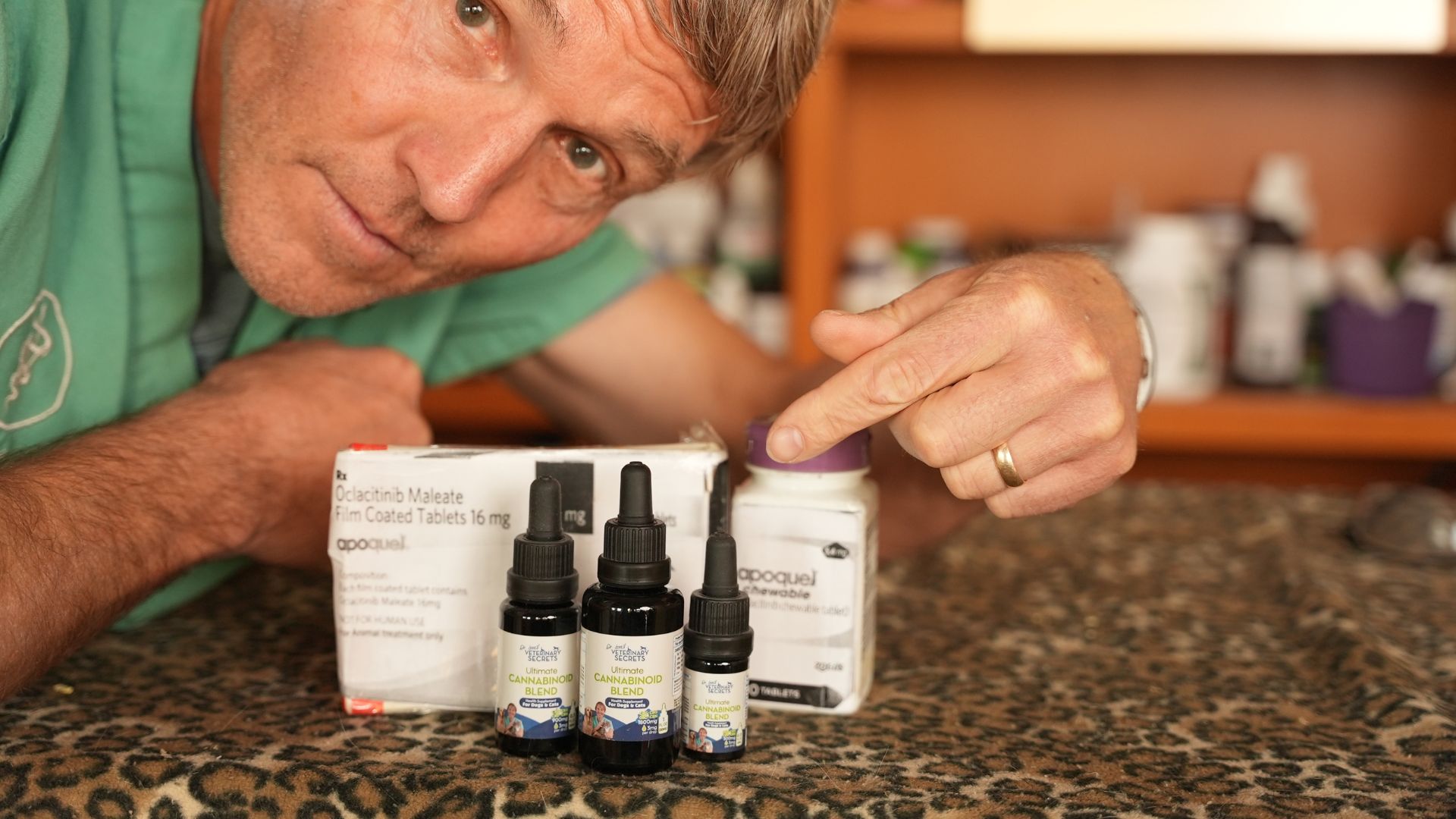
A new study involving 14 dogs with poorly controlled allergic skin disease has provided some encouraging findings.
The researchers added full-spectrum CBD to the dogs’ existing Apoquel treatment.
The dogs experienced significantly less itching.
Then the researchers reduced their Apoquel dose by 50% while continuing the CBD.
And here’s the interesting part.
The dogs maintained their reduced level of itching over the following 30 days.
That’s a promising result, particularly for dogs that have been struggling with chronic allergies.
But before we start replacing Apoquel with CBD, there are a few important things to understand.
The study was small.
CBD isn’t completely free of potential side effects.
And we still need more research before we can say exactly which dogs will benefit.
Let’s look at the findings, how CBD may help, the dosage used, and what this could mean for your allergic dog.
What Is Atopic Dermatitis in Dogs?

Atopic dermatitis, often called atopy, is a chronic allergic skin condition that causes inflammation and itching. Dogs with atopy may repeatedly scratch, lick their paws, develop irritated skin, or suffer from recurring ear and skin infections.
I’ve treated many dogs with allergies over the years.
And I know how difficult this condition can be.
Not just for your dog, but for everyone living with them.
Imagine having a dog that’s constantly uncomfortable.
They’re scratching throughout the day.
Licking their paws.
Chewing at their groin.
And sometimes they’re dealing with recurring ear infections or inflamed skin that never seems to completely heal.
It’s miserable for the dog.
And understandably, pet parents want to find something that provides relief.
What Are the Common Signs of Atopic Dermatitis?
Some of the symptoms I’ve frequently seen in allergic dogs include:
-
Persistent itching and scratching
-
Excessive paw licking
-
Licking or chewing around the groin
-
Recurring ear infections
-
Repeated skin infections
-
Inflamed or irritated skin
-
Chronic discomfort
These symptoms can become particularly frustrating when a dog continues itching despite taking medication.
Why Can Allergic Skin Take So Long to Heal?
When a dog has chronic atopic dermatitis, there’s often significant inflammation within the skin.
Inflammatory cells are involved.
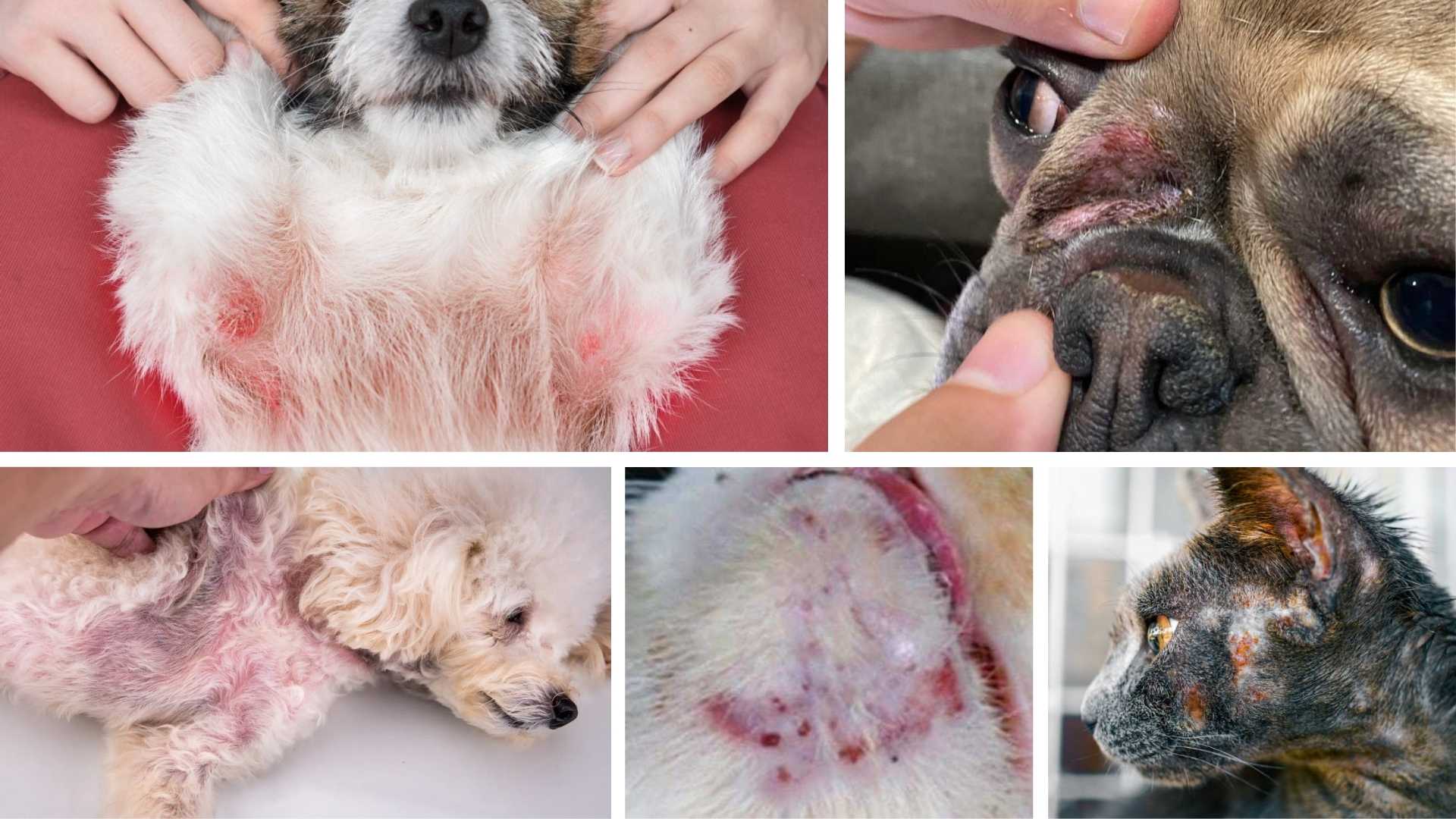
And in some cases, secondary skin infections develop.
Even if we manage to reduce the itching, the skin itself may take longer to return to normal.
That’s an important distinction.
A dog may become noticeably more comfortable before we see substantial changes in the appearance of their skin.
And this is something that came up in the earlier CBD research.
What Is Apoquel, and How Does It Work for Dog Allergies?
Apoquel is a prescription medication used to control itching associated with allergic dermatitis and atopic dermatitis in dogs. Its active ingredient, oclacitinib, works by inhibiting certain Janus kinase (JAK) signaling pathways involved in inflammation and itching.
Apoquel has been extensively studied.
And for many dogs, it can provide very effective relief.
I’ve seen how difficult severe allergies can be, so I absolutely understand why pet parents use it.
If your dog is licking their paws constantly and developing recurring infections, you want something that’s going to help.
And Apoquel can certainly do that.
Why Does Apoquel Reduce Itching?
Apoquel works by interfering with specific pathways involved in transmitting inflammatory and itch-related signals.
These pathways involve enzymes known as Janus kinases, or JAK enzymes.
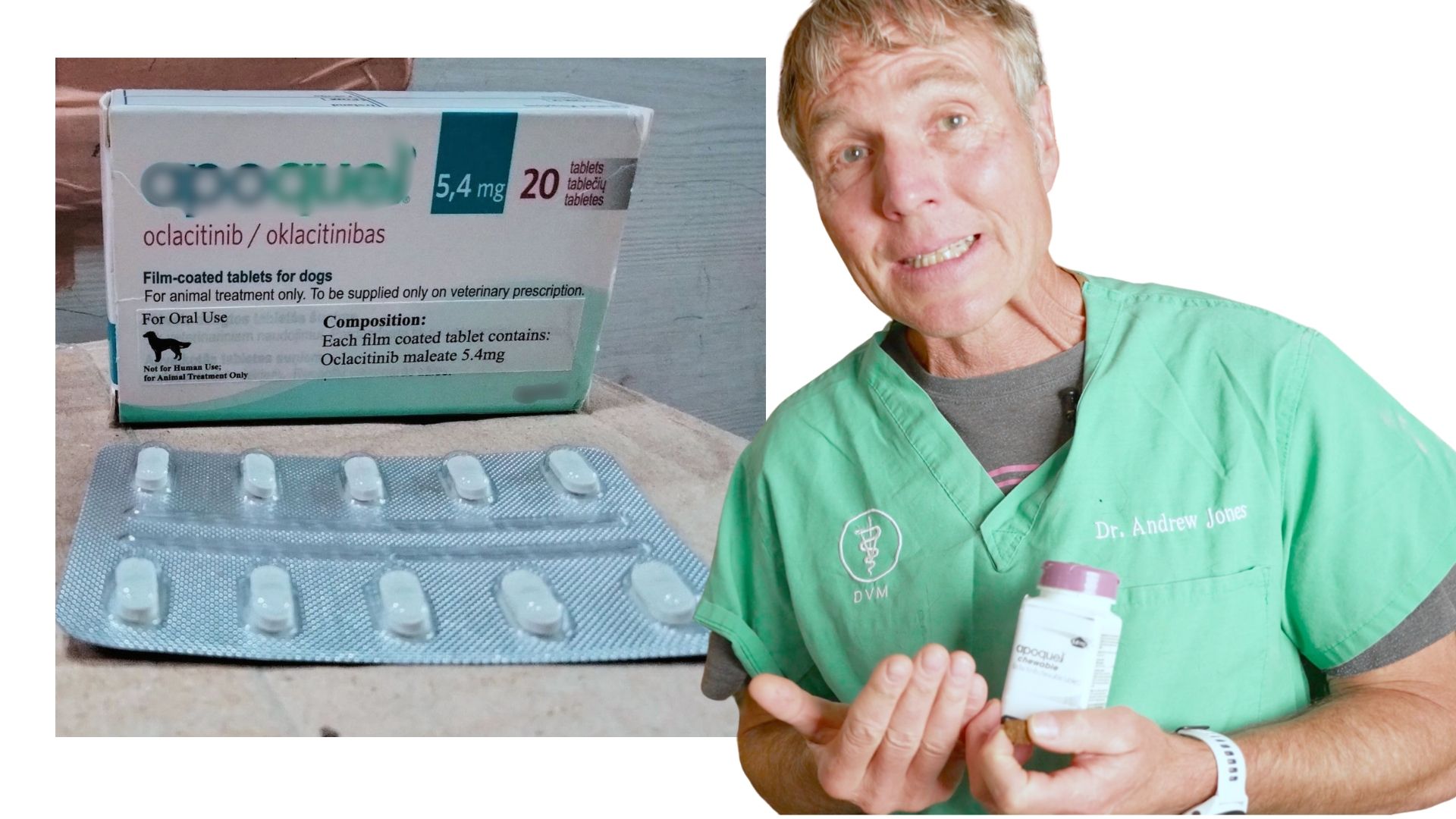
By inhibiting certain JAK-related signaling processes, Apoquel can reduce the itching associated with allergic skin disease.
However, these pathways are also involved in aspects of normal immune function.
And that’s one of my concerns.
When we’re interfering with an important part of the immune response, we need to consider potential side effects.
Why Am I Cautious About Long-Term Apoquel Use?
I’ve previously discussed the potential adverse effects associated with Apoquel.
These include concerns involving:
-
Gastrointestinal problems
-
Immune suppression
-
Neurological signs
-
Kidney-related problems
-
Liver-related problems
-
Certain cancer-related warnings
Apoquel’s prescribing information also includes warnings involving neoplastic conditions.
Now, that doesn’t mean Apoquel causes cancer in every dog, or that a dog receiving Apoquel will necessarily develop these problems.
Follow-up studies, including research involving large numbers of dogs, have not established a clear increase in cancer incidence attributable to the medication.
But I do think its immune-related effects and safety warnings deserve consideration.
Personally, if I had a dog with severe allergies, I would want to explore other reasonable options before relying on Apoquel long-term.
That said, I also recognize that some dogs need it to remain comfortable.
And that’s why the new CBD study is so interesting.
What Did the October 2026 CBD and Apoquel Study Find?
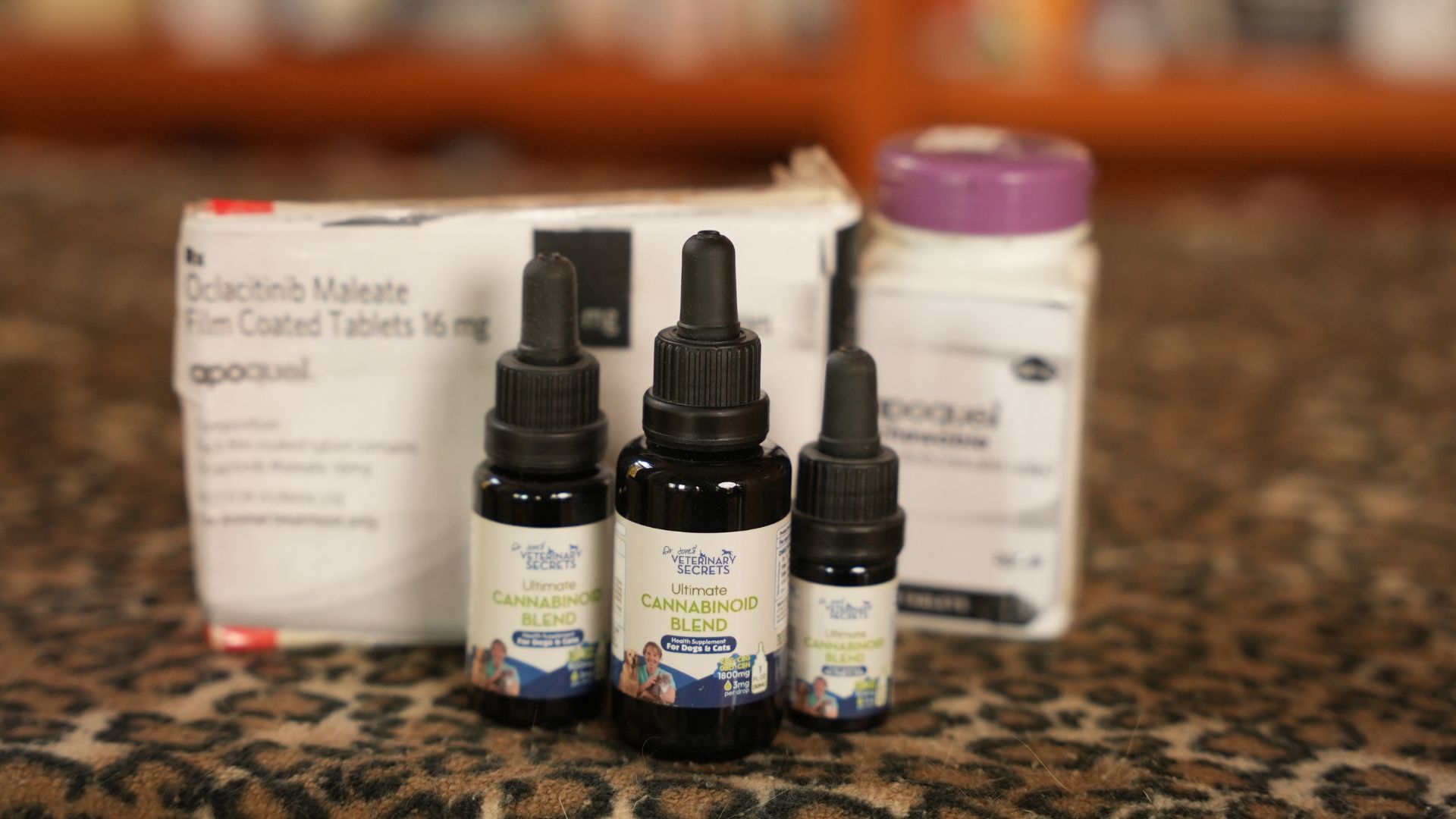
The October 2026 study examined 14 dogs whose allergic itching was not adequately controlled with Apoquel alone. Adding full-spectrum CBD at 2 mg/kg twice daily significantly reduced itching compared with the dogs’ baseline symptoms.
The study then explored whether those improvements could be maintained with less Apoquel.
And the findings were encouraging.
How Many Dogs Were Included?
The study involved 14 dogs.
All of them were experiencing inadequate itch control while receiving Apoquel.
These weren’t dogs whose allergies were already well managed.
They were still struggling with itching despite conventional medication.
That’s why I find the results particularly relevant.
What CBD Did the Researchers Use?
The researchers used full-spectrum cannabidiol, also known as full-spectrum CBD.
This is different from a CBD isolate.
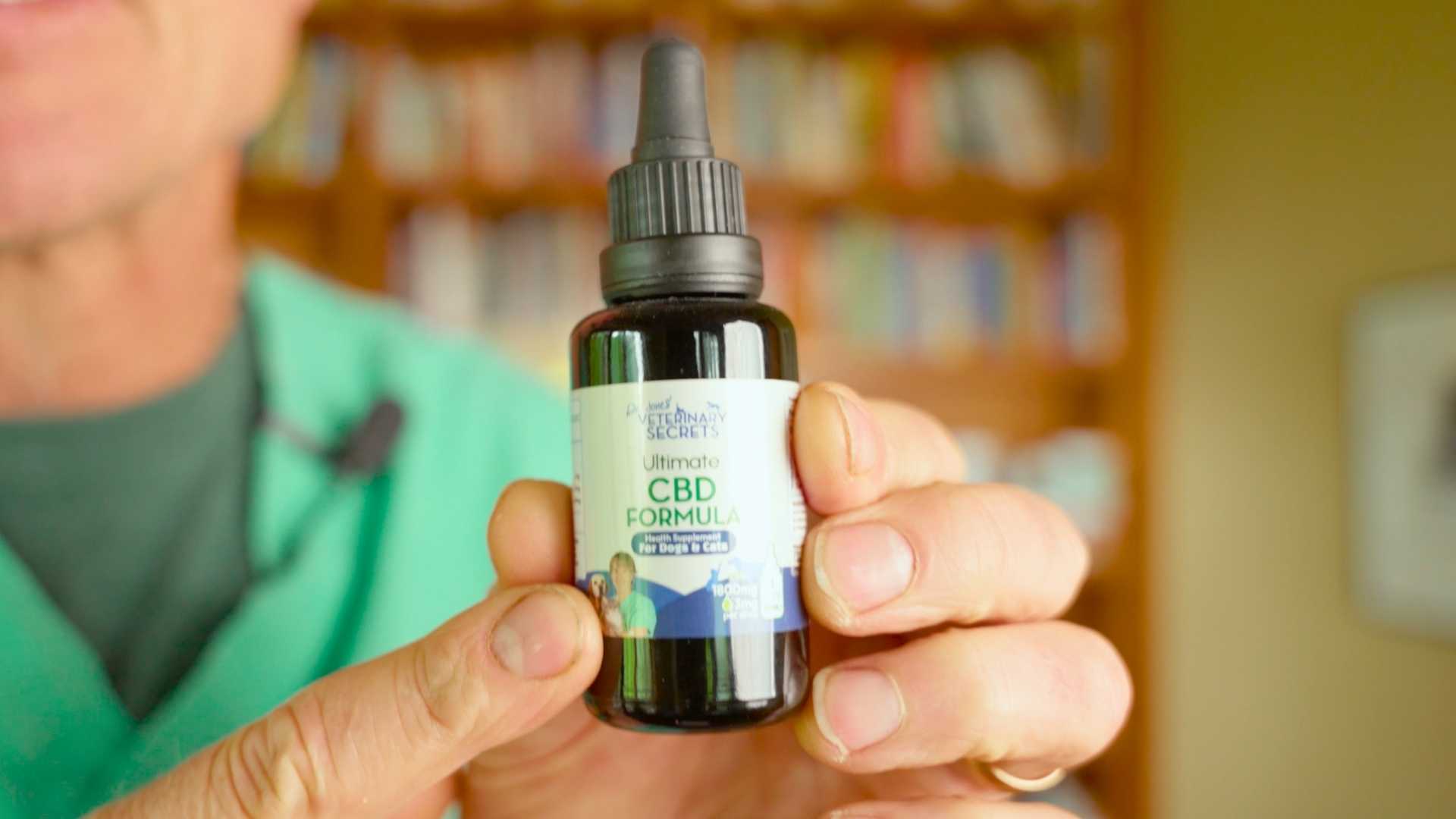
A full-spectrum formulation contains CBD along with other cannabis-derived compounds, potentially including additional cannabinoids and terpenes.
I’ve discussed the idea that these compounds may work together.
This is often called the entourage effect.
It’s one reason I’ve been particularly interested in full-spectrum formulations.
The theory is that combining several naturally occurring compounds may produce different effects compared with CBD alone.
However, that doesn’t establish that every full-spectrum formulation works better than CBD isolate.
How Much CBD Was Given to the Dogs?
The researchers used:
2 mg of CBD per kilogram of body weight, twice daily.
The CBD was initially given alongside the dogs’ full Apoquel dose.
Here’s the key study information:
| Study Detail | Finding |
|---|---|
| Publication date | October 2026 |
| Dogs studied | 14 |
| Condition | Atopic dermatitis with inadequate Apoquel control |
| CBD formulation | Full-spectrum cannabidiol |
| CBD amount | 2 mg/kg |
| Frequency | Twice daily |
| Initial treatment | CBD alongside full-dose Apoquel |
| Main result | Significant reduction in itching |
| Subsequent change | Apoquel dose reduced by 50% |
| Follow-up | Improved itch control maintained for 30 days |
Now, let’s look at what happened.
Did Adding CBD Reduce Itching?
Yes.
After CBD was added to the dogs’ existing Apoquel treatment, the researchers observed a significant reduction in itching compared with baseline.
That’s a meaningful finding.
Remember, these dogs weren’t receiving sufficient relief from Apoquel alone.
But with the additional full-spectrum CBD, their itching improved.
What Happened When the Apoquel Dose Was Cut in Half?
This is the part that really got my attention.
After observing improved itch control, the researchers reduced the Apoquel dose by 50%.
They continued giving the same amount of CBD.
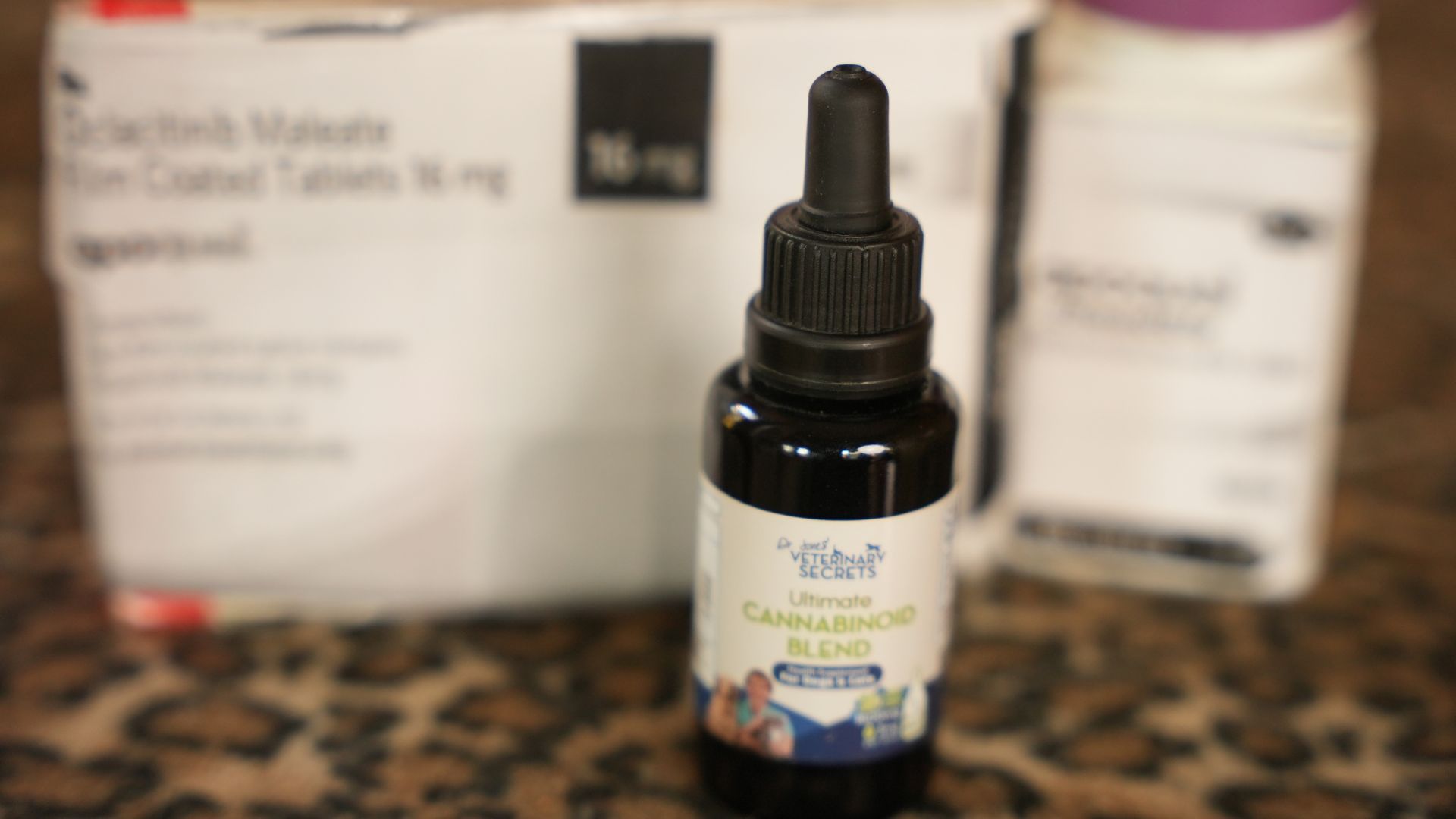
And during the following 30 days, the dogs maintained their improved itch control.
So these dogs were receiving half as much Apoquel while continuing to experience less itching than they had before CBD was added.
I think that’s quite promising.
Especially for dogs whose owners are concerned about long-term medication exposure.
Does This Mean CBD Can Replace Apoquel?
Not necessarily.
And I want to be clear about that.
The study involved only 14 dogs.
The results suggest that CBD may be a useful addition to Apoquel treatment.
But they don’t prove that CBD alone can control every dog’s allergies.
Nor do they establish that all dogs can safely reduce Apoquel by 50%.
If your dog is currently taking Apoquel, don’t change the prescribed dose based on this study without discussing it with your veterinarian.
The important finding is that CBD may offer an additional treatment option worth investigating.
What CBD Dose Was Used for Dogs With Allergies?
The new study used 2 mg/kg of full-spectrum CBD, twice daily.
Let me make that easier to understand.
A kilogram is approximately 2.2 pounds.
So a dog weighing 10 to 11 pounds is roughly 5 kilograms.
At 2 mg/kg, that works out to 10 mg of CBD per dose.
And the researchers gave that dose twice daily.
Example: CBD Amount for a 10 to 11 lb Dog
| Calculation | Amount |
|---|---|
| Dog’s weight | Approximately 5 kg |
| Study amount | 2 mg/kg |
| CBD per dose | 10 mg |
| Frequency | Twice daily |
| Total daily CBD | 20 mg |
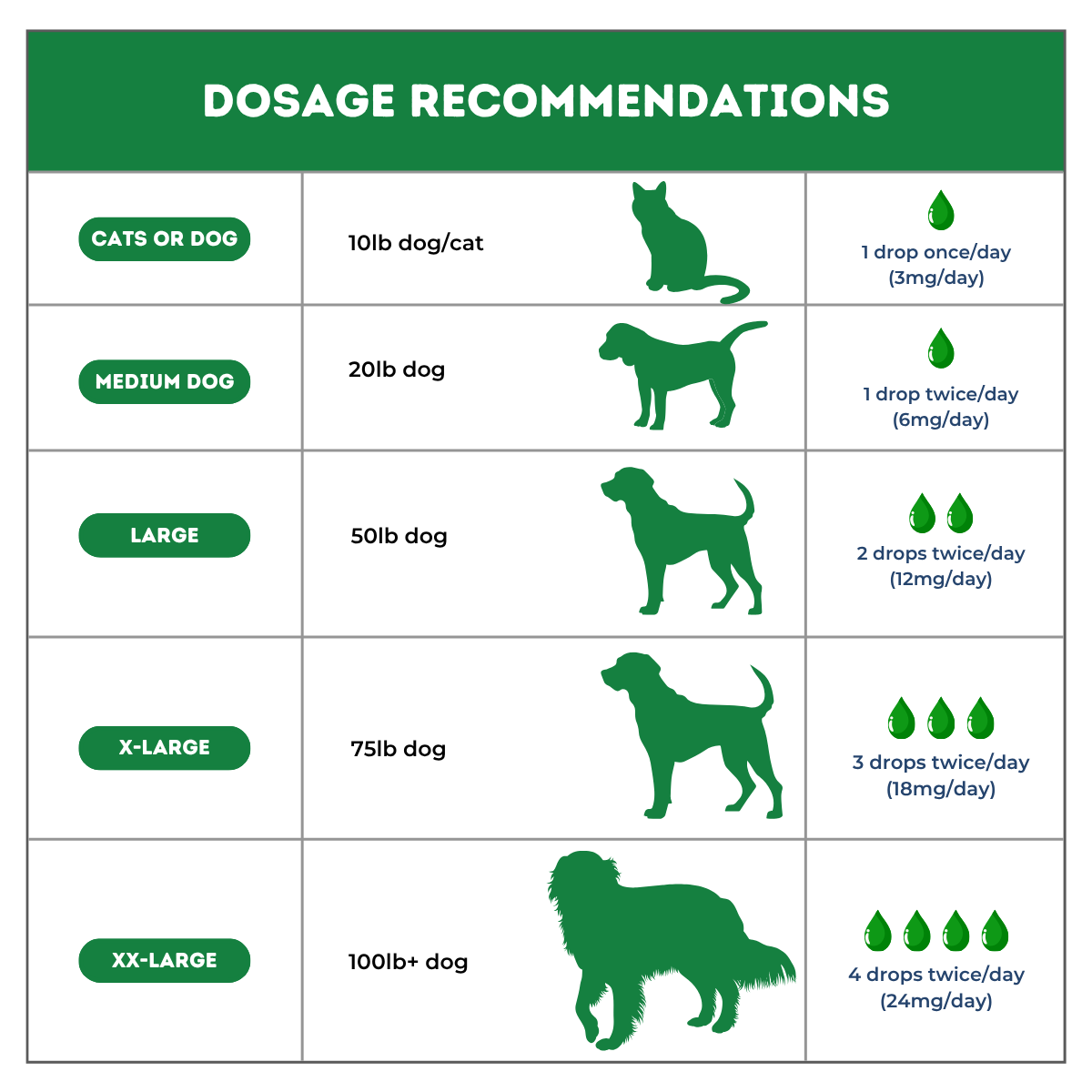
In my original example, I discussed a full-spectrum CBD product containing 3 mg per drop.
Using that concentration:
10 mg divided by 3 mg per drop equals approximately 3.3 drops per dose.
That’s a little over three drops, twice daily.
However, the number of drops depends entirely on the concentration and delivery system of the particular product.
Different CBD products can contain very different amounts per drop.
Is 2 mg/kg Twice Daily the Recommended CBD Dose for Every Allergic Dog?
No.
This was the amount used in the October 2026 study.
It shouldn’t automatically be treated as the ideal dose for every dog.
We still need more research involving different dog sizes, formulations, treatment schedules, and long-term use.
And because CBD may be combined with prescription medications, I would discuss the intended dose with your veterinarian before starting.
What Did the 2022 CBD Study Find in Dogs With Atopic Dermatitis?
The October 2026 study isn’t the only research investigating CBD for canine allergies.
A 2022 study published in Veterinary Dermatology evaluated 32 dogs with atopic dermatitis and found that owners reported reduced itching after CBD/CBDA treatment, although veterinarians did not observe corresponding improvements in the dogs’ skin lesions during the study period.
This is another study I find interesting.
How Was the 2022 Study Conducted?
The researchers included 32 dogs with atopy.
It was a placebo-controlled study.
Some dogs received a combination of:
-
CBD (cannabidiol)
-
CBDA (cannabidiolic acid)
Other dogs received a placebo.
The researchers then evaluated the dogs’ responses.
What Happened on Days 14 and 28?
At day 14 and day 28, pet parents reported that their dogs were itching less.
And that’s encouraging.
After all, one of our main goals with an allergic dog is to reduce discomfort.
But there was another finding.
Why Didn’t the Veterinarians See the Same Improvement in the Skin?
When the veterinarians examined the dogs, they didn’t observe marked improvement in the visible skin lesions.
Some dogs still had inflamed skin.
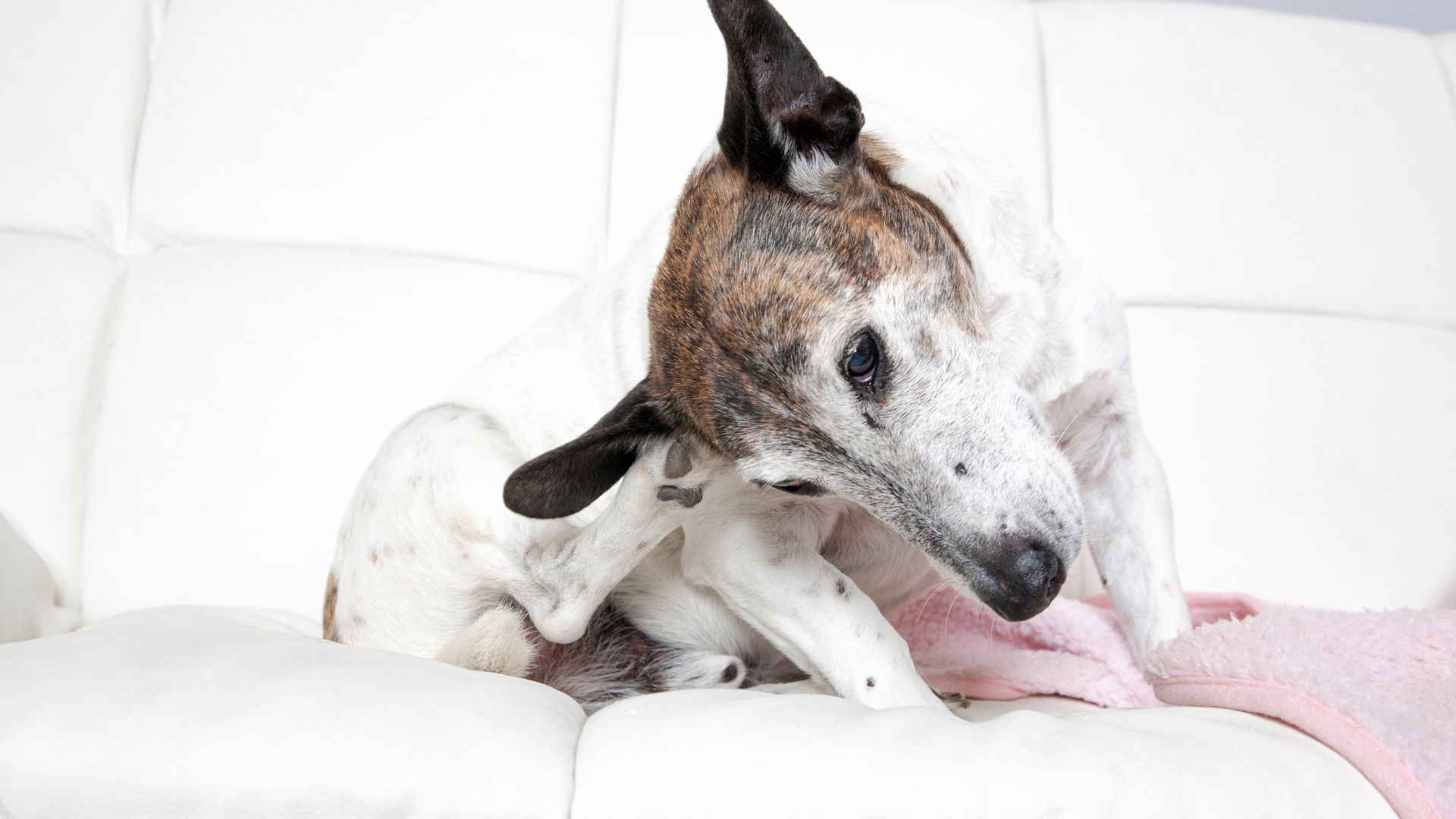
And signs associated with chronic allergic skin disease were still present.
Now, that doesn’t necessarily surprise me.
When a dog has had longstanding allergic skin disease, there can be significant inflammation in the skin itself.
Sometimes there are also secondary infections.
Even after the itching begins to improve, the damaged skin needs time to recover.
So I wouldn’t automatically expect the skin to look normal within two or four weeks.
But it’s an important limitation of the findings.
The owners reported reduced itching, while the clinicians did not observe comparable improvements in skin appearance over the same period.
Both observations matter.
What Did the 2025 Review Say About CBD for Dog Allergies?
A 2025 review examined the available studies involving CBD and canine atopic dermatitis.
The overall findings were encouraging, but the researchers identified several limitations.
The biggest issue?
Not every study used the same CBD formulation or dose.

Why Is CBD Research Difficult to Compare?
Different studies have used:
-
CBD isolates
-
CBD and CBDA combinations
-
Other modified cannabinoid formulations
-
Different doses
-
Different carrier oils
And that makes it difficult to compare results directly.
We aren’t necessarily testing the same treatment in every study.
Did the 2025 Review Find That CBD Reduces Itching?
In general, the studies reviewed reported some improvement in itching.
The degree of improvement varied.
Some dogs experienced modest relief.
Others appeared to improve more substantially.
And that’s encouraging.
But the review also emphasized the need for additional research.
We still need more standardized studies before recommending one particular formulation or treatment schedule for every dog with allergies.
What Is My Take on the Research?
When I look at the results collectively, I see a pattern worth paying attention to.
The 2022 study found owner-reported improvements in itching.
The 2025 review identified generally encouraging results across several studies.
And now the October 2026 study suggests that full-spectrum CBD may provide additional itch relief in dogs already taking Apoquel.
That’s interesting.
Not conclusive.
But certainly interesting.
For me, the newest study is particularly encouraging because it involved dogs whose itching wasn’t adequately controlled with Apoquel.
But I also want to see larger studies that confirm the findings.
Is Full-Spectrum CBD Better Than CBD Isolate for Dog Allergies?
Full-spectrum CBD contains additional cannabis-derived compounds beyond cannabidiol alone, while CBD isolate primarily contains CBD. Researchers are interested in whether the combination of compounds may influence treatment effects, but superiority for canine allergies has not been firmly established.
This is something I’ve been discussing for quite some time.
The cannabis plant contains multiple cannabinoids and other compounds.
And some of these may have different biological effects.
What Is the Entourage Effect?
The entourage effect is the idea that multiple cannabis-derived compounds may interact to produce different effects than an isolated compound.
For example, a full-spectrum product may contain:
-
CBD
-
Other cannabinoids
-
Terpenes
-
Additional naturally occurring plant compounds
I find this particularly interesting because the October 2026 study used full-spectrum cannabidiol.
And the results were encouraging.
Why Do I Prefer Full-Spectrum Cannabinoids?
My interest comes from the possibility that these compounds may work together.
And from the encouraging results being reported with certain full-spectrum formulations.
But there’s still a lot to learn.
A full-spectrum product isn’t automatically more effective or safer than every CBD isolate.
And product quality and composition matter.
For now, I would say full-spectrum CBD deserves further investigation as a possible option for allergic dogs.
CBD vs. Apoquel: Which Is Better for Dog Allergies?
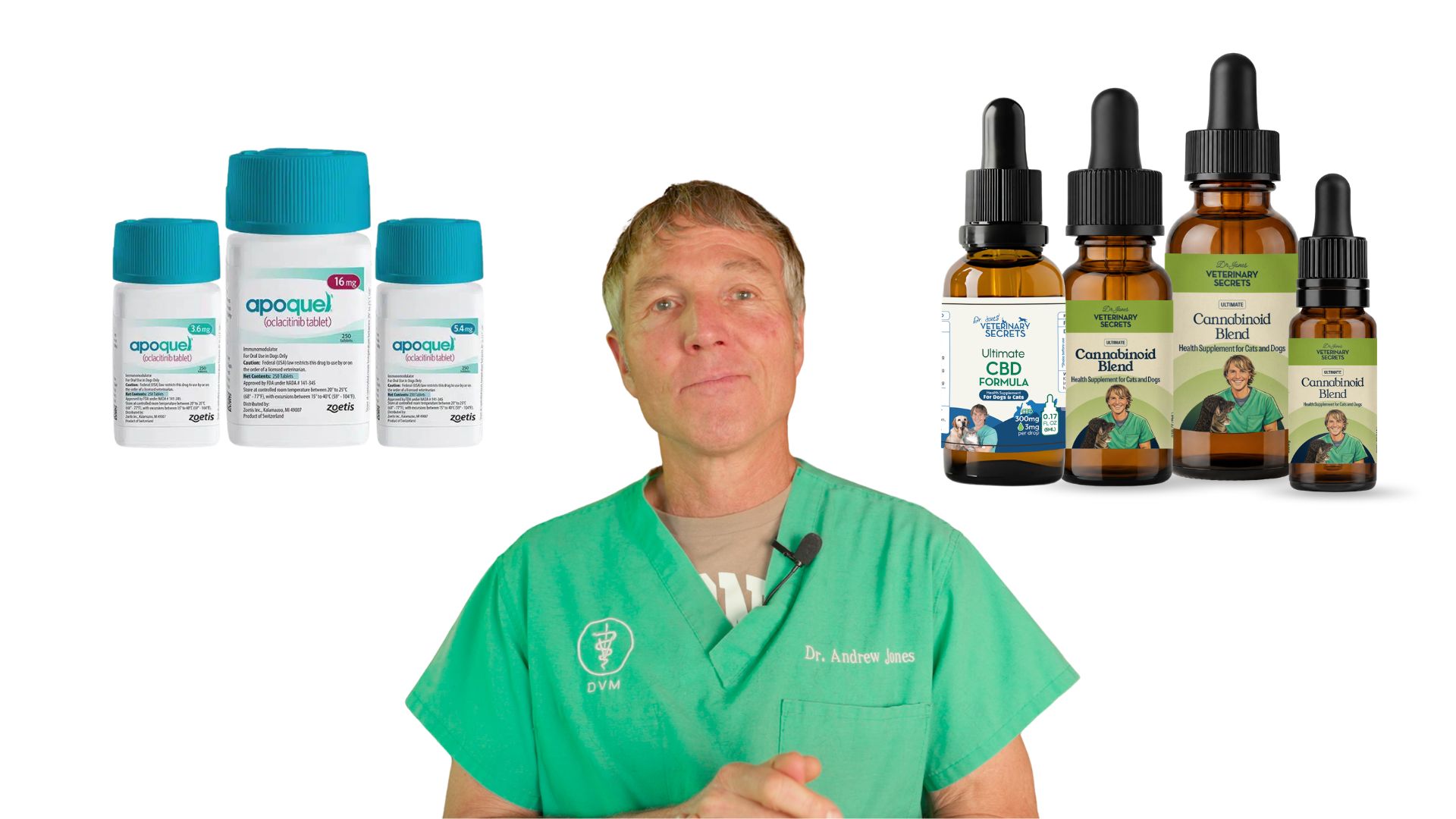
Apoquel has substantially more clinical evidence supporting its ability to control allergic itching in dogs. CBD has encouraging early research suggesting it may reduce itching and potentially provide additional support when used alongside Apoquel, but it has not been established as an equivalent replacement.
This is an important comparison.
Because many pet parents want to know which treatment offers the best balance between effectiveness and potential side effects.
Why Is Apoquel Effective?
Apoquel targets JAK-related signaling pathways involved in itching and inflammation.
For many dogs, that can result in substantial symptom relief.
And there’s extensive research supporting its effectiveness.
Why Am I Interested in CBD?
CBD may influence inflammatory and other biological processes relevant to allergic skin disease.
The emerging studies suggest it may help reduce itching.
And the October 2026 findings raise the possibility that some dogs may be able to maintain good symptom control with less Apoquel when CBD is added.
That’s the part I find particularly exciting.
Now, if I had a dog with severe allergies, I would certainly consider whether there were ways to reduce reliance on medication while still keeping the dog comfortable.
But the treatment needs to work.
And I wouldn’t want a dog suffering through uncontrolled itching simply because we’re trying to avoid Apoquel.
What Are the Potential Side Effects of Apoquel?
Apoquel has been researched extensively, and its potential adverse effects are described in prescribing information and follow-up safety studies.
Among the concerns I’ve discussed are:
-
Gastrointestinal problems
-
Changes related to immune function
-
Kidney-related concerns
-
Liver-related concerns
-
Neurological problems
-
Warnings involving neoplastic conditions
Not all of these concerns have the same level of evidence or are established as direct consequences of the medication.
But I believe pet parents should understand the safety information associated with long-term treatment.
Does Apoquel Cause Cancer?
This is a question many pet parents ask.
Apoquel’s labeling includes warnings regarding neoplastic conditions.
However, follow-up research involving large numbers of treated dogs has not established a clear increase in cancer incidence attributable to Apoquel.
Would I Personally Use Apoquel for My Allergic Dog?
I would be cautious.
I would first want to consider the other available options.
But I’ve treated enough severely allergic dogs to know that sometimes a medication like Apoquel makes a tremendous difference.
When a dog is constantly licking, scratching, and developing infections, relief matters.
If Apoquel is what finally makes that dog comfortable, I understand why their owner would choose it.
And that’s exactly why I’m interested in research suggesting CBD may be a useful addition.
If we can improve itching while potentially reducing the amount of Apoquel required, that’s worth investigating.
Could CBD Help a Dog That Is Still Itching on Apoquel?
The October 2026 study suggests that full-spectrum CBD may provide additional itch relief in dogs whose allergic symptoms remain inadequately controlled with Apoquel alone.
This is probably the most useful practical finding for pet parents.
Some dogs don’t respond as well to Apoquel as we’d like.
They may still be scratching.
Still licking their paws.
Still developing skin irritation.
And their owners are understandably frustrated.
What Would I Consider for a Dog in This Situation?
First, I would want to understand how well the dog’s allergies are being controlled.
Is the dog still itching frequently?
Are ear or skin infections recurring?
Are they continuing to lick their paws or groin?
And is the current treatment providing enough relief?
If the answer is no, I would discuss whether an additional treatment might be appropriate.
The new research suggests CBD deserves consideration.
Would I Add CBD Without Stopping Apoquel?
The October 2026 study initially added CBD while maintaining the dogs’ full Apoquel dose.
It didn’t immediately replace Apoquel.
Only after the itching improved did the researchers reduce the Apoquel dose.
That’s a meaningful distinction.
It suggests a potential role for CBD as an additional treatment, rather than immediately using it as a substitute.
Click To Get A Free Copy of My E-Book!

Final Thoughts: Could CBD Be a Better Option for Dogs Taking Apoquel?

I think this new October 2026 study is genuinely encouraging.
Here we have 14 dogs with allergic skin disease.
They’re receiving Apoquel.
But they’re still itching.
The researchers add full-spectrum CBD at 2 mg/kg twice daily.
And what happens?
Their itching significantly decreases.
Then the Apoquel dose is reduced by half.
And over the following 30 days, the dogs maintain their improved itch control.
That’s the part that really interests me.
Because I’ve treated many dogs with chronic allergies.
And I know how difficult it can be to keep them comfortable.
The constant scratching.
The licking.
The recurring ear infections.
The inflamed skin.
It’s frustrating for pet parents, and it’s certainly uncomfortable for the dog.
So if we have an additional treatment that may help some dogs obtain better relief, I want to know about it.
And if that treatment may eventually allow us to reduce the amount of conventional medication needed, even better.
But I also think we need to be sensible.
Fourteen dogs is a small study.
The 2022 study involving 32 dogs was encouraging, but the owners’ improvements in itch scores weren’t matched by visible changes in skin lesions.
And the 2025 review pointed out that researchers have used different CBD formulations, doses, and carrier oils.
So there’s still work to be done.
Can CBD help allergic dogs?
The early research suggests it may help some of them.
Can it reduce the amount of Apoquel a dog needs?
The October 2026 study suggests that may be possible in certain cases.
Can we completely replace Apoquel with CBD?
We don’t have enough evidence to say that.
And I wouldn’t want you to stop a medication that’s keeping your dog comfortable without a proper plan.
I’m also interested in the generally encouraging safety findings associated with CBD.
But remember, some dogs receiving long-term CBD can develop elevated ALP levels.
That’s why I think periodic blood work is such a sensible precaution.
Whether your dog is receiving Apoquel, CBD, or another long-term treatment, let’s make sure we’re monitoring their overall health.
For me, the goal is simple.
I want our dogs to be comfortable.
I want to reduce their itching.
And wherever possible, I’d like to accomplish that without relying on more medication than they actually need.
This new research gives us another reason to investigate full-spectrum CBD.
And I’ll certainly be following the research as it develops.
P.S. If your dog is taking Apoquel but still struggling with itching, this new study is worth discussing with your veterinarian. The researchers added full-spectrum CBD at 2 mg/kg twice daily, and the dogs experienced significantly less itching. They were then able to reduce Apoquel by 50% while maintaining improved itch control for the next 30 days. That’s encouraging, although we still need larger studies before applying this approach to every allergic dog.
P.P.S. I’m particularly interested in full-spectrum CBD because it contains more than just cannabidiol. There are other cannabinoids and terpenes that may contribute additional biological effects. Researchers are still working out how these compounds interact, but I think it’s an important area to follow, especially for dogs with chronic allergic skin disease.
P.P.P.S. One last thing. Whether your dog is taking Apoquel, CBD, or another long-term medication, I encourage you to arrange regular veterinary checkups and blood work. Some dogs taking CBD can develop an increase in the enzyme ALP, even without obvious signs of liver problems. I like having at least a yearly baseline blood panel so we can monitor how our pets are doing. A simple precaution, and one I think is well worth taking.


CBD for Dog Allergies: What Do the Studies Show?
Here’s a comparison of the three important pieces of research.
| Research | Dogs Studied | Treatment | Main Findings |
|---|---|---|---|
| 2022 Veterinary Dermatology study | 32 | CBD/CBDA vs. placebo | Owners reported reduced itching at days 14 and 28; visible skin lesions did not show comparable improvement |
| 2025 review | Multiple studies | Different CBD formulations and doses | Generally encouraging itch reduction, but substantial variation between studies |
| October 2026 study | 14 | Full-spectrum CBD added to Apoquel | Significant itch reduction; improved control maintained for 30 days after Apoquel dose was halved |