Diatomaceous Earth for Dogs and Cats: 5 Potential Benefits, Uses, Dosage, and Safety

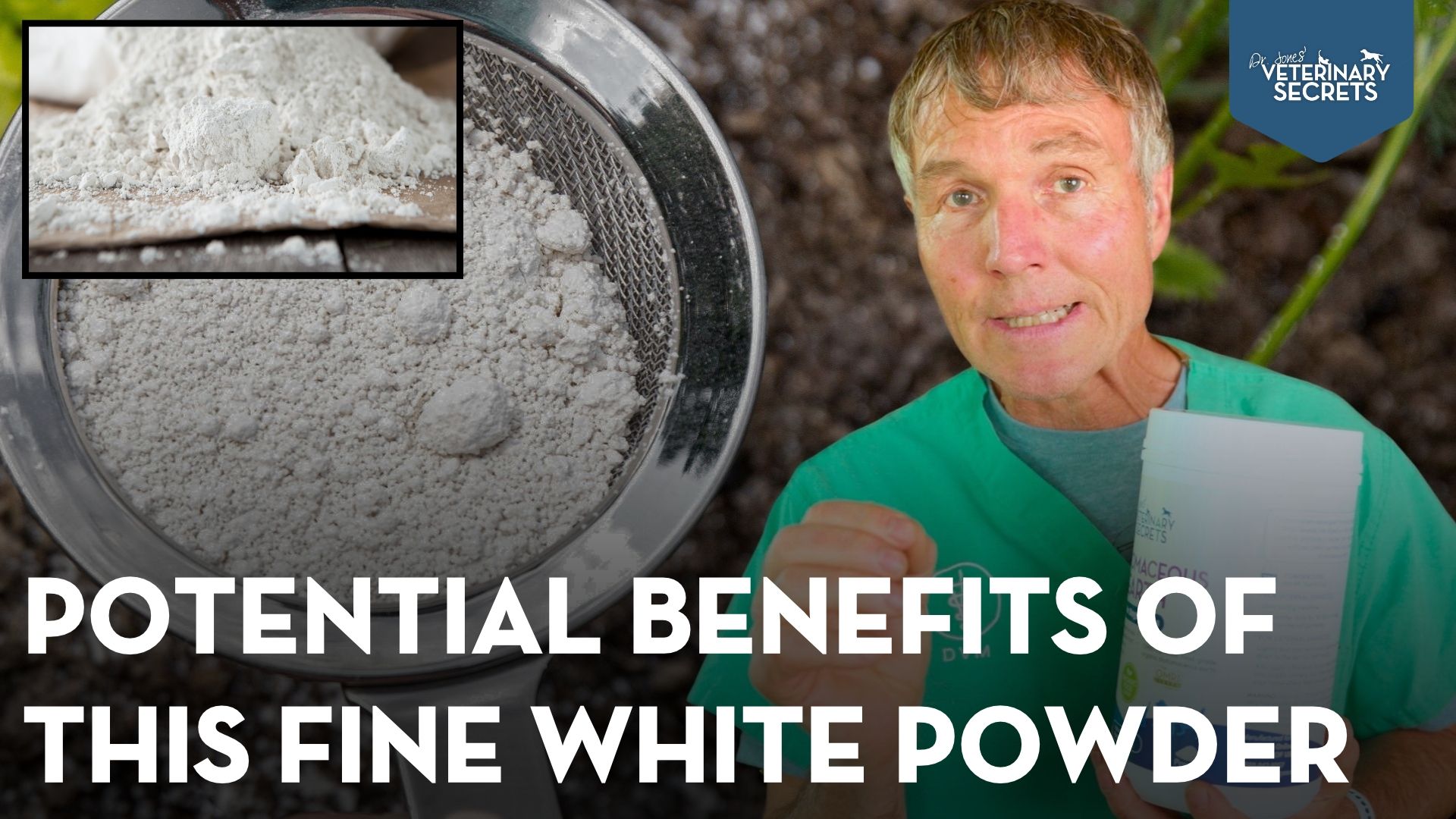
Is Diatomaceous Earth Good for Dogs and Cats?
Food-grade diatomaceous earth (DE) is a naturally occurring silica-rich powder that may be useful for flea control and other household pest-management purposes. It has also been used as a natural supplement for dogs and cats, particularly for intestinal parasites, silica support, and digestive health. However, research supporting many of its internal benefits in pets is still limited.
I’ve been using diatomaceous earth for years.
In my garden, I’ve used it to help stop slugs from eating my lettuce.
In my home, I’ve used it to help control fleas.
And I’ve also used food-grade diatomaceous earth with my dogs and cats as part of a natural approach to intestinal parasites.
It’s a relatively inexpensive, naturally occurring product with quite a few potential uses.
But there’s something I want you to understand.
Not all diatomaceous earth is suitable for pets, and how you use it matters.
For any use involving your pet’s food, you need to make sure you’re purchasing the appropriate food-grade product.
And when using diatomaceous earth externally, it’s particularly important to avoid breathing in the fine powder.
Today, I want to discuss five areas where diatomaceous earth may offer benefits for dogs and cats:
-
Silica support for bones, joints, and connective tissue
-
Natural flea control
-
Potential support for binding certain unwanted substances
-
Natural intestinal parasite management
-
Possible immune and general health support
I’ll also share the amounts I’ve discussed for internal use, how I’ve applied it externally, and a simple topical mixture containing diatomaceous earth and coconut oil.
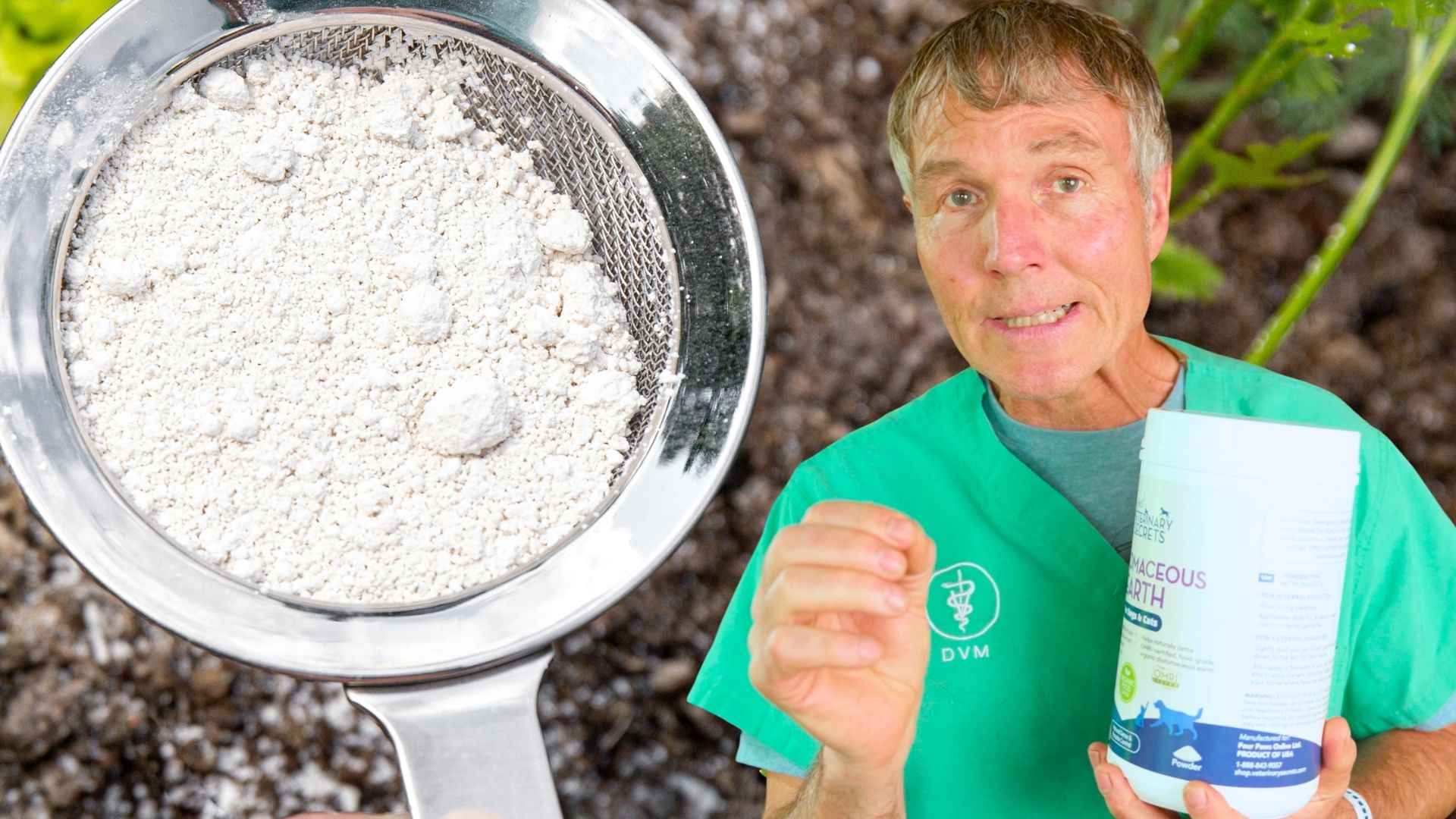
We now have our own food-grade product:
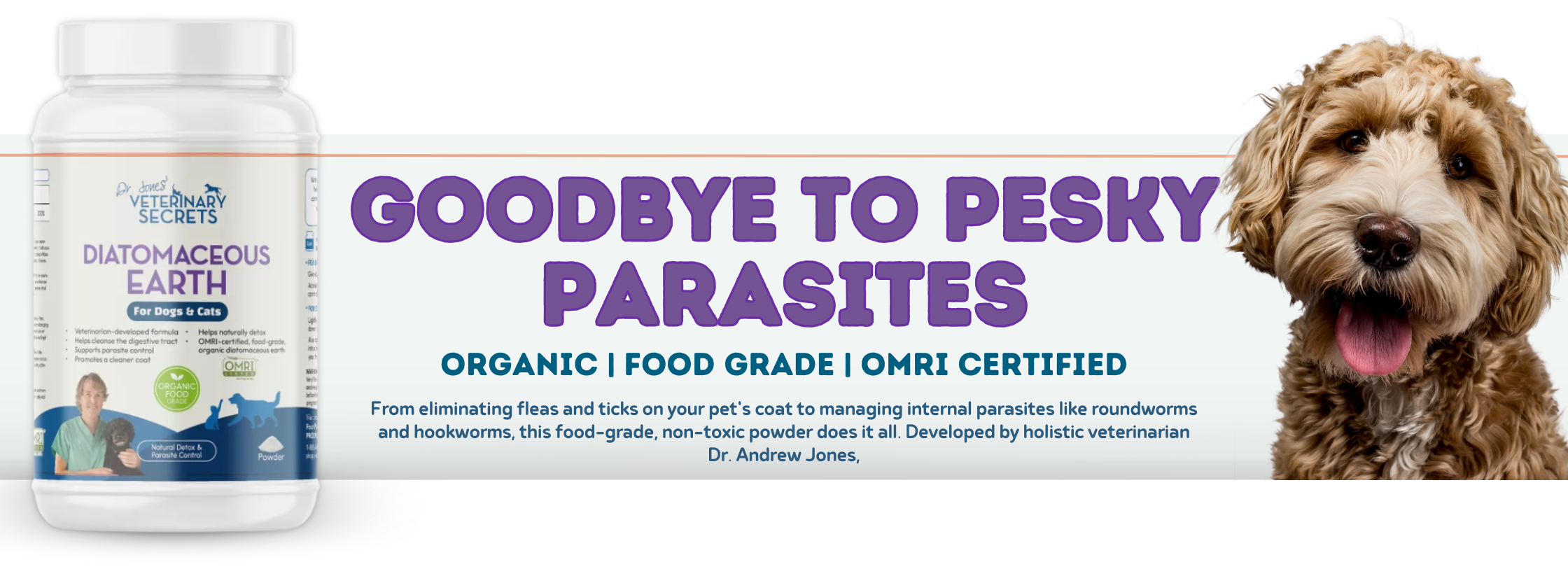
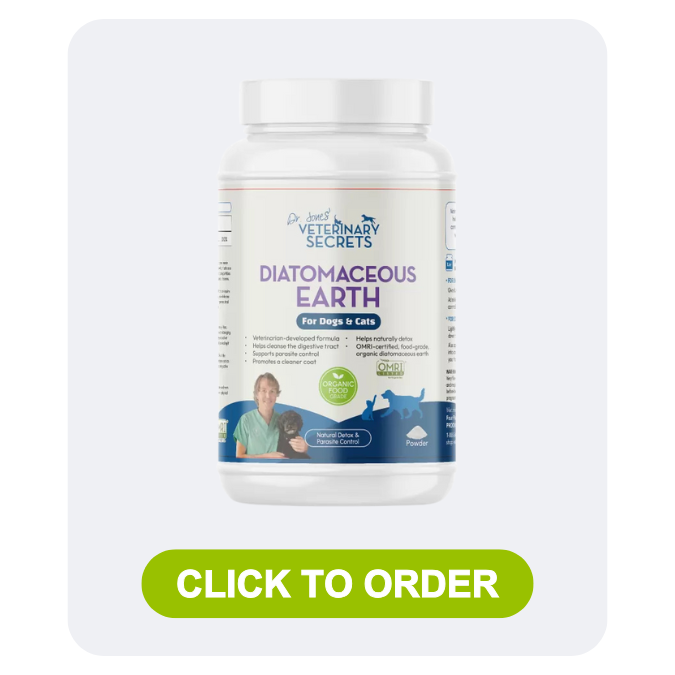
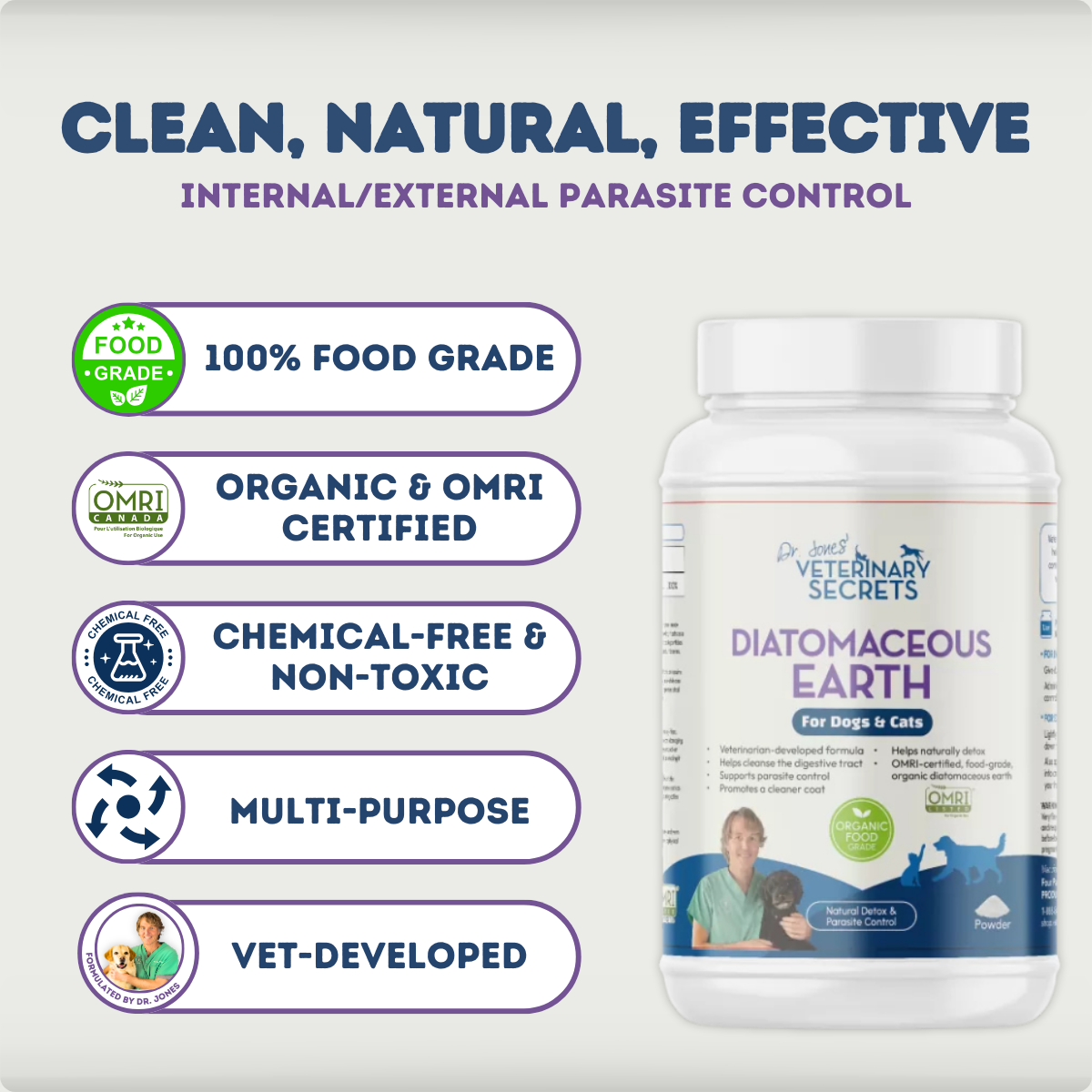
Dr. Jones’ Diatomaceous Earth Powder for Pets
What Is Diatomaceous Earth?
Diatomaceous earth is a naturally formed sedimentary material made from the fossilized remains of microscopic algae called diatoms. These remains are rich in silica and form a fine, white, chalk-like powder.
Diatoms are microscopic organisms that have existed for millions of years.
Over time, their silica-rich remains accumulated and formed deposits within the earth.
These deposits can be processed into the powder we know as diatomaceous earth.
And when you look at this powder under a microscope, something interesting becomes apparent.
The tiny particles have irregular, sharp-looking structures.
They can resemble little fragments of broken glass.
That’s part of what makes diatomaceous earth useful for controlling certain insects.
What Is Diatomaceous Earth Made Of?
Food-grade diatomaceous earth is primarily composed of silica.

The material I’ve discussed contains approximately 85% silica.
Silica is a compound containing silicon, an element involved in several biological processes.
Silicon has attracted research interest because of its relationship with:
-
Bone metabolism
-
Connective tissue
-
Cartilage
-
Tendons
-
Blood vessels
This is one reason I’ve been interested in diatomaceous earth beyond its use for fleas and other pests.
How Does Diatomaceous Earth Work Against Insects?
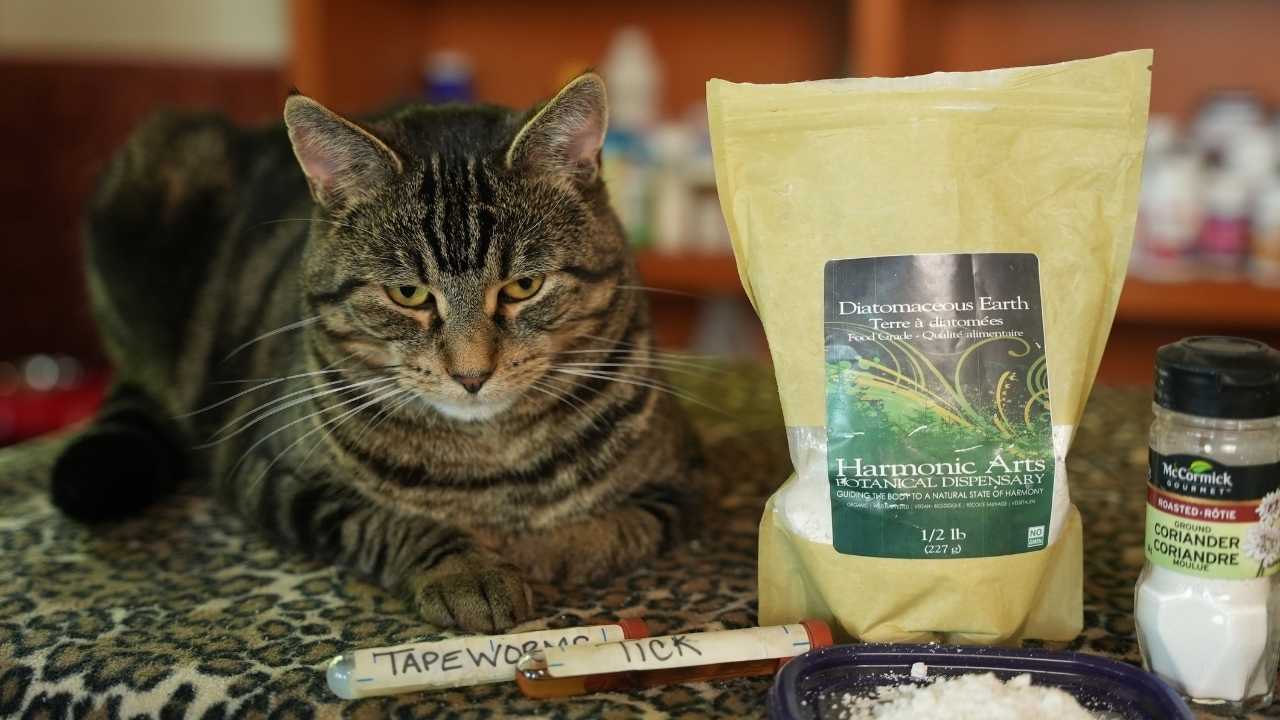
Diatomaceous earth acts physically rather than functioning like a conventional chemical insecticide.
The fine particles can damage or disrupt the protective outer coating of susceptible insects.
This contributes to moisture loss and dehydration.
It’s one reason diatomaceous earth has long been used for pest management.
And it helps explain why people have used it in gardens, homes, and around animals.
However, effectiveness depends on the pest, application conditions, and where the powder is used.
Is Diatomaceous Earth Safe for Dogs and Cats?
Food-grade diatomaceous earth is the type considered for applications involving food, but that does not make every use automatically safe. The fine powder can irritate the eyes and respiratory tract, and its safety depends on how it is applied and whether it is inhaled or ingested.
This is where I want pet parents to be particularly careful.
What Is the Difference Between Food-Grade and Other Diatomaceous Earth?
Not all diatomaceous earth products are intended for the same purpose.
If you’re considering diatomaceous earth for use involving your pet’s food, choose a product specifically labeled food-grade.
Products intended for industrial or filtration applications should not be substituted.
The source and processing of the material matter.
Why Should You Avoid Breathing in Diatomaceous Earth?
Because diatomaceous earth is a very fine powder, it can become airborne during application.
And inhaling dust can irritate the respiratory system.
When using it around your pet:
-
Avoid creating airborne clouds of powder.
-
Keep it away from the nose, mouth, and eyes.
-
Do not let your pet inhale the dust.
-
Avoid applying it around animals with respiratory problems unless your veterinarian approves.
-
Use small amounts rather than scattering excessive powder.
I wouldn’t want a dog or cat breathing in something we’re trying to use to support their health.
Is Diatomaceous Earth Completely Harmless?
No substance should be considered harmless in every circumstance.
Food-grade DE has different intended uses from industrial-grade material, but ingestion and inhalation are separate safety questions.
For internal use, I would discuss the product and amount with your veterinarian, particularly for cats, puppies, kittens, or pets with existing medical problems.
What Are the 5 Potential Benefits of Diatomaceous Earth for Pets?
I’ve used diatomaceous earth for several different purposes over the years.
Some uses, particularly physical pest control, have a clearer explanation.
Others, such as detoxification and immune support, are still areas where the research is limited.
Here’s how I look at the five potential benefits.
1. Diatomaceous Earth as a Natural Source of Silica for Bones and Joints
One potential nutritional benefit of food-grade diatomaceous earth is its silica content. Silicon has been studied for its relationship with bone health, connective tissue, and normal skeletal development.
This is something I’ve found particularly interesting for dogs.
Especially dogs experiencing joint or connective tissue problems.
How Does Silica Support Bone and Connective Tissue?
Silicon is involved in biological processes associated with connective tissue and bone metabolism.
Researchers have examined its relationship with:
-
Bone mineral density
-
Cartilage
-
Tendons
-
Connective tissue
-
Normal bone formation
The fact that diatomaceous earth contains a high proportion of silica makes this an interesting area to investigate.
What Does the Research Say About Silicon and Bone Health?
A 2007 study published in the Journal of Nutrition, Health & Aging discussed the relationship between dietary silicon and bone health.
The research highlighted the potential importance of silicon for bone and connective tissue.
Other research over the preceding decades has also suggested a positive association between dietary silicon intake and bone mineral density.
That’s encouraging.
However, research involving dietary silicon doesn’t automatically establish that feeding diatomaceous earth to dogs produces the same benefits.
Can Diatomaceous Earth Help Dogs With ACL or Cruciate Ligament Injuries?
This is one area I’ve personally been interested in.
The cranial cruciate ligament is an important structure within a dog’s knee.
And because silicon has been investigated for its relationship with connective tissue, I’ve wondered whether silica-rich supplements could offer nutritional support for dogs recovering from ligament injuries.
I see potential here, but there is not established clinical evidence that diatomaceous earth repairs torn cruciate ligaments in dogs.
For a dog with an injured ACL or cranial cruciate ligament, the main priority remains obtaining an appropriate veterinary diagnosis and treatment plan.
Diatomaceous earth should not be relied upon to repair the injury.
2. Diatomaceous Earth for Natural Flea Control
Diatomaceous earth may help control fleas through its physical drying action on susceptible insects. I’ve used it around my home as part of a natural flea-control approach.
This is one of the practical uses that originally got me interested in the product.
If you’ve ever dealt with fleas in your home, you know how frustrating they can be.
And sometimes the problem goes beyond the fleas you can see on your dog or cat.
They may also be present in the animal’s bedding and surrounding environment.
How Does Diatomaceous Earth Kill Fleas?
Diatomaceous earth works by interacting with the insect’s protective outer surface.
The resulting moisture loss can cause the insect to dry out.
This is a physical mechanism rather than a conventional pesticide effect.
However, flea control involves different stages of the flea life cycle, so DE alone may not eliminate an infestation.
How Have I Used Diatomaceous Earth for Fleas?
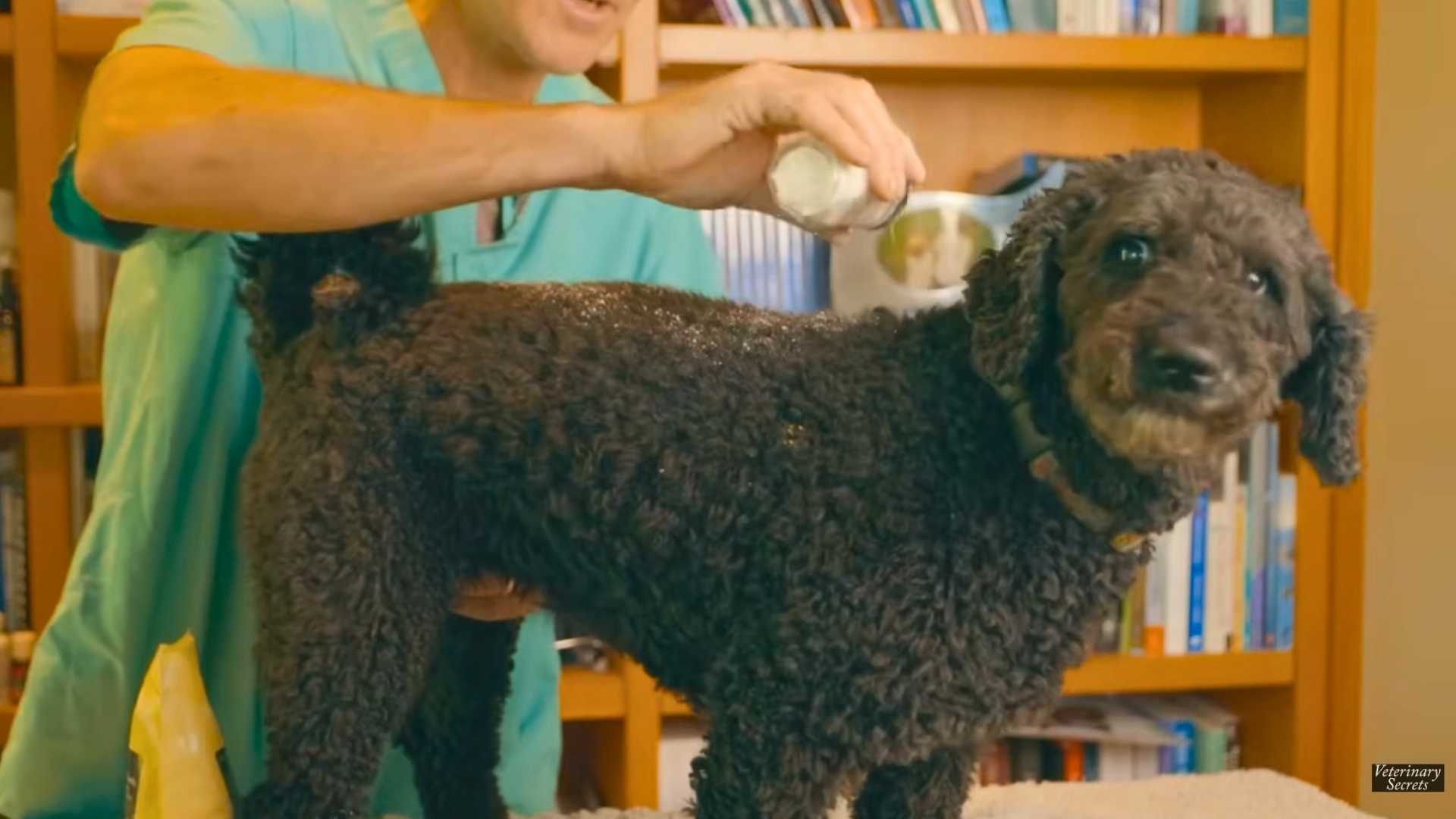
My traditional approach has involved using a flea comb first.
A flea comb helps physically remove fleas from the coat.
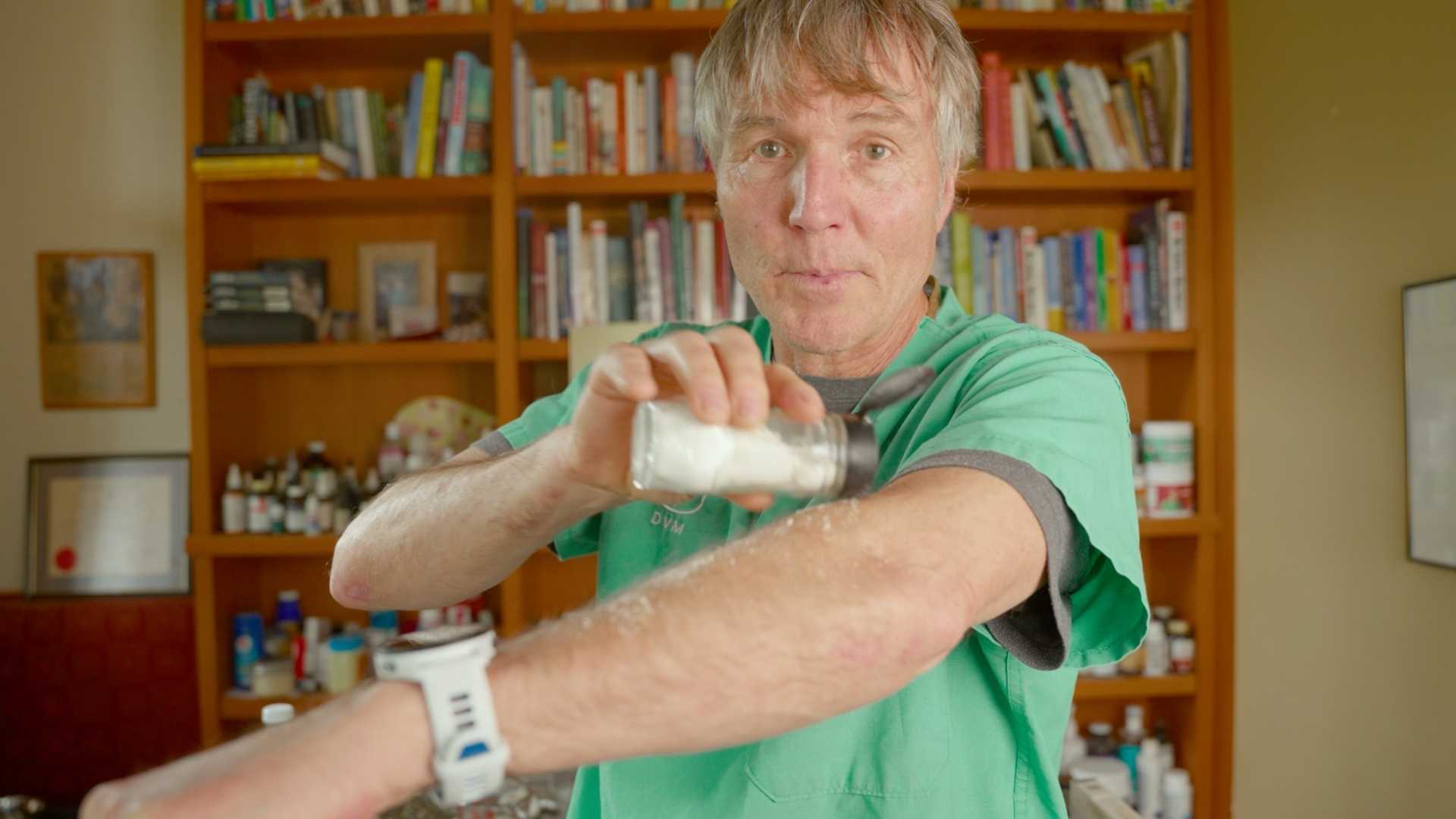
I’ve also discussed dusting small amounts of diatomaceous earth onto the coat and distributing it through the fur.
The areas I’ve described include:
-
The back
-
The legs
-
The underside of the body
In cases of heavy flea infestation, I’ve previously discussed repeating topical applications daily.
But because repeated dusting increases the opportunity for your pet to inhale the powder, I would be cautious about putting loose DE directly onto an animal.
For cats in particular, I would prefer discussing safer flea-control options with a veterinarian before applying it.
Can You Use Diatomaceous Earth Around the House?
I’ve also used diatomaceous earth in household areas where pests may hide.
These include:
-
Cracks
-
Crevices
-
Areas around pet bedding
-
Certain carpeting areas
The goal is to treat places where fleas may be present.
If using it this way, apply it sparingly, avoid airborne dust, and keep your pets away from treated areas where they could inhale the powder.
Is Diatomaceous Earth Better Than Conventional Flea Treatments?
I consider diatomaceous earth a possible supporting tool rather than a complete replacement for effective flea-control treatment.
Its effectiveness can vary.
And it may not be sufficient for a significant infestation.
The important thing is to control the fleas while keeping your pet safe.
3. Diatomaceous Earth for Detoxification and Heavy Metal Support
Diatomaceous earth has been discussed for its potential ability to bind certain substances, including aluminum, within the gastrointestinal tract. However, its effectiveness as an internal detoxification treatment for dogs and cats has not been established.
This is another area that’s caught my attention.
I’ve been interested in ways to help animals exposed to unwanted substances.
Especially when we’re dealing with potential contaminants in food.
Can Diatomaceous Earth Bind Heavy Metals?
Silica-based materials have been investigated for their interactions with certain metals.
The research discussed in the original material included a study associated with the American Journal of Clinical Nutrition that examined silica and aluminum.
The findings described an affinity for aluminum and potential effects on its availability within the gastrointestinal tract.
This is interesting because it suggests a possible mechanism involving certain substances in the digestive system.
However, it doesn’t establish that ordinary food-grade diatomaceous earth can safely remove heavy metals from a pet’s blood or tissues.
Diatomaceous earth Detox Benefits:
Diatomaceous earth has also been promoted for possible effects involving:
-
Digestive tract cleansing
-
Reducing odors
-
Reducing gas
-
Binding certain substances
-
General digestive support
-
Liver support
These are proposed or traditionally discussed uses.
We don’t yet have strong veterinary clinical evidence showing that ingesting DE reliably provides these benefits.
For me, it’s an interesting area for further research, not a reason to replace established medical treatment.
4. Diatomaceous Earth for Intestinal Parasites and Worms

Diatomaceous earth has been used as a natural approach to intestinal parasite management, including concerns about roundworms and tapeworms. However, there is insufficient evidence that feeding DE reliably eliminates these worms in dogs and cats.
This is one of the reasons I originally began using the product with pets.
I’ve long been interested in natural alternatives for parasite control.
And diatomaceous earth is frequently discussed for this purpose.
Can Diatomaceous Earth Kill Roundworms and Tapeworms?
Diatomaceous earth has traditionally been used by some pet owners in parasite-cleansing programs.
I’ve discussed it in the context of roundworms and tapeworms.
But there’s an important difference between a traditional use and a treatment that’s been proven to eliminate an infection.
At present, we don’t have convincing clinical evidence that feeding DE reliably treats roundworm or tapeworm infections in dogs and cats.
A pet with confirmed worms needs an effective treatment chosen for the parasite involved.
What Does the Poultry Research Say?
A study discussed in the Oxford Journal of Poultry Science investigated the use of diatomaceous earth in egg-laying hens.
Two breeds of commercial egg-laying hens were included.
The findings discussed improvements in:
-
Egg production
-
Egg quality
-
Certain outcomes associated with parasite management
Those observations helped generate interest in diatomaceous earth as a potential natural parasite-control option.
However, hens are not dogs or cats.
And research in poultry doesn’t prove that DE can successfully eliminate intestinal parasites in pets.
What About a Spring or Fall Parasite Cleanse?
I’ve previously discussed using diatomaceous earth in seasonal parasite-cleansing routines, such as during spring and fall.
But if you’re concerned about worms, I would first want to know whether your pet actually has an infection.
A veterinary fecal examination can help identify intestinal parasites.
And that makes it possible to choose an appropriate treatment rather than relying on a general cleanse.
5. Diatomaceous Earth for Immune Support
Silicon has been investigated for its role in biological functions, including immune-related processes. However, there is limited evidence that oral diatomaceous earth improves immune function or treats infections in dogs and cats.

This is the fifth potential benefit that has interested me.
Silica-related compounds have been discussed in connection with normal physiological functions.
And silicon has been studied for its possible importance in immune responses.
How Is Silica Related to the Immune System?
The immune system relies on many nutrients and biological processes to function normally.
Silicon has been investigated for its role in the body’s responses to different stimuli.
Some discussions have suggested a relationship between silica and antibody production.
However, we should distinguish the biological role of silicon from the effects of consuming diatomaceous earth.
A silica-rich supplement isn’t automatically proven to strengthen the immune system.
How Much Diatomaceous Earth Should You Give a Dog?
I’ve previously discussed size-based amounts for the internal use of food-grade diatomaceous earth.
Here are those amounts, preserved from my original guidance.
| Dog Size | Amount Discussed |
|---|---|
| Small dogs | ½ teaspoon |
| Dogs under 50 lbs | 1 teaspoon |
| Dogs 50 to 100 lbs | 1 tablespoon |
| Dogs over 100 lbs | 2 tablespoons |
These are historical amounts I’ve discussed, not established therapeutic doses. The small-dog category overlaps with the under-50-pound category, and no dosing frequency was specified.
There is no validated DE dose for treating intestinal worms, poisoning, or autoimmune and immune problems in pets.
How Much Diatomaceous Earth Should You Give a Cat?
The original dosing guide doesn’t provide a separate cat-specific amount.
Because cats have different physiological needs and can be particularly sensitive to dust exposure, I wouldn’t simply adapt a dog dose.
How Do You Mix Diatomaceous Earth With Pet Food?
One of the methods I’ve previously described is mixing food-grade diatomaceous earth into wet food.
I’ve also discussed adding water to dry food before mixing in the powder.
The goal is to distribute it evenly and reduce loose dust.
Mixing DE With Wet Food
The method I’ve described is:
-
Add the intended amount of food-grade DE to the food.
-
Mix thoroughly.
-
Make sure there are no loose pockets of dry powder before serving.
Mixing DE With Dry Food
The method I’ve previously discussed is:
-
Add a small amount of water to the kibble.
-
Mix in the food-grade DE.
-
Stir until the powder is evenly distributed.
The important point is to avoid loose airborne powder.
These are mixing methods, not recommendations to administer DE for a medical condition without veterinary advice.
How Do You Use Diatomaceous Earth Externally?
Diatomaceous earth has been used for external pest control.
I’ve discussed its use around pet bedding and household hiding places where fleas may be present.

Where Can You Apply Diatomaceous Earth?
Areas I’ve discussed include:
-
Cracks and crevices
-
Selected areas around pet bedding
-
Carpeted areas where fleas may hide
When using it, avoid generating dust and make sure pets cannot inhale it.
Can You Make a Diatomaceous Earth Coat Mask for Dogs?
I’ve also discussed a topical mixture intended to help freshen the coat.
The original recipe combines diatomaceous earth with coconut oil, water, and a small amount of essential oil.
Diatomaceous Earth and Coconut Oil Coat Mask
| Ingredient | Amount |
|---|---|
| Diatomaceous earth | 1 to 2 tablespoons |
| Coconut oil | 2 tablespoons |
| Lavender essential oil | A few drops |
| Water | Enough to create a spreadable mixture |
The original application method was to distribute the mixture over the coat, leave it for approximately 10 minutes, and rinse thoroughly.
Food-Grade vs. Other Diatomaceous Earth: Which Is Best for Pets?
If you’re choosing a diatomaceous earth product, one of the first things I would check is its grade and intended use.
| Type | Intended Purpose | My Recommendation |
|---|---|---|
| Food-grade diatomaceous earth | Food-related applications, depending on product labeling | The appropriate category to investigate for pet-related uses |
| Industrial or filtration-grade DE | Industrial and filtration applications | Do not use as a substitute for food-grade DE |
| Unidentified bulk powder | Intended use unclear | Avoid using on or around pets until the product is identified |
I also encourage checking the manufacturer’s instructions.
The word natural doesn’t mean that every product or application is automatically safe.
What Makes Dr. Jones’ Diatomaceous Earth Powder Different?
We now have our own food-grade diatomaceous earth product.
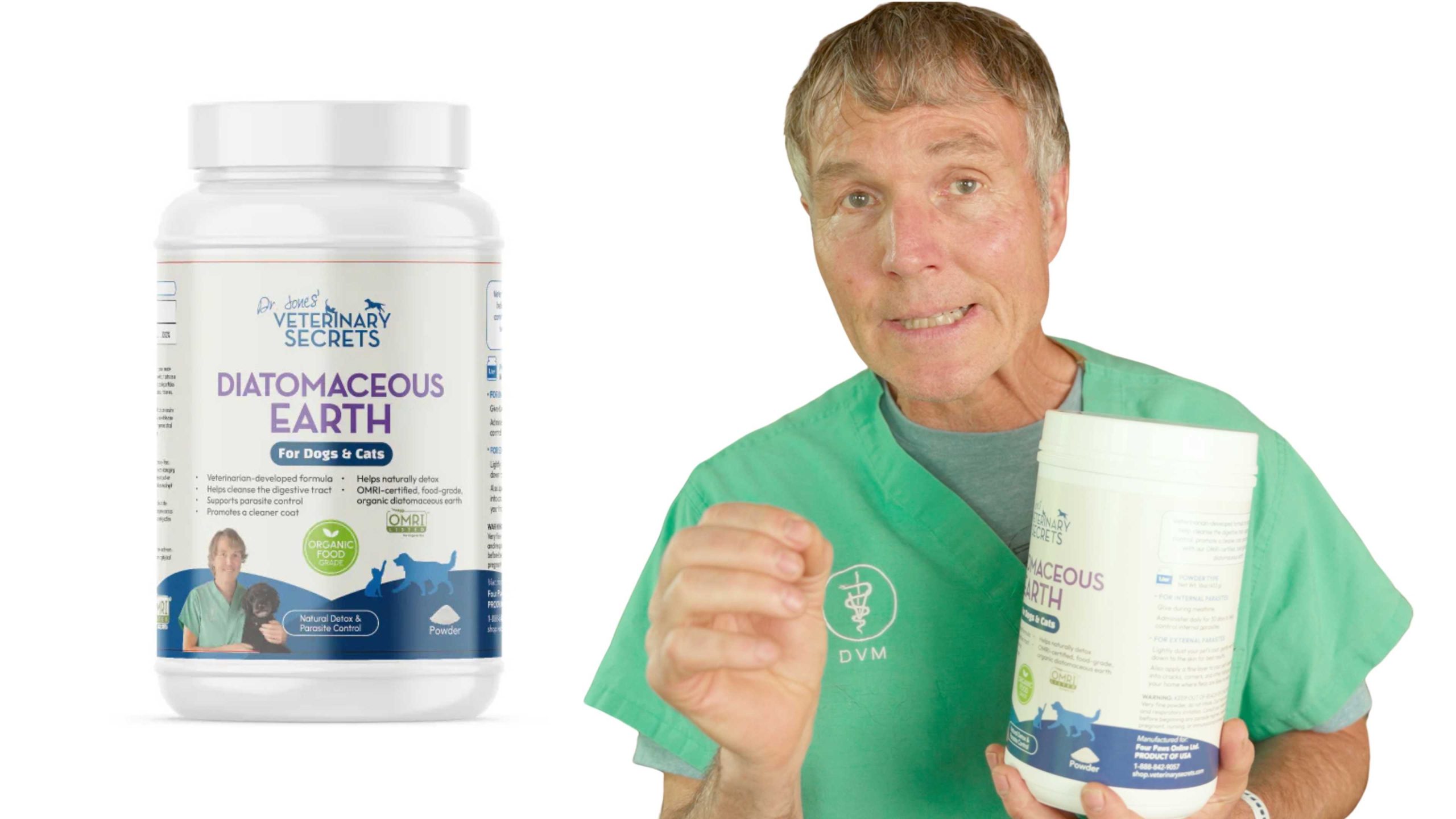
Dr. Jones’ Diatomaceous Earth Powder for Pets
It’s a fine, white powder intended for pet-related applications.
The product is described as:
-
Food-grade diatomaceous earth
-
Certified for organic use through OMRI
-
Suitable for consideration in natural pest-management routines
-
A versatile powder with household and pet-related applications
OMRI certification relates to suitability for specified organic production uses. It should not be interpreted as proof that the powder treats intestinal parasites, poisoning, or infections.
I’ve always liked having simple, practical products available for pet parents who are interested in reducing unnecessary reliance on harsh household chemicals.
And diatomaceous earth is one of the materials I’ve used for many years.
You can learn more about our product here:
Dr. Jones’ Diatomaceous Earth Powder for Pets
Final Thoughts: Is Diatomaceous Earth Worth Considering for Dogs and Cats?
I’ve been using diatomaceous earth for years.
In my garden.
Around the house.

And I’ve also explored its use as part of natural parasite-management routines for dogs and cats.
It’s one of those simple, naturally occurring materials that has quite a few interesting applications.
But I think it’s important to separate the uses we understand reasonably well from those that still need more research.
For household insect control, diatomaceous earth has an established physical mechanism.
For internal parasites, detoxification, immune support, and ligament repair, the veterinary evidence is much less convincing.
And that distinction matters.
The material is rich in silica.
Silicon has been studied in relation to bone health and connective tissue.
And there are some interesting studies involving silica-based materials and their interactions with certain substances.
I’ve also found the poultry parasite research interesting.
But none of that means we should assume diatomaceous earth can replace a proven dewormer, treat poisoning, or repair a dog’s injured cruciate ligament.
I still believe natural products deserve serious consideration.
And I’ve always been interested in finding practical ways to support our pets’ health.
But a good natural remedy needs to be appropriate for the problem we’re trying to address.
So if you’re considering diatomaceous earth, start by choosing the correct food-grade product.
Avoid inhaling the dust.
Be careful with topical applications.
And if your pet has a medical condition, get an appropriate diagnosis before trying to treat it yourself.
For pet parents interested in natural pest management, diatomaceous earth may be one useful tool to consider.
And I’ll continue watching the research on its other potential applications.
Because the more we learn, the better decisions we can make for our dogs and cats.
Click To Get A Free Copy of My E-Book!

P.S. One thing I always want you to remember about diatomaceous earth is to choose the correct product. If you’re considering a pet-related application, look for food-grade material. And whether you’re using it around the home or handling it near your pet, don’t allow your dog or cat to inhale the fine powder.
P.P.S. I’ve used diatomaceous earth for everything from garden pests to household flea control. That’s why I find it such an interesting natural product. But if your pet has confirmed intestinal worms, suspected poisoning, or an infection, please don’t rely on DE alone. Get the problem properly diagnosed and treated.
P.P.P.S. We now have our own Dr. Jones’ Diatomaceous Earth Powder for Pets, a food-grade powder described as OMRI certified for organic use. If you’ve been looking for diatomaceous earth for appropriate pet-related or household applications, you can learn more about it here.
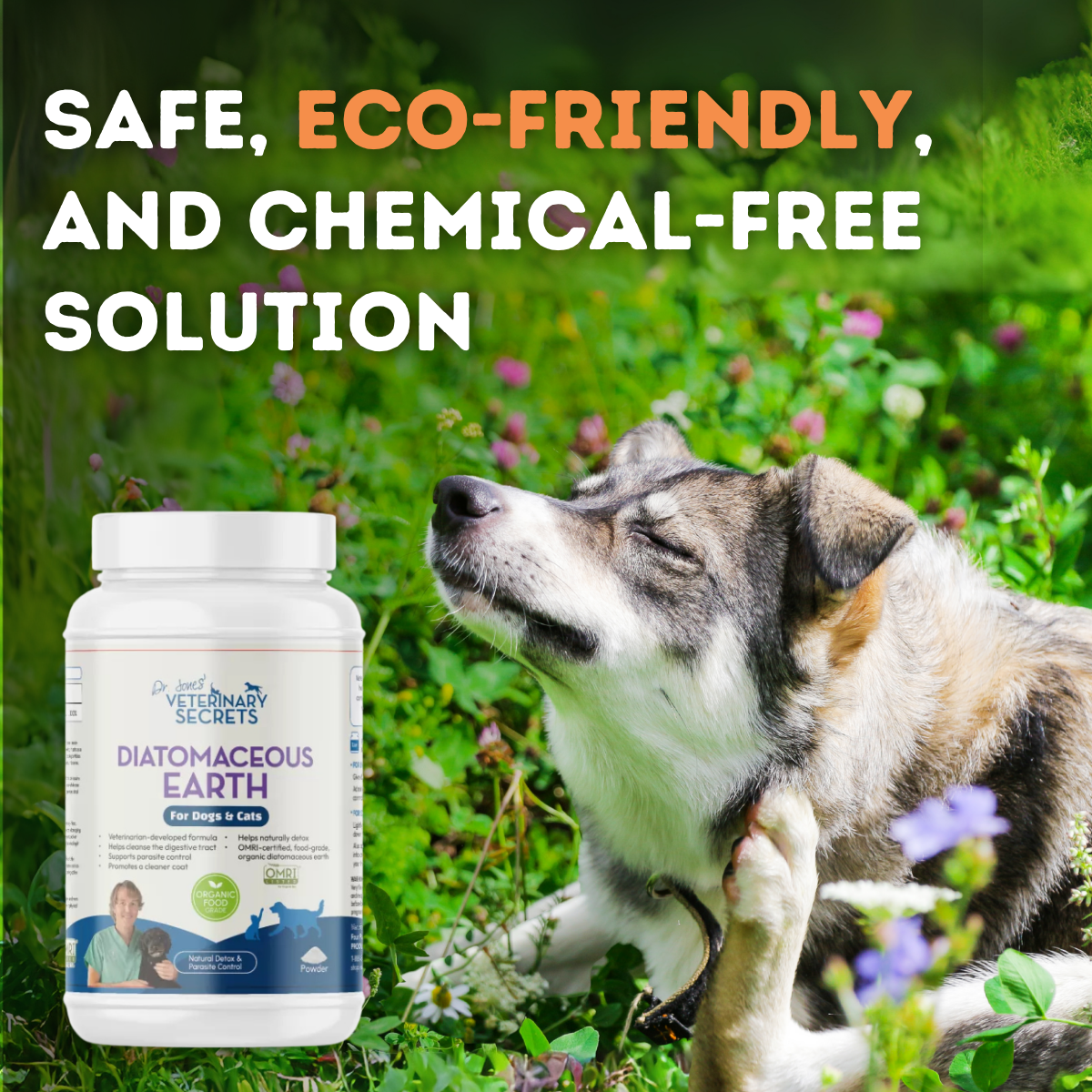
The 5 Potential Benefits of Diatomaceous Earth Compared
Here’s a quick comparison of the five areas I’ve discussed.
| Potential Benefit | Why It’s Interesting | What We Know |
|---|---|---|
| Silica for bones and connective tissue | Silicon has been studied for bone and connective tissue health | Does not establish DE as an ACL repair treatment |
| Flea control | DE has a physical drying effect on susceptible insects | May help in some settings; dust exposure requires caution |
| Detox and heavy metal support | Silica-based materials may interact with certain substances | Not proven to treat poisoning or remove toxins from pets |
| Intestinal parasite management | Traditional use and some poultry research | Not proven to eliminate worms in dogs or cats |
| Immune support | Silicon is involved in biological processes | Direct immune benefits from oral DE remain unproven |