Polyps in Dogs and Cats: Causes, Symptoms, and 8 Natural Remedies That May Help

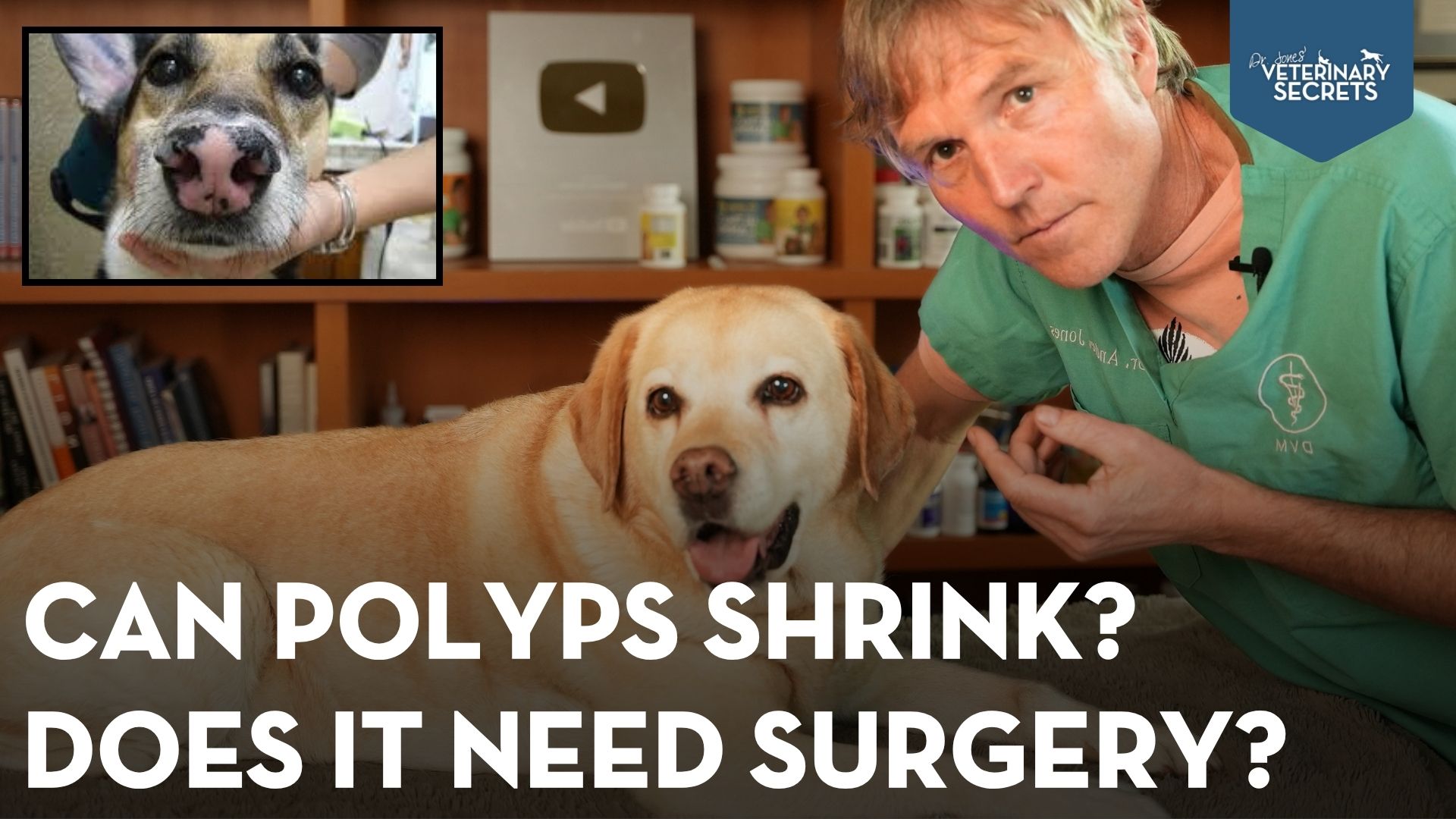
What Are Polyps in Dogs and Cats, and Should You Be Worried?
Polyps are abnormal tissue growths that can develop in different parts of your dog’s or cat’s body. Most are benign, meaning noncancerous, but some can cause problems depending on their size, location, and how they grow.
If you’ve discovered a new lump or polyp on your pet, you’re probably wondering two things.
Is this something serious?
And does my dog or cat need surgery?
Fortunately, many growths we find in our pets are not cancerous. But even benign growths can cause discomfort, inflammation, infections, or problems with normal body functions.
The good news is that surgery isn’t always necessary.
Depending on the type of growth, there may be natural remedies worth considering to support your pet’s immune system, reduce inflammation, and potentially help manage certain growths.
Some of my favorite options include:
-
Vitamin E and omega-3 fatty acids
-
Medicinal mushrooms
-
Green tea extract
-
Colostrum
-
Aloe vera and calendula
-
Cannabinoid supplements
-
Melatonin
I’ve also used other topical preparations and homeopathic remedies in selected cases.
But here’s the important part.
Before treating any new lump or polyp at home, have your veterinarian determine what it actually is. A growth that looks harmless isn’t always benign, and some polyps need to be removed.
Let’s look at the different types of polyps, which symptoms matter, and eight natural approaches I would consider.
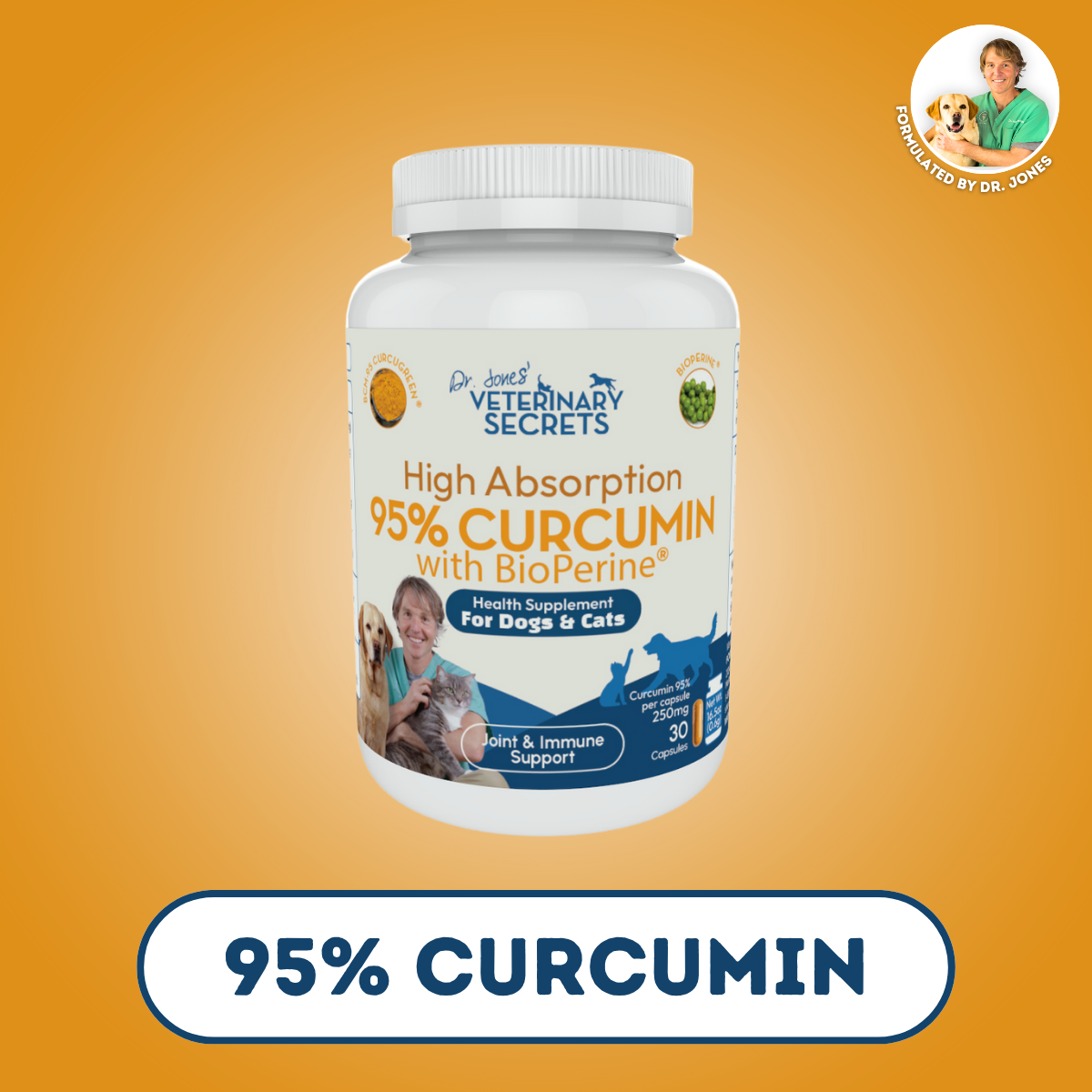
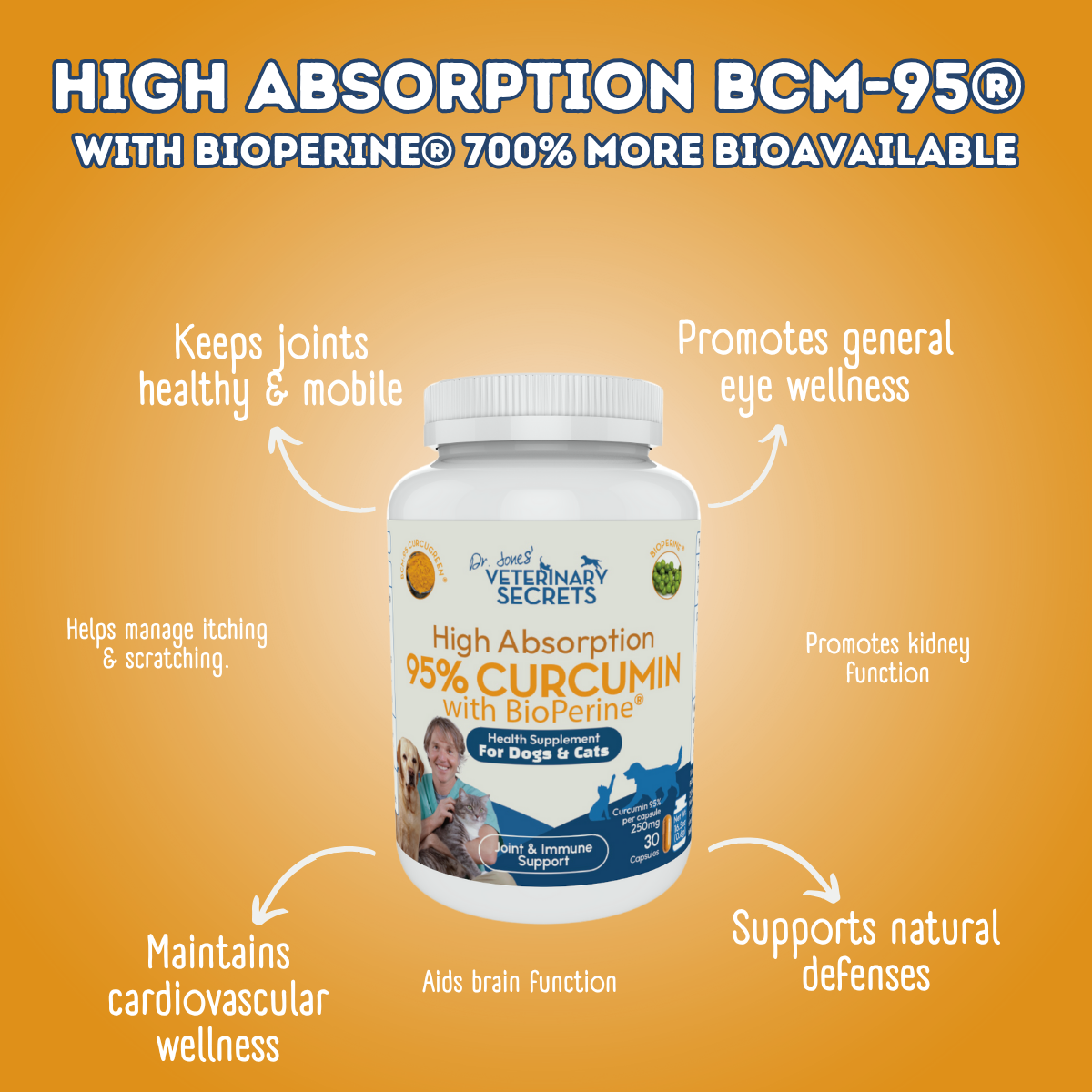
Dr. Jones’ Ultimate High Absorption 95% Curcumin for Dogs and Cats
What Exactly Is a Polyp?
A polyp is an abnormal growth of tissue that develops from a lining or surface within the body.
Many polyps are benign.
They often have a distinctive appearance, with a rounded head attached to the surrounding tissue by a narrow stalk.
Think of a small mushroom.
That’s a fairly good way to picture some polyps.
However, not every polyp has a stalk, and not every lump you find on your dog or cat is a polyp.
Some may be cysts, inflammatory growths, or other types of tissue masses.
That’s why correctly identifying the growth is the first step.
Are Polyps Cancerous?
Most polyps are benign, but some may become cancerous or represent a more serious type of growth.
Larger polyps can be particularly concerning, although size alone doesn’t determine whether something is cancerous.
Even a benign polyp can cause significant problems if it interferes with breathing, hearing, or normal bowel movements.
This is why I wouldn’t automatically ignore a growth just because it appears harmless.
Where Do Polyps Commonly Develop in Dogs and Cats?
Polyps can occur in several parts of the body.
The four main locations I want pet parents to understand are:
-
Rectum
-
Nasal passages
-
Ears
-
Nasopharynx, the area behind the nose and above the throat
Each type can cause different symptoms.
1. Rectal Polyps in Dogs and Cats
Rectal polyps develop in the rectum, the final portion of the large intestine.
They are often benign, but some may become cancerous.
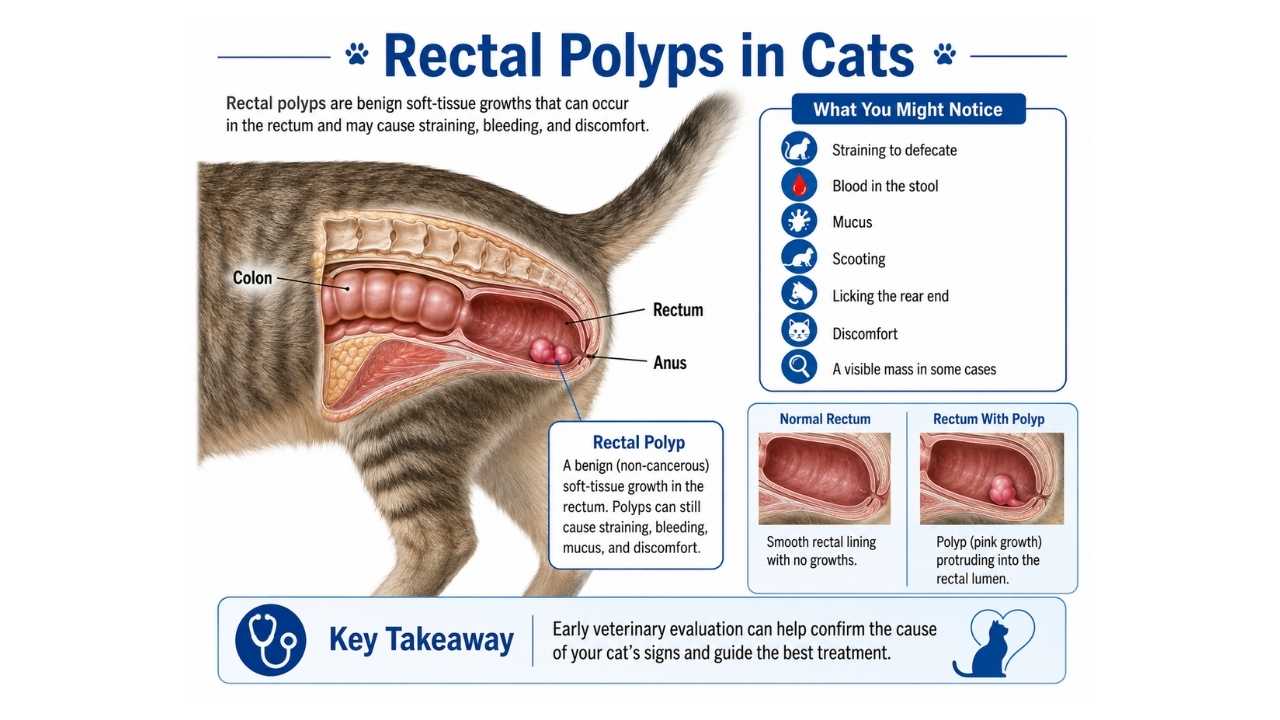
Depending on their size and location, they can also interfere with normal bowel function.
A visible growth around the rectal area should always be assessed before attempting home treatment.
2. Nasal Polyps in Dogs and Cats
Nasal polyps develop inside the nasal passages.
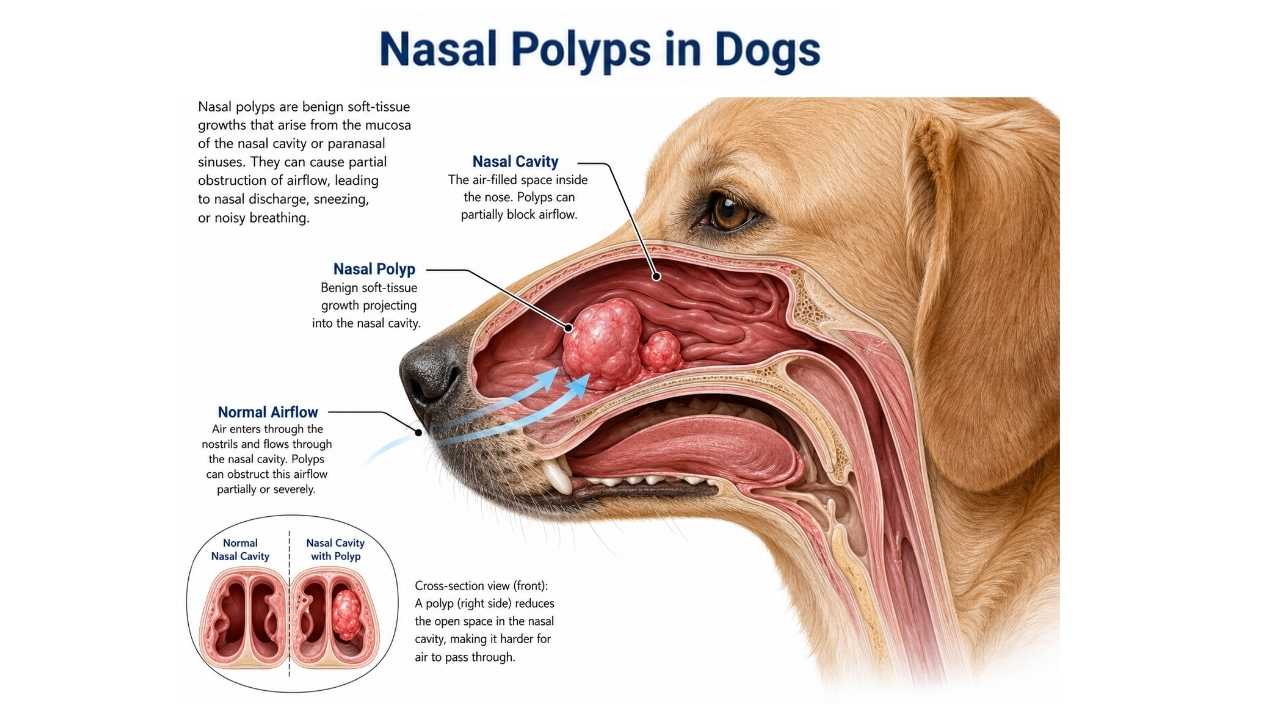
Even when benign, these growths can cause problems because they occupy space within an area needed for normal breathing.
A large nasal polyp may make breathing more difficult.
This is an example of why a noncancerous growth can still be serious.
3. Ear Polyps in Dogs and Cats
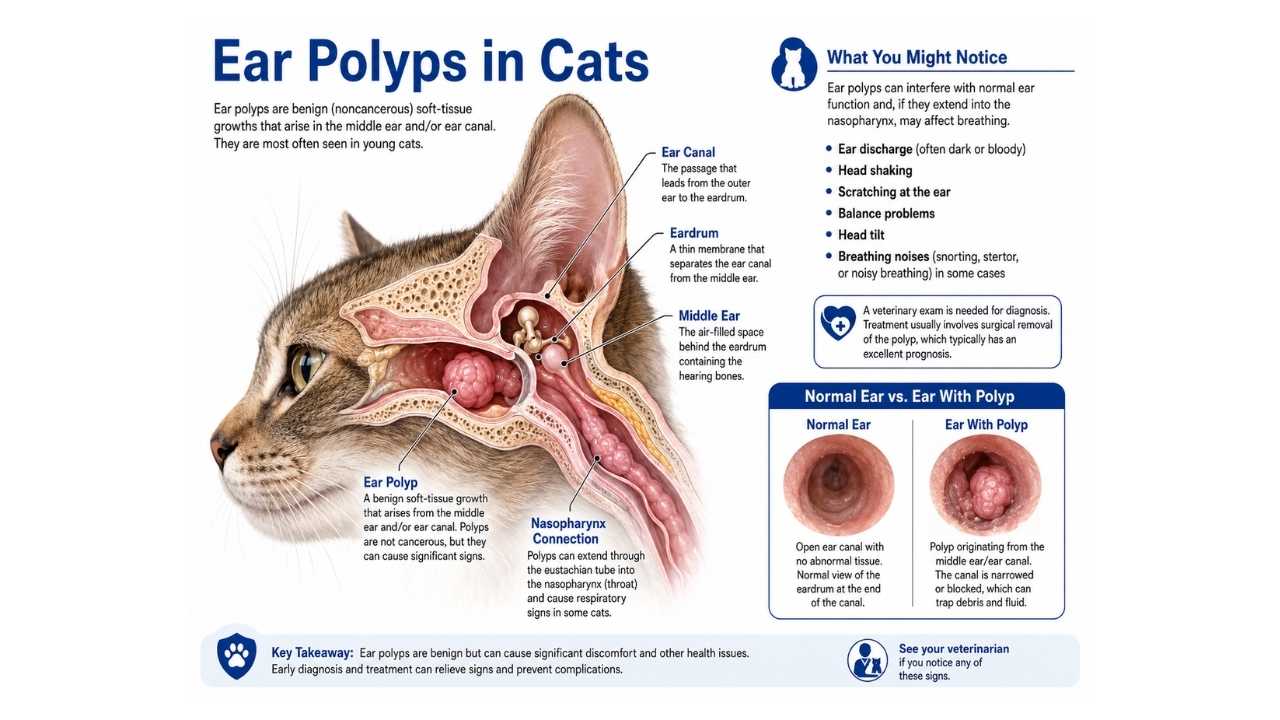
Ear polyps, also called aural polyps, develop within structures of the ear.
These growths may contribute to recurring ear infections and inflammation.
If a dog or cat has repeated ear problems, a polyp may be one of the possible causes worth investigating.
4. Nasopharyngeal Polyps in Cats and Dogs
Nasopharyngeal polyps develop in the region behind the nasal passages and above the throat.
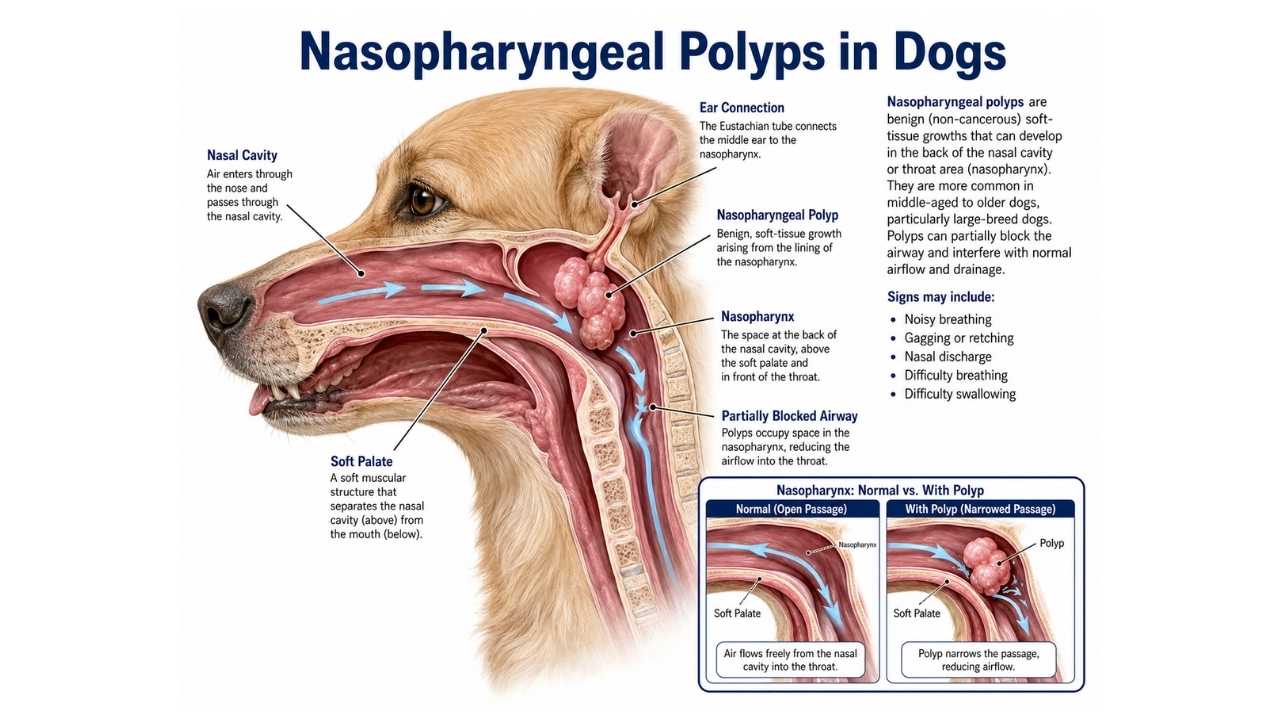
They are particularly important because they can affect nearby structures involved in breathing and ear function.
These polyps may be associated with:
-
Breathing difficulties
-
Ear infections
-
Head tilting
A cat with recurring ear problems, difficulty breathing, or an unexplained head tilt may need an examination for an underlying growth.
The location matters.
A small external growth and a polyp obstructing your cat’s airway are very different situations.
And they should not be treated in the same way.
Why Do Polyps Develop in Dogs and Cats?
Polyps are abnormal growths of tissue.
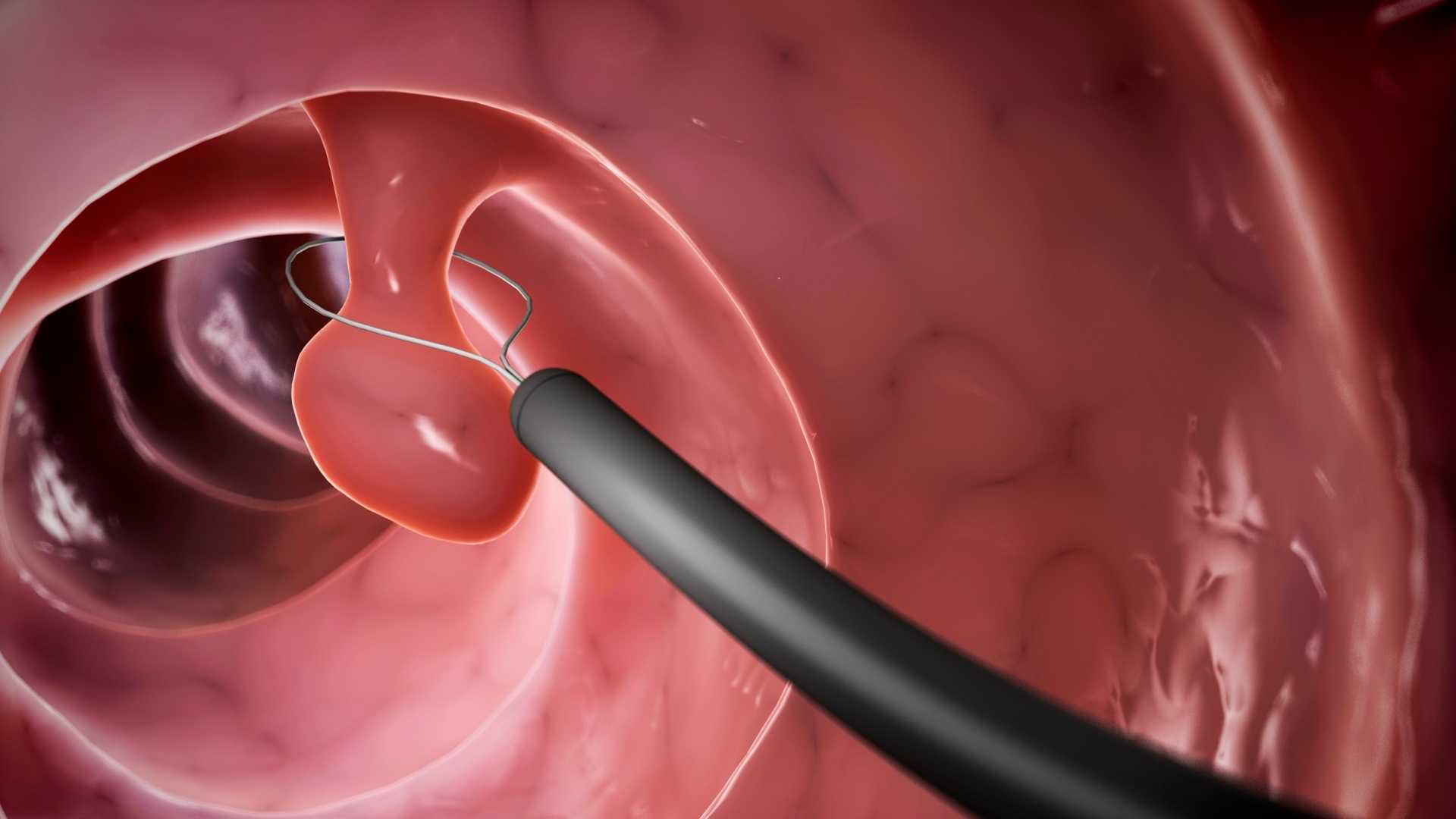
Some are associated with inflammation, while others involve changes in the way tissue grows.
Regardless of the underlying cause, I want to understand whether a growth is:
-
Benign or potentially cancerous
-
Causing inflammation
-
Interfering with normal body function
-
Becoming larger
-
Producing discomfort
Those details help determine whether monitoring, supportive care, or removal is the most appropriate approach.
When Should You Worry About a Polyp?
Not every growth needs immediate removal.
But there are situations where I would be concerned.
These include:
-
A growth that is becoming larger
-
A polyp affecting breathing
-
Recurring ear infections
-
Head tilting associated with an ear or nasopharyngeal growth
-
A rectal growth causing discomfort
-
A growth that appears inflamed or damaged
-
A lump that has not been properly identified
Even if the growth turns out to be benign, it may still need treatment.
For me, the first question is not simply whether the polyp is cancerous.
It’s whether the growth is causing problems for the animal.
Do Polyps in Dogs and Cats Always Need Surgery?
No. Many benign polyps do not require surgery, particularly when they are small and are not causing problems.
But some do need to be removed.
Surgery may be necessary when the growth interferes with breathing, contributes to persistent problems, or raises concern about cancer.
The important thing is to determine what kind of growth we’re dealing with before making that decision.
If your veterinarian has examined the polyp and determined that monitoring is appropriate, there may be additional ways to support your pet.
And this is where I become interested in nutritional and natural approaches.
Can Natural Remedies Help Polyps in Dogs and Cats?
Some natural supplements may support immune function, skin health, and inflammation.
These effects may be helpful when managing certain benign growths.
I am particularly interested in nutrients and compounds that support the immune system and help regulate inflammatory responses.
The goal isn’t to assume every supplement will make a polyp disappear.
It’s to provide appropriate support while monitoring the growth and making sure it isn’t something that requires veterinary treatment.
Here are eight approaches I’ve discussed for dogs and cats with polyps or other benign growths.
1. Support the Immune System With Vitamin E, Omega-3s, Mushrooms, Green Tea, and Colostrum
The first approach is to support your pet’s immune system.
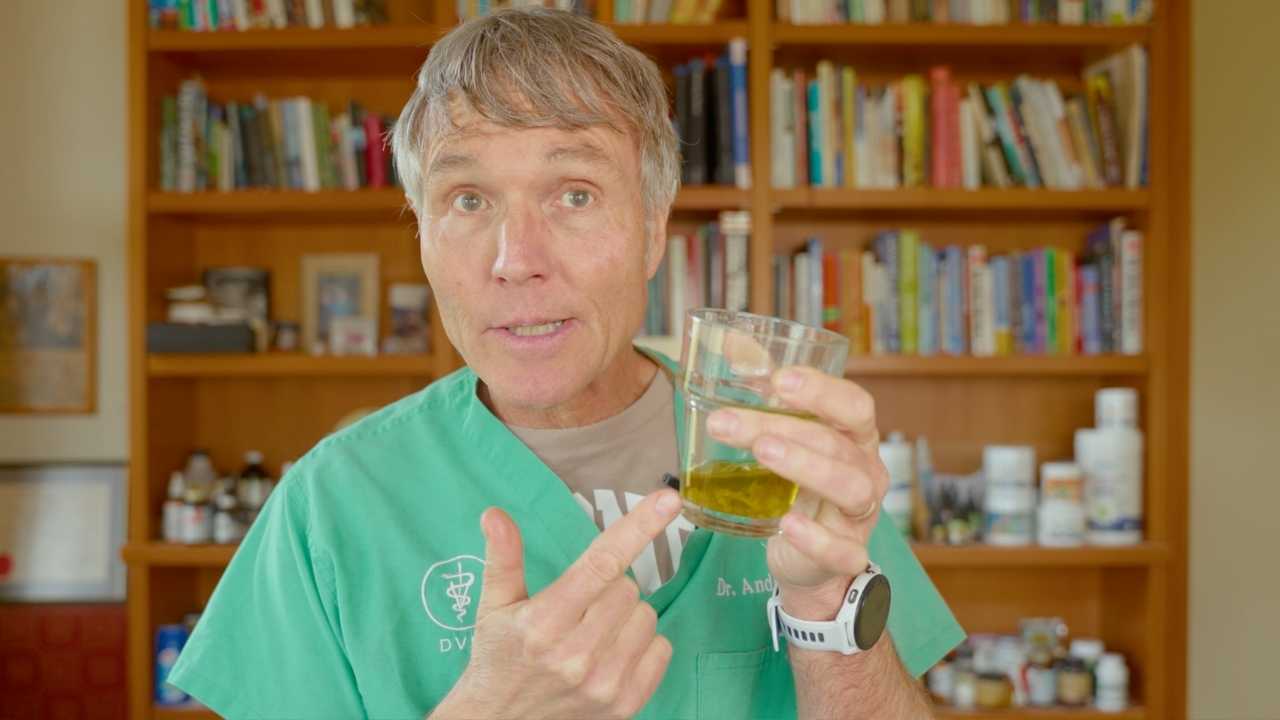
A healthy immune system plays an important role in identifying abnormal cells, responding to inflammation, and maintaining healthy tissues.
Several nutritional supplements are worth considering.
Vitamin E for Skin and Immune Health
Vitamin E is an antioxidant that supports normal cellular and immune function.
It’s one of the nutrients I would consider when trying to support your pet’s skin and immune health.
Suggested dose: 100 IU per 10 pounds of body weight daily.
Vitamin E supplements vary in concentration, so confirm the appropriate dose with your veterinarian, particularly before giving higher amounts over an extended period.
Omega-3 Fatty Acids From Fish Oil or Krill Oil
Omega-3 fatty acids are another useful part of my immune-support approach.

They are available from:
-
Fish oil
-
Krill oil
Omega-3s are particularly interesting because of their role in helping regulate inflammation and supporting skin health.
For pets with inflamed growths or ongoing skin problems, I would consider a good-quality omega-3 supplement.
The appropriate amount depends on the product’s concentration of active omega-3 fatty acids.
Medicinal Mushrooms: Turkey Tail, Reishi, and Chaga
Medicinal mushrooms are another group of supplements I find interesting for immune support.
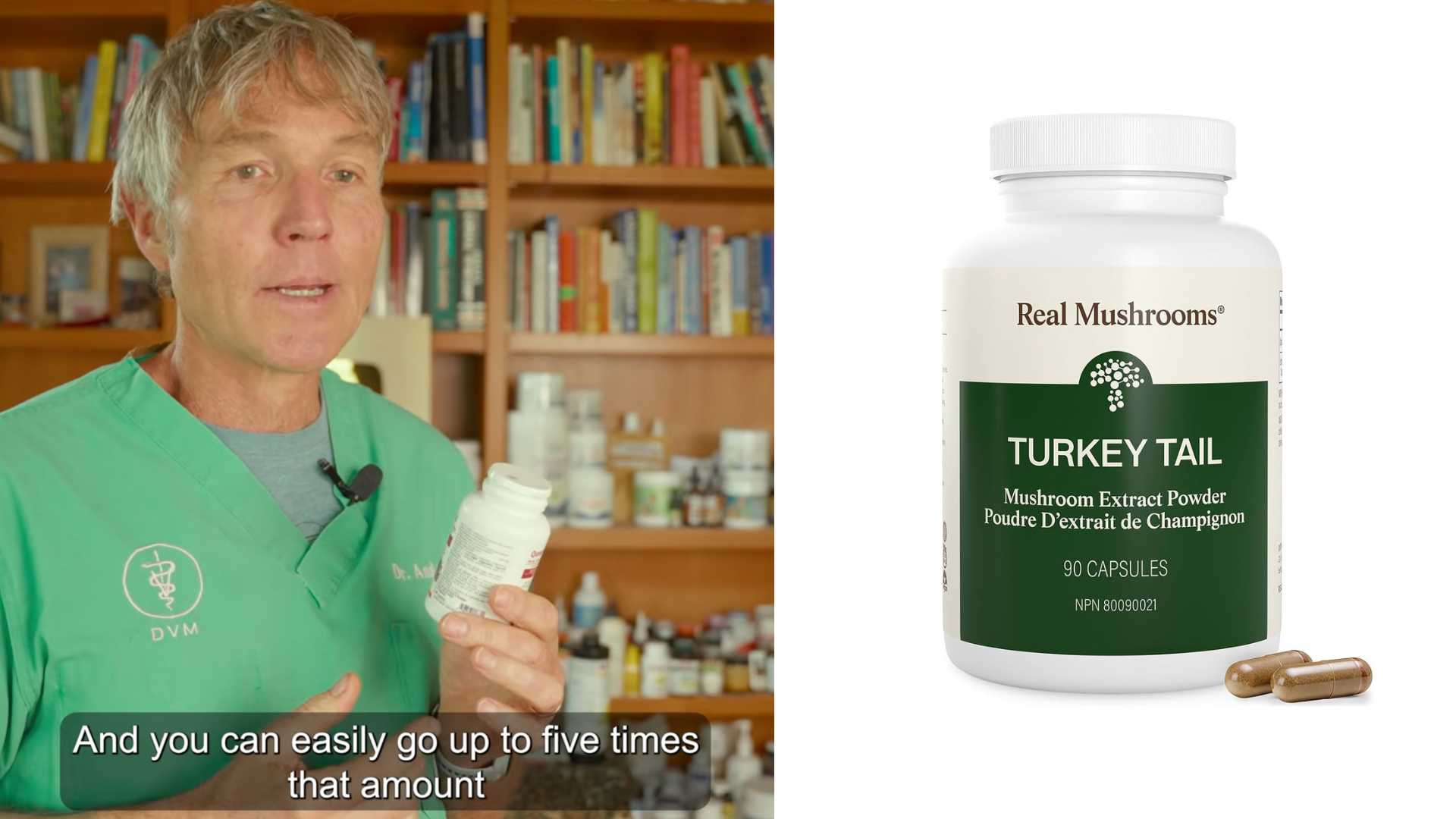
The three I would consider are:
-
Reishi
-
Chaga
These mushrooms contain compounds that have been investigated for their effects on immune activity.
For some pets with growths, immune-supporting supplements may be worth considering alongside regular monitoring.
Suggested dose: 100 mg per 10 pounds of body weight daily.
The exact product and mushroom formulation matter, so I would confirm the appropriate dose before use.
Green Tea Extract for Immune Support
Green tea contains naturally occurring plant compounds with antioxidant activity.
Green tea extract has been discussed as another supplement that may support immune function and help manage inflammatory processes associated with growths.
Suggested dose: 50 mg per 10 pounds of body weight daily.
I would be particularly careful with green tea extracts because concentrated formulations differ and some can be harmful to pets. Use only a veterinarian-approved, pet-appropriate preparation, not ordinary caffeinated tea or an unverified human supplement.
Colostrum for Dogs and Cats
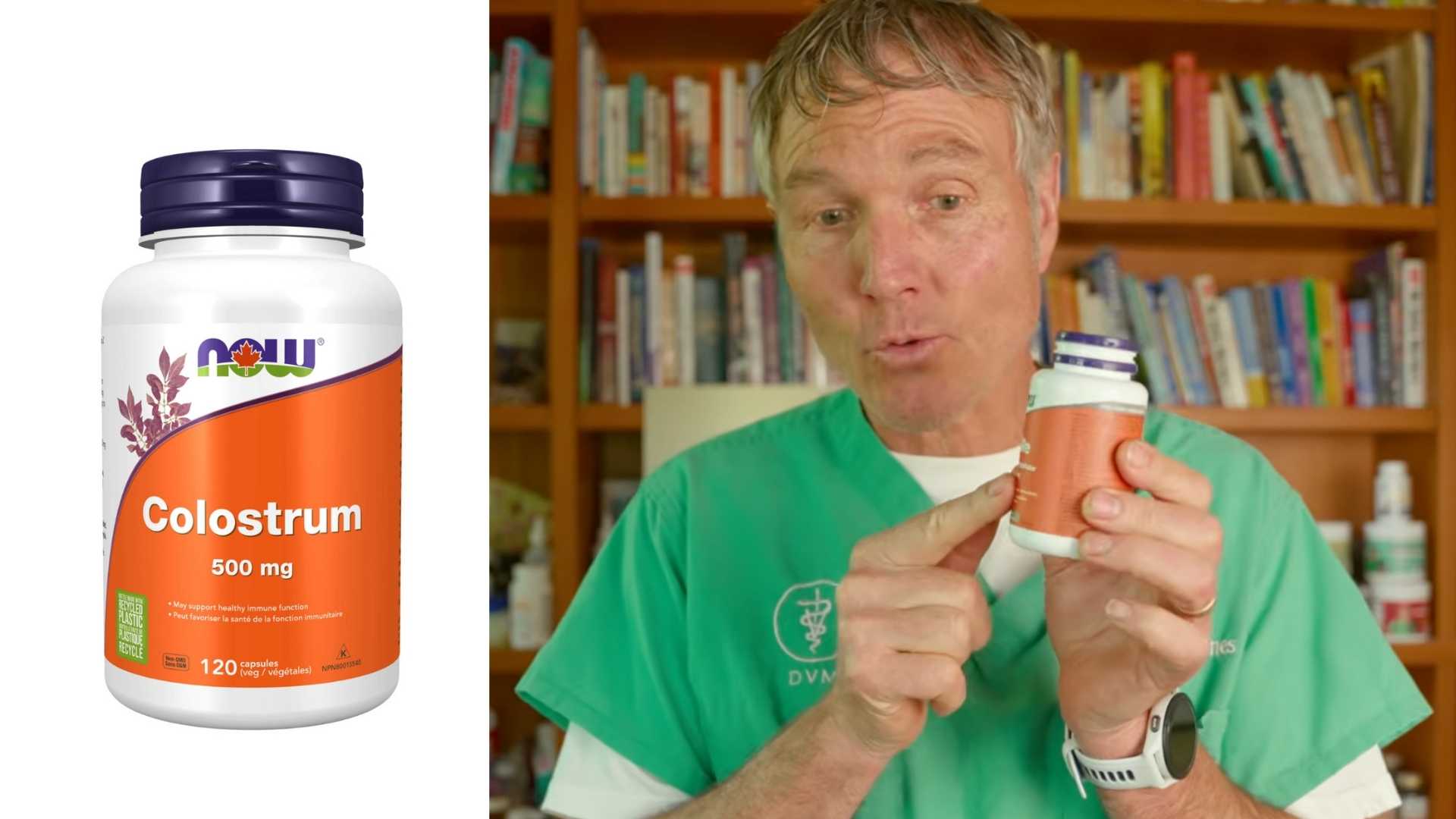
Colostrum is another option I would consider for immune support.
Bovine colostrum contains naturally occurring compounds associated with immune function.
It can be considered for both oral and topical applications.
Suggested oral dose: 100 mg per 10 pounds of body weight daily.
Topical use has also been discussed for supporting the skin and surrounding tissue.
The goal is to support the body’s normal immune response while the growth is being monitored.
2. Apple Cider Vinegar for Certain External Skin Growths
Apple cider vinegar, commonly called ACV, is another traditional topical remedy discussed for growths.
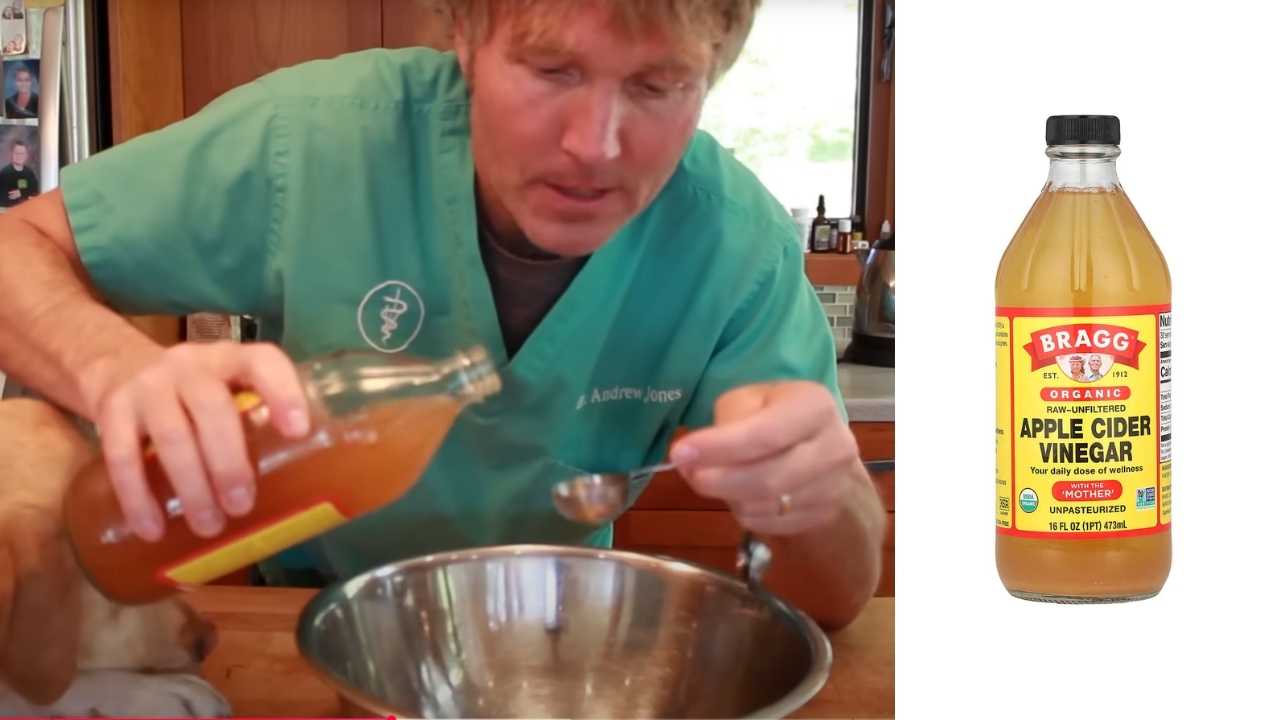
Because of its acidity, ACV can act as a peeling agent and help remove dead surface skin cells.
The approach discussed involves placing ACV-soaked cotton balls over affected external skin areas overnight.
However, this is not a treatment I would use indiscriminately.
Apple cider vinegar can irritate or burn skin, especially with prolonged contact. Do not apply it to rectal tissue, inside the nose or ears, open wounds, or an unidentified lump. Any use on a growth should first be reviewed with your veterinarian.
Removing surface skin cells does not establish that the underlying polyp has been treated.
For me, identifying the growth correctly is far more important than trying to remove it with an acidic topical preparation.
3. Aloe Vera and Calendula for Inflamed Polyps and Cysts
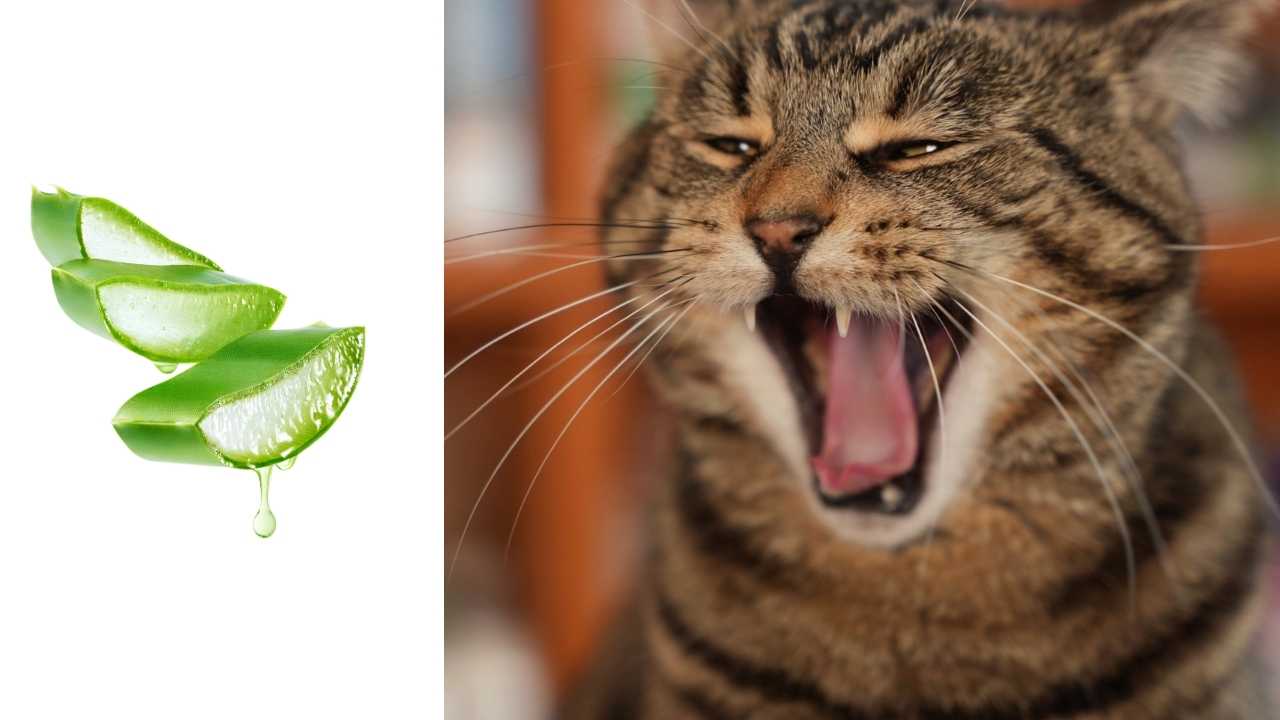
Two topical herbs I like discussing for skin inflammation are:
-
Aloe vera
-
Calendula
These are particularly relevant when dealing with external skin irritation, including inflammation around a ruptured cyst or an irritated growth.
How May Aloe Vera Help?
Aloe vera is used topically for its soothing properties.
It may help calm irritated skin surrounding certain external growths.
How May Calendula Help?
Calendula is another botanical ingredient traditionally used to soothe inflamed skin.
Creams containing calendula may be considered for irritated skin surrounding a growth.
I would use pet-appropriate products and avoid allowing pets to lick preparations that are not intended for ingestion.
These are options for supporting irritated external skin, not for treating deep nasal, rectal, or ear polyps.
4. Cannabinoid Supplements for Inflammation and Immune Support
Cannabinoid supplements are another option I’ve discussed for supporting pets with inflammation.
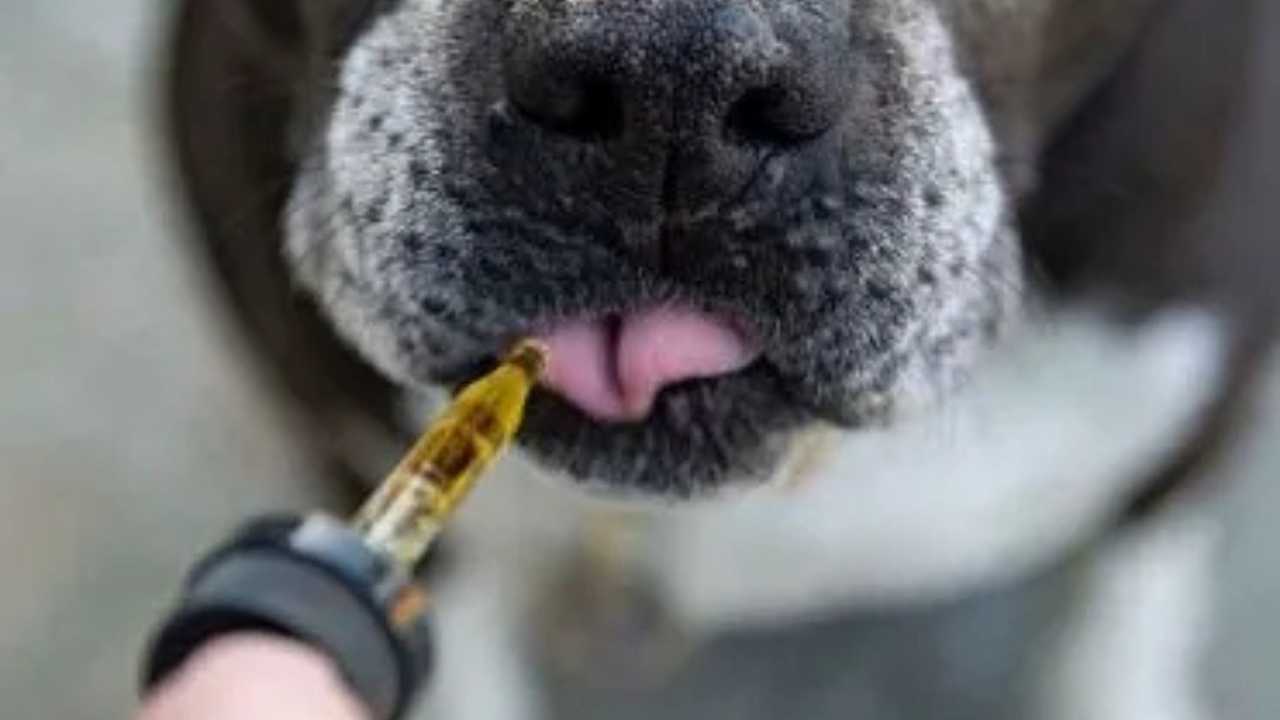
These include:
-
CBD oil
They are of interest because of their potential effects on inflammatory and immune-related pathways.
Can CBD Help With Polyps?
CBD and cannabinoid blends may help influence inflammation and immune responses.
This makes them an area of interest when discussing certain types of abnormal tissue growth.
However, their ability to shrink or eliminate polyps has not been established.
I would view them as possible supportive options rather than replacements for veterinary diagnosis or surgery when needed.
Cannabinoid Dosage for Dogs and Cats
The amount discussed is:
3 mg per 10 pounds of body weight, twice daily.
The formulation and cannabinoid concentration matter. CBD can cause adverse effects and interact with medications, so I would confirm any supplement and dose with your veterinarian before giving it to a dog or cat.
5. Thuja for Lumps and Polyps
Thuja is a homeopathic remedy traditionally recommended for certain types of lumps and growths.
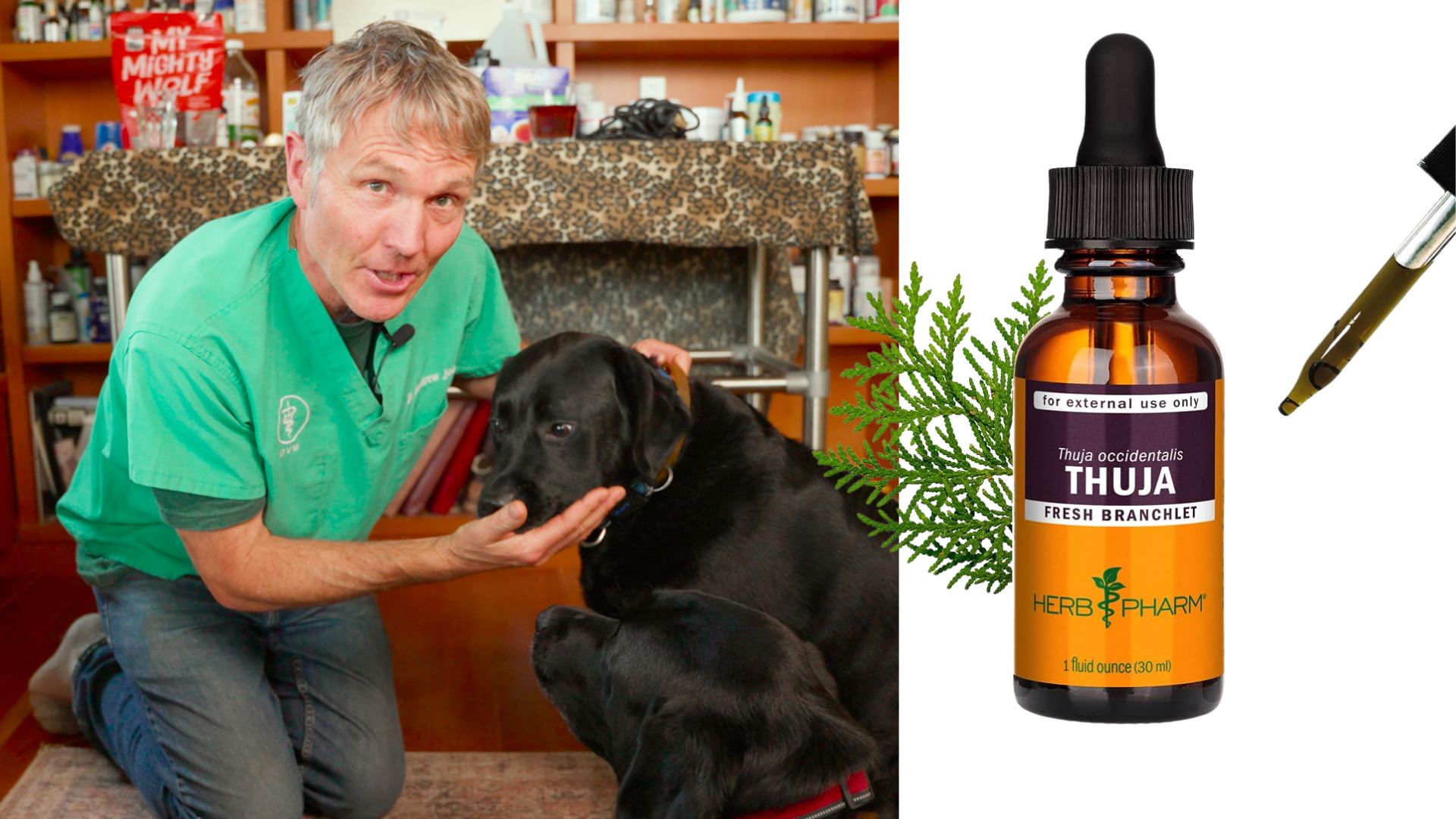
It is one of the options commonly discussed in alternative approaches to managing benign skin growths.
What Is the Suggested Thuja Dose?
The homeopathic preparation discussed is:
Thuja 30C, once or twice daily, for at least 30 days.
This is a traditional homeopathic recommendation. It has not been established as an effective treatment for shrinking polyps, and it should not delay examination or treatment of an abnormal growth.
I would still want any lump properly identified and monitored.
6. Topical Preparation H for Rectal Polyps
This is an unusual one, but it’s something I’ve used with clients who had pets with rectal growths.
Preparation H is a topical product associated with hemorrhoid treatment.
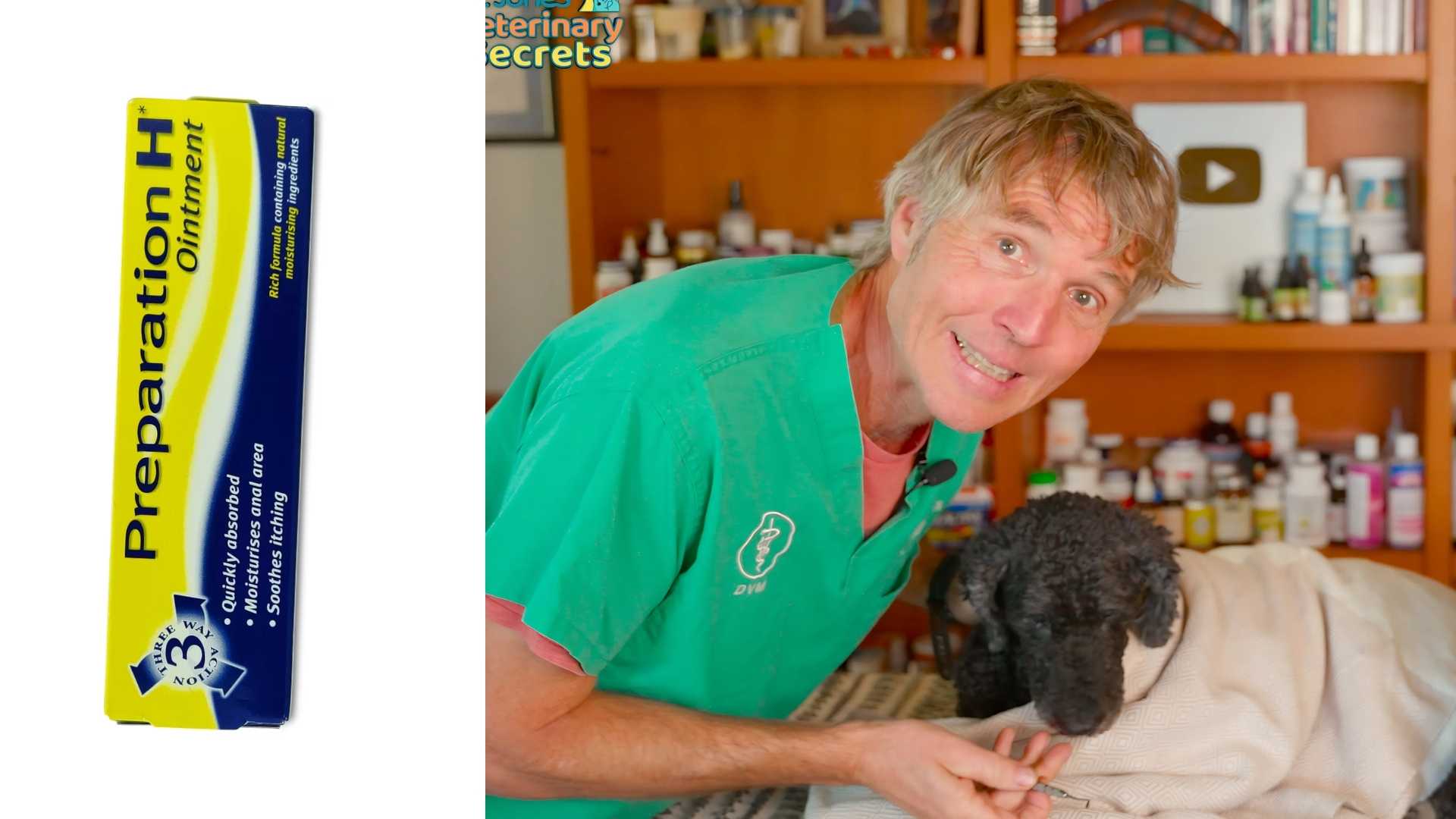
Its intended action includes reducing local swelling and addressing some of the tissue changes associated with hemorrhoids.
For selected rectal growths, I’ve considered it as a way to reduce local inflammation and discomfort.
How Would Preparation H Be Used?
The approach discussed is:
Apply topically twice daily for 21 days.
I want to emphasize that this is not a general recommendation to put human hemorrhoid products on any rectal growth.
Preparation H formulations differ, and some ingredients may be unsuitable for pets. A rectal polyp also is not necessarily a hemorrhoid.
Before using it, have the growth examined and ask your veterinarian whether the exact product is appropriate.
7. Melatonin for Polyps and Skin Growths
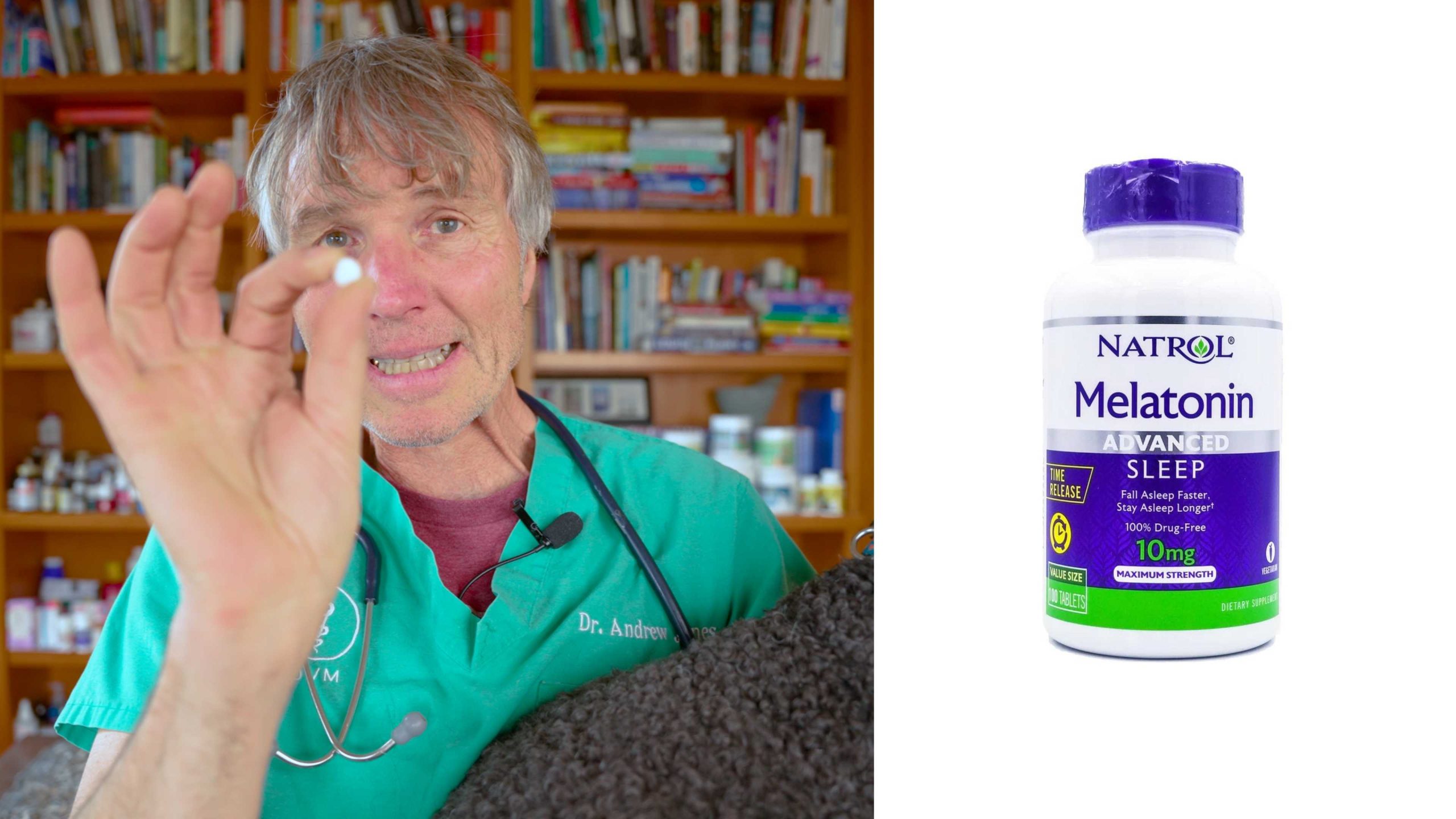
Melatonin is often called the sleep hormone.
But its potential benefits extend well beyond sleep.
Melatonin plays an important role in regulating the circadian rhythm, and research has also investigated its antioxidant, anti-inflammatory, and immune-related effects.
That’s what makes it interesting when discussing certain skin growths and polyps.
How Might Melatonin Help With Polyps?
Melatonin may influence the skin’s immune response through several mechanisms.
These include:
-
Antioxidant activity
-
Regulation of circadian rhythms
-
Support of normal immune function
-
Anti-inflammatory effects
-
Support of the skin barrier
Because inflammation and immune activity may play a role in some growths, melatonin is being investigated for potential therapeutic benefits.
Some have suggested it may help reduce the size of certain growths, although this is not an established outcome for polyps in dogs and cats.
Melatonin Dosage for Polyps in Dogs and Cats
The amount I discuss is:
2 mg per 20 pounds of body weight, up to a maximum of 6 mg per dose, given once or twice daily for 30 days.
This is the dose discussed specifically for growth-related support, not a universal recommendation for all melatonin uses.
Melatonin can have biological effects beyond sleep, so I would discuss its use with your veterinarian before starting it.
8. Curcumin for Polyps in Dogs and Cats
Curcumin is one of the natural compounds I find most interesting for inflammation and abnormal tissue growths.
Curcumin is a component of turmeric.
It has attracted attention because of its:
-
Anti-inflammatory properties
-
Antioxidant activity
-
Potential effects on cancer-related pathways
-
Possible influence on immune function
Curcumin has been investigated for its effects on inflammation and cellular processes.
And in some animals, I’ve observed benefits when using curcumin as part of supportive care for nasal or rectal polyps.
Can Curcumin Help Shrink Polyps?
Curcumin may help regulate inflammation associated with certain growths.
It has also been investigated for potential anticancer effects.
But I wouldn’t assume every polyp will shrink or disappear after supplementation.
The type of polyp, its location, and whether it is benign all matter.
For me, curcumin is a supportive option worth considering once the growth has been properly assessed.
What Is the Curcumin Dose for Dogs and Cats?
The dosage discussed is:
50 to 100 mg per 10 pounds of body weight, once or twice daily.
The amount depends on the individual animal and supplement formulation.
Why Does Curcumin Absorption Matter?
One of the challenges with curcumin supplementation is absorption.
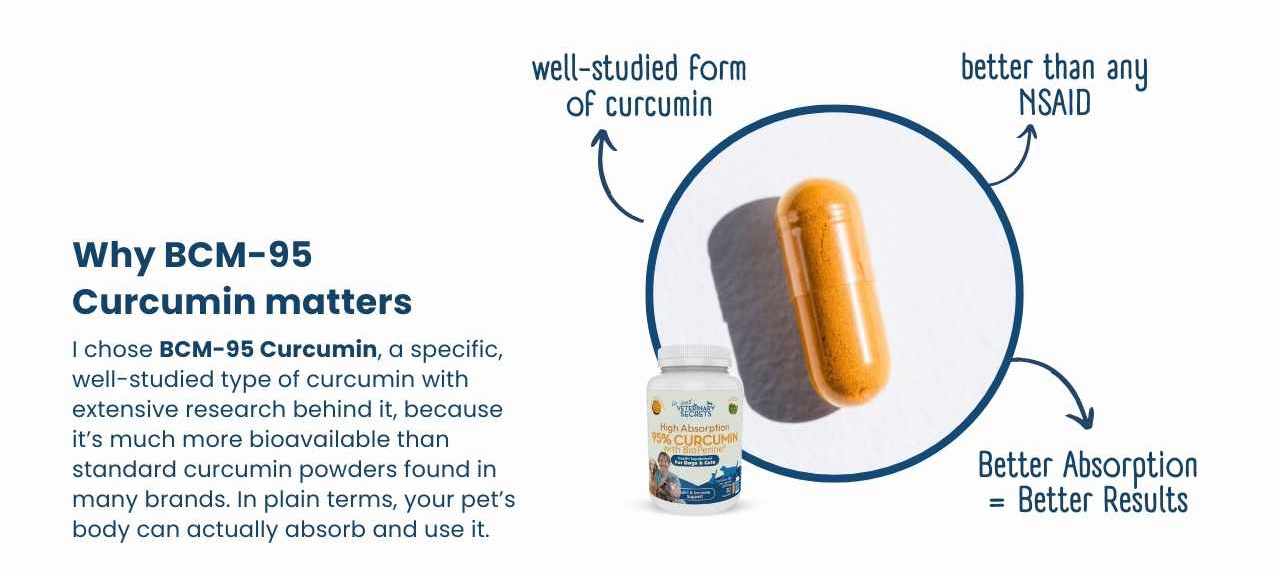
A supplement can contain curcumin, but that doesn’t automatically mean the body absorbs it efficiently.
This is why I am interested in formulations designed for improved absorption.
One option is:
Dr. Jones’ Ultimate High Absorption 95% Curcumin for Dogs and Cats
This supplement contains a high-concentration curcumin formulation designed to improve absorption.
For pets needing support with inflammation, it’s one of the options I would consider discussing.
Which Natural Remedy Would I Consider First?
That depends on the type of growth and what problems it’s causing.
I wouldn’t use the same treatment for a small external growth and a polyp affecting a cat’s breathing.
Here’s how I would think about the options.
For General Immune and Skin Support
I would consider:
-
Vitamin E
-
Omega-3 fatty acids
-
Medicinal mushrooms
-
Colostrum
These are primarily nutritional and immune-support options.
For Inflamed External Skin Growths
Aloe vera and calendula may be worth considering for surrounding skin irritation.
I would avoid harsh topical treatments until the growth has been properly identified.
For Inflammation Associated With Certain Polyps
Curcumin and melatonin are two compounds I find particularly interesting because of their anti-inflammatory and immune-related effects.
For Rectal Polyps
I have previously used topical Preparation H in selected cases, but I would first want the rectal growth examined.
For Polyps Causing Breathing Problems
I would prioritize veterinary examination and appropriate treatment.
A nasal or nasopharyngeal polyp that interferes with breathing is not something I would attempt to manage with supplements alone.
Final Thoughts: Can You Treat Polyps in Dogs and Cats Naturally?
The good news is that many polyps in dogs and cats are benign.
And not every growth needs surgery.
But that doesn’t mean every polyp should be ignored or treated at home without a diagnosis.
The type of growth matters.
The location matters.
And most importantly, whether it is affecting your pet’s health matters.
Once your veterinarian has determined that a growth is benign and can be monitored, there are several supportive natural options I would consider.
My main interests include:
-
Vitamin E and omega-3 fatty acids for nutritional and skin support
-
Medicinal mushrooms and colostrum for immune support
-
Aloe vera and calendula for external skin inflammation
-
Melatonin for its antioxidant and immune-related properties
-
Curcumin for its anti-inflammatory effects
Of these, curcumin is one of the supplements I find particularly interesting.
It’s the active component of turmeric, and its potential effects on inflammatory and cancer-related pathways are worth investigating further.
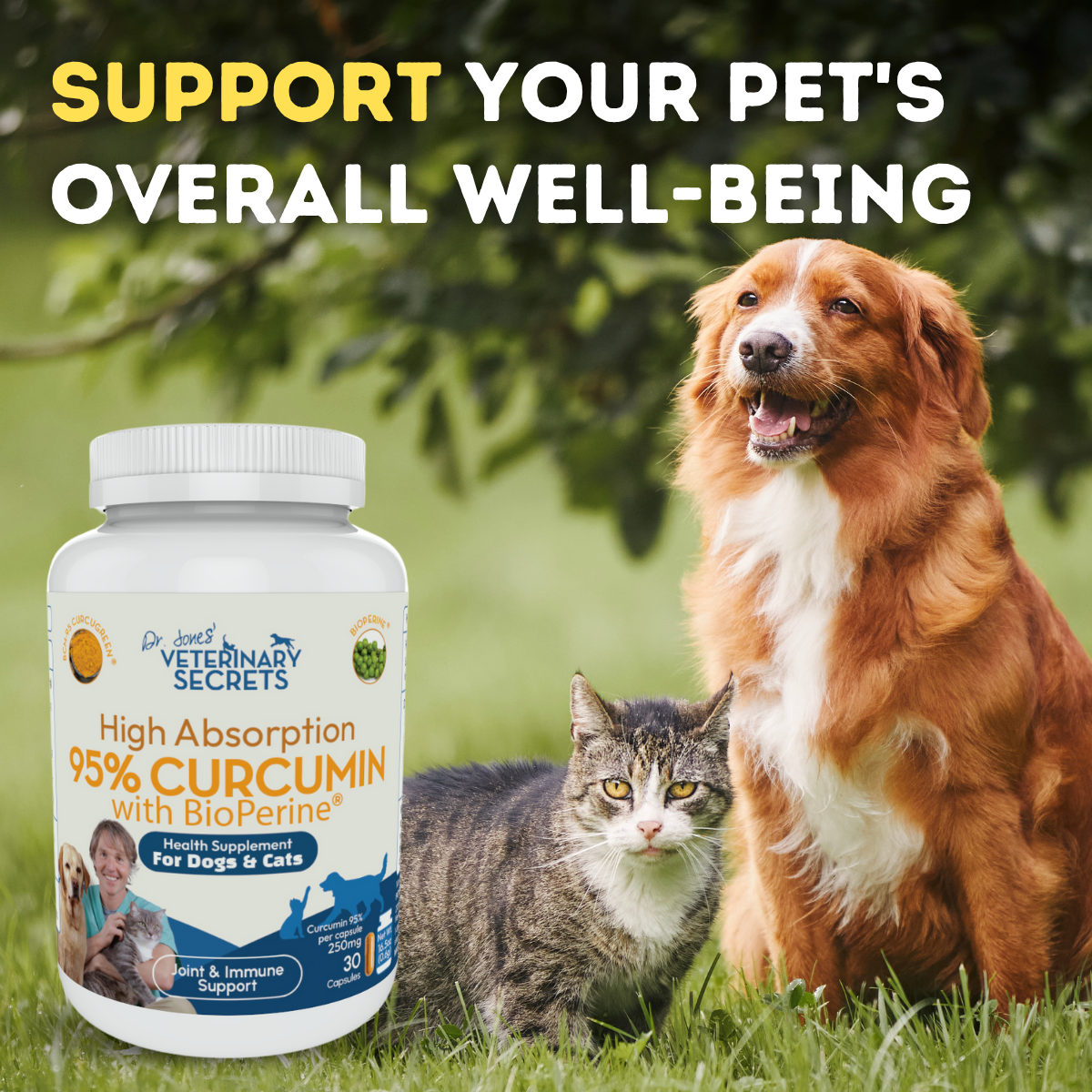
A high-absorption formulation, such as my Ultimate High Absorption 95% Curcumin, is one option for pet parents to discuss with their veterinarian.
But remember, the first step is always finding out what the growth is.
If it’s benign and not causing problems, monitoring and supportive care may be appropriate.
If it’s affecting breathing, causing discomfort, or showing concerning changes, your pet may need further treatment.
I want you to have options.
I also want you to know when those options are appropriate.
Because the best way to help your dog or cat isn’t simply to treat a lump.
It’s to make sure we’re treating the right problem.
Click To Get A Free Copy of My E-Book!

P.S. Fortunately, many animals with benign polyps do not need surgery. But if you’ve discovered a new lump or growth, have your veterinarian check it first. Once you know what you’re dealing with, you can make a much better decision about monitoring, supportive care, or removal.
P.P.S. One of my favorite natural compounds for inflammation is curcumin. The active component of turmeric has some very interesting anti-inflammatory properties, and I’ve considered it for dogs and cats with certain growths. My Dr. Jones’ Ultimate High Absorption 95% Curcumin is designed for improved absorption.
P.P.P.S. Don’t forget that even a benign polyp can cause problems. A growth in your cat’s ear or behind the nose may lead to recurring infections, head tilting, or breathing difficulties. Those are signs to get your pet examined rather than relying on supplements alone.
Polyps in Dogs and Cats: Types and Symptoms
| Type of Polyp | Location | Possible Problems |
|---|---|---|
| Rectal polyp | Rectum | Discomfort, bowel problems, potential cancerous changes |
| Nasal polyp | Nasal passages | Difficulty breathing |
| Ear or aural polyp | Ear | Ear infections, inflammation |
| Nasopharyngeal polyp | Behind the nose and above the throat | Breathing difficulty, ear infections, head tilting |
Natural Remedies for Polyps: Dosage and Use Chart
Here are the dosages and treatment durations discussed for the eight approaches.
| Remedy | Amount Discussed | Frequency or Duration |
|---|---|---|
| Vitamin E | 100 IU per 10 lbs | Daily |
| Omega-3 fatty acids | No specific amount provided | Product-dependent |
| Turkey Tail, Reishi, or Chaga | 100 mg per 10 lbs | Daily |
| Green tea extract | 50 mg per 10 lbs | Daily |
| Bovine colostrum | 100 mg per 10 lbs orally | Daily |
| Apple cider vinegar | ACV-soaked cotton balls | Overnight contact described; not recommended without veterinary approval |
| Aloe vera or calendula | Topical preparation | No specific amount provided |
| CBD or cannabinoid blend | 3 mg per 10 lbs | Twice daily |
| Thuja 30C | Homeopathic preparation | Once or twice daily for at least 30 days |
| Preparation H | Topical application | Twice daily for 21 days |
| Melatonin | 2 mg per 20 lbs, maximum 6 mg per dose | Once or twice daily for 30 days |
| Curcumin | 50 to 100 mg per 10 lbs | Once or twice daily |