Dog Cannot Hear? Causes of Deafness in Dogs and How to Help

If your dog cannot hear you, aging is the most common cause, but hearing loss can also be linked to ear blockages, infections, certain medications, loud noises, or genetics. A gradual decline in an older dog is different from sudden deafness, which needs a closer look at the ears and your dog’s recent medical history.
I know it can be unsettling when your dog stops responding to their name. But there are useful ways to find out what may be happening and help your dog feel safe, connected, and comfortable. Many of these tips also apply to cats.
Dr. Jones’ Ultimate CBD Formula for Dogs and Cats




How can I tell if my dog is losing their hearing?
Often, pet parents notice hearing changes before anyone else does. You know what normally gets your dog’s attention, and suddenly that familiar response is missing.
You may notice that your dog:
- No longer responds when you call their name.
- Does not turn toward a clap or another familiar sound.
- Responds to some sounds but seems to miss certain pitches.
- Startles more easily when you approach or wake them.
A simple observation is to make a sound while your dog is looking away from you and watch for a response. In practice, many clients had already noticed these changes before bringing their pets in. My job was to help work out why.
What causes deafness in dogs?
Age-related hearing loss
Aging is the most common cause of hearing loss in dogs. Just as our own sensory organs change with age, our pets’ ears can change too.
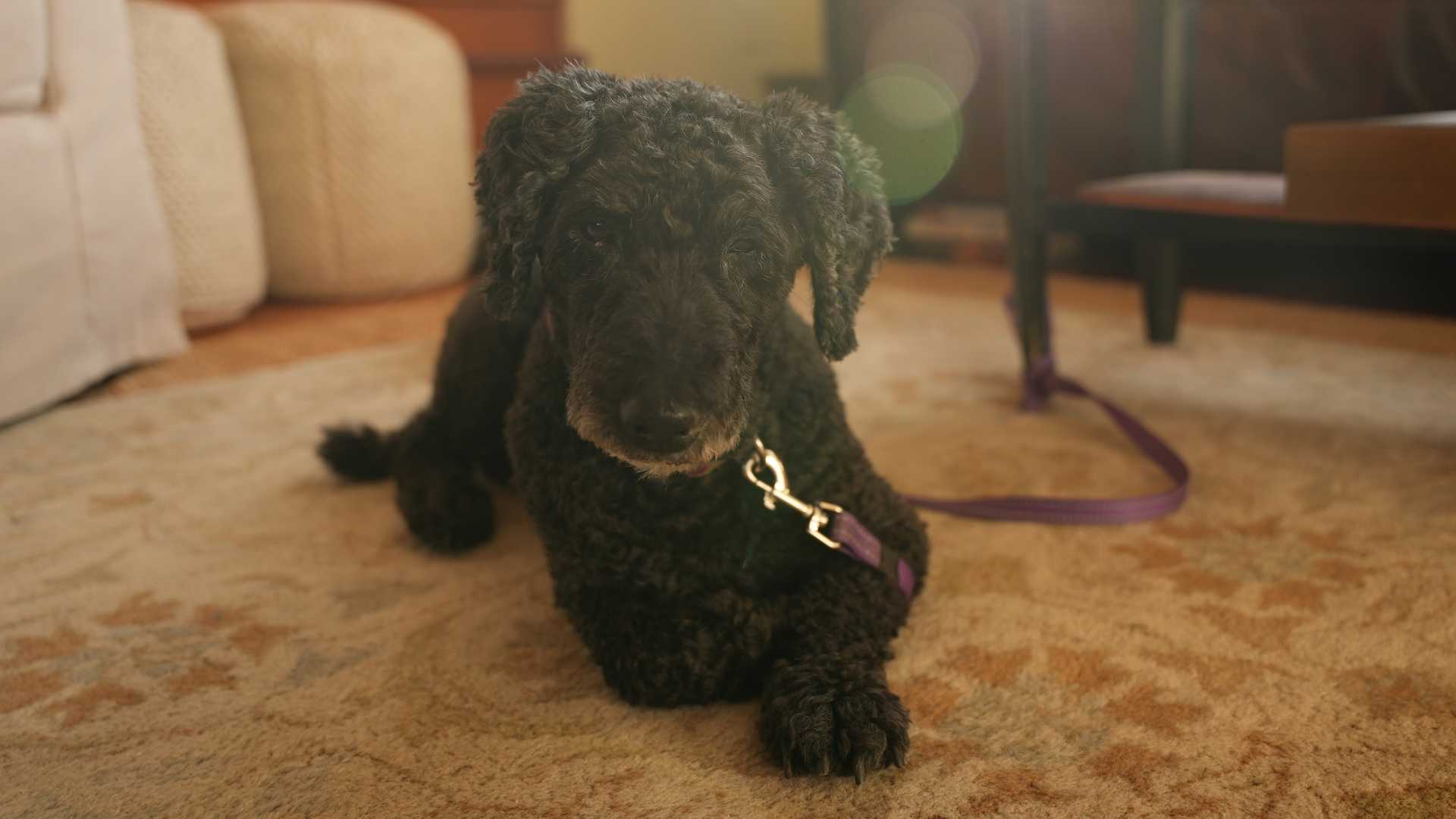
This usually shows up as a gradual decline. Your dog may respond less reliably to your voice or miss sounds they once noticed immediately.
I saw this with Tula as she got older. Her hearing was not what it used to be, and I had to change how I got her attention.
Earwax, debris, infections, or growths
Anything that physically blocks sound from entering the ear can affect hearing.
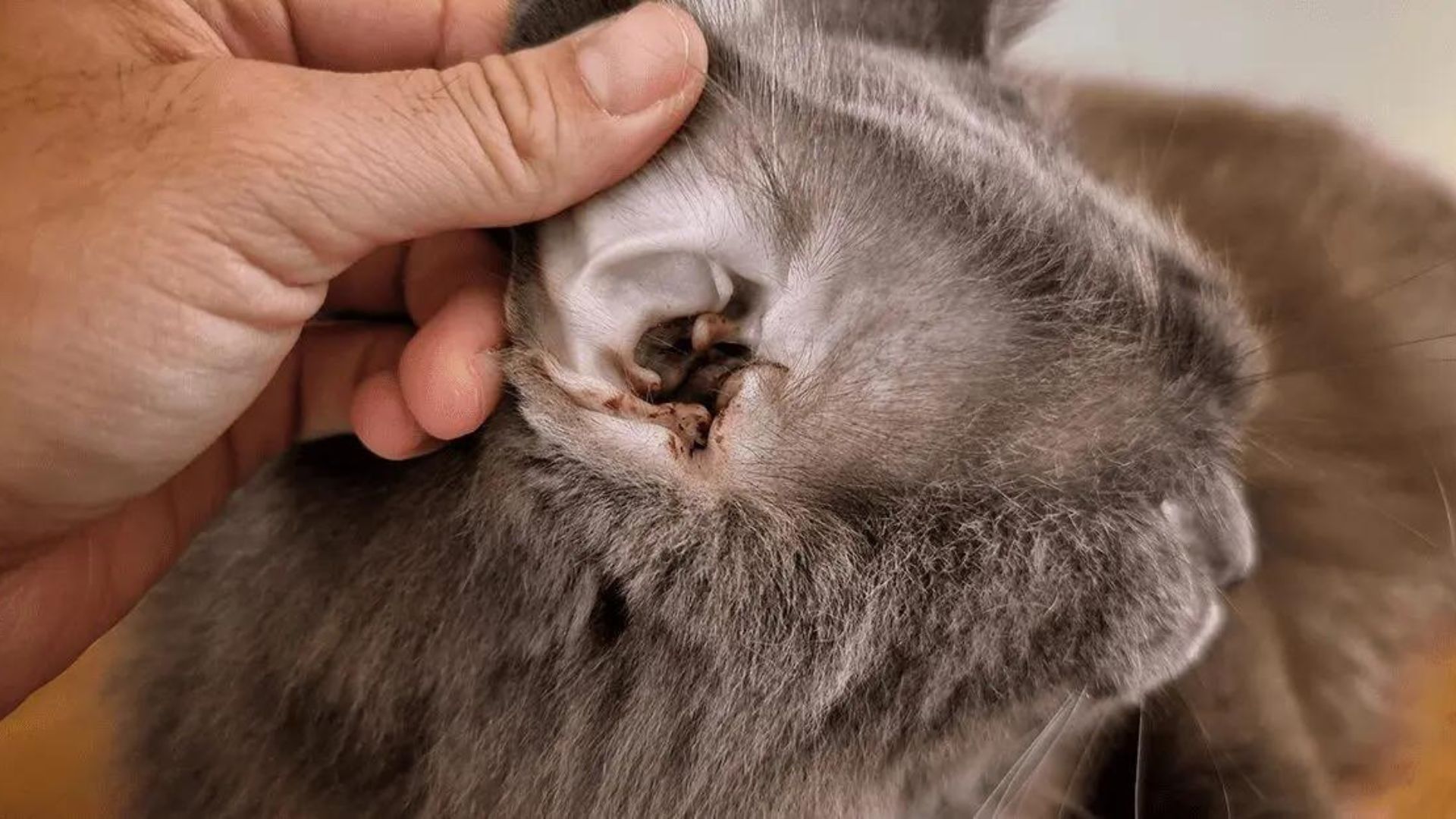
During an ear examination, I look for:
- Excess wax or debris.
- Signs of infection.
- A punctured eardrum.
- Growths or polyps.
- Other visible obstructions in the ear canal.
That is why looking inside the ears is such a useful first step. Before assuming the problem is aging or nerve damage, we need to check for something physically interfering with hearing.
Medications and ear treatments
Some medications can cause ototoxicity, meaning they can damage the structures involved in hearing.

A thorough medication history matters, especially when hearing loss happens suddenly. That history should include oral medications, ear drops, ear flushes, and recent procedures.
These are medications and treatments I discuss when investigating hearing loss:
| Medication or treatment | Why it belongs in the discussion |
|---|---|
| Azithromycin, also called Zithromax | An antibiotic used in dogs and cats that can be associated with ototoxicity |
| Gentamicin, also called Gentocin | An antibiotic found in some veterinary ear medications that can damage hearing |
| Chlorhexidine ear flushes | Chlorhexidine can cause ototoxicity when used to flush the ear |
| Furosemide, also called Lasix | A diuretic commonly used for fluid buildup, often associated with heart disease |
| Certain chemotherapy drugs | Some can cause ototoxicity |
| Certain NSAIDs | Some anti-inflammatory drugs can affect hearing, particularly at high doses |
If your dog needs an ear cleaning, my suggestion is to ask whether the flush contains chlorhexidine and request an option without it.
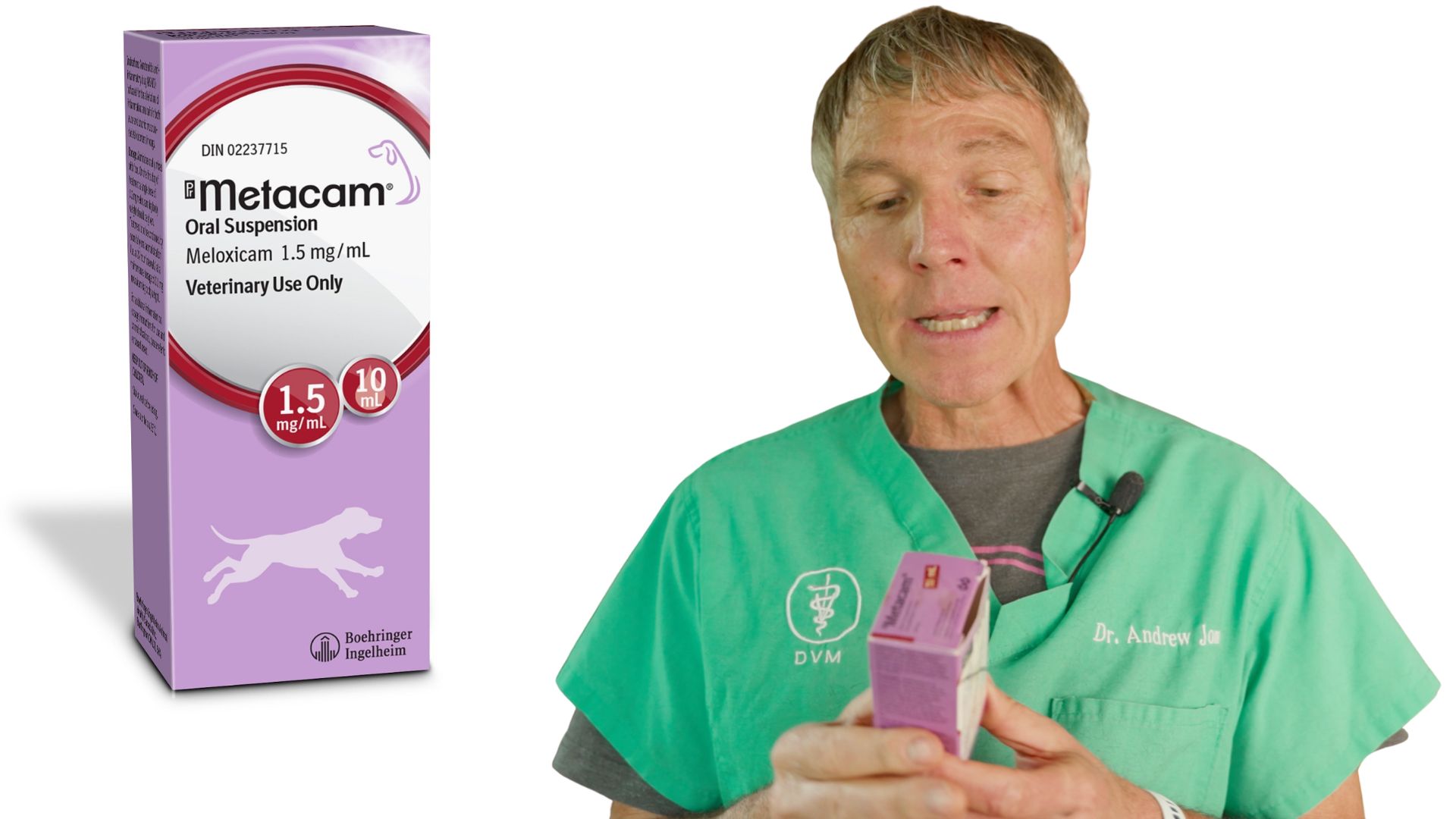
If your dog needs ear drops, ask whether they contain gentamicin. There are other antibiotics available, and I encourage you to discuss those options with your veterinarian.
Hearing loss after anesthesia
I have seen animals come out of anesthesia with hearing loss.
The anesthetic drugs may play a role. Reduced blood flow during anesthesia may also contribute. If the change appeared after a procedure, that timing is worth discussing with your veterinarian.
Loud noises
Very loud noises can affect a dog’s hearing, just as they can affect ours.
For most dogs and cats, this is not the main cause of hearing loss, but it is another possibility to consider.
Genetics and deafness from birth
Some dogs are born deaf. Genetics can play a role, and deafness is associated with white coats in certain dogs, particularly Dalmatians.
A young dog with hearing loss needs a different history from an older dog whose hearing has slowly declined.
How does a veterinarian check a dog’s hearing?
The first steps are usually simple: observe how your dog responds to sound, examine the ears thoroughly, and review their medical history.
A thorough ear examination
I use an ear scope to look for debris, infection, eardrum damage, and visible growths. This helps identify physical problems that may interfere with sound reaching the inner ear.
A neurological examination
A neurological exam checks reflexes, pupil responses, and other signs that may help identify a nerve-related problem.
If the ear and neurological examinations look normal, finding the cause can be more challenging. That is when the history becomes especially useful.
BAER testing
A more advanced hearing test is called BAER testing. This is generally performed at a referral practice.
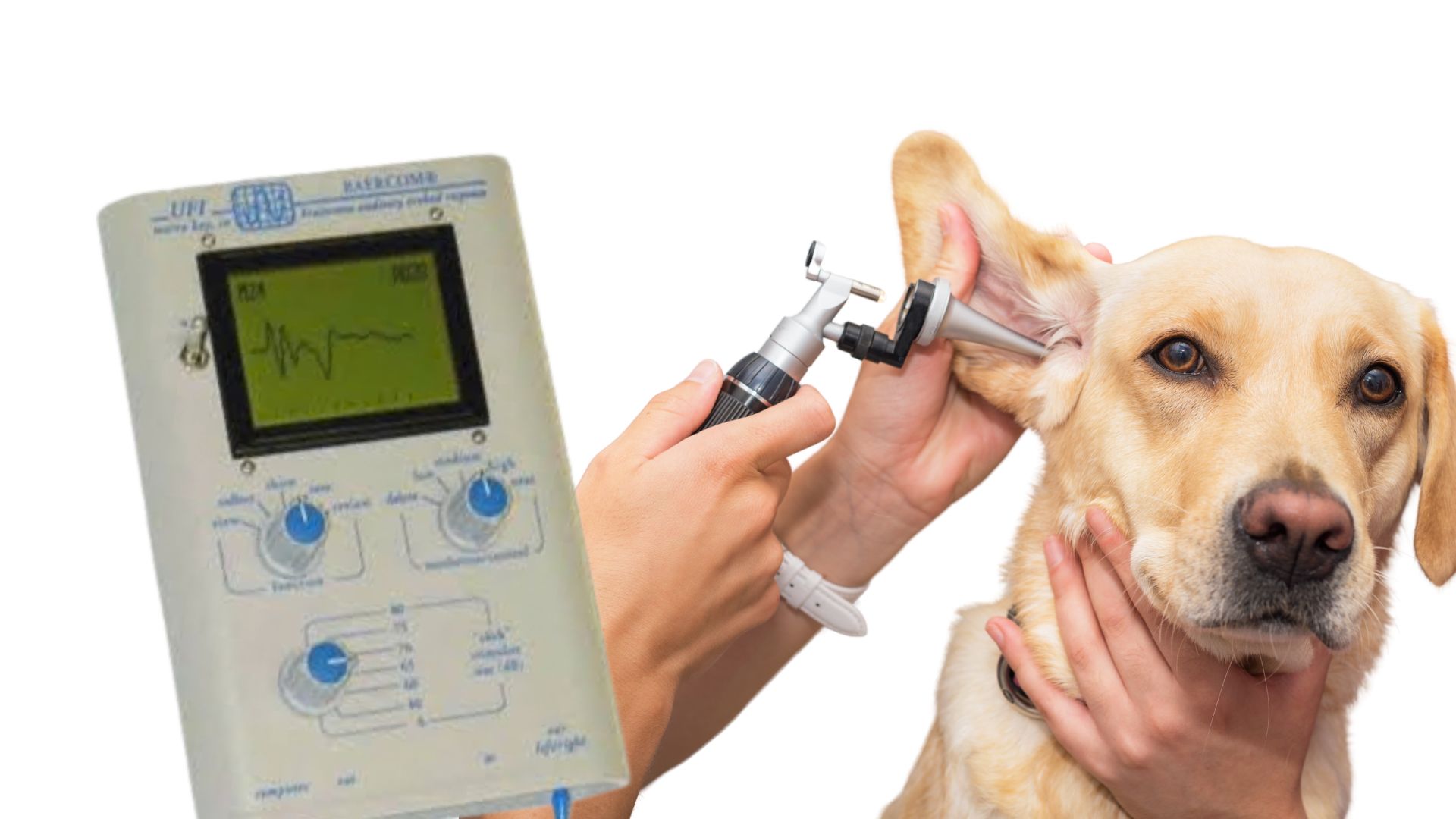
It is an option when more detailed hearing assessment is needed.
What does a tuning fork tell us?
In people, a vibrating tuning fork placed at the center of the forehead can help distinguish a blockage-related hearing problem from a nerve-related problem.
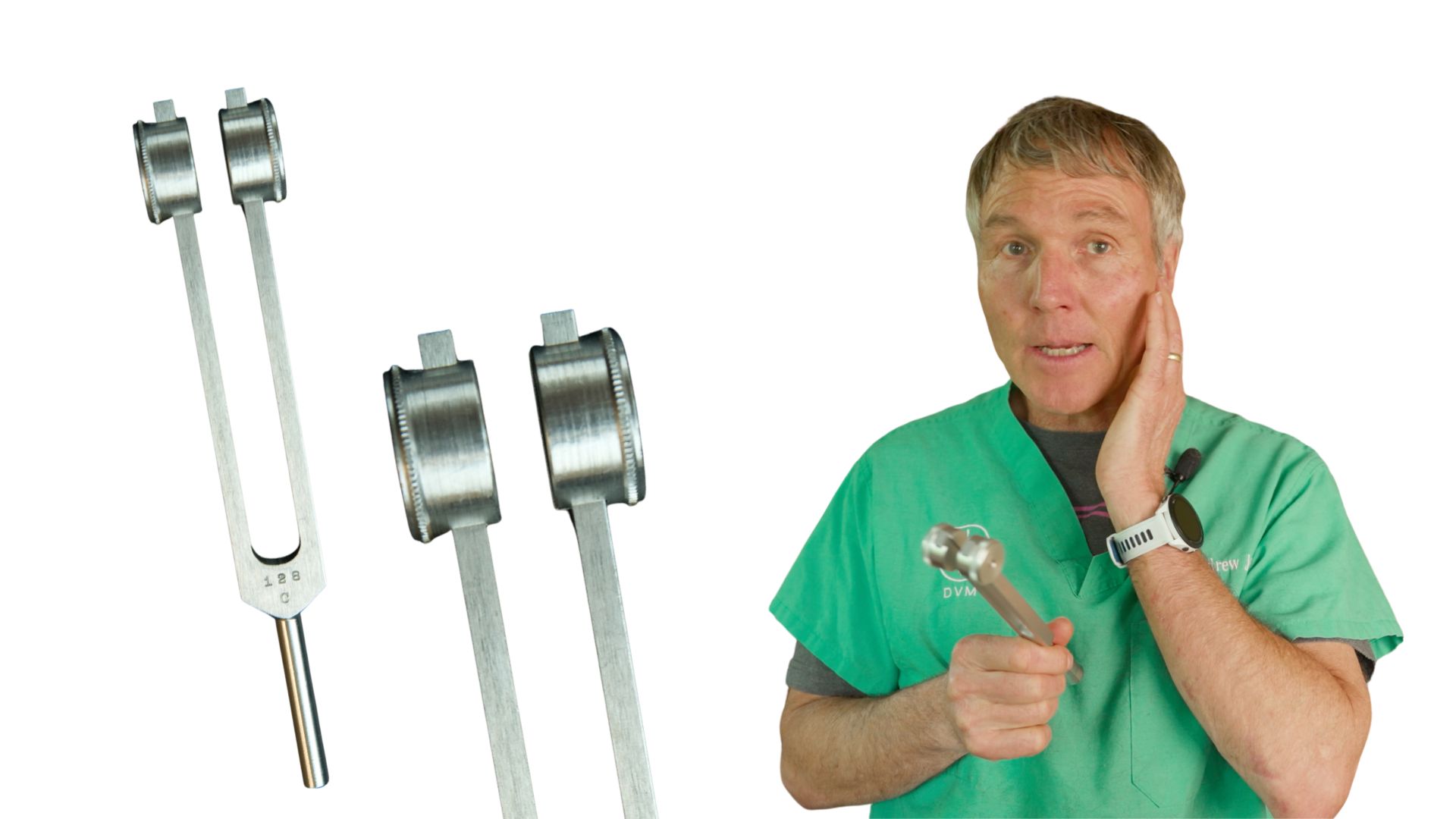
With normal hearing, the sound is heard equally on both sides. With wax or fluid affecting one ear, the sound may seem louder in that ear. With nerve-related hearing loss on one side, it may seem louder in the better-hearing ear.
I demonstrated this with a tuning fork vibrating at about 512 hertz. It is an interesting way to explain how hearing works, but it is not a test we typically use in veterinary medicine.
How can I communicate with a deaf dog?
When your dog loses hearing, you need another way to say, “Come here,” “Good dog,” or “I’m right beside you.”
The goal is to make communication clear, consistent, and pleasant.
Teach simple hand signals
Hand signals can help your dog understand familiar commands, including sit and stay.
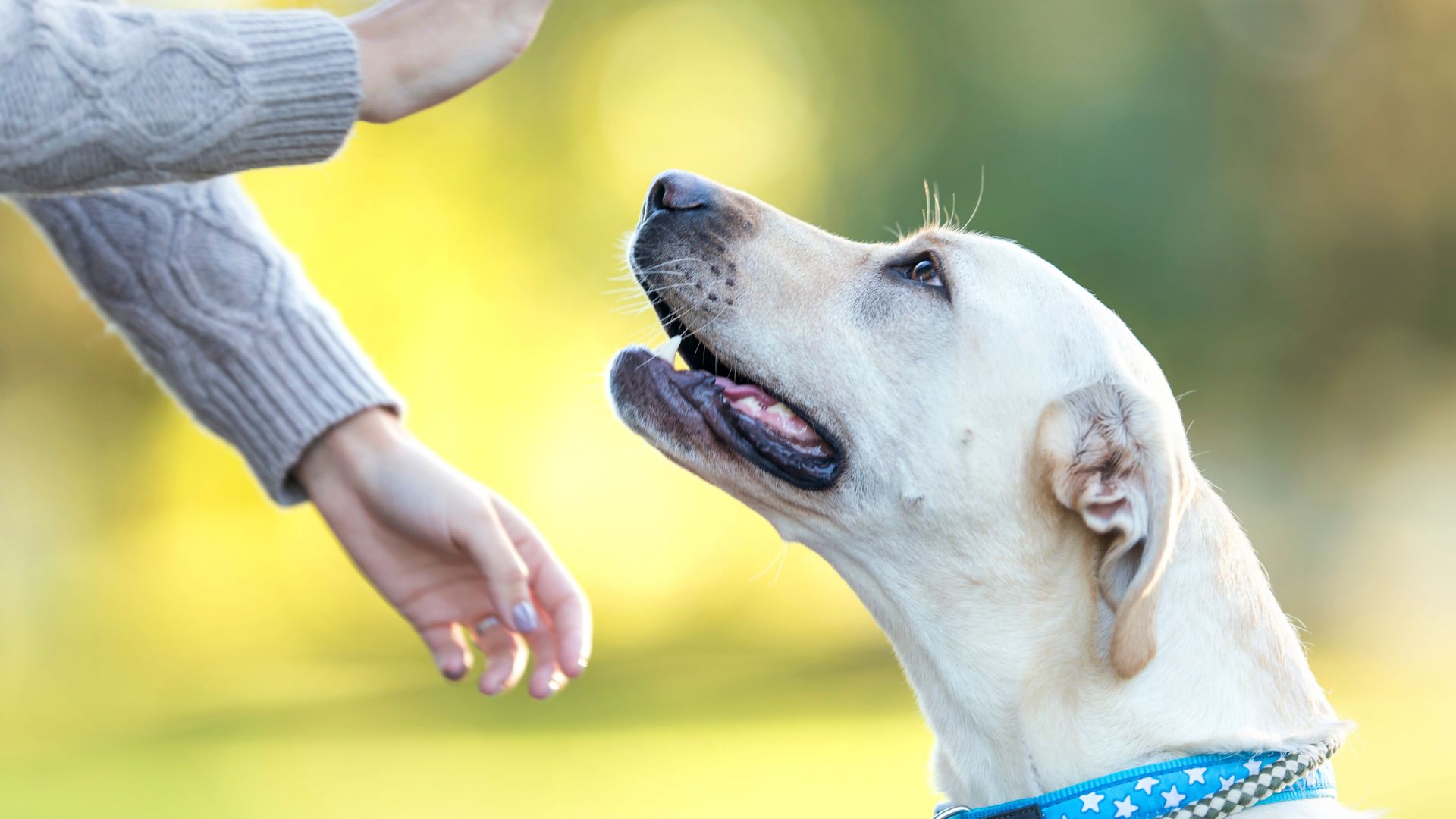
Start with a simple visual signal for praise. For example:
- Let your dog see you clap your hands.
- Pair that movement with a positive reward.
- Repeat it when your dog does something you want to encourage.
The clap works as something your dog sees, rather than something they hear. A little piece of chicken can help make the connection. Cassian certainly appreciates that part.
I have taken my young dogs to obedience classes, and I find the refresher useful myself. Familiar hand commands can become especially valuable when hearing starts to decline.
Get where your dog can see you
If your dog cannot hear you, calling louder may not get you very far.
Move into their line of sight and use a clear hand movement.
With Tula, I would sometimes get in front of her so she could see me directing her. At other times, a visible object, such as a stick moving past her, helped draw her attention back toward me.
Consider a vibrating collar
A vibrating collar is another way to get a deaf dog’s attention.
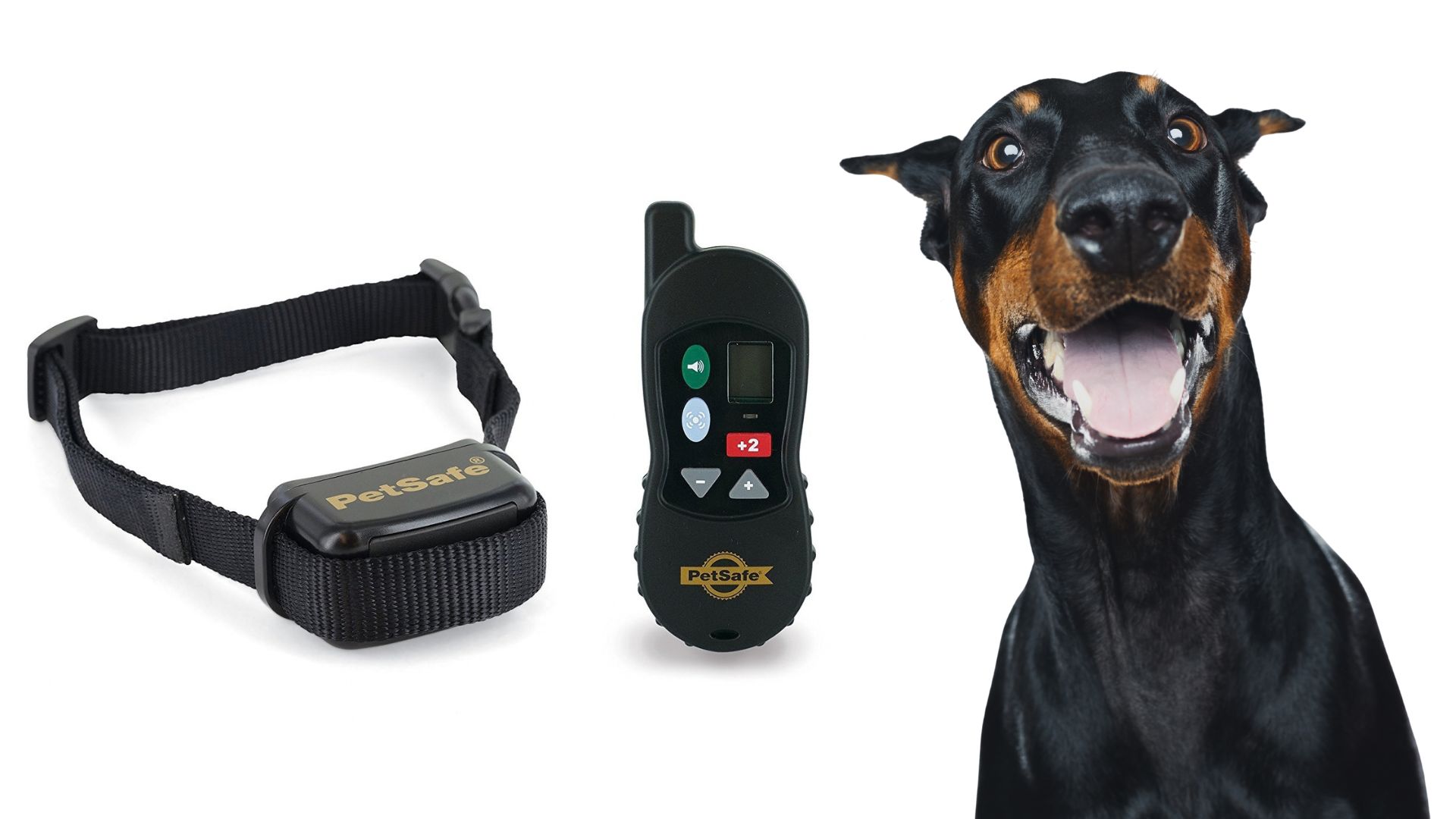
With training, the vibration can become a signal that you want your dog to look toward you. Once you have their attention, you can communicate with hand signals.
How can I avoid startling my deaf dog?
A dog who cannot hear you approaching may wake with a start. Tula did this more often as her hearing declined.
Try these ways to let your dog know you are nearby:
- Switch a light off and on.
- Make a gentle vibration through the floor.
- Approach where your dog can see you.
- Touch them gently and consistently in the same spot.
- Pair a gentle touch with a treat to make the experience positive.
The smell of a treat may also help a sleeping pet wake more pleasantly.
I want that interaction to feel reassuring. The aim is to let your dog know you are there without giving them a fright.
How can I keep a deaf dog safe outside?
A leash is especially valuable when your dog cannot hear approaching vehicles or your voice.
I put extra emphasis on leash control around traffic and in unfamiliar places. Your dog may be looking ahead while you can see something they have not noticed.
A collar and ID tag that clearly states “I am deaf” can also help other people understand why your dog may not respond when called.
When should I call my veterinarian about hearing loss?
Contact your veterinarian when your dog’s hearing changes, particularly if the loss happens suddenly.
Make a note of:
- When you first noticed the change.
- Whether it appeared suddenly or gradually.
- Any history of ear infections.
- Recent medications, ear drops, or ear flushes.
- Any recent anesthesia or medical procedure.
Those details help guide the examination and the discussion about possible causes.
What is the best way to help a dog who cannot hear?
My first step is to look for a cause, especially when hearing loss is sudden. My next step is to help the family communicate in ways their dog can still understand.
Simple hand signals, positive rewards, gentle approaches, and good leash control can make daily life easier. You may need to change how you get your dog’s attention, but you can still make that connection.
P.S. Your dog may no longer hear “good dog,” but a familiar hand signal and a little piece of chicken can still get the message across. Some things need very little explanation.
Click To Get A Free Copy of My E-Book!