Before Giving Flea and Tick Medication: What Dog and Cat Parents Should Know

Should You Be Concerned About Flea and Tick Medications?
Yes, you should be aware of the possible risks before giving flea and tick medication to your dog or cat.
That does not mean every pet should avoid these products.
It means you need to understand the balance.
Fleas and ticks are not harmless. Ticks can spread serious diseases such as Lyme disease, ehrlichia, babesiosis, and anaplasma. In high-risk tick areas, a conventional flea and tick medication may be the better choice.
But when these chemical insecticides are given month after month after month, they may add to your pet’s overall toxic load. Some dogs and cats can react, and some reactions may involve the nervous system.
So the real question is not, “Are flea and tick medications always bad?”
The better question is:
Does my dog or cat truly need this level of prevention, this often, in my specific situation?
That is where we need to think.
Dr. Jones’ Diatomaceous Earth Powder for Pets




Why Are Flea and Tick Medications Used?
Nobody wants fleas.
Nobody wants ticks.
Ticks especially can bring a host of tick-borne diseases.
Common tick-borne diseases mentioned include:
- Lyme disease
- Ehrlichia
- Babesia
- Anaplasma
These are not minor issues.
So yes, flea and tick medications were developed for a reason.
They can be very effective.
The concern is that many of these products work by targeting the nervous system of the parasite. That is how they affect fleas and ticks.
But in some animals, they may also affect the nervous system of the dog or cat.
That is where the concern starts.
What Flea and Tick Medications Were Mentioned?
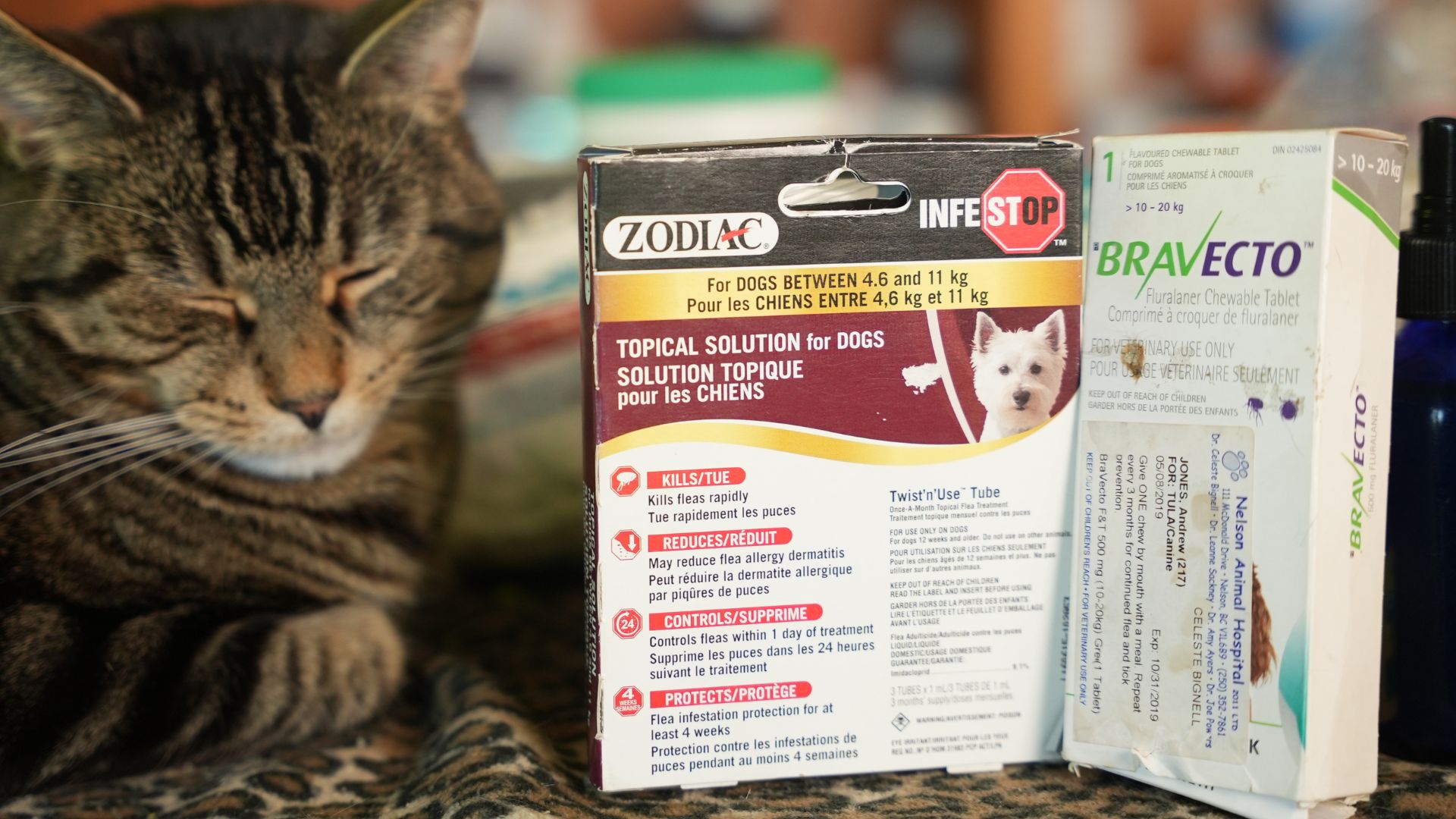
The pasted content mentioned several commonly used flea and tick medications or drug classes.
| Product or Drug Class | Mentioned Example | Concern Discussed |
|---|---|---|
| Imidacloprid | Advantage | Reports of reactions in some pets |
| Isoxazolines | Bravecto, NexGard, Simparica | Potential neurologic side effects |
| Fluralaner | Bravecto | Residues may persist beyond expected label period |
| Topical flea and tick products | General topical preventatives | Possible pet exposure, human exposure, environmental runoff |
These products can work.
The question is how often they are needed, whether your pet is reacting, and whether safer options may be enough in lower-risk situations.
What Are Isoxazolines?
Isoxazolines are a newer class of flea and tick preventatives.
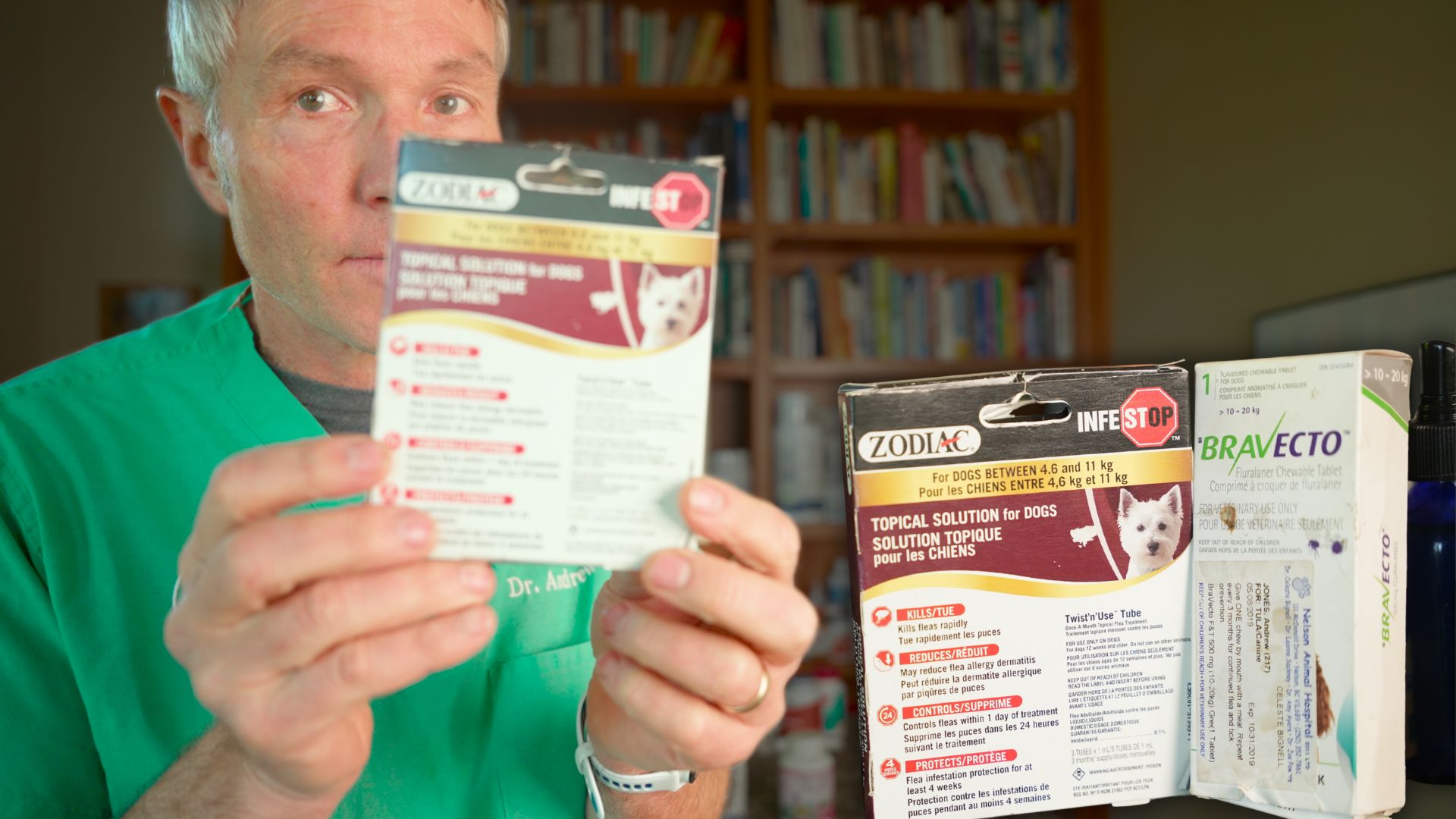
Examples mentioned include:
- Bravecto
- NexGard
- Simparica
These products target the nervous system of fleas and ticks.
They are effective, but they have also been linked to potential neurologic adverse events in dogs and cats.
The pasted content specifically mentions that the FDA issued an alert for potential adverse neurologic events with some of these drugs.
What Neurologic Side Effects Should You Watch For?
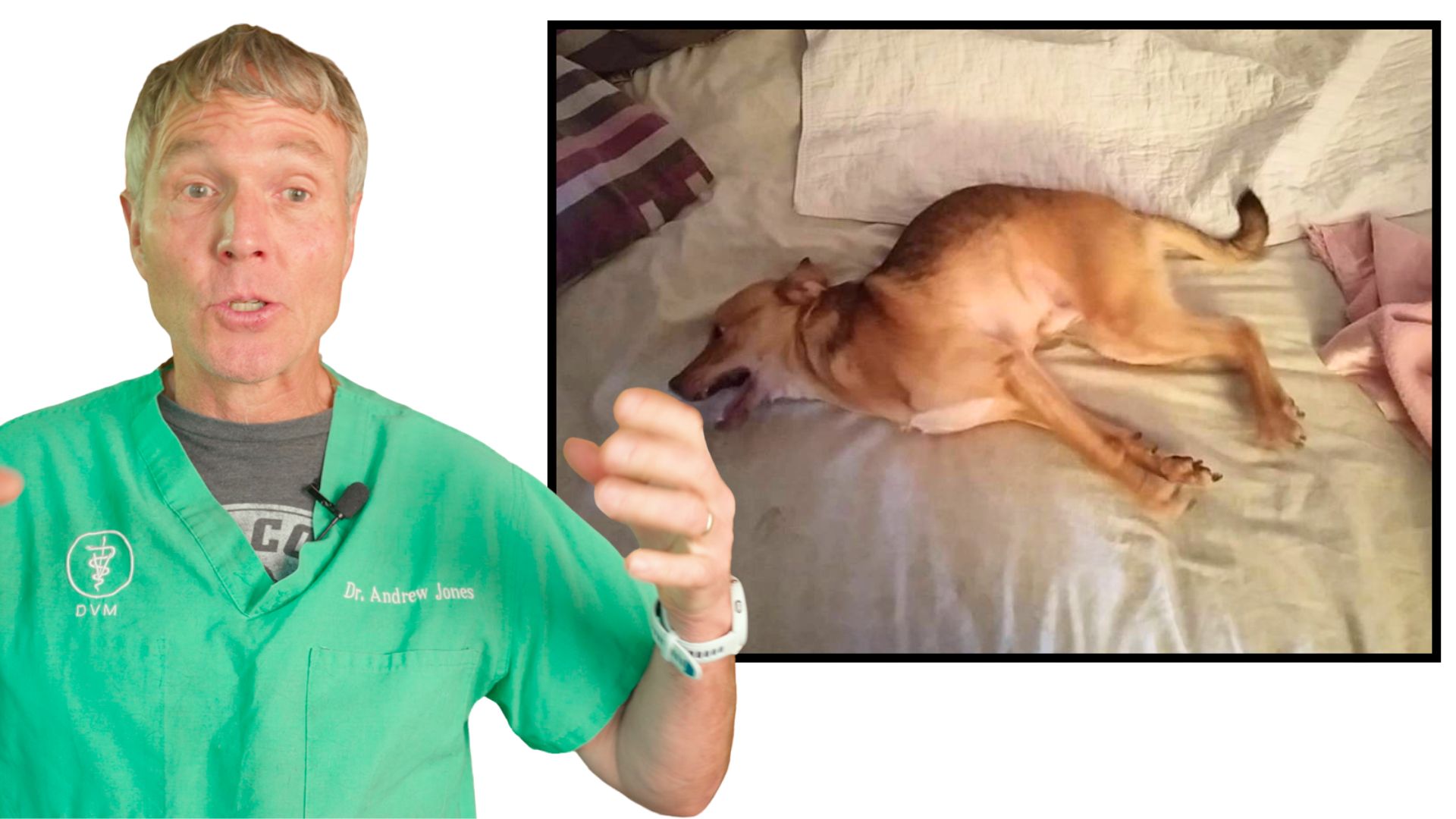
The neurologic signs mentioned include:
- Ataxia
- Swaying
- Weakness
- Muscle tremors
- Seizures
You may also see similar types of neurologic issues with some topical flea and tick medications, although the pasted content suggests perhaps not to the same extent.
If your dog or cat develops sudden neurologic signs after a flea or tick medication, call your veterinarian.
Do not wait and hope seizures or severe tremors simply pass.
That is not a wait-and-see situation.
Why Can These Medications Affect the Nervous System?
The main issue is how the products work.
They are designed to affect the parasite’s nervous system.
That is how they kill or repel fleas and ticks.
But your dog or cat also has a nervous system.
In some animals, the medication may appear to cause nervous system side effects.
This is why the FDA neurologic alert matters.

It does not mean every dog or cat will react.
It means pet parents should know what signs to watch for.
What About Topical Flea and Tick Medications?
Topical flea and tick medications are applied to the skin.
The concern is that some of the product can eventually wash off or transfer.
That may expose:
- Your pet
- Your hands
- Your household
- Wildlife
- Waterways
In some areas of Europe, there has been encouragement to ban certain topical flea and tick preventatives because toxic insecticides are being found in waterways and may be harming wild animals.
So this is not just a pet issue.
It can also be an environmental issue.
What Did Dr. Karen Becker Report?
Dr. Karen Becker published an interesting post on this topic.

The discussion focused on research showing that residues of flea and tick drugs, including Bravecto, may persist beyond the expected label period.
The specific concern mentioned was that residues were still being found in stool after the supposed label period had ended.
That means the drug may be sticking around in the animal longer than many pet parents realize.
Your pet’s body then has to keep working to detoxify and eliminate it.
How Does the Body Detoxify These Products?
The pasted content mentioned several systems involved in detoxification:
- Liver
- Kidneys
- Gut microbiome
- Urine
- Stool
The liver plays a major role in detoxification.
The kidneys help remove compounds through the urine.
The gut microbiome may also play a large role.
If residues are still present in the stool after the expected label period, that suggests the body is still trying to move the drug out.
And if your pet is getting these drugs month after month, that cumulative load may matter.
Dr. Jones’ Ultimate Liver Support Formula Soft Chews

What Is the Concern With Long-Term Use?
The concern is not only one dose.
Sometimes, if there is a serious parasite problem, using a conventional medication once may make sense.
I can get my head around that.

The bigger concern is giving these chemical insecticides repeatedly, month after month after month.
That ongoing exposure adds to your pet’s toxic load.
And our pets are already exposed to many chemicals that were not around 50 years ago.
These may include:
- Flea and tick medications
- Household cleaners
- Lawn chemicals
- Roundup exposure
- Chemicals in food
- Environmental toxins
Your dog walks through the grass.
Your cat walks through the home.

They lick their paws.
They groom themselves.
They ingest what they touch.
That matters.
Why Are Dogs and Cats More Exposed Than We Think?
Dogs and cats are closer to the ground than we are.
They walk through lawns, dirt, floors, and household dust.

Then they lick their paws or groom their coat.
That is one reason they may ingest more chemicals than we expect.
In some places, such as New York City, dogs and cats can have detectable Roundup levels in their urine, sometimes much higher than people.
Part of that may come from food.
Part may come from environmental exposure.
Either way, it supports the bigger point:
Your pet’s chemical exposure is not just one thing.
It is the total load.
What Are Possible Signs of Flea and Tick Medication Reactions?
The pasted content focuses especially on neurologic signs.
Signs to Watch For
- Ataxia
- Swaying
- Weakness
- Muscle tremors
- Seizures
- Sudden behavior changes
- Unusual lethargy
- Possible elevated liver enzymes on blood work
- Any new symptoms after starting flea or tick medication
If your pet has a known history of reactions, discuss that with your veterinarian before giving another dose.
Are Flea and Tick Medications Always Bad?
No.
This is about balance.
If you live in an area with a serious tick burden, and your dog comes back covered in ticks, the risk of tick-borne disease may be higher than the risk of the medication.
In that case, a conventional flea and tick preventative may be needed.
I understand that.
But if your pet only gets the occasional tick, or you are mostly dealing with mild flea prevention, then it may make sense to look at lower-toxin or holistic prevention first.
When Might Conventional Flea and Tick Medication Be Necessary?
Conventional products may be reasonable if:
- You live in a very high-risk tick area
- Your dog comes home covered in ticks
- Tick-borne disease risk is high
- Holistic options have not worked
- Daily tick checks are not enough
- Yard control has not helped
- Collars or natural repellents are not effective enough
- Your pet has a serious flea infestation
- The parasite risk is greater than the medication risk
This is not one-size-fits-all.
A dog living in a heavy tick area and running through the woods every day is very different from an indoor cat with rare flea exposure.
When Might Natural Prevention Be Worth Trying First?
Natural prevention may be worth considering if:
- Your pet only gets occasional ticks
- You are mainly managing fleas
- You do daily tick checks
- You can control the yard environment
- Your pet has reacted to conventional products
- Your pet has elevated liver enzymes
- Your pet has neurologic sensitivity
- You want to reduce chemical exposure
- You are not in a high-risk tick-borne disease area
The goal is not to be toxin-free at all costs.
Unfortunately, that is not always realistic.
The goal is to use the least toxic effective option for your pet’s actual risk.
What Natural or Lower-Toxin Options Were Mentioned?
The pasted content refers to previous videos with specific flea and tick preventatives, sprays, and oral options, but does not list exact recipes or doses.
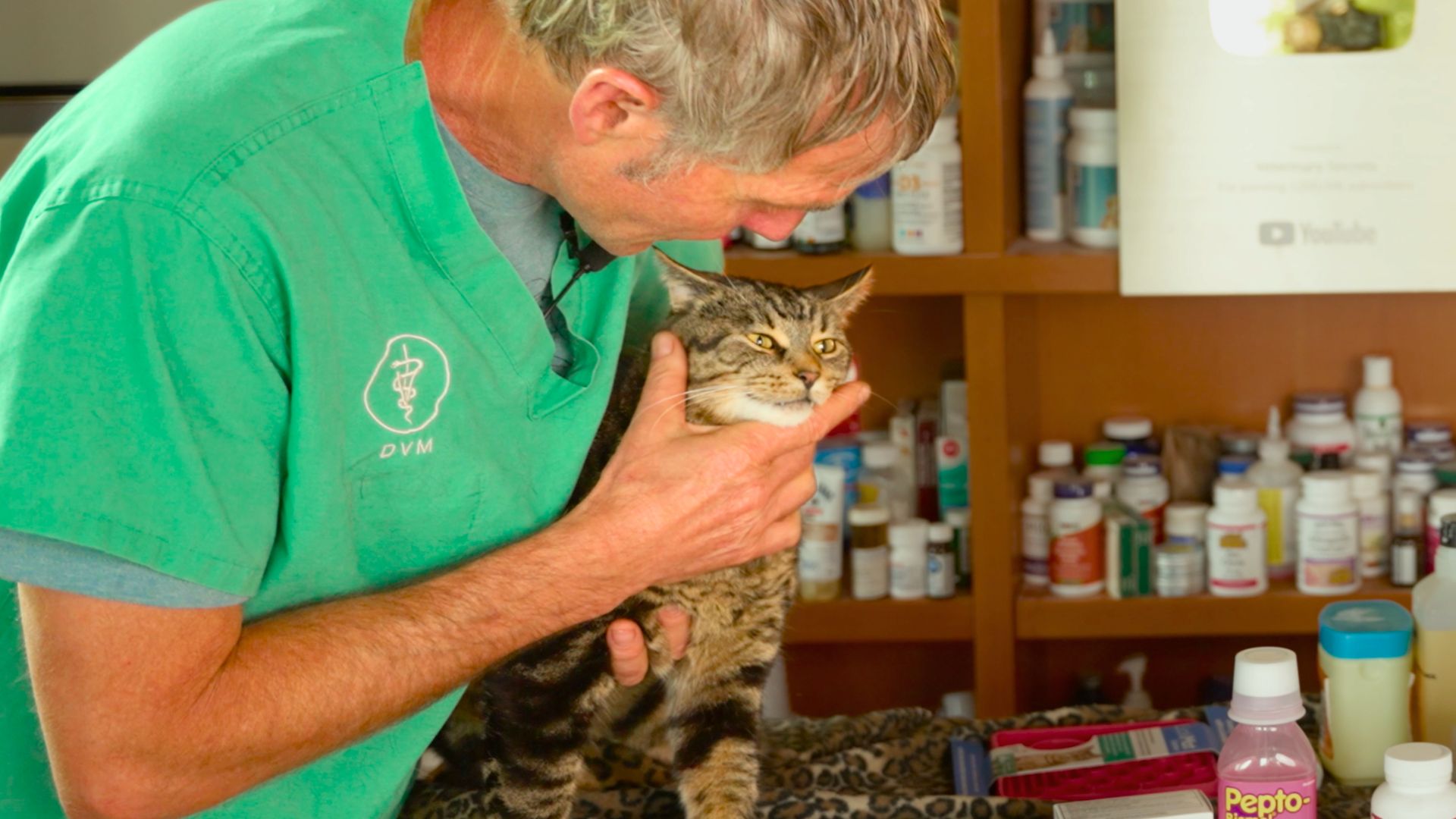
It does mention:
- Daily tick checks
- External tick control in the yard
- Garlic-based repellents
- Garlic Guard
- Flea and tick collars
- Holistic prevention when risk is lower
- Probiotics to support detoxification
Because exact spray recipes and oral protocols were not included in the pasted content, I will not invent them here.
That would be me making stuff up.
And you already have the internet for that.
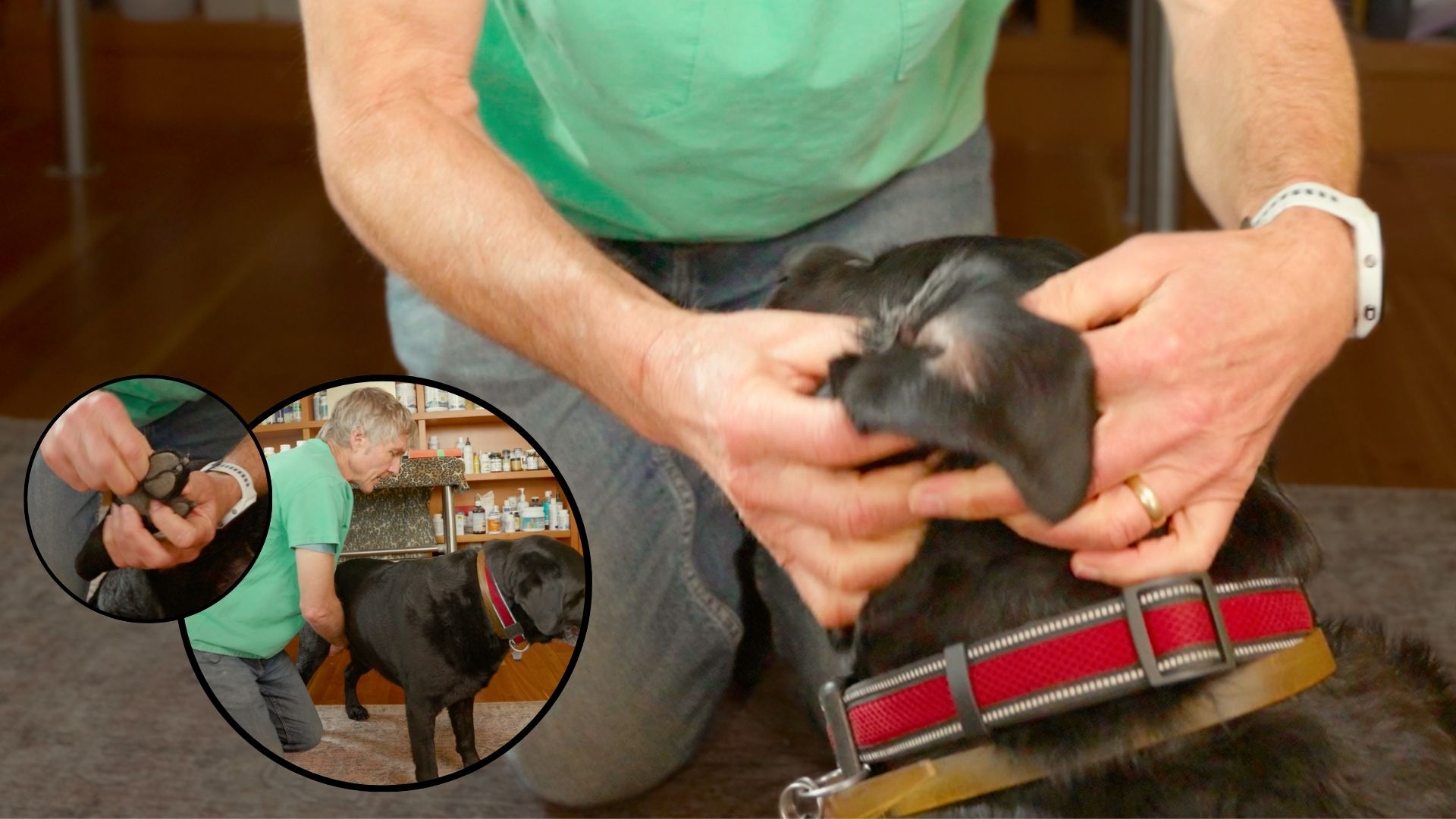
Daily Tick Checks Matter
Daily tick checks are one of the simplest things you can do.
If your dog goes outside, especially through grass, brush, or woods, check them when they come back inside.
Focus on:
- Ears
- Neck
- Under the collar
- Armpits
- Belly
- Groin
- Between toes
- Tail base
This is especially important if you are trying to reduce conventional flea and tick medication use.
Daily checking will not stop every tick.
But it can reduce risk.
What About Yard Control?
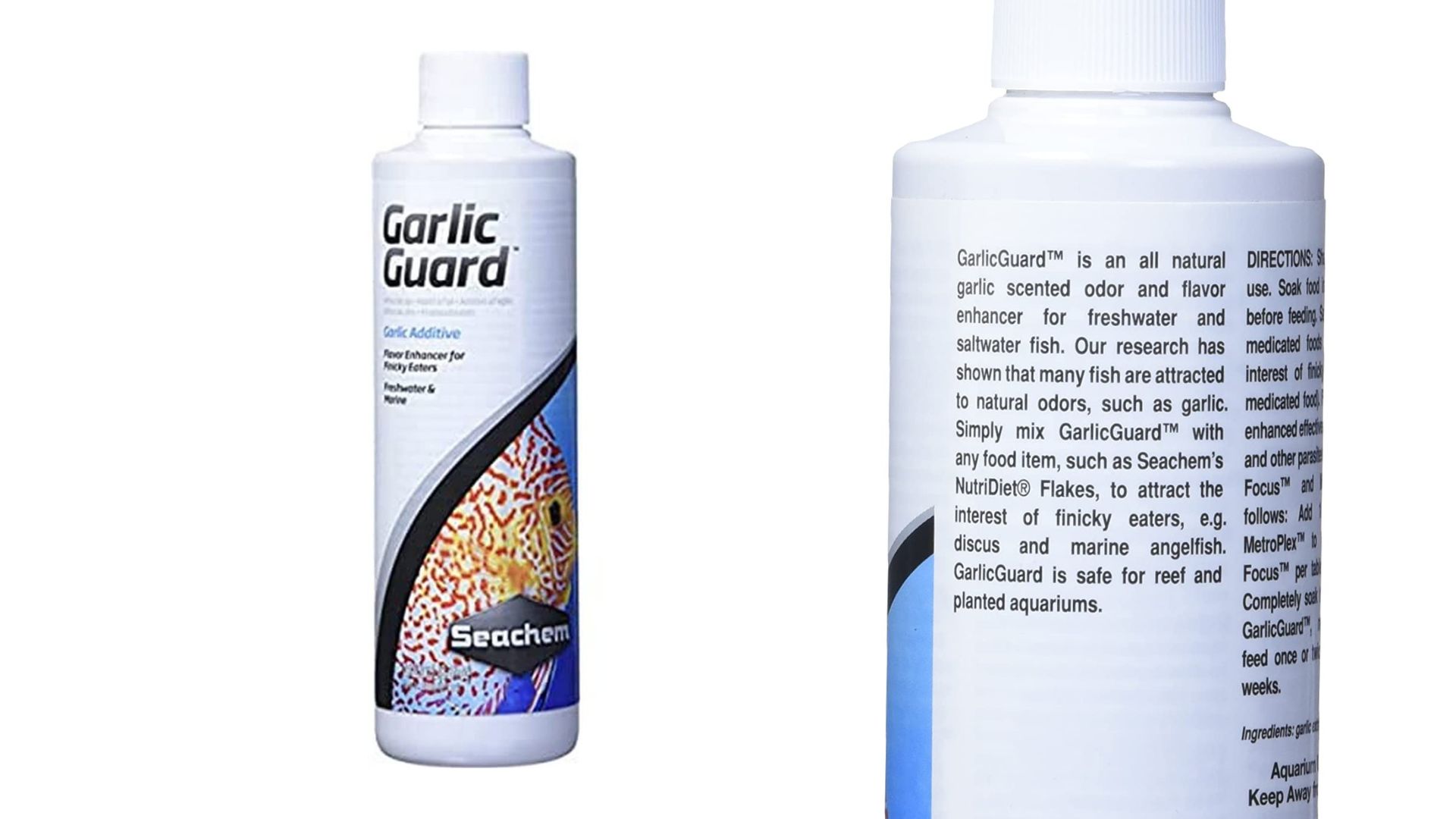
This may be helpful, especially if ticks are coming from your immediate environment.
Possible approaches mentioned generally include external tick control and garlic-based repellents such as Garlic Guard.
If your dog is picking up ticks every time they go outside, the yard may be part of the problem.
Reduce the tick burden there first.
Then decide whether your dog still needs stronger medication.
What About Probiotics After Flea and Tick Medication?
If you are concerned that your dog or cat has been on flea and tick preventatives and may be showing signs of side effects, or if blood work shows elevated liver enzymes, the pasted content suggests considering a good quality probiotic.
Why?
Because the gut microbiome may play a role in detoxification.
Supporting the gut may help the body deal with some of the toxic load.
This is not an antidote.
It is supportive care.
But in a pet exposed to repeated flea and tick medications, especially one with possible side effects, gut support makes sense.
Step-by-Step: What to Do Before Giving Flea and Tick Medication
Step 1: Assess Your Pet’s Actual Risk
Ask yourself:
- Does my pet have fleas now?
- Does my pet get ticks often?
- Are tick-borne diseases common where we live?
- Does my dog run through woods or tall grass?
- Is this an indoor cat with low exposure?
- Has my pet reacted to medications before?
Step 2: Decide if Conventional Medication Is Truly Needed
If your dog is regularly covered in ticks, conventional prevention may be necessary.
If it is just occasional exposure, you may be able to start with lower-toxin prevention.
Step 3: Know the Side Effects
Watch for neurologic signs such as:
- Ataxia
- Swaying
- Weakness
- Muscle tremors
- Seizures
Step 4: Do Daily Tick Checks
If you are using holistic prevention or reducing medication use, daily tick checks matter.
Step 5: Reduce Environmental Exposure
Consider yard control and avoiding known high-tick areas when possible.
Step 6: Support Detoxification
If your pet has had repeated flea and tick medications, elevated liver enzymes, or possible side effects, consider gut support, including a good quality probiotic.
Step 7: Call Your Veterinarian if Your Pet Reacts
If your pet develops neurologic signs, severe weakness, seizures, or concerning symptoms after a flea and tick product, call your veterinarian.
When Should You Call Your Veterinarian?
Call your veterinarian if your dog or cat has:
- Seizures
- Muscle tremors
- Ataxia
- Swaying
- Sudden weakness
- Collapse
- Severe lethargy
- Vomiting or diarrhea after medication
- Signs of toxicity
- Elevated liver enzymes after medication use
- Ongoing neurologic signs
- A suspected reaction to a flea or tick medication
- Symptoms of tick-borne disease
- Heavy flea or tick infestation
Also call before giving flea and tick medication if your pet has a history of seizures or neurologic problems.
That is especially important with isoxazoline products.
Final Thoughts
Flea and tick medications can be effective.
But effective does not mean risk-free.

These products are designed to affect the nervous system of fleas and ticks. In some dogs and cats, especially with certain drugs, there may be nervous system side effects.
The FDA has issued alerts for potential neurologic adverse events with some isoxazoline flea and tick medications, including signs such as ataxia, swaying, weakness, muscle tremors, and seizures.
Topical products also raise concerns because they can wash off, transfer to people, and potentially affect the environment and wildlife.
At the same time, ticks can carry serious diseases.
So we need balance.
If your dog lives in a high-risk tick area and comes home covered in ticks, a conventional preventative may be needed.
But if your pet has low exposure, only occasional ticks, or a history of reactions, then it may make sense to consider daily tick checks, yard control, natural repellents, and lower-toxin options first.
Do not use these products blindly month after month without asking whether your pet truly needs them.
Look at your pet.
Look at your area.
Look at the risk.
Then make the best decision you can.
Click To Get A Free Copy of My E-Book!

P.S. If your dog or cat has been on flea and tick medication and you are seeing neurologic signs, tremors, weakness, seizures, elevated liver enzymes, or your pet just seems off, please do not ignore it.
Call your veterinarian.
And if you are trying to reduce your pet’s toxic load, start with what you can control: daily tick checks, yard management, less chemical exposure, and gut support with a good quality probiotic.
P.P.S. I am not saying never use conventional flea and tick medication.
If you live in a serious tick area, and your dog is coming back covered in ticks, the risk of tick-borne disease may be higher than the risk of the medication.
But if it is occasional ticks or mild flea management, then yes, I would be looking at safer, lower-toxin options first.