Why Is My Dog So Itchy? Yeast, Allergies, Odor, and Natural Relief Options

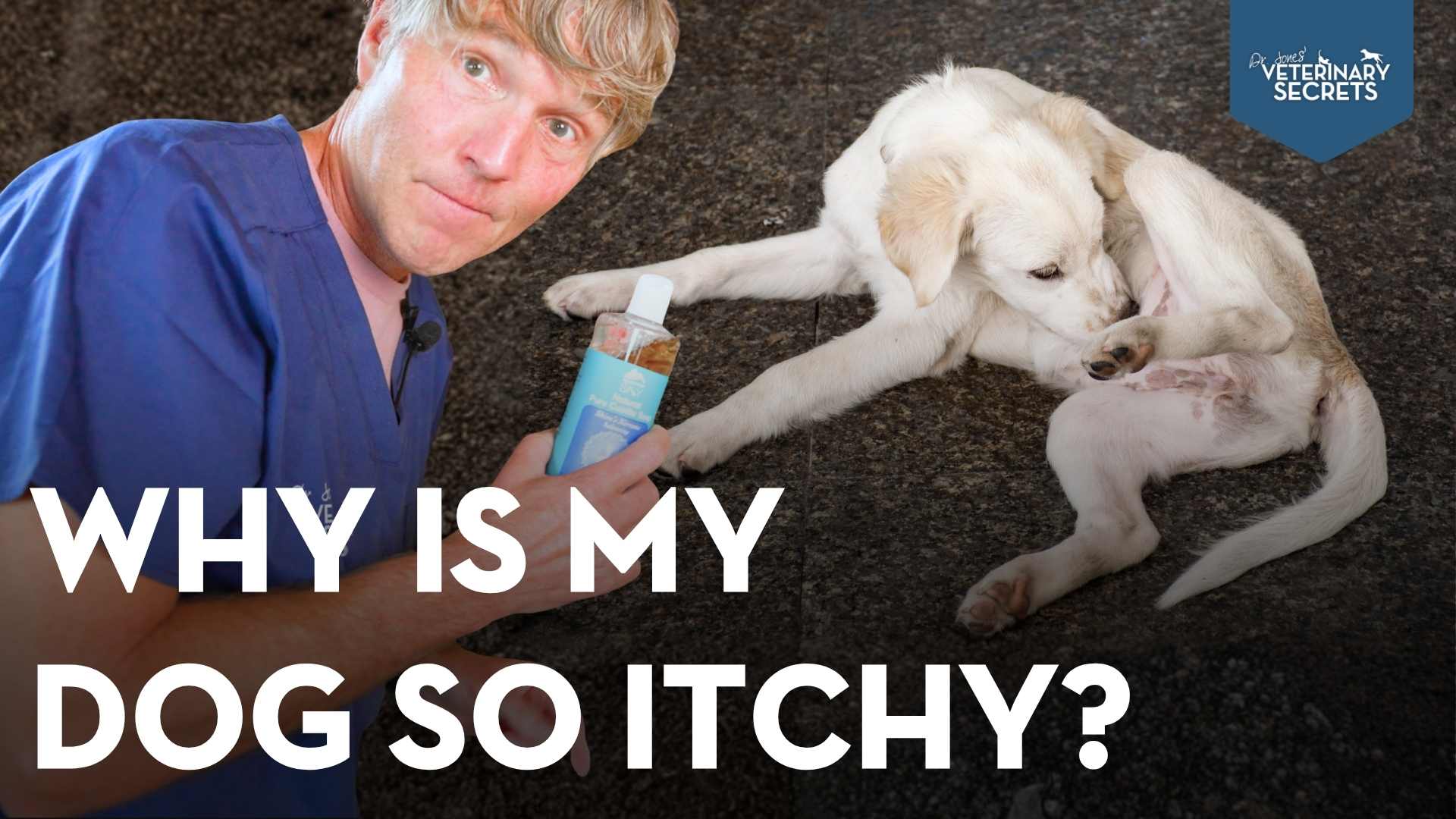
What Is Really Causing Your Dog to Itch?
There is usually not one magic pill that stops all dog itching.
I wish there were.
Many itchy dogs are treated with veterinary medications such as steroids, Apoquel, Atopica, or Cytopoint. These can help some dogs, but they often need to be given repeatedly, and they can have potential side effects.
The bigger question is this:
What is actually causing your dog to itch?
If the real problem is yeast, then you need to treat yeast.
If the real problem is allergy, then you need to support the allergic response.
If your dog smells strong right after a bath, scratches constantly, has thickened skin, or is less responsive to treatments like prednisone, yeast may be a big part of the problem.
And yes, yeast is the same general type of organism that helps bread rise.
I used some last night to make pizza crust.
Different situation.
Please do not put your dog in the oven.
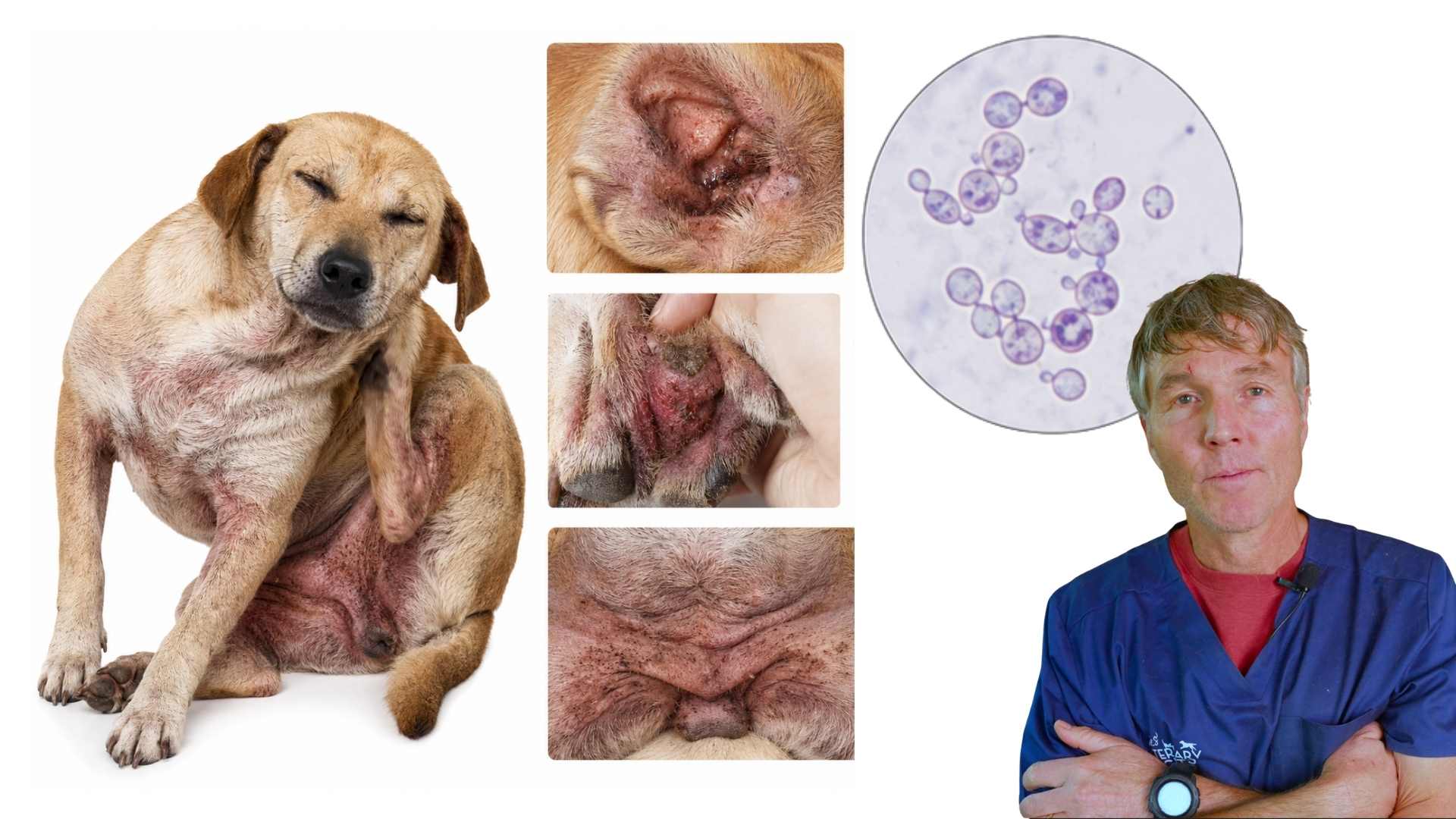
What Is Yeast in Dogs?
Yeasts are spore-like forms of fungi.
The yeast we are most concerned about in itchy dogs is linked to Malassezia dermatitis, a fungal infection of the skin.
Yeast can normally live on your dog’s skin.
That does not automatically mean there is a problem.
The issue happens when yeast overgrows, often because there is an underlying allergy.
Then your dog becomes itchy, smelly, crusty, and uncomfortable.
Why Should You Suspect Yeast?
Yeast infections are often:
- Itchy
- Crusty
- Smelly
- Greasy
- Recurrent
- Worse in skin folds
- Less responsive to standard allergy treatment
A dog may first start with simple itching or a rash.
Over time, the skin can thicken and start to look like “elephant skin.”
The itch can be extreme.
The odor can be especially troublesome.
Sometimes one area is affected.
Sometimes the entire body is affected.
Dogs are most commonly affected, but cats can get yeast infections as well.
Common Signs of Yeast Overgrowth in Dogs
You should think about yeast if your dog has:
- Chronic allergies
- Increased itching and scratching
- Strong dog odor
- Odor that comes back quickly after bathing
- Thickened skin
- Crusty skin
- Skin folds that smell or look irritated
- Less response to treatment, such as prednisone
- Ongoing rash or skin inflammation
If your dog smells like an old gym sock 24 hours after a bath, yeast should be on your list.
What Dogs Are More Prone to Yeast?
Some breeds are genetically predisposed to yeast infections.
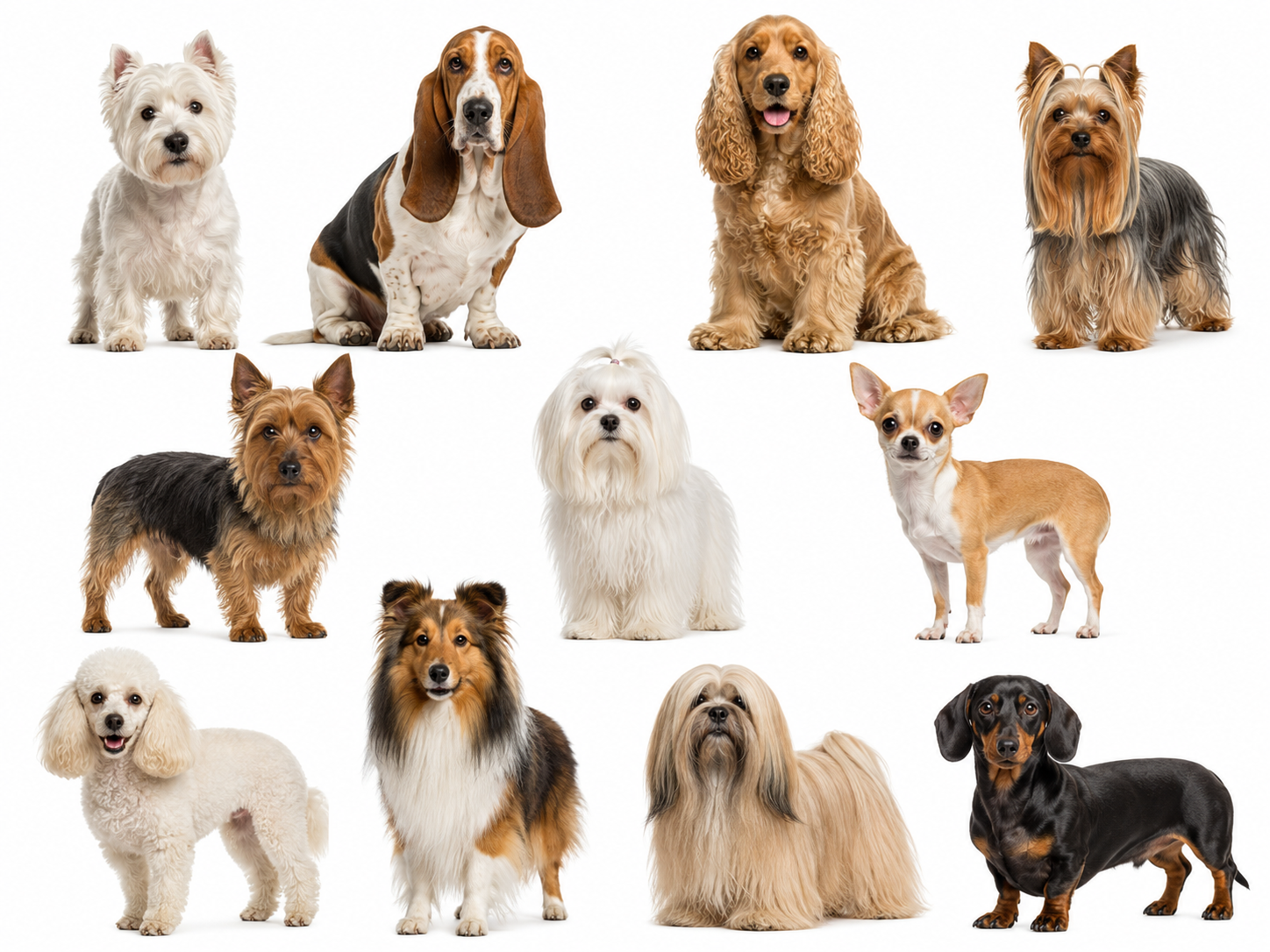
These include:
- West Highland White Terrier
- Basset Hound
- Cocker Spaniel
- Silky Terrier
- Australian Terrier
- Maltese
- Chihuahua
- Poodle
- Shetland Sheepdog
- Lhasa Apso
- Dachshund
A Westie with atopy and a secondary yeast infection is a classic example.
Allergy starts the problem.
Yeast moves in and makes everything smellier and itchier.
Rude, but common.
Why Do Allergies and Yeast Often Happen Together?
Yeast are normal skin inhabitants.
But when your dog has an underlying allergy, the skin barrier can change.
The skin becomes inflamed, irritated, oily, or moist.
That creates a better environment for yeast to overgrow.
So if your dog has allergies and keeps getting smelly, itchy skin, the yeast may not be the original cause.
But it can become the problem that keeps your dog miserable.
This is why treating the actual cause matters.
If yeast is involved, treat the yeast.
How Is Yeast Confirmed?
Your veterinarian can confirm yeast fairly easily.
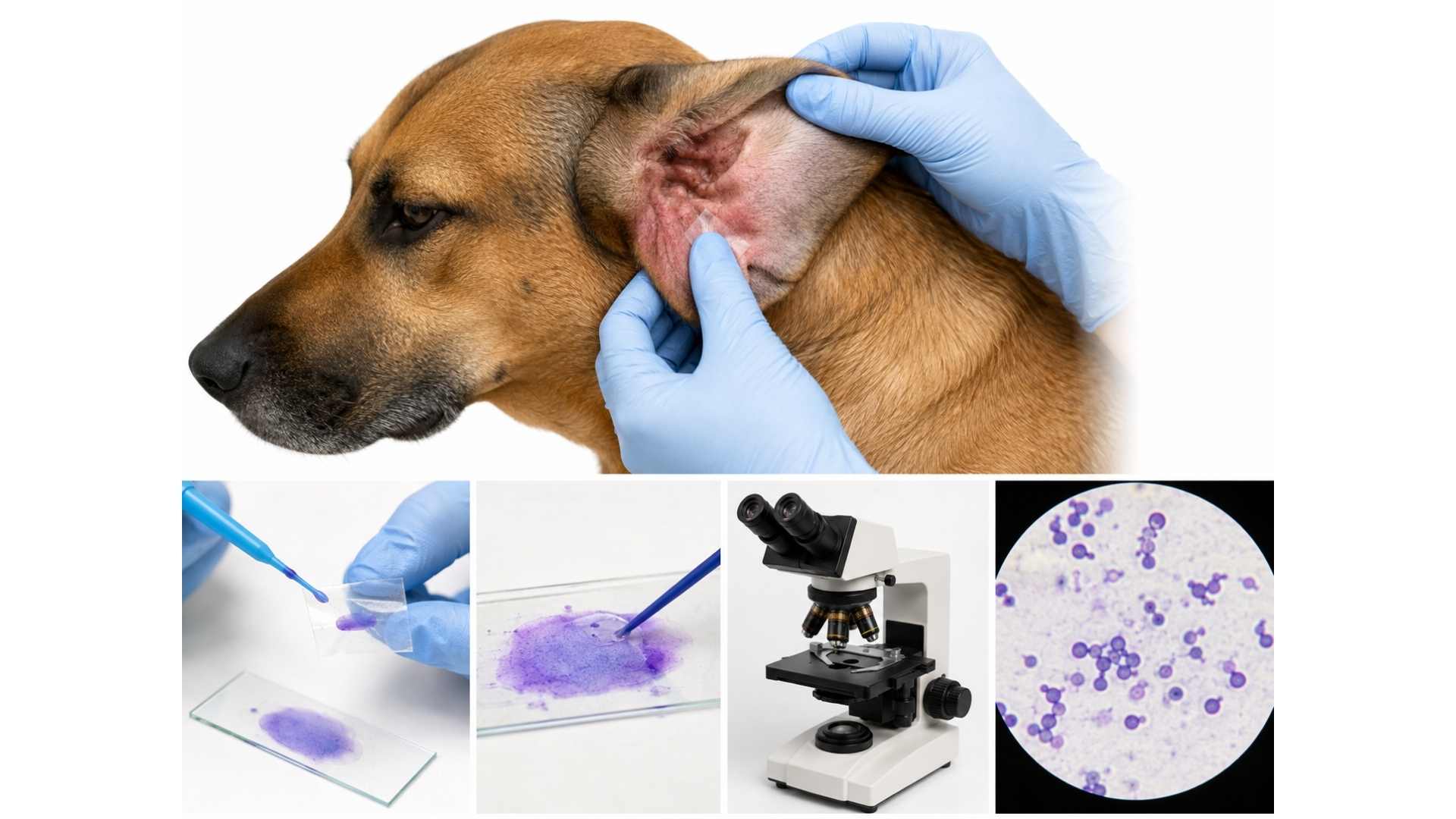
A simple method is using a small piece of tape on the affected skin, such as a skin fold.
The tape is then stained at the clinic and checked under the microscope.
The yeast organism can be seen that way.
I did this hundreds of times in practice.
It is simple, fast, and very useful.
You do not want to guess forever.
If the dog is itchy and smelly, check for yeast.
How Do You Treat Yeast in Dogs?
The basis of yeast treatment is shampoo.
But the shampoo must be left on the skin for at least 10 minutes to work.
That is the part many people miss.
You cannot lather, rinse, and call it done in 45 seconds.
Yeast is not impressed by a quick spa day.
Yeast Shampoo Schedule
| Stage | How Often |
|---|---|
| Initial treatment | Shampoo twice weekly |
| Follow-up treatment | Shampoo once weekly |
| Typical yeast elimination period | About 4 weeks |
| Maintenance | As needed |
The key is consistency.
Shampooing once, then wondering why the yeast is still there, is like brushing your teeth once and expecting a dentist to applaud.
Conventional Veterinary Yeast Shampoos
Degreasing shampoos can help because they remove the skin oils that feed yeast.
Options mentioned include:
- Benzoyl peroxide shampoos, such as OxyDex and Pyoben
- Sulfur and salicylate shampoos, such as SebaLyt and Sebolux
- 4% chlorhexidine shampoos, such as ChlorhexiDerm Max
- Malaseb shampoo
These shampoos help strip skin oil and kill yeast.
They can be very useful for dogs with oily, smelly, yeasty skin.
People Shampoos That May Help Yeast
Some anti-dandruff shampoos for people can also help.
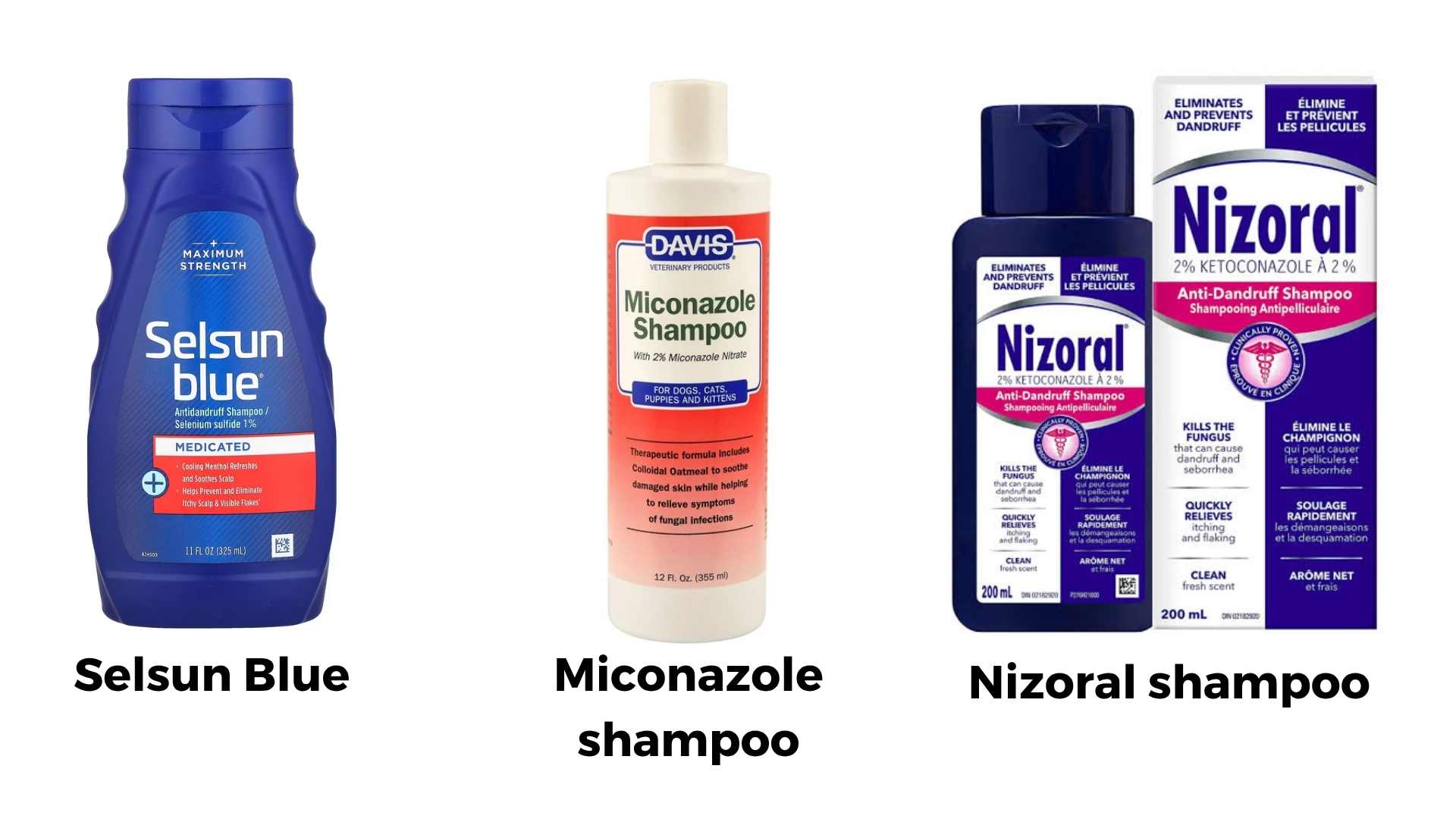
Options mentioned include:
- Selsun Blue
- Miconazole shampoo
- Nizoral shampoo
I used Selsun Blue in practice, and it worked well.
Again, leave the shampoo on for at least 10 minutes.
That contact time matters.
Homemade Anti-Yeast Dog Shampoo Recipe
You can also make a homemade dog anti-yeast shampoo.
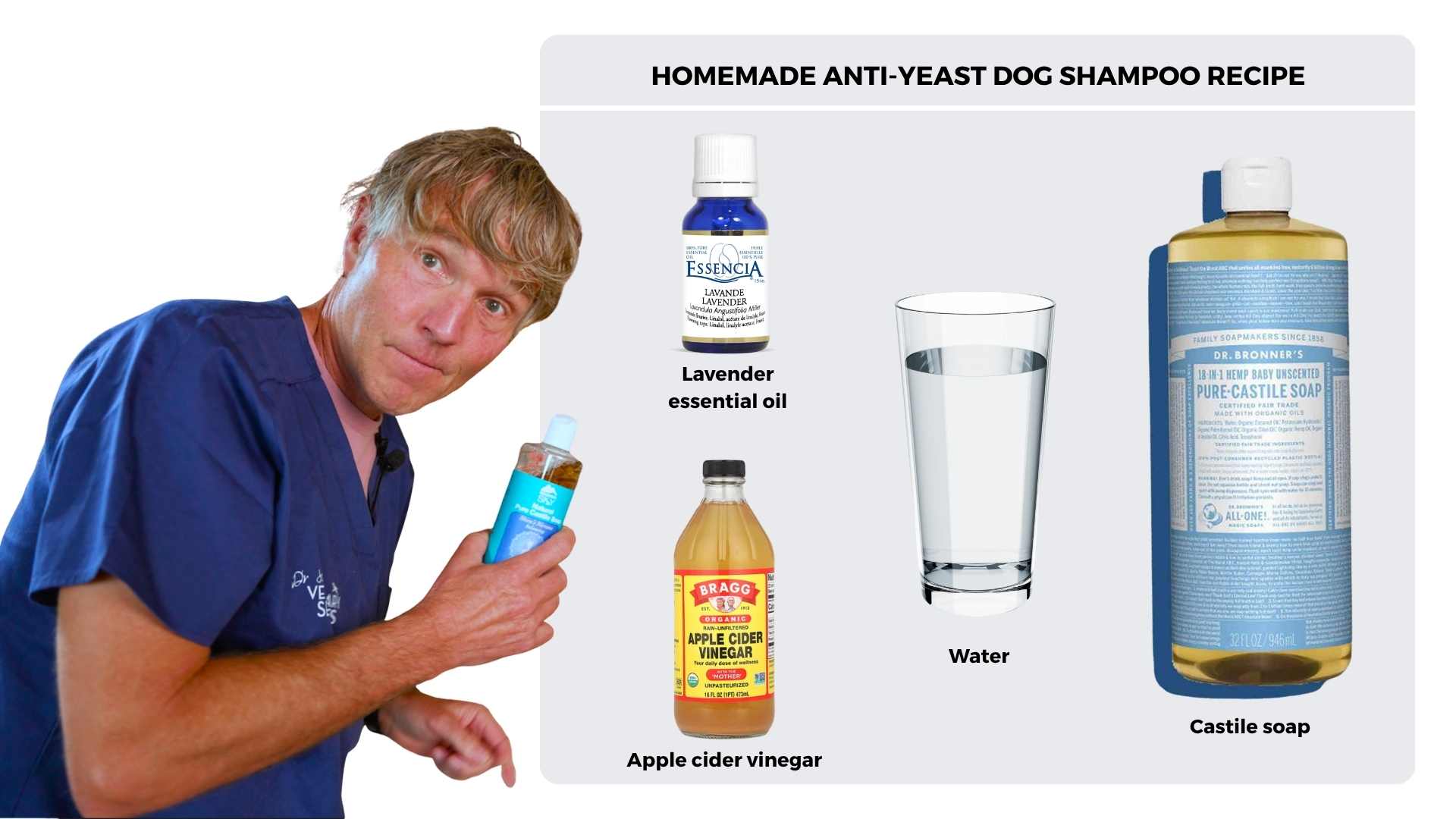
Ingredients
| Ingredient | Amount |
| Water | 3/4 cup |
| Castile soap | 2 tablespoons |
| Apple cider vinegar | 2 tablespoons |
| Lavender essential oil | 10 drops |
Why These Ingredients?
Castile soap is a natural concentrated oil-based soap. You can usually find it at a natural health store. It is commonly made from olive oil, hemp oil, or coconut oil.
Apple cider vinegar can help kill yeast and common skin bacteria such as staph, which contribute to odor.
Lavender essential oil can help with yeast, bacteria, and smell.
When you add apple cider vinegar, the mixture may turn white.
That is completely normal.
How to Use the Homemade Anti-Yeast Shampoo
- Wet your dog thoroughly.
- Apply the shampoo.
- Fully lather your dog.
- Focus on skin folds and smelly areas.
- Leave it on for at least 10 minutes.
- Rinse well.
- Repeat twice weekly at first, then once weekly for about 4 weeks, then as needed.
Focus on the places where yeast likes to hide.
Skin folds are yeast apartments.
Warm, moist, and apparently very popular.
Topical Apple Cider Vinegar Spray for Yeast
Diluted apple cider vinegar can be sprayed onto yeasty areas.
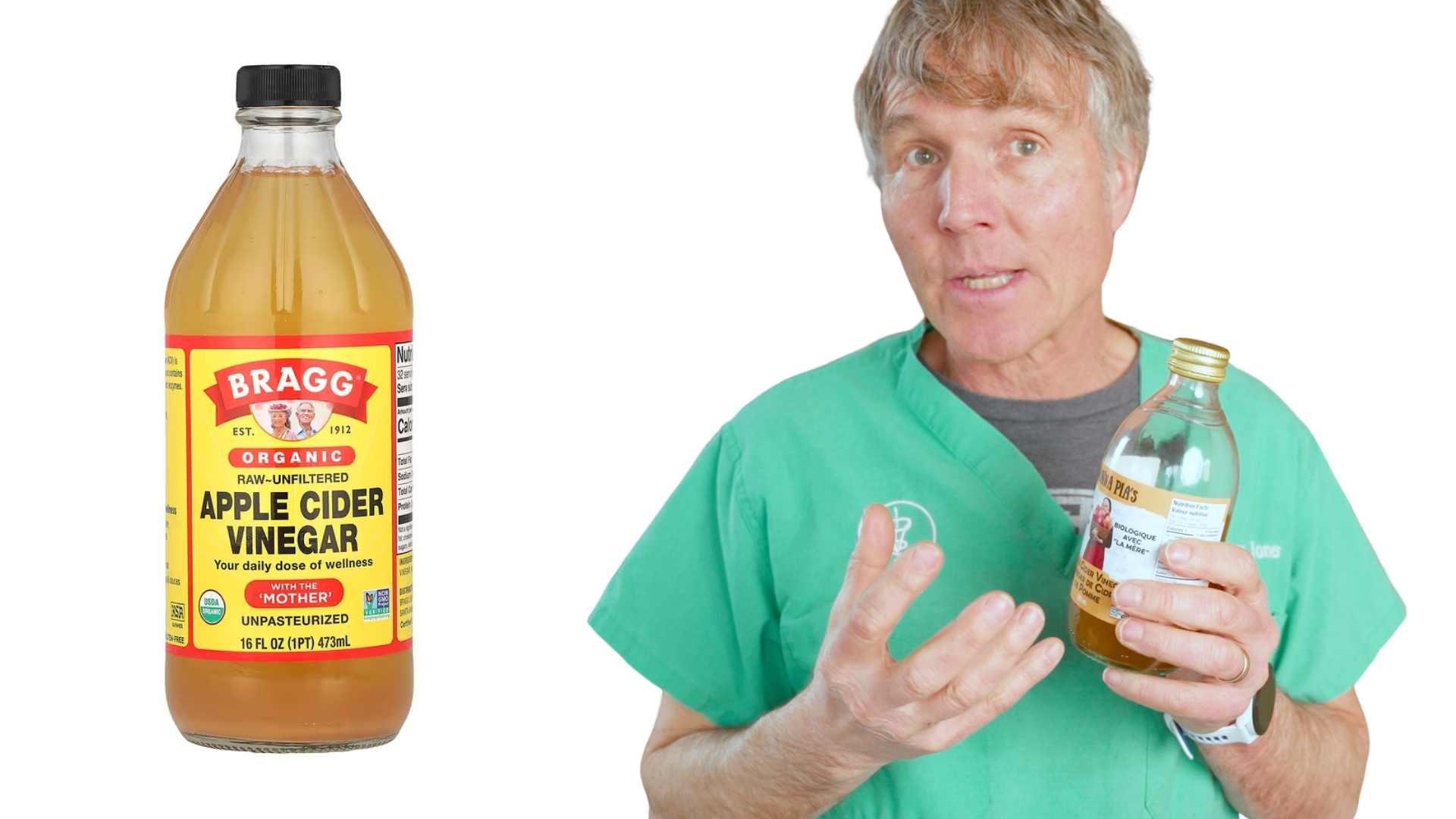
Apple Cider Vinegar Spray Recipe
| Ingredient | Amount |
| Water | 3/4 cup |
| Apple cider vinegar | 1/4 cup |
Mix in a spray bottle.
Spray onto yeasty areas.
If you add lavender, your dog may also smell nicer.
This can be especially helpful for localized yeasty spots.
Canesten or Monistat for Yeast in Dogs
Human anti-yeast creams such as Canesten or Monistat can be effective topical remedies.
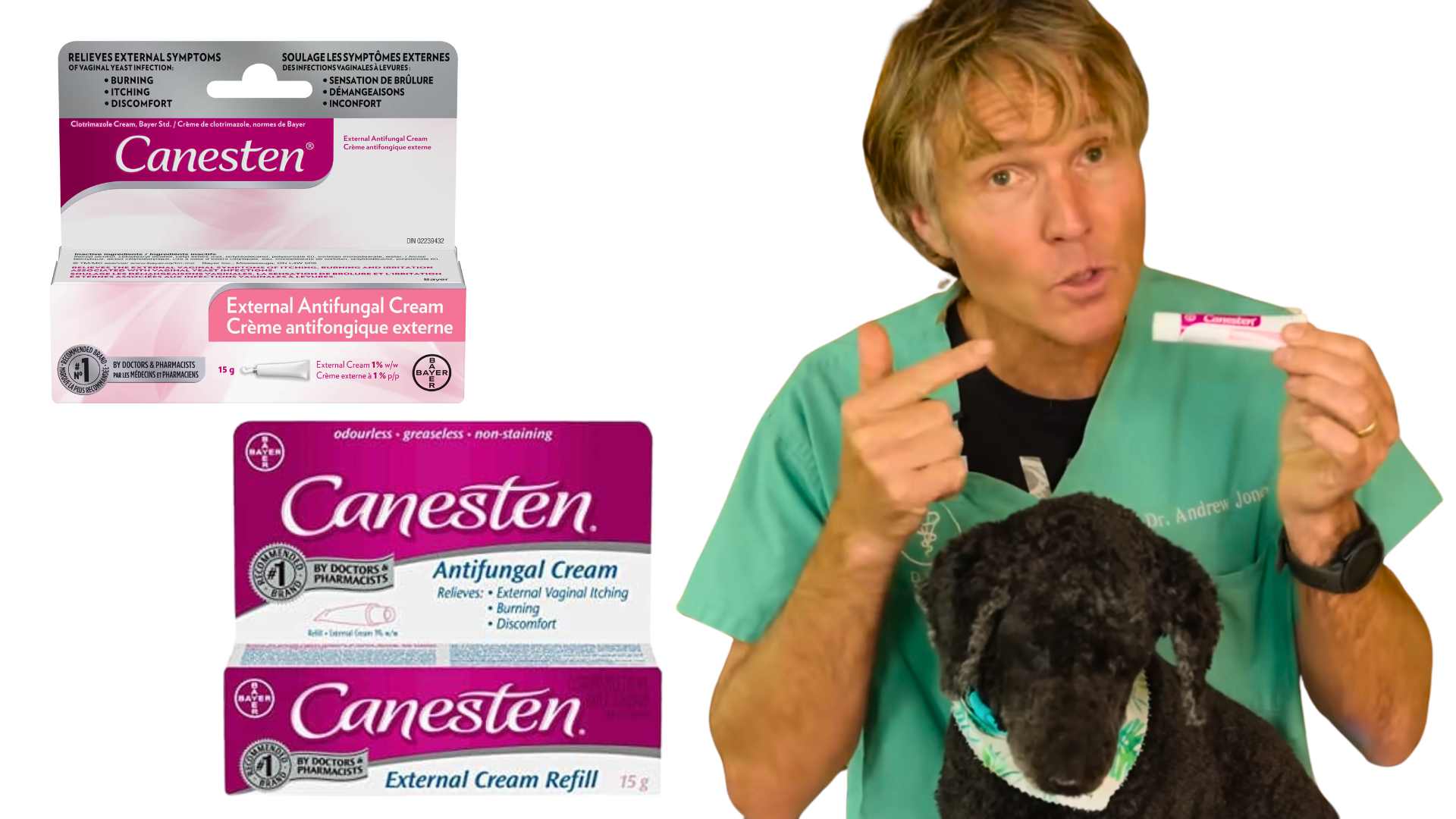
The active ingredients include:
- Clotrimazole
- Miconazole
These ingredients are also used in many veterinary yeast medications.
How to Apply
Apply topically to the yeasty area:
Twice daily for 7 to 10 days
This is best for localized yeast areas, not for a dog whose whole body is affected.
Feed Anti-Yeast Ingredients
Some foods may help support your dog from the inside.
The two mentioned are:
- Garlic
- Apple cider vinegar
Garlic for Yeast in Dogs
Garlic is specifically anti-yeast.
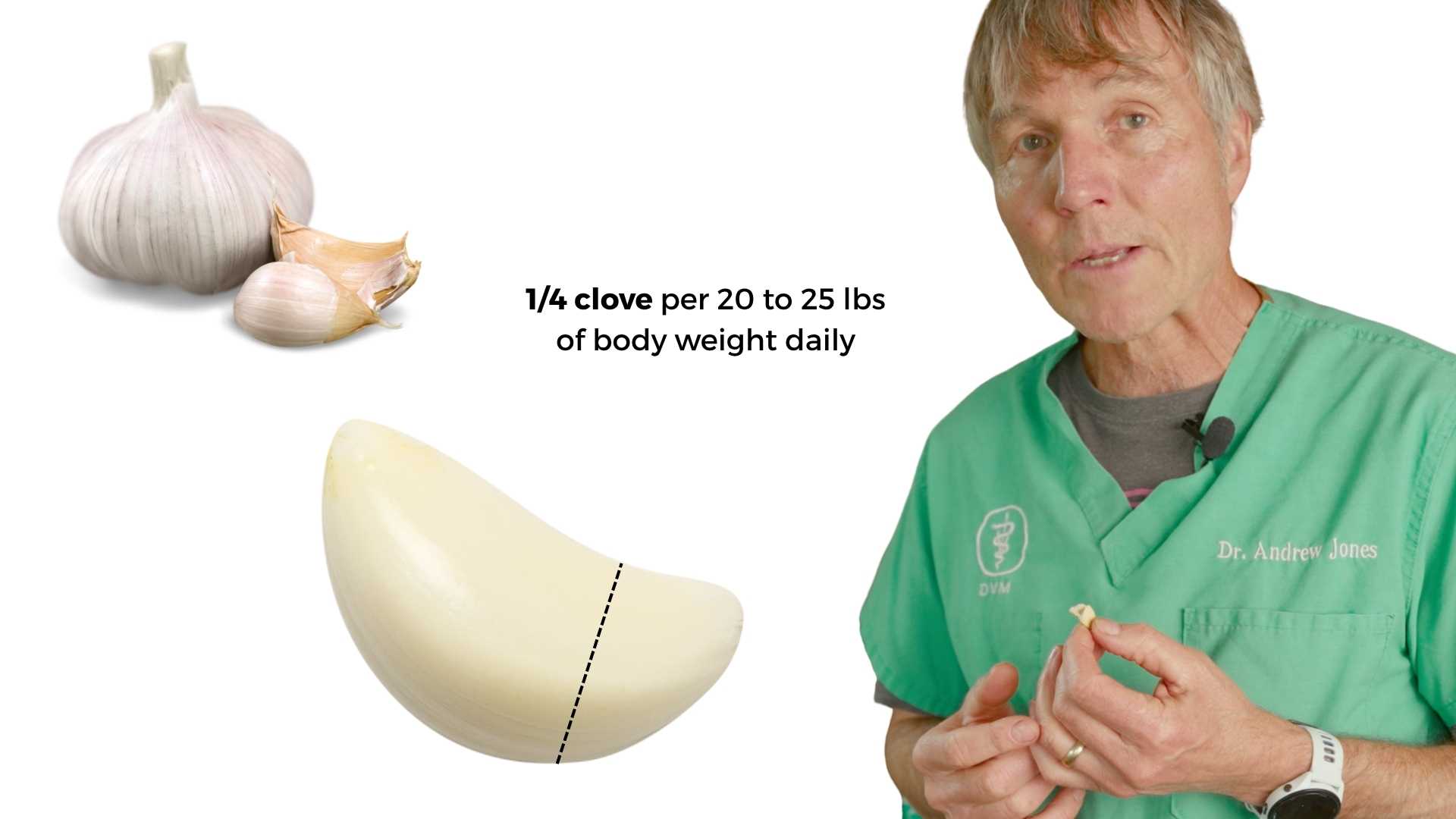
Garlic Dose
| Dog Weight | Dose |
| 20 lbs | 1/4 garlic clove daily |
You can safely feed a dog:
1/4 garlic clove per 20 lbs daily
Use the correct amount.
Do not assume more is better.
Your dog does not need to smell like a pizza restaurant to get benefit.
Apple Cider Vinegar for Dogs
Apple cider vinegar is also anti-yeast and may help with digestion.
Apple Cider Vinegar Dose
| Dog Weight | Dose |
| 10 lbs | 1 teaspoon twice daily |
Give:
1 teaspoon per 10 lbs, twice daily
Natural Allergy Support: Quercetin
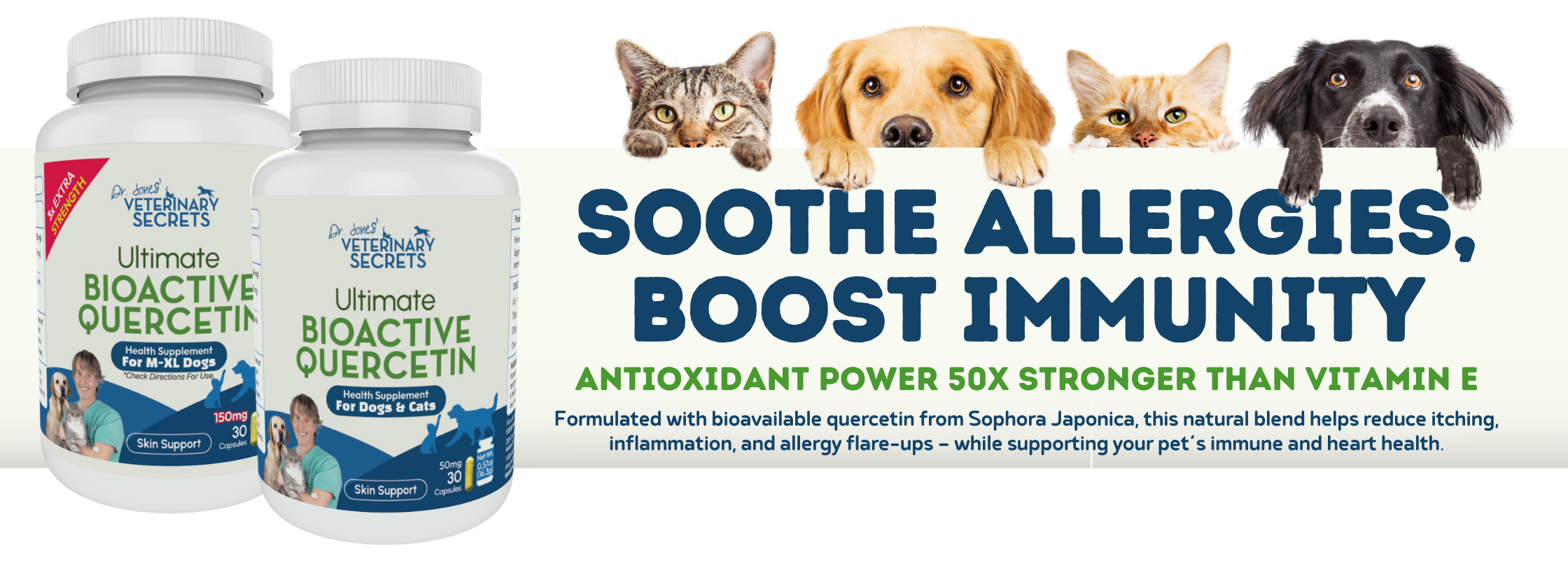
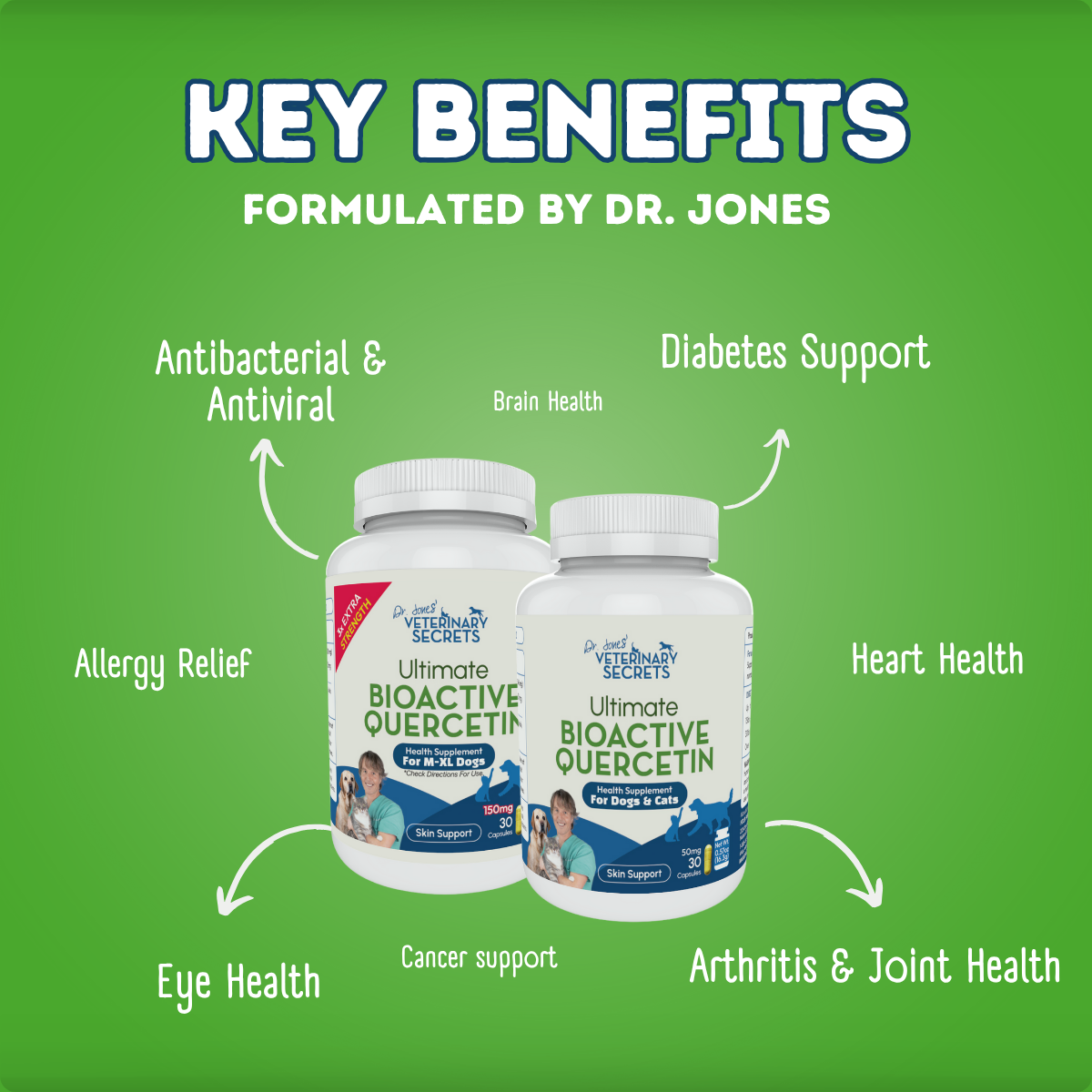
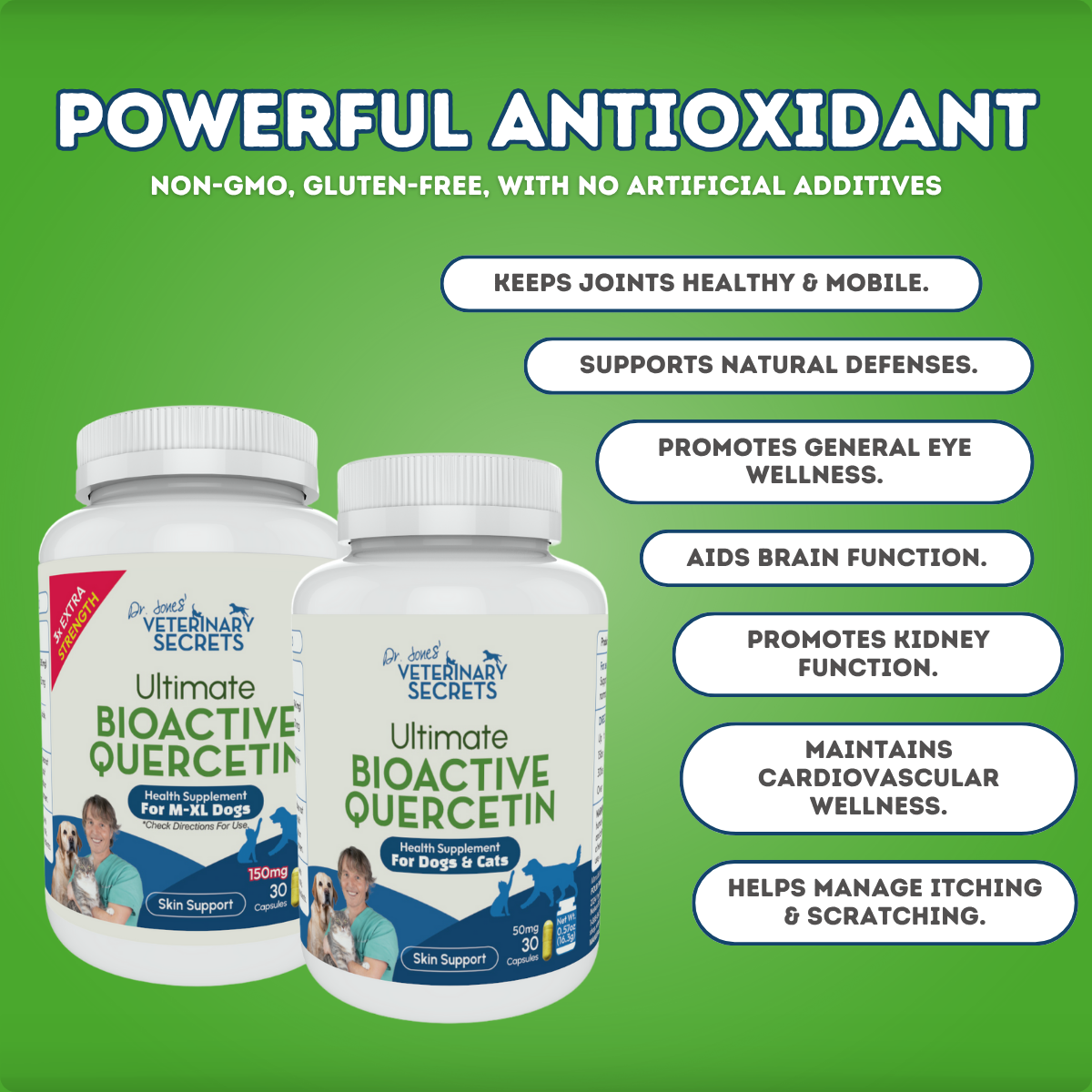
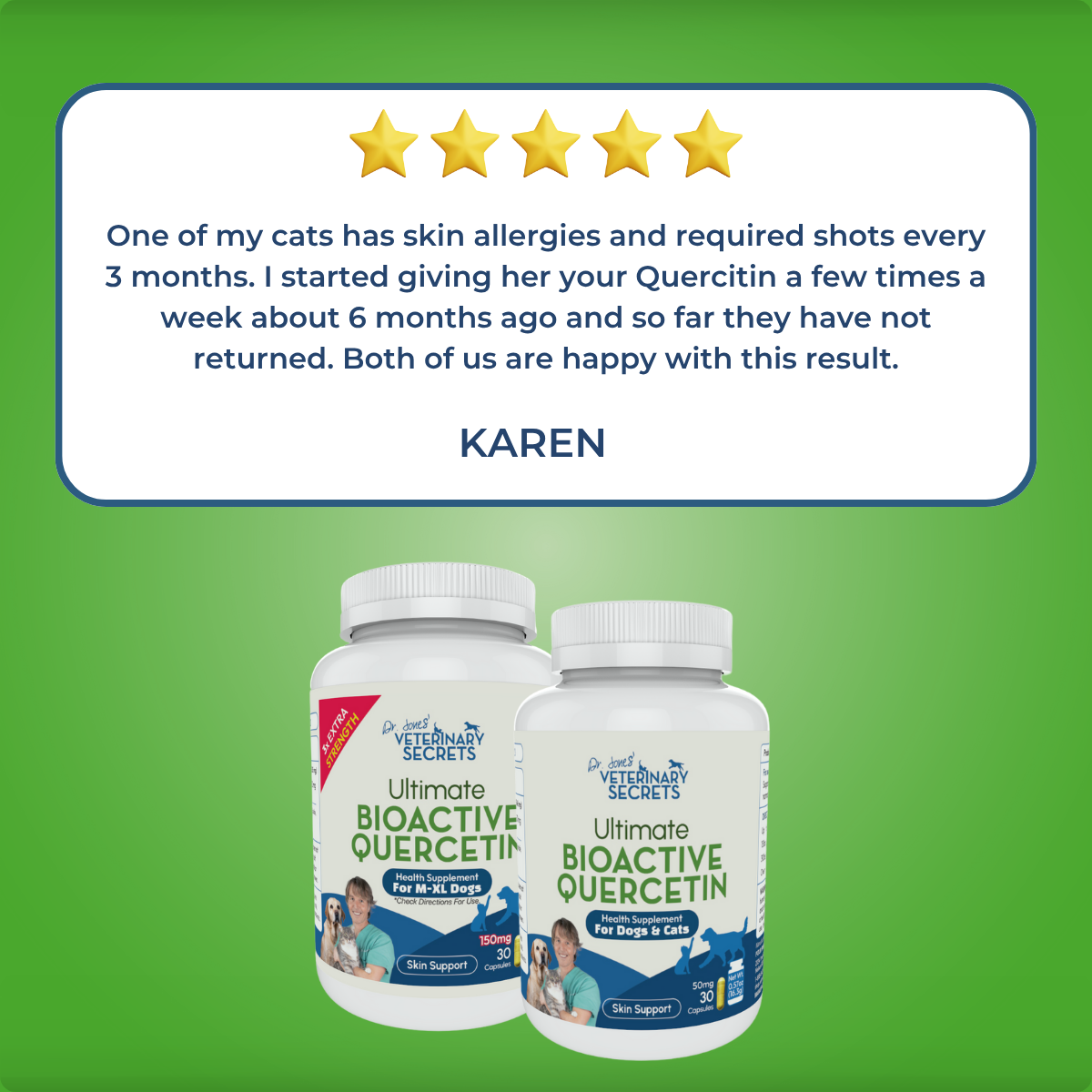
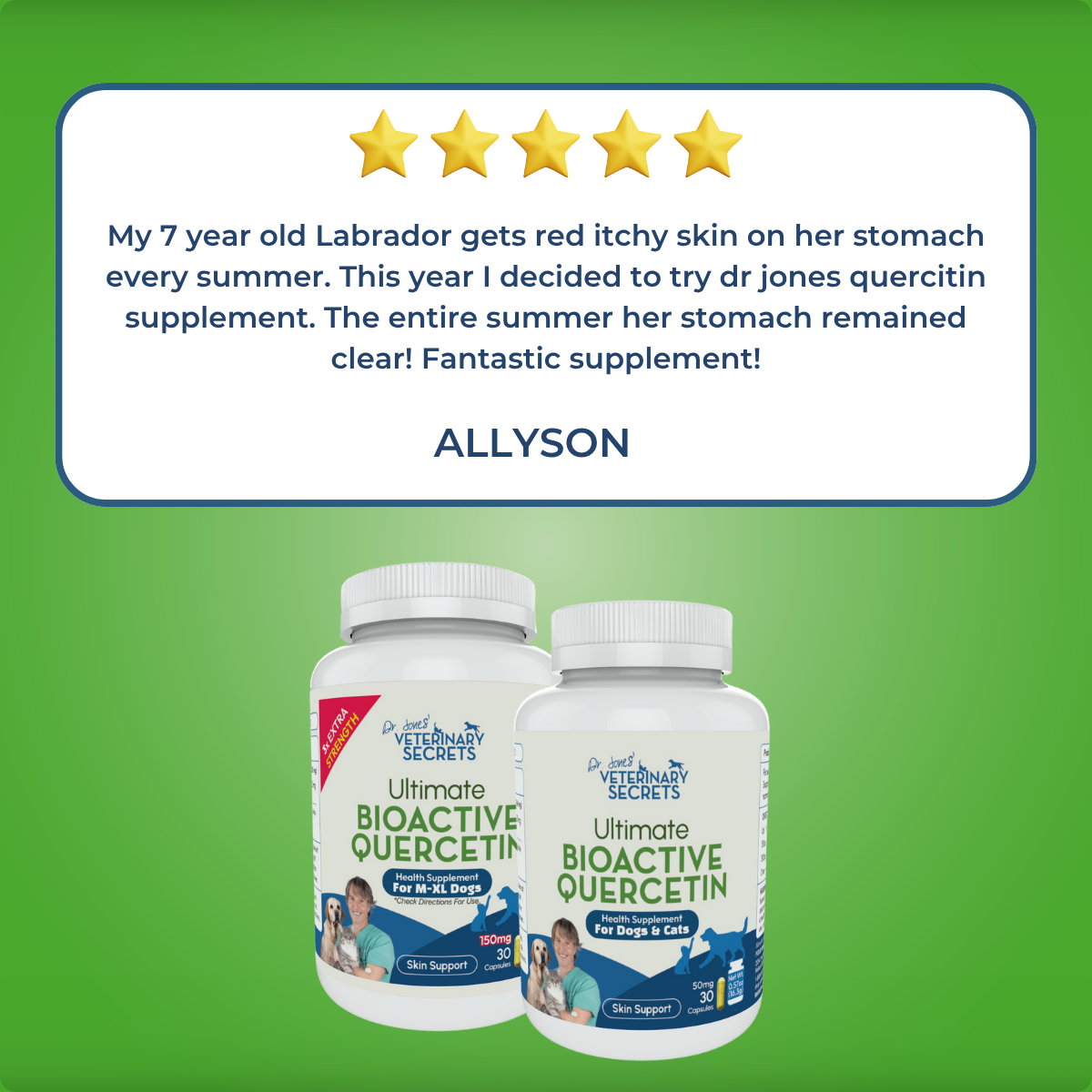
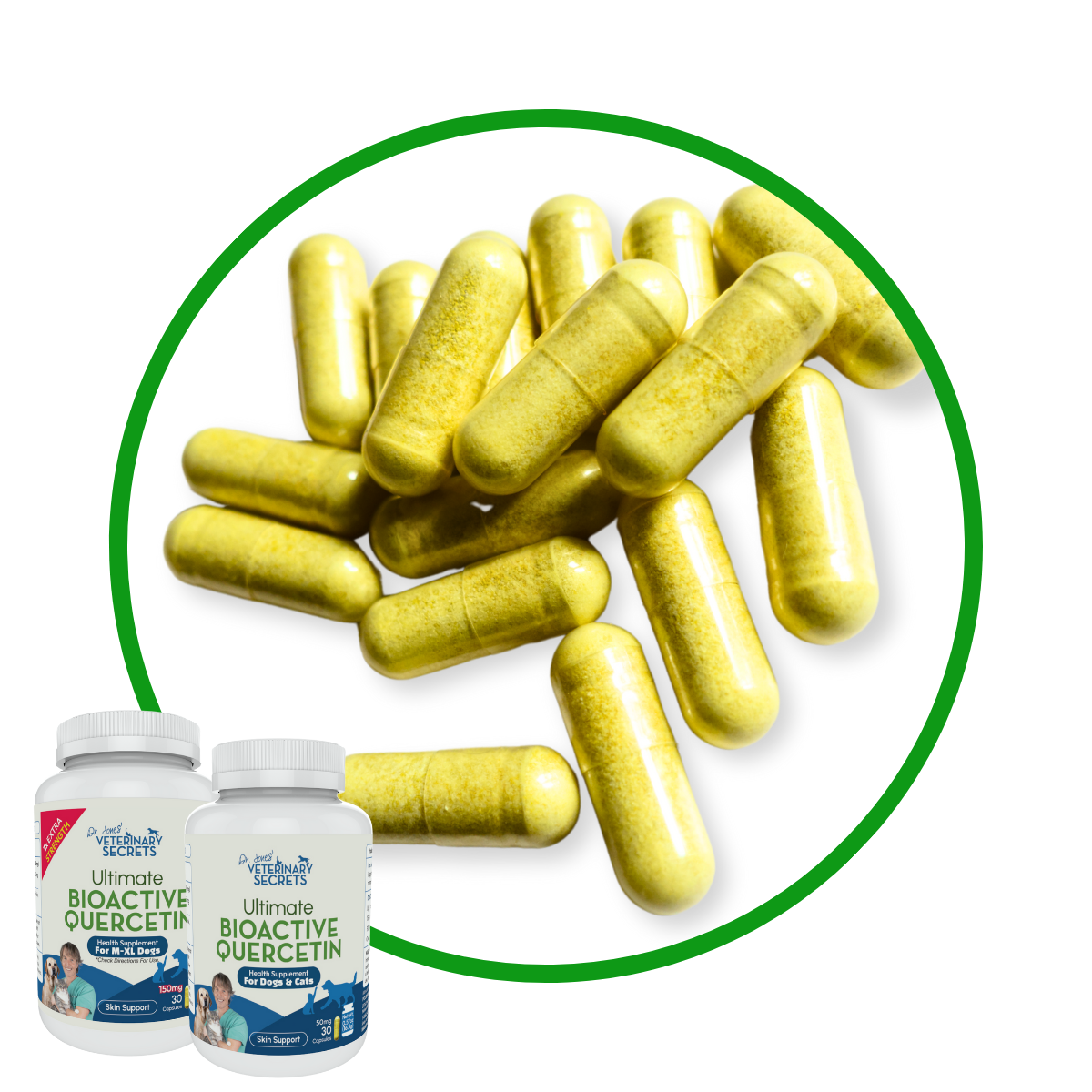
One natural product that has helped many pet parents manage dog allergies at home is quercetin.
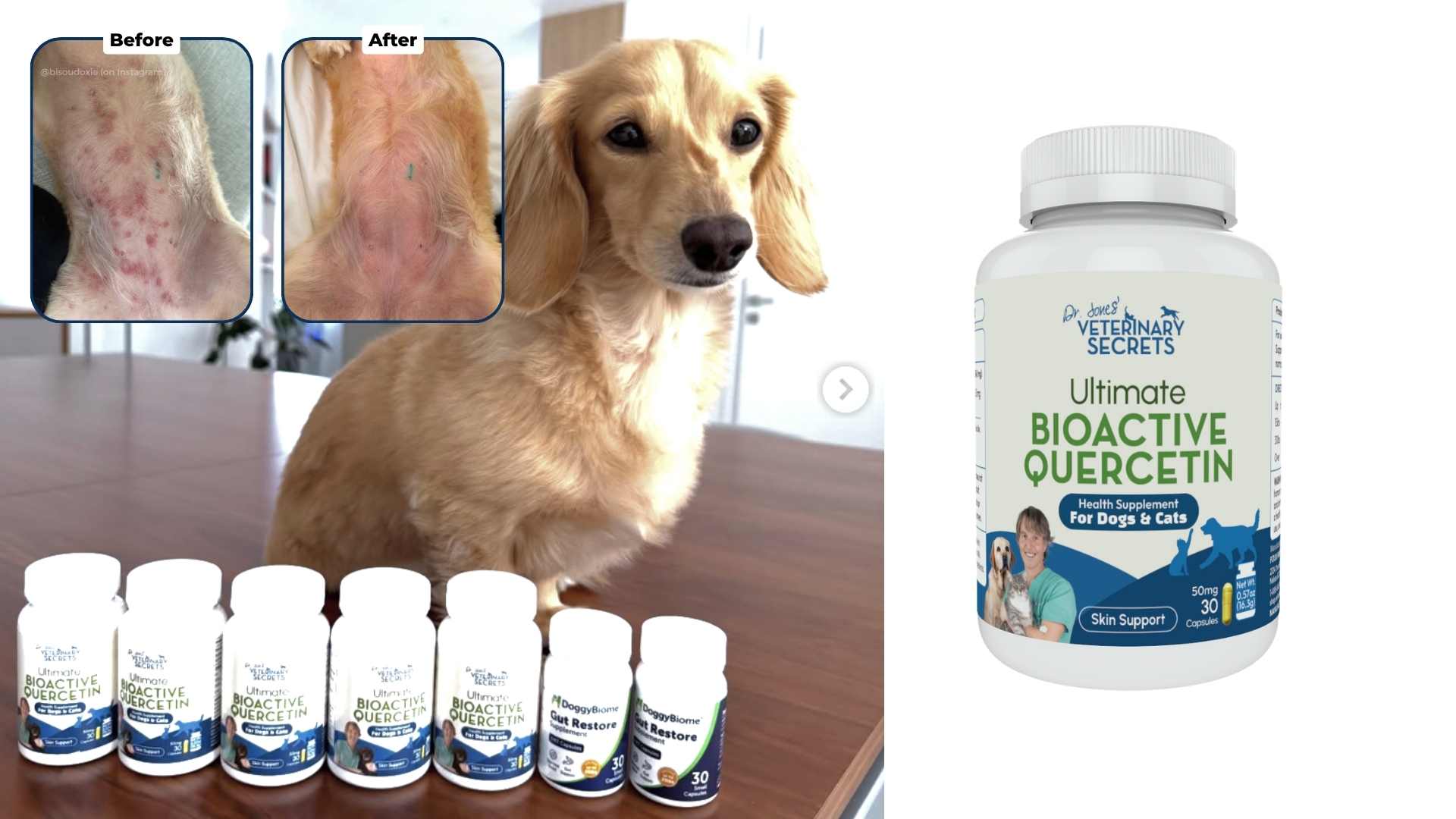
Quercetin is a flavonoid found in apple peel.
We now have a whole plant quercetin supplement that worked very well for my brother’s dog, Angus, the allergic Border Collie.
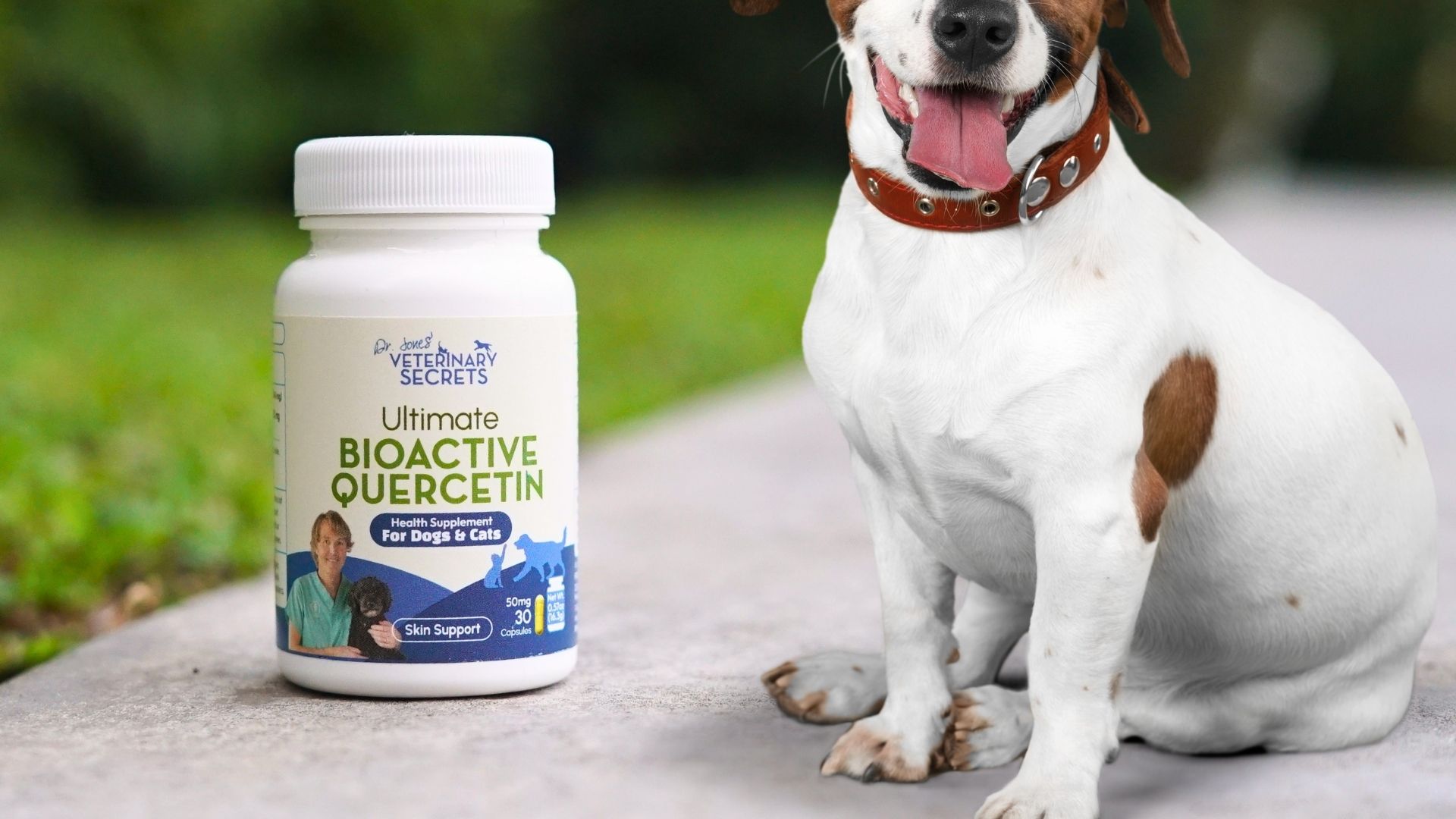
For big dogs:
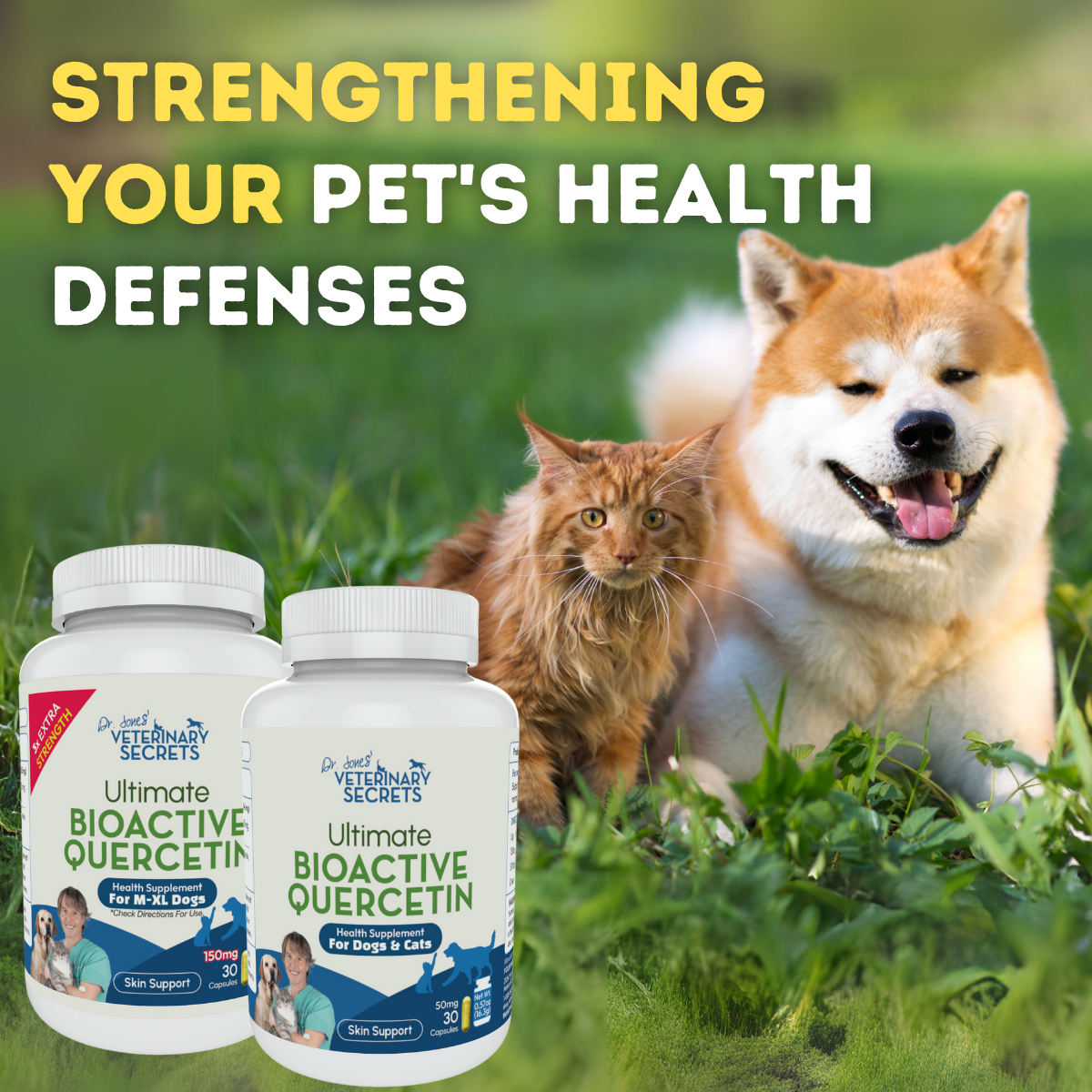
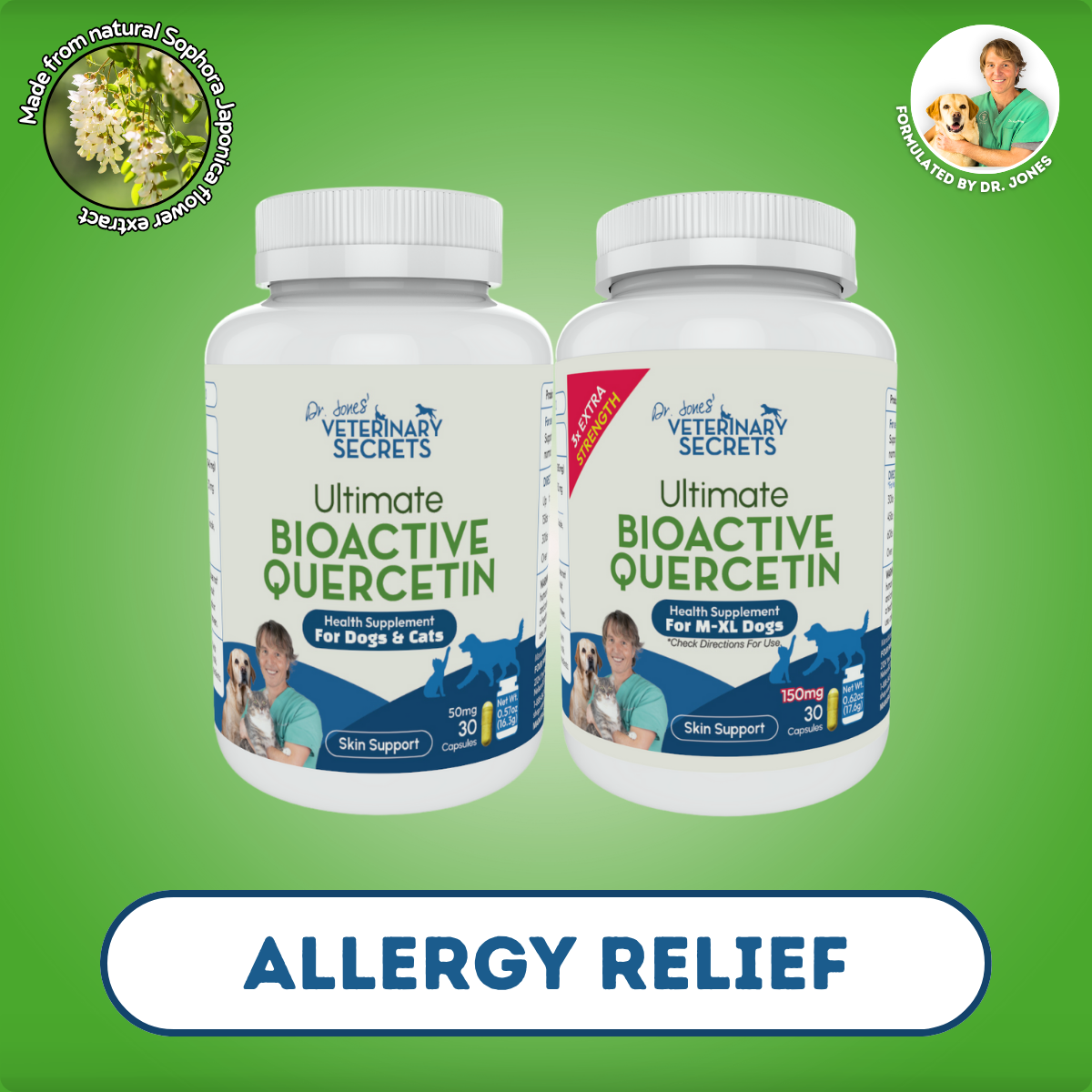
Dr Jones’ EXTRA STRENGTH Bioactive Quercetin for Dogs and Cats
For little dogs and cats:
Dr Jones’ BIOACTIVE Quercetin for Dogs and Cats
Also mentioned:
Dr Jones’ ULTIMATE BIOACTIVE Quercetin for Dogs and Cats
If you have an allergic dog and you have not yet tried quercetin, it may be worth considering.
Yeast vs Allergy: What Is the Difference?
| Issue | What You May Notice | What to Think About |
| Allergy | Itching, rash, scratching, recurring skin issues | Find and address the allergic trigger |
| Yeast | Strong odor, crusty skin, thickened skin, greasy skin, intense itch | Treat yeast directly |
| Allergy plus yeast | Chronic itch, smell returns after bath, poor response to treatment | Support allergy and treat yeast together |
This is why itchy dogs can be frustrating.
There may be more than one thing happening.
Allergy can open the door.
Yeast walks in and sits on the couch.
Best For / Not For
Best For
Anti-yeast support may be helpful for dogs with:
- Strong odor
- Itching that keeps returning
- Thickened skin
- Crusty skin
- Greasy skin
- Chronic allergies
- Skin folds that smell
- Odor that returns after bathing
- Suspected Malassezia dermatitis
- Secondary yeast infection with atopy
Quercetin may be helpful for dogs with allergies and ongoing itch support needs.
Not For
Do not rely ONLY on home remedies if your dog has:
- Severe skin infection
- Open wounds
- Bleeding skin
- Severe pain
- Widespread hair loss
- Fever
- Extreme discomfort
- No improvement after consistent care
- A skin condition you have not confirmed
If you are unsure whether it is yeast, bacteria, mites, allergy, or something else, get it checked.
Pros and Cons of Yeast Remedies
Pros
- Many options can be done at home
- Shampoo therapy can be very effective
- Apple cider vinegar is simple and inexpensive
- Canesten and Monistat can help localized yeast
- Garlic and apple cider vinegar may support anti-yeast care internally
- Quercetin can support allergy management
- Treating yeast may reduce odor and itching
Cons
- Shampoo must stay on at least 10 minutes
- Yeast may come back if underlying allergy is not addressed
- Severe infections need proper care
- Some dogs need ongoing maintenance
- Not every itchy dog has yeast
- Skin testing may be needed to confirm the cause
Step-by-Step: What to Do if Your Dog Is Itchy and Smelly
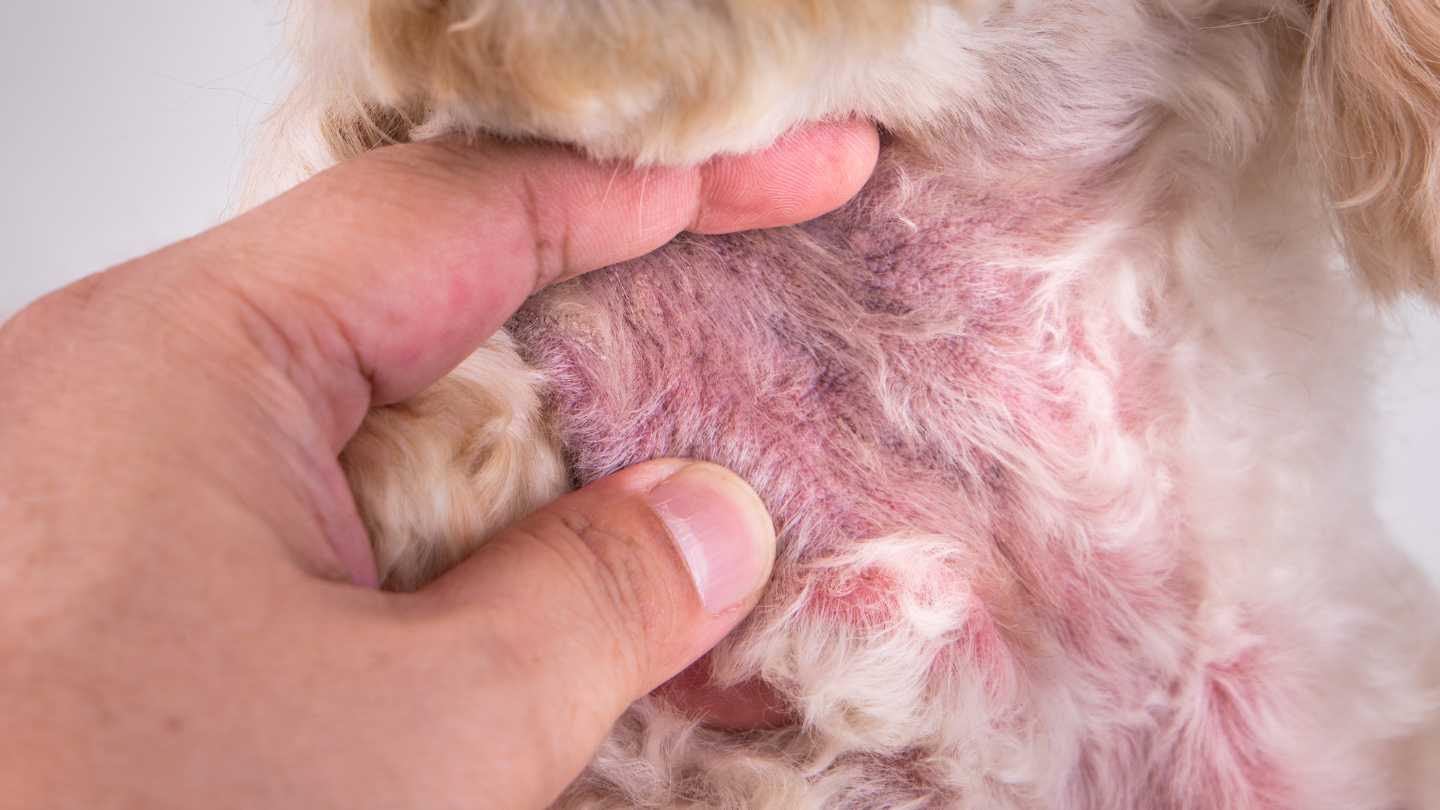
Step 1: Look for Yeast Signs
Check for:
- Strong odor
- Crusty skin
- Greasy skin
- Thickened skin
- Skin folds
- Constant scratching
- Odor returning soon after a bath
Step 2: Consider the Underlying Allergy
Yeast often overgrows when allergies are present.
If your dog has chronic allergies, yeast may be secondary.
Step 3: Confirm With Your Veterinarian
Ask about a tape test.
This can help confirm yeast under the microscope.
Step 4: Start Shampoo Therapy
Use a conventional yeast shampoo, people anti-dandruff shampoo, or the homemade shampoo.
Leave on for at least 10 minutes.
Start twice weekly.
Step 5: Treat Local Spots
For yeasty areas, consider diluted apple cider vinegar spray or Canesten or Monistat applied twice daily for 7 to 10 days.
Step 6: Feed Anti-Yeast Support
Consider:
- Garlic, 1/4 clove per 20 lbs daily
- Apple cider vinegar, 1 teaspoon per 10 lbs twice daily
Step 7: Support Allergies
Consider quercetin, especially if your dog has allergic itching.
Step 8: Reassess After 4 Weeks
If yeast is improving, continue as needed.
If your dog is not improving, the cause may be different or more complicated.
When Should You Call Your Veterinarian?
Call your veterinarian if:
- Your dog is intensely itchy
- The skin is bleeding or painful
- There are open sores
- The odor is severe
- Your dog has thickened elephant-like skin
- Your dog does not improve after consistent treatment
- You suspect a bacterial infection
- Your dog has recurring yeast infections
- Your dog has chronic allergies
- You are not sure what is causing the itch
A tape test can help confirm yeast quickly.
And when we know the cause, we can treat it better.
Final Thoughts
There is no single magic pill for every itchy dog.
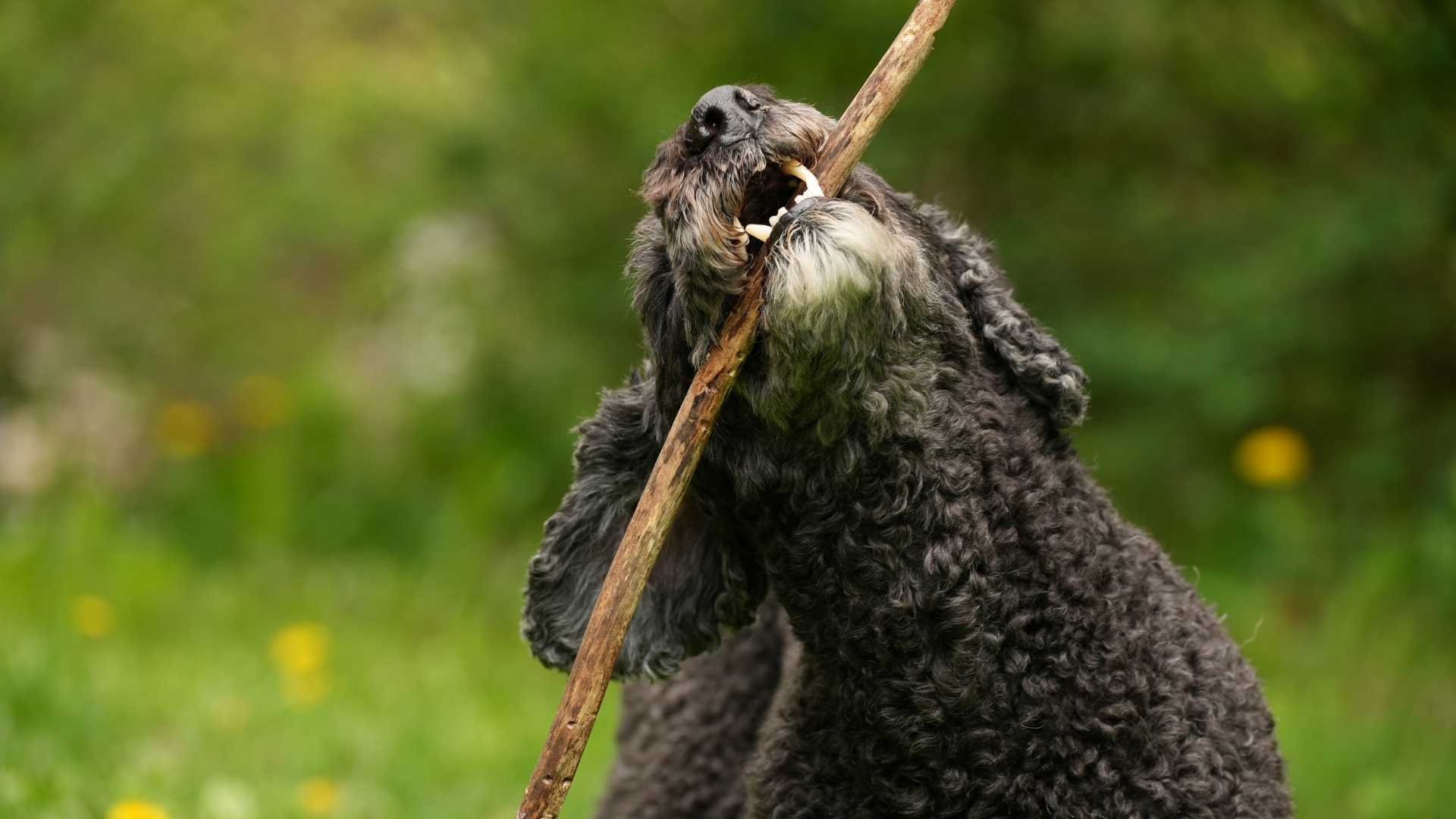
If your dog is itching, scratching, smelling strong, and not responding well to standard allergy treatments, think yeast.
Yeast is often overlooked and misdiagnosed.
It can cause extreme itching, crusty skin, thickened skin, and that strong dog odor that comes right back after a bath.
The good news is that yeast can often be managed.
Use shampoo properly.
Leave it on for at least 10 minutes.
Treat local areas with diluted apple cider vinegar spray or anti-yeast creams such as Canesten or Monistat.
Support from the inside with garlic and apple cider vinegar.
And if allergies are part of the picture, quercetin may be worth considering.
The big point is this:
Find the cause.
If it is yeast, treat yeast.
If it is allergy, support the allergy.
And if it is both, which it often is, deal with both.
Click To Get A Free Copy of My E-Book!

P.S. If you have an allergic dog and you have not yet tried quercetin, I encourage you to consider it.
Quercetin is a flavonoid found in apple peel, and our new quercetin supplement has received many positive reviews.
It has worked wonderfully for my brother’s allergic Border Collie, Angus.
P.P.S. Get our skin support supplement here:
Thank you so much and God bless you for this wonderful education. You really have saved my dog because vet isn’t an option I have and home remedies are just so Godly and affordable ??
We’re so happy this information has helped you and your dog. There are so many simple things we can do at home to support our pets naturally, but remember, the goal is always to find the root cause. For itchy dogs, things like allergies and yeast overgrowth can often be part of the puzzle. Wishing you and your pup lots of happy, healthy days ahead!
Yeast and allergies I did start to buy your product but I didn’t think I could wait. So I just bought some. I’m hoping that will work. He seems a little better even just after a couple of days. I’m using as directed by you and AI. And I’m also using the salsa blue shampoo twice a week sometimes more because he needs it. I’m using coconut oil because he is so dry the skin that falls off this poor dog. I just love them too much I keep telling them to hang in there we will get this. Thank you for all of the education. I know right now he is due for his rabies and I’m putting it off because of the immune system is so low and I know it would not be good for them right now. They think you so much for putting all this information out there for everyone. I direct everyone to you. Thank you Dr Jones can’t express my appreciation enough. Next time around I will buy your product. I just didn’t want to wait.
You’re very welcome! I’m glad he’s showing some improvement, keep going slowly and consistently.
One important note: if his skin is very dry, flaky, or painful, avoid over-bathing, as frequent medicated shampoo can sometimes dry the skin further. And with vaccines, it’s best to discuss timing with your veterinarian rather than delaying rabies protection on your own.
You’re clearly doing your best for this guy, and he’s lucky to have you in his corner!
What should I use if I think my dog has mites?
If you suspect mites, we’d recommend getting your dog checked first because itching can also come from allergies, yeast, fleas, or other skin problems. A simple skin test can help identify the real culprit. Once we know what we’re dealing with, we can treat it properly. No guessing games needed!