Cyclospora and Pets: Are Dogs and Cats at Risk?

Can Cyclospora Affect Dogs and Cats?
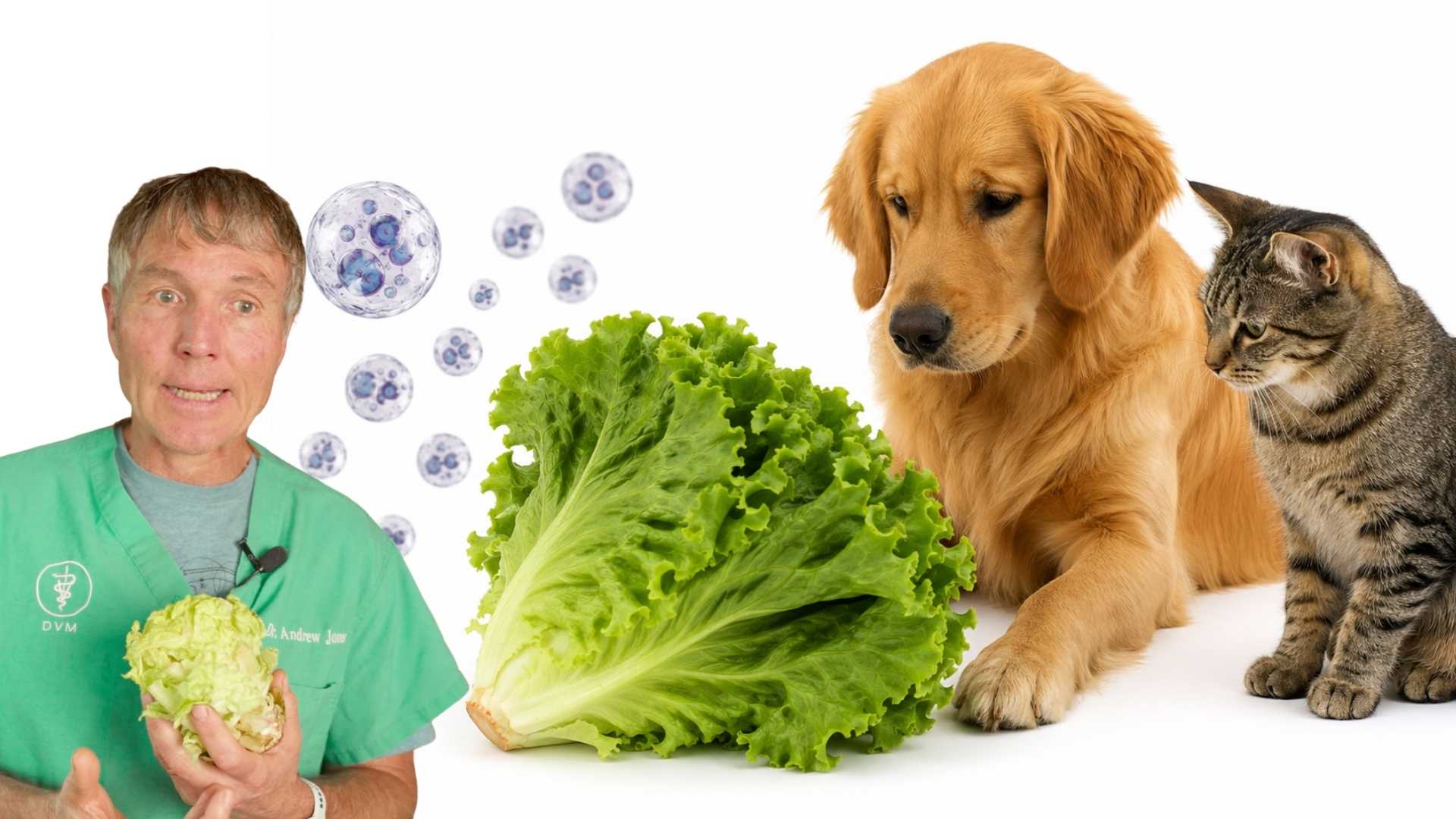
No, Cyclospora does not make dogs or cats sick.
Cyclospora is a microscopic parasite causing serious diarrhea in people, but it is not expected to cause illness in our dogs and cats. Pets may swallow the parasite from the environment and pass inactive eggs in their waste without showing signs of illness, but they cannot pass the human-specific infection back to people.
That is the good news.
The less pleasant news?
Our dogs and cats can still get diarrhea from a pile of other things.
Garbage gut, parasites, eating something questionable, bacteria, stress, food changes, and the classic “I don’t know what he ate, but it was not food.”
So while Cyclospora is mainly a people problem, this is a good reminder to know what to do when your pet has vomiting or diarrhea.

What Is Cyclospora?
Cyclospora is a tiny microscopic parasite that causes infectious diarrhea in people.
People get it by eating food or drinking water contaminated with infected human feces.
Common sources include fresh, raw produce such as:
- Leafy greens
- Herbs
- Berries
- Raw fruits
- Raw vegetables
The parasite infects the small intestine and causes a specific set of gut symptoms.
And no, this is not the mild “I ate too much pizza” type of diarrhea.
This can be severe.
What Are the Symptoms of Cyclospora in People?
Symptoms usually appear about a week after exposure.
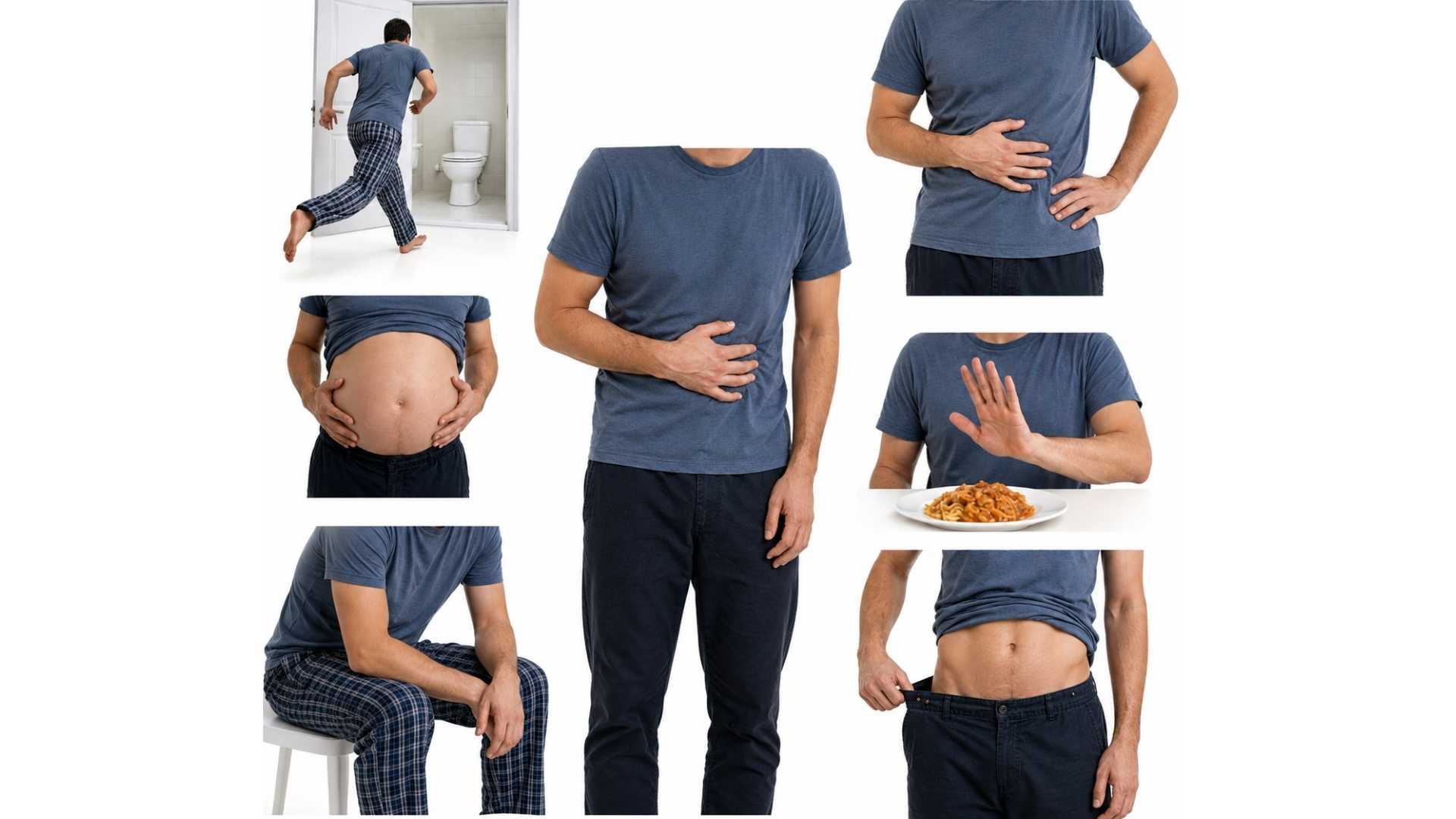
Common symptoms include:
- Watery diarrhea
- Severe or explosive diarrhea
- Stomach cramps
- Bloating
- Increased gas
- Nausea
- Loss of appetite
- Fatigue
- Mild fever
- Unintentional weight loss
It sounds especially unpleasant, and I am hoping you do not get it.
How Does Cyclospora Spread?
Cyclospora spreads through the fecal-oral route.
That means contaminated fecal material gets into food or water, and then a person consumes it.
But unlike some other foodborne illnesses, you cannot catch Cyclospora directly from another person right away.
Why?
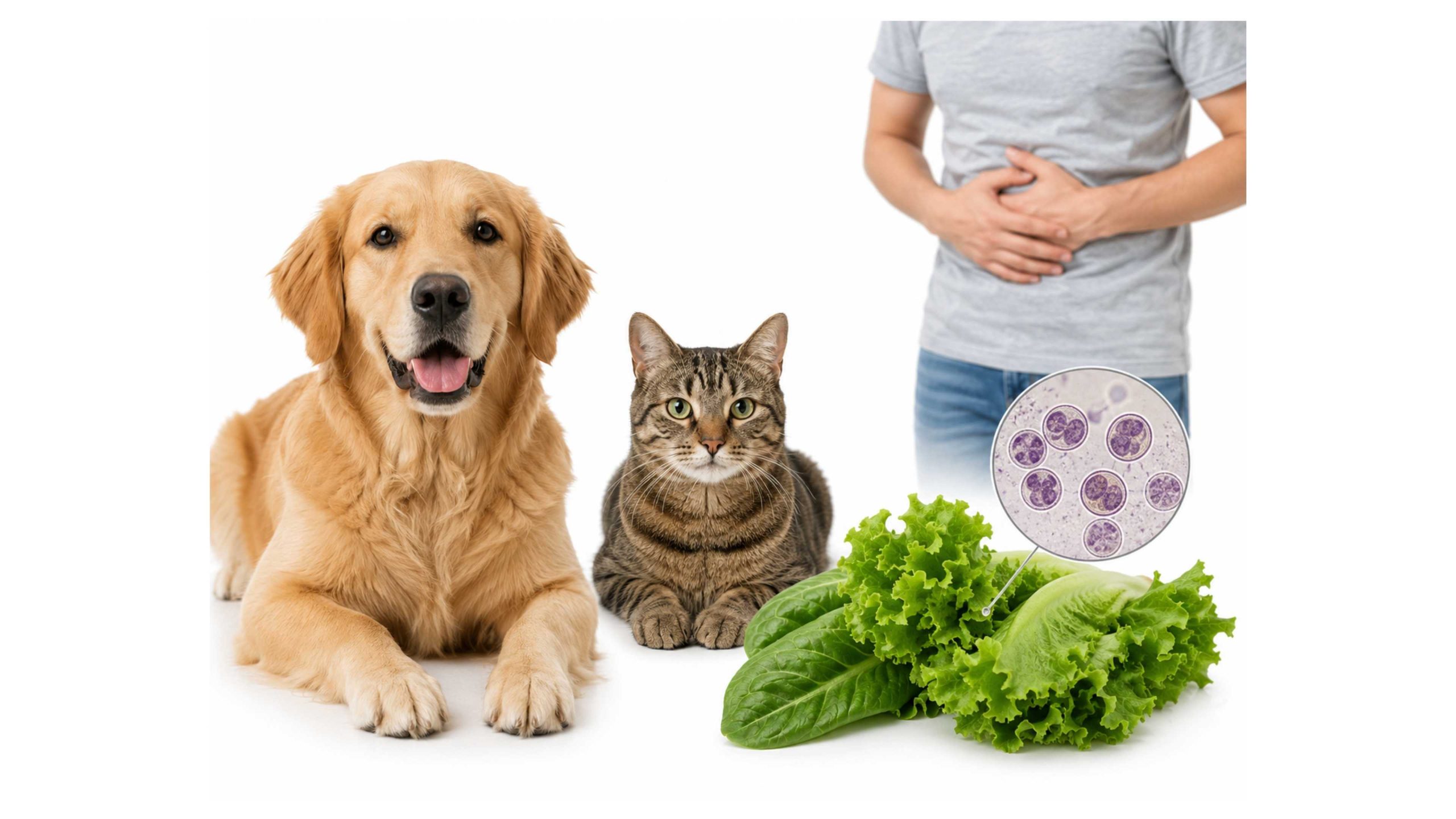
Because when the parasite is passed in stool, it is not immediately infectious. It needs days to weeks in the environment to mature into a form that can make a person sick.
Outbreaks are often tied to imported raw fruits and vegetables that may have been washed, handled, or irrigated with contaminated water.
Lovely thought, I know.
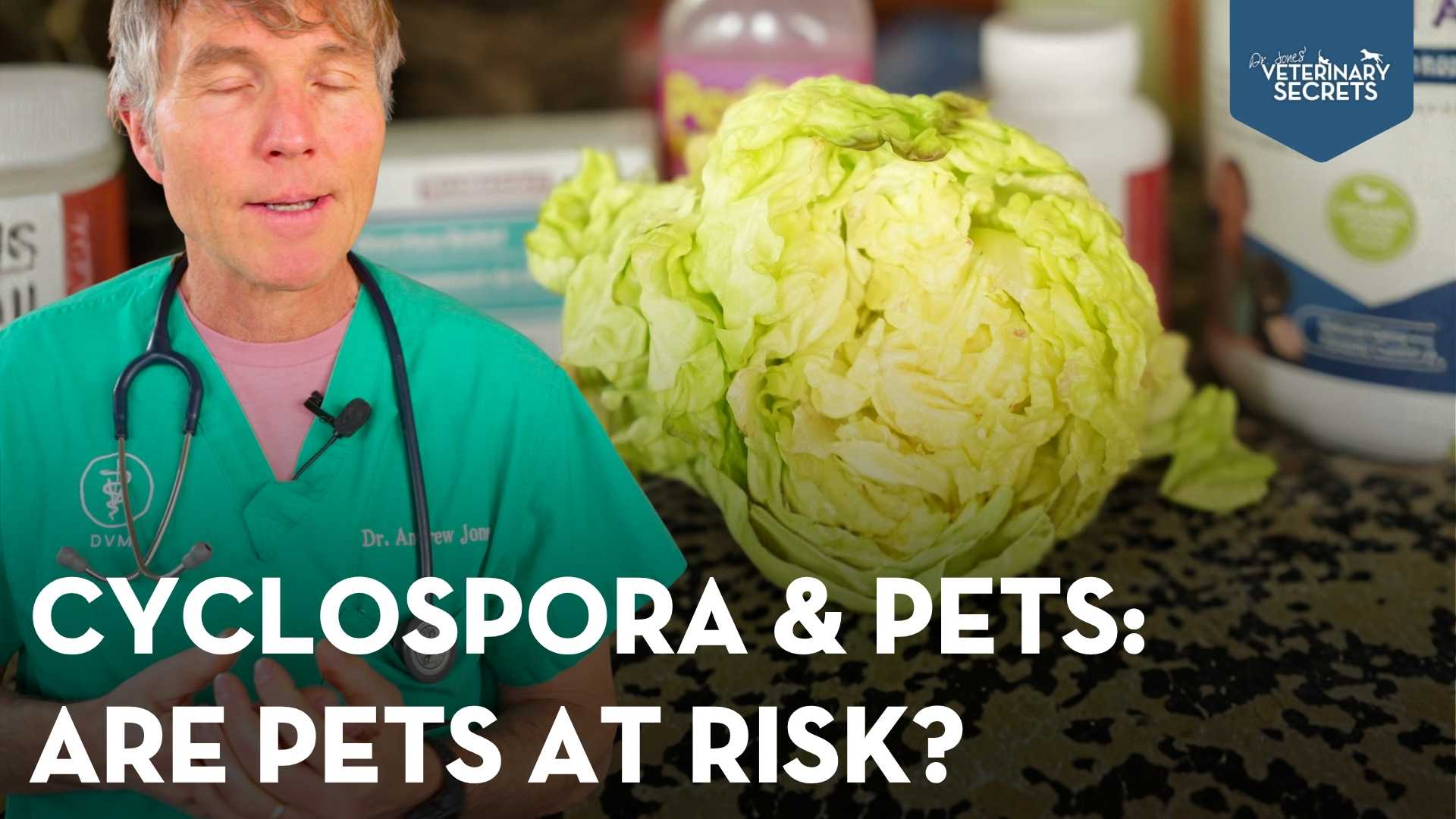
Suddenly iceberg lettuce feels less innocent.
How Big Is the Cyclospora Outbreak?
As of last week in the pasted content, the CDC had identified more than 11,500 cases of domestic cyclosporiasis this season.
That included:
- 4,173 confirmed cases
- About 7,400 additional cases undergoing further laboratory testing and analysis
The testing was being done to determine whether the illness was acquired in the United States.
So yes, this is a real outbreak affecting many people.
Why Is Cyclospora Hard to Avoid?
Cyclospora is hard to avoid because it can be difficult to wash off completely from foods like berries and leafy greens.
It is also highly resistant to common sanitizers.
That means a quick rinse may not be enough.
The best ways to reduce risk are:
- Cook produce when possible
- Practice careful food safety
- Avoid risky raw produce during outbreaks
- Consider locally grown produce when possible
- Be cautious with iceberg lettuce during an outbreak
The hard part is that we generally do not cook lettuce.
So for now, it may be wise to avoid iceberg lettuce and try to get locally grown produce, or cook produce when possible.
Are Pets at Risk From Cyclospora?
No, dogs and cats are not at risk from Cyclospora in the way people are.
Cyclospora does not make dogs or cats sick.
Pets cannot pass the human-specific infection back to people.
Animals may swallow the parasite from the environment and pass inactive eggs in their waste, but they do not show signs of illness from it.
So if your dog or cat has diarrhea, Cyclospora is not the likely concern.
You need to think about other causes.
What Causes Vomiting and Diarrhea in Dogs and Cats?
One of the more common reasons dogs and cats visit a veterinary clinic is vomiting and diarrhea.
One common cause is garbage gut, also called gastritis.
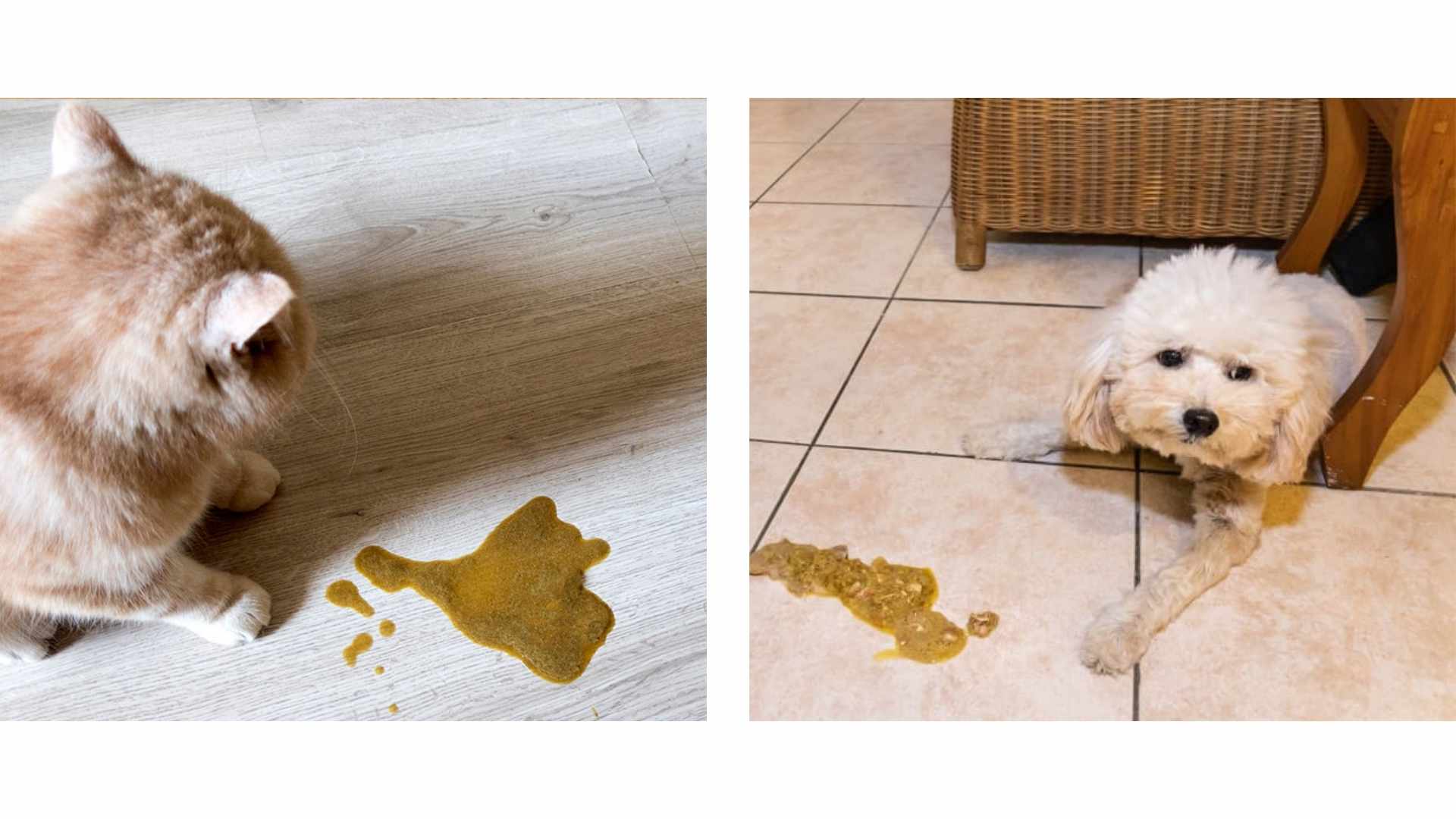
That usually means they ate something they should not have.
Not exactly shocking if you live with a Labrador.
Other possible causes include:
- Eating spoiled food
- Eating garbage
- Parasites
- Eating something from the yard
- Dietary changes
- Infections
- Toxins
- Stress
- Gut inflammation
The exact cause may vary, but the first step is the same:
Assess how sick your pet really is.
Step 1: Assess Your Pet First
Before giving any home remedy, look at your pet carefully.
Ask:
- Are they still alert?
- Are they very lethargic?
- Are they vomiting every hour?
- Did they vomit only a few times?
- Are they drinking?
- Are they extremely dehydrated?
- Are they just mildly or moderately dehydrated?
- Are they still responsive?
- Are they getting worse?
This first step matters.
If your dog or cat is very sick, home remedies are not the answer.
How to Check Hydration
You can check hydration by looking at the gums.
Lift the lip and touch the gums with your finger.
They should have some moisture.
If the gums are very dry or tacky, dehydration may be a concern.
You can also watch whether your pet is drinking and how often they are vomiting or having diarrhea.
If they are not drinking at all, that is more concerning.
When Is Home Care Reasonable?
Home care may be reasonable if your pet is:
- Still alert
- Only vomiting a few times
- Not extremely dehydrated
- Still drinking
- Not rapidly worsening
- Not severely weak
If that sounds like your dog or cat, you may consider a few home remedies.
If in doubt, please see your veterinarian.
For Dogs With Vomiting or Diarrhea: No Food for 24 Hours
For dogs, start with no food for 24 hours.
That means:
- No meals
- No treats
- No snacks
- No “just a little piece”
- No pity biscuits
Offer plenty of fresh water.
The goal is to rest the digestive tract.
If you keep feeding a gut that is already irritated, you may keep the vomiting and diarrhea going.
For Cats: Do Not Fast
Cats are different.
For cats, offer small amounts of canned food.
Do not fast cats the same way you fast dogs.
Cats have a different metabolism, and prolonged lack of food can become a problem.
So for cats:
- Offer small amounts of canned food
- Keep them hydrated
- Watch closely
- Seek help if they are not eating or drinking
Cats like to be treated differently.
In this case, they are correct.
Add Electrolytes to the Water
Vomiting and diarrhea can cause electrolyte loss.
Adding an electrolyte solution to the water may help.
If your pet is not drinking at all, you can syringe in fluid.
Fluid Amount Mentioned
100 ml per 10 lbs daily
That is about:
1/2 cup per 10 lbs daily
More serious cases may require subcutaneous fluids, which can be done at home with proper instruction.
If in doubt, please see your veterinarian.
Dehydration is not something to guess your way through.
What Can Help Vomiting in Dogs and Cats?
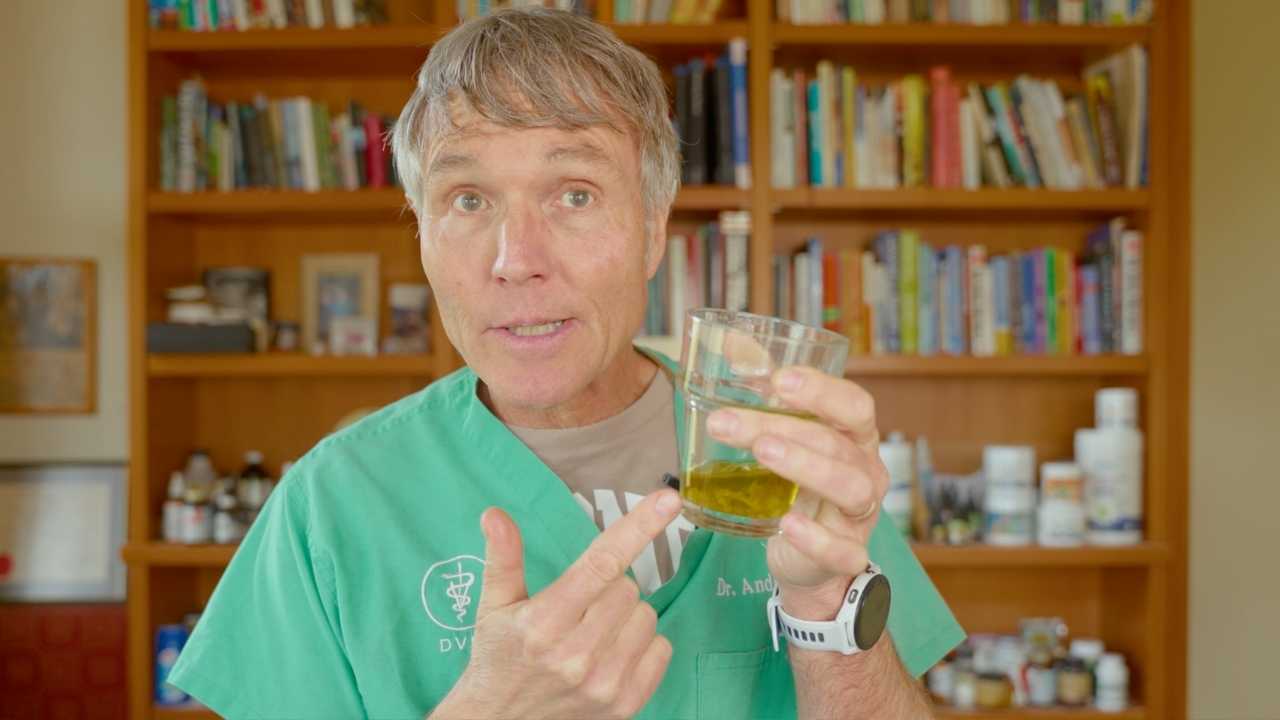
The options mentioned for vomiting include:
- Peppermint tea
- Chamomile tea
- Famotidine, also known as Pepcid
Peppermint Tea for Nausea and Indigestion
Peppermint is more than a breath freshener.
It has an antispasmodic effect on the body, which can make it useful for stomach problems such as:
- Nausea
- Indigestion
- Gut discomfort
This can be a gentle option for some pets with mild stomach upset.
Chamomile Tea for Gut Discomfort
Chamomile tea is known for helping sleep and calming anxiety.
It may also help ease gut discomfort and indigestion by reducing stomach acid in the gastrointestinal tract.
Chamomile also acts as an anti-inflammatory to help stop pain.
This can be useful when the gut is irritated.
Famotidine, or Pepcid, for Vomiting
Famotidine is an over-the-counter antacid.
It can be effective, and many dogs and cats respond quickly.
Famotidine Dose
2.5 mg per 10 lbs, 2 to 3 times daily
This may help when stomach acid and nausea are part of the problem.
What Can Help Diarrhea in Dogs and Cats?
The diarrhea options mentioned include:
- Pepto-Bismol
- Kaopectate
- Imodium
- Diatomaceous earth
- Probiotics
- Slippery elm bark powder
Some are dog-only.
Some can be used for dogs and cats.
Read the cautions carefully.
Diarrhea Home Remedy Dosage
Pepto-Bismol for Dog Diarrhea
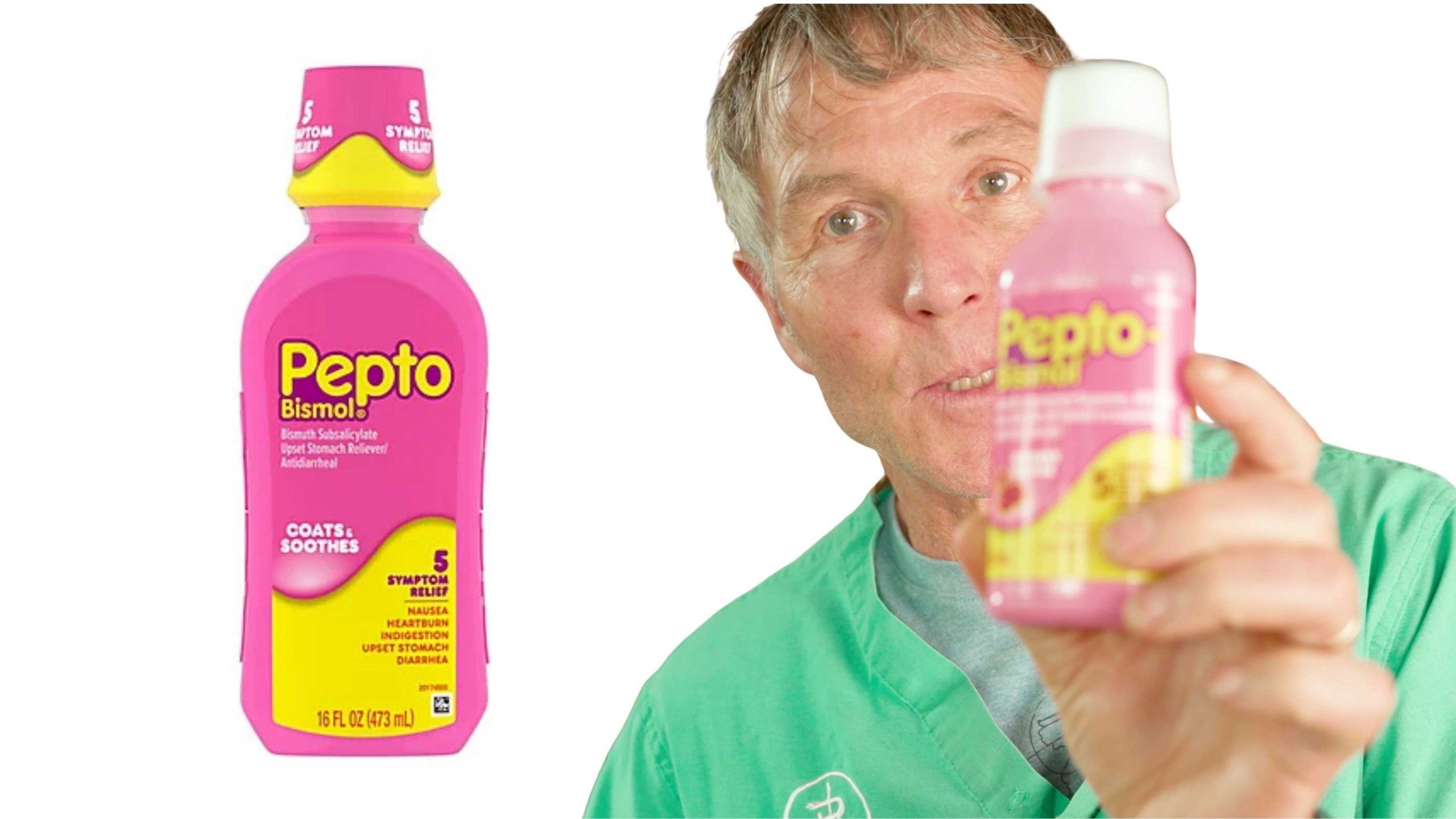
Pepto-Bismol is an old standby and can be effective for dogs.
But it is not safe for cats.
Dog Dose
1 ml per 10 lbs of body weight, 3 times daily
Use for no more than 7 days.
Again, dogs only.
Do not use this for cats.
Kaopectate for Dogs and Cats
The newer version of Kaopectate can be safe for dogs and cats.
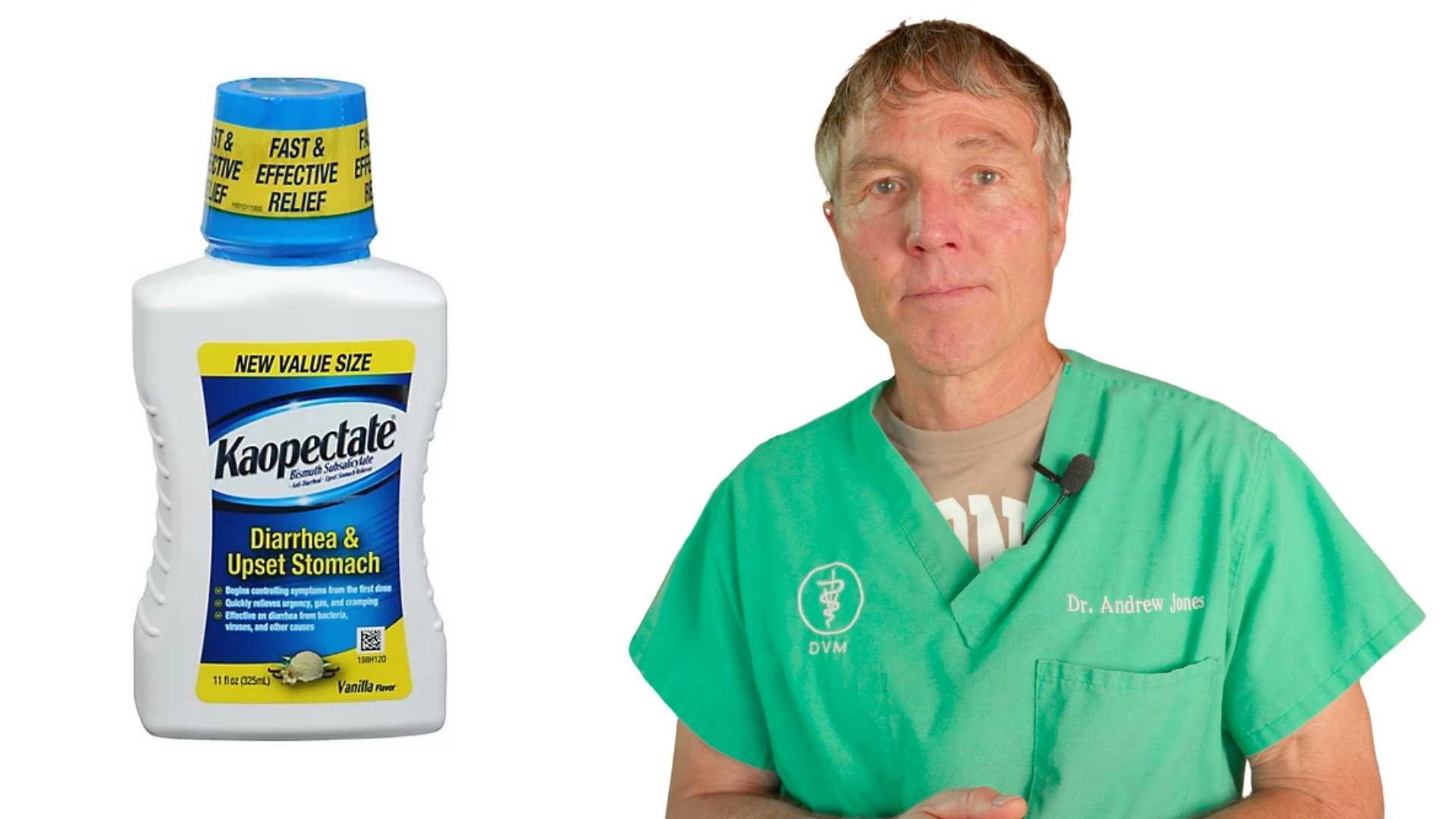
It contains attapulgite clay as the active ingredient.
This binds toxins, decreases fluid in the intestinal tract, and helps reduce diarrhea.
Dose for Pets
0.5 to 1.0 ml per pound by mouth every 4 to 6 hours
Treatment should only be needed for 1 to 2 days.
Warning About Old Kaopectate
The old version includes bismuth salicylate, which is toxic to cats.
Never use the old bismuth salicylate version with cats.
Check the label.
Then check it again.
Cats are not forgiving when we guess wrong.
Imodium for Dogs and Cats With Care
Imodium, or loperamide, can be used with care.
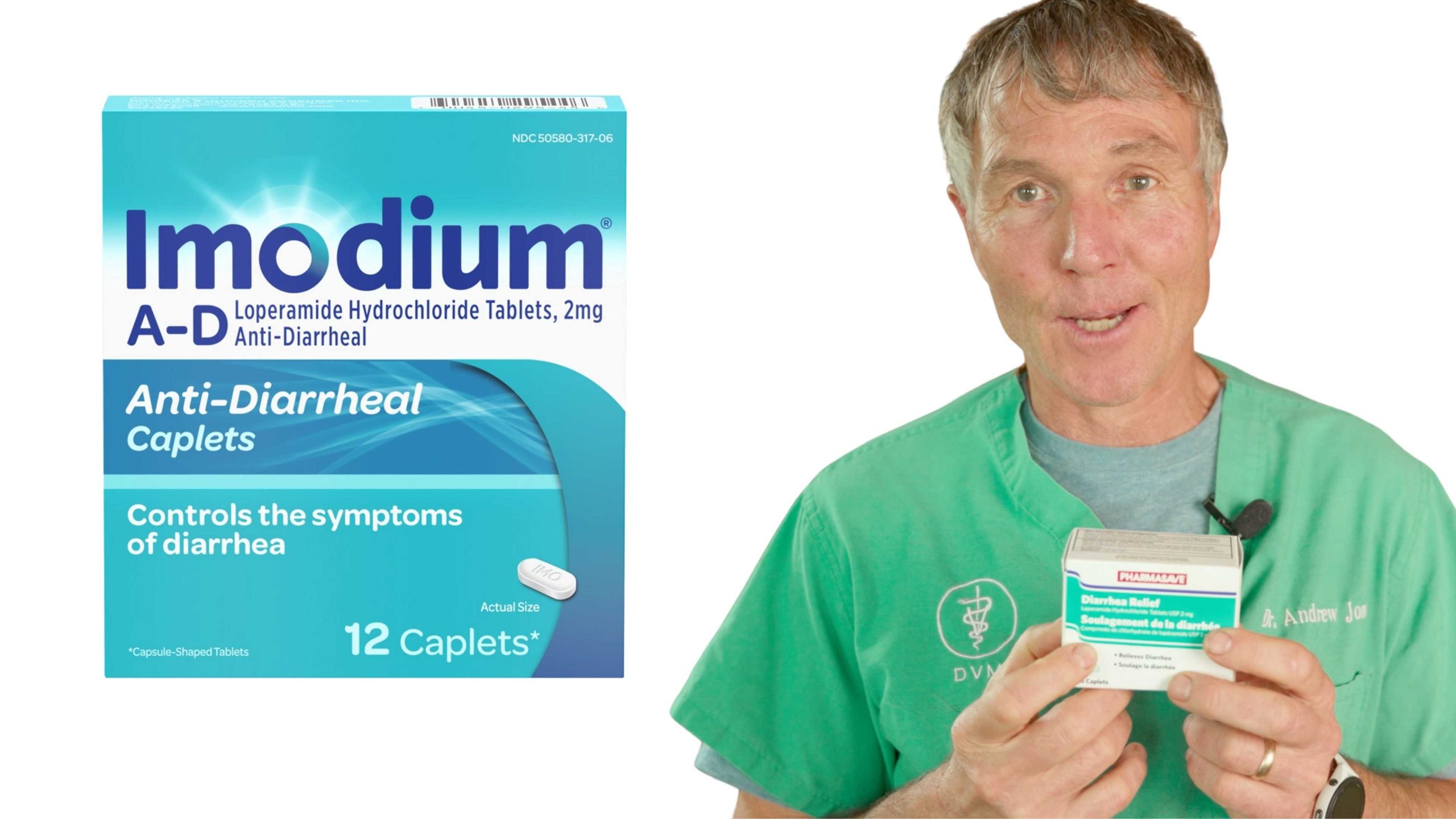
Dose
0.5 mg per 10 lbs, 3 times daily
Example:
A 40-lb dog would get one 2 mg tablet, 3 times daily.
Breed Warning
Avoid giving Imodium to:
- Collies
- Collie crosses
This is one of those cases where breed matters.
Diatomaceous Earth for Diarrhea
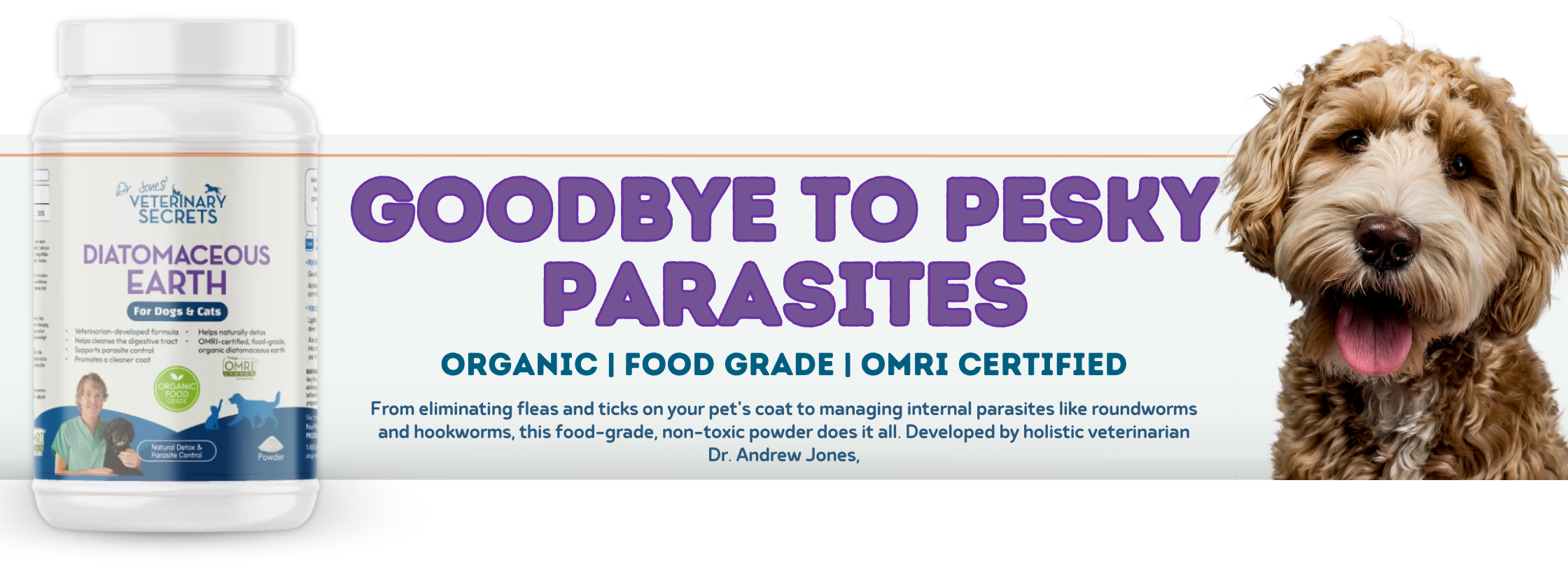
Diatomaceous earth is commonly used for parasites, and parasites can be a cause of diarrhea.
It may help as part of natural parasite control.
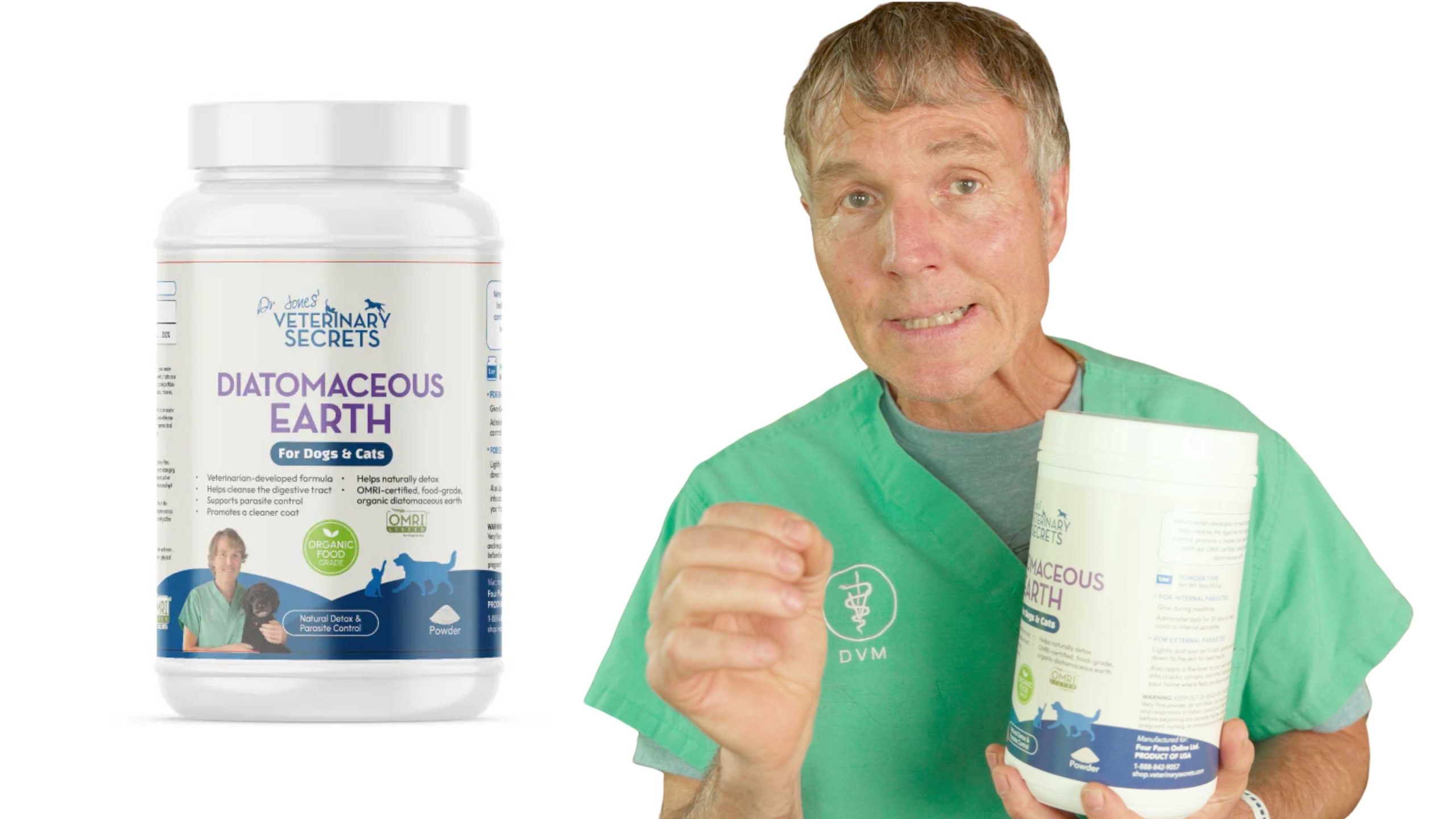
I use this for my own pets.
I also use it on my lettuce for slugs.
It works well.
Dose
1/4 teaspoon per 10 lbs, twice daily
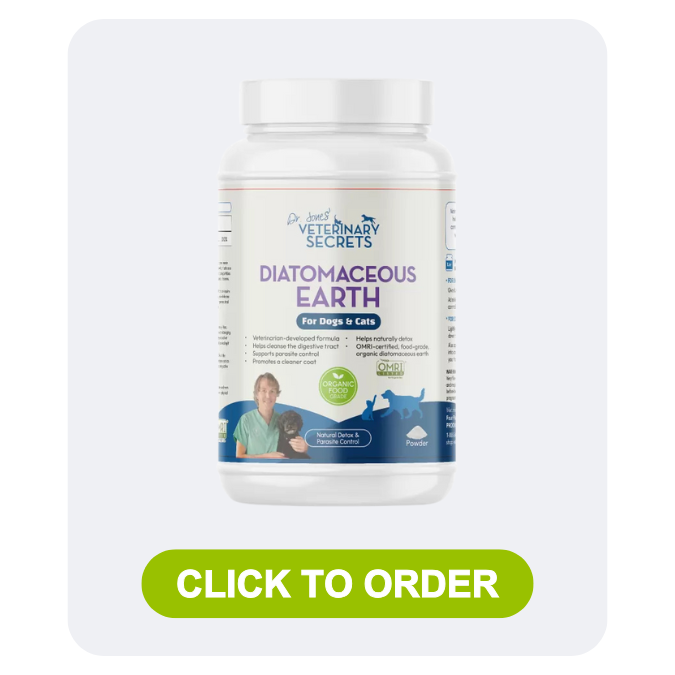
Dr. Jones’ Diatomaceous Earth Powder for Pets was mentioned as an option.
Probiotics for Pet Diarrhea
Any time there is diarrhea, probiotics are always a good idea.
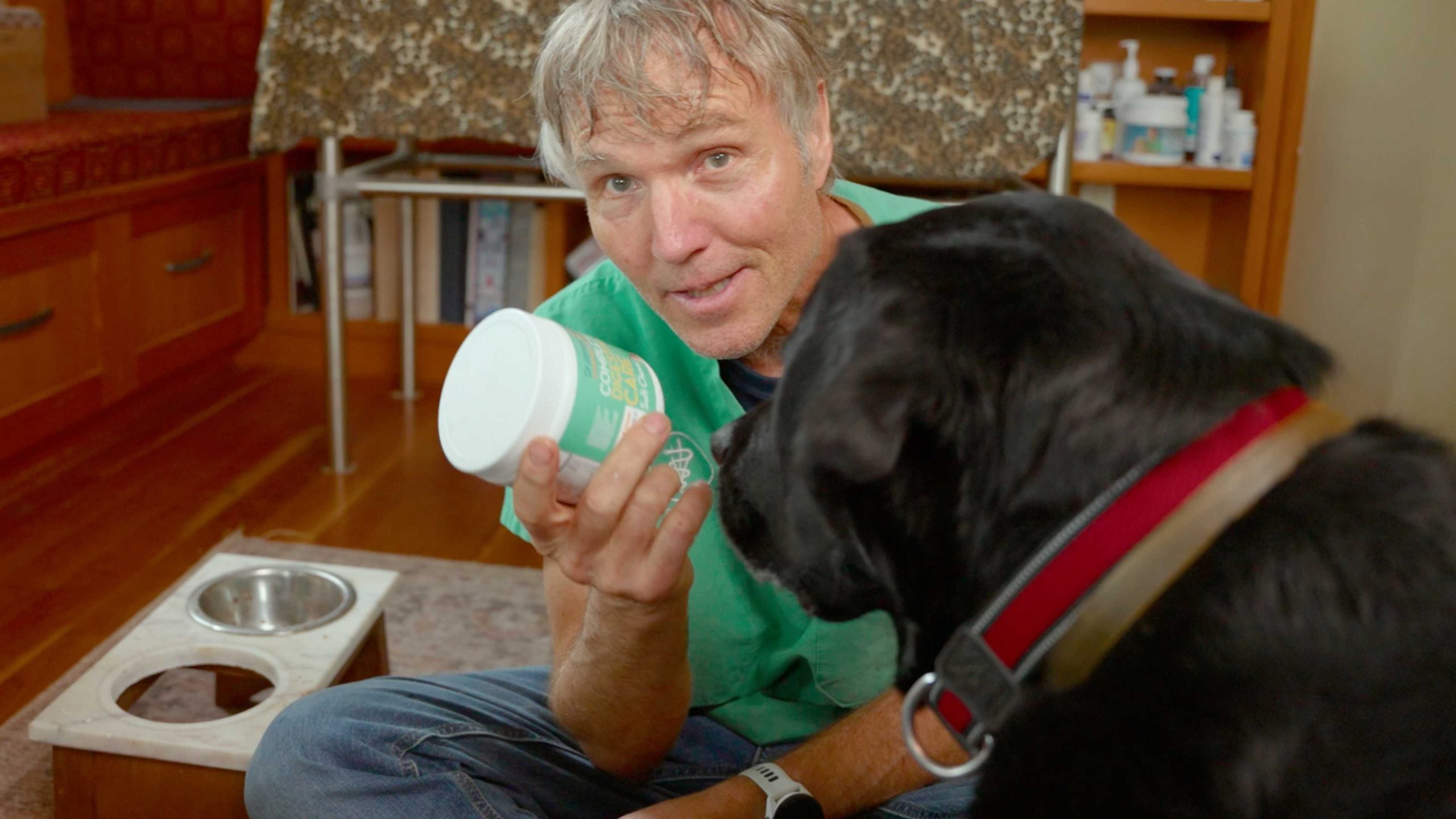
A good-quality, high-CFU, multi-strain formula is a good option.
This is especially worth considering if:
- Diarrhea is persistent
- Diarrhea has been serious
- Your pet has gut imbalance
- Your pet has had repeated digestive upset
The product mentioned is:
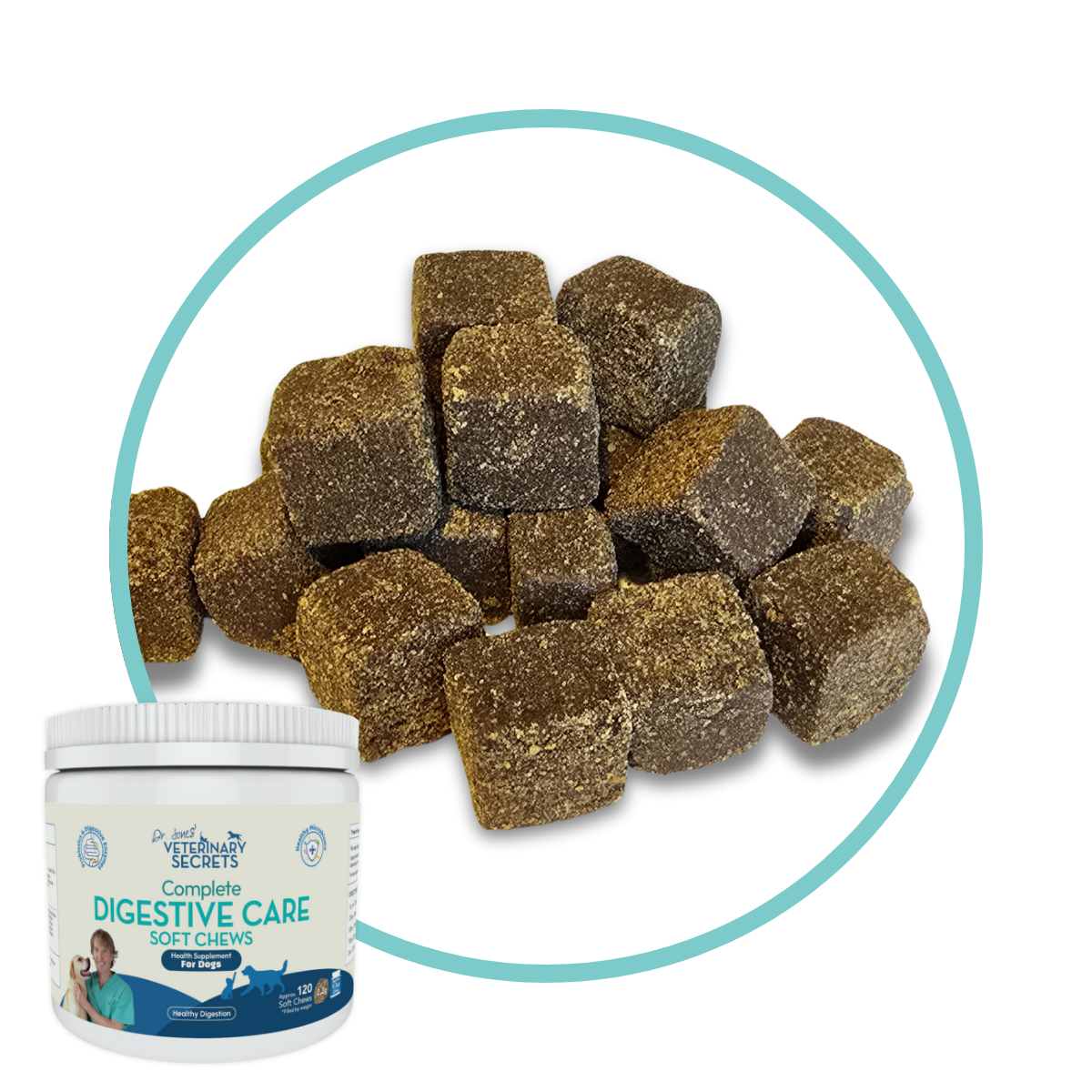
Dr. Jones’ Complete Digestive Care Soft Chews
Digestive help support a healthier gut microbiome, and when the gut is irritated, that support can be very useful.
Slippery Elm for Vomiting and Diarrhea
Slippery elm bark powder is one of the most commonly used natural remedies for digestive and intestinal problems.
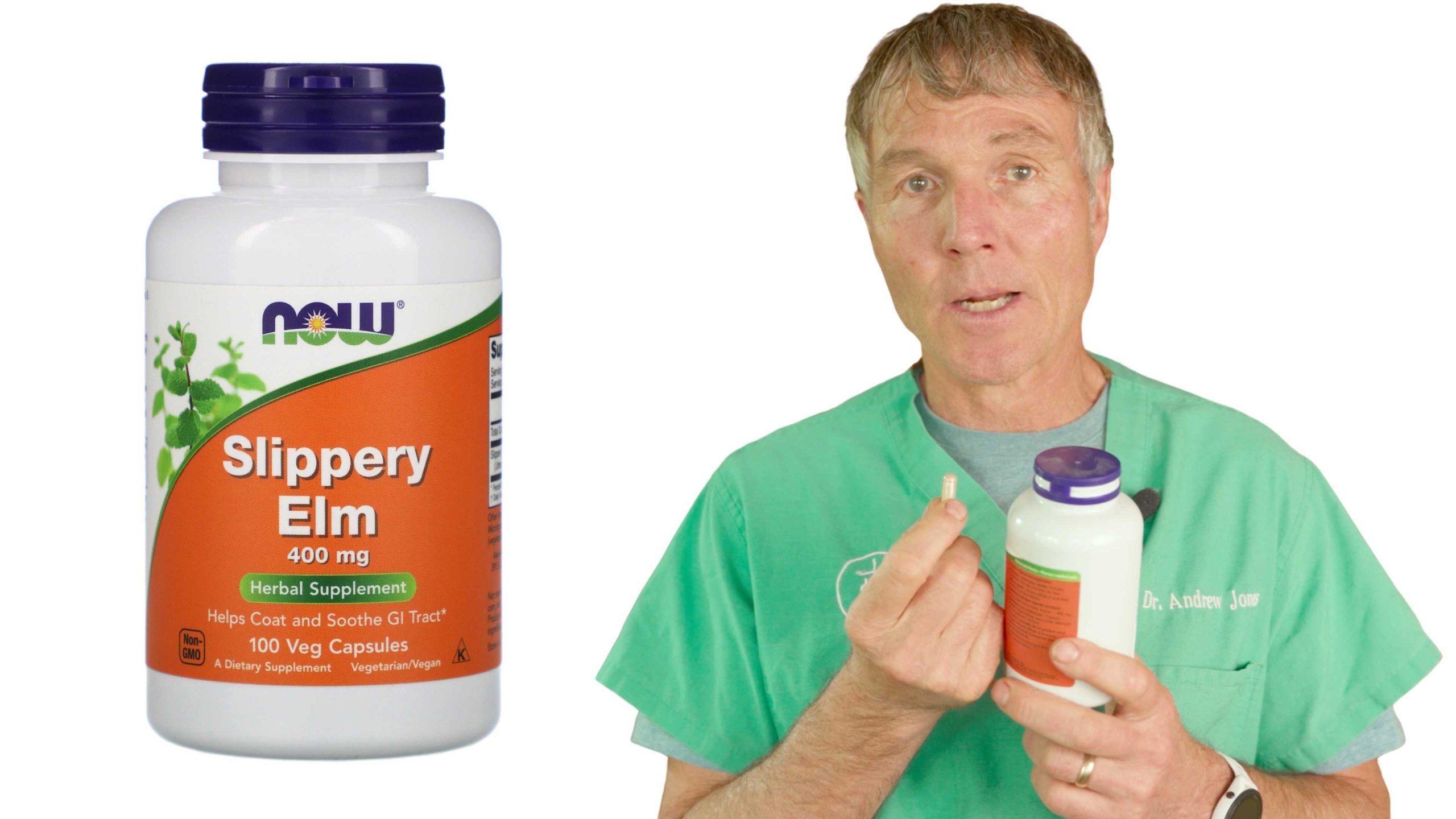
It may help with:
- Nausea
- Vomiting
- Diarrhea
- Constipation
- Gut inflammation
- Digestive irritation
- Intestinal discomfort
It is also mentioned as safe and effective for dogs and cats, even cats with chronic renal failure.
As a side benefit, it may improve coat dryness and dandruff.
Slippery Elm Bark Powder Dose
1/8 to 1/4 teaspoon per 10 lbs, once or twice daily
Slippery Elm Capsule Dose
One 350 to 400 mg capsule per 10 lbs daily
You can give capsules whole or open them and sprinkle the powder on your pet’s food.
Best For / Not For
Best For
Home remedies may be reasonable for dogs and cats who are:
- Still alert
- Only vomiting a few times
- Not extremely dehydrated
- Still drinking
- Having mild to moderate diarrhea
- Not rapidly worsening
- Showing signs of simple garbage gut
- Needing gut support after digestive upset
Not For
Do not rely only on home remedies if your pet is:
- Very lethargic
- Extremely dehydrated
- Vomiting every hour
- Not drinking
- Very weak
- Feverish
- Passing blood
- Having severe ongoing diarrhea
- Getting worse
- Refusing food, especially cats
- Showing signs of serious illness
If in doubt, see your veterinarian.
Diarrhea Home Remedy Dosage Table
| Remedy | Pet | Dose Mentioned | Notes |
|---|---|---|---|
| Pepto-Bismol | Dogs only | 1 ml per 10 lbs, 3 times daily, no more than 7 days | Not safe for cats |
| Kaopectate, newer version | Dogs and cats | 0.5 to 1.0 ml per pound by mouth every 4 to 6 hours | Use only 1 to 2 days |
| Old Kaopectate | Not for cats | Avoid | Old version contains bismuth salicylate, toxic to cats |
| Imodium, loperamide | Dogs and cats with care | 0.5 mg per 10 lbs, 3 times daily | Avoid Collies and Collie crosses |
| Diatomaceous earth | Dogs and cats | 1/4 teaspoon per 10 lbs, twice daily | May help if parasites are involved |
| Probiotics | Dogs and cats | Follow product directions | Good for persistent or serious diarrhea |
| Slippery elm bark powder | Dogs and cats | 1/8 to 1/4 tsp per 10 lbs once or twice daily | Helps digestive and intestinal issues |
| Slippery elm capsule | Dogs and cats | One 350 to 400 mg capsule per 10 lbs daily | Can give whole or sprinkle on food |
Step-by-Step: What to Do if Your Pet Has Vomiting or Diarrhea
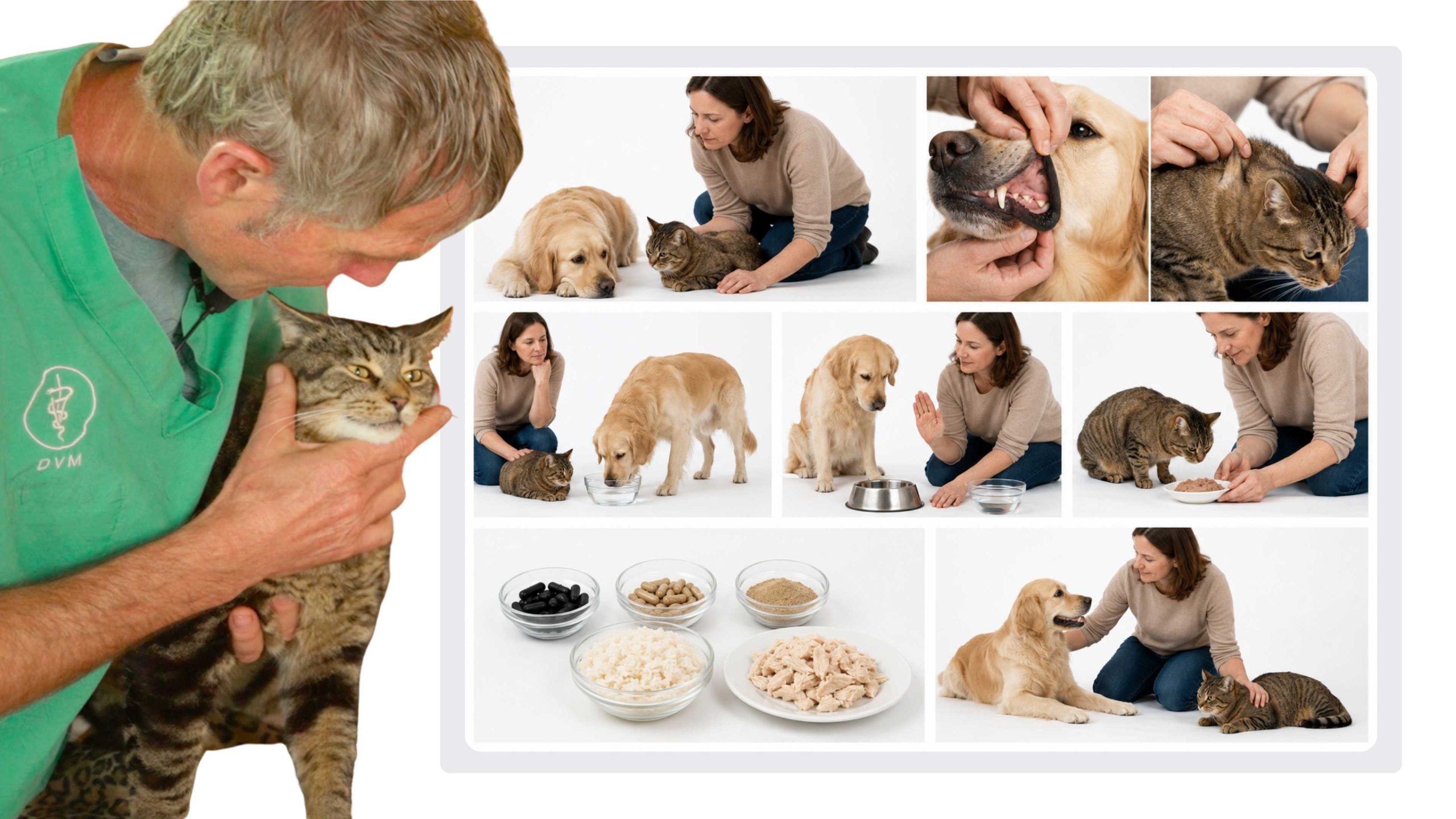
Step 1: Assess Your Pet
Check whether they are alert or very lethargic.
Watch how often they are vomiting.
Check hydration by feeling the gums.
Step 2: Decide if Home Care Is Safe
If they are still alert, only vomiting a few times, and not extremely dehydrated, home care may be reasonable.
If they are very sick, seek veterinary care.
Step 3: Rest the Gut
For dogs:
- No food for 24 hours
- Offer fresh water
For cats:
- Do not fast
- Offer small amounts of canned food
Step 4: Add Electrolytes
Add an electrolyte solution to water.
If your pet is not drinking, syringe fluid at:
100 ml per 10 lbs daily
Step 5: Support Vomiting
Consider:
- Peppermint tea
- Chamomile tea
- Famotidine, 2.5 mg per 10 lbs, 2 to 3 times daily
Step 6: Support Diarrhea
Consider the appropriate option:
- Pepto-Bismol for dogs only
- Newer Kaopectate for dogs and cats
- Imodium with breed caution
- Diatomaceous earth
- Probiotics
- Slippery elm
Step 7: Watch Closely
Monitor your pet for improvement.
If they worsen, stop drinking, become lethargic, or continue vomiting or having diarrhea, see your veterinarian.
When Should You Call Your Veterinarian?
Call your veterinarian if your dog or cat has:
- Extreme lethargy
- Repeated vomiting
- Vomiting every hour
- Severe diarrhea
- Blood in the stool
- Extreme dehydration
- Dry gums
- Refusal to drink
- Refusal to eat, especially in cats
- Fever
- Weakness
- Signs of pain
- Symptoms that do not improve
- Symptoms that worsen despite home care
More serious cases may need subcutaneous fluids or additional care.
What Should You Keep on Hand for Pet Gut Upset?
A simple home gut-care kit may include:
- Electrolyte solution
- Slippery elm bark powder
- Probiotics
- Diatomaceous earth
- Famotidine
- Newer Kaopectate with attapulgite clay
- Plain canned food for cats
- Water and syringe for fluids if needed
Two products mentioned are:
Final Thoughts
Cyclospora is causing serious diarrhea in people, but fortunately, it is not making our dogs and cats sick.
It is a human-specific parasite.
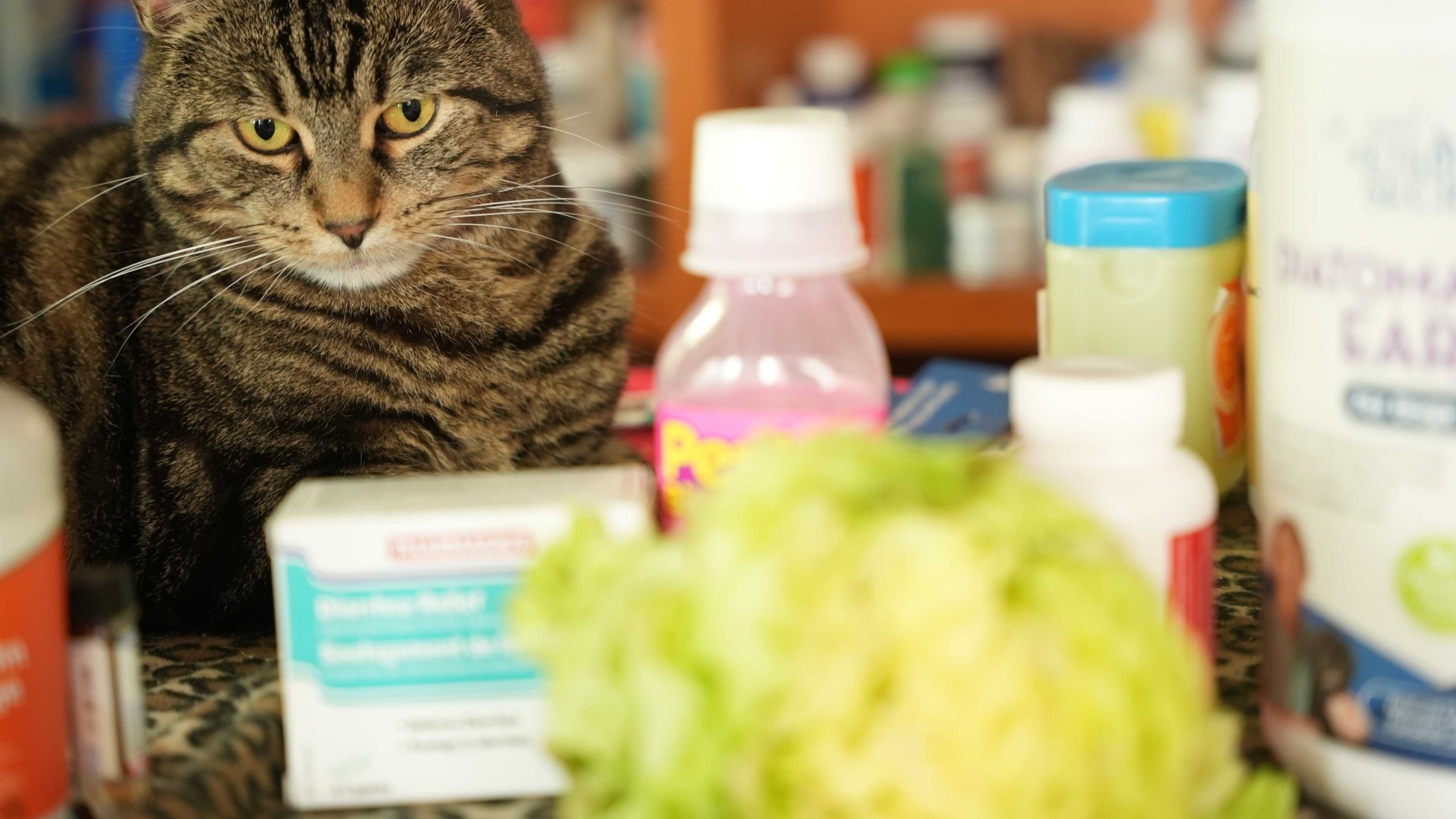
Pets cannot pass the human-specific infection back to people, and they are not expected to show illness from it.
For us, the best advice is to avoid risky raw produce during an outbreak, especially iceberg lettuce, consider locally grown produce, and cook produce when possible.
For our pets, the bigger concern is the usual list of gut troublemakers:
Garbage gut.
Parasites.
Eating things they should not.
A mystery snack from the yard.
Or, if you live with a Labrador, Tuesday.
Start by assessing your pet.
If they are alert, only mildly sick, drinking, and not extremely dehydrated, home remedies may help.
For dogs, rest the gut with no food for 24 hours.
For cats, do not fast. Offer small amounts of canned food.
Use electrolytes, consider vomiting support, and choose diarrhea remedies carefully.
And if your pet is very lethargic, severely dehydrated, vomiting repeatedly, or getting worse, please see your veterinarian.
Click To Get A Free Copy of My E-Book!

P.S. I am hoping you do not contract Cyclospora, because it sounds like an especially unpleasant form of infectious diarrhea.
I am also very happy it is not affecting our dogs and cats.
For now, it seems like good advice to avoid iceberg lettuce, try to get locally grown produce, or cook produce when possible.
P.P.S. As for what to have on hand for pet gut upset, there are a few good options.
Diatomaceous earth may help with natural parasite control. I use it for my own pets, and yes, even on my lettuce for slugs.
Probiotics are also always a good idea when diarrhea is involved.
Dr. Jones’ Complete Digestive Care Soft Chews is an animal-specific digestive support formula.
Dr. Jones’ Diatomaceous Earth Powder for Pets
Dr. Jones’ Complete Digestive Care Soft Chews