Green Tea for Dogs and Cats: Safety, Benefits, and Uses

Is Green Tea Safe for Dogs and Cats?
Yes, green tea can be safely used for dogs and cats when you use the right amount.
The big concern people bring up is caffeine.
Fair question.
Caffeine can be toxic to pets at high doses. But the amount of caffeine in the small doses of green tea I suggest for pets is nowhere near that level.
A cup of brewed green tea has about 35 mg of caffeine. The low end for seeing clinical signs in dogs is about 20 mg per kg. For a 10 lb dog, which is about 5 kg, that would be about 100 mg of caffeine.
That means a 10 lb dog would need to drink about 3 full cups of green tea before reaching the low end where clinical signs might occur.
And we are never giving that much.
For most pet uses, I am talking about small measured amounts, often around 1/4 cup per 20 lbs of body weight daily.
And for cats, or dogs who are already very hyperactive, I would usually choose decaf green tea.
Simple answer: green tea can be a safe, inexpensive, and useful home remedy for pets when used properly.
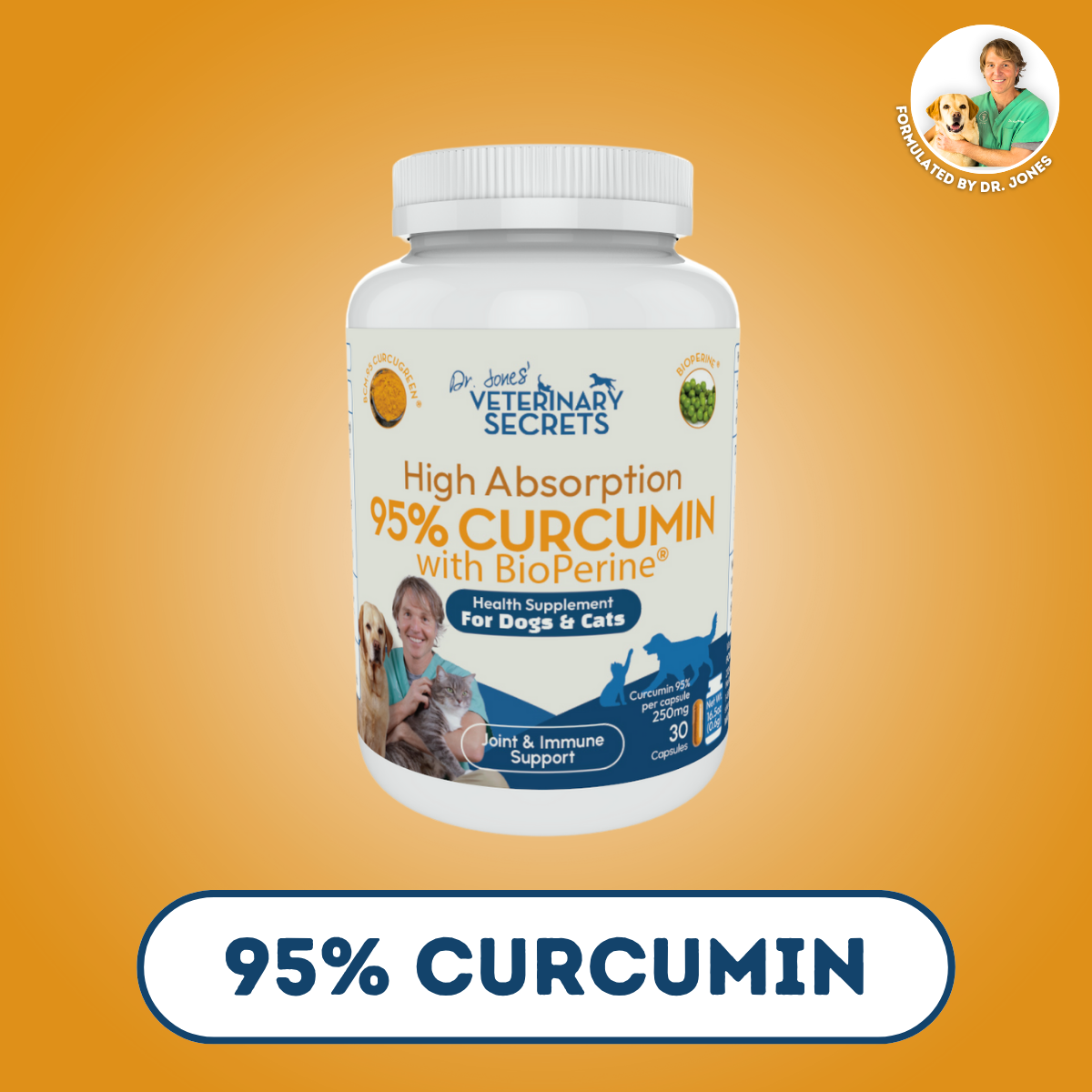
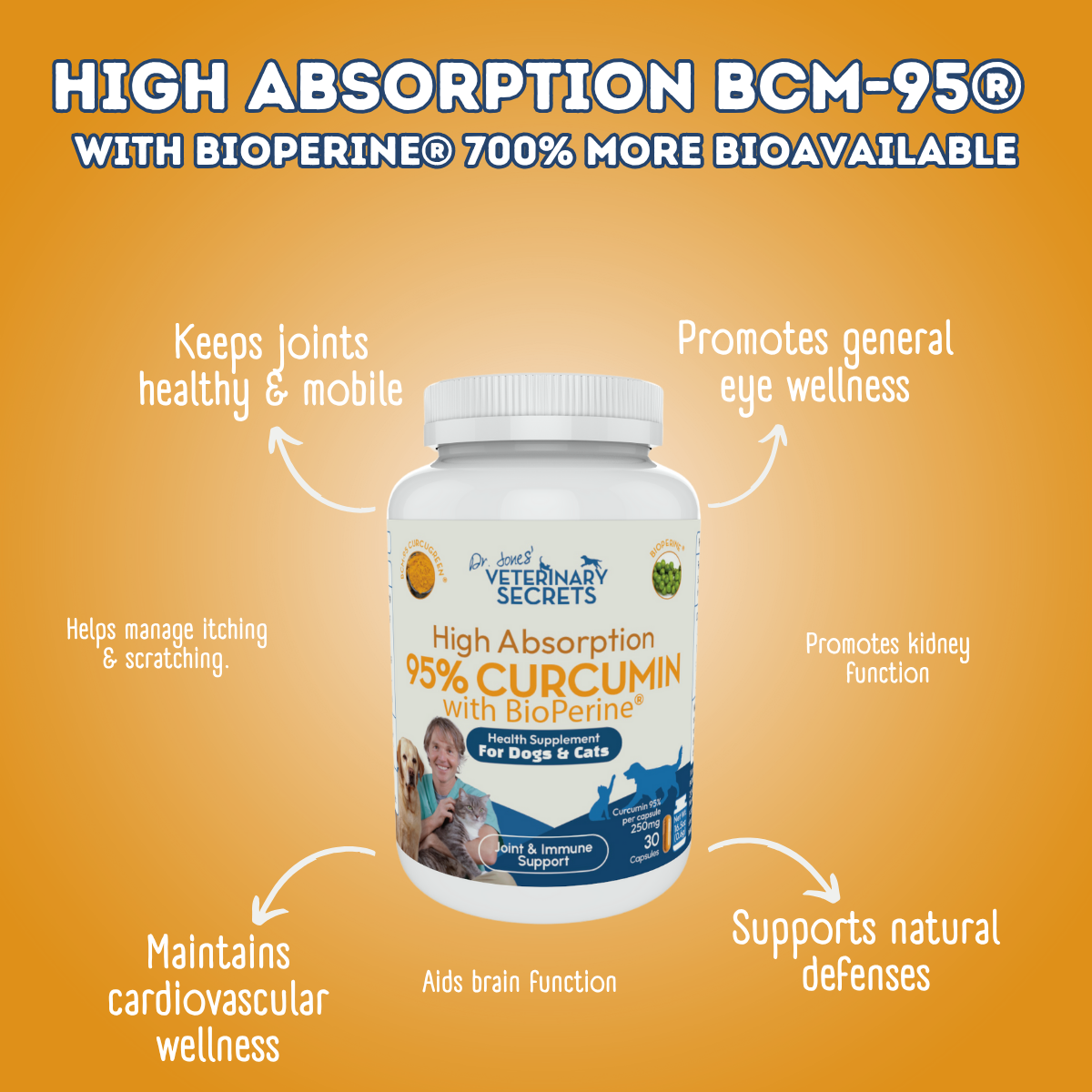
Dr. Jones’ Ultimate High Absorption 95% Curcumin for Dogs and Cats (30 Capsules)



Why Should Pet Parents Consider Green Tea?
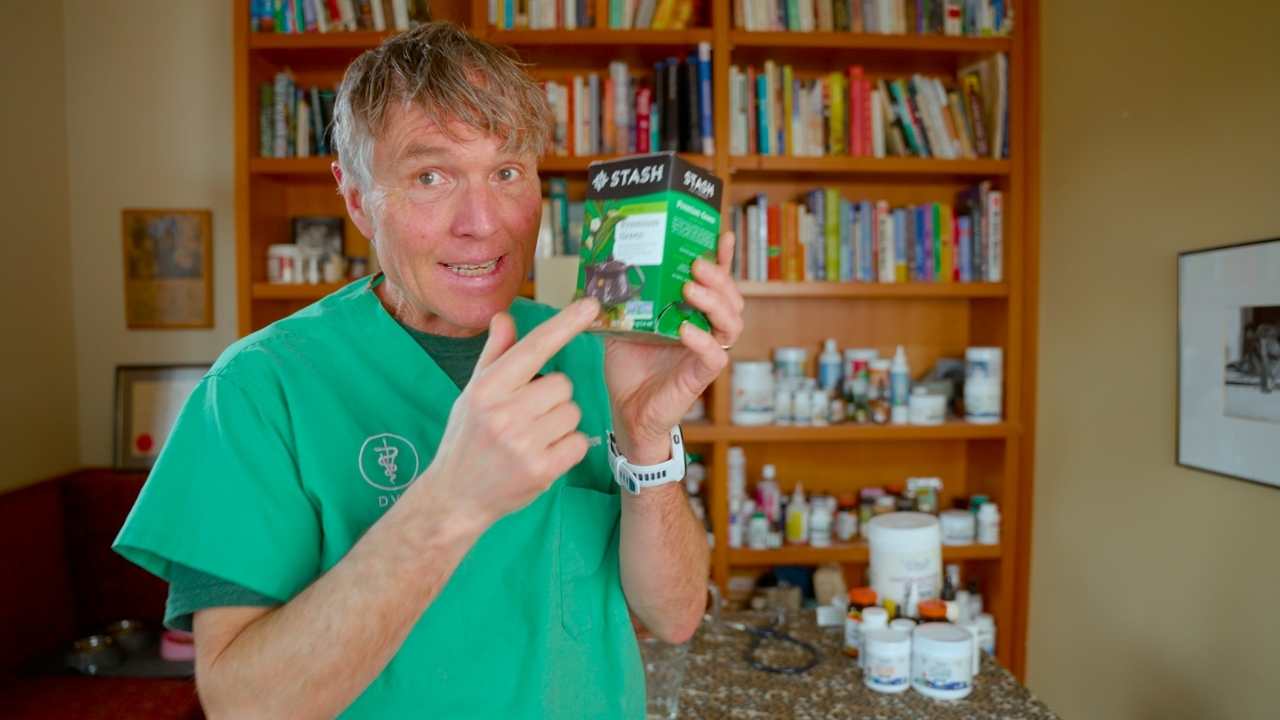
Green tea is one of those cheap remedies that many pet parents are ignoring.
It has a pile of useful properties.
Green tea may help as a:
- Powerful anti-inflammatory
- Antioxidant
- Antimicrobial
- Antibacterial
- Antiviral
- Antifungal
- Cancer-supportive option
- Oral health rinse
- Skin compress
- Ear flush
- Eye rinse
- Urinary tract support
And the best part?
You are not buying some exotic mystery powder from the far side of the internet.
You can pick it up yourself. Brew it. Cool it. Use it.
Very cost effective.
What About the Caffeine in Green Tea?
Let’s talk caffeine, because this is where many people panic.
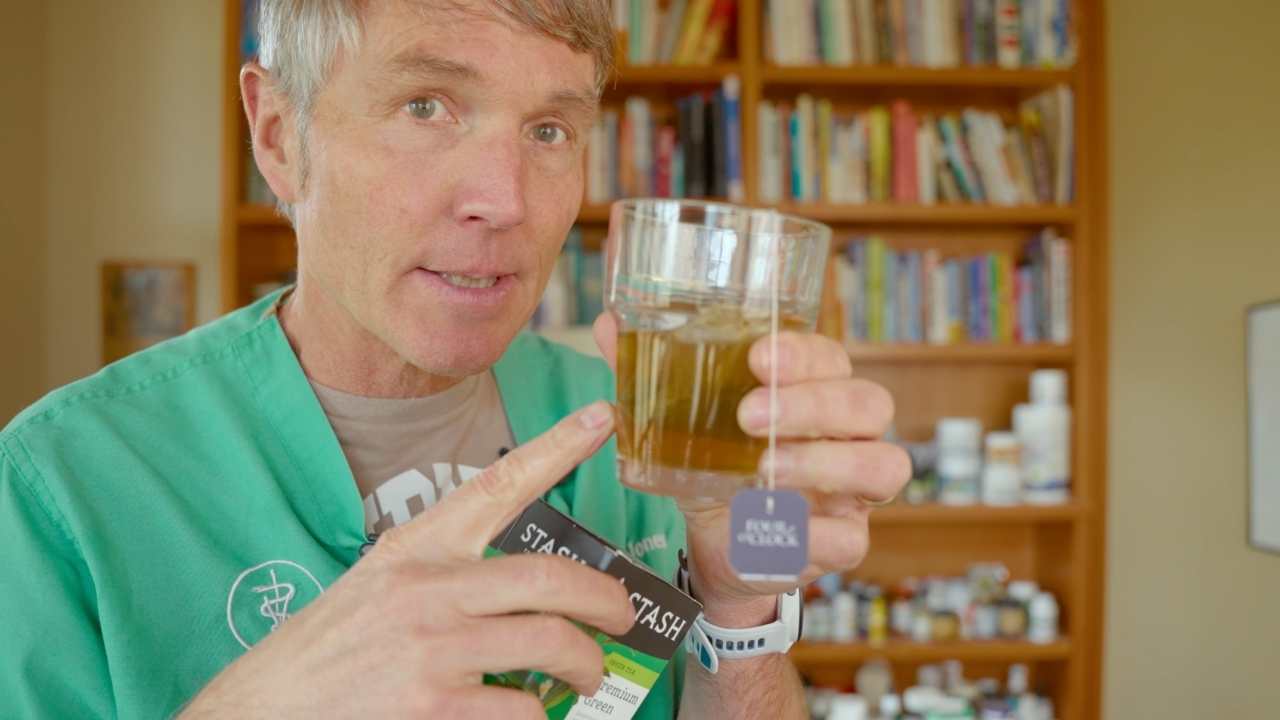
A cup of green tea contains about 35 mg of caffeine.
For dogs, the toxic dose of caffeine is about:
- 150 mg per kg
The low end for possible clinical signs is about:
- 20 mg per kg
So let’s do the simple math.
A 10 lb dog or cat is about 5 kg.
At 20 mg per kg, that equals:
- 100 mg of caffeine
One cup of green tea has about:
- 35 mg of caffeine
So a 10 lb dog would need to consume about 3 full cups of green tea to reach the low-end amount where clinical signs may appear.
That is far more than I would ever suggest giving.
For oral use, the amount I suggest is usually:
- 1/4 cup per 20 lbs of body weight daily
That is a small amount.
We are miles away from the caffeine concern.
Should You Use Regular or Decaf Green Tea?
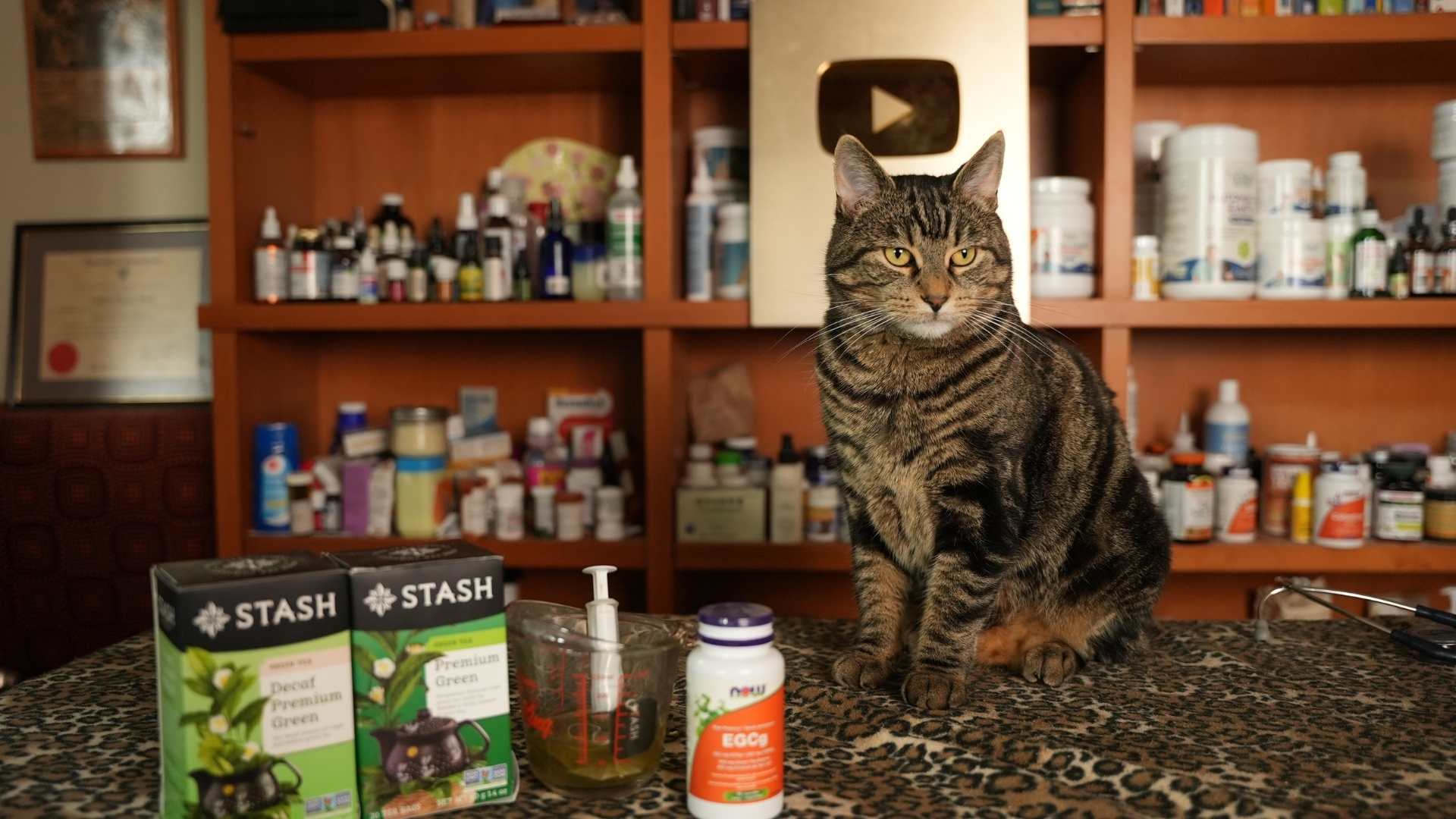
For many pet uses, decaf green tea is a great option.
Decaf green tea still contains many of the important medicinal compounds, including EGCG, the green tea flavonoid with antioxidant and cancer-supportive properties.
I Would Use Decaf Green Tea For:
- Cats
- Hyperactive dogs
- Dogs with anxiety
- Pets sensitive to stimulants
- Calming support
- Urinary issues in cats
- Most topical uses
Cats are generally more sensitive to caffeine, so for cats, I would usually reach for decaf green tea first.
I Might Use Regular Green Tea For:
- Dogs needing metabolic support
- Dogs with fatty tumors or lipomas
- Some oral uses in dogs
- Some topical uses
Regular green tea may slightly increase metabolic rate, which is one reason I consider it for dogs with fatty tumors.
What Is EGCG in Green Tea?
EGCG is a medicinal flavonoid found in green tea.
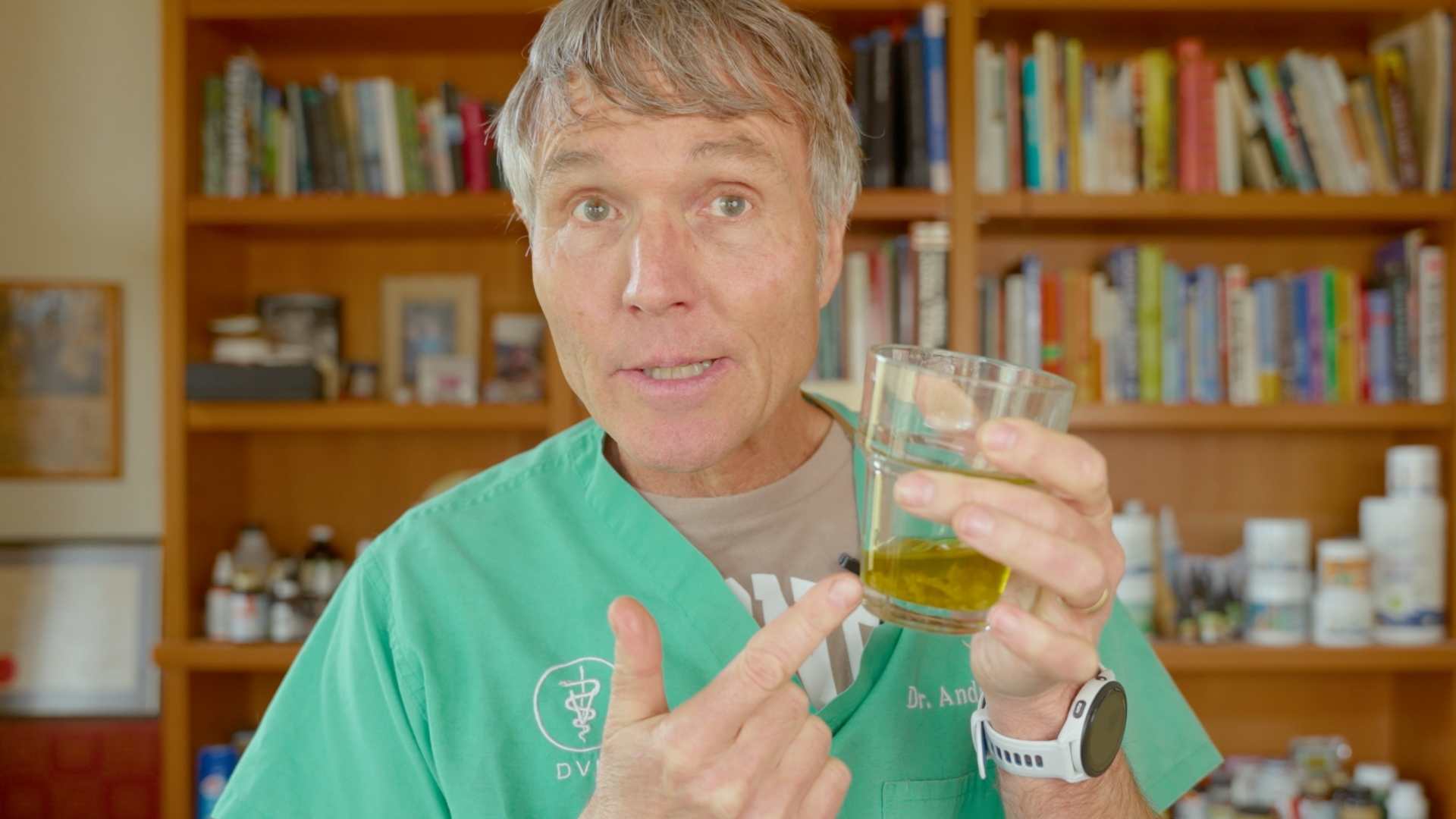
It is one of the main compounds responsible for green tea’s impressive antioxidant and cancer-supportive properties.
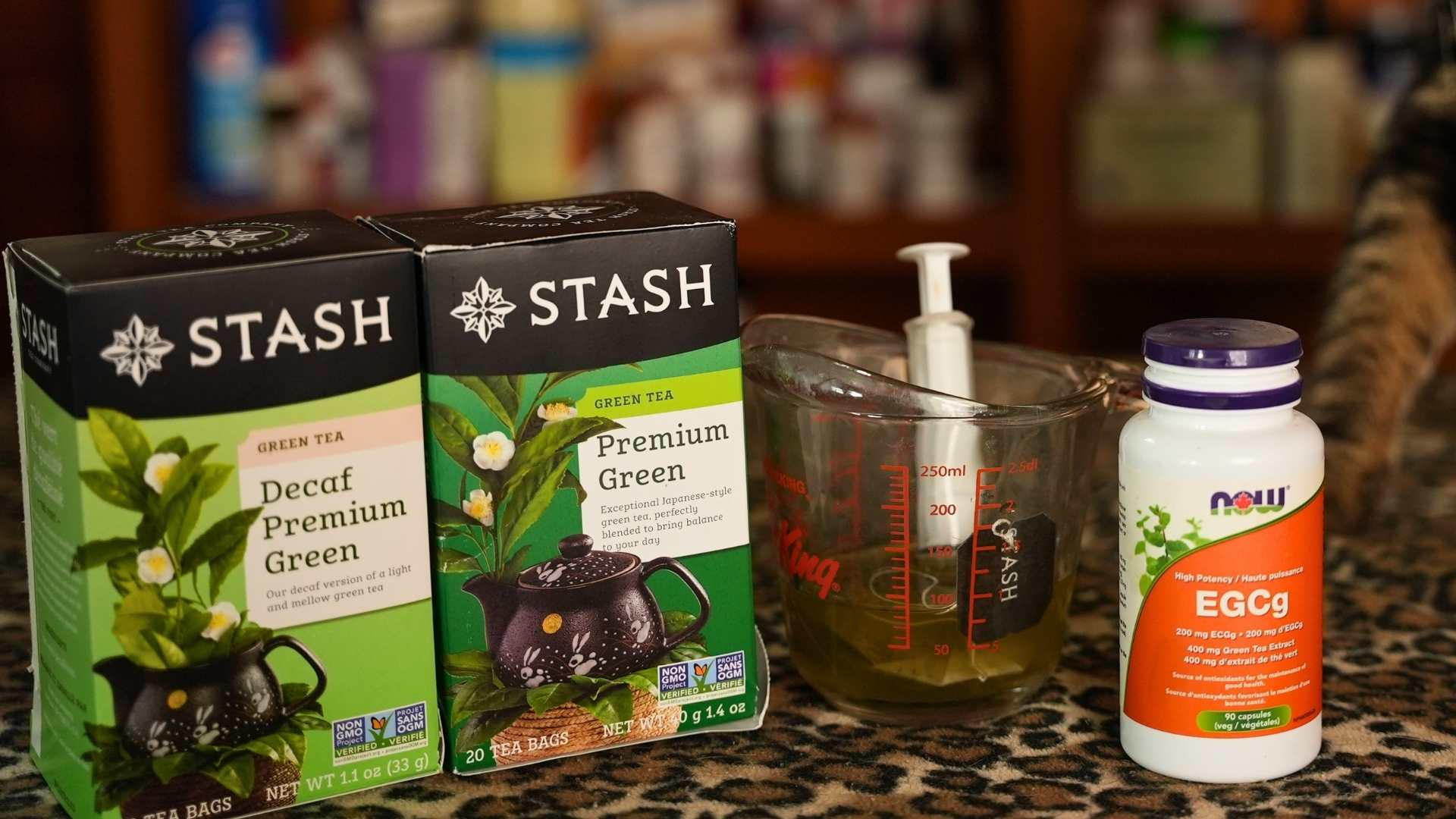
You can get EGCG from brewed green tea, but you can also use green tea extract capsules.
The green tea extract mentioned contains:
- 200 mg EGCG
- Equivalent to 400 mg green tea extract
- About 4 mg caffeine per capsule
That is very little caffeine.
EGCG Extract Dose
A suggested dose is:
- 2 mg per lb of body weight daily
For a 20 to 25 lb dog, that would be about:
- 50 mg EGCG
- About 1/4 capsule daily, based on a 200 mg EGCG capsule
This is often easier than trying to give brewed green tea, especially when you want a more concentrated EGCG dose.
1. Green Tea for Cancer Support

Green tea has impressive research behind it for cancer prevention and cancer treatment support.
The main compound here is EGCG.
If your dog or cat has cancer, I would be comfortable adding green tea as part of a broader support plan.
You have two basic options:
- Brewed green tea
- Concentrated EGCG green tea extract
For cancer support, I would lean toward the concentrated EGCG capsules because you know you are getting a higher amount of that specific medicinal compound.
Cancer Support Dose
Brewed green tea:
- 1/4 cup per 20 lbs of body weight daily
EGCG extract:
- 2 mg per lb of body weight daily
For a 20 to 25 lb dog:
- About 50 mg EGCG daily
- About 1/4 of a 200 mg EGCG capsule
2. Green Tea for Fatty Tumors and Lipomas
Green tea may help dogs with fatty tumors, also called lipomas, in two ways.
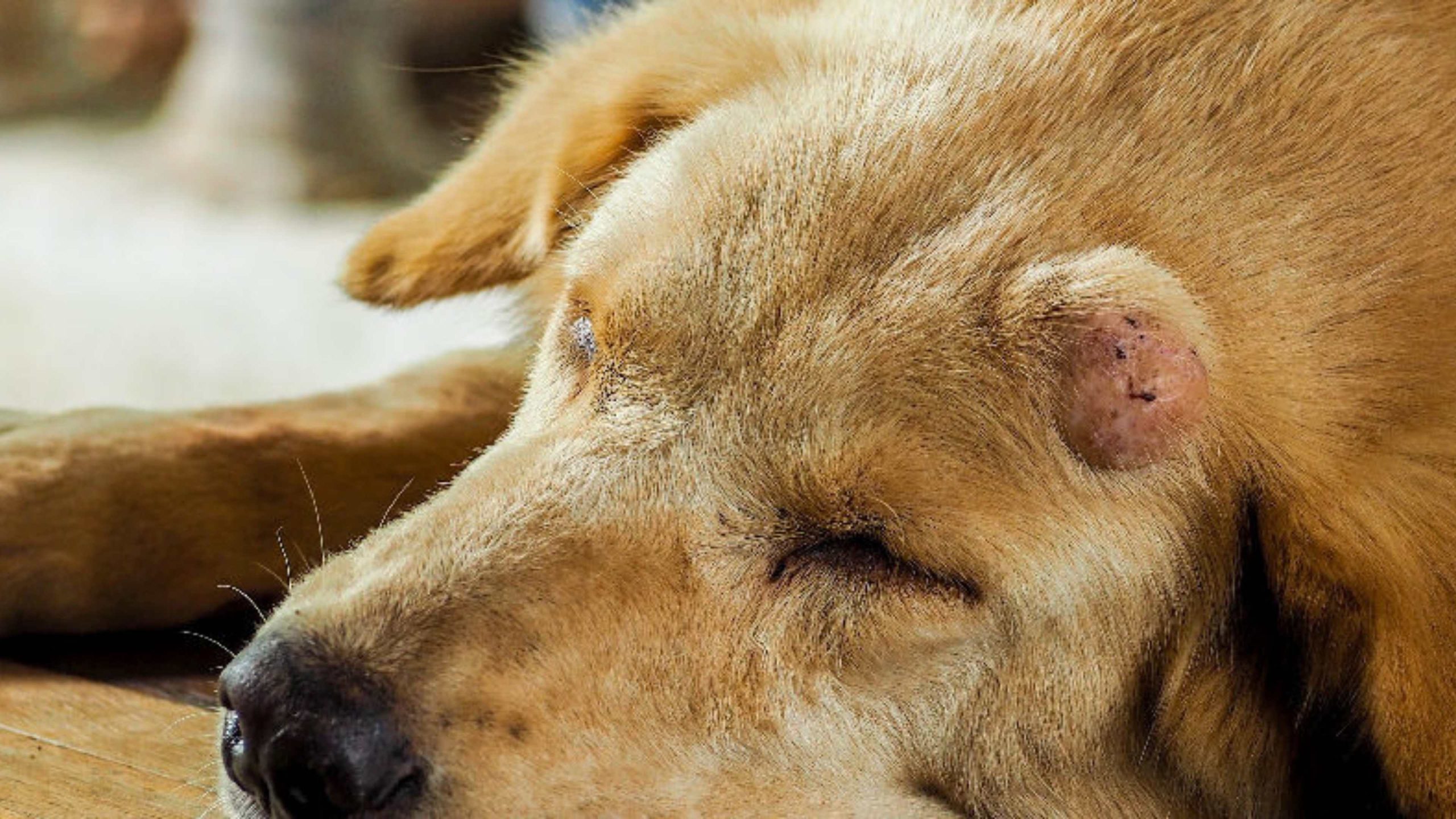
First, it may slightly increase metabolic rate.
There is a connection between body fat and these lumps and bumps. If we can support metabolism and help reduce excess fat, some fatty tumors may shrink.
Second, EGCG has anti-inflammatory properties.
Chronic inflammation may be one reason the immune system is less effective at controlling abnormal growths.
So green tea may help by:
- Supporting metabolic rate
- Decreasing chronic inflammation
- Supporting immune function
Lipoma Support Dose
Use:
- 1/4 cup green tea per 20 lbs of body weight daily
You can add it to your dog’s water or food.
3. Green Tea for Diabetes Support
Green tea may also be useful for diabetic pets, especially cats with type 2 diabetes.
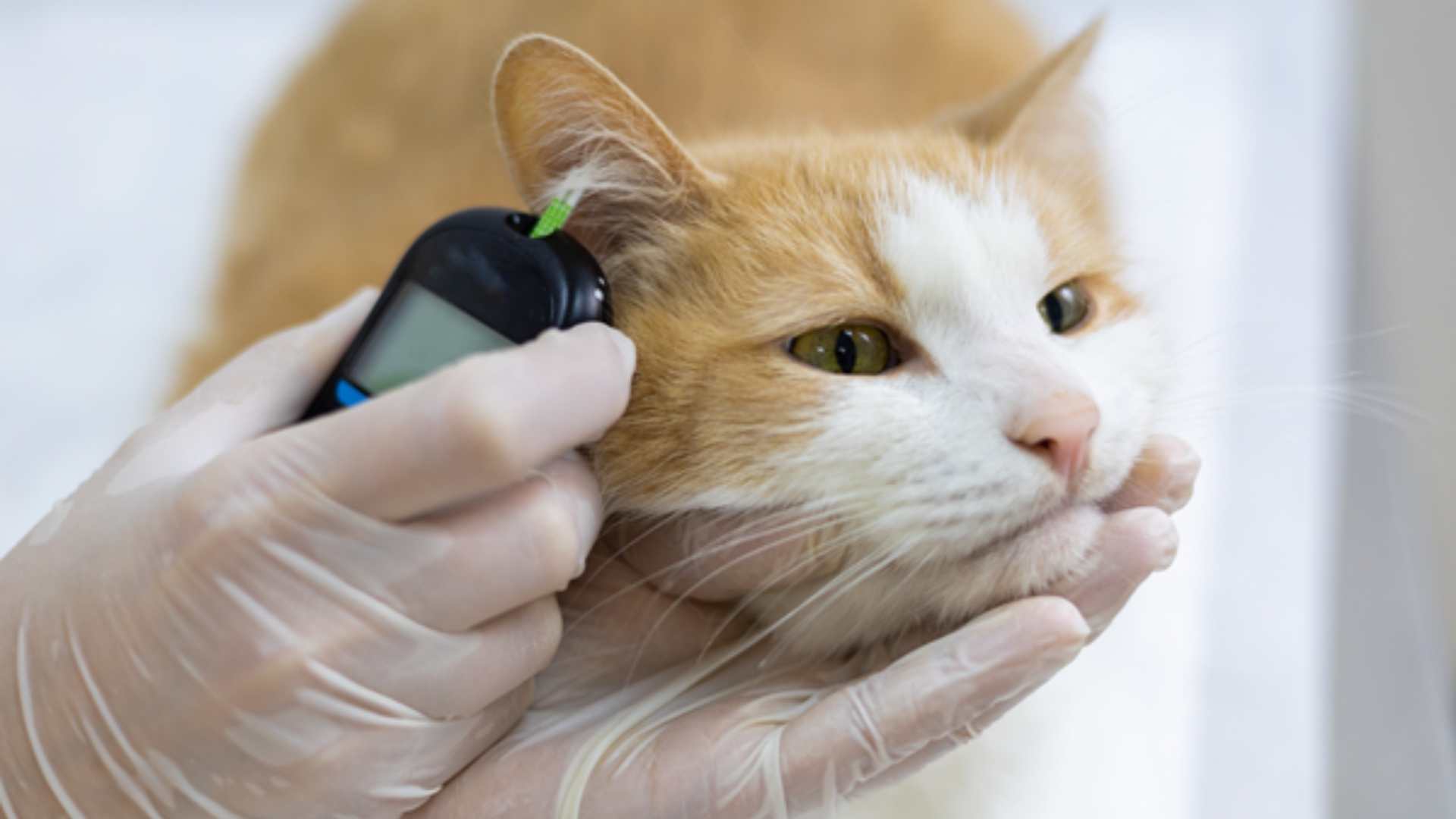
Many animals with type 2 diabetes are slightly overweight and have been eating higher-carbohydrate diets.
There is also a strong inflammation connection.
Inflammation may affect:
- The pancreas
- Insulin production
- The cells’ response to insulin
If we can reduce inflammation at the level of the pancreas or cells, we may be able to support better insulin response.
In some type 2 diabetic cats, this may help reduce the insulin dose or, in some cases, support diet-based management.
For cats, I would use decaf green tea.
4. Green Tea for Anxiety and Brain Support
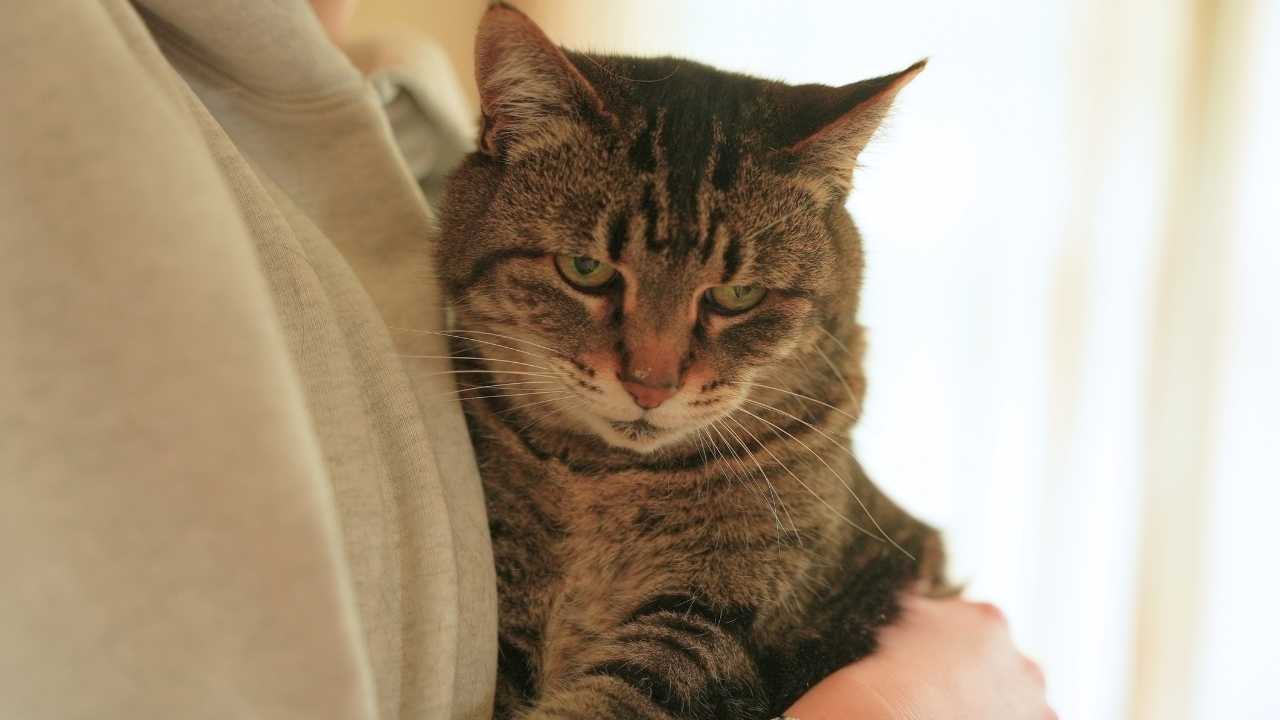
Green tea contains L-theanine.
L-theanine is a calming amino acid found in green tea.
It is sometimes called the calming chemical because it can support relaxation.
This may be helpful for pets with anxiety.
It may also be worth considering for cats with urinary tract disease where stress is part of the problem.
Anxiety Support Dose
Use:
- Decaf green tea
- 1/4 cup per 20 lbs of body weight daily
For anxiety, use decaf.
We do not want to give a hyperactive dog or an anxious cat a stimulant and then act surprised when they start vibrating across the kitchen.
5. Green Tea for Oral Health and Gingivitis
Green tea can be very helpful for oral health.

It has antibacterial and anti-inflammatory properties.
Dental disease often involves plaque, which is bacteria sticking to food particles, eventually turning into tartar.
Green tea may help target plaque and reduce gum inflammation.
Green Tea Mouth Flush
Use:
- 3 to 5 ml of brewed green tea
- Flush the mouth once daily
This can be regular or decaf green tea.
People who use green tea as a mouthwash have improved oral health. They do not drink the mouthwash. They swish and spit.
Our dogs and cats may swallow a little. That small amount is not the concern.
If you can avoid a huge dental bill by doing a simple green tea mouth flush daily, that is worth considering.
6. Green Tea for Hot Spots and Skin Inflammation
Green tea can be used topically for hot spots and inflamed skin.
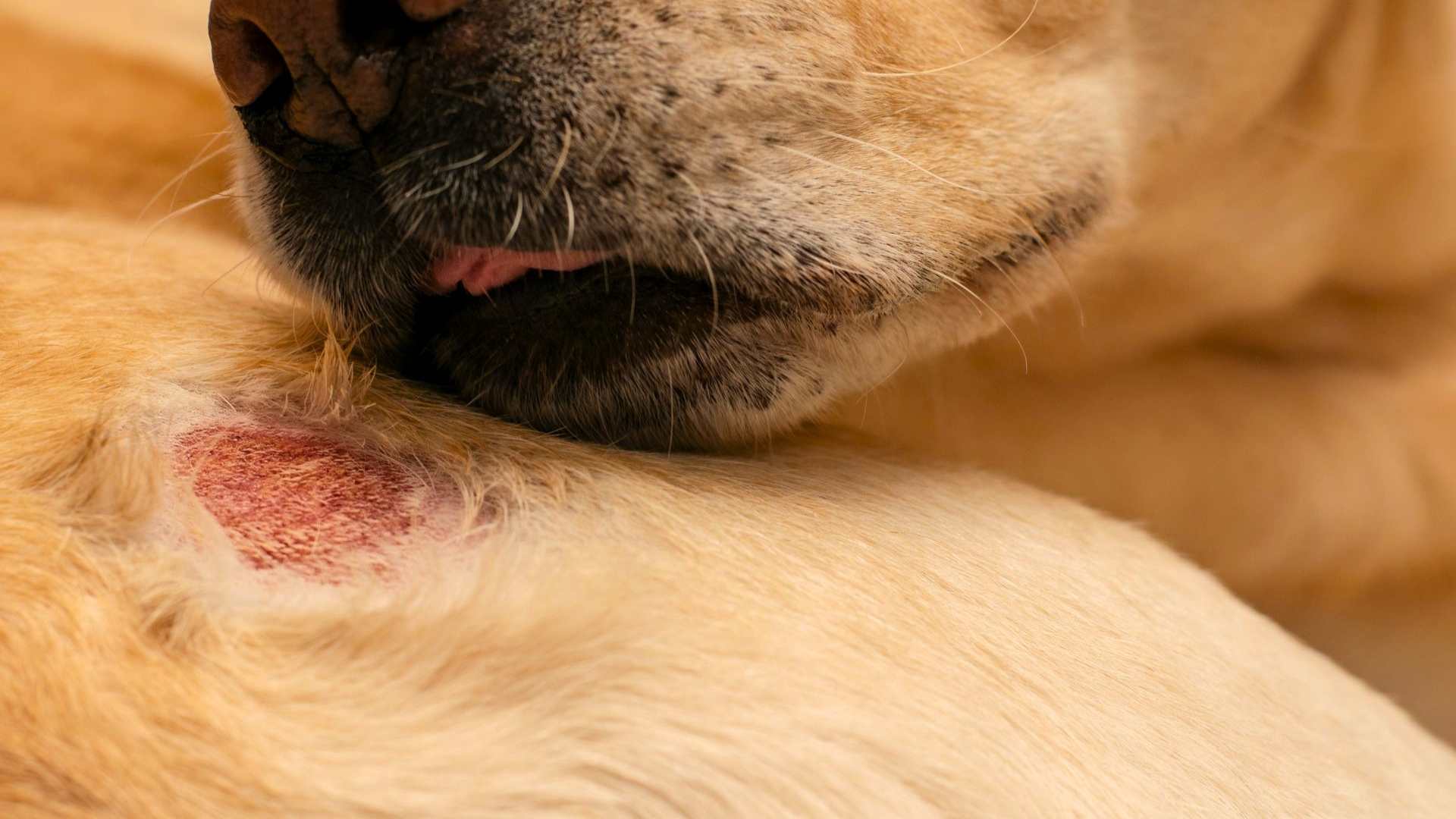
It has:
- Anti-inflammatory properties
- Antibacterial properties
- Antifungal properties
How to Use Green Tea on Skin
- Brew a concentrated cup of green tea.
- Use about 1/2 cup water.
- Let it steep for about 20 minutes.
- Let it cool.
- Soak gauze in the green tea.
- Wipe or hold it over the affected skin.
Use:
- Twice daily
- Up to 4 times daily for acute surface infections
Make a fresh cup every day.
This can be helpful for hot spots or local areas of infection.
7. Green Tea for Eye Infections
I have successfully used green tea for surface eye infections.
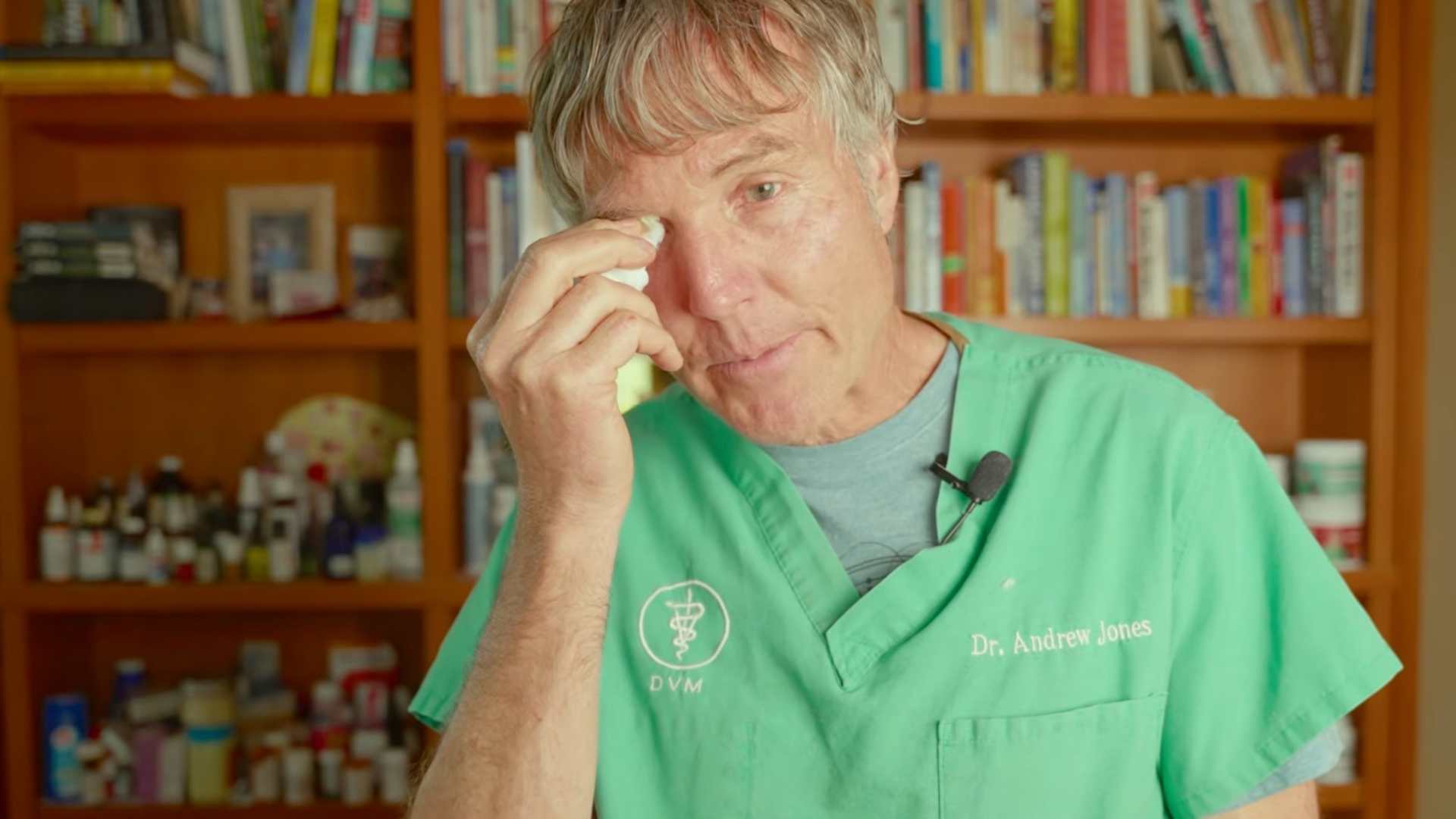
This can include mild bacterial or viral eye irritation, because green tea is anti-inflammatory and has antimicrobial and antiviral properties.
For a stye, you can also use the tea bag itself as a warm compress.
Green Tea Eye Drop Method
- Brew a concentrated 1/2 cup of decaf green tea.
- Let it steep for about 20 minutes.
- Let it cool completely.
- Draw some up with a small syringe.
- Place 2 to 3 drops in the corner of the affected eye.
Use:
- Minimum twice daily
- Better 3 to 4 times daily
- Typically for 3 to 5 days
Make a fresh cup daily.
Eye Caution
If your pet has severe eye pain, cloudiness, squinting, worsening discharge, or the eye is not improving, get the eye checked.
Eyes are not something to ignore.
8. Green Tea for Ear Infections
Green tea may also help with ear infections.
It can help because it is:
- Antibacterial
- Antifungal
- Anti-inflammatory
It may also be beneficial for ear mites.
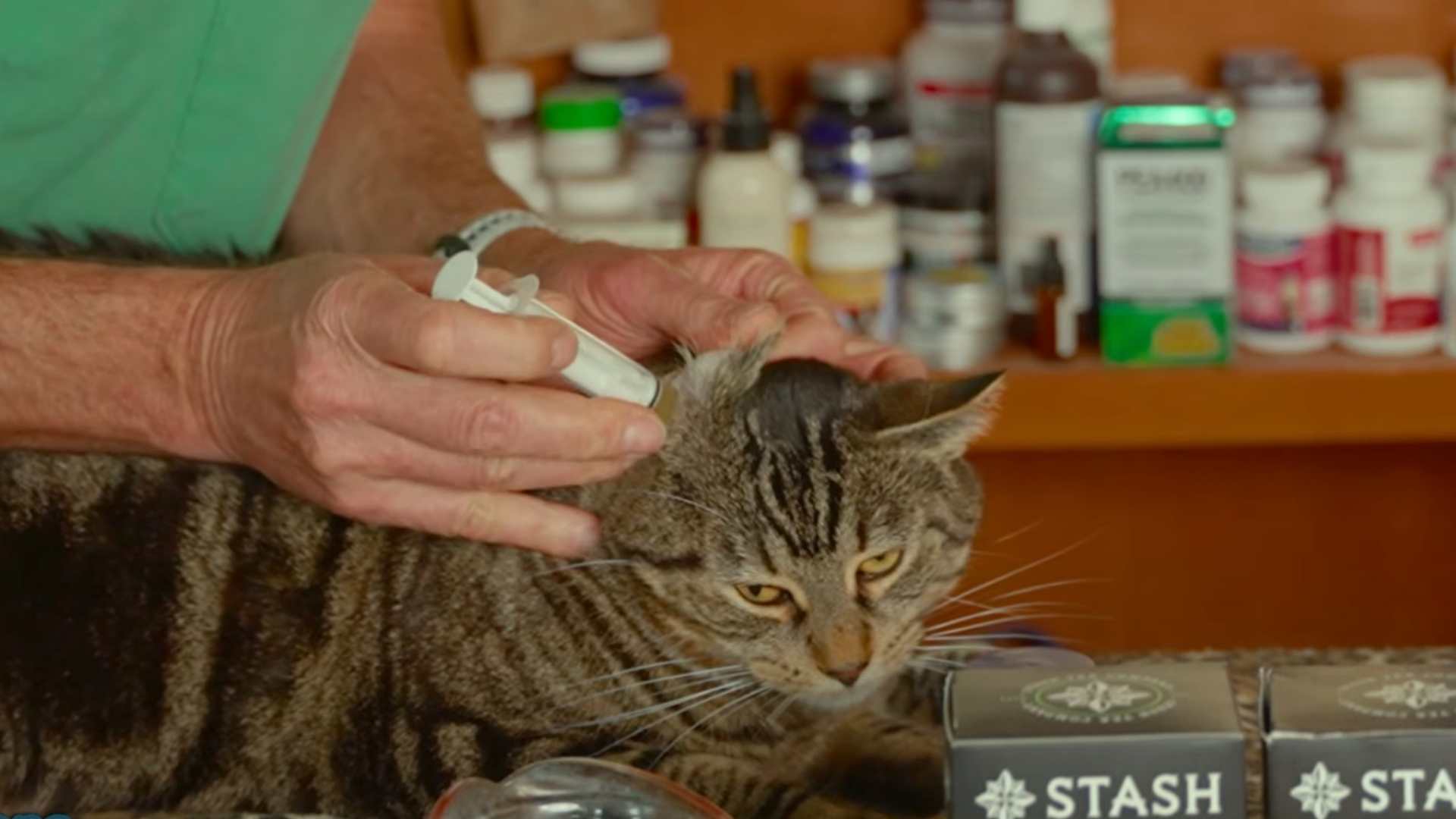
Green Tea Ear Flush Method
- Brew a concentrated 1/2 cup of regular green tea.
- Let it steep until strong.
- Let it cool.
- Use a small syringe.
- Put the green tea into the base of the ear.
- Rub the base of the ear well.
Suggested amount:
- 3 to 10 drops, depending on pet size
For a cat like Cassian:
- 3 to 4 drops
Use:
- Twice daily
- For 5 to 7 days
- Longer if the ear infection is more serious
9. Green Tea for Urinary Tract Infections
Green tea may help urinary tract issues because it concentrates in the bladder.
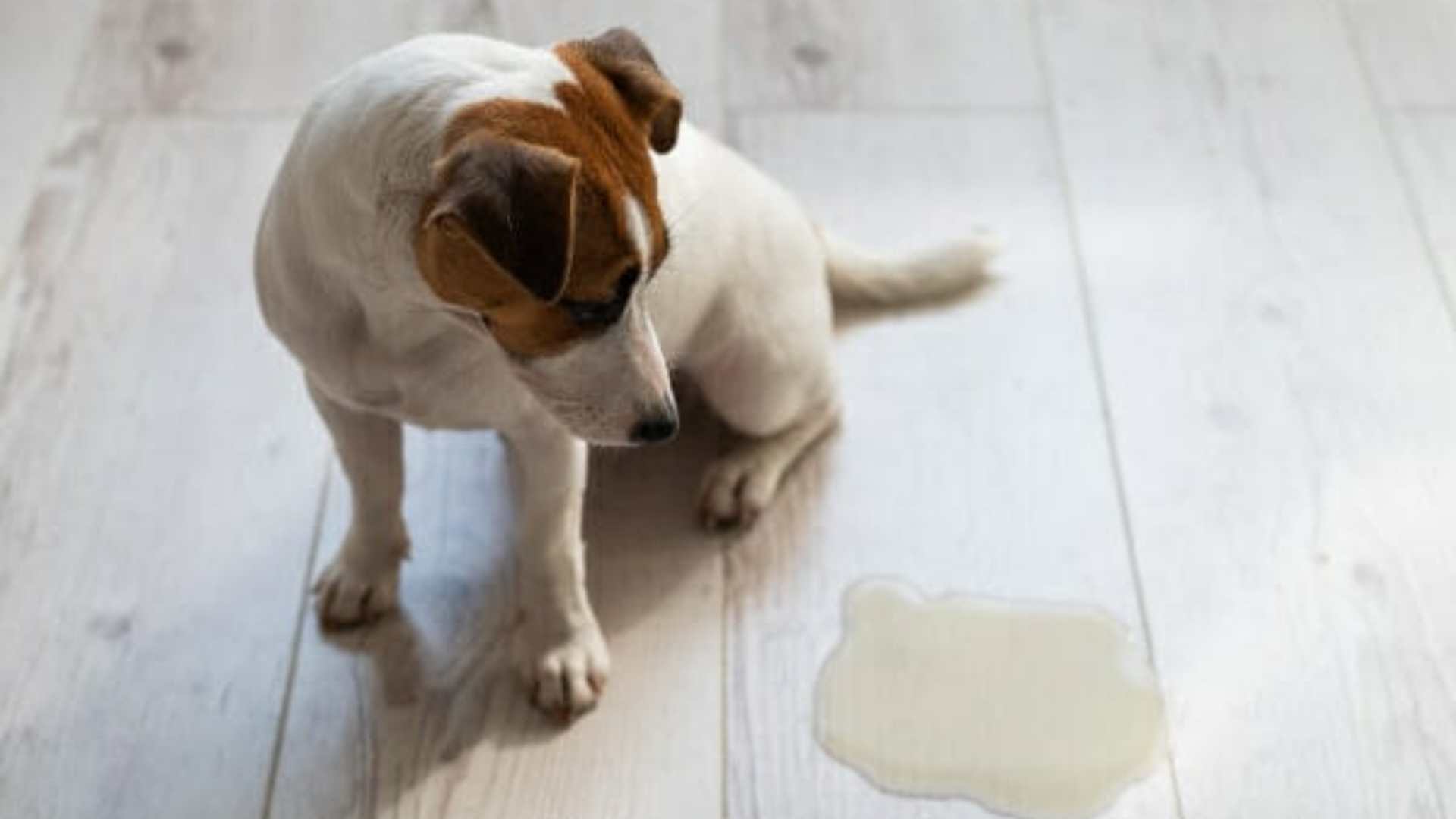
When we drink green tea, the kidneys process it, and the compounds can end up concentrated in the urinary bladder.
That means it may help where we need it.
Green tea has antibacterial and anti-inflammatory properties, which can be helpful for:
- Bladder inflammation
- Bacterial urinary tract infections
- Feline lower urinary tract disease
For cats, use decaf green tea.
For dogs, regular green tea is fine.
Green Tea and Honey UTI Recipe
Mix:
- 1 cup green tea
- 1 teaspoon honey
Give:
- 1/4 cup per 20 lbs of body weight
- Twice daily
- For 10 to 14 days
I have seen a number of dogs with bacterial UTIs respond to green tea, and they seem to respond even better when green tea is combined with honey.
10. Green Tea Compress for Styes, Cysts, and Swollen Anal Glands
Green tea can also be used as a warm compress.
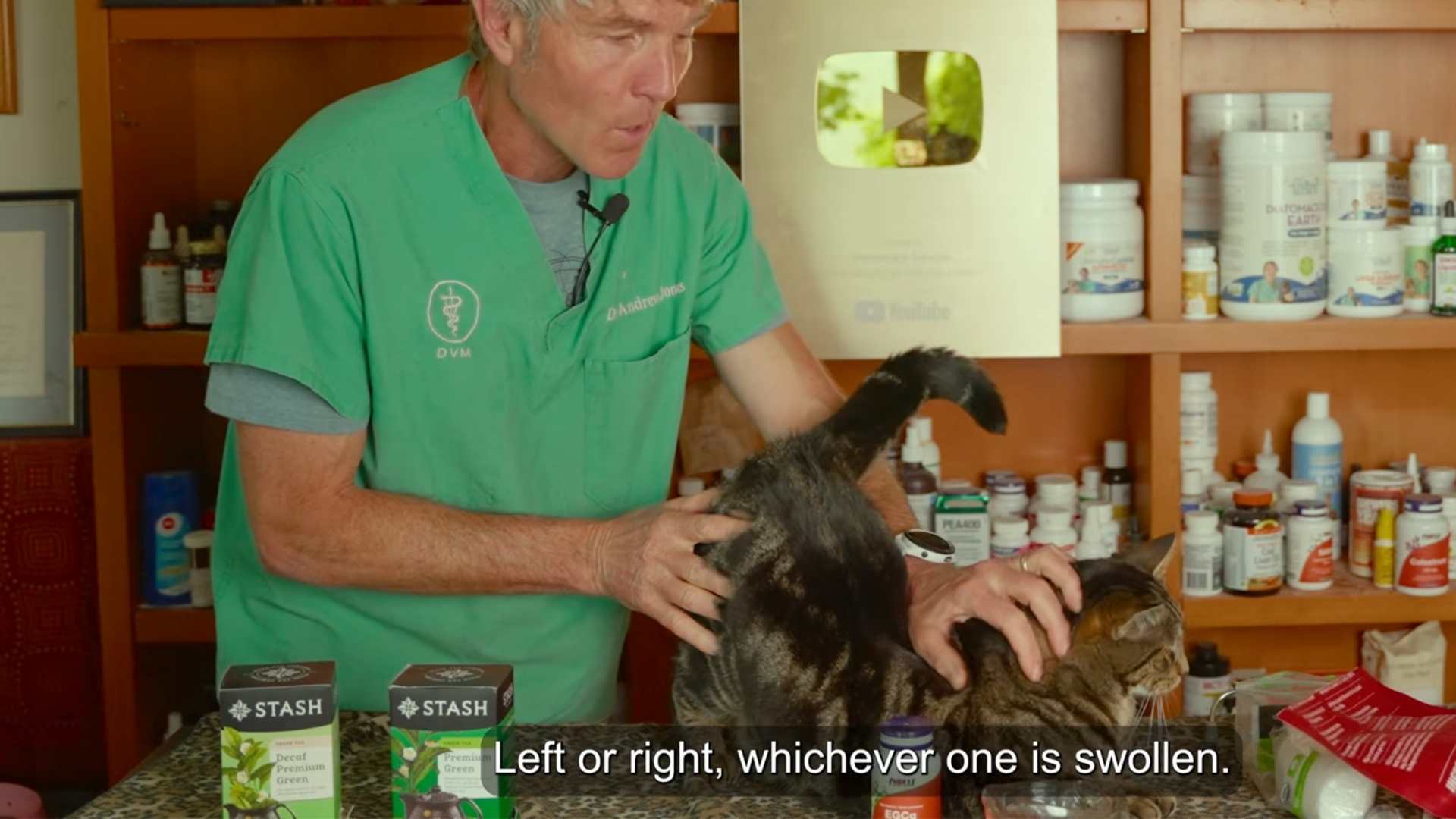
This may be helpful for:
- Styes
- Eyelid bumps
- Skin lumps
- Sebaceous cysts
- Swollen anal glands
How to Make a Green Tea Compress
- Brew a concentrated 1/2 cup of green tea.
- Let it steep for about 20 minutes.
- Use it warm, not hot.
- Soak gauze in the tea.
- Hold it over the affected area while it cools.
For a stye:
- Hold over the eyelid for 5 to 10 minutes
- Ideally 4 times daily
For a sebaceous cyst or swollen anal gland:
- Hold warm gauze over the area for at least 5 minutes
- Ideally 4 times daily
- If that is not realistic, aim for twice daily
The warmth and green tea may help loosen an obstructed duct and allow fluid to drain.
Our animals do not always agree with the plan, so do your best.
Regular Green Tea vs Decaf Green Tea vs EGCG Extract
| Option | Best For | Notes |
| Regular green tea | Dogs, lipomas, metabolism, some topical uses | Contains about 35 mg caffeine per cup |
| Decaf green tea | Cats, anxiety, sensitive pets, most topical uses | Still contains EGCG and medicinal properties |
| EGCG extract | Cancer support, concentrated antioxidant support | Easier to dose, one capsule may contain 200 mg EGCG and only 4 mg caffeine |
All three can be used safely in pets when dosed appropriately.
Best Uses for Green Tea in Pets
Green tea may be worth considering for:
- Cancer support
- Fatty tumors
- Lipomas
- Diabetes support
- Anxiety
- Cognitive support
- Oral health
- Gingivitis
- Hot spots
- Skin infections
- Eye infections
- Ear infections
- Ear mites
- Urinary tract infections
- Feline lower urinary tract disease
- Styes
- Sebaceous cysts
- Swollen anal glands
That is a pretty impressive list for something sitting in your kitchen cupboard.
Best For
Green tea may be helpful for pets needing:
- Low-cost natural support
- Anti-inflammatory support
- Antioxidant support
- Mild topical antimicrobial support
- Oral health support
- Mild urinary support
- Skin, ear, or eye support
- Decaf calming support
- EGCG cancer-supportive nutrients
Green Tea Safety and Dose Guide
| Form | Suggested Use | Dose From This Article |
|---|---|---|
| Brewed green tea | General oral support | 1/4 cup per 20 lbs daily |
| Decaf green tea | Cats, anxiety, topical use, sensitive pets | 1/4 cup per 20 lbs daily when used orally |
| EGCG extract | Cancer support, antioxidant support | 2 mg per lb daily |
| Green tea mouth flush | Dental disease and gingivitis | 3 to 5 ml once daily |
| Green tea eye drops | Surface eye infections | 2 to 3 drops, 2 to 4 times daily |
| Green tea ear drops | Ear infections | 3 to 10 drops, twice daily |
| Green tea and honey | Urinary tract support | 1/4 cup per 20 lbs twice daily for 10 to 14 days |
| Warm green tea compress | Styes, cysts, swollen anal glands | Hold 5 to 10 minutes, 2 to 4 times daily |
Step-by-Step: How I Would Use Green Tea Safely
Step 1: Choose Regular or Decaf
Use decaf for:
- Cats
- Anxiety
- Hyperactive dogs
- Sensitive pets
Use regular green tea for:
- Dogs needing metabolic support
- Lipoma support
- Some topical uses
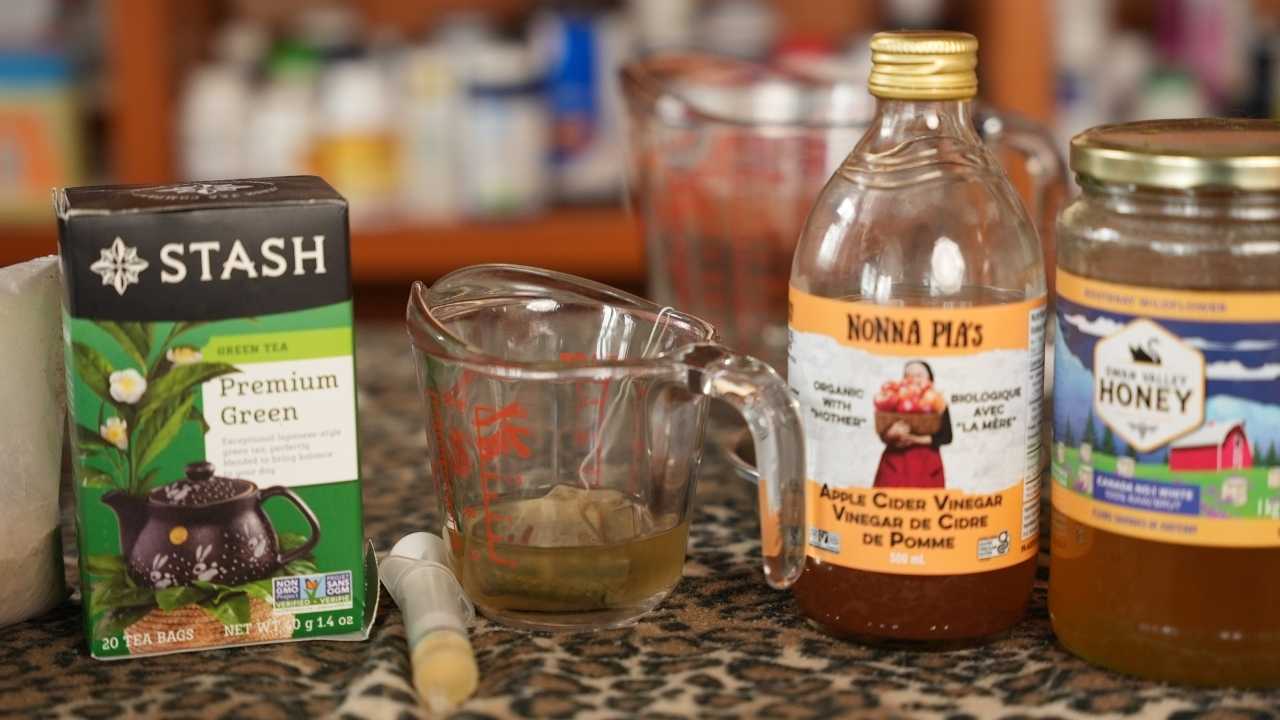
Step 2: Brew It Properly
For topical use, make it concentrated:
- Use about 1/2 cup water
- Steep for about 20 minutes
- Cool before applying
Step 3: Use the Right Amount
For oral use:
- 1/4 cup per 20 lbs daily
For UTI support with honey:
- 1/4 cup per 20 lbs twice daily for 10 to 14 days
Step 4: Use EGCG Extract When You Need Concentrated Support
For EGCG:
- 2 mg per lb daily
A 20 to 25 lb dog may get about 50 mg daily.
Step 5: Watch Your Pet
Monitor for:
- Stomach upset
- Increased agitation
- Taste refusal
- Worsening symptoms
- No improvement after several days
Step 6: Get Help if the Problem Is Serious
If your pet is worsening, do not just keep adding green tea.
Call your veterinarian.
Final Thoughts
Green tea is one of the cheapest, most overlooked pet remedies.
It has anti-inflammatory, antioxidant, antimicrobial, antiviral, antifungal, and EGCG-related cancer-supportive properties.
The caffeine concern is real at high doses, but the small measured amounts I suggest are nowhere near that level.
For most cats, anxious pets, and sensitive dogs, use decaf green tea.
For cancer support, consider EGCG extract.
For oral health, skin, eyes, ears, urinary issues, lipomas, and warm compresses, brewed green tea is simple, practical, and inexpensive.
You do not need to overcomplicate this.
Brew it. Cool it. Use it properly.
Sometimes the best remedy is already in your kitchen.
Click To Get A Free Copy of My E-Book!

P.S. If you have not tried green tea for your dog or cat, consider it.
It is inexpensive, easy to find, and has a surprisingly long list of uses.
For cats, I would use decaf.
For dogs, small amounts of regular green tea can be fine, and decaf is also a great option.
And if you are using it for cancer support, look at EGCG extract.
Simple, cheap, useful.
That is my kind of remedy.