Ditch NSAIDs! Top 7 Natural Anti-inflammatories and Painkillers for Pets
My Top Seven Natural Anti-inflammatories and Painkillers for Dogs and Cats
Hi, I’m Dr. Andrew Jones, and today I want to share my top seven natural anti-inflammatories and painkillers for dogs and cats. At the end of this article, I’ll introduce a brand new remedy, so stick around for that!
Why Natural Pain Relief Is Important
Conventional NSAIDs (non-steroidal anti-inflammatory drugs) can come with a host of side effects, including gastrointestinal issues like vomiting, diarrhea, ulcers, and, in more severe cases, organ dysfunction such as kidney and liver disease. It’s estimated that up to 10% of kidney disease in pets could be caused by NSAIDs. These side effects are often irreversible, especially kidney damage.
Given these risks, I want to highlight some natural, safer alternatives that can effectively manage pain and inflammation in both dogs and cats.
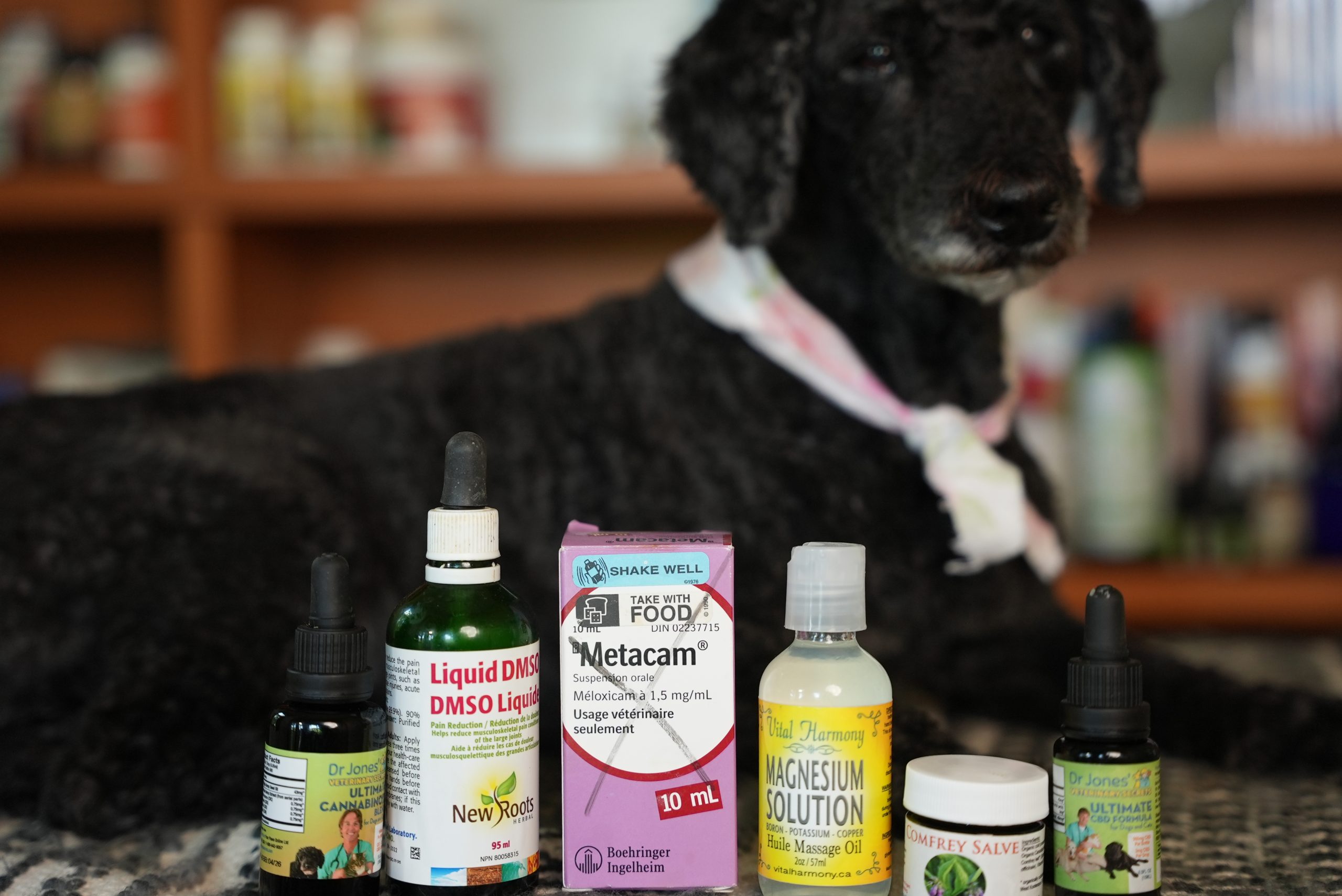
1. Joint Support Supplements
Every dog and cat should be on a high-quality joint supplement. Key ingredients include glucosamine, chondroitin, and MSM. These compounds help rebuild cartilage, alleviate pain, and provide anti-inflammatory benefits. Glucosamine and chondroitin work together to form new cartilage, while MSM, rich in sulfur, supports connective tissue and aids in tendon and ligament repair.
2. CBD and Other Cannabinoids
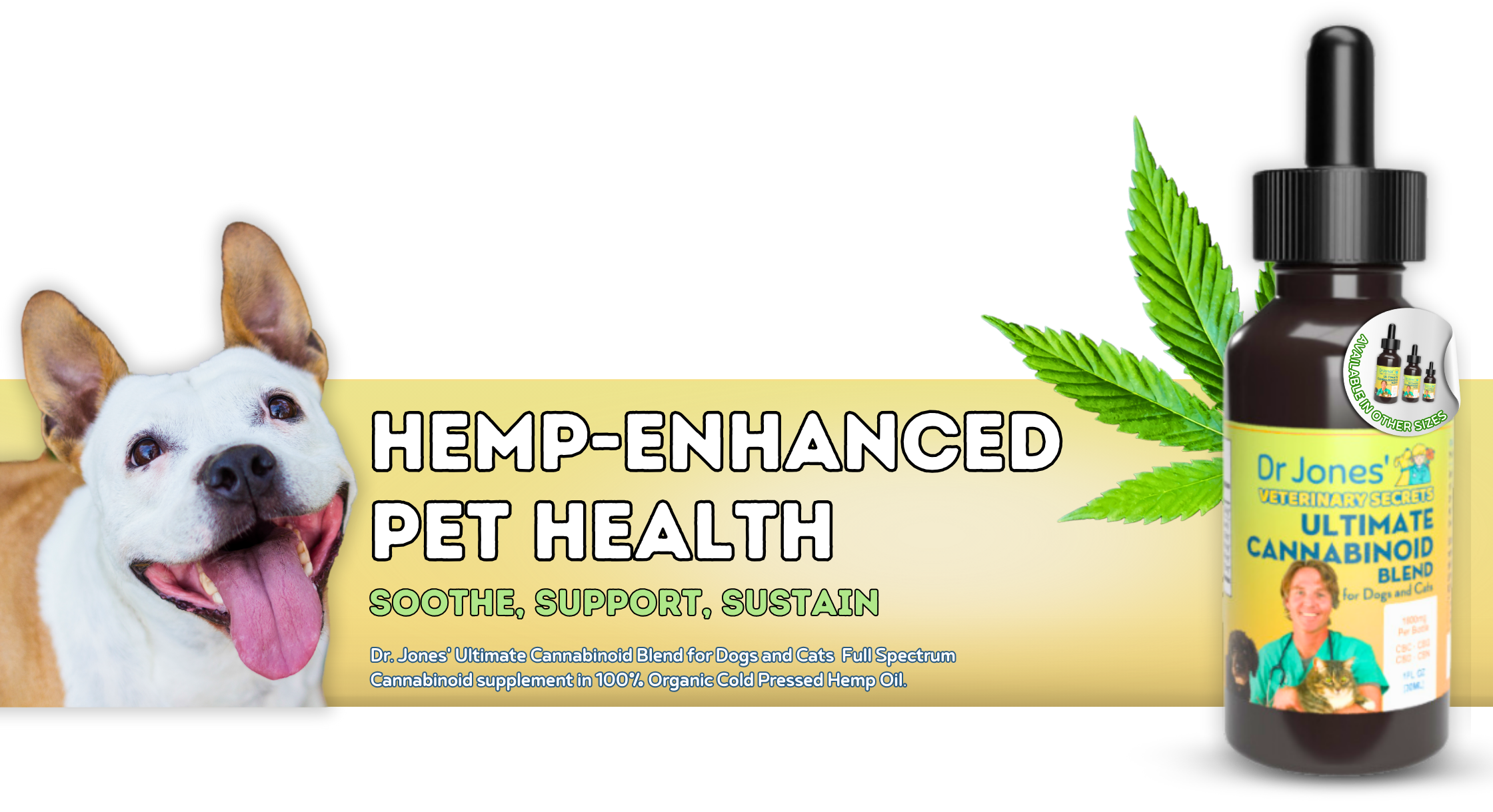
CBD, along with other cannabinoids like CBG and CBN, are well-researched anti-inflammatories and pain relievers. These non-psychoactive components of the cannabis plant are safe for both dogs and cats. I recommend starting with 3 mg of CBD per 10 lbs of body weight, given once or twice daily. If needed, you can add other cannabinoids such as CBC or CBG, found in our Ultimate CBD Blend.
Shop Dr. Jones’ Premium Cannabinoid Care for Dogs and Cats
Dr. Jones’ Ultimate Cannabinoid Blend for Dogs and Cats
3. 95% Curcumin and Boswellia
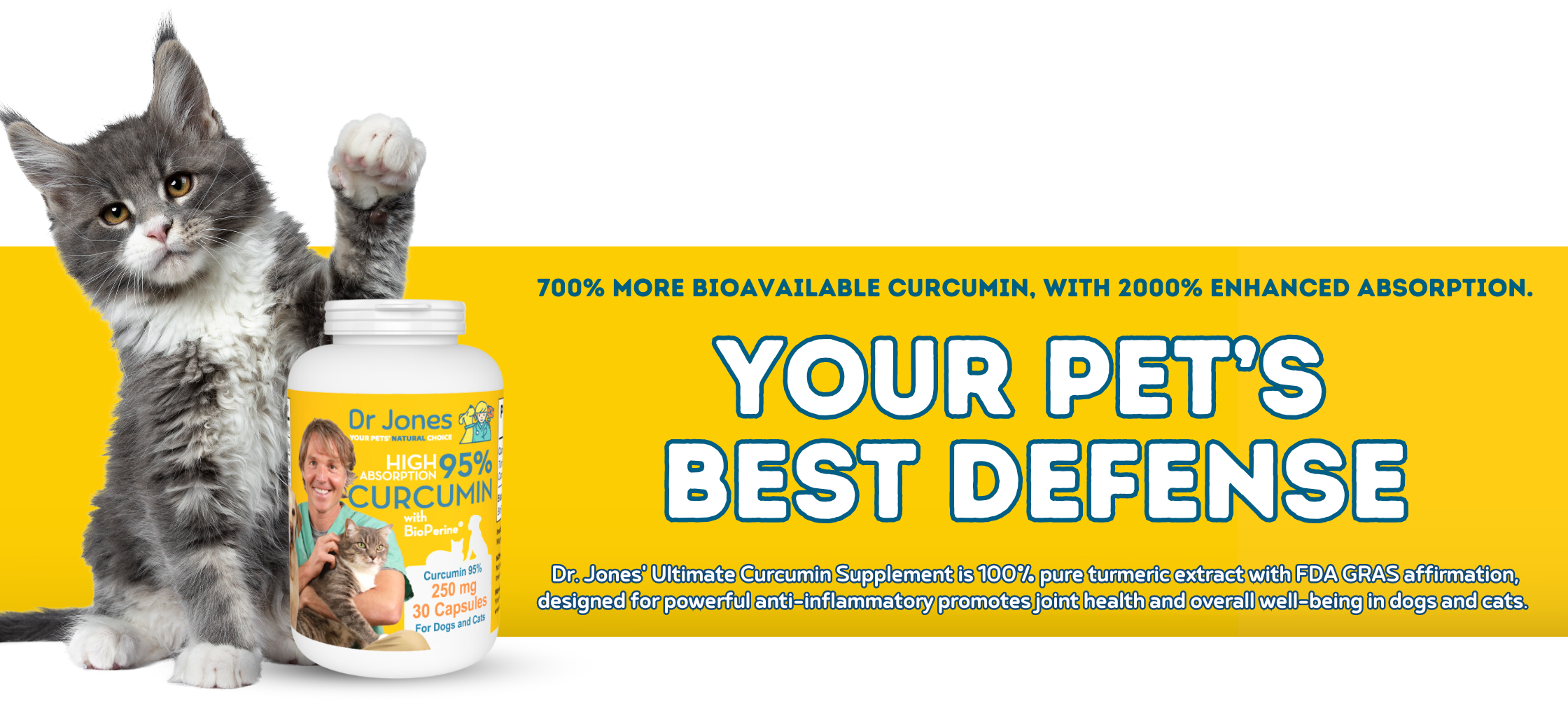
Curcumin (the active component of turmeric) and boswellia are powerful anti-inflammatory herbs. Studies show that when used together, they can be as effective as NSAIDs without the side effects. I suggest 250 mg of bioavailable curcumin per 50 lbs of body weight daily, with boswellia at about half that dose.
Support Joint, Cognitive, and Immune Health with Dr. Jones’ Ultimate 95% Curcumin for Pets!
Dr. Jones’ Ultimate High Absorption 95% Curcumin for Dogs and Cats
4. Comfrey (Topical Application)
Comfrey, also known as bone knit, is a topical herb with strong pain-relieving properties. It contains allantoin, which promotes healing and reduces pain. You can apply a comfrey salve to your dog or cat’s affected joint twice daily for 7 to 14 days.
5. DMSO (Dimethyl Sulfoxide)
DMSO is a clear, odorless liquid that penetrates the skin quickly and offers effective pain relief. I recommend applying DMSO over a painful joint after using a few drops of CBD oil. Rub it in gently, being aware that you may absorb some of it too, which is perfectly safe.
6. Acupressure
Acupressure is similar to acupuncture, but without the needles. By applying pressure to specific points on your pet’s body, you can provide natural pain relief. For example, BL60 and KI3 are located in the tissue between your pet’s Achilles tendon and the ankle joint. Hold these points for 30-60 seconds for effective relief.
7. Topical Magnesium
A new remedy I’ve discovered is topical magnesium, which can be absorbed through the skin to provide pain relief. Magnesium modulates pain receptors and helps reduce discomfort. This particular solution includes magnesium chloride, boron, and other minerals to aid absorption. Apply it twice daily to sore areas on your pet.
Consider Holistic Options for Pain Relief
If you have an older pet in pain, I highly recommend trying one or more of these holistic remedies. From supplements to topical treatments, these options offer safe and effective alternatives to NSAIDs. Thanks for reading this edition of Veterinary Secrets!

For a cat going under general anesthesia (which I’m not crazy about) for a dental cleaning— I saw the list of prescription drugs that would ADDITIONALLY be added, with the procedure. Metacam, Covenia and Zorbium. I say NO to all of these. Which natural pain reliever would be best for her and would I rub it into the neck, for mouth and jaw soreness (post procedure)? Thank you, Doctor!
Hi Mary,
Thanks for your question—and I completely understand your concern about the medications often used with dental procedures.
For post-dental pain in cats, a few of the natural options Dr. Jones often discusses that may help support comfort and reduce inflammation include:
1. CBD / Cannabinoid oil
This is one of the most commonly used natural options for pain and inflammation. It’s typically given orally, not rubbed on the neck, as it works systemically in the body. A common starting point is about 3 mg of CBD per 10 lbs of body weight once or twice daily, adjusting as needed.
2. Curcumin (turmeric extract)
Curcumin is a strong natural anti-inflammatory that can help with pain and swelling. It’s also given orally with food, rather than applied topically.
3. Topical options
Topical remedies such as magnesium or comfrey salve are sometimes used for joint or muscle discomfort, but they generally aren’t used around the mouth or jaw area after dental work.
Because dental procedures can sometimes involve tooth extractions or gum inflammation, it’s still important that your veterinarian ensures your cat has adequate pain control and a smooth recovery. If you’re uncomfortable with certain medications, it’s reasonable to discuss alternative pain-management options with them before the procedure so you have a plan in place.
Hello
I have a nursing cat with 2 babies 4 days old.
She was attacked by a male on her hind leg. I am treating the abcess per your instructions but I am concerned about giving her the olive leaf extract as it could lower blood sugar of kittens through her milk. I cannot find a safe way to treat her pain either.
No fever and absolutely vicious during wound care. She eats and drinks and sleeps a lot.
Any help would be appreciated!
The encouraging signs are that she’s eating, drinking, nursing her kittens, and has no fever. With olive leaf extract, I’d be cautious in a nursing mom since we don’t have good safety information for 4 day old kittens. For pain relief, please avoid human medications, as many are toxic to cats.
Warm compresses and keeping the wound clean can help support healing. My biggest concern is the abscess itself, as cat bite wounds can sometimes trap infection under the skin. If swelling worsens, drainage stops, she becomes lethargic, develops a fever, or stops eating, she should see a veterinarian promptly.
What happens if you give Nsaids while the dog is on Fenbenzadole?
Fenbendazole and NSAIDs don’t have a known direct drug interaction, but NSAIDs still need to be used carefully. They can affect the stomach, kidneys, and liver, especially in a sick or dehydrated dog. If an NSAID is needed while your dog is on fenbendazole, we’d recommend checking with your veterinarian and using the lowest effective dose.