Darwin’s Raw Pet Food vs. the FDA: Salmonella Warnings, Safety Concerns, and the Truth About Raw Feeding

Is Darwin’s Raw Pet Food Safe for Dogs and Cats?
Darwin’s raw pet food is facing renewed scrutiny after the FDA issued a warning on October 26, 2026, concerning Salmonella contamination in two lots of its raw cat food. The FDA considers the findings a serious food safety concern, while Darwin’s argues that the agency’s approach to regulating raw pet food is overly restrictive.
So, who’s right?
And more importantly, should you stop feeding raw food to your dog or cat?
I think there are some important things we need to discuss.
Because this isn’t simply about one company and two contaminated batches of food.
It’s part of a much larger dispute between Darwin’s Natural Pet Products and the U.S. Food and Drug Administration (FDA) over how raw pet food should be regulated.
The FDA says Darwin’s has a history of contamination problems and hasn’t done enough to protect pets and their owners.
Darwin’s strongly disagrees.
The company argues that detecting Salmonella in raw meat doesn’t automatically mean the product will make an animal sick.
And they’re questioning whether the FDA’s standards are appropriate for raw pet food.
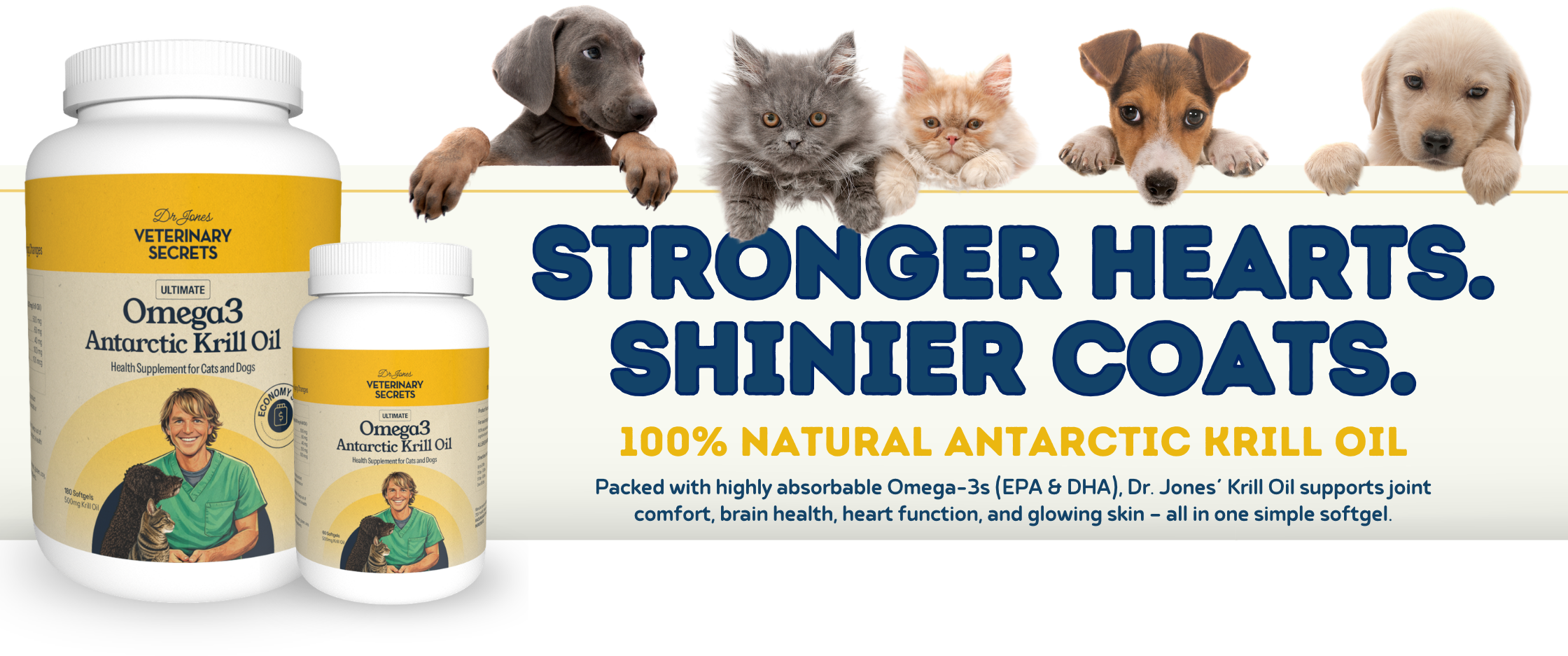
Dr. Jones’ Ultimate Omega 3 Formula for Dogs and Cats
Now, I have my own opinions about raw feeding.
I’ve seen plenty of dogs and cats do very well on raw diets.
My own cat Cassian eats some raw food, and my beloved dog Tula enjoyed it too.
But does that mean raw food is completely safe?
Of course not.
Raw meat can contain harmful bacteria.
And sometimes those bacteria can cause serious illness.
So let’s look at what happened, what the FDA is alleging, how Darwin’s is responding, and what I think pet parents should consider.
What Happened With Darwin’s Raw Cat Food in October 2026?
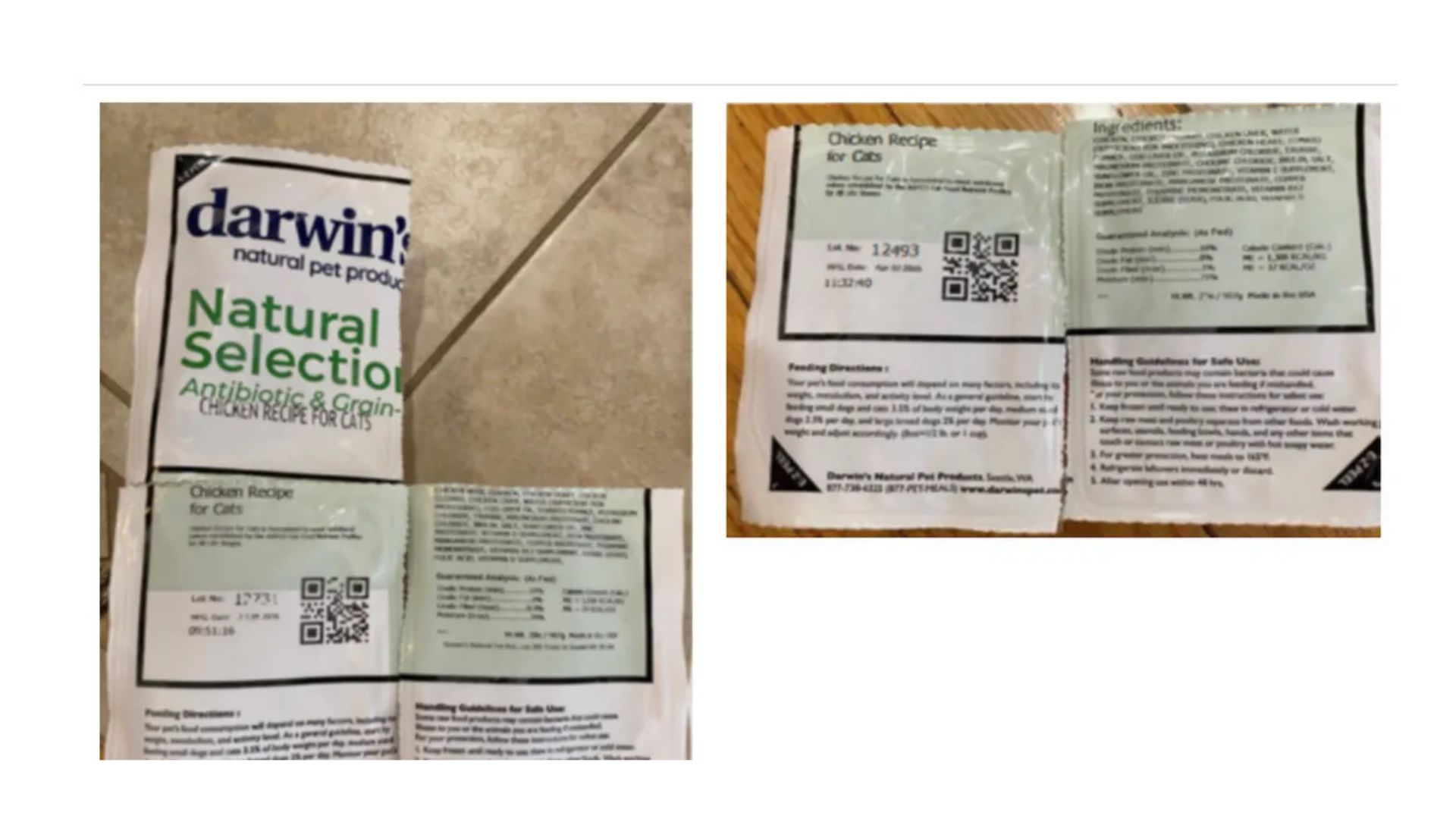
On October 26, 2026, the FDA issued a warning involving two lots of Darwin’s Natural Selections Chicken Recipe for Cats that tested positive for Salmonella. Two cats were also reported to have become ill and tested positive for Salmonella.
This is the latest development in an ongoing dispute.
And it has raised questions about how Darwin’s handles contaminated products.
Which Darwin’s Cat Food Was Involved?
The product identified in the warning was:
Darwin’s Natural Selections Chicken Recipe for Cats
According to the FDA’s findings discussed in the warning:
-
Two lots tested positive for Salmonella.
-
Two cats became ill and tested positive for Salmonella.
-
The FDA raised concerns about how the company responded.
-
The agency expected broader action to address the potentially contaminated food.
The concern is straightforward.
Salmonella is a bacterium that can cause illness.
And if contaminated raw pet food reaches households, there’s a potential risk to both animals and people.
Why Did the FDA Want a Recall?
According to the FDA’s position, the affected food should have been subject to an adequate recall.
The agency wanted Darwin’s to take stronger action, including a public notification.
Darwin’s, however, uses an online subscription-based sales model.
That makes this situation a little different from traditional pet food sold through grocery stores or pet shops.
How Did Darwin’s Respond?
Darwin’s argued that it could identify which customers had purchased the affected products.
And because the food was sold directly to those customers, the company said it could notify the affected pet parents.
The company maintained that direct communication was an appropriate response.
But the FDA wanted more.
It expected a broader public recall announcement.
And that disagreement is part of the reason this situation has continued to escalate.
Why Is the FDA Taking Legal Action Against Darwin’s?
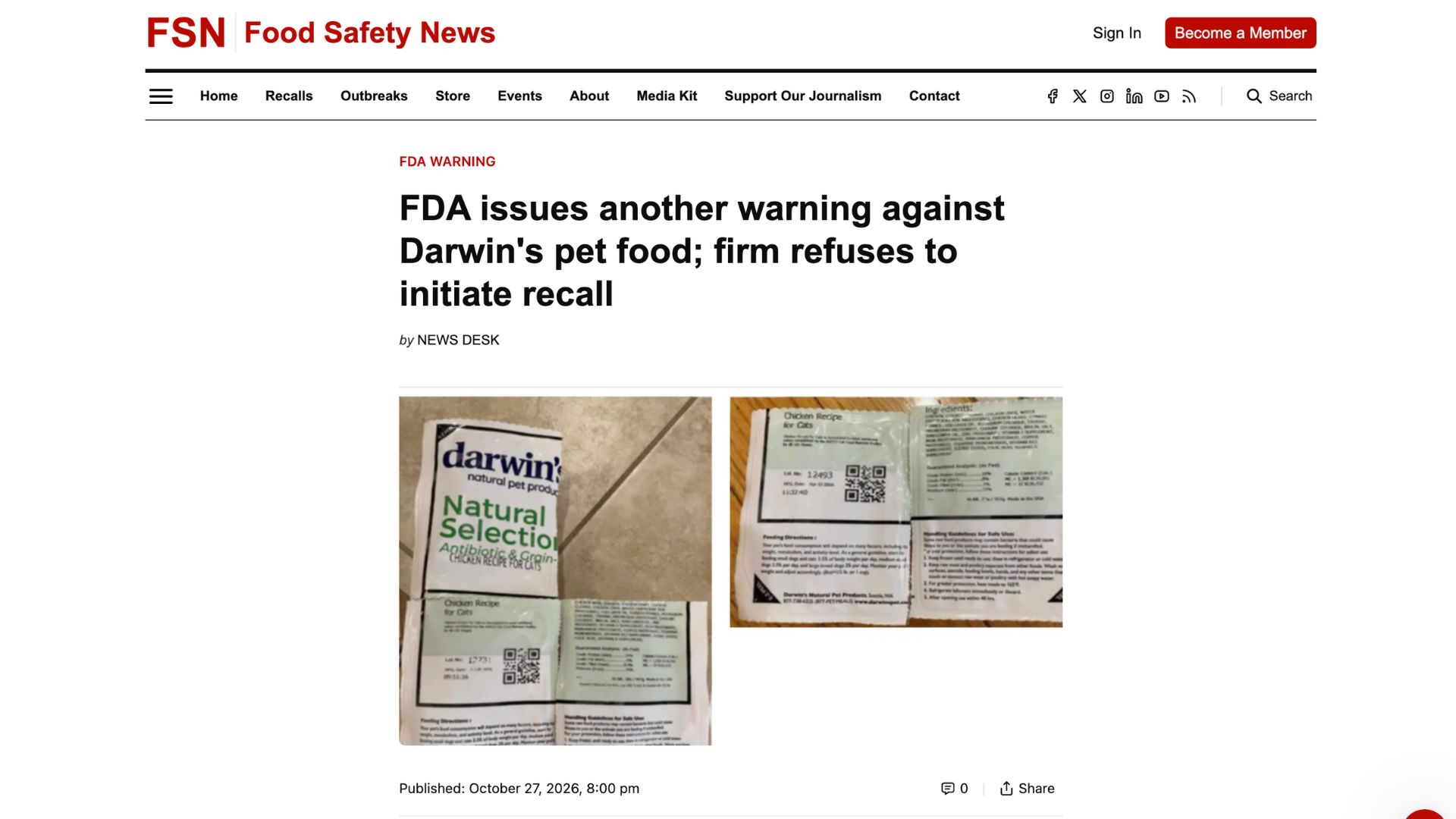
The U.S. Department of Justice filed a lawsuit against Darwin’s and related parties, alleging repeated production and distribution of contaminated pet food and violations of federal food safety requirements. Darwin’s disputes those allegations.
The legal action was described as having begun approximately three months before the October 2026 warning.
So this isn’t a new issue.
It’s part of a dispute that has been developing for years.
What Is the FDA Alleging?
The FDA and Department of Justice have raised concerns involving:
-
Repeated bacterial contamination
-
Food safety violations
-
Inadequate preventive measures
-
Insufficient responses to contamination findings
-
Continued manufacturing and distribution of potentially unsafe products
The government is seeking action that could restrict Darwin’s ability to manufacture and sell products considered unsafe under federal requirements.
These are legal allegations and regulatory positions, not findings that every Darwin’s product is contaminated.
What Does Darwin’s Say About the Lawsuit?
Darwin’s strongly disagrees with the government’s conclusions.
The company’s owner has defended its manufacturing and sourcing practices.
Darwin’s maintains that it takes compliance with food safety requirements seriously and uses rigorous standards to produce its food.
The company has also said it intends to defend its ability to continue producing and selling raw pet food.
But there’s a larger disagreement behind all this.
And it centers on one particular bacterium.
Salmonella.
Why Has Darwin’s Been Investigated for More Than 10 Years?
The FDA’s concerns are not limited to the October 2026 warning.
The agency has pointed to a history of contamination findings, recalls, and reported illnesses.
And some of the previous incidents have been serious.
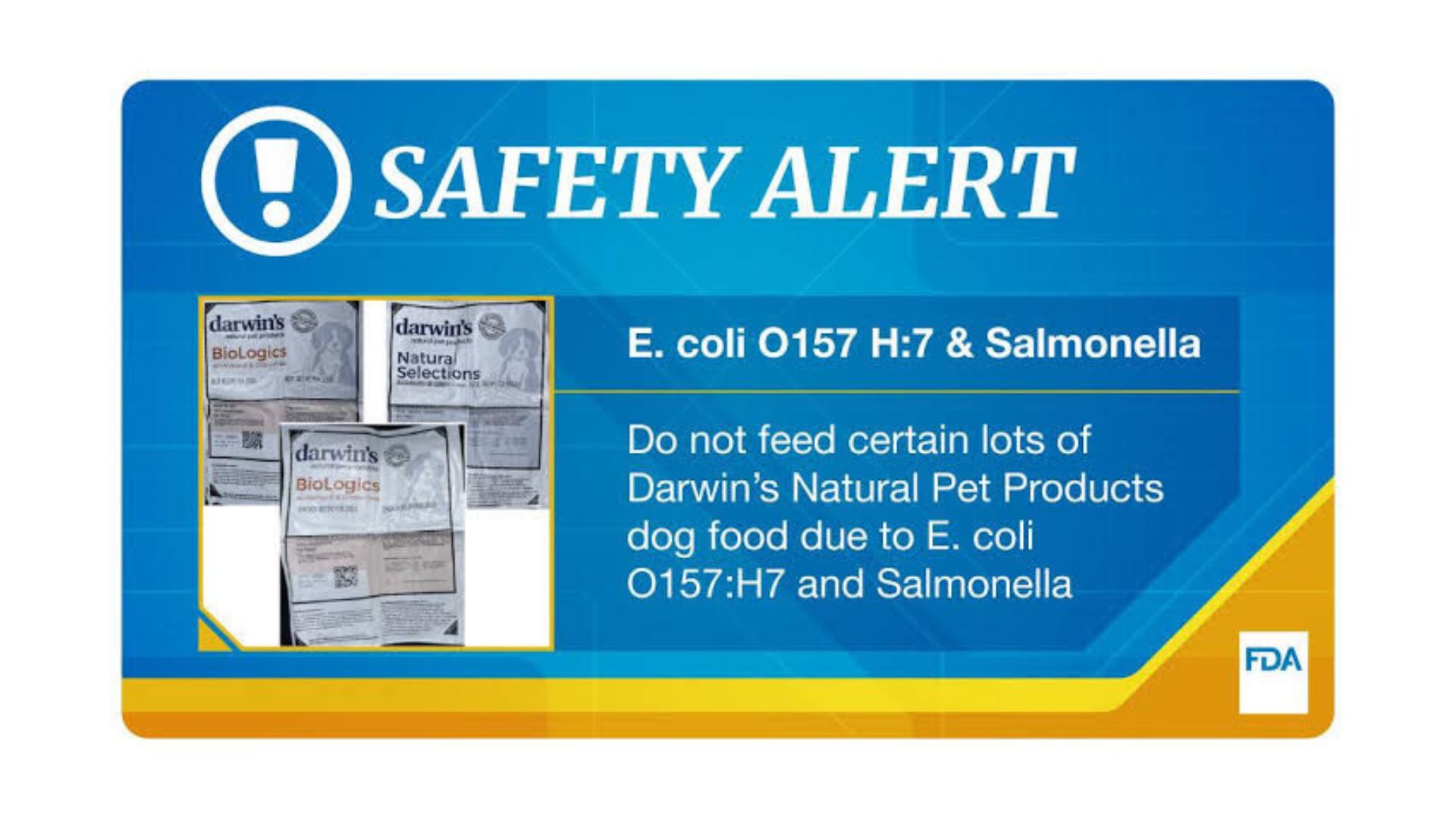
Darwin’s Raw Pet Food: Timeline of FDA Concerns
| Year | Incident or Regulatory Action |
|---|---|
| 2016 to 2018 | Five recalls involving bacterial contamination concerns, including Salmonella, Listeria, and E. coli |
| 2018 | A kitten’s death was associated with Salmonella linked through genetic sequencing to contaminated pet food |
| 2018 | Two Darwin’s food samples were found to contain a Salmonella strain associated with a multistate human outbreak, although no pet was identified as the source of that outbreak |
| 2018 | FDA warning letter concerning food safety |
| 2022 | Two lots of Darwin’s cat food were identified in connection with diarrhea in three kittens |
| 2023 | Another FDA warning letter concerning food safety |
| 2024 | E. coli contamination concerns arose following a child’s serious illness and testing of unopened Darwin’s raw dog food |
| 2026 | Department of Justice lawsuit alleging ongoing food safety violations |
| October 26, 2026 | FDA warning involving two Salmonella-positive lots of Natural Selections Chicken Recipe for Cats |
According to the account of the October 2026 advisory, this was the eighth FDA advisory involving Darwin’s.
That’s a considerable history of regulatory attention.
And I think it’s fair to examine the incidents individually rather than treating them all as identical.
What Happened With the Kitten That Died From Salmonella?
One of the most serious incidents involved a kitten that died after a Salmonella infection.
According to the findings discussed, investigators identified a genetic match between Salmonella found in the pet food and Salmonella associated with the kitten.
That’s particularly concerning.
Because while I believe the risks of raw feeding need to be considered in context, bacterial infections can sometimes have devastating consequences.
And I would never dismiss that.
This is why I want raw pet food manufacturers to take food safety seriously.
What Happened With the 2018 Human Salmonella Outbreak?
In 2018, there was a multistate outbreak of drug-resistant Salmonella involving people.
The outbreak was linked to raw chicken products.
During the investigation, the FDA identified two samples of Darwin’s raw pet food containing the outbreak-associated Salmonella strain.
Now, that sounds concerning.
But there was another important detail.
The FDA was unable to identify a pet that caused or transmitted the outbreak.
So while the bacterial finding was relevant, it didn’t establish that a Darwin’s-fed pet was responsible for the human infections.
And I think that distinction matters.
We need to separate detecting bacteria from proving exactly how an infection occurred.
What Happened With the 2022 Darwin’s Cat Food Investigation?
In 2022, the FDA identified two lots of Darwin’s raw cat food associated with gastrointestinal illness in three kittens.
The kittens reportedly developed diarrhea.
This incident added to the agency’s concerns about contamination in Darwin’s products.
And again, it illustrates why bacterial safety is something we need to consider when feeding raw meat.
Young animals can be particularly vulnerable when they become ill.
Was Darwin’s Raw Dog Food Linked to a Child’s E. coli Infection in 2024?
In 2024, investigators examined a possible connection between Darwin’s raw dog food and a serious E. coli infection in a child who developed hemolytic uremic syndrome.
This is one of the most concerning incidents discussed.
Hemolytic uremic syndrome is a serious condition that can follow certain E. coli infections.
What Did the Investigators Find?
According to the account:
-
A child developed a serious E. coli infection.
-
The child was diagnosed with hemolytic uremic syndrome.
-
Investigators tested an unopened package of Darwin’s raw dog food stored in the household freezer.
-
The food reportedly contained an E. coli strain matching the strain involved in the illness.
-
Investigators considered whether the family’s dog may have been part of the transmission pathway.
The proposed explanation was that the dog had eaten contaminated food and the infection may subsequently have reached the child.
However, that proposed transmission pathway should be distinguished from directly establishing every step of the infection.
How Did Darwin’s Respond?
Darwin’s has disputed the broader conclusions drawn from FDA advisories.
The company argues that the reported incidents don’t demonstrate widespread illness among animals consuming its products.
And that leads us to the larger question.
How should regulators evaluate bacteria in raw pet food?
Why Is Darwin’s Challenging the FDA’s Salmonella Policy?
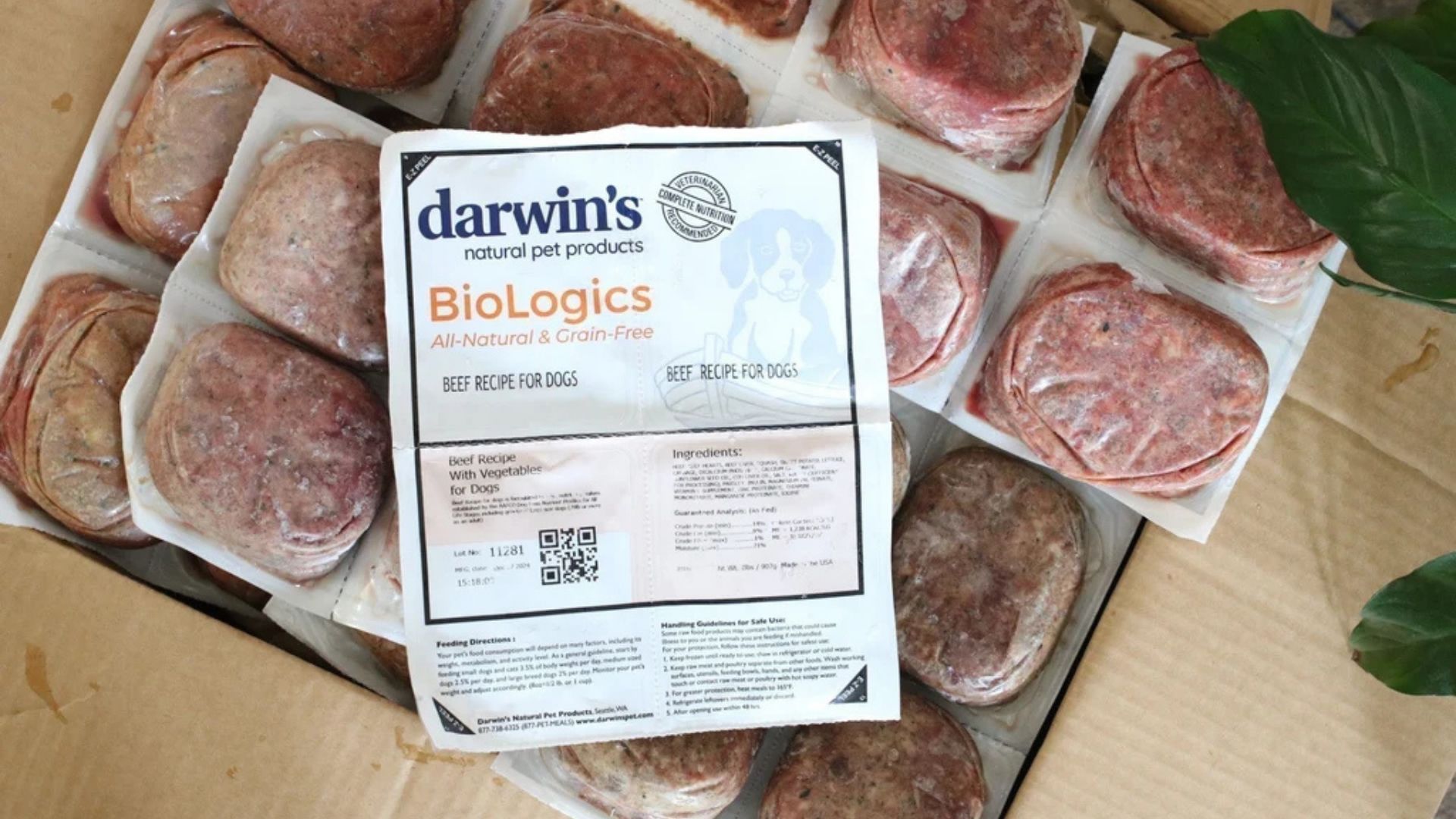
Darwin’s argues that the presence of Salmonella in raw meat should not automatically cause the product to be considered unsafe or adulterated without considering whether the amount and circumstances of contamination are likely to cause disease.
This is really at the heart of the dispute.
And I think it’s worth discussing.
Because raw meat is different from cooked food.
Isn’t Salmonella Sometimes Found in Raw Chicken?
Yes.
Salmonella can be present in raw chicken.
And it’s something people already recognize when preparing food at home.
Think about buying raw chicken from the grocery store.
You bring it home.
You prepare it.
And you cook it.
We understand that raw chicken may contain bacteria.
But we still allow raw chicken to be sold.
And that’s the comparison Darwin’s is making.
What Is Darwin’s Argument?
The company argues that raw pet food shouldn’t automatically be classified as unacceptable solely because a test detects Salmonella.
Darwin’s has questioned whether regulators should establish thresholds that better reflect the relationship between bacterial contamination and actual illness.
In other words, they’re asking:
Does any detectable Salmonella automatically mean a raw pet food product will cause disease?
The FDA has rejected the company’s proposed approach.
And that’s a major source of disagreement.
Why Does the FDA Disagree?
The FDA considers Salmonella contamination a public health concern, particularly in pet food that will be handled by people and consumed without cooking.
And that last part is important.
Raw pet food is intended to be fed raw.
When you purchase chicken for yourself, you’re generally going to cook it.
Cooking can kill harmful bacteria.
But when you feed your dog or cat raw chicken, that cooking step doesn’t happen.
So the potential for bacterial exposure remains.
And that’s a legitimate concern.
Is the FDA’s Salmonella Testing Method Fair?
Darwin’s has also questioned how the FDA tests raw food for bacterial contamination.
According to the company’s criticism, the testing process involves taking samples and placing them under conditions that allow bacteria to multiply before they are identified.
Why Does the FDA Incubate Samples?
The testing process described involves creating conditions that support bacterial growth.
This makes it possible to identify microorganisms that may have been present in the tested food.
Darwin’s argues that the way these findings are interpreted can be problematic when applied to raw meat products.
The company questions whether detecting bacteria through this process necessarily establishes that the food will cause illness.
Does Detecting Salmonella Prove a Pet Will Get Sick?
Not necessarily.
Detecting Salmonella establishes that the bacterium was found in the tested sample.
It doesn’t mean every animal that consumes the food will become ill.
But that doesn’t make the finding irrelevant.
Salmonella can cause serious illness.
And because raw food isn’t cooked before feeding, contaminated products can create exposure risks.
So I think both sides are raising questions worth examining.
Darwin’s wants the regulatory standards to account for the nature of raw meat.
The FDA wants to prevent contaminated products from causing illness.
Those are different priorities, but food safety remains important.
Why Does Darwin’s Say the FDA Is Overreaching?
Darwin’s believes the regulatory actions directed at the company have been excessive.
It has described the lawsuit as regulatory overreach.
The company argues that it has been unfairly targeted under standards it considers inappropriate for raw pet food.
And it maintains that its manufacturing procedures are designed to produce safe, high-quality products.
What Is Darwin’s Position on Food Safety?
The company has said it doesn’t dispute that some food samples tested positive for Salmonella.
Instead, it disputes the conclusion that the presence of Salmonella automatically makes the product unacceptable.
Darwin’s also says it welcomes measures intended to improve pet food safety.
But it objects to how the FDA is applying and interpreting its standards.
Is the FDA Specifically Targeting Raw Pet Food Companies?
That’s one of the questions I’ve raised.
I’ve long believed there is considerable resistance to raw feeding among some regulatory and conventional veterinary organizations.
And the amount of regulatory attention directed toward Darwin’s makes me wonder whether raw pet food is being evaluated fairly.
However, that doesn’t establish that the FDA is unfairly targeting the company.
The agency has identified repeated contamination concerns.
And some incidents have involved serious illnesses.
So there’s a legitimate food safety issue here, even if we disagree about how it should be regulated.
Is this a case of regulatory overreach?
Or necessary enforcement?
I think pet parents deserve to understand both arguments.
Is Raw Pet Food Really Dangerous for Dogs and Cats?
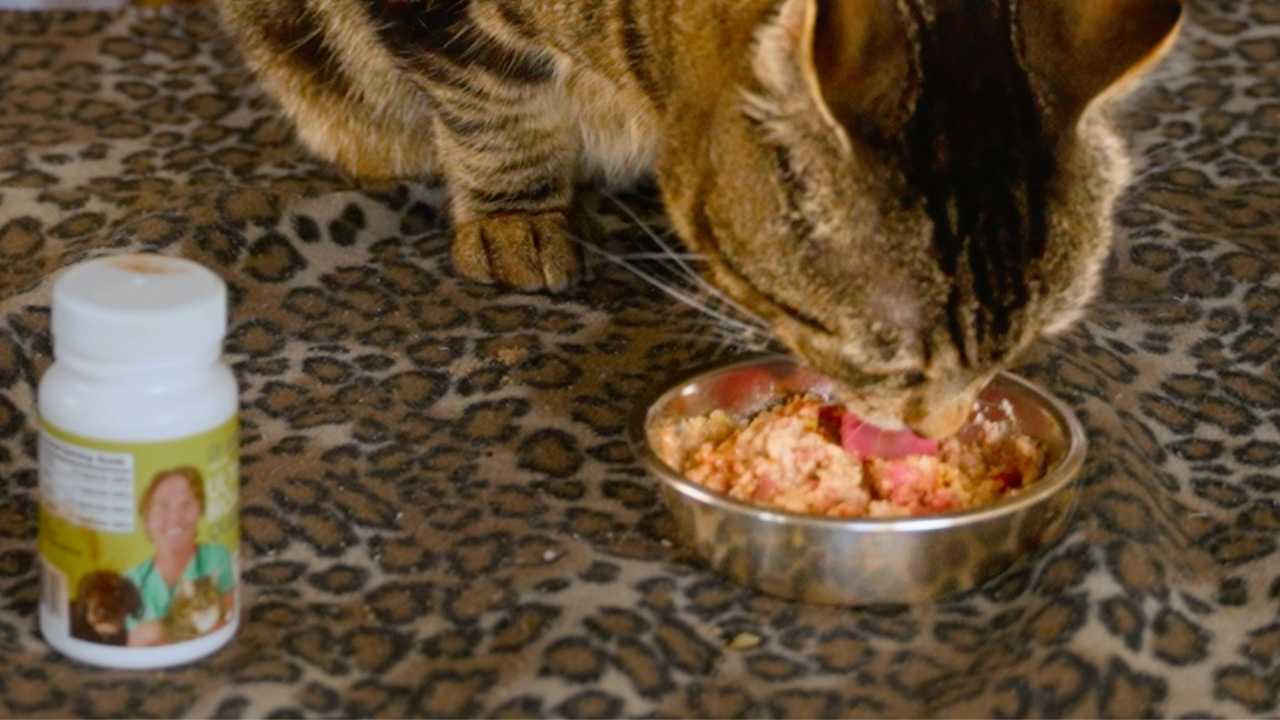
Raw pet food carries a risk of bacterial contamination, including Salmonella and E. coli. Some contaminated food may cause serious illness, but detecting bacteria doesn’t mean every pet eating raw food will become sick.
This is where I think we need some perspective.
Raw food is raw meat.
And raw meat can contain bacteria.
There’s no practical way to guarantee that every raw meat product is completely free of microorganisms.
But we also need to consider how often illness occurs and how serious it can be.
Can Cats and Dogs Get Salmonella From Raw Food?
Yes.
They can.
And some animals can become seriously ill.
We have discussed examples involving kittens that developed diarrhea and a kitten whose death was associated with Salmonella.
So I wouldn’t tell anyone that raw food has zero risk.
What About People Living With Raw-Fed Pets?
There’s also a potential risk to people.
The 2024 E. coli investigation involving a child illustrates why regulators consider household exposure to be part of the food safety discussion.
A raw food decision isn’t necessarily only about the animal eating it.
It’s also about how contaminated food may affect the household.
Does Every Pet Eating Raw Food Become Sick?
No.
And this is one of the reasons I question broad statements suggesting that raw feeding is automatically dangerous for every dog or cat.
Many pets consume raw diets without developing obvious illness.
That’s been my experience.
But the fact that some animals tolerate raw food well doesn’t eliminate the possibility of serious infections in others.
Raw Food vs. Kibble: Which Is Better for Dogs and Cats?
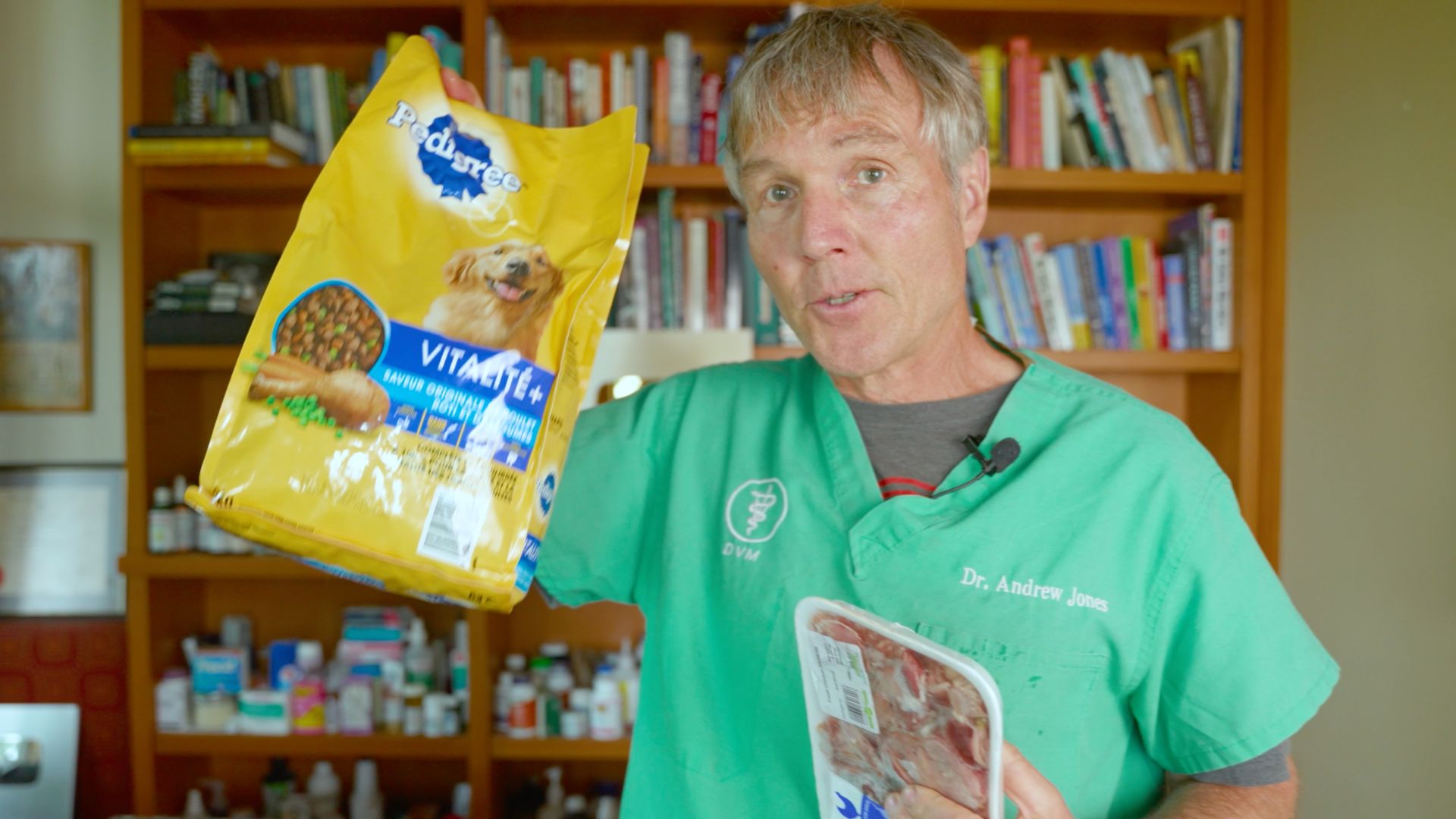
Raw food and kibble have different advantages and risks. Raw food avoids some of the extensive heat processing associated with kibble but carries greater concern about exposure to bacteria in uncooked meat. Kibble is processed and generally has lower bacterial contamination risk, although it isn’t completely immune to contamination.
This is where the discussion gets interesting.
Because the debate often seems to assume that there are only two choices.
Feed raw food and accept the bacterial risk.
Or feed kibble and assume everything is perfectly safe.
But I don’t think it’s that simple.
Is Kibble Free From Harmful Bacteria?
Not necessarily.
Kibble is generally exposed to high temperatures during manufacturing.
That can reduce the risk of certain bacterial contaminants.
But it doesn’t mean every dry pet food product is sterile.
Bacterial contamination is still possible.
Why Am I Concerned About Highly Processed Kibble?
I’ve frequently discussed concerns about feeding cats large amounts of dry, highly processed food.
Particularly when the food contains substantial carbohydrate content.
I’ve also discussed the relationship between diet, obesity, diabetes, and other health conditions.
For me, one of the biggest issues is whether we’re feeding our pets a diet that supports their nutritional needs.
I want to see good body condition.
Healthy teeth.
Comfortable joints.
And overall good health.
Does Raw Food Have Nutritional Advantages?
This is something I’ve discussed based on my clinical experience.
When I was in veterinary practice, I noticed that many animals eating raw diets appeared to be doing very well.
But I want to distinguish that personal observation from proof that raw diets are superior for every pet.
Raw Food vs. Kibble Comparison
| Factor | Raw Pet Food | Dry Kibble |
|---|---|---|
| Processing | Uncooked or minimally processed | Typically processed using heat |
| Bacterial exposure | Greater concern from uncooked animal ingredients | Generally reduced by heat processing, but contamination remains possible |
| Moisture | Often higher than dry kibble | Typically low |
| Main safety concern discussed | Salmonella, E. coli, and other harmful bacteria | Potential contamination and concerns about highly processed diets |
| Nutritional considerations | Depends on the complete formulation | Depends on the complete formulation |
| My experience | I’ve observed many raw-fed pets in good condition | I have concerns about certain highly processed, carbohydrate-heavy diets |
The important thing is not to assume every raw diet is good or every kibble is bad.
The product, ingredients, safety measures, and individual animal all matter.
What Have I Personally Observed in Raw-Fed Dogs and Cats?
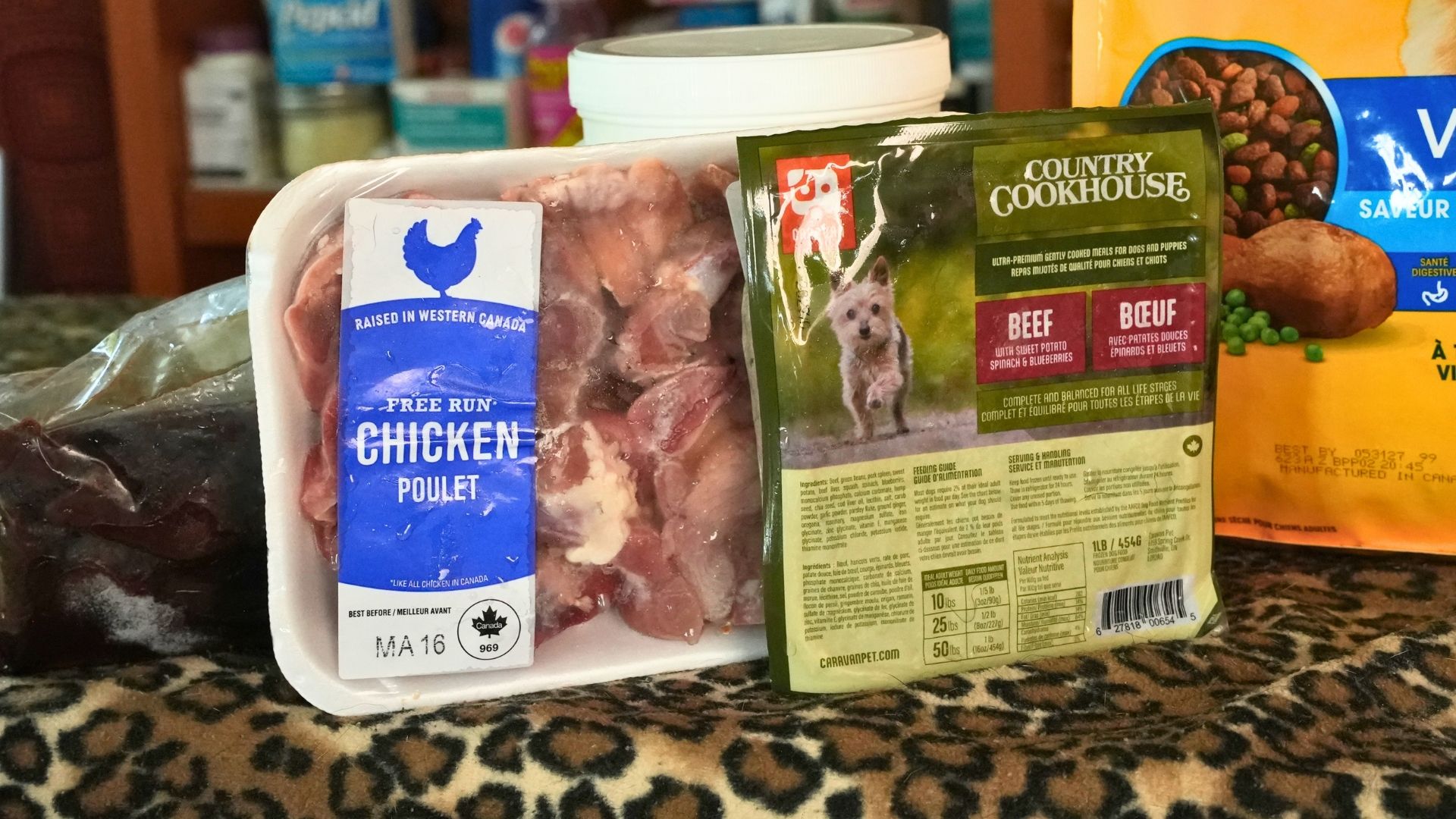
I want to share something from my own years in veterinary practice.
Because this is one reason I remain interested in raw feeding.
In my experience, many of the animals I saw eating raw diets appeared to be in good overall condition.
What Did I Notice About Raw-Fed Cats?
Many of the raw-fed cats I encountered were maintaining a healthy body weight.
I saw fewer problems with obesity and diabetes among some of these patients.
Now, that doesn’t establish that raw food itself prevented those conditions.
There can be many differences between the animals and households involved.
But these observations certainly influenced my interest in raw feeding.
What Did I Notice About Raw-Fed Dogs?
Among the raw-fed dogs I saw in practice, I often observed:
-
Healthy body condition
-
Cleaner-looking teeth
-
Fewer apparent allergy concerns in some animals
-
Good overall joint comfort
-
Generally good health
Again, those were observations from my practice.
They weren’t findings from a controlled comparison study.
But they’re part of why I believe raw feeding deserves thoughtful consideration rather than automatic dismissal.
Would I Feed Darwin’s Raw Food to My Own Pets?
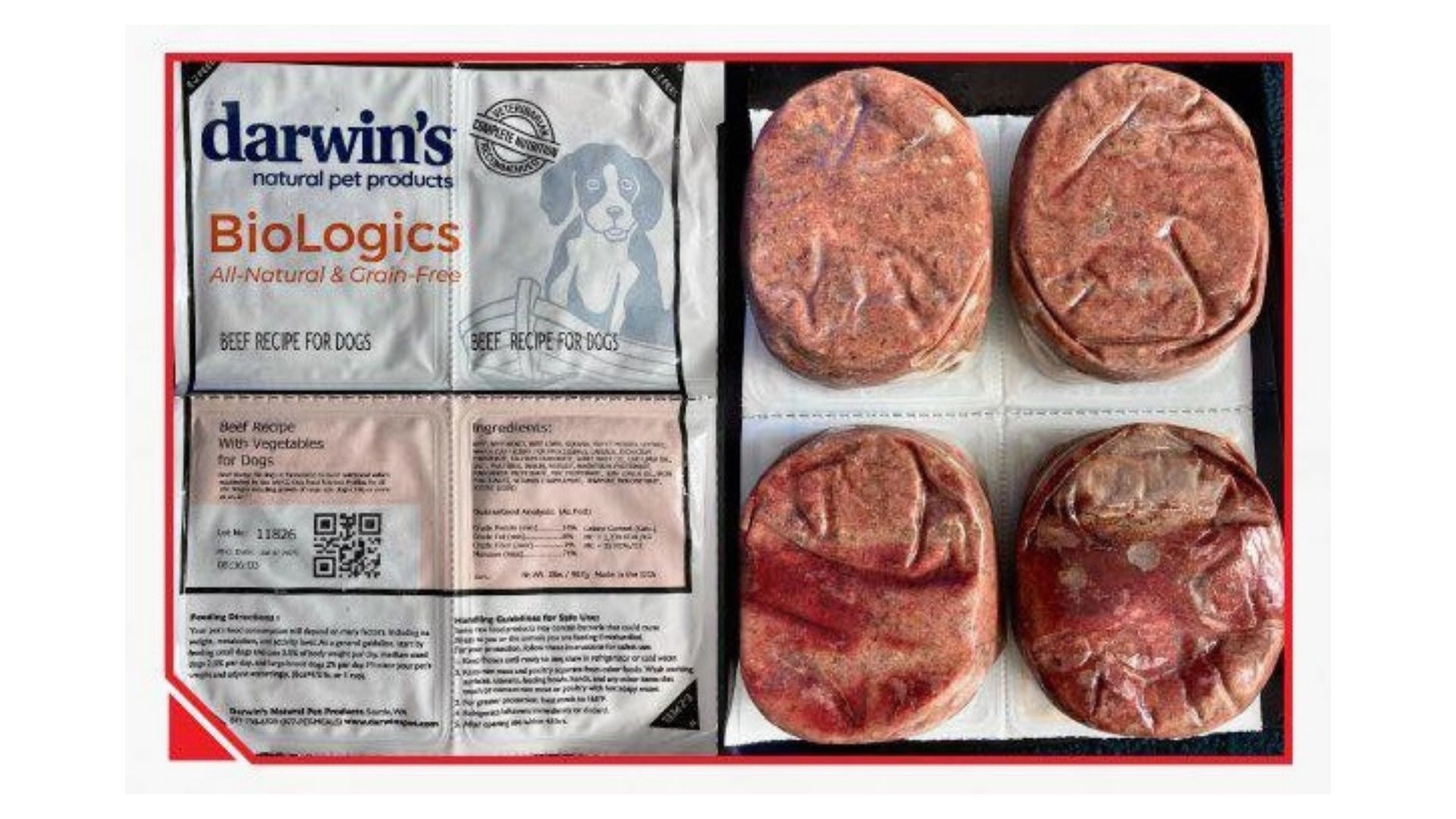
I’ve personally been comfortable including raw food in my pets’ diets, and I’ve expressed willingness to consider Darwin’s products. However, that doesn’t mean I would ignore a current FDA contamination warning or feed a specifically implicated batch.
Now, you might be wondering.
Dr. Jones, after all these FDA warnings, would you actually feed Darwin’s to your own cat or dog?
Well, here’s my perspective.
Does Cassian Eat Raw Cat Food?
Yes.
Our cat Cassian has eaten some raw food.
He’s also eaten other types of cat food.
And I’ve continued paying attention to his overall health and nutrition.
Did Tula Eat Raw Dog Food?
Yes.
My beloved Tula enjoyed raw food.
And I was comfortable including it in her diet.
Would I Feed Raw Food to a Future Dog?
Yes, I’ve discussed wanting to include at least some raw food in the diet of a future dog.
That reflects my experience and personal feeding preference.
Final Thoughts: Is the FDA Right About Darwin’s Raw Pet Food?
This is a complicated situation.
And I don’t think it helps anyone to pretend otherwise.
The FDA has identified Salmonella in two lots of Darwin’s raw cat food.
Two cats were reported to have become ill.
And the agency has pointed to a long history of contamination concerns.
Some of the earlier incidents were serious.
So I absolutely understand why regulators are concerned.
I want our dogs and cats to be safe.
And I want pet food manufacturers doing everything reasonably possible to prevent harmful bacterial contamination.
But I also understand Darwin’s argument.
Raw meat is different from cooked food.
When we buy raw chicken for ourselves, we recognize that it may contain bacteria.
We cook it before eating.
Raw pet food, however, is designed to be served without cooking.
And that’s where the regulatory disagreement becomes more complicated.
Does detecting Salmonella automatically mean every pet that eats the food will become ill?
No.
But does the presence of harmful bacteria create a real risk?
Yes.
And I don’t think we should ignore that either.
I’ve had years of experience observing dogs and cats eating raw diets.
And many of those animals appeared to be in excellent condition.
They maintained healthy weights.
Some had very clean teeth.
And many seemed to be doing well overall.
Those observations are part of why I’ve remained interested in raw feeding.
Cassian has eaten some raw food.
Tula enjoyed raw food.
And I’ve discussed including raw food in the diet of a future dog.
But I don’t want you to interpret that as a guarantee that raw feeding is safer or healthier for every pet.
There’s a risk.
And sometimes that risk can have serious consequences.
The same goes for assuming that all kibble is automatically safe simply because it’s been processed.
I think we need to evaluate pet food based on the actual product, its nutritional composition, its manufacturing standards, and the needs of the individual animal.
As for Darwin’s, the company has every right to defend its position.
And the FDA has a responsibility to address genuine food safety concerns.
Whether the government’s actions amount to regulatory overreach is something that deserves careful consideration.
But I wouldn’t call every contamination finding meaningless.
Nor would I conclude that one company’s regulatory dispute proves raw feeding should be abandoned altogether.
For me, the goal is simple: feed our pets well, take food safety seriously, and make informed decisions.
That’s what matters.
And I hope this discussion gives you a clearer understanding of what’s happening between Darwin’s and the FDA.
Because I believe pet parents deserve the full picture.
Not just a frightening headline.
Click To Get A Free Copy of My E-Book!

P.S. If you’re currently feeding Darwin’s raw pet food, make sure you’re aware of the FDA’s October 26, 2026 warning involving two lots of Natural Selections Chicken Recipe for Cats. I believe in informed raw feeding, but I would never ignore a warning involving a specifically contaminated batch of food. Check the product information and any communication you’ve received from the company.
P.P.S. I’ve seen many raw-fed dogs and cats do very well over the years. That experience is one reason I continue to believe raw feeding deserves consideration. But I’m also realistic about the risks. Raw meat can contain Salmonella, E. coli, and other bacteria. And while many pets may never develop an obvious problem, some infections can be serious. Let’s recognize both the potential benefits and the potential risks.
P.P.P.S. One last thought. I want raw pet food manufacturers to follow strong safety practices. And I also want regulators to evaluate products fairly. I don’t believe we should automatically conclude that every raw diet is dangerous, just as we shouldn’t assume that every bag of highly processed kibble is the ideal choice for our pets. Ask questions, look at the evidence, and choose the food that makes the most sense for your dog or cat.