Apoquel Overdose Warning: FDA Alert, Symptoms in Dogs and Cats, and 5 Natural Allergy Alternatives

Is Apoquel Dangerous for Dogs and Cats?
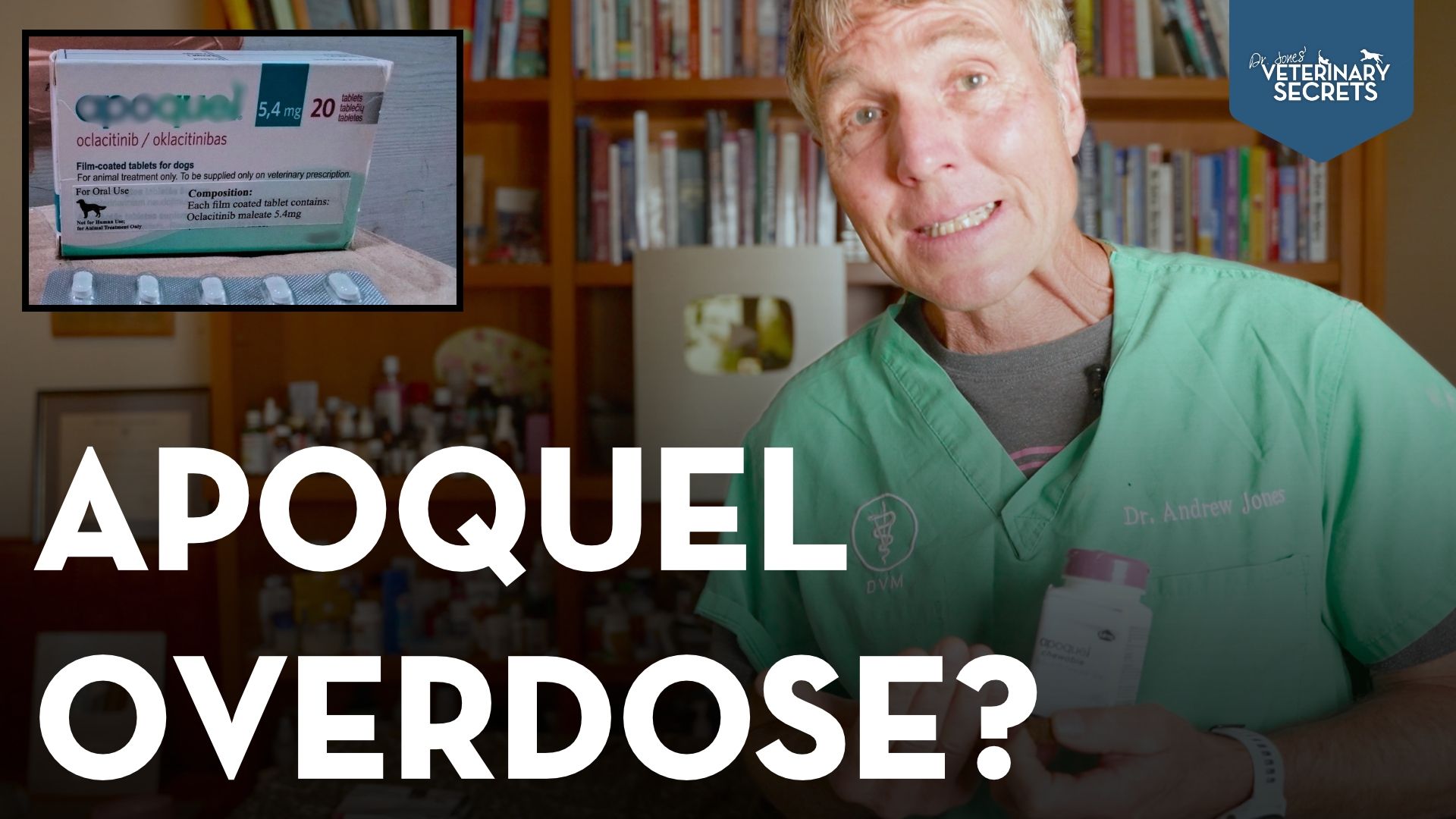
Apoquel (oclacitinib) can be very effective at relieving itching in dogs, but accidental overdoses can cause serious poisoning in both dogs and cats. In July 2026, the FDA issued a warning about increasing overdose reports involving Apoquel Chewable, particularly because its pork-liver flavor makes it appealing to pets.
As of April 2, 2026, the FDA had received 259 overdose reports involving dogs and 64 involving cats.
And here’s something that may surprise you.
Cats appear particularly vulnerable to serious complications.
If your dog is taking Apoquel for allergies, this is something I really want you to know about.
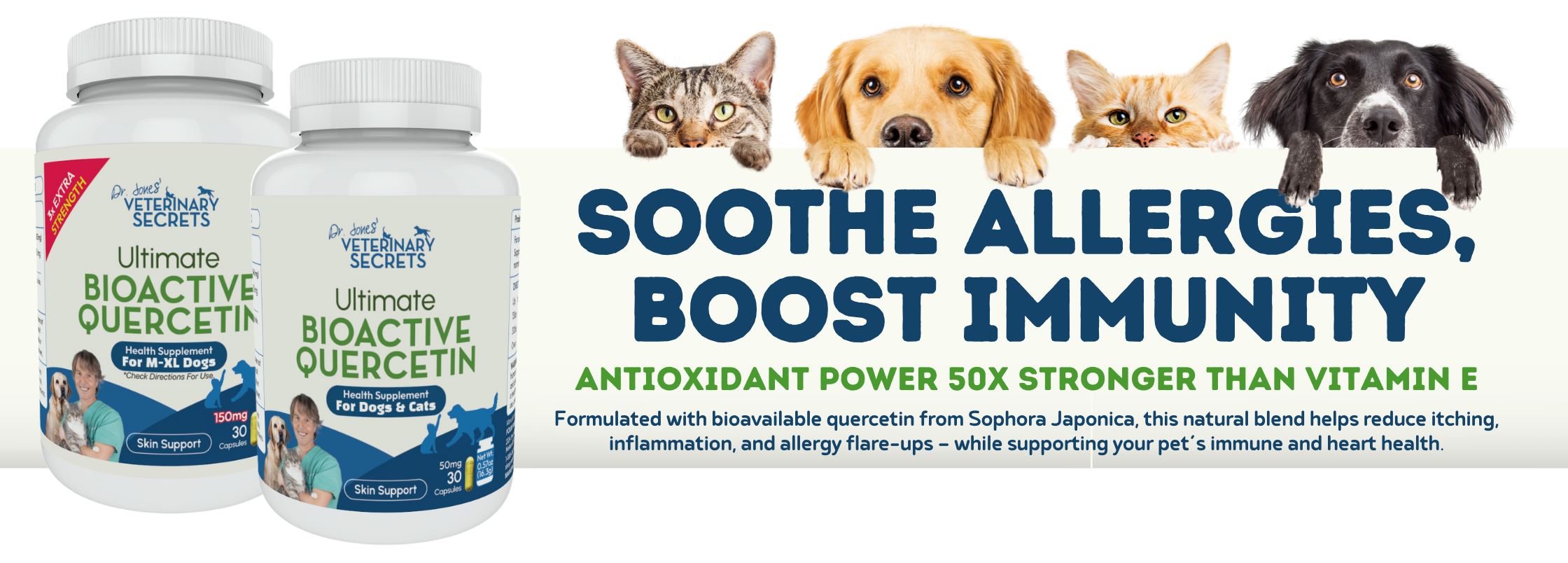
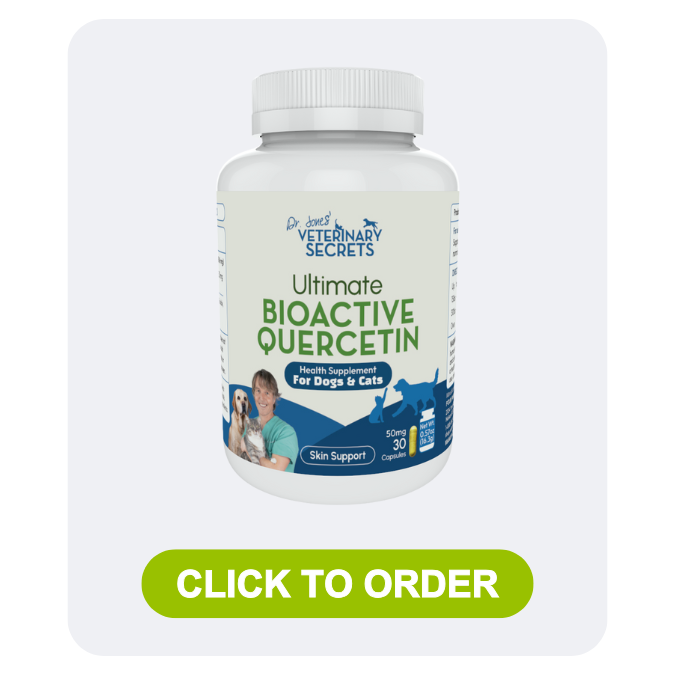
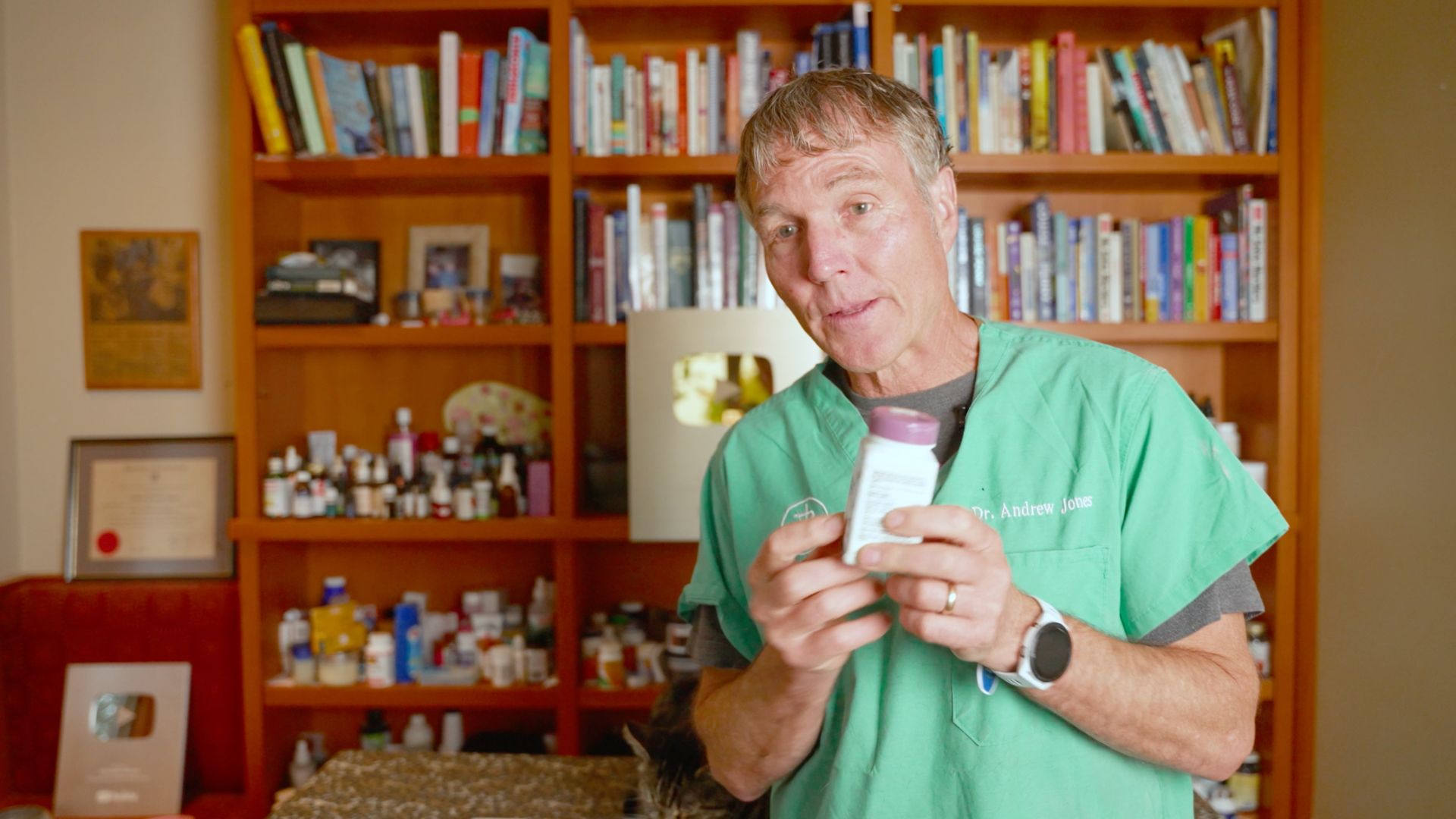
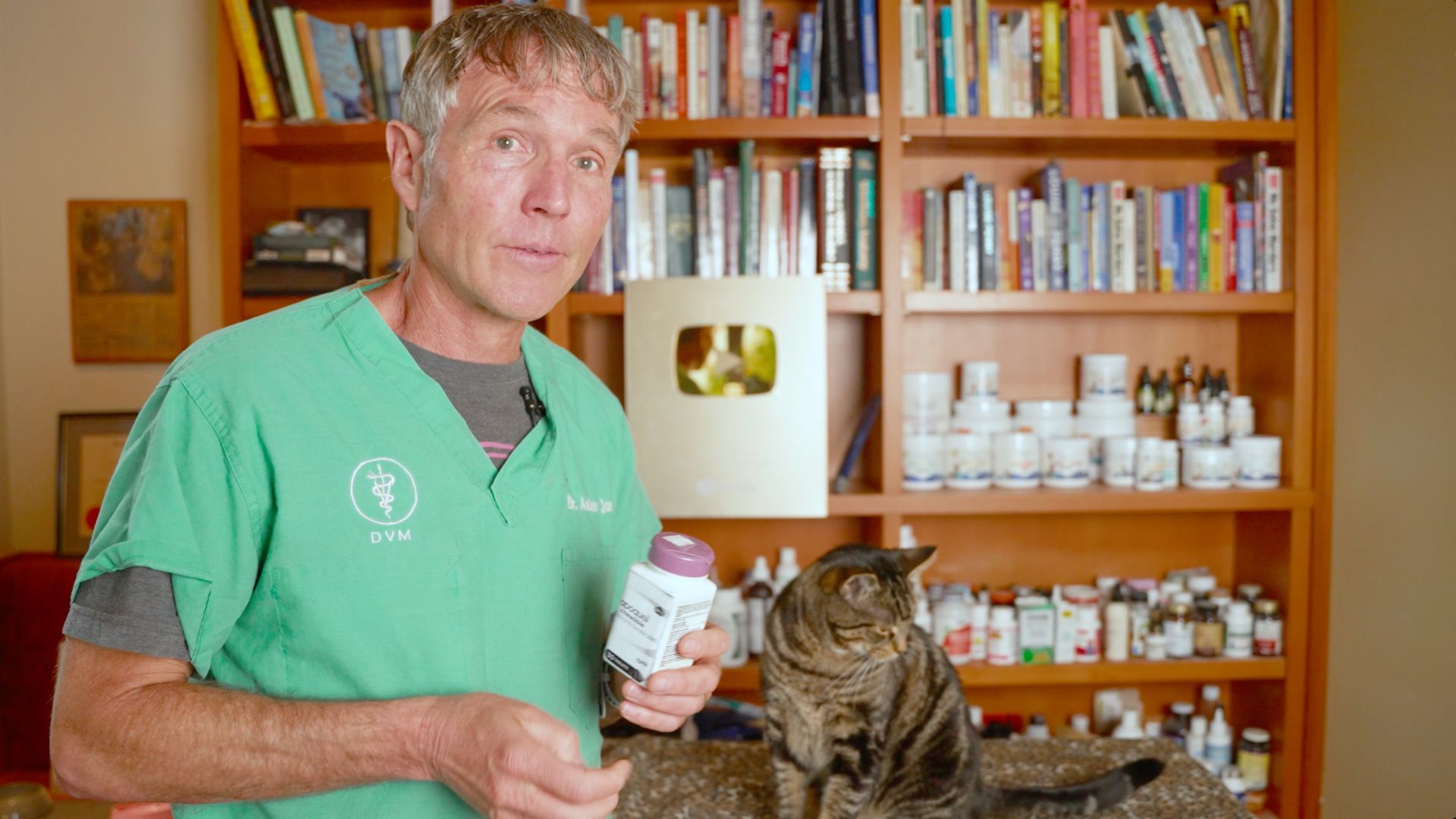
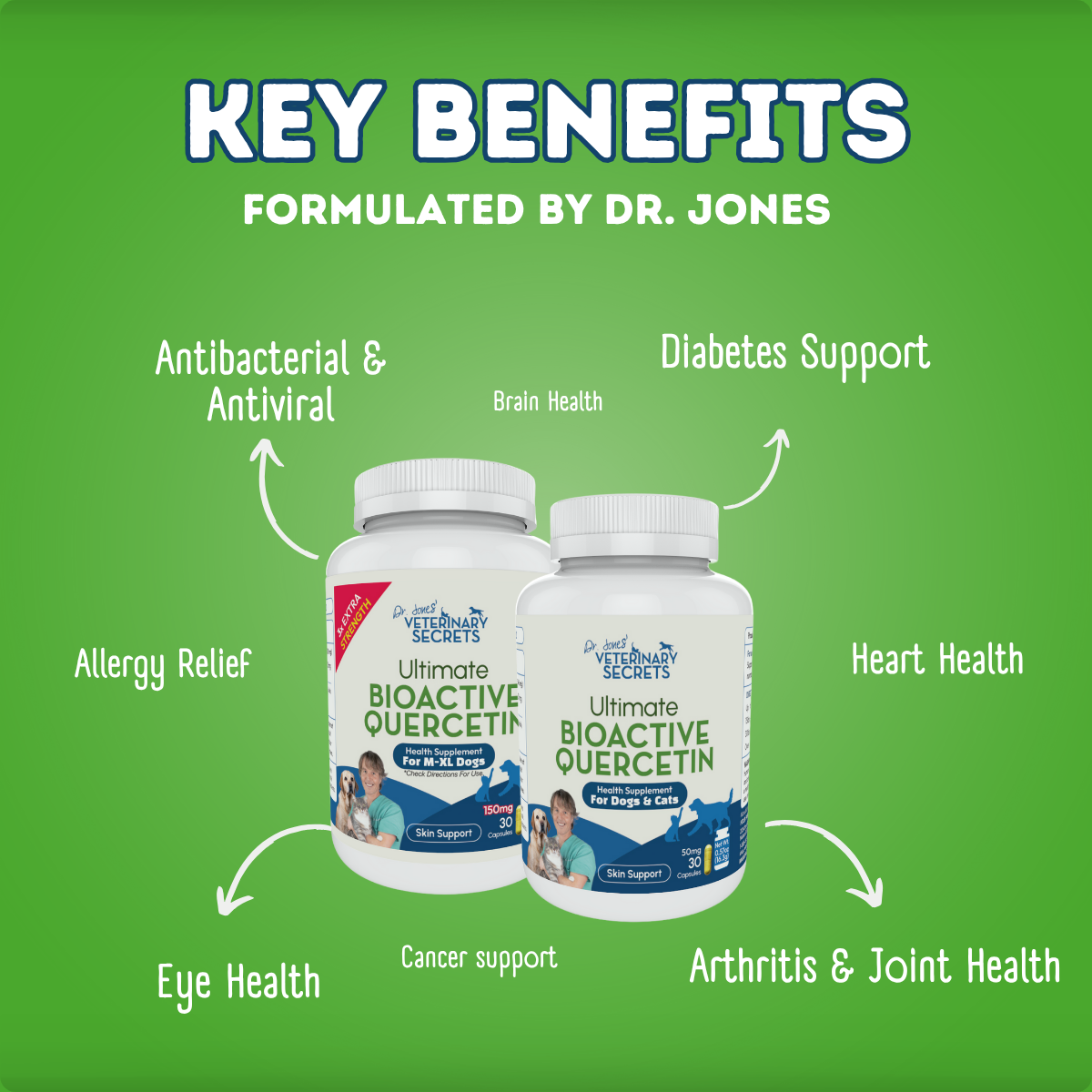
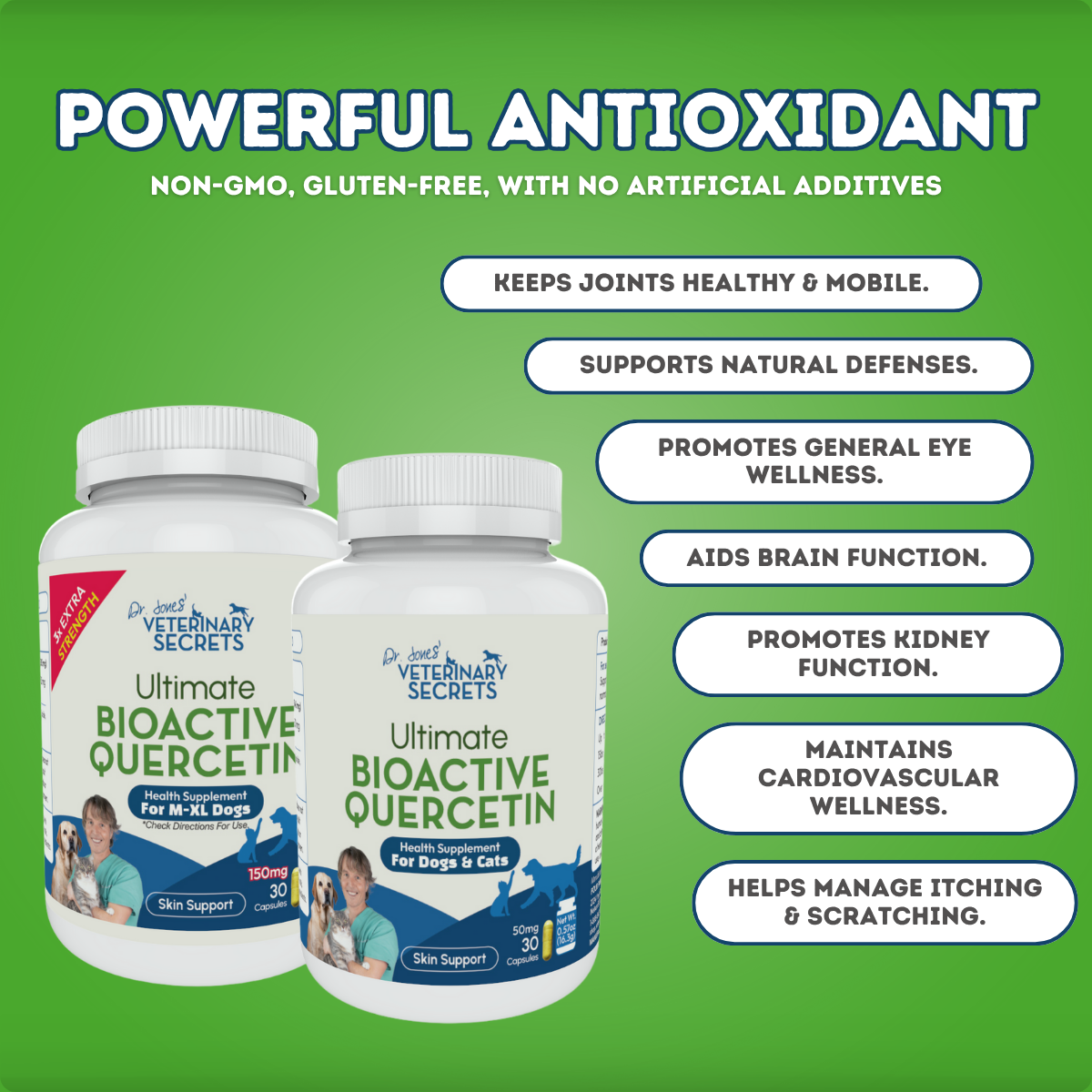
Dr. Jones’ Ultimate BioActive Quercetin for Dogs and Cats
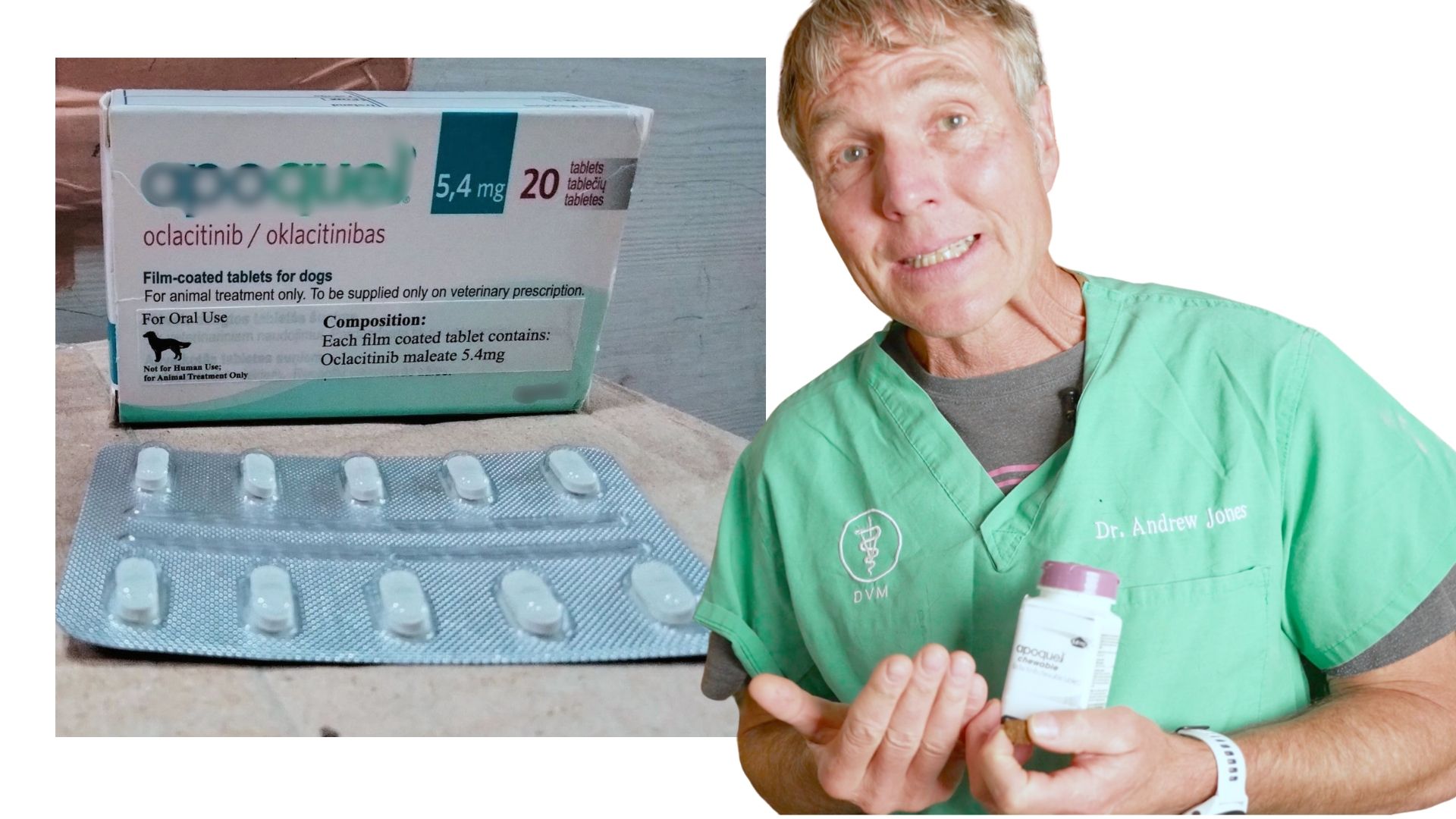
Apoquel is one of the most commonly prescribed medications for itchy dogs. I’ve seen how effective it can be for animals suffering from severe allergic skin disease.
But I’ve also encouraged pet parents to look beyond simply suppressing the itching.
Because while Apoquel can make your dog more comfortable, it doesn’t necessarily address why they’re itching in the first place.
Now, with the FDA reporting accidental overdoses and serious complications, I think it’s worth taking a closer look at this medication.
I want to explain what happened to a cat named Tangerine, the signs of Apoquel poisoning, what the FDA has warned about, and five approaches I consider for dogs with allergies.
What Is Apoquel, and How Does It Work?
Apoquel is a prescription medication containing oclacitinib, used to control itching associated with allergic skin disease in dogs.
It works by inhibiting certain Janus kinase (JAK) signaling pathways.
These pathways are involved in transmitting inflammatory signals that contribute to itching.
By blocking some of those signals, Apoquel can provide significant relief.
And for a dog who has been scratching, chewing, and licking constantly, that relief can make a tremendous difference.
Why Is Apoquel Commonly Prescribed for Itchy Dogs?
Allergic skin disease can be extremely frustrating.
Some dogs scratch so much that their skin becomes irritated.

Others constantly lick or chew their paws.
And some develop recurring secondary skin problems.
Apoquel can help control the itching, sometimes providing substantial relief for dogs suffering from severe allergies.
But there’s an important distinction.
Controlling itching isn’t necessarily the same as correcting the underlying allergy.
Your dog may still have an environmental allergy, food-related problem, flea exposure, infection, or damaged skin barrier.
That’s why I encourage pet parents to look at the bigger picture.
Why Did the FDA Issue an Apoquel Overdose Warning?
In July 2026, the FDA warned about increasing reports of accidental overdoses involving Apoquel Chewable.
The concern is partly related to its formulation.
Unlike a tablet that your dog might not find particularly interesting, Apoquel Chewable contains pork-liver flavoring.
And unfortunately, that makes it appealing to pets.
Sometimes a little too appealing.
A dog may discover the medication bottle and decide the contents look like treats.
And if they manage to open it, they may consume multiple tablets or even the entire bottle.
How Many Apoquel Overdoses Were Reported?
According to the figures reported by the FDA as of April 2, 2026:
| Animal | Apoquel Overdose Reports |
|---|---|
| Dogs | 259 |
| Cats | 64 |
| Total | 323 |
These are reported overdose cases, not the total number of animals taking Apoquel or a measure of how frequently overdoses occur among all users.
But they are concerning enough that the FDA issued a warning.
And the reports aren’t limited to dogs.
Cats are also getting into this medication.
Why Are Apoquel Chewables Appealing to Pets?
The pork-liver flavoring is intended to make the medication easier to administer.
For a dog who doesn’t like swallowing pills, that can be helpful.
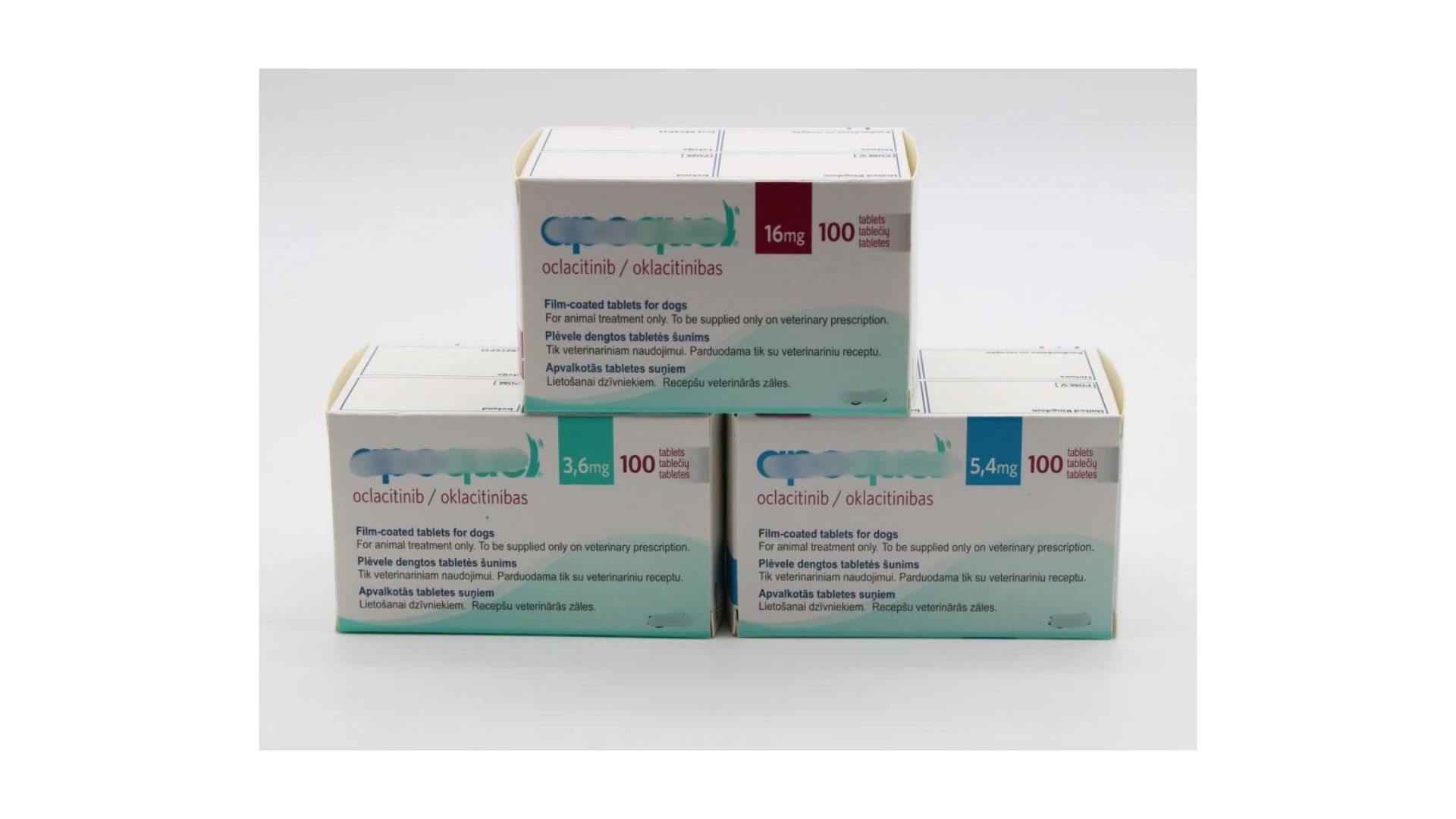
But there’s an unfortunate downside.
The flavored tablets may be mistaken for something edible.
And when a pet discovers an unattended bottle, they may eat far more than the prescribed amount.
This is why secure storage is especially important.
If you have Apoquel Chewable at home, I would treat it like any other prescription medication that could cause serious harm if swallowed accidentally.
A Cat Named Tangerine Nearly Died After an Apoquel Overdose
One of the most concerning examples came from a case reported by Pet Poison Helpline.
A pet parent returned home to discover that her dog’s bottle of Apoquel was empty.
There had been 13 tablets in the bottle.
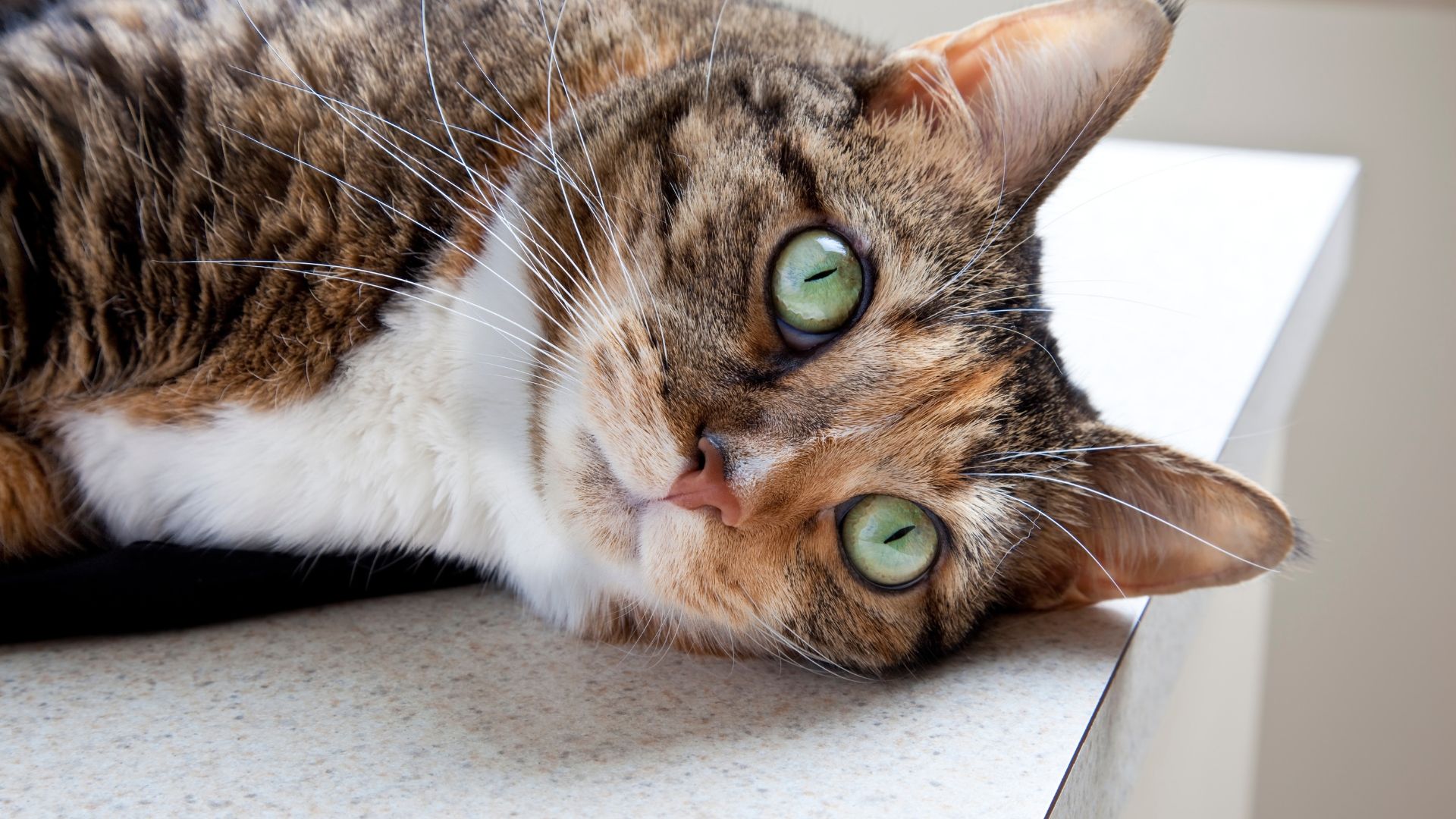
She also had five cats.
One of them, a cat named Tangerine, was showing unusual symptoms.
What Were Tangerine’s First Symptoms?
Tangerine’s owner noticed two changes involving his eyes:
-
His third eyelid was elevated.
-
He was squinting.
These might not sound like dramatic signs of poisoning.
But they were enough to raise concern.
Tangerine was taken to an emergency veterinary hospital.
And what the veterinarians discovered was serious.
How Did Apoquel Affect Tangerine?
At the emergency hospital, veterinarians found evidence that the medication was affecting Tangerine’s kidneys and liver.
Without appropriate treatment, the poisoning could have been fatal.
He needed intensive veterinary care.
Fortunately, after two days of hospitalization and treatment, Tangerine made a full recovery.
That’s wonderful news.
But imagine returning home to discover an empty medication bottle, then realizing that one of your cats may have swallowed the contents.
It’s not something any pet parent wants to experience.
What Can We Learn From Tangerine’s Case?
The most important lesson is that a medication prescribed for one animal can be dangerous when another pet gets into it.
In this case, the medication belonged to a dog.
But a cat was the one who became seriously ill.
So if you have both dogs and cats in your home, I want you to be particularly careful with where you store Apoquel.
And don’t assume that because a medication is routinely prescribed to dogs, an accidental overdose will be harmless.
What Are the Signs of Apoquel Overdose in Dogs and Cats?
Early Apoquel overdose symptoms may include vomiting, diarrhea, lethargy, loss of appetite, and eye redness or swelling. More serious poisoning can affect the heart, brain, kidneys, and liver.
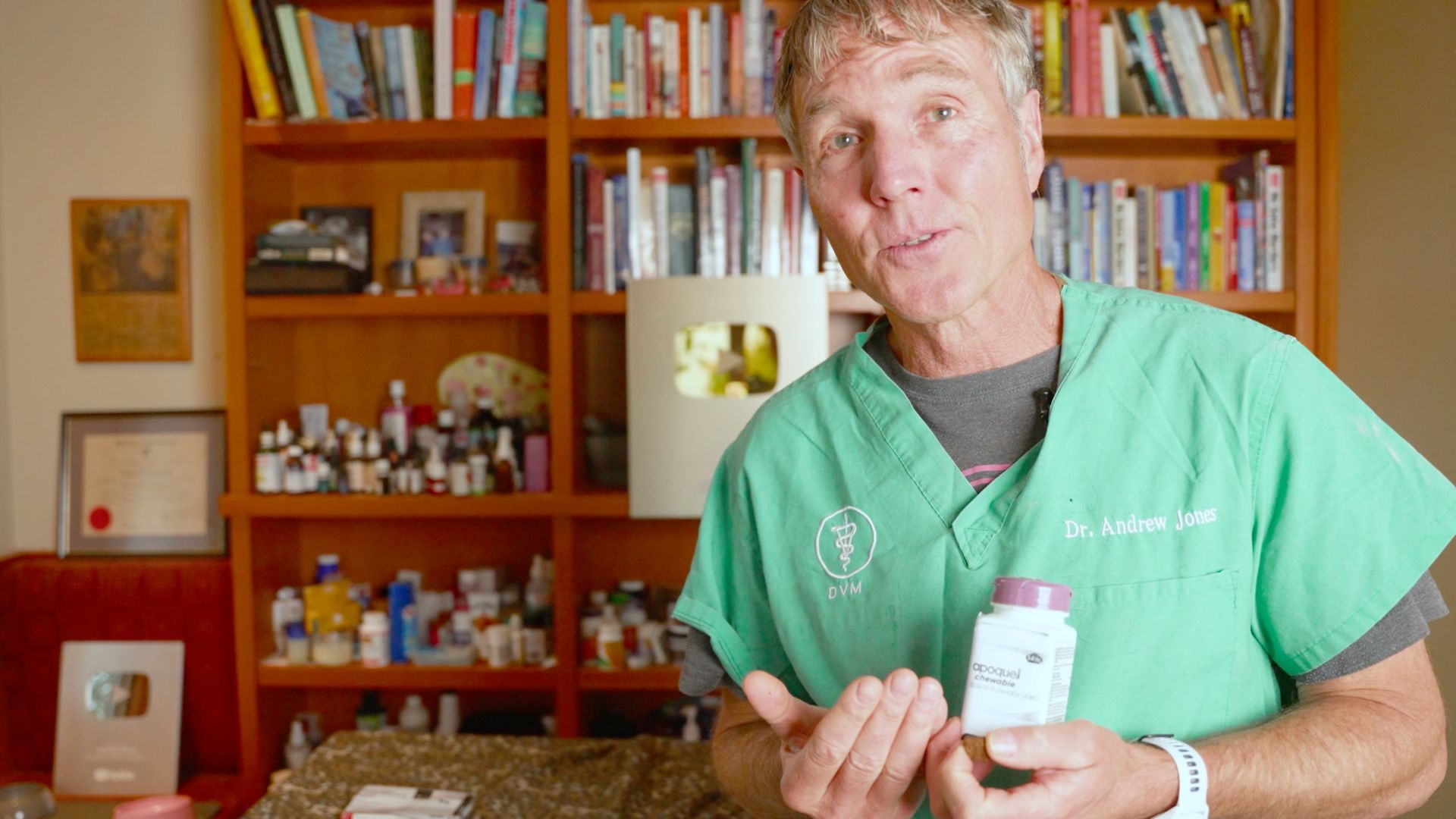
Symptoms often develop within 24 hours.
However, I would not wait for these symptoms to appear if I knew my pet had swallowed an excessive amount.
Early Symptoms of Apoquel Poisoning
Watch for:
-
Vomiting
-
Diarrhea
-
Lethargy
-
Loss of appetite
-
Eye redness
-
Eye swelling
-
Unusual eye changes, such as those observed in Tangerine
These signs may indicate that something is wrong.
And if you know your dog or cat has gotten into Apoquel, the situation needs immediate veterinary attention.
What Happens in Severe Apoquel Poisoning?
In more serious cases, Apoquel overdose can affect several organ systems.
These include:
-
The heart
-
The brain
-
The kidneys
-
The liver
The seriousness of these effects is why I wouldn’t recommend simply monitoring an animal at home after a suspected overdose.
The amount consumed matters.
The animal’s size matters.
And cats may be particularly vulnerable.
How Quickly Do Apoquel Overdose Symptoms Appear?
Symptoms often develop within 24 hours.
But that doesn’t mean you should wait 24 hours to see what happens.
A pet may already have been exposed to a dangerous amount before obvious signs develop.
If the medication bottle is empty or you suspect an overdose, contact your veterinarian or an animal poison control service immediately.
What Should You Do if Your Dog or Cat Eats Too Much Apoquel?
If you discover that your pet may have swallowed an excessive amount of Apoquel, here’s what I would recommend.
Step 1: Contact Your Veterinarian Immediately
Don’t wait for vomiting, diarrhea, or lethargy.
Tell your veterinarian that your pet may have ingested Apoquel.
If your regular clinic isn’t available, contact an emergency veterinary hospital or animal poison control service.
Step 2: Identify How Much Medication Is Missing
Check the medication bottle if you can do so safely.
Try to determine:
-
How many tablets were originally in the bottle
-
How many may have been swallowed
-
Which pet may have eaten them
Remember Tangerine.
The bottle belonged to a dog, but the cat was the one who became ill.
Step 3: Watch for Changes in Your Pet
Be alert for vomiting, diarrhea, loss of appetite, unusual tiredness, or changes involving the eyes.
However, do not delay veterinary care while watching for symptoms.
Step 4: Do Not Induce Vomiting Without Veterinary Instructions
Do not attempt to make your dog or cat vomit unless specifically instructed by a veterinary professional.
The correct treatment depends on the circumstances.
Step 5: Follow the Recommended Veterinary Treatment
Some animals may need emergency treatment or hospitalization.
Tangerine required two days of intensive care before making a full recovery.
Prompt treatment can make a tremendous difference.
What Are the Possible Side Effects of Apoquel?
While accidental overdose is the focus of the FDA’s recent warning, there are also important safety considerations associated with Apoquel itself.
Apoquel works by affecting JAK signaling involved in inflammation and itching.
That can provide relief.
But it also means the medication influences biological processes involved in immune function.
What Side Effects Have Been Associated With Apoquel?
The safety concerns discussed include:
-
Vomiting
-
Diarrhea
-
Low blood pressure
-
Collapse
-
Seizures
-
Coma
-
Immunosuppression
These are not all equally common, and the most severe effects should not be assumed to occur with ordinary prescribed use. Some are particularly relevant to serious adverse events or poisoning.
Still, I think pet parents should understand the medication they’re giving.
Especially when that medication may be used over an extended period.
What FDA Safety Warnings Should Pet Parents Know?
The FDA required Zoetis to include important warnings in Apoquel’s labeling and marketing information.

Two concerns highlighted are:
1. Apoquel should not be used in dogs with serious infections.
2. Apoquel may increase susceptibility to infection, including demodicosis, and may exacerbate neoplastic conditions.
Let’s explain that second warning.
Demodicosis is a condition involving Demodex mites.
Neoplastic conditions refer to abnormal tissue growth, including cancer.
The warning means Apoquel may worsen existing neoplastic conditions.
For me, those are important considerations when deciding whether a medication is appropriate for an individual dog.
Does Apoquel Suppress the Immune System?
Apoquel affects signaling pathways involved in inflammation and immune activity.
That is part of how it reduces itching.
But those effects also help explain why susceptibility to infections and certain other conditions is included in its safety warnings.
I would be especially thoughtful about its use in dogs with existing serious infections or other medical problems.
Is Apoquel Safe for Long-Term Allergy Treatment?
Apoquel can have an important role in managing severe allergic skin disease.
And I’m not suggesting that every dog taking Apoquel should suddenly stop receiving it.

Some dogs are so uncomfortable from allergies that controlling the itching is essential to their quality of life.
But I believe we need to look beyond the medication.
Because the question I always come back to is:
Why is your dog itching in the first place?
If we can identify and address some of the underlying contributors, we may be able to reduce the severity of the problem.
And in some cases, that may create an opportunity to simplify treatment with veterinary guidance.
What Causes Allergic Itching in Dogs?
Dogs can experience itching for several reasons.
The source of the problem isn’t always obvious.
Some of the possibilities I consider include:
-
Food allergies
-
Environmental allergens
-
Fleas
-
Secondary bacterial infections
-
Secondary yeast infections
-
Problems with the skin barrier
These conditions may occur individually or together.
And that matters because simply suppressing the itch doesn’t necessarily correct all of them.
Could Your Dog’s Diet Be Contributing?
Yes.
Food allergies may contribute to some cases of allergic skin disease.
That’s one reason I place so much importance on nutrition.
If food allergy is suspected, a properly conducted elimination diet may help identify the problem.
What About Environmental Allergies?
Some dogs develop allergic skin disease associated with environmental allergens.
This is often referred to as atopy or atopic dermatitis.
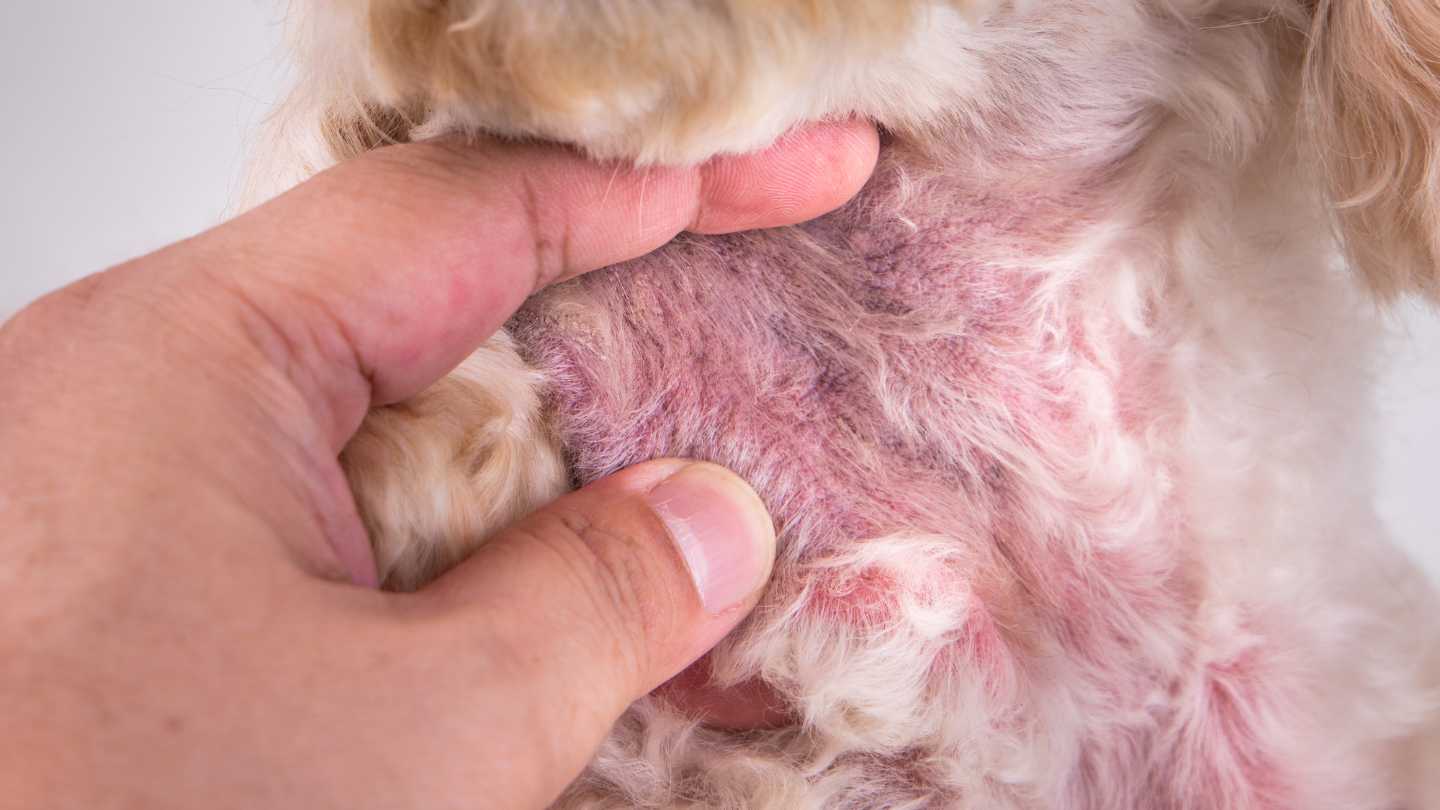
It can be a particularly frustrating condition because the dog may continue experiencing itching even when other aspects of care are being addressed.
Can a Damaged Skin Barrier Make Allergies Worse?
Yes.
The skin barrier plays an important role in maintaining healthy skin.
When that barrier is damaged, the skin may become more irritated.
And if a dog also has a secondary bacterial or yeast infection, the discomfort can be even worse.
That’s why I consider skin care an important part of managing allergies.
What Are My 5 Natural Approaches to Dog Allergies?
Before relying exclusively on long-term medication, I encourage pet parents to consider several supportive approaches.
The goal is to help the dog feel better while addressing as many contributing factors as possible.
Let’s go through each one.
1. Start With Your Dog’s Diet
Nutrition plays a major role in skin health.
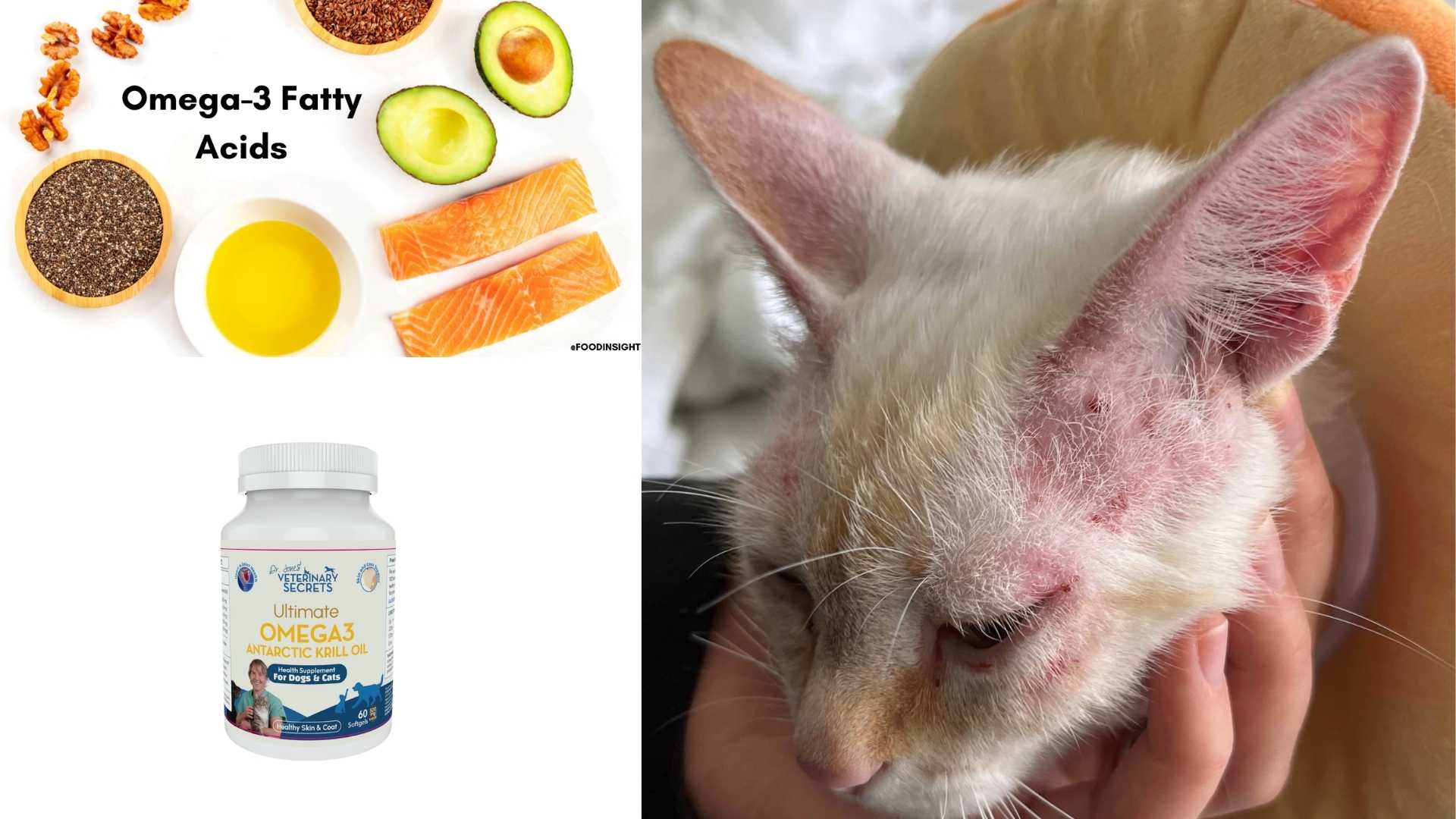
And it’s one of the first things I want pet parents to consider when dealing with a chronically itchy dog.
My preference is a balanced, minimally processed diet that provides:
-
High-quality protein
-
Adequate essential fatty acids
-
Appropriate overall nutrition
The goal is to support healthy skin and overall health.
What if Your Dog Has a Food Allergy?
If I suspect a food allergy, I would consider a properly conducted elimination diet.
This can help determine whether a particular dietary ingredient is contributing to the itching.
And if food is part of the problem, identifying that trigger may be extremely helpful.
But changing foods repeatedly without a plan isn’t the same as carrying out a proper elimination diet.
I’d want to approach it carefully.
2. Omega-3 Fatty Acids for Allergic Skin Disease
Omega-3 fatty acids are among my favorite nutritional supplements for dogs with allergic skin disease.
They have been extensively studied for their beneficial effects on skin health and inflammation.
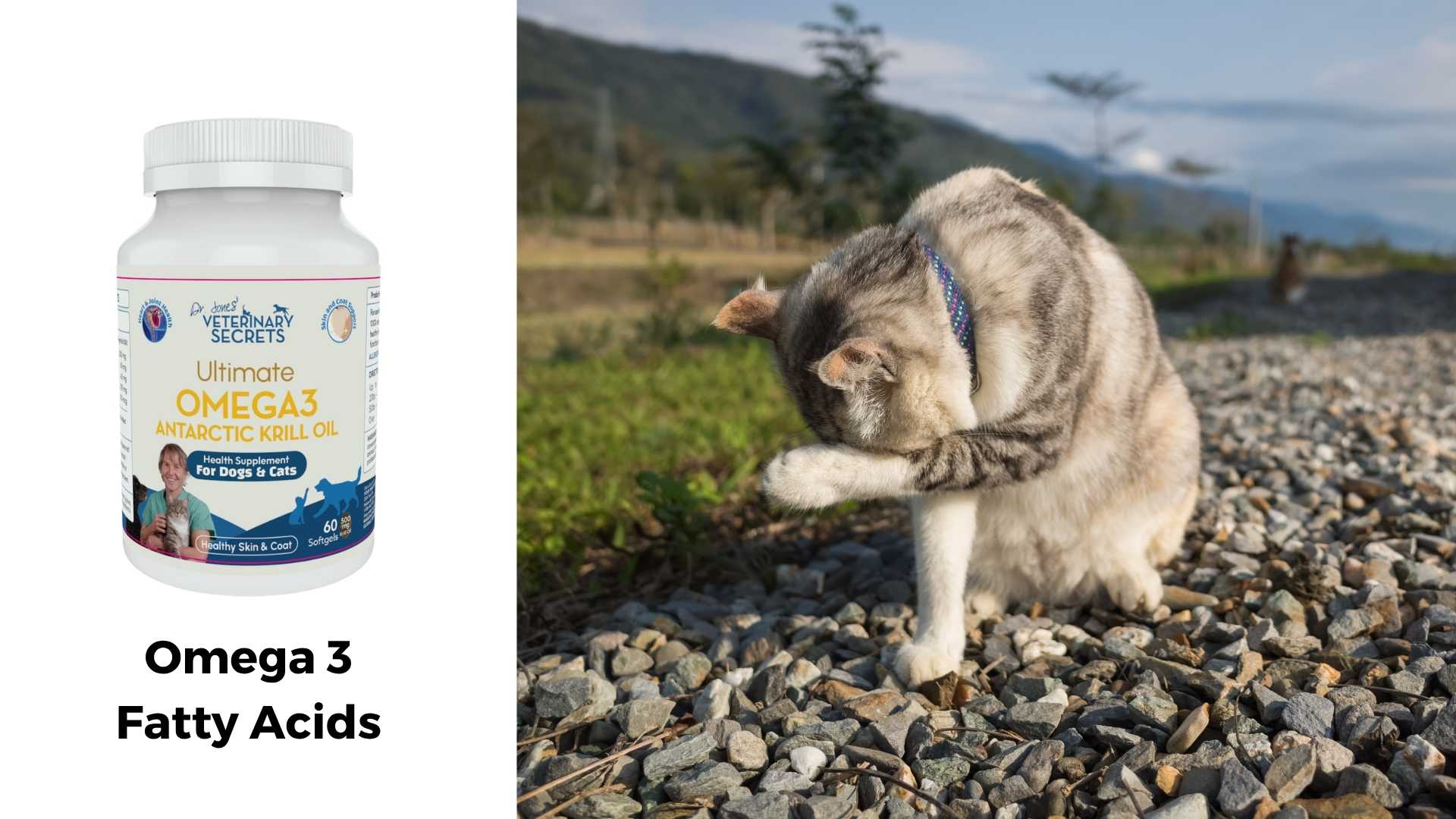
Two omega-3 fatty acids are particularly important:
-
EPA
-
DHA
These fatty acids have anti-inflammatory properties and may help support the skin barrier.
How Do Omega-3s Help Itchy Dogs?
Omega-3 fatty acids may help:
-
Reduce allergic inflammation
-
Support the skin barrier
-
Improve skin health
-
Provide nutritional support for dogs with chronic allergic skin problems
This is why I strongly encourage omega-3 supplementation for allergic dogs.
I consider it one of the most useful foundational steps.
What Are Good Omega-3 Sources for Dogs?
Options discussed include:
-
Sardines
-
Quality marine omega-3 supplements
-
Krill oil
I particularly like krill oil as a source of marine omega-3 fatty acids.
What Omega-3 Dose Do I Recommend?
The amount I discuss for allergic dogs is:
500 mg of omega-3 fatty acids per 20 pounds of body weight daily.
Because omega-3 products differ in their concentrations of EPA and DHA, I would confirm the appropriate amount for the specific supplement.
One option I recommend is:
Dr. Jones’ ULTIMATE Omega 3 Formula
For me, omega-3 support is one of the first things to consider when dealing with chronic allergic itching.
3. Support and Repair Your Dog’s Skin Barrier
The third approach is to focus on the skin itself.
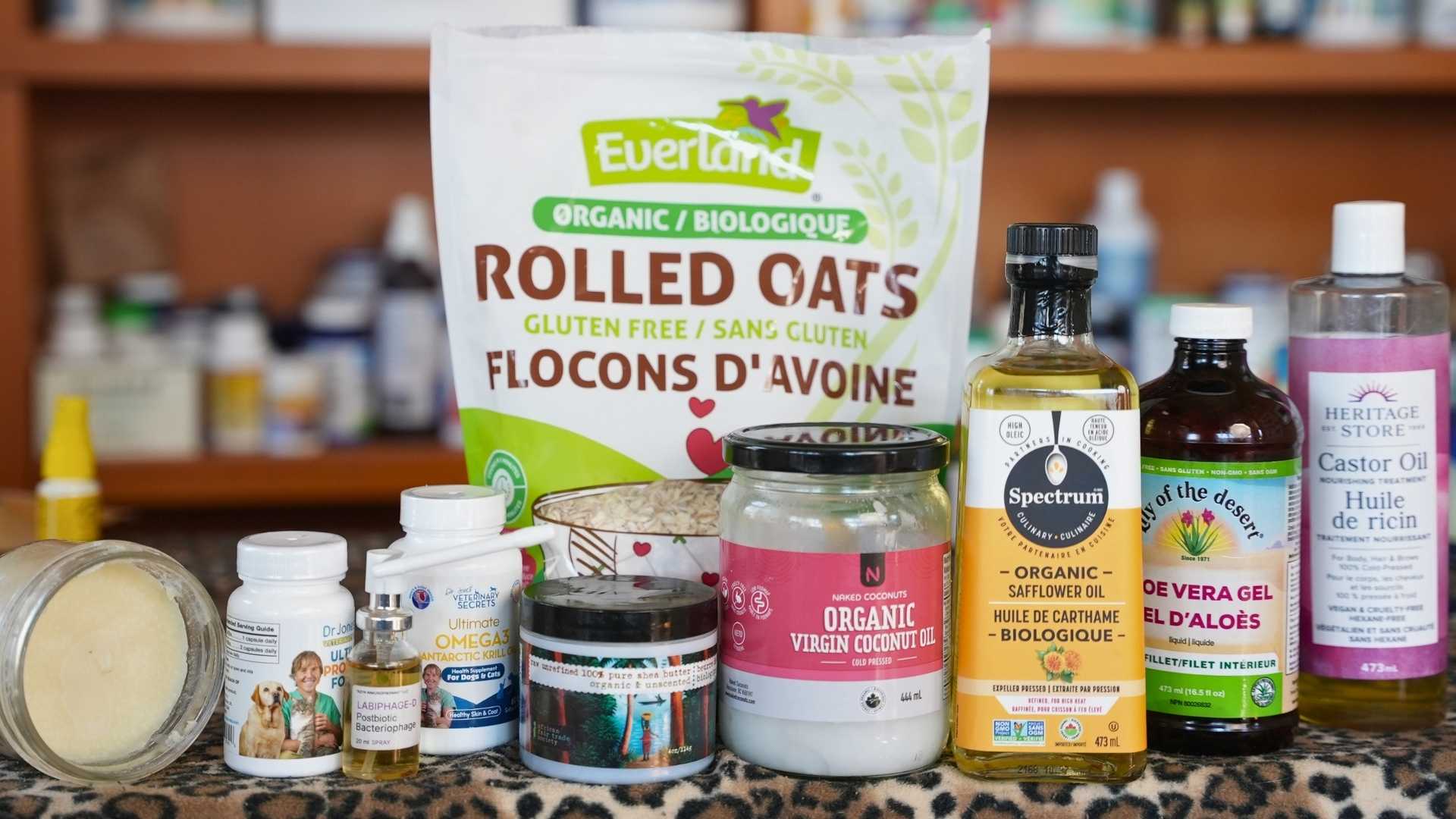
Many allergic dogs have irritated skin.
And when the skin barrier is damaged, that irritation can become more difficult to manage.
This is why I consider good skin care an essential part of allergy support.
What Helps Repair an Irritated Skin Barrier?
I encourage pet parents to consider:
-
Regular bathing with a gentle veterinary shampoo
-
Appropriate skin moisturizers
-
Identifying and treating secondary yeast infections
-
Identifying and treating secondary bacterial infections
These measures can make a substantial difference for some itchy dogs.
Can Safflower Oil Help Your Dog’s Skin?
Safflower oil is one of the oils I consider for skin barrier support.
Both topical and oral use have been discussed as ways to help support damaged skin.
The goal is to provide fatty acids that support skin health.
What About Wheat Germ Oil?
Wheat germ oil is another option I’ve discussed.
Like safflower oil, it may be used as part of an approach focused on supporting the skin barrier.
For allergic dogs with dry or irritated skin, I think this is an area worth addressing rather than simply relying on medication to suppress itching.
The specific preparation and amount should be appropriate for the individual dog.
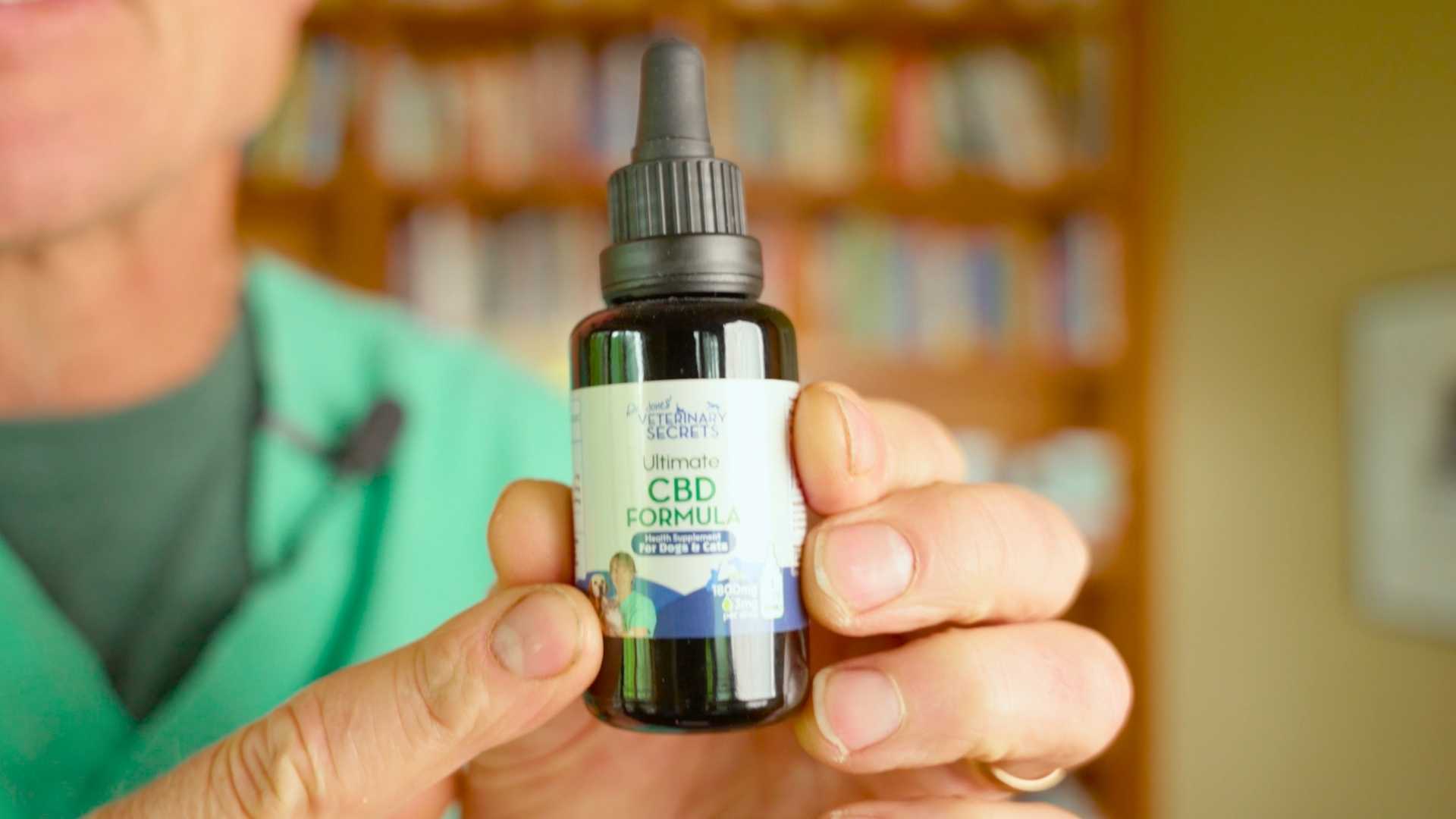
4. CBD for Dog Allergies and Itching
The fourth option is CBD.
And there’s some interesting research involving dogs with environmental allergies.
A recent small study investigated full-spectrum CBD extract in dogs suffering from atopy.
The results were encouraging.
What Did the CBD Allergy Study Find?
The study involved dogs with atopy, also known as environmental allergic skin disease.
The dogs received a full-spectrum CBD extract at 2 mg per kilogram of body weight, twice daily.
Researchers observed a marked improvement in itching.
But here’s the part I found particularly interesting.
When the dogs’ Apoquel doses were reduced by half while they continued receiving CBD, their allergies remained controlled during the study.
Now, this was a small study.
So we need more research.
But the findings suggest that CBD may have a useful supportive role in managing allergic itching.
Can CBD Help Reduce Apoquel Use?
The study suggests this may be possible for some dogs.
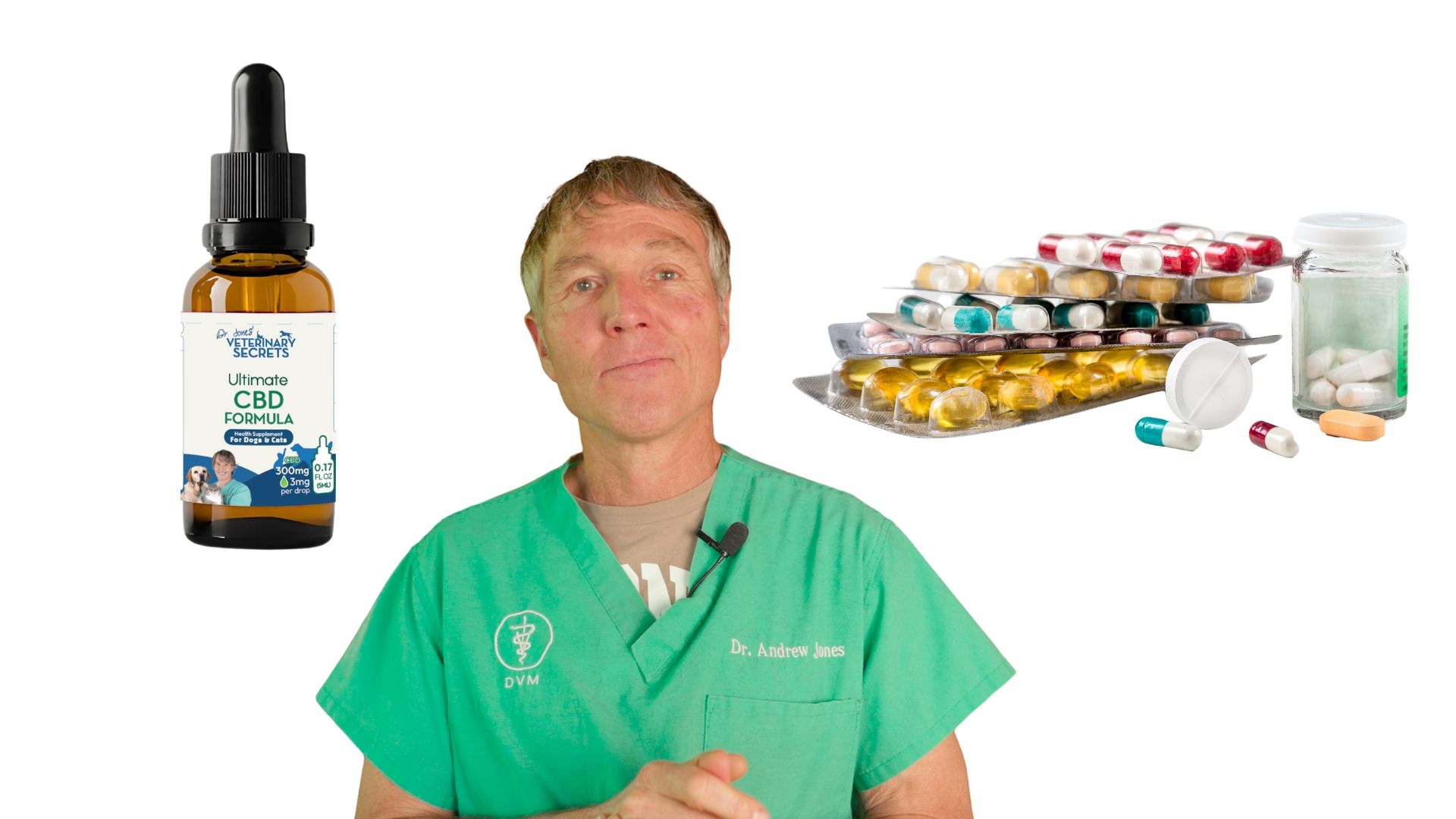
The dogs receiving full-spectrum CBD maintained allergy control after their Apoquel dose was reduced.
That’s encouraging.
What CBD Dose Was Used in the Study?
The amount investigated was:
2 mg/kg twice daily.
This was a higher-dose CBD approach used in a small study of dogs with atopy.
It should not be treated as a standard dose for every pet.
The appropriate amount depends on the animal and the product.
Angus the Border Collie’s Experience With CBD
I also want to share a personal example.
My brother Michael, who is also the other half of our business, has a Border Collie named Angus.

Angus has struggled with allergies.
And Michael found that Angus’ allergies became well controlled after adding CBD alongside krill oil and quercetin.
That’s the combination he has been using.
For me, it’s an encouraging example of how several supportive approaches may work together.
Of course, an individual dog’s experience doesn’t guarantee the same outcome for every pet.
But it’s one reason I continue to be interested in CBD for allergic itching.
My CBD supplement is:
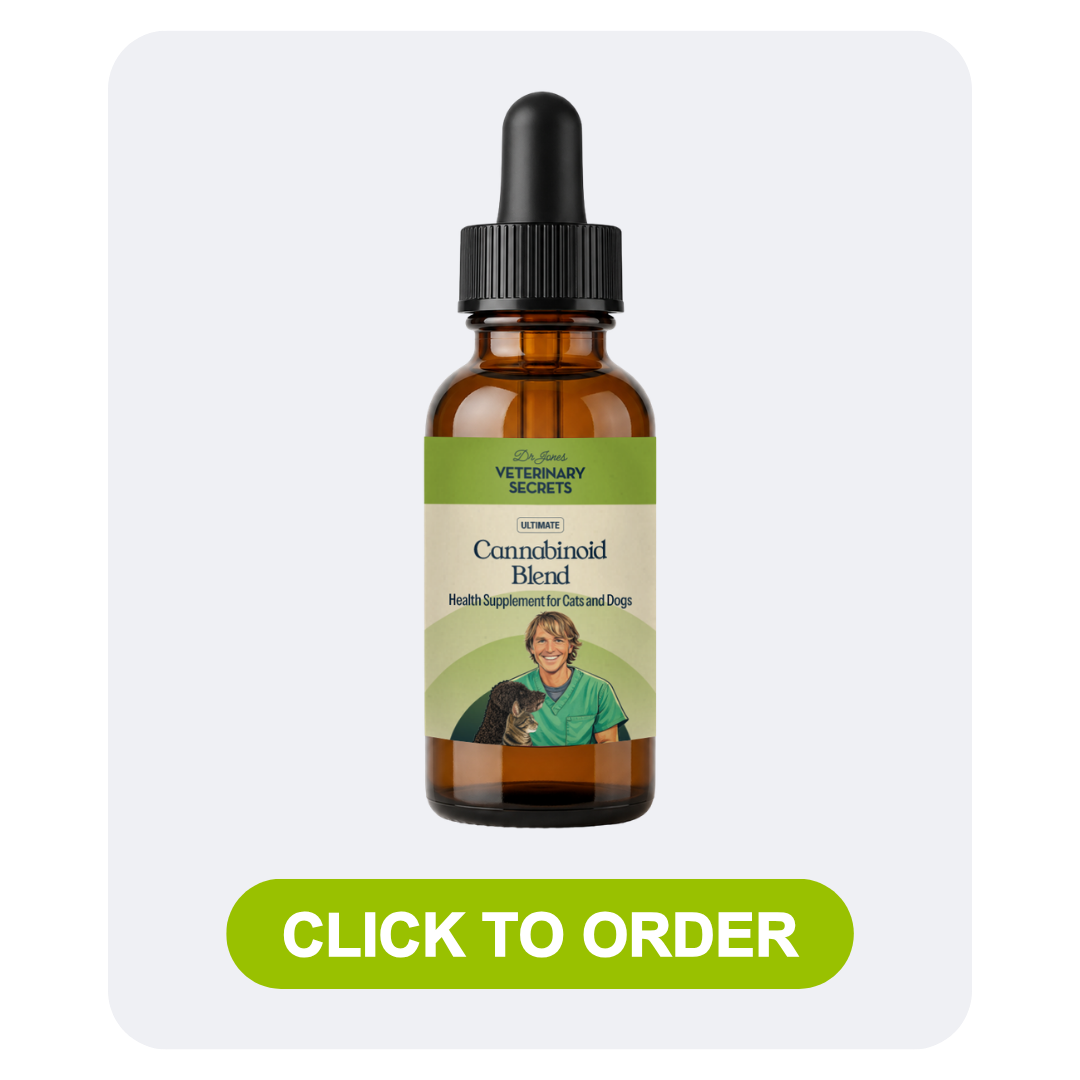
Dr. Jones’ ULTIMATE CBD Formula
5. Quercetin for Natural Allergy Support in Dogs and Cats
The fifth option is one of my favorite natural compounds for allergies.
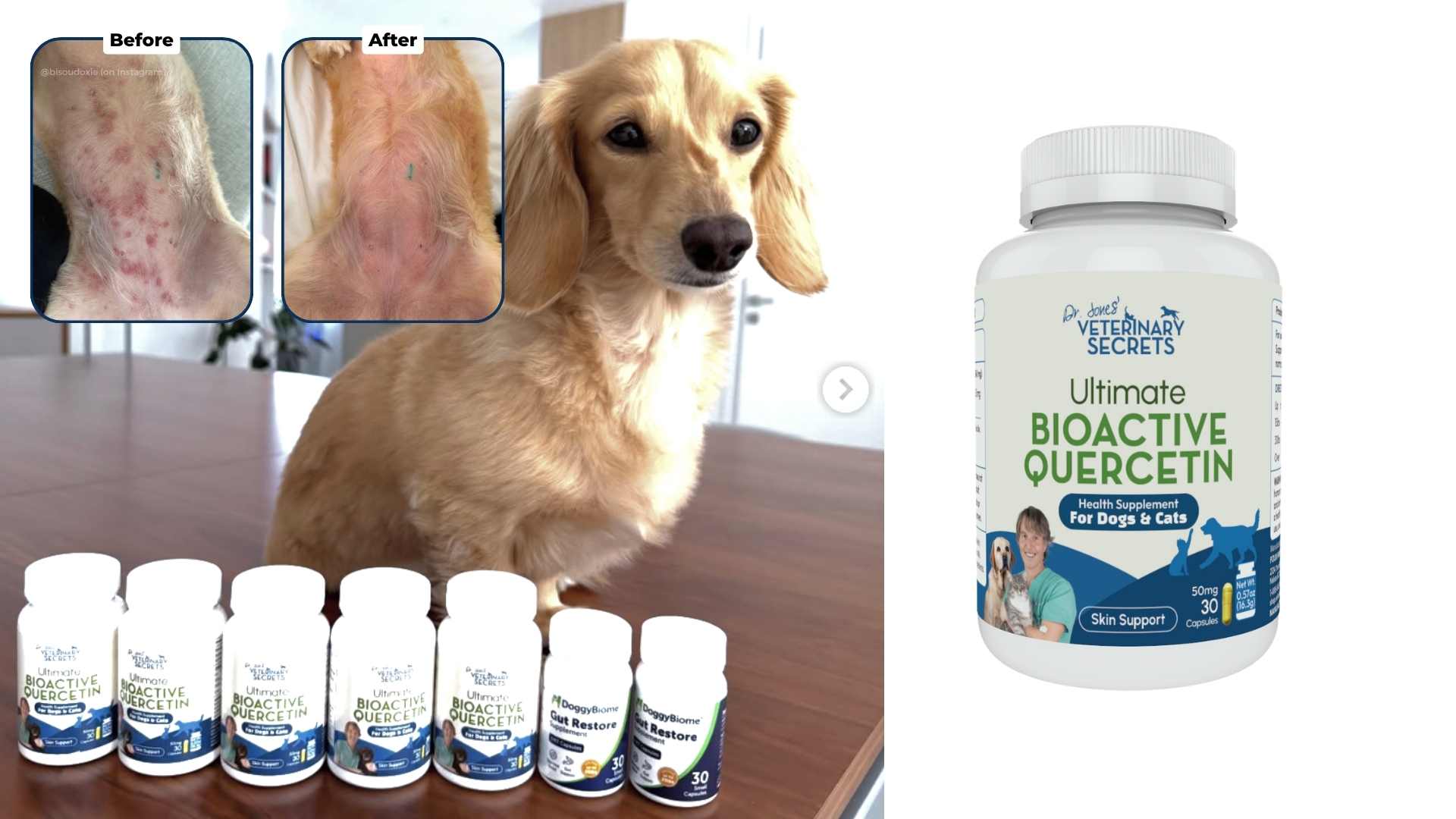
Quercetin is a naturally occurring bioflavonoid found in many plants.
It has antioxidant and anti-inflammatory properties.
And laboratory research suggests it may influence histamine release.
This is why quercetin is often discussed as a natural antihistamine-like supplement.
How Does Quercetin Help With Allergies?
Histamine is involved in allergic responses.
Quercetin has been studied for its potential effects on histamine release and inflammation.
These properties make it particularly interesting for dogs and cats dealing with allergic itching.
I have used quercetin as part of a natural allergy-support program.
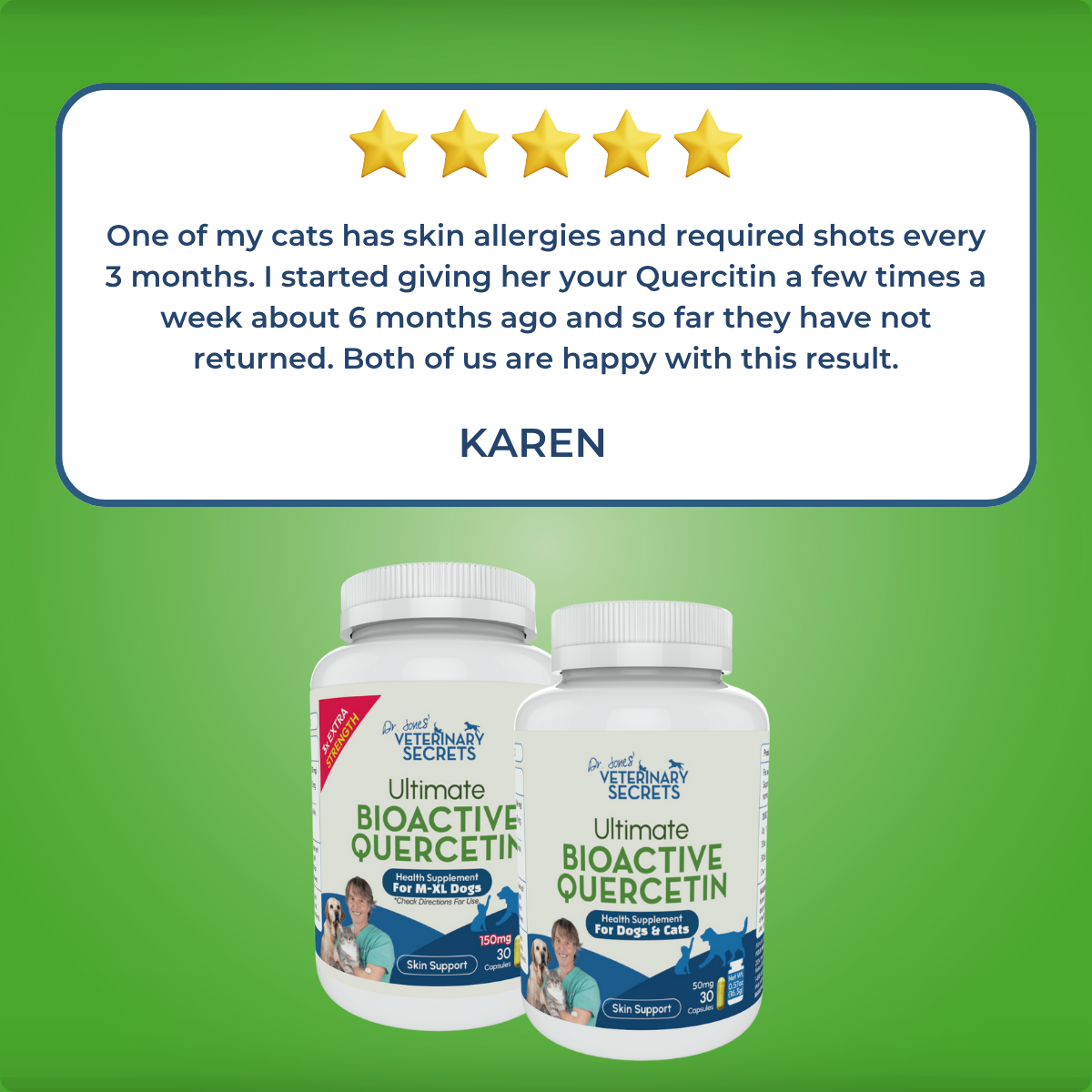
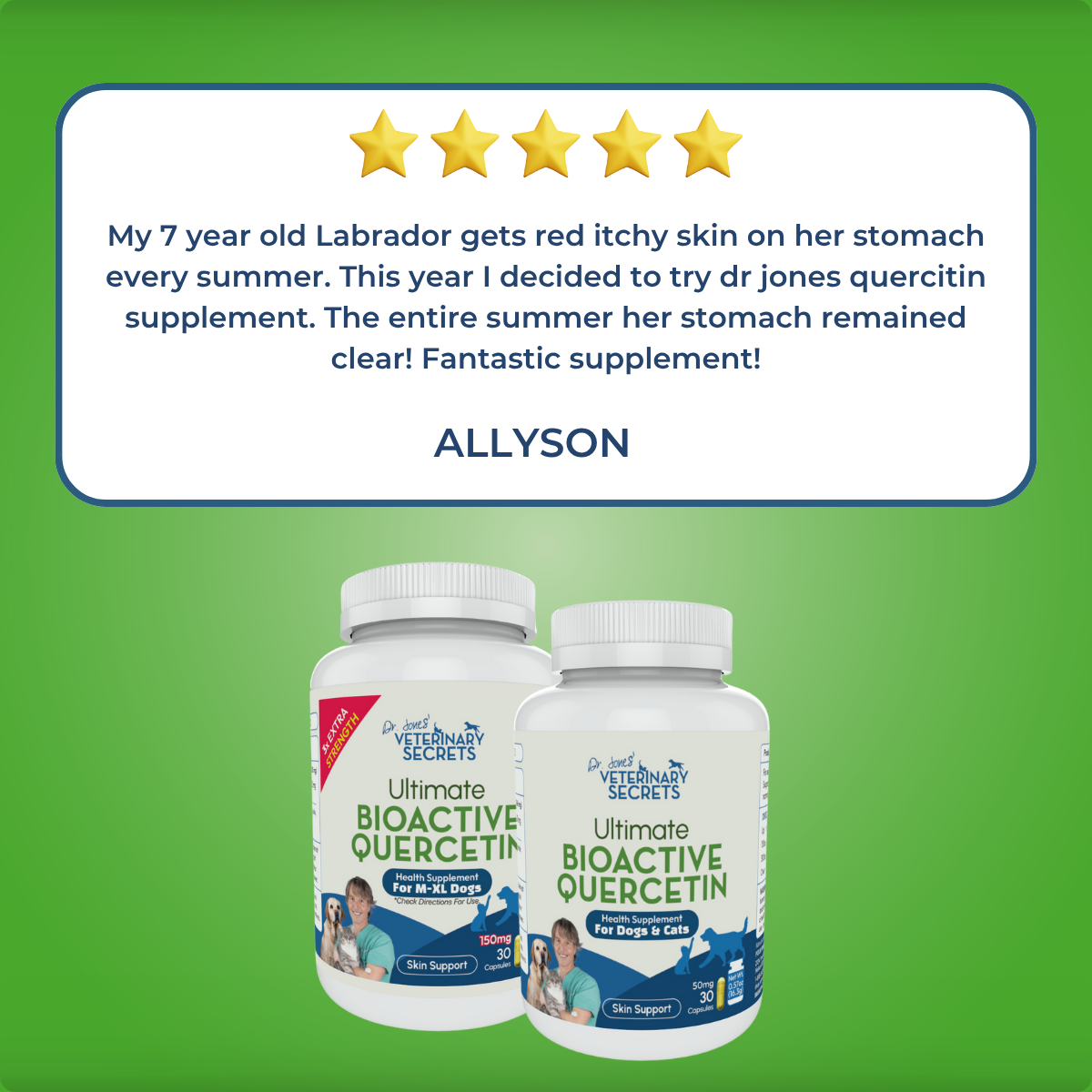
And I’ve received encouraging feedback from pet parents using our whole-plant quercetin supplement.
Where Is Quercetin Naturally Found?
Quercetin occurs in foods and plants such as:
-
Apple peel
-
Red onion
-
Kale
-
Green tea
-
Black tea
These are examples of natural quercetin sources, not a feeding list for dogs and cats. In particular, onion is toxic to pets.
Rather than relying on these foods, I prefer a supplement specifically formulated for animals.
What Makes Bioactive Quercetin Different?
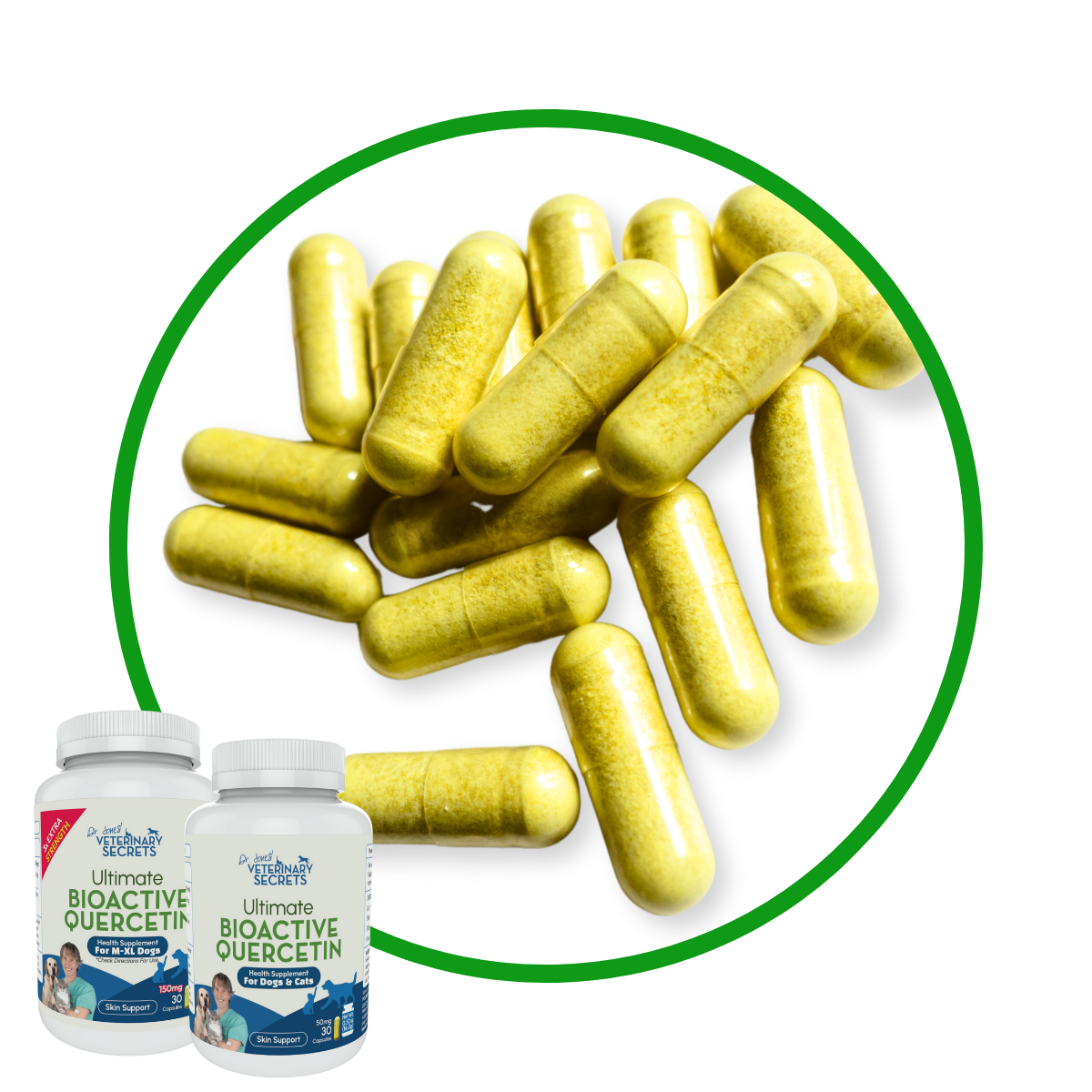
Our supplement uses Japonica flower, a whole-flower extract rich in bioactive quercetin.
I particularly like this approach because it provides a concentrated source of the plant compound.
We have heard from many pet parents whose allergic dogs and cats have responded well to the supplement.
You can find it here:
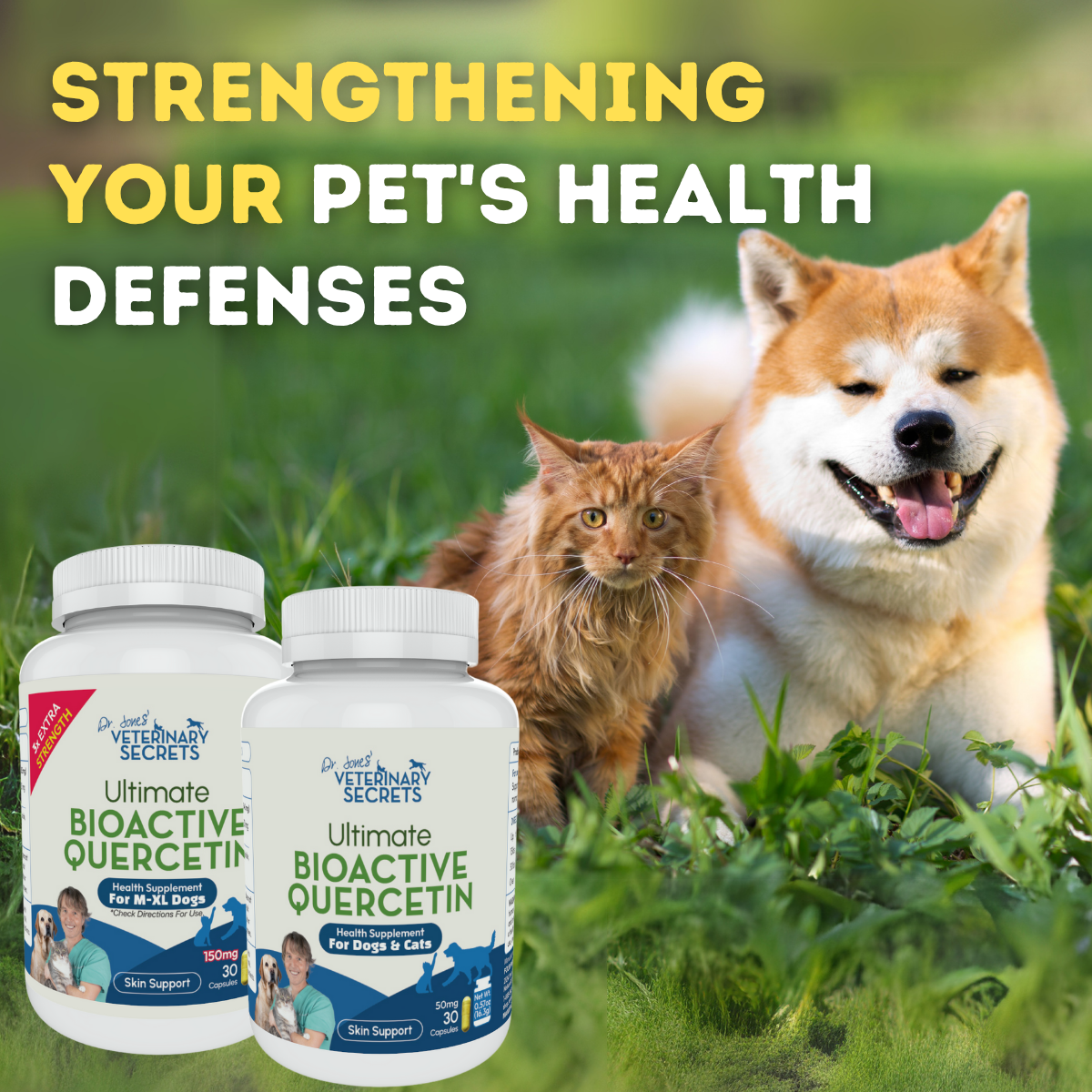
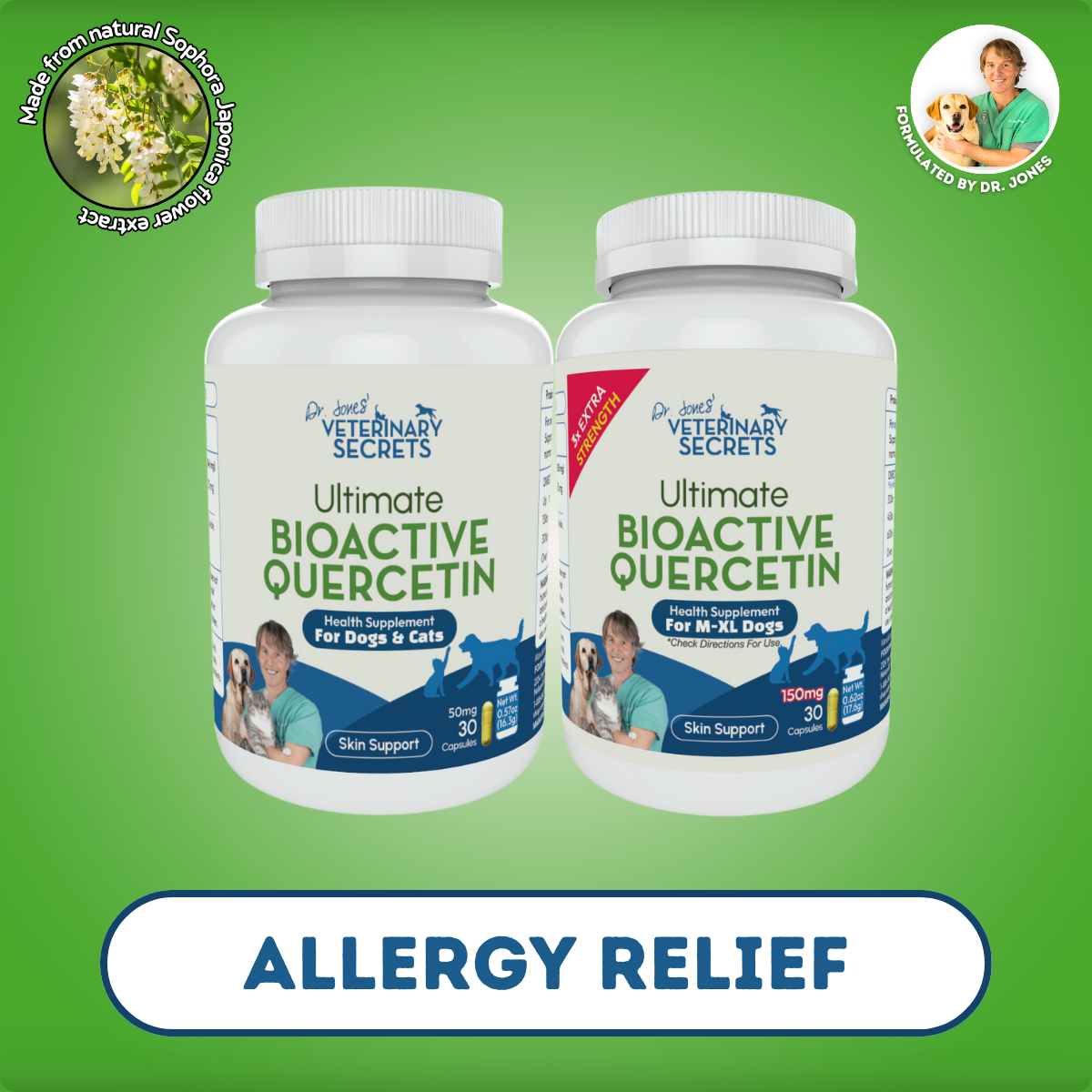
Dr. Jones’ ULTIMATE Bioactive Quercetin for Dogs and Cats
For dogs with recurring allergies, quercetin is one of the natural options I encourage pet parents to consider.
Apoquel vs. Natural Allergy Support: What’s the Difference?
Apoquel and natural allergy-support approaches do not necessarily serve the same purpose.
Apoquel directly affects inflammatory signaling associated with itching.
Other approaches may focus on nutrition, skin health, or supporting the body’s response to inflammation.
| Option | Main Purpose | Key Consideration |
|---|---|---|
| Apoquel | Reduces itching by inhibiting JAK signaling | Prescription medication with safety warnings |
| Omega-3 fatty acids | Supports skin health and inflammatory balance | One of the better-studied nutritional options for allergic skin disease |
| Gentle bathing and moisturizers | Supports damaged or irritated skin | Helps address the skin barrier |
| Safflower and wheat germ oils | Provides additional skin barrier support | Specific use depends on the individual pet |
| CBD | May help reduce allergic itching | Encouraging small-study findings |
| Quercetin | Supports the body’s response to inflammation and histamine | Clinical response may vary |
For me, this isn’t necessarily a choice between Apoquel and every natural alternative.
Some dogs may need prescription medication while other contributing factors are being addressed.
The goal is to improve comfort and, where appropriate, work with your veterinarian to simplify the treatment plan.
Which Natural Option Would I Consider First for an Itchy Dog?
That depends on what appears to be contributing to the itching.

For Dogs With Chronic Allergic Skin Disease
I would start by reviewing the diet and making sure the dog receives adequate essential fatty acids.
Omega-3 supplementation is one of my preferred nutritional approaches.
For Dogs With Dry, Damaged Skin
I would focus on supporting the skin barrier.
That may include gentle bathing, moisturizers, and addressing secondary infections.
Safflower oil and wheat germ oil are also options I’ve discussed for this purpose.
For Dogs With Environmental Allergies
I would be interested in discussing CBD.
The recent small study involving full-spectrum CBD in dogs with atopy provides encouraging findings.
For Dogs Needing Additional Natural Anti-Itch Support
Quercetin would be high on my list.
Its antioxidant, anti-inflammatory, and potential histamine-related effects make it an interesting option for allergy support.
For Dogs With Severe Allergies
I wouldn’t automatically rule out Apoquel.
Some dogs genuinely need medication to control severe itching.
But I would also ask whether diet, omega-3s, skin barrier care, CBD, or quercetin could provide additional support.
Final Thoughts: Apoquel Can Help, but I Want You to Know the Risks
Apoquel has helped many dogs suffering from severe allergic skin disease.
And I understand why pet parents appreciate a medication that can finally stop their dog from scratching constantly.
But the recent FDA warning is an important reminder that even commonly prescribed medications can cause serious problems when they’re accidentally consumed in excessive amounts.
As of April 2, 2026, there had been 259 reported Apoquel overdoses in dogs and 64 in cats.
And the story of Tangerine, who required two days of intensive treatment after exposure to his household’s dog medication, shows why these warnings matter.
So if your dog is taking Apoquel, please keep the bottle securely stored.
Be particularly careful with the flavored chewable tablets.
And if you suspect an overdose, get veterinary advice immediately.
But I also want you to think about something else.
Why is your dog itching in the first place?
Could food be contributing?
Are environmental allergens involved?
Is the skin barrier damaged?
Is there a secondary infection making things worse?
I believe those are questions worth asking before relying exclusively on long-term itch suppression.
My favorite supportive approaches include:
-
Improving the diet
-
Omega-3 fatty acids
-
Gentle skin care and skin barrier support
-
Full-spectrum CBD
-
Bioactive quercetin
I’m particularly encouraged by the small CBD study involving dogs with atopy.
The fact that those dogs maintained allergy control after their Apoquel doses were reduced while continuing CBD is an interesting finding.
And in my own family, my brother Michael has seen encouraging results with his Border Collie Angus after adding CBD, krill oil, and quercetin.
For some seriously allergic dogs, Apoquel may still be necessary.
And that’s okay.
But if we can address the underlying causes and help support the skin naturally, we may be able to improve comfort and potentially simplify treatment with veterinary guidance.
That’s what I want for your dog.
Not just less itching today.
But healthier skin and better long-term comfort.
Click To Get A Free Copy of My E-Book!

P.S. If your dog is taking Apoquel, please make sure the medication is securely stored. The FDA’s July 2026 warning highlights increasing accidental overdoses, including serious cases involving cats. And remember, if you think your pet has eaten too much Apoquel, don’t wait for symptoms to appear. Contact your veterinarian immediately.
P.P.S. For some seriously allergic dogs, Apoquel may be the only practical option for controlling severe itching. But many pet parents haven’t yet tried the range of supportive alternatives available. Omega-3 fatty acids, skin barrier care, CBD, and quercetin are all worth discussing. If your dog’s allergies become better controlled, ask your veterinarian whether the medication plan can be adjusted safely.
P.P.P.S. One of my favorite natural options for allergy support is quercetin. Our Dr. Jones’ ULTIMATE Bioactive Quercetin for Dogs and Cats contains a whole-flower Japonica extract rich in bioactive quercetin. We’ve heard from many pet parents whose allergic dogs and cats have responded well to it. If your pet struggles with recurring itching, it’s one of the options I encourage you to consider.
Natural Allergy Support for Dogs: Dosage and Treatment Comparison
Here are the main approaches and amounts discussed.
| Approach | Amount or Method Discussed | Intended Benefit |
|---|---|---|
| Balanced, minimally processed diet | Individualized diet | Supports skin health and nutrition |
| Elimination diet | Properly conducted dietary trial | Helps identify suspected food allergies |
| Omega-3 fatty acids | 500 mg per 20 lbs daily | Supports skin barrier and helps manage inflammation |
| Gentle veterinary shampoo | Regular bathing | Helps care for irritated skin |
| Safflower oil | Topical or oral use; no specific dose given | Skin barrier support |
| Wheat germ oil | Topical or oral use; no specific dose given | Skin barrier support |
| Full-spectrum CBD | 2 mg/kg twice daily in the small atopy study | Investigated for reducing allergic itching |
| Quercetin | No specific amount provided | Natural antihistamine-like and anti-inflammatory support |