Cat Teeth: 7 Natural Tips To Healing Cat Dental Problems

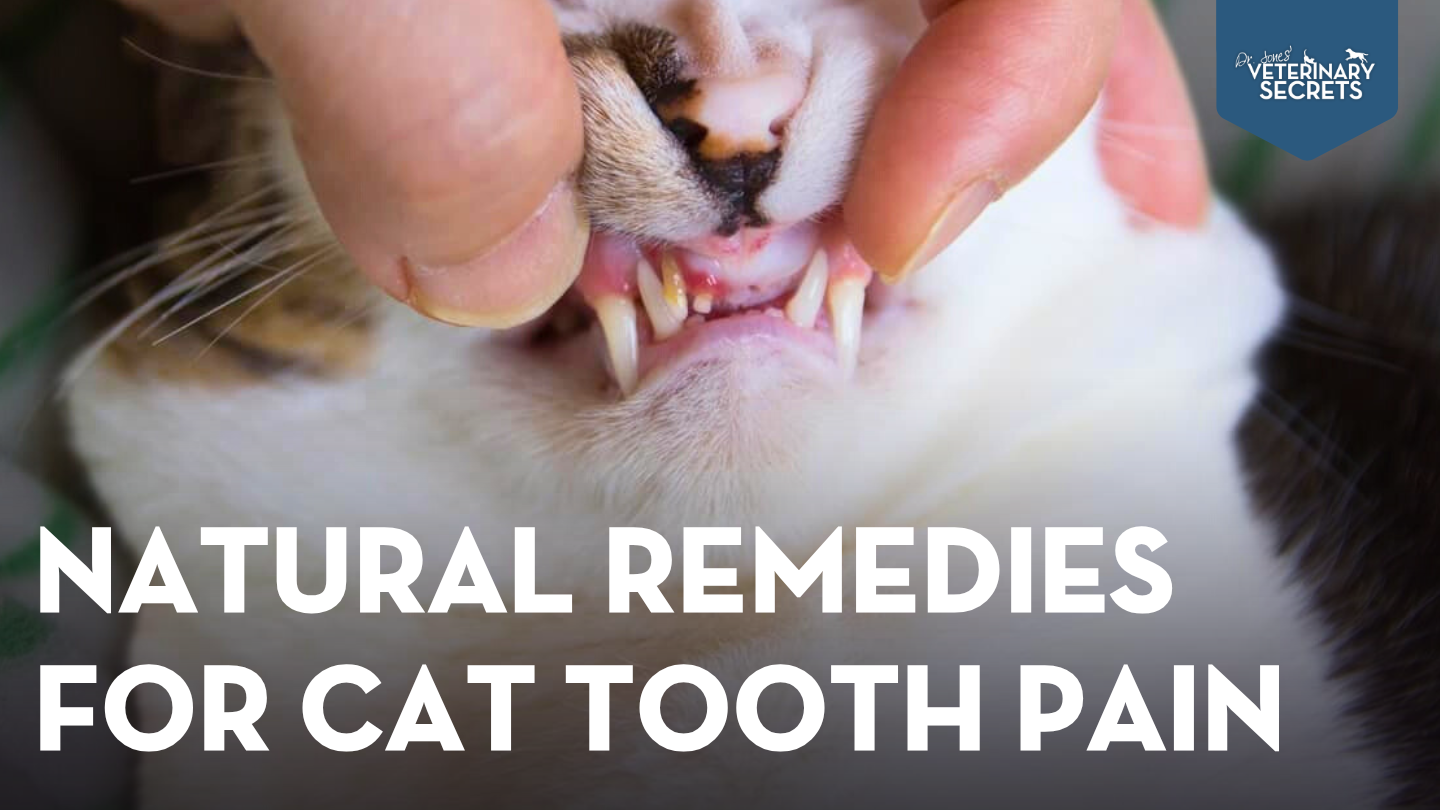
Your Cat’s Teeth: Essential Care for a Healthy Life
Your cat’s dental health is crucial in keeping them healthy and preventing disease. Periodontal (gum) disease is the number one diagnosed health issue in cats. In fact, by the age of three, 70% of cats have some form of periodontal disease. Poor dental health can lead to serious health conditions like:
- Heart disease
- Liver disease
- Kidney disease
- Stroke
- Diabetes
In this article, I’ll cover the anatomy of your cat’s teeth, the causes of dental disease, and the most effective natural solutions for keeping your cat’s teeth and gums healthy at home.
Probiotics: The Surprising Link Between Gut Health and Dental Health
While probiotics are commonly known for supporting digestive health, recent research has highlighted their surprising benefits for your pet’s overall well-being, including dental health.
Probiotics support the balance of beneficial bacteria in the gut, but they also play an important role in oral health. By improving gut flora, probiotics can help reduce inflammation and combat harmful bacteria in the mouth, which is essential for preventing conditions like gingivitis and periodontal disease.
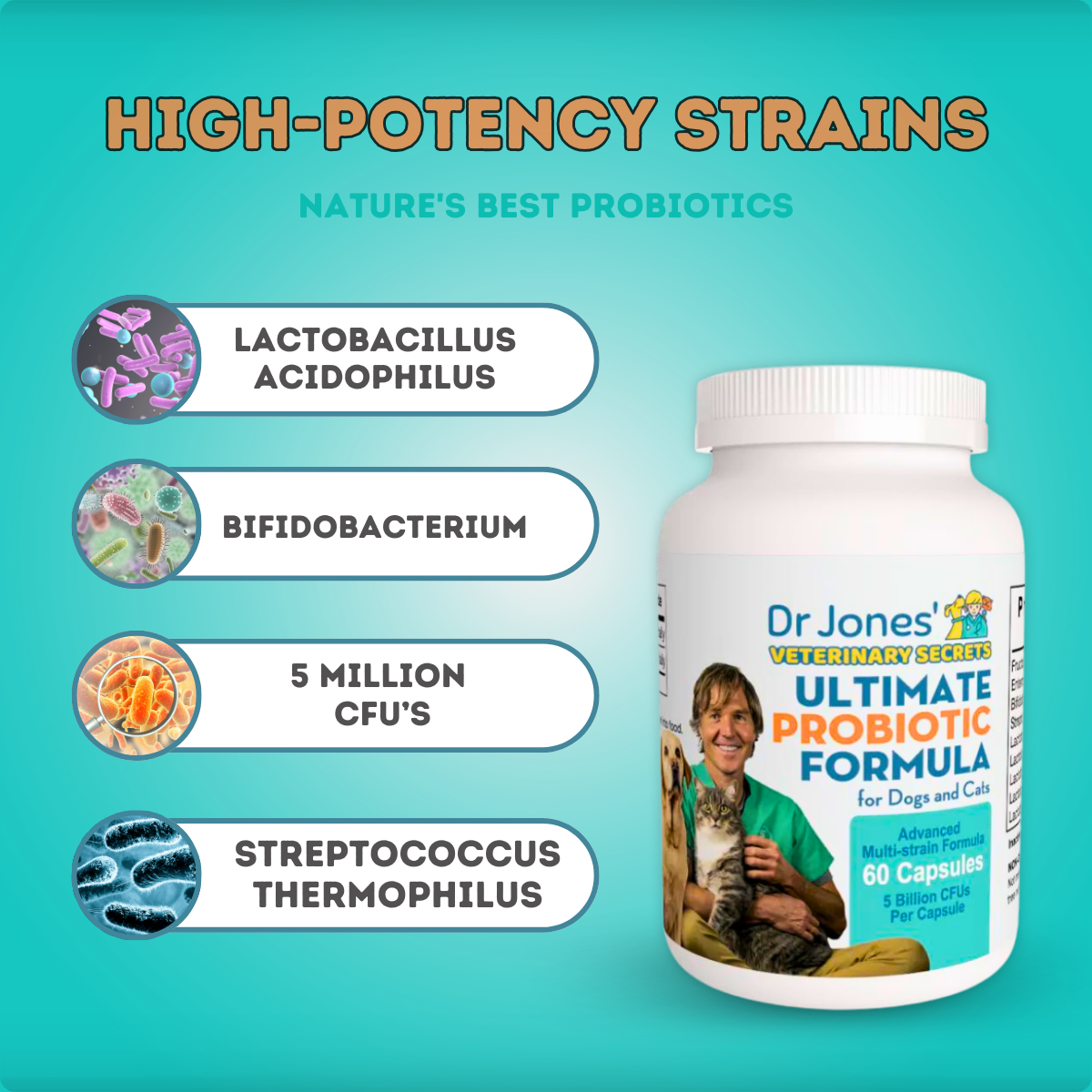
Probiotic Supplementation: Dr. Jones’ Ultimate Probiotic Formula for Dogs and Cats
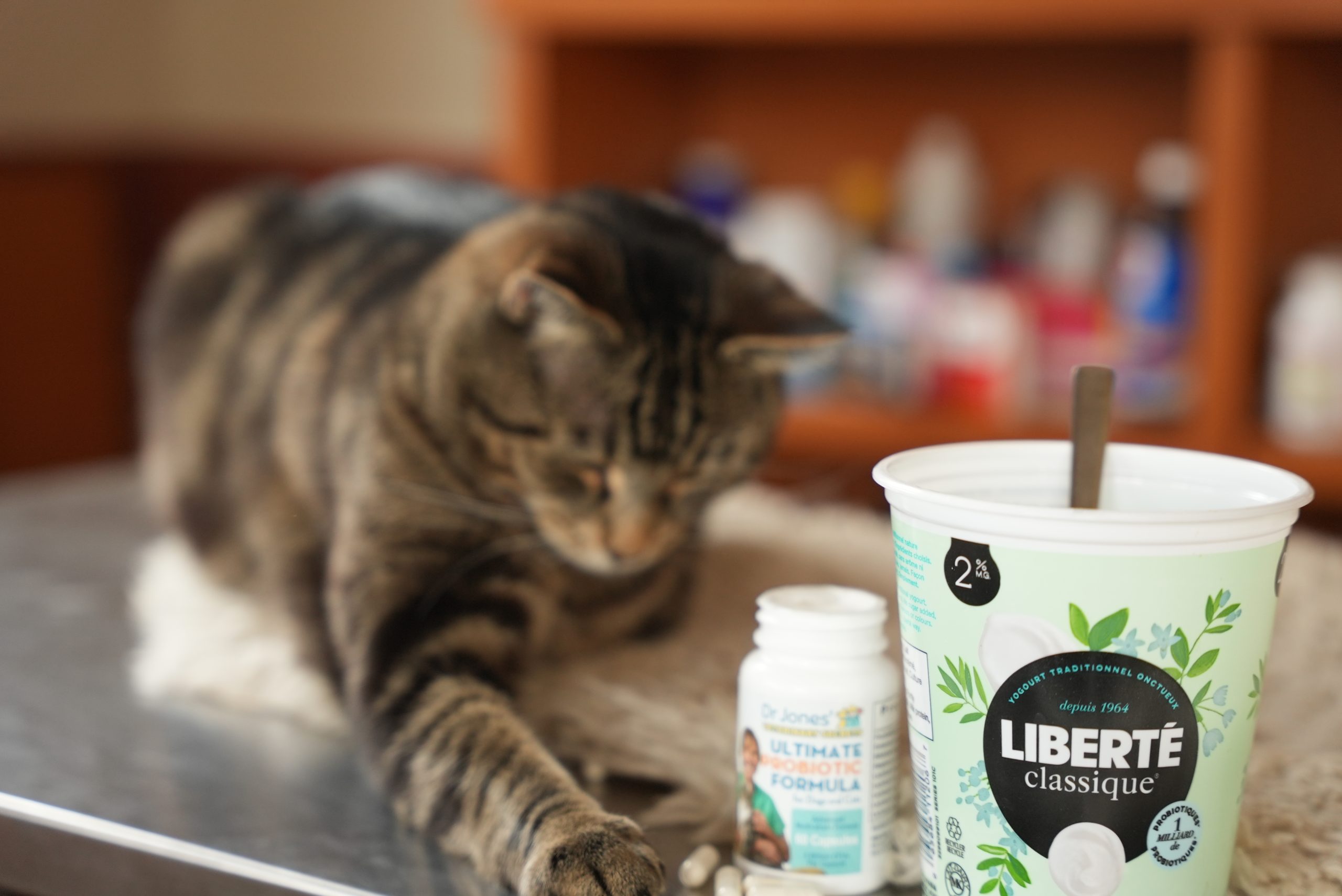
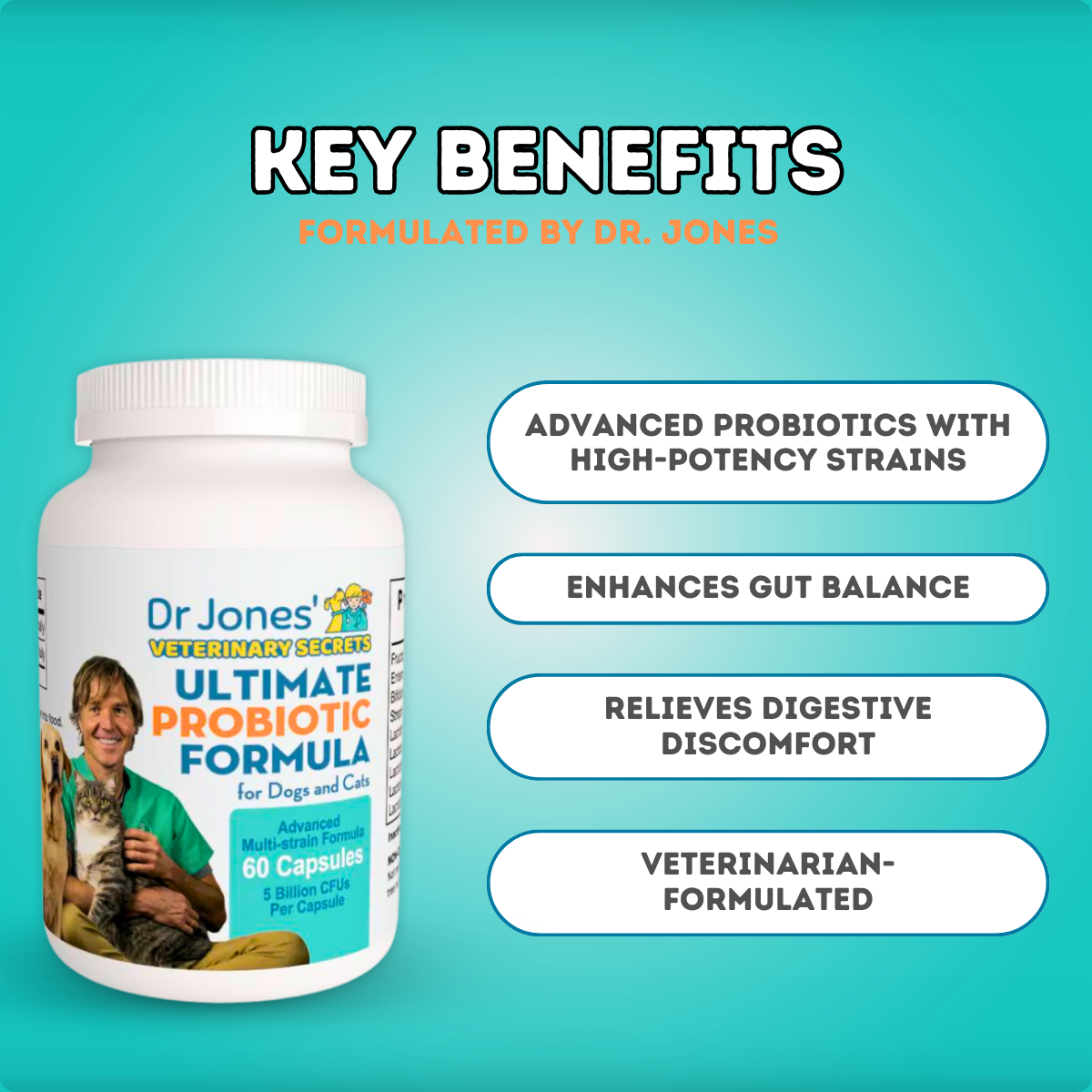
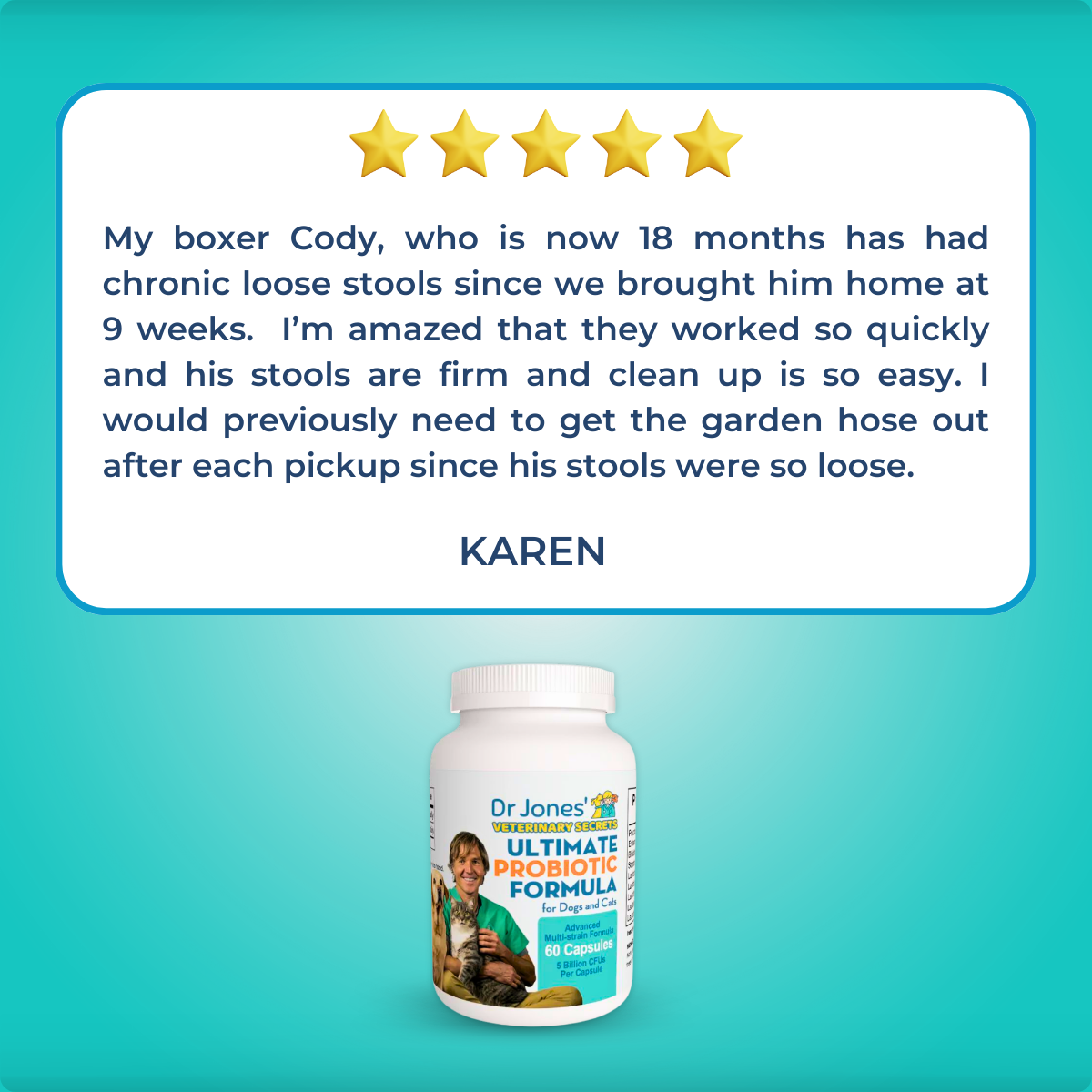
For a practical and effective way to improve your pet’s dental and digestive health, I highly recommend our Probiotic supplement Dr. Jones’ Ultimate Probiotic Formula for Dogs and Cats. This specially designed formula helps address common issues like diarrhea, bloating, and digestive discomfort while promoting healthy gut bacteria.
Not only will this formula support your pet’s digestive system, but it can also have a positive effect on their oral health by reducing the harmful bacteria that cause plaque and tartar buildup. This easy-to-use formula is perfect for pets of all ages and is a great addition to their daily routine to promote overall vitality and well-being.
Understanding Your Cat’s Teeth
Just like people, cats start with deciduous (baby) teeth. These teeth begin to erupt around 2-3 weeks of age. By 4 months, kittens start to lose their baby teeth and replace them with 30 adult teeth by 6-7 months of age.
Unlike dogs, cat teeth are designed for eating meat, not grinding plant material. Cats don’t have grinding surfaces on their teeth, as their natural diet is based on raw meat.
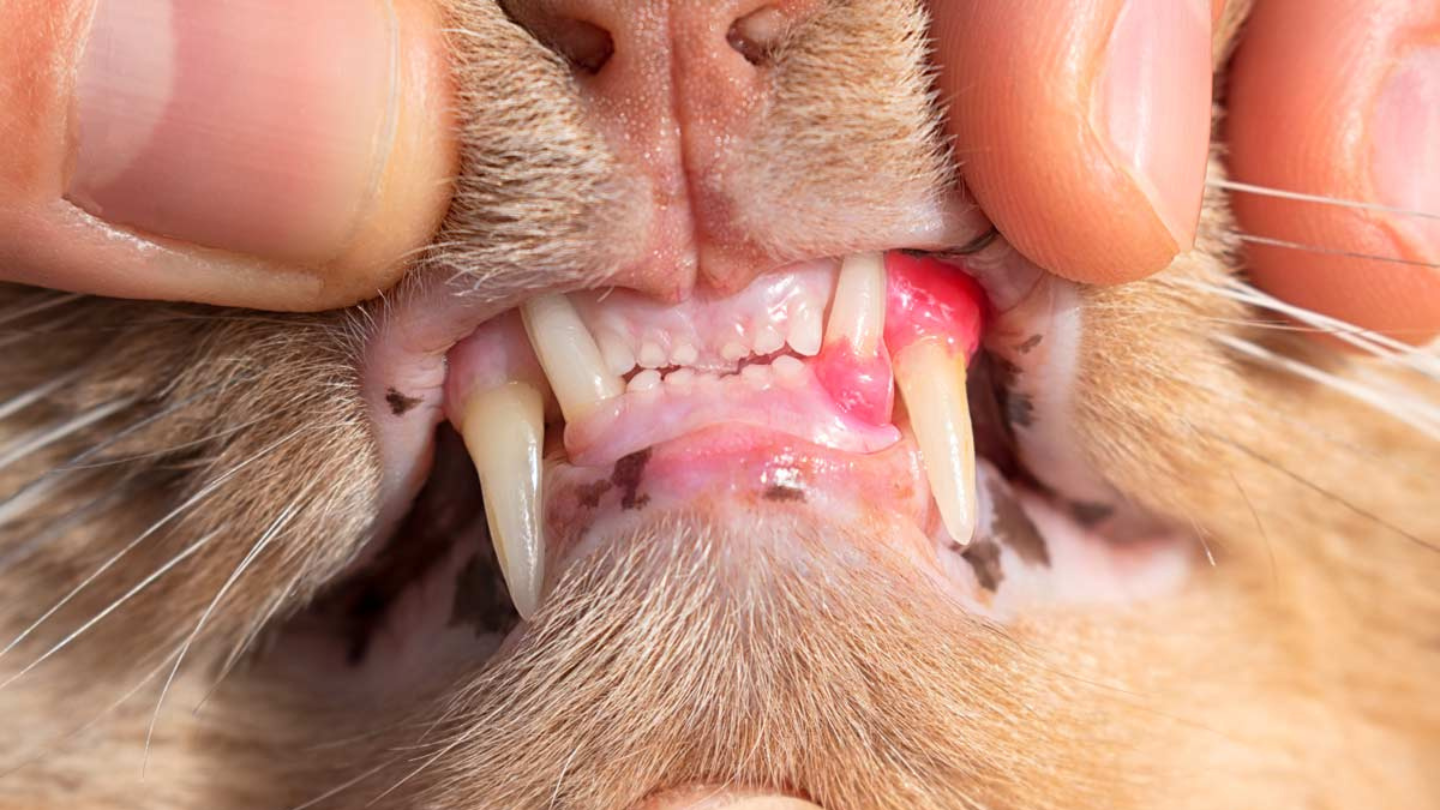
Most dental problems occur after the adult teeth have fully formed. Plaque, a thin coating of bacteria, builds up on the teeth, eventually turning into tartar. This leads to gum inflammation, and bacteria grow beneath the gumline, causing gingivitis. Left untreated, this can lead to tooth loss and other serious issues.
Common Dental Problems in Cats
Some common dental problems in cats include:
- Plaque and Tartar: Buildup on the teeth, causing gum inflammation.
- Gingivitis: Infection under the gumline.
- Broken Teeth: Causing pain when chewing.
- Tooth Root Abscesses: Infections at the root of the tooth, leading to swelling under the eye.
- FORL (Feline Odontoclastic Resorptive Lesion): A type of cavity where the tooth decays at the gumline.
Signs of Dental Disease in Cats
Dental disease in cats can often be difficult to detect, but some common signs include:
- Bad breath (halitosis)
- Reluctance to chew or eat
- Redness at the gumline
- Visible tartar on the teeth
- Loose teeth in advanced cases
- Localized tooth pain (your cat may ‘chatter’ their teeth when you gently press around the inflamed area)
If left untreated, bacteria from the mouth can spread to other organs, causing more serious health issues like heart or liver disease.
What Can You Do to Help Your Cat’s Teeth?
Fortunately, there are several effective natural remedies you can use to prevent and treat your cat’s dental issues. Here’s what I recommend:
1. Dental Diets
If your cat eats kibble, make sure it’s dry kibble with larger pieces that require chewing. Some pet food companies produce specialized dental diets that reduce tartar buildup. These diets are more abrasive on the teeth and often contain enzymes to help break down tartar.
2. Natural Diets
Raw meaty bones or windpipes (such as chicken necks) can help keep teeth clean. However, be cautious, as bones can splinter and pose a choking risk. To reduce the risk of bacterial infection (like Salmonella), briefly boil the bones or windpipes for 30 seconds before giving them to your cat.
3. Brushing Your Cat’s Teeth
The most effective way to keep your cat’s teeth clean is by brushing them. Ideally, you should brush your cat’s teeth daily, but twice a week is a good goal. Start by gently rubbing your finger around your cat’s mouth, flavored with tuna to make it enticing. You can use a finger toothbrush or a small pet toothbrush. Always use pet-safe toothpaste, as regular human toothpaste can upset your cat’s stomach if swallowed. Baking soda is also a safe natural alternative.
For cats with recurring gingivitis, consider adding lactoferrin (½ a 350 mg capsule daily) mixed in syrup or baby food. Propolis, an antiseptic from honeybees, can also be applied topically to inflamed gums.
4. Vitamin C for Gum Health
Vitamin C plays a role in maintaining healthy gums and teeth. It acts as an immune stimulant and supports the production of gum tissue. The recommended dose for cats is 100 mg per 10 lbs of body weight daily. If your cat experiences diarrhea, reduce the dose.
5. Plaque Off
Plaque Off is a natural product derived from a special type of seaweed. It has proven benefits for oral health and is safe for cats. This granulated product is rich in natural iodine, vitamins, and minerals, and it’s free from artificial colors, preservatives, gluten, and sugar. Add it to your cat’s food daily to help reduce plaque and tartar buildup.
6. Herbs for Dental Health
Certain herbs can also be beneficial for your cat’s dental health:
- Calendula Lotion: Helps heal ulcers in the mouth and promotes tissue repair.
- Chamomilia: Relieves teething pain in kittens.
- Myrrh: When mixed with water, it can be applied topically to reduce gum inflammation.
Conclusion: Keeping Your Cat’s Teeth Healthy
Now that you understand the importance of dental care for your cat, you can recognize the signs of dental disease, such as red gums, visible tartar, bad breath, and reluctance to chew. If your cat shows any of these symptoms, they likely have periodontal disease.
By adopting a natural approach to dental care—using specific diets, regular brushing, supplements, and herbal remedies—you can help prevent and treat your cat’s dental problems, ensuring they enjoy a longer, healthier life.

Understanding Your Cat’s Teeth
Just like humans, cats start with deciduous (baby) teeth, which begin to emerge around 2-3 weeks of age. By 4 months, kittens start to lose their baby teeth, and by 6-7 months, they gain their full set of 30 adult teeth.
Unlike dogs, cats don’t have grinding surfaces on their teeth. Their teeth are specialized for eating meat, and they don’t chew or grind plant material. This makes dental care even more important, as their teeth are designed for tearing and shearing, which can lead to tartar buildup and gum issues if not properly maintained.
Probiotic Benefits Beyond Digestion
Beyond oral health, probiotics are a simple and effective way to keep your cat feeling their best. Here are the top benefits of probiotics for your pet:
- Improved Digestion: Probiotics help with common digestive issues like diarrhea, gas, and bloating.
- Boosted Immune System: Probiotics support your pet’s immune system, which helps fight infections, including oral infections.
- Better Skin and Coat Health: A healthy gut supports overall well-being, including skin health, which can impact your cat’s appearance and comfort.
Probiotic Supplementation: Dr. Jones’ Ultimate Probiotic Formula for Dogs and Cats
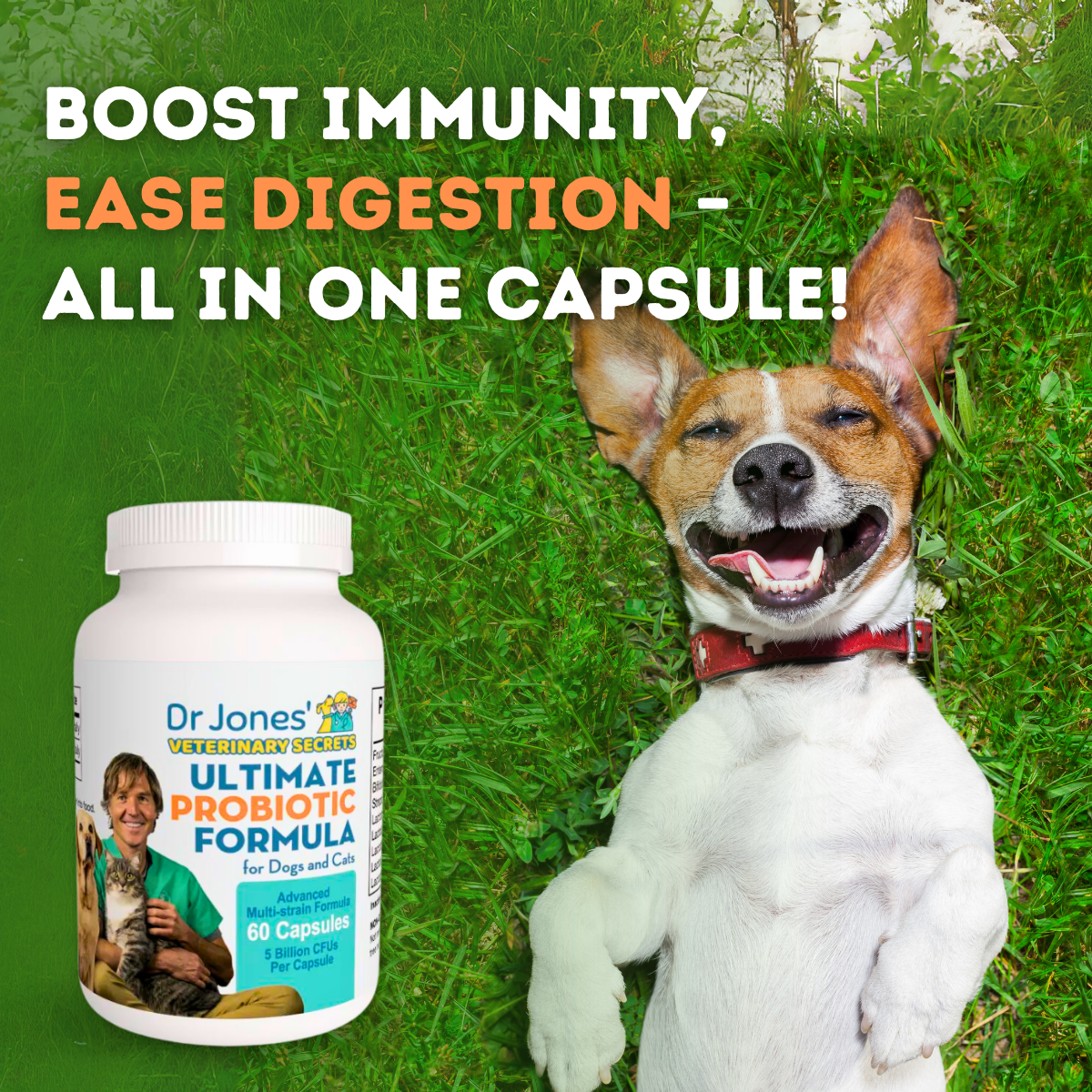
For a practical and effective way to improve your pet’s dental and digestive health, I highly recommend our Probiotic Supplement Dr. Jones’ Ultimate Probiotic Formula for Dogs and Cats. This specially designed formula helps address common issues like diarrhea, bloating, and digestive discomfort while promoting healthy gut bacteria.

Thank you for the information. My six and eight year old cats currently live on the 3rd floor of a retirement complex. They do not come in contact with any other animals except on the very rare occasion when they need medical care. So I do not feel any immunizations are indicated. They both received kitten immunizations years ago but I do not feel there would be any benefit in subjecting them to the risk associated with immunizations now. Hopefully I will be able to maintain this living situation for many years and they will continue in their current level of health.
Sounds like they’re living the penthouse life! ? For indoor only cats with little to no exposure to other animals, focusing on great dental care, good nutrition, and regular wellness checks can go a long way in helping keep them healthy. Wishing your two happy kitties many more healthy years together!
Where can I purchase the “Plaque off”? Lemo’s stores don’t seem to have anything to take off plaque. Can I use Plaque off & Vitamen C in my Chihauhau’s food as well? I read somewhere that vitamen C wasn’t a good thing to give to dogs, is that true? Thank you for all of your advise. Bari
Hi Bari! PlaqueOff can generally be used for both dogs and cats—just follow the label dosing. Dogs make their own vitamin C, so it’s usually not necessary to supplement unless there’s a specific reason. Too much can cause tummy upset. For dental health, regular brushing with pet-safe toothpaste is still your best friend!
I would like to know where to,purchase the plaque off I have 4 cats and do not want to take them to the vet for cleaning because the vet collapsed my dogs trachea with that tube they stick down their throat.
Hi Shirley
You can order Plaque Off online at:
http://www.plaqueoff.com/for-animals/
I completely understand your concern after that experience. PlaqueOff is available from many pet retailers and online pet stores. For your cats, look for the cat-specific dosing on the product label.
And with 4 cats, brushing their teeth regularly can go a long way toward reducing plaque and tartar without relying solely on professional cleanings.
My cat has stomatis ,is there anything natural I can use. My vet wants to remove his teeth.
Feline stomatitis can be very painful. Gentle oral care, probiotics, and anti-inflammatory support may help, but there’s no natural remedy proven to cure severe stomatitis. If your vet recommends extractions, I’d discuss all options with them before deciding.
Hi Donna, when my cat had stomatitis, I switched to distilled water only and somehow the stomatitis went away.
With all due respect, Grace, distilled water is not to be consumed long term for any animals, including humans. Do some online research about it. And no, distilled water does not “cure” stomatitis.
That’s interesting! Some cats may improve with changes in water, but there isn’t good evidence that distilled water alone cures stomatitis. It’s certainly worth discussing with your vet, especially since stomatitis can be quite painful.
thank you for this website! my cat has periodontal disease and I would like to purchase a natural safe product for pepper until I can afford a proper cleaning and live in Ontario. any suggestions? many thanks
You’re very welcome! For Pepper, gentle daily tooth brushing with pet-safe toothpaste is one of the best things you can do while you arrange a professional cleaning. A veterinary oral-health probiotic may also help support a healthier mouth. If Pepper has painful gums, bleeding, loose teeth, or trouble eating, please have your vet check her sooner rather than later—dental disease can be painful.
My cat is not eating. 3 months ago his teeth was cleaned. Then about 2 weeks after, he started biting and tugging at my bed covers so I took him back to the vet and he gave him a rabies vaccine, purevax, and Depomedrol 20mg. Vwhen I took him homega, he wasn’t the same, slow moving and a little out of it. The vet said it was normal because of the shots. Okay so the shots wore off and he was eating, but he then started sneezing and spotting, so the vet gave me Azithromycin of which stopped the cold, but not he seems to no be able to chew his food. He will appear to be eating, then I noticed that he spits it out. He does drink water.
Does anyone have any insight. Before his teeth were cleaned, he was healthy, eating well, and vibrant. Now I’m afraid to take him back to that same vet.
If anyone has anything to add, please let me know. My Tyler is 8 years old.
Thank you.
Poor Tyler—spitting food out and being unable to chew strongly suggests mouth or dental pain, even after a recent cleaning. Cats are experts at hiding pain.
I’d have him examined by another veterinarian, particularly to check for tooth resorption, gum inflammation, or another painful oral problem. Since he’s not eating, don’t wait too long—cats can develop serious liver problems when they go without food.
In the meantime, try soft, palatable food and avoid forcing him to chew hard food. I’d also ask the vet to carefully examine his entire mouth rather than assuming the previous dental cleaning ruled out a dental problem.
Rhonda, it sounds to me like your vet damaged poor Tyler’s teeth. 🙁 I would take him to a different vet and get their opinion if I were you.
My cat has to have a tooth pulled and i’m trying to see if there is something natural that I can help his teeth and gums. I have cat toothpaste but I feel like there is more that I need to do. I read that cats can’t have baking soda. But here you say that I can. My vets says that it’s too late to do anything and it needs to be pulled. Please help!
If a tooth truly needs to be extracted, especially with severe decay or tooth resorption—natural remedies can’t repair the damaged tooth. The good news is you can still support the remaining teeth and gums.
For now, stick with cat-safe toothpaste and gentle brushing. I would not recommend baking soda for cats, particularly since they may swallow it. After the extraction, ask your vet about a dental-care routine to help prevent further problems.
And if you’re unsure whether the extraction is necessary, getting a second veterinary opinion is perfectly reasonable.
I have a senior Maine Coon, he will be 30 yrs old on 7/16. Born in 1987. He has 1 long tooth in the front that is painful to him if I touch it. He eats well and I brush his teeth once a month. Is there anything natural that can help him. He is a big cat but very sweet. Hate his tooth hurts him. Help! >^.^<
30 years old! What a wonderful old gentleman. If that tooth is painful when touched, though, I’d have a veterinarian examine it. A painful tooth may need treatment or extraction, and natural remedies won’t fix a damaged tooth.
At home, keep things gentle: soft food if needed, and avoid brushing or touching that painful tooth until he’s been checked. At his age, a second veterinary opinion may also be worthwhile.
We have a 21 year old cat. Yesterday we opened her mouth cause she wasn’t eating and pawing at her mouth and saw a bad tooth. My husband touched it and it fell out in his hand. She started eating and drinking water. My question is; what natural product can I get and put a couple of drops in her food to help with the tarter?
Glad she’s eating again! Since the tooth fell out and she was pawing at her mouth, I’d still have your vet check her mouth—there could be infection or other painful teeth remaining.
For tartar prevention, the safest natural step is regular gentle brushing with a cat-safe toothpaste. You can also look for a veterinary dental product such as a seaweed-based plaque supplement. Avoid putting essential oils or human dental products in her food.
I feed an old cat 5hat paws at her mouth when I feed her and she tugs out white saliva with her paw. She really smells bad. I live in Japan so, I can only imagine the cost of a vet. Is there something I can give her to get rid of whatever it is.
hat combination, pawing at the mouth, drooling, and very bad breath—strongly suggests significant dental or oral disease, and possibly a painful or infected tooth. There isn’t a safe drop or supplement that will reliably “get rid of” the underlying problem.
For now, offer soft food and avoid touching or brushing the painful area. Since she’s an older cat, I’d try to get a veterinary oral exam when possible; untreated dental infection can become much more serious.
Hello everyone,
Plaque Off can be purchased on Amazon.
There are two “different” ones. One is marketed for cats & costs about $27 and another for dogs at about $16. The ONLY difference is the cat one has brewers yeast which most cats love the taste. I’ve used both and my cats didn’t mind either one and so I buy the one for dogs to save money. I mix it in their wet food.
Remember with any supplement or new food to slowly increase the dose. Start with a small partial dose and work up to a full dose. Watch for side effects.
Brewers yeast is CHEAP & it lowers blood sugar in animals and people. But, there’s probably not enough in this supplement to affect blood sugar. But watch for signs like depression, lethargy, difficulty walking (hind legs dragging). The likelihood is minimal. So, don’t worry just be vigilante with cats & dogs.
As always, have your cat or dog seen before starting a supplement.
Oh, also because of its high iodine content make CERTAIN to watch for thyroid symptoms!!!! Have a test done beforehand to make sure your pets thyroid is normal. Test during use to make sure the thyroid remains normal.
Some people reported that their (male) cat developed bladder crystals, stones or an infection while taking Plaque Off. Moreover, cats with a predisposition or prior history of bladder crystals, stones, infections or blockages were at a much higher risk of developing those urinary issues again. So, best to be able to take your cat or dog in for a check up before and while taking this AMAZING supplement.
My cat’s gums went from bright red and bleeding to pink and very little intermittent bleeding! Certainly a wonderful supplement that truly works!
Remember, stomatitis (I think I spelled that wrong), gingivitis and other oral diseases are VERY painful for your pet! So, please try something. Plaque Off is great but do use other things as well like vitamin C, gentle brushing and so forth. A raw diet is best. Please stop dry kibble if possible. Human grade wet food is second best next to raw. Freeze dried raw is a great place to start.
Carbs found in dry kibble and most commercial wet foods is a leading cause of tooth decay, gum inflammation and disease.
Best of luck everyone!
Thank you for sharing your experience! It’s wonderful to hear that your cat’s gums improved so much.
You’re absolutely right that dental disease can be very painful, and gradual introduction of any new supplement is a good approach. I’d also agree that regular veterinary dental checks and gentle tooth brushing can be valuable additions to a pet’s oral-care routine.
For the thyroid and urinary concerns you mentioned, I’d recommend discussing those with your veterinarian rather than assuming the supplement will cause or prevent these problems. Pets with thyroid disease or a history of urinary crystals, stones, infections, or blockages may need individualized advice before starting a seaweed-based supplement.
And one small clarification: there isn’t good evidence that carbohydrates in commercial pet food are, by themselves, the leading cause of dental disease. Dental health is more complicated and involves plaque, bacteria, genetics, oral anatomy, diet, and individual risk factors.
Thanks again for sharing what worked for your cat—personal experiences can be helpful, especially when combined with good veterinary guidance!
My cat has FORL and tartar.
I serve boiled soft flesh of fish. my cat can’t eat fish bone or other non soft raw flesh and organs…it will make my cat nutrition-unbalanced..
nowdays i only feed water soaked soft Natural balance ultimate chicken and salmon kibbles..
..
I can’t apply your curing method to my cat because he can’t eat hard food..that is the real problem….
Is removing the tartar only the best way? but I was told that FORL cat can’t undergo tartar removing method, because the vibration of ultrasonic scaler will damage my cat’s gum and tooth.. right?
What should i do? I don’t think that the herb can’t cure the real problem…
FORL is different from ordinary tartar buildup. Unfortunately, herbs or supplements cannot cure tooth resorption or repair damaged teeth.
The best step is a veterinary dental exam with full-mouth dental X-rays. If painful/resorbing teeth are found, extraction is usually the treatment.
An ultrasonic scaler does not automatically make dental care unsafe for a cat with FORL—the important part is having the teeth properly examined and treated by a veterinarian experienced in feline dentistry.
Since your cat needs soft food, I wouldn’t force hard kibble, bones, or abrasive foods.
First of all everyone needs to think about how Animals behave in the wild! Just because we “domesticate” them doesn’t mean their wild natural behavior dsappears; it never will… Stop vaccinating, first of all, beyond puppy/kitten vacs, be sure to space them out and only give ONE at a time! Wait at least 2 weeks before allowing vet to give another! After initial vacs DON’T allow anymore! The immune system WILL build antibodies from that point on. Leave their poor bodies alone!! Vaccines do more harm than good! FACT. ALL Disease, ADD, AUTISM, AUTOIMMUNE PROBLEMS, ETC!!! Again they’re UNnatural, they’re an assault on Animals and humans even though western “drs” will NEVER admit this because billions of dollars are more important than actually honoring the Hippocratic Oath!!! What Animals NEED is the same thing, or as close as we can come, as they’d get in Nature! Processed food, vaccinations, flea and tick treatment (totally toxic!!! Just sprinkle garlic POWDER on food, starting with small amount in beginning. Blood suckers are REPELLED by simple garlic!) and all lab produced things are harmful CRAP that generate tons of profit! Do right by your pets, your children, yourselves and live as naturally as possible. Feed/eat whole, organic (pesticide, herbicide, fungicide, GMO FREE) foods, drink purified water, get OUTSIDE, breathe FRESH air, move your bodies, don’t vaccinate, LET the Immune System do, without medicine (!!!), what it was designed to do billions of years ago! Without the above our bodies don’t know how to react, toxins build up, we get inflammed then disease starts, and so on!! It truly is simple. Research Research Research.
This is crazy advice. Vaccines have helped humans and animals live MUCH longer than “in the wild”. Over vaccinating is to be avoided, but the basic kitten/puppy shots and a rabies vaccine are going to protect your animals from deadly diseases from which they can suffer and die if unvaccinated.
This isn’t an all or nothing. Vaccines are a powerful tool. It should be considered animal abuse to let them fend for themselves when we have this technology. Next you’ll be saying that we should go back to drinking untreated water and uninspected meat, because that’s how we did it in the old days.
There is such a thing as progress. Don’t be hysterical and throw out the baby with the bath water.
Garlic, onion, chives, leeks are well-known to be toxic to cats! Something seeming innocent as “natural” is not always safe for pets. Using garlic powder is even more concentrated and may cause serious health issues or even death to your cat.
Hi Alice, if you’ve read any of Dr. Jones’ thoughts on garlic, he’s found the worry about garlic is overblown. He’s stated several times that not once in 20 years of practice did he see a case of garlic toxicity in either a dog or cat. This from pubmed – regarding dogs and garlic ( https://pubmed.ncbi.nlm.nih.gov/30497454/ ):
“Safety and efficacy of aged garlic extract in dogs: upregulation of the nuclear factor erythroid 2-related factor 2 (Nrf2) signaling pathway and Nrf2-regulated phase II antioxidant enzymes”
“Conclusion: The long-term oral administration of AGE at a dose of 90 mg/kg/day for 12 weeks did not show any adverse effects in dogs. Furthermore, the administration of AGE upregulated the gene expressions of canine Nrf2 and Nrf2-regulated phase II antioxidant enzymes. These results suggest that AGE might safely contribute to the health of dogs provided that the appropriate dosage is used.”
At higher levels garlic and onions can be toxic, but there is a long history of safe use in both cats and dogs (Dogs 22 mg/kg HSI (Historical Safe Intake) – there is a long history of safe use in dogs. Cats 17 mg/kg HSI: https://www.nap.edu/resource/12461/satety_of_dietary_supplements_final.pdf )
Well, I guarantee that if you don’t get your animal a rabies or tetanus vaccination they will die if they encounter either! There are only a few animals that can’t get rabies and cats and dogs are not on that list! AND rabies is transferable to humans!
Rabies deaths are practically non-existent. Rabies “vaccination” for indoor cats is a complete scam. Like humans, domesticated animals are more likely to die from medical intervention than almost anything else.
I hear you on being cautious about routine medical interventions.
On rabies though, it is still one of those diseases we really do not mess around with. It is almost always fatal once symptoms show, and in many places vaccination is still required by law because it protects pets and people. Even indoor cats are not completely zero risk, things like bats can and do get inside homes.
That said, I am with you on keeping things as natural and supportive as possible where it makes sense. In the Cat Teeth post, the focus is really on everyday prevention and healing support for a very common issue, dental disease. Simple things like diet choices, oral hygiene, and gentle natural supports can go a long way in keeping our cats healthier without overdoing interventions.
Right on, Pam! Thanks for your post. All four of our cats were raised on raw food and remained unvaccinated after their initial shots (which I regret). However, they all lived long, healthy and happy lives. Living creatures do not (and should not) rely on chemical concoctions (vaccines, synthetic drugs) to survive. We are creating disease with unnecessary treatments that serve, only, to feed a branch of the medical industrial complex. Dr Jones stands out as a free thinker with many nontoxic tools in his treatment belt. Well done and thanks!
I’m all for natural living and letting pets be pets! But I’d be careful with a few of these claims—vaccines and parasite prevention can be important, and garlic can actually be toxic to cats and dogs.
The sweet spot is balance: good nutrition, sensible prevention, and avoiding unnecessary treatments. Nature is a great teacher… but sometimes she needs a little veterinary backup!
I keep reading about the idea of brushing cats’ teeth. Although it might have the desired result, how in the world could someone EVER convince a cat to let them brush their teeth?
We have five indoor cats, one indoor-outdoor cat, and two outdoor cats that actually supposedly live somewhere else, although they are at our house most of the time.
Our youngest cat is five years old, and all of the cats are extremely difficult to even manage to give a pill to, yet alone convince them to sit passively once a day while you brush their teeth.
The youngest one DOES have gingivitis, and she has had three shots, which likely contain prednisone, which has helped, but is now not working as well.
We are horribly concerned about her, but are looking for a long-term solution.
I don’t understand why cats are now having these problems with gum disease that apparently were not common until recent years.
You’re definitely not alone—most cats hear “toothbrush” and immediately file for emancipation!
For your youngest cat, recurring gingivitis deserves a proper dental exam, especially since the injections are no longer helping. Cats can also develop tooth resorption and other painful dental disease, which supplements or brushing won’t cure.
If brushing is impossible, don’t force it. A vet dental exam, appropriate diet, and gentle oral-health support may be a much more realistic long-term plan.
Please look up the list of things that are toxic to cats. Garlic is toxic to cats. Please get your advice from veterinarians or legitimate websites, and don’t just start using homeopathic treatments suggested by strangers in a comment section. Please.
Absolutely, and thank you for flagging this. Garlic is toxic to cats (and dogs), including raw, cooked, powdered, and concentrated forms. Cats are particularly susceptible, and ingestion can cause potentially serious anemia.
For pet health advice, it’s always best to check reputable veterinary sources such as the Merck Veterinary Manual or ASPCA Poison Control rather than relying on unverified remedies in comment sections.
Please don’t give garlic to cats